Borderline vs Narcissist: Clinical Comparison Guide
Borderline vs Narcissist Differences: Emotional Patterns and Relationship Dynamics

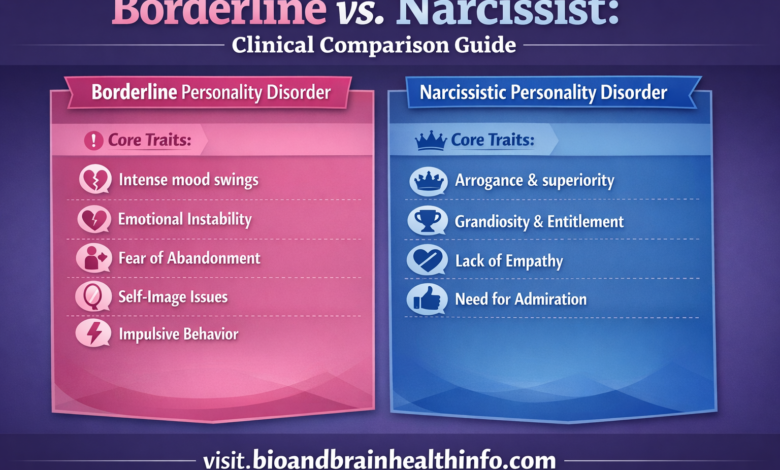
A borderline vs narcissist comparison explores BPD vs NPD differences through emotional reactivity, interpersonal patterns, and trauma history to understand how similar behaviors may arise from very different emotional motivations and internal experiences.
Thank you for reading this post, don't forget to subscribe!“Clarity appears when we compare motivations beneath behavior, not just the behavior itself.”
Sometimes emotional intensity and emotional distance can look similar from the outside, yet they come from very different inner worlds.
Confusion often begins when we try to understand behavior without seeing the emotional need beneath it.
Even after leaving, the nervous system can stay on alert because it learned unpredictability as normal. Regulation returns through consistency, not force.
Borderline vs Narcissist
A borderline vs narcissist comparison explores BPD vs NPD differences through emotional reactivity, interpersonal patterns, and trauma history, yet many people quietly wonder, “Am I misunderstanding someone or losing myself?”
Confusion often comes from mistaking trauma responses for identity rather than adaptive survival strategies.
Emotional chaos or emotional control does not automatically define character or intention.
If you feel unsure about emotional dynamics, you are not alone — these reactions reflect complex patterns, not personal flaws.
This article will help you understand what’s happening — without labels, blame, or self-attack.
REASON FOR THIS BLOG -Borderline vs Narcissist
To clarify emotional and psychological differences often confused between borderline and narcissistic patterns, helping readers understand motivations behind behavior while separating trauma-based reactions from identity — without diagnosis, judgment, or pressure.
INNER SEARCH MIRROR -Borderline vs Narcissist
You may be asking:
Is this borderline or narcissistic behavior?
Why does emotional intensity feel unpredictable?
Why does one person react emotionally while another withdraws?
Are empathy differences real or misunderstood?
Why do interpersonal patterns feel confusing?
Does trauma history influence reactions?
Please Explore This Blog bpd-npd-relationship-patterns-and-psychology
PSYCHOLOGICAL EXPLANATION – Borderline vs Narcissist
A borderline vs narcissist comparison involving BPD vs NPD differences, emotional reactivity, interpersonal patterns, and trauma history shows that similar behaviors can emerge from different psychological motivations.
Emotional reactivity may reflect attachment fears and regulation challenges, while emotional control may protect identity and self-image.
These patterns develop as survival conditioning shaped by past experiences.
Understanding motivation rather than judging behavior reduces self-blame and clarifies that intent and reaction are not always the same.
| Psychological Pattern | Core Motivation |
|---|---|
| Emotional intensity | Attachment security |
| Emotional distancing | Identity protection |
| Validation seeking | Stability restoration |
Personal note: Clarity often begins when we focus on emotional needs rather than labels.
NERVOUS SYSTEM EXPLANATION – Borderline vs Narcissist
Borderline vs Narcissist Through a Nervous System Lens
Within a borderline vs narcissist dynamic involving BPD vs NPD differences, emotional reactivity, interpersonal patterns, and trauma history, nervous system responses activate rapidly before conscious thought.
Fight, flight, freeze, or fawn reactions influence emotional tone and communication style.
These biological responses help explain sudden emotional shifts or emotional shutdown without assuming intentional harm.
Common warning signs:
Sudden emotional escalation
Fear of rejection or criticism
Emotional withdrawal during conflict
Physical tension or shutdown
Exhaustion after interactions
Personal note: Many people feel relief when they realize reactions begin in the body, not just the mind.
CORE DISTINCTION -Borderline vs Narcissist
Identity vs Survival Responses
Survival responses aim to protect emotional safety; identity reflects deeper values, conscience, and long-term self-direction.
In a borderline vs narcissist comparison involving BPD vs NPD differences, emotional reactivity, interpersonal patterns, and trauma history, survival strategies may resemble personality traits.
However, protection is not identity. Emotional reactions shaped by past adaptation do not define who someone truly is.
Authority emerges when this distinction becomes clear: survival seeks immediate safety, while identity remains steady beneath emotional fluctuation.
Please Explore This Blog bpd-narcissism-overlap-psychology-explained
TRAUMA VS NARCISSISM -Borderline vs Narcissist
Borderline vs Narcissist: Trauma Responses vs Emotional Protection
In a borderline vs narcissist comparison involving BPD vs NPD differences, emotional reactivity, interpersonal patterns, and trauma history, behaviors may appear similar but motivations differ.
Trauma responses often include remorse, reflection, and willingness to repair, while protective patterns may prioritize self-image and avoid accountability.
Understanding intention reduces self-labeling and restores clarity without diagnosis.
| Trauma Response | Protective Pattern |
|---|---|
| Reflects afterward | Deflects responsibility |
| Shows remorse | Minimizes impact |
| Seeks repair | Protects identity |
Personal note: Relief often begins when we understand motivation instead of judging behavior alone.
GROWTH DIRECTION-Borderline vs Narcissist
Borderline vs Narcissist Patterns and Gentle Growth Orientation
Healing within a borderline vs narcissist understanding shaped by BPD vs NPD differences, emotional reactivity, interpersonal patterns, and trauma history often looks subtle.
Signs include slower reactions, increased emotional space, and choosing peace over urgency.
Growth becomes less about fixing and more about noticing patterns calmly, allowing agency and clarity to return naturally.
Personal note: Progress sometimes feels like quieter reactions rather than visible change.
HEALING COMPASS / ORIENTATION TABLE
Healing moves gradually through gentle stages that restore internal stability.
| Stage | Gentle Orientation |
|---|---|
| Awareness | “I notice patterns clearly.” |
| Understanding | Emotional meaning becomes clearer |
| Regulation | Nervous system settles more often |
| Boundaries | Energy feels safer |
| Integration | Self-trust grows steadily |
Insight becomes stability when understanding deepens without pressure.
Please Explore This Blog relationship-cycles-bpd-and-npd-relationship-dynamics
🌿 10 Signs — Borderline vs Narcissist: Clinical Comparison Guide
Emotional Reactivity Appears in Different Forms
In borderline vs narcissist patterns, BPD vs NPD differences may show through emotional reactivity, interpersonal patterns, and trauma history, where emotional intensity reflects different internal motivations rather than identical psychological processes.
Attachment Needs Shape Relationship Behavior
BPD vs NPD dynamics within borderline vs narcissist comparison reveal how attachment needs influence interpersonal patterns, emotional reactivity, and trauma history differently.
Emotional Chaos vs Emotional Control
Borderline vs narcissist differences may show emotional reactivity in one pattern and emotional control in another, shaped by trauma history and interpersonal patterns.
Responses to Conflict Feel Distinct
In borderline vs narcissist comparisons, BPD vs NPD reactions to conflict reflect emotional reactivity levels and interpersonal patterns influenced by trauma history.
Empathy Expression Can Differ
Borderline vs narcissist dynamics show empathy expressed differently through emotional reactivity, interpersonal patterns, and trauma history rather than absence of feeling.
Identity Stability vs Emotional Instability
BPD vs NPD comparisons highlight how borderline vs narcissist patterns may differ in emotional reactivity and interpersonal patterns linked to trauma history.
Validation Needs Drive Communication
Borderline vs narcissist interpersonal patterns may involve emotional reactivity or emotional distancing, influenced by trauma history and attachment needs.
Emotional Regulation Patterns Vary
In borderline vs narcissist differences, emotional reactivity reflects underlying trauma history and shapes interpersonal patterns differently.
Relationship Cycles Reveal Core Differences
Borderline vs narcissist comparisons show BPD vs NPD cycles shaped by emotional reactivity, interpersonal patterns, and trauma history.
Self-Protection Strategies Look Similar but Feel Different Internally
Borderline vs narcissist survival strategies may appear similar externally but differ through emotional reactivity, interpersonal patterns, and trauma history motivations.
🌱 CLOSING NOTE
Understanding borderline vs narcissist differences through BPD vs NPD comparisons, emotional reactivity, interpersonal patterns, and trauma history is not about labeling people but about restoring clarity. Awareness helps reduce confusion and self-blame by recognizing motivations beneath behavior. Healing begins when patterns are understood with curiosity and compassion, allowing calm understanding to replace emotional poverwhelm.
Please Explore This Blog bpd-and-npd-explained-differences-overlap
🌿 A Whole-System View of the Human Healing Process
Medical / Ethical Positioning – Borderline vs Narcissist
In a borderline vs narcissist clinical comparison involving BPD vs NPD differences, ethical understanding focuses on interpretation rather than diagnosis.
Emotional reactivity and interpersonal patterns shaped by trauma history influence how the brain assigns meaning to behavior.
Misinterpretation often occurs when emotional signals are viewed without context, highlighting the importance of compassionate, non-labeling awareness.
| Ethical Focus | Interpretation Shift |
|---|---|
| Context awareness | Reduces misjudgment |
| Pattern observation | Clarifies confusion |
| Non-diagnostic stance | Maintains safety |
| Emotional pacing | Supports understanding |
Personal note: Ethical clarity helps people feel seen without feeling labeled.
Psychological Layer – Borderline vs Narcissist
Within borderline vs narcissist dynamics, psychological processing differs based on internal motivation.
BPD vs NPD differences influence emotional reactivity and interpersonal patterns, where trauma history may amplify perception of threat or rejection.
The mind builds narratives to maintain emotional safety, sometimes reinforcing misunderstanding. Viewing these reactions as adaptive meaning-making helps reduce self-blame.
| Psychological Process | Internal Effect |
|---|---|
| Meaning amplification | Heightened emotion |
| Attachment interpretation | Connection seeking |
| Identity protection | Emotional distancing |
| Cognitive framing | Reaction patterns form |
Personal note: Psychological clarity often comes from understanding “why” before deciding “what.”
Nervous System Layer -Borderline vs Narcissist
In borderline vs narcissist interactions, nervous system responses activate quickly when emotional safety feels threatened.
BPD vs NPD differences influence emotional reactivity through fight, flight, freeze, or fawn patterns shaped by trauma history.
These reactions occur before conscious thought, explaining sudden intensity or emotional shutdown without assuming intent.
| Nervous Response | Protective Function |
|---|---|
| Fight | Regain control |
| Flight | Reduce overwhelm |
| Freeze | Prevent escalation |
| Fawn | Maintain connection |
Personal note: Understanding nervous system reactions often softens harsh self-judgment.
Mental Health Layer – Borderline vs Narcissist
Sustained emotional strain within borderline vs narcissist relational patterns may influence concentration, emotional resilience, and decision clarity.
Emotional reactivity combined with interpersonal patterns shaped by trauma history can create mental fatigue and uncertainty.
Recognizing these effects separates temporary stress responses from deeper identity assumptions.
| Mental Impact | Experience |
|---|---|
| Cognitive fatigue | Slower processing |
| Emotional exhaustion | Reduced resilience |
| Self-doubt loops | Confusion increases |
| Attention fragmentation | Difficulty focusing |
Personal note: Mental fatigue often reflects emotional load rather than personal weakness.
Identity Layer (Inner Continuity & Meaning)
Even when emotional reactivity shifts rapidly, identity remains deeper than survival strategies.
In borderline vs narcissist comparisons, BPD vs NPD differences influence behavior, yet core values and conscience often stay intact beneath adaptation.
Healing involves reconnecting with internal continuity rather than redefining oneself completely.
| Identity Anchor | Inner Stability |
|---|---|
| Core values | Direction remains |
| Conscience | Moral awareness persists |
| Self-reflection | Growth continues |
| Meaning-making | Purpose evolves |
Personal note: Identity survives emotional turbulence more often than people realize.
Reflective Support Layer (Including AI)
Reflective tools like journaling, calm conversation, or AI dialogue can support understanding within borderline vs narcissist exploration.
These tools mirror emotional patterns shaped by interpersonal dynamics and trauma history without directing decisions, allowing insight to emerge naturally.
| Reflective Tool | Function |
|---|---|
| Journaling | Externalizes thought |
| Supportive dialogue | Clarifies emotion |
| AI reflection | Pattern recognition |
| Structured prompts | Encourage pause |
Personal note: Reflection works best when curiosity replaces pressure.
Please Explore This Blog bpd-and-narcissist-relationship-dynamics-explained
Integration Layer — Whole-System Healing Orientation
Healing within a borderline vs narcissist understanding emerges when BPD vs NPD differences, emotional reactivity, interpersonal patterns, and trauma history are viewed as interconnected layers.
The mind seeks meaning, the nervous system seeks safety, and identity maintains continuity beneath adaptation.
Whole-system awareness supports gradual integration where emotional clarity develops naturally without urgency.
Reflective practices reveal patterns while preserving autonomy, allowing growth to unfold steadily.
Rather than forcing change, integration encourages compassionate observation, helping stability grow alongside insight and restoring self-trust through consistent awareness.
| Integration Focus | Result |
|---|---|
| Awareness | Reduced confusion |
| Regulation | Emotional steadiness |
| Reflection | Clear perspective |
| Continuity | Restored self-trust |
Personal note: Healing often feels like remembering balance rather than creating something new.
PERSONAL NOTE -Borderline vs Narcissist
While studying borderline vs narcissist patterns, including BPD vs NPD differences, emotional reactivity, interpersonal patterns, and trauma history, one insight became clear: confusion often comes from comparing behaviors without understanding emotional motivation.
Similar reactions may emerge from completely different internal experiences. Shifting focus away from labels and toward emotional meaning helped reduce judgment and increase clarity.
Emotional intensity or emotional distance began to feel less threatening when viewed as adaptation rather than identity.
This perspective allowed space for compassion without denying accountability.
Understanding patterns gently creates stability, helping both self-awareness and relational understanding grow without pressure to immediately categorize or decide who someone is.
COSMIC / PHILOSOPHICAL TAKEAWAY -Borderline vs Narcissist
“Human behavior often reflects the search for safety, even when it appears chaotic or controlled on the surface.”
In a borderline vs narcissist exploration involving BPD vs NPD differences, emotional reactivity, interpersonal patterns, and trauma history, emotional expression becomes a language shaped by past adaptation.
Two individuals may appear similar outwardly, yet their inner motivations can be entirely different. Growth begins when observation replaces judgment, allowing complexity without forcing certainty.
Emotional clarity arises slowly, not through rigid labeling but through compassionate understanding of survival patterns.
When awareness expands beyond behavior alone, confusion transforms into insight, creating space where emotional understanding and personal stability can coexist without pressure.
Please Explore This Blog bpd-and-narcissist-couple-relationship-cycle-explained
FINAL CLOSING -Borderline vs Narcissist
Understanding borderline vs narcissist differences, including BPD vs NPD comparisons, emotional reactivity, interpersonal patterns, and trauma history, is not about deciding who is right or wrong.
It is about restoring calm awareness and reducing self-criticism.
Nothing is wrong with you for feeling confused by emotional intensity or relational complexity; many reactions emerge from nervous system responses shaped by past experiences.
Healing often begins when urgency fades and curiosity replaces judgment.
If this article felt supportive, allow clarity to settle gently — stability grows through observation, patience, and compassionate awareness rather than force or pressure.
FAQ SECTION -Borderline vs Narcissist
❓ What is the difference between borderline vs narcissist patterns?
They may look similar externally, but motivations differ — one may relate to emotional regulation and attachment fear, while another may involve self-image protection.
❓ Is BPD vs NPD a strict comparison?
Clinical differences exist, but emotional patterns vary across individuals.
❓ Why does emotional reactivity feel overwhelming?
Nervous system activation and trauma history can intensify emotional responses.
❓ How do interpersonal patterns differ?
Relationship behaviors may reflect attachment needs versus identity protection strategies.
❓ Can trauma history create similar behaviors?
Yes. Trauma responses may resemble certain personality patterns without defining identity.
❓ Is empathy absent in narcissistic patterns?
Empathy expression varies and may be influenced by emotional regulation capacity.
❓ Why does confusion continue after conflict?
Emotional activation can delay clarity until the nervous system settles.
❓ Does understanding mean labeling people?
No. Understanding focuses on patterns rather than diagnosis.
❓ Can awareness improve relationship clarity?
Yes. Recognizing emotional motivation often reduces misunderstanding.
❓ Is healing about changing personality?
Healing focuses more on regulation and awareness than changing identity.
🌿 Final Blog Footer — Bio & Brain Health Info
Written by Lex, founder of Bio & Brain Health Info — exploring the intersections of psychology, spirituality, and emotional recovery through calm, trauma-aware understanding.
✨ Insight & Reflection
Healing does not begin when answers arrive — it begins when self-attack stops.
Clarity grows in spaces where safety is restored.
🧠 Learn
Narcissism • Emotional Healing • Spiritual Psychology
🌍 A Moment for You
💡 Pause for two minutes. Let your body settle before moving on.
🧭 If This Article Helped, Your Next Questions Might Be:
These questions are natural continuations — not obligations.
✨ Cosmic Family Invitation
You are not here by accident. If these words reached you, clarity was already beginning.
We rise together — different souls, one journey. 🕊️
📩 Connect with us
info@bioandbrainhealthinfo.com
Telegram: @bioandbrainhealthinfo
WhatsApp Channel: Punehealth
Lex | Bio & Brain Health Info
Cosmic Family — Different Souls, One Journey.
Please Explore This Blog bpd-and-narcissism-psychological-overlap
REFERENCES & CITATIONS – Borderline vs Narcissist
American Psychiatric Association — Personality Disorders Overview
https://www.psychiatry.org/patients-families/personality-disordersNational Institute of Mental Health — Borderline Personality Disorder
https://www.nimh.nih.gov/health/topics/borderline-personality-disorderPsychology Today — Narcissism Basics
https://www.psychologytoday.com/us/basics/narcissismCleveland Clinic — Emotional Regulation Overview
https://health.clevelandclinic.orgHarvard Health Publishing — Stress Response and Emotional Regulation
https://www.health.harvard.eduPolyvagal Institute — Nervous System Regulation
https://www.polyvagalinstitute.orgVerywell Mind — Personality Disorder Traits Explained
https://www.verywellmind.comMind.org.uk — Emotional Health & Relationships
https://www.mind.org.ukGreater Good Science Center — Emotional Regulation Research
https://greatergood.berkeley.eduAPA Dictionary of Psychology
https://dictionary.apa.org