-
Mental Health

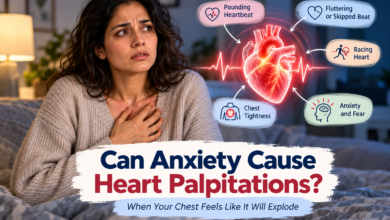
Can Anxiety Cause Heart Palpitations?
Many people wonder, can anxiety cause heart palpitations, especially when intense stress makes the chest feel frighteningly unfamiliar? Have you ever been sitting quietly when your heart suddenly begins pounding so hard that you wonder whether something terrible is happening? Your breathing changes. Perhaps your hands begin…
Read More » -
Mental Health
Why Is Anxiety Worse in the Morning?
BBH · Bio and Brain Health Lived Experience + Mental Health Education This article is educational and does not diagnose or replace medical or mental-health care. The Short Answer: Why Is Anxiety Worse in the Morning? Why is anxiety worse in the morning? For some people, waking…
Read More » -
Mental Health
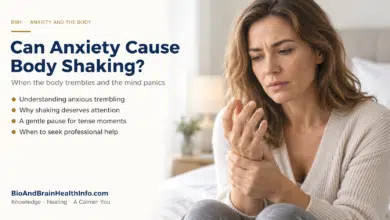
Can anxiety cause body shaking?
Can Anxiety Cause Body Shaking? When the body trembles and the mind panics BBH · Bio and Brain Health · Lived experience. Not medical advice. The first time it happened after a stressed day, I came home and my body started shaking. I did not have a…
Read More » -
AI & CBT
How to Stop Being Defensive in a Relationship
If you keep asking yourself how to stop being defensive in a relationship, you are probably not trying to be difficult. You may be trying to protect yourself from feeling blamed, rejected, misunderstood, or emotionally unsafe. Defensiveness often shows up during conflict when your body reacts faster…
Read More » -
AI & CBT
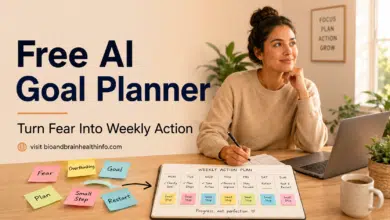
Free AI Goal Planner for Fear and Overthinking
You may have goals, dreams, and ideas for a better life, but still feel blocked when it is time to execute them. Fear, overthinking, inconsistency, and confusion can make even simple goals feel heavy. This free AI goal planner is designed to help you use an AI…
Read More » -
Mental Health
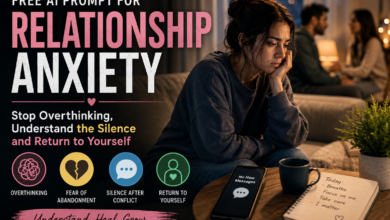
Free AI Prompt for Relationship Anxiety
Relationship anxiety can make silence after conflict feel like rejection, especially when someone suddenly becomes emotionally distant or appears to respond normally to others while ignoring you. In that moment, relationship overthinking may begin: you replay conversations, compare yourself with other people, search for closure and question…
Read More » -
Mental Health
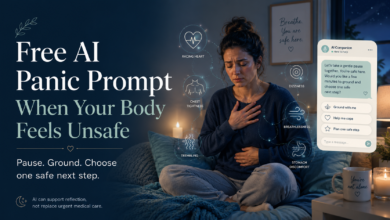
Free AI Panic Prompt When Your Body Feels Unsafe
When panic takes over, your heartbeat may feel too fast, your breathing may feel difficult, and your mind may convince you that something terrible is about to happen. This free AI prompt for panic attack support gives you one calm, structured tool to use when thinking clearly…
Read More » -
Mental Health
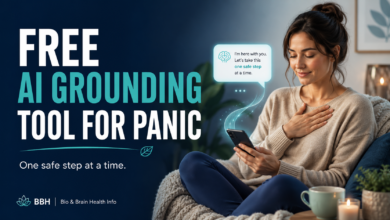
Grounding Techniques for Panic Attacks: Free AI Tool
Panic can make your heart race, your chest feel tight, your body shake, and your breathing feel difficult. In that moment, long instructions may be impossible to follow for Panic attack grounding techniques – Try – 5-4-3-2-1 grounding technique. This guide explains practical grounding techniques for panic…
Read More » -
Mental Health
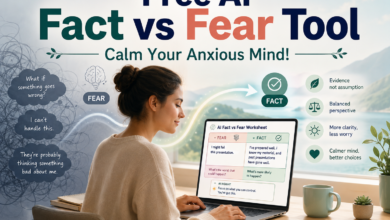
Free AI Fact vs Fear Tool: Calm Your Anxious Mind!
The free AI Fact vs Fear Tool helps you separate confirmed facts from anxious predictions when fear feels more convincing than the evidence. A delayed reply, unfamiliar body sensation, work meeting, or unexpected bill can quickly trigger overthinking and make uncertainty feel like danger. This practical guide…
Read More » -
Mental Health
25 Free AI ChatGPT Prompts for Anxiety
You know that something feels wrong, but you may not understand what is happening or why. Your thoughts may be racing. Your chest, stomach, shoulders or jaw may feel tense. You may be caught between anxiety and overthinking, repeatedly searching for an answer that will finally make…
Read More » -
Relationship
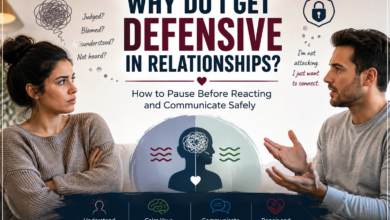
Why Do I Get Defensive in Relationships?
If you keep asking, “why do I get defensive in relationships?”, this blog will help you understand what may be happening beneath the reaction. Being defensive in relationships often starts when you feel judged, blamed, corrected, misunderstood, or emotionally unsafe. Your body may react before your mind…
Read More » -
Brain Mastery
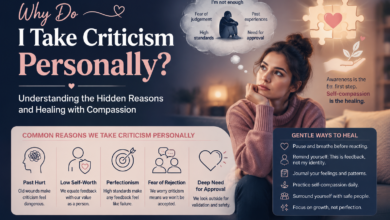
why do I take criticism personally
If you often ask, “why do I take criticism personally,” especially at work, you are not alone. A small correction from a manager, client, or coworker can sometimes feel like rejection, failure, or proof that you are not good enough. This is where feedback anxiety at work…
Read More »