What Is Depression? Why It Feels Like More Than Sadness
Depression Explained: Why You Feel Empty, Exhausted, and Unable to Function

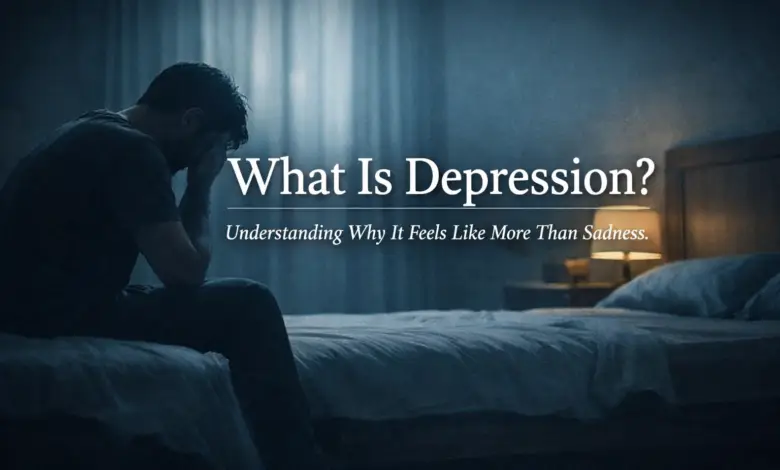
If you have been searching what is depression, trying to understand your own emotional pain, or wondering whether what you feel is normal sadness or something deeper, this blog will help you understand the reality behind depression.
Thank you for reading this post, don't forget to subscribe!We will explore depression symptoms, explain the difference between depression vs sadness, break down the hidden signs of depression many people miss, and describe what depression feels like emotionally, mentally, and physically—so you can better understand yourself or someone you care about with greater clarity, compassion, and practical awareness.
What Is Depression? Understanding Depression Beyond Sadness
When people ask what is depression, they are often expecting a simple answer—usually something like “depression means feeling very sad.” But that explanation misses the lived reality of what depression actually is. Depression is far more than sadness. For many people, depression feels less like crying and more like slowly losing access to your own mind, energy, motivation, and sense of self.
Understanding what depression is matters because countless people suffer silently while believing they are simply lazy, weak, ungrateful, or broken. They may know something is wrong, yet still blame themselves because the world around them often misunderstands what depression looks like. This is one reason many people live with depression symptoms for months or years before ever asking for help.
At its core, depression is a complex mental health condition that affects emotions, thoughts, physical energy, motivation, and daily functioning. It can reduce your ability to work, care for yourself, make decisions, connect socially, and feel hope about the future. It does not always appear as visible sadness. Sometimes it appears as emotional numbness, exhaustion, emptiness, irritability, fear, or a persistent inability to function the way you once could.
Many people searching for depression meaning are not looking for a dictionary definition—they are trying to understand why life suddenly feels heavier than it should. Why ordinary tasks feel impossible. Why their mind keeps shutting down even when responsibilities continue piling up. Depression often feels like being trapped inside yourself while watching your life slowly lose momentum.
Depression Meaning and Clinical Definition
From a clinical perspective, depression is a mood disorder involving persistent low mood, loss of interest or pleasure, and changes in functioning that continue beyond temporary emotional sadness. But while this medical definition is accurate, it often fails to explain what depression feels like in practical human terms.
Depression can affect:
- Emotional state
- Motivation and drive
- Cognitive clarity
- Sleep and appetite
- Physical energy
- Stress tolerance
- Self-perception
- Ability to perform basic daily tasks
This is why depression symptoms often extend beyond emotions alone. A person with depression may feel physically heavy, mentally foggy, emotionally disconnected, and unable to access motivation even for things they logically know matter.
One of the most painful parts of depression is that many sufferers can still intellectually understand what they “should” do—go to work, shower, respond to messages, exercise, solve problems—but feel neurologically incapable of translating that understanding into action. This creates a cruel internal conflict where the person knows what needs to happen but feels trapped behind invisible resistance.
That experience is not stupidity. It is not weakness. It is not moral failure. It is often a real sign that the system is overwhelmed.
Why Depression Is More Than Feeling Sad
A major misunderstanding in mental health education is the belief that depression vs sadness is simply a matter of intensity—as if depression is just “extreme sadness.” In reality, sadness and depression are not the same thing.
Sadness is a natural emotional response to disappointment, grief, loss, or pain. It usually rises in response to something specific and gradually changes over time. Depression, however, often becomes broader and more persistent. It begins affecting the entire way a person experiences life, motivation, energy, and self-perception.
The difference between sadness vs depression is not just emotional depth—it is functional impairment.
A sad person may still:
- Complete responsibilities
- Care for themselves
- Feel moments of relief
- Remain hopeful beneath the pain
A depressed person may:
- Struggle to get out of bed
- Lose interest in food, music, or hobbies
- Withdraw from people entirely
- Feel emotionally numb instead of openly sad
- Experience constant mental fatigue
- Lose belief that things can improve
This is why understanding the difference between depression and sadness is so important. Depression changes how a person functions, not just how they feel.
What Depression Feels Like Internally
Many people ask what depression feels like because they suspect something is wrong but cannot explain their internal state. Depression rarely feels identical for everyone, but many sufferers describe a similar emotional pattern: heaviness, emptiness, exhaustion, and disconnection from life.
In my own experience, depression did not feel like simple sadness. It felt like my mind and body had shut down under pressure I could no longer process. During one of the hardest periods of my life—while dealing with financial collapse, overwhelming responsibility, betrayal, and emotional isolation—I reached a point where even basic functioning felt impossible.
I was not simply “upset.”
I was exhausted in a way sleep could not fix.
I stayed in bed for long periods, withdrew from people, lost interest in food and entertainment, and felt trapped in constant internal fear. My heart would race so heavily that I sometimes felt convinced I might collapse from a heart attack. My mind kept searching for solutions, but the more I forced myself to think, the more mentally blocked I became.
What made it worse was this: logically I knew I had rebuilt my life before. I knew on paper that I could recover again. But depression creates a strange split between logic and emotional access. You may intellectually know hope exists while feeling completely unable to emotionally believe it.
That is one of the cruelest parts of what being depressed feels like—you can understand reality rationally while your nervous system refuses to let you feel it.
Emotional Symptoms of Depression Often Hidden From Others
Not all signs of depression look dramatic from the outside. Some of the most severe depression symptoms are internal and invisible.
A person may appear quiet, distant, lazy, distracted, or unmotivated while privately experiencing:
- Constant hopelessness
- Emotional numbness
- Internal emptiness
- Chronic fear or dread
- Self-hatred
- Repetitive negative thought loops
- Feeling trapped inside one’s own mind
- Loss of meaning or purpose
Because these experiences are often hidden, many depressed people receive criticism instead of compassion. They are told to “try harder,” “stop overthinking,” or “be grateful.” Unfortunately, this often deepens shame and worsens the condition.
One of the most damaging misunderstandings is when people interpret depression symptoms as laziness. Many depressed individuals desperately want to function. They want to shower, work, clean, socialize, and rebuild—but feel unable to generate the internal energy required to begin.
That inability is not always lack of discipline. Sometimes it is profound psychological and physiological shutdown.
Physical and Mental Symptoms of Depression Can Affect the Whole Body
Depression is not just emotional. It often affects the entire nervous system and body.
Common depression symptoms include:
- Persistent fatigue
- Heavy limbs / body exhaustion
- Sleep disruption
- Appetite changes
- Brain fog
- Difficulty concentrating
- Panic-like physical sensations
- Muscle tension / aches
- Slowed thinking / reaction time
For some people, depression feels less like sadness and more like the body is running in survival mode for so long that it eventually stops functioning normally.
This is one reason many people with depression struggle to explain themselves. They may not say, “I feel sad.” Instead, they say:
- “I feel tired all the time.”
- “My body won’t move.”
- “My brain feels shut off.”
- “Everything feels heavy.”
- “Even small tasks overwhelm me.”
These are often overlooked warning signs of depression, especially when someone is high-functioning enough to hide their suffering.
Why Depression Is Often Mistaken for Laziness
One of the most damaging misconceptions surrounding depression is the belief that depressed people simply lack discipline. Many people see someone lying in bed, avoiding responsibilities, delaying simple tasks, or struggling to maintain routines and conclude that the person has become lazy. But for many sufferers, this interpretation is not only wrong—it deepens the shame that already fuels depression.
A person living with depression often does not lack desire. They lack access to the internal energy, emotional regulation, and nervous system capacity required to act on that desire.
This distinction matters.
During one of my own lowest periods, I remember being unable to do something as basic as taking a bath for nearly twenty days. Not because I did not want to. Not because I did not care. Not because I had “given up.” I wanted desperately to function normally. I knew I needed to shower. I kept telling myself to get up and go. But every time I tried to push myself, I felt more emotional resistance, more heaviness, and more internal struggle.
Even when I explained this to a doctor, I was told I had become lazy.
That experience taught me how deeply misunderstood signs of depression can be—even by people who should understand them.
When your body and mind are in shutdown, simple tasks can feel neurologically impossible. The problem is not always discipline. Sometimes the system itself is overloaded.
Wanting to Function But Feeling Unable to Move
One of the most painful parts of depression is the invisible conflict between intention and action.
Many depressed people live in a daily state of:
- Wanting to improve
- Wanting to get up
- Wanting to fix their life
- Wanting to care for themselves
Yet feeling physically and mentally unable to begin.
This is one reason what depression feels like is so hard to explain to others. From the outside, it may appear that the person is choosing inaction. But internally, many people are fighting constant mental battles just to complete ordinary tasks.
You may spend an hour trying to convince yourself to:
- Shower
- Answer one message
- Clean one room
- Eat one meal
- Open your laptop
- Leave the bed
And the more you pressure yourself, the more overwhelmed your system becomes.
This creates a brutal cycle:
- Depression reduces functioning
- You fail to meet expectations
- You blame yourself
- Shame increases
- Nervous system stress increases
- Functioning drops further
Without understanding this pattern, many sufferers start believing the depression itself is proof they are weak.
It is not.
Depression, Executive Dysfunction, and Nervous System Shutdown
To understand depression symptoms properly, it helps to understand that depression often affects more than mood—it can affect executive functioning and nervous system regulation.
Executive functioning includes your ability to:
- Start tasks
- Plan actions
- Prioritize
- Maintain attention
- Organize thoughts
- Follow through consistently
When depression becomes severe, these systems can become impaired. This is why someone may know exactly what needs to be done but still feel unable to start.
For many people, depression also overlaps with prolonged nervous system stress. When the body has remained under chronic overwhelm for too long—through trauma, financial pressure, emotional pain, burnout, or constant internal stress—it may shift toward shutdown states sometimes associated with freeze or hypoarousal.
In simple terms:The system becomes so overwhelmed that it conserves energy by reducing emotional, mental, and physical output.
This does not explain every case of depression, but for many people it helps explain why depression can feel like paralysis rather than sadness.
Why High-Functioning People Can Still Be Depressed
Another dangerous myth is that successful or productive people cannot be depressed.
Many people assume: “If you can still work, smile, socialize, or achieve things, you must not really be depressed.”
This is false.
Some people experience what is often informally called high-functioning depression—where they continue meeting responsibilities externally while suffering internally.
They may:
- Keep working
- Run businesses
- Care for family
- Maintain appearances
- Socialize selectively
While privately experiencing:
- Exhaustion
- Emptiness
- Constant negative thoughts
- Panic and fear
- Emotional numbness
- Severe self-criticism
These hidden depression symptoms often go unnoticed because society tends to validate visible suffering more than internal suffering.
A person can appear composed while privately fighting for survival.
This is why many people delay seeking help. They think:
- “If I can still function, maybe it isn’t serious.”
- “Others have it worse.”
- “I should just push through.”
But functioning externally does not mean someone is mentally well.
Signs of Depression Many People Miss
Not all signs of depression involve crying, dramatic sadness, or visible breakdowns. Some of the most overlooked warning signs of depression appear subtle at first.
Behavioral Signs of Depression
- Increasing isolation
- Avoiding calls/messages
- Staying in bed excessively
- Neglecting hygiene
- Losing interest in hobbies
- Reduced appetite or overeating
- Declining work performance
- Procrastination beyond normal levels
Cognitive Signs of Depression
- Constant overthinking
- Repetitive hopeless thought loops
- Feeling mentally blocked
- Difficulty making decisions
- Inability to imagine positive future outcomes
Emotional Signs of Depression
- Numbness instead of sadness
- Feeling disconnected from life
- Irritability or anger
- Persistent shame
- Feeling like a burden
Recognizing these early signs of depression matters because many people wait until their suffering becomes severe before acknowledging what is happening.
Why Self-Blame Makes Depression Worse
One of the most destructive habits during depression is turning your suffering into evidence against yourself.
Many people begin thinking:
- “Why can’t I handle simple things?”
- “Other people have worse lives than me.”
- “I am wasting my potential.”
- “I’m weak for feeling this way.”
- “I should be stronger by now.”
But depression often already includes harsh self-criticism. Adding more blame only increases the internal burden.
A critical truth I learned through my own experience is this: You cannot shame a dysregulated system into healing.
Pressure may create short-term bursts of forced action, but long-term recovery usually requires understanding, support, regulation, and gradual rebuilding—not endless self-attack.
That does not mean avoiding responsibility. It means understanding that sustainable recovery often begins when compassion replaces shame.
Depression Is Not Permission to Give Up—But It Is a Signal to Slow Down
Understanding depression compassionately does not mean romanticizing it or surrendering to it. Depression still requires action, support, and often treatment. But action taken through hatred is rarely sustainable.
Depression often improves through gradual rebuilding:
- Small routines
- Consistent self-care
- Reduced shame
- Medical/professional support
- Nervous system regulation
- Meaningful connection
- Step-by-step re-engagement with life
When I began recovering, progress did not happen through one dramatic breakthrough. It happened through small acts of rebuilding—taking a bath, preparing food, caring for my skin, slowly reintroducing structure into my day. Tiny actions became proof that function could return.
That is why one of the most important truths I tell people is this:
Do not demand your healed self from your hurting self overnight.
Healing often begins with one small repeated action.
What Causes Depression? Why It Rarely Has One Simple Root
One of the biggest mistakes people make when trying to understand what is depression is assuming there must be one clear reason behind it. They search for a single explanation—one trauma, one event, one weakness, one mistake, one chemical imbalance. But for many people, depression develops from multiple pressures accumulating over time until the mind and body can no longer compensate.
This is why asking, “What caused my depression?” often has no simple answer.
Depression can emerge from a combination of emotional, psychological, biological, environmental, and neurological factors. For one person, depression may begin after grief or heartbreak. For another, it may build slowly through years of chronic stress, burnout, trauma, loneliness, or suppressed emotional pain. For others, medical issues or biological predisposition may play a significant role.
Understanding this complexity matters because many people blame themselves for not being able to identify one obvious cause. In reality, depression often forms gradually when many unresolved burdens begin stacking together.
Long-Term Stress and Nervous System Overload
For many people, depression symptoms begin after prolonged periods of stress.
When the nervous system remains under pressure for months or years—through financial hardship, emotional conflict, family burden, burnout, trauma, uncertainty, or chronic survival mode—the body may eventually stop responding with anxiety and instead move toward collapse.
At first, prolonged stress often looks like:
- Overthinking
- Hypervigilance
- Panic
- Sleep problems
- Constant tension
- Racing thoughts
But when overwhelm continues too long, many people stop feeling “activated” and instead start feeling shut down.
This is where depression can begin feeling less like panic and more like:
- Exhaustion
- Emptiness
- Emotional numbness
- Lack of motivation
- Disconnection from life
- Inability to function
For some people, depression is not the first stage of suffering—it is what happens after the system has been overwhelmed for too long.
Trauma, Suppressed Pain, and Emotional Burden
Another common contributor to depression symptoms is unresolved emotional pain.
Trauma does not always mean one catastrophic event. Trauma can also involve repeated emotional injuries, chronic instability, neglect, betrayal, emotional invalidation, or years of living in environments where your nervous system never feels safe.
When pain is continually suppressed instead of processed, it often does not disappear. It remains in the system.
Many people spend years:
- Ignoring emotional pain
- Staying busy to avoid feeling
- Suppressing grief
- Minimizing their suffering
- Pretending they are fine
- Over-functioning despite inner collapse
Eventually the emotional burden can become too heavy to keep carrying.
In these cases, depression may partly reflect the weight of unprocessed pain finally overwhelming the system.
Depression Can Also Come From Identity Conflict and Life Misalignment
Sometimes depression develops not only from pain—but from living in prolonged conflict with yourself.
A person may slowly become depressed when they spend years:
- Living for others’ expectations
- Staying in the wrong relationship
- Working in a life they hate
- Betraying their values repeatedly
- Hiding who they really are
- Pursuing goals disconnected from meaning
This does not mean depression is simply a mindset problem. It means emotional suffering sometimes intensifies when a person’s outer life remains chronically misaligned with their inner reality.
For many people, part of healing involves not only treating symptoms—but honestly asking:
- Am I living in constant survival mode?
- Am I carrying unresolved emotional pain?
- Have I built a life that no longer fits who I am?
- Am I exhausted from pretending to be okay?
These are not the only causes of depression, but they can be deeply relevant for some individuals.
Spiritual Reflection: What the Bhagavad Gita Teaches About Mental Collapse and Inner Darkness
From a spiritual perspective, teachings in the Bhagavad Gita offer a powerful lens for understanding why periods of emotional collapse can feel so disorienting. In the opening chapter, Arjuna experiences overwhelming despair, paralysis, confusion, trembling, hopelessness, and inability to act—even though he is a capable warrior who logically understands his duty. His body shakes, his mind becomes clouded, and he loses the will to move forward. This mirrors something many people experience during depression: the painful gap between knowing what must be done and feeling unable to do it.
In Bhagavad Gita 2.62–63, Krishna explains how prolonged mental attachment, fear, and inner conflict can cloud judgment and eventually destroy clarity:
“From attachment comes desire, from desire comes anger, from anger arises delusion; from delusion comes loss of memory, from loss of memory comes destruction of discrimination, and from destruction of discrimination one falls.”
While the Gita is not a medical text and should never replace treatment for depression, many people find comfort in this perspective: that when the mind is overwhelmed, clarity itself becomes disturbed.
In this view, depression is not proof that you are weak or broken—it may be a period where pain, fear, attachment, exhaustion, and inner conflict have clouded your ability to access your natural strength. Spiritual reflection can help some people understand their suffering with less shame, while psychological and medical support help restore practical stability.
Biological and Medical Factors Matter Too
It is equally important to understand that not all depression is purely psychological.
Biological and medical contributors can play a major role, including:
- Genetic predisposition
- Brain chemistry differences
- Hormonal imbalances
- Thyroid dysfunction
- Vitamin deficiencies
- Chronic illness
- Medication side effects
- Neurological conditions
This is why responsible discussion of what is depression must remain balanced. Depression is not only trauma, only mindset, only spiritual misalignment, or only brain chemistry. For many people, it is a combination of factors.
That is also why medical evaluation can be important—especially when depression symptoms are severe, persistent, or worsening.
Depression Often Requires Medical and Professional Support
One of the most important truths I learned personally is this:
Depression may improve with awareness and self-work, but severe depression often requires more than willpower.
There is still stigma around seeking professional help, but depression can be serious and should not be minimized. Depending on severity, support may include:
- Therapy / counseling
- Psychiatric evaluation
- Medication
- Medical testing for underlying contributors
- Trauma-focused treatment
- Structured support systems
Medication alone may not solve every root issue—but for many people it reduces symptom severity enough to make healing work possible. There is no shame in needing medical support.
In my own experience, medication helped—but I also learned that depression recovery is often a long process when someone is fighting alone without support. Medicine can reduce the weight, but rebuilding still takes time, patience, and often human connection.
Why Support Matters More Than Most People Realize
One reason I later created a support community is because I learned firsthand how dangerous and isolating depression can feel when you believe you must survive it alone.
Depression often convinces people:
- No one understands
- You are a burden
- Your pain is embarrassing
- You should solve it yourself
- Others will judge you if you speak honestly
But healing is significantly harder in isolation.
Sometimes what a depressed person needs most is not advice—but safe connection. A place where they can speak honestly without fear of judgment. A place where they can be understood while their nervous system slowly relearns safety.
Support does not replace medical care—but it can dramatically improve recovery.
How Depression Recovery Often Begins
Recovery from depression rarely happens through one dramatic breakthrough. More often, it begins with small repeated acts of rebuilding.
When my own system slowly started stabilizing, recovery did not begin with huge motivation. It began with awareness, support, and very small actions:
- Taking one bath
- Preparing one proper meal
- Caring for my body again
- Reintroducing routine
- Reducing constant thought spirals
- Allowing myself rest without shame
- Rebuilding trust in my ability step by step
This is one of the most important lessons I can offer anyone struggling:
Depression recovery is often slow because the system must regain safety before it regains full function.
You do not heal depression by demanding perfection from yourself overnight.
You heal by rebuilding capacity gradually.
Final Thoughts: If You Are Struggling With Depression
If someone struggling with depression reads this, I want them to understand something clearly:
You are not lazy.
You are not broken.
You are not less intelligent, less capable, or less worthy because you are struggling.
Depression can make simple tasks feel impossible. It can make you doubt your strength, your value, your future, and your identity. It can convince you that because you cannot function normally right now, you have somehow failed at life.
That is not true.
Stop turning your suffering into evidence against yourself.
Yes—depression should be taken seriously.
Yes—it may require medical care.
Yes—it may take time to heal.
But your current struggle is not proof that your life is over.
Take small steps.
Rest when needed.
Seek support.
Accept treatment if necessary.
And remember:
If you have rebuilt before, you can rebuild again.
Even if your mind cannot fully believe that yet.
FAQ Section About What Is Depression?
1. What is depression in simple words?
Depression is a mental health condition that affects mood, energy, motivation, thinking, and daily functioning. It is more than sadness and can impact both emotional and physical well-being.
2. What does depression feel like?
Depression often feels like emotional heaviness, emptiness, exhaustion, numbness, hopelessness, and difficulty functioning in daily life.
3. How is depression different from sadness?
Sadness is a temporary emotional response to difficult events, while depression is more persistent and often affects motivation, functioning, energy, and overall quality of life.
4. What are the common signs of depression?
Common signs of depression include fatigue, hopelessness, social withdrawal, sleep changes, appetite changes, brain fog, low motivation, and loss of interest in activities.
5. Can depression make you physically tired?
Yes. Depression often causes physical exhaustion, heavy limbs, low energy, sleep disruption, and body fatigue even without heavy physical activity.
6. Why do depressed people struggle with basic tasks?
Depression can impair motivation, concentration, executive functioning, and nervous system regulation, making simple tasks feel overwhelming.
7. Can someone be depressed and still function normally?
Yes. Some people experience high-functioning depression, where they maintain work or responsibilities externally while suffering internally.
8. What causes depression?
Depression can result from many factors including chronic stress, trauma, nervous system overload, burnout, loneliness, medical issues, and biological predisposition.
9. Does depression always need medication?
Not always. Some people improve with therapy, lifestyle changes, and support, while others benefit significantly from medication. Treatment depends on severity and individual needs.
10. Can depression get better?
Yes. With proper support, treatment, self-awareness, and gradual rebuilding, many people recover or significantly improve from depression.
People Also Ask About What Is Depression ?
1. How do I know if I am depressed or just sad?
Sadness is usually temporary and tied to a specific event, while depression is more persistent and often affects motivation, energy, concentration, and daily functioning. If your emotional state is lasting for weeks and interfering with life, it may be more than sadness.
2. Why does depression make everything feel difficult?
Depression can reduce mental energy, impair concentration, affect nervous system regulation, and lower motivation, making even simple tasks feel overwhelming or physically exhausting.
3. Can depression cause physical pain and exhaustion?
Yes. Depression can contribute to fatigue, body heaviness, sleep disruption, headaches, muscle aches, digestive changes, and general physical exhaustion.
4. What are hidden signs of depression?
Hidden signs of depression may include social withdrawal, neglecting hygiene, emotional numbness, irritability, procrastination, overthinking, fatigue, and loss of interest in things once enjoyed.
5. Can depression affect decision-making?
Yes. Depression often impairs concentration, executive functioning, confidence, and mental clarity, which can make decision-making significantly harder.
6. Why do depressed people isolate themselves?
Many people isolate during depression because of emotional exhaustion, shame, hopelessness, low social energy, fear of burdening others, or lack of motivation.
7. Is depression caused by trauma or brain chemistry?
Depression can involve many factors, including trauma, chronic stress, nervous system dysregulation, biological predisposition, medical issues, and environmental pressures. It is often caused by multiple interacting factors.
8. How long can depression last?
Depression can last weeks, months, or longer depending on severity, underlying causes, and access to treatment. Recovery time varies from person to person.
9. Can lifestyle changes help depression?
Lifestyle changes such as exercise, sleep improvement, nutrition, stress reduction, social support, and routine-building can help many people, though severe depression may require professional treatment as well.
10. What should I do if I think I have depression?
If you think you may have depression, consider speaking with a mental health professional or medical provider for evaluation and support. Early intervention can improve recovery outcomes.
References / Source Suggestions
Use these as authority references at end of blog:
- National Institute of Mental Health – Depression
https://www.nimh.nih.gov/health/topics/depression - World Health Organization – Depressive Disorder
https://www.who.int/news-room/fact-sheets/detail/depression - American Psychiatric Association – What Is Depression?
https://www.psychiatry.org/patients-families/depression/what-is-depression - Mayo Clinic – Depression Overview
https://www.mayoclinic.org/diseases-conditions/depression/symptoms-causes/syc-20356007 - Harvard Health – Understanding Depression
https://www.health.harvard.edu/mind-and-mood/what-causes-depression
Medical Safety Disclaimer
If you are struggling with depression and need safe support, join our free Saturday Zoom Healing Space…
This article is educational and reflective in nature and is not a substitute for medical diagnosis or treatment.