How To Calm Emotions Naturally (Emotions Feel Out of Control)
Why Your Emotions Feel Out of Control (And How to Calm Your Mind Naturally)

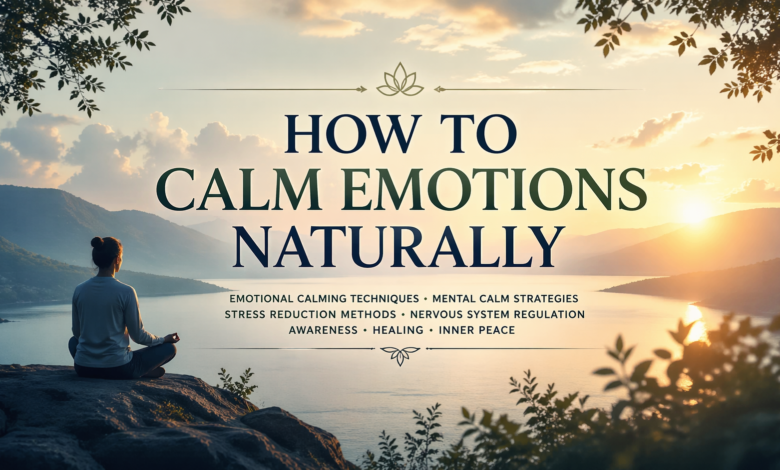
There are moments when emotions feel too strong to handle. A painful conversation, rejection, stress, or inner pressure can suddenly create emotional overwhelm that affects both the mind and body. Your breathing changes, thoughts race, and it becomes difficult to think clearly.
Thank you for reading this post, don't forget to subscribe!Many people search for how to calm emotions naturally, but most advice ignores the deeper connection between emotional reactions, body tension, and nervous system activation.
👉 This blog explores practical emotional calming techniques, mental calm strategies, stress reduction methods, and nervous system regulation to help you understand why emotions feel out of control.
Instead of suppressing feelings or forcing positivity, you will learn how awareness, breathing, and emotional observation create real inner calm.
If you struggle with emotional overload, overthinking, anger, sadness, or internal pressure, this blog will help you understand what is happening beneath the surface and guide you toward a calmer, more stable emotional response.
How to Calm Your Mind When Emotions Feel Out of Control
There are moments in life when emotions do not arrive quietly. They come like a sudden storm — fast, heavy, and difficult to understand.
A painful conversation, rejection, stress, disappointment, or deep family conflict can create emotional pressure that feels bigger than the situation itself. In those moments, the mind becomes loud, the body becomes tense, and peace feels far away.
Many people search for how to calm emotions naturally because they are not just looking for advice — they are looking for relief. They want to know why emotions suddenly become so strong, why their chest feels tight, why thoughts replay endlessly, and why calm feels impossible to reach. Most people assume emotions are only mental, but emotional reactions are deeply connected to the body.
This is why emotional calming techniques matter.
They are not simply “relaxation methods.”
They are practical ways to help the body stop reacting in survival mode.
When the body calms, the mind begins to follow. This is also where mental calm strategies become important because calming thoughts alone rarely works if the nervous system is still activated.
👉Many people try stress reduction methods by distracting themselves, avoiding the problem, or forcing positive thinking.
👉But emotional pain does not disappear simply because you ignore it. It often waits silently beneath the surface. True healing begins when you understand what your body is trying to protect.
Understanding nervous system regulation can change how you see emotional overwhelm.
Instead of asking, “What is wrong with me?”
you begin asking, “What is happening inside me?”
That question creates awareness instead of self-judgment.
Read Also: why emotional reactions feel stronger than expected
How to Calm Emotions Naturally When Your Body Feels Overwhelmed
Most people believe emotions begin in the mind.
But emotions often begin in the body first.
You may notice:
- Heat rising in the chest
- Tightness in the stomach
- Fast breathing
- Shaky hands
- Pressure behind the eyes
- Sudden emotional intensity
These reactions are not weakness.
They are survival responses.
👉 When the body senses emotional danger — criticism, rejection, shame, fear, humiliation, abandonment — it activates a protective system inside you. This system reacts before logic has time to understand the situation.
That is why learning how to calm emotions naturally is not about “thinking differently” first.
It begins with understanding the body.
Why Emotional Reactions Feel Stronger Than Logic
Imagine touching something hot.
You pull your hand away before thinking.
Emotions work similarly.
The nervous system reacts quickly because emotional pain can feel like a threat to identity, safety, or belonging.
A painful sentence from someone close can feel like a physical wound.
The body responds by preparing to:
- Fight
- Defend
- Escape
- Shut down
This is where nervous system regulation becomes essential.
Without calming the body, the mind keeps repeating the same emotional loop.
You cannot force peace while your body believes it is under attack.
This is why emotional calming techniques are more powerful than emotional suppression.
👉 Suppression says: “Do not feel.”
👉 Regulation says: “Feel safely without drowning in it.”
Emotional Calming Techniques That Work During Intense Moments
When emotions become intense, people often try to solve the situation immediately.
They want answers.
They want validation.
They want to defend themselves.
But strong emotions rarely calm through argument.
They calm through slowing the body.
Emotional Calming Techniques for Immediate Relief
Here are practical emotional calming techniques that can reduce emotional overload in the moment:
1. Slow Your Breathing Before Your Thinking
One of the strongest stress reduction methods is slowing the breath.
When emotions rise, breathing becomes shallow.
Try this:
- Inhale slowly for 4 seconds
- Hold for 4 seconds
- Exhale for 6 seconds
- Repeat 5–10 times
This tells the nervous system: “You are safe right now.”
This simple practice supports nervous system regulation and lowers emotional intensity.
2. Name What You Feel Without Judgment
Instead of saying: “I should not feel this.”
Try saying: “I feel hurt.”
“I feel rejected.”
“I feel angry.”
Naming emotions reduces internal chaos.
This is one of the most overlooked mental calm strategies because awareness reduces confusion.
3. Pause Before Reacting
A pause creates emotional distance.
You do not need to answer immediately.
You do not need to defend yourself instantly.
The pause protects you from reacting from pain.
This is not avoidance.
It is emotional intelligence.
Learning how to calm emotions naturally often begins with giving yourself permission to stop reacting instantly.
The Moment Awareness Interrupts Emotional Pain
There are moments when emotional pain feels unbearable.
A sentence, a memory, or a conflict touches something deeper than the current situation.
In those moments, emotional overwhelm feels like fire moving through the body.
The heart beats faster.
Thoughts become loud.
Breathing becomes heavy.
And for a few seconds, reaction feels inevitable.
But sometimes, something else happens.
Awareness appears.
Like standing in the middle of a storm and suddenly noticing that the sky still exists above it.
That awareness creates space.
Read Also: emotional triggers explained
Why Awareness Is One of the Most Powerful Mental Calm Strategies
Awareness changes the question.
Instead of asking: “How do I stop feeling this?”
You begin asking: “Why is this affecting me so deeply?”
That shift creates distance between you and the emotion.
This is where mental calm strategies become deeper than motivation.
You stop fighting emotions.
You begin observing them.
Observation reduces emotional pressure.
This is not emotional detachment in a cold way.
It is conscious observation.
This awareness also supports stress reduction methods because emotional energy no longer controls every decision.
Peace does not always come from changing the situation. It often comes from no longer allowing the situation to define you.
Nervous System Regulation and Emotional Healing
People often believe calmness is something you force.
But calmness is something the body allows when it feels safe.
This is why nervous system regulation matters.
Your body remembers emotional experiences.
It remembers:
- Rejection
- Criticism
- Shame
- Fear
- Loneliness
- Emotional instability
When similar experiences happen again, the body reacts automatically.
This explains why emotional responses sometimes feel “too big” for the moment.
The body is not reacting only to now.
It is reacting to memory.
Why Stress Reduction Methods Must Include the Body
Many stress reduction methods fail because they only focus on changing thoughts.
But stress is physical.
Stress lives in:
- Breathing patterns
- Muscle tension
- Heart rate
- Nervous system activation
This is why walking, slow breathing, silence, grounding, and body awareness work so well.
They help create nervous system regulation, which allows emotional healing to begin.
When your body feels safe, emotions become easier to understand.
Read Also : Why Do I Overreact Emotionally (And How to Stop It)
How to Calm Emotions Naturally Through Awareness and Surrender
There comes a moment when fighting emotions becomes exhausting.
- You stop trying to prove yourself.
- You stop trying to explain your pain.
- You stop chasing understanding from people who cannot give it.
And slowly, something shifts.
👉 You realize: Peace is not found by controlling everyone else. Peace is found by returning to yourself.
Spiritual Awareness as a Mental Calm Strategy
Many spiritual teachings describe life as a journey of learning, karma, connection, and awareness.
When emotions become overwhelming, this perspective can help create space.
You begin seeing situations differently.
Not as punishment.
But as experience.
This does not remove pain.
But it changes your relationship with pain.
This is one of the deepest mental calm strategies because it shifts identity away from emotional suffering.
👉 You stop becoming every emotion. You begin witnessing emotions. And that witness creates peace.
Learning how to calm emotions naturally is not about becoming emotionless.
It is about becoming conscious enough to stay steady while emotions pass through.
That is where healing begins.
How to Build Long-Term Emotional Stability Without Losing Yourself
Many people believe emotional control means becoming silent, cold, or emotionally distant.
But emotional stability is different.
Emotional stability means you can feel deeply without becoming trapped inside the feeling.
It means emotions still exist, but they no longer control every thought, reaction, or decision.
This is where learning how to calm emotions naturally becomes a long-term practice instead of a temporary solution.
👉 People often search for quick fixes. They want immediate relief. But true emotional healing happens slowly through awareness, repetition, and self-understanding.
This is why emotional calming techniques matter beyond stressful moments.
They are not only tools for crisis.
They become habits for emotional balance.
When you consistently practice mental calm strategies, emotional pressure loses its intensity.
This is also where stress reduction methods become part of everyday life rather than emergency coping tools.
Long-term healing requires nervous system regulation, because a calm mind cannot exist inside a constantly activated body.
How to Calm Emotions Naturally Through Daily Emotional Awareness
Emotional calm is not created in one moment.
It is built through daily awareness.
Most people only try to regulate emotions after they feel overwhelmed.
But emotional strength grows before the emotional storm begins.
This is why how to calm emotions naturally should become a daily practice.
- You do not need hours of meditation.
- You do not need perfect emotional control.
- You only need small moments of awareness repeated consistently.
Daily Mental Calm Strategies That Create Emotional Stability
1. Notice Emotional Patterns Without Judgment
Many emotional reactions repeat.
The same situations trigger the same feelings.
The same wounds create the same emotional response.
This is why observing patterns is one of the strongest mental calm strategies.
Ask yourself:
- What situations trigger me most?
- What words affect me deeply?
- When do I feel emotionally unsafe?
Awareness creates clarity.
Clarity reduces emotional confusion.
2. Practice Emotional Pauses Every Day
You do not need conflict to practice regulation.
- Pause during normal moments.
- Pause before responding.
- Pause before reacting.
These small pauses strengthen nervous system regulation because they teach the body that immediate reaction is not always necessary.
This is one of the most powerful emotional calming techniques because it builds emotional patience.
3. Learn to Sit With Emotions Instead of Escaping Them
Many people avoid discomfort.
- They distract themselves.
- They stay busy.
- They escape silence.
- But healing begins when you stop running.
Learning how to calm emotions naturally means learning how to sit with emotions safely.
This is one of the deepest stress reduction methods because emotional resistance often creates more suffering than the emotion itself.
Read Also: emotional healing through awareness
Nervous System Regulation as a Daily Healing Practice
Most emotional overwhelm does not come from one event.
It comes from accumulated emotional stress.
Pressure builds slowly.
Unspoken feelings collect over time.
The body stores tension.
This is why nervous system regulation should become part of everyday emotional care.
Daily Habits That Support Nervous System Regulation
1. Slow Breathing During Stressful Moments
Breathing directly affects emotional intensity.
Slow breathing sends safety signals to the body.
This is one of the simplest stress reduction methods because it calms survival activation.
2. Move the Body Regularly
Walking, stretching, or slow movement helps release stored emotional tension.
Movement supports nervous system regulation because the body processes stress physically.
3. Create Small Moments of Silence
Silence is not emptiness.
Silence allows emotional noise to settle.
This creates space for mental calm strategies to work more effectively.
4. Reduce Emotional Overstimulation
Constant noise, social pressure, arguments, or emotional drama keep the nervous system activated.
Reducing emotional overload is one of the strongest emotional calming techniques because calmness grows in safe environments.
Stress Reduction Methods That Support Emotional Healing
Many people think stress only comes from work or responsibility.
But emotional stress also comes from:
- Overthinking
- Relationship conflict
- Internal pressure
- Fear of judgment
- Unresolved emotional pain
This is why stress reduction methods should support both body and mind.
Read Also: understand emotional awareness and detachment
Stress Reduction Methods That Create Long-Term Calm
1. Reduce the Need to Explain Yourself
Not every person will understand your emotional experience.
Trying to explain yourself constantly creates exhaustion.
This is one of the most powerful mental calm strategies because it protects emotional energy.
2. Stop Revisiting Emotional Pain Repeatedly
Reflection helps.
Rumination hurts.
There is a difference.
Learning how to calm emotions naturally means knowing when to stop replaying emotional pain.
3. Protect Your Inner Environment
Your emotional world matters.
What you watch, hear, read, and experience affects emotional balance.
This is why stress reduction methods include boundaries.
Healthy boundaries support nervous system regulation and emotional safety.
Mental Calm Strategies for Emotional Strength and Self-Trust
Emotional calm is not only about feeling better.
It is about trusting yourself again.
When emotions stop controlling every reaction, you begin feeling more stable.
You stop fearing your own mind.
You stop feeling trapped by emotional intensity.
This is where mental calm strategies become powerful.
Mental Calm Strategies That Build Self-Trust
1. Separate Feelings From Identity
You are not your worst emotional moment.
You are not your sadness.
You are not your anger.
This awareness supports how to calm emotions naturally because it creates emotional distance.
2. Observe Before Believing Every Thought
Not every thought is truth.
Strong emotions often create distorted thinking.
Observation creates clarity.
This is one of the strongest mental calm strategies because awareness interrupts emotional assumptions.
3. Accept That Healing Is Not Linear
Some days feel calm.
Some days feel heavy.
Healing moves in cycles.
This understanding supports emotional calming techniques because it removes pressure to be “perfectly healed.”
Emotional peace is not the absence of pain. It is the ability to remain steady while pain moves through you.
How to Calm Emotions Naturally by Returning to Yourself
At some point, emotional healing becomes less about fixing life and more about understanding yourself.
- You stop chasing emotional certainty.
- You stop forcing closure.
- You stop needing every situation to make sense.
This is where how to calm emotions naturally becomes a deeper life practice.
- You begin returning inward.
- You begin trusting awareness.
- You begin creating emotional safety inside yourself.
This is where nervous system regulation, stress reduction methods, mental calm strategies, and emotional calming techniques work together.
They create not just temporary calm.
But emotional steadiness.
And emotional steadiness becomes the foundation for peace.
Like a river that still moves, but no longer floods everything around it.
👉 That is what healing feels like. Not emotional silence. But emotional strength.
Read Also : Start Here – Your Journey to Mental Clarity & Emotional Healing
FAQ: How to Calm Emotions Naturally and Regain Emotional Control
1. How can I calm emotions naturally when I feel overwhelmed?
Learning how to calm emotions naturally begins with calming the body first. Slow breathing, emotional awareness, grounding exercises, and stepping away from stressful situations can reduce emotional overload. When the nervous system feels safe, emotional intensity decreases.
2. What are the best emotional calming techniques for strong emotions?
The most effective emotional calming techniques include deep breathing, naming emotions without judgment, slowing physical movement, pausing before reacting, and body awareness practices. These techniques help reduce emotional pressure without suppressing feelings.
3. Why do emotions feel out of control sometimes?
Emotions feel intense when the body enters survival mode. Stress, emotional triggers, unresolved pain, or nervous system activation can create strong reactions. This is why nervous system regulation is important for emotional balance.
4. What are simple mental calm strategies for overthinking?
Helpful mental calm strategies include observing thoughts without believing every thought, journaling, slowing breathing, limiting emotional overstimulation, and focusing on body awareness instead of mental arguments.
5. Which stress reduction methods work best for emotional overload?
Effective stress reduction methods include walking, breathwork, grounding exercises, reducing stimulation, silence, and mindful pauses. These methods help the body release tension and support emotional recovery.
6. How does nervous system regulation help emotional healing?
Nervous system regulation helps calm the body’s fight-or-flight response. When the nervous system feels safe, emotional reactions become easier to manage. This allows the mind to think clearly and supports long-term emotional healing.
People Also Ask: Emotional Calm and Mental Stability Questions
Why do I feel emotionally overwhelmed so easily?
Emotional overwhelm often happens when stress builds faster than the nervous system can process. Past emotional experiences, overthinking, relationship conflict, or unresolved pain can make reactions feel stronger.
Can emotional calming techniques really reduce anxiety?
Yes. Emotional calming techniques help reduce body tension, slow breathing, and lower emotional intensity. When practiced regularly, they can reduce anxiety and improve emotional stability.
How do I stop replaying painful emotional situations?
One of the best mental calm strategies is observation without judgment. Instead of fighting thoughts, notice them, breathe slowly, and bring attention back to the body. This helps reduce emotional replay.
What is the fastest way to calm emotions naturally?
The fastest way to calm emotions naturally is to slow breathing, create physical distance from the trigger, and ground yourself in the present moment. Calming the body often calms the mind.
Why does my body react before my mind understands?
The nervous system reacts quickly to emotional danger. This is part of survival biology. Nervous system regulation helps slow these reactions so emotional responses feel more manageable.
Are stress reduction methods helpful for emotional healing?
Yes. Effective stress reduction methods lower physical tension, improve emotional awareness, and help the body recover from emotional overload. They support both mental clarity and emotional regulation.
References
Use these in your references section to strengthen trust and SEO authority:
- Stress Management and Emotional Health – Cleveland Clinic
Helps explain emotional stress, relaxation, and body response.
Source: Cleveland Clinic Stress Management Guide - Polyvagal Theory Overview – Polyvagal Institute
Useful for explaining nervous system states, safety, and emotional regulation.
Source: Polyvagal Theory Overview - Polyvagal Theory and Nervous System Science – PubMed Central
Scientific explanation of autonomic nervous system regulation and emotional response.
Source: Polyvagal Theory Research Review - Polyvagal Theory Foundations – PubMed Central
Helpful for body–mind connection and emotional safety concepts.
Source: Polyvagal Theory Foundations - Practical Nervous System Regulation Techniques
Trauma-informed regulation methods for calming emotional overload.
Source: Polyvagal Techniques for Nervous System Regulation