How Maya Creates Fear Without Danger
Fear Without Real Danger: Anxiety and Maya

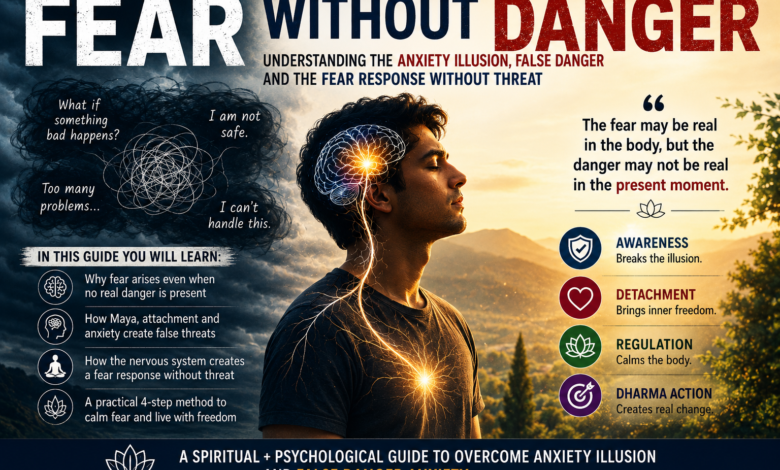
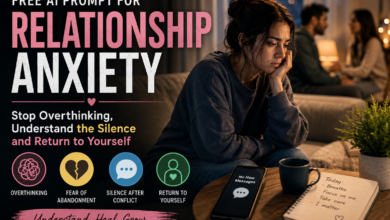
Fear can feel terrifying when there is no clear danger in front of you. This blog is important because it explains fear without danger in a deeper way than ordinary anxiety articles.
Thank you for reading this post, don't forget to subscribe!Most content only says anxiety is a false alarm, but here you will understand how false danger anxiety, anxiety illusion, fear response without threat, and perceived threat anxiety begin inside the nervous system, the mind, and the attachment pattern.
The unique BBH angle is that fear is not treated as weakness or imagination. The fear is real in the body, but the danger may be created by Maya, memory, uncertainty, and emotional misunderstanding.
You will learn why the body reacts before logic, why imagined outcomes feel real, and how awareness, detachment, and nervous system regulation can help you separate real danger from illusion.
This blog gives you psychology, spirituality, and practical healing in one place.
How Maya Creates Fear Without Danger
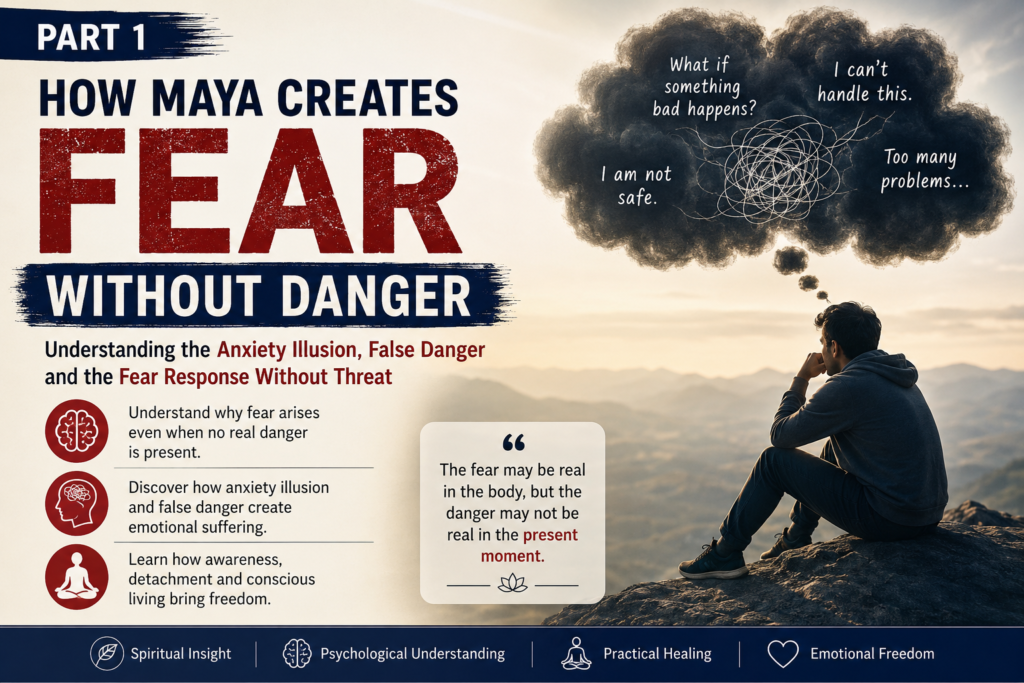
Fear can feel terrifying when there is no clear danger in front of you. This is why fear without danger becomes so confusing for the mind and body.
A person may be sitting in a safe room, looking at a phone message, thinking about an unresolved issue, remembering a past experience, or imagining a future problem — and suddenly the body reacts as if something harmful is already happening.
- The chest may become tight.
- The stomach may contract.
- The heartbeat may change.
- The mind may start searching for what is wrong.
The person may know logically that nothing dangerous is happening in the present moment, but emotionally the fear still feels real.
This is where many people start blaming themselves.
- They think, “Why am I afraid?”
- “Why can’t I control this?”
- “Why is my body reacting like this when nothing has happened?”
But this reaction does not mean the person is weak. It often means the nervous system is responding to a perceived threat before the conscious mind has clearly understood whether the danger is real, imagined, remembered, or future-based.
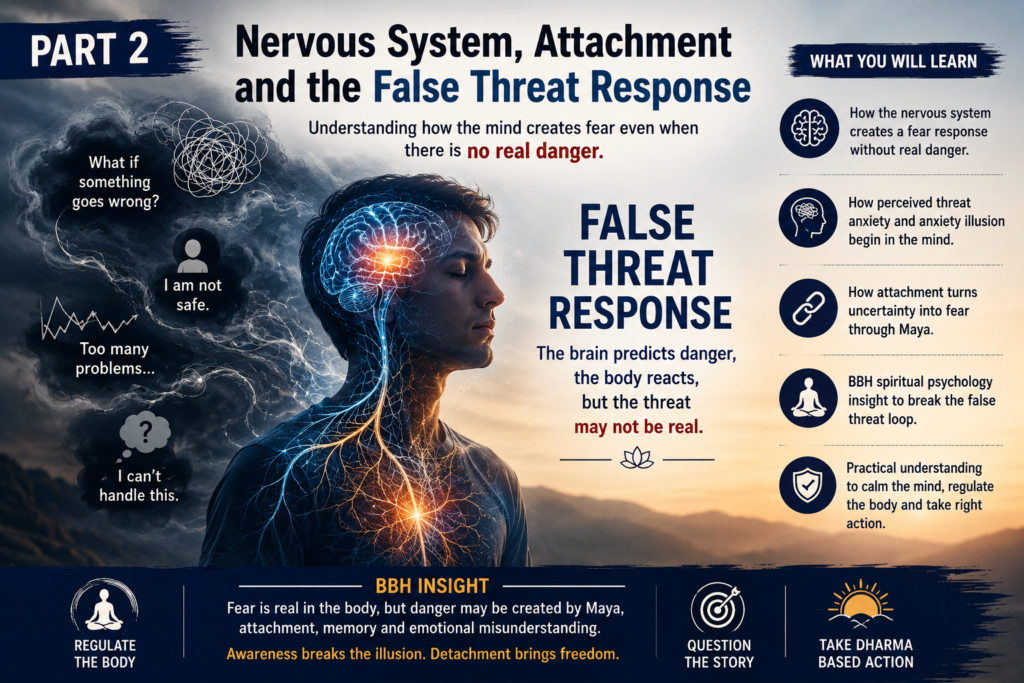
In the BBH view, the fear is real in the body, but the danger may be created by Maya, attachment, memory, uncertainty, and emotional misunderstanding. This is what makes the topic deeper than a simple anxiety explanation.
Fear without danger is not only a mental problem. It is also a nervous-system response, an attachment pattern, and a spiritual illusion where the mind mistakes possibility for reality.
Why Fear Can Feel Real Even When There Is No Real Danger
Fear feels real because the body does not wait for perfect logic before reacting. The nervous system is designed to protect life quickly. If it senses possible harm, it may activate before the thinking mind has enough time to examine the situation clearly.
This is why saying “there is nothing to fear” often does not help. The person may already know that logically. But the body is not asking for logic first. It is asking for safety. The nervous system wants reassurance, grounding, and clarity before it can relax.
A tax issue, a social situation, a health thought, a relationship conflict, or the fear of going outside may not be immediate physical danger. But if the nervous system connects that situation with shame, loss, punishment, helplessness, rejection, or failure, the body may react as if survival itself is at risk.
This is why false danger anxiety can become so powerful. The outer situation may need practical action, but anxiety makes it feel like an emergency. The mind does not simply say, “This is a problem to handle.” It says, “This is danger.”
When this happens repeatedly, the person may begin to lose trust in their own emotional system. This is where understanding conscious living becomes important, because conscious living teaches the person to observe the fear instead of immediately becoming controlled by it.
The Body Reacts to Perceived Danger, Not Only Real Danger
The nervous system does not only react to real danger. It also reacts to perceived threat anxiety — the feeling that something might go wrong, even if it has not happened yet.
For example, the mind may think,
- “What if this becomes worse?”
- “What if I cannot handle it?”
- “What if people judge me?”
- “What if I lose control?”
These thoughts may not be confirmed facts, but the body can still respond to them as if they are already happening.
This is how anxiety illusion begins. A future possibility starts feeling like present reality. The person is not responding only to the current situation. They are responding to the story the mind is building around the situation.
- This can create physical symptoms.
- Breathing may become shallow.
- Muscles may tighten.
- The body may feel restless, frozen, heavy, or ready to escape.
- The mind may keep checking, predicting, and replaying.
This is the fear response without threat — the body’s alarm system reacting to a predicted threat rather than a visible danger.
The key point is this: body symptoms are real, but they do not always prove that real danger is present.
What Is Fear Without Danger in Psychology?
Fear without danger can be understood as a false alarm in the mind-body system. It happens when the brain and nervous system respond to possible harm, imagined harm, remembered harm, or emotionally exaggerated harm even when there is no immediate external danger.
This does not make the fear meaningless. Fear may point toward stress, unresolved suffering, trauma memory, lack of emotional understanding, or attachment to a certain outcome. But fear does not always accurately describe what is happening outside.
This is one of the most important distinctions in anxiety psychology: the fear is physically real, but the danger may be emotionally constructed.
A person may feel danger because the mind is remembering something painful.
- They may feel danger because they are attached to a specific result.
- They may feel danger because uncertainty feels unbearable.
- They may feel danger because the body has learned to prepare early, even before the situation becomes truly threatening.
This is why detachment and conscious living are important together. Detachment does not mean becoming emotionless or careless. It means creating enough inner distance to see the difference between what is happening now and what the mind is predicting.
False Danger Anxiety and the Brain’s Alarm System
False danger anxiety happens when the brain’s alarm system becomes activated by something that is not truly dangerous in the present moment. This may happen before checking an email, answering a call, stepping outside, facing a responsibility, or dealing with an unresolved issue.
The situation may require action, but anxiety makes it feel like survival danger.
For example, a GST issue may be a practical matter that needs clarity, documents, communication, or professional guidance. But the anxious mind may turn it into a total life threat. Instead of seeing it as “one issue to handle,” the mind may feel, “I am unsafe. I cannot face this. Something terrible will happen.”
That is how a practical situation becomes a false danger loop.
This is also why detachment helps control emotions. Detachment does not remove responsibility. It helps separate the real action needed from the imagined emotional disaster. The issue may still need attention, but the mind does not need to turn it into a complete identity threat.
Anxiety Illusion: When a Feeling Becomes a False Reality
Anxiety illusion begins when a feeling becomes stronger than observation. The person does not only feel afraid. They start believing the fear is giving accurate information about reality.
The mind says, “Because I feel danger, there must be danger.”
But this is not always true.
Feelings are important signals, but they are not always final truth. A feeling can reveal stress, uncertainty, memory, attachment, or emotional pain. It can show that something inside needs care. But it may not accurately describe what is happening outside.
This is where many people get trapped.
- They try to solve the fear by obeying every anxious prediction.
- They avoid the call, avoid the email, avoid the outside world, avoid the conversation, or avoid the responsibility.
In the short term, avoidance may feel like relief. But in the long term, the nervous system may learn that escape is the only way to survive.
That is why fear without danger needs understanding, not only avoidance.
Maya and Fear: How Illusion Begins Inside the Mind
Maya begins when the mind mistakes a temporary inner experience for permanent reality. In the context of fear, Maya makes an imagined outcome feel certain.
- It makes uncertainty feel like danger.
- It makes a passing phase feel like a permanent condition.
The deeper problem is not only fear. The deeper problem is identification with fear. A person begins to believe, “This fear is me. This fear is truth. This fear is my future.” That is the illusion.
From the BBH view, Maya is unconscious attachment that increases suffering. When the mind is attached to safety, control, success, certainty, approval, or a specific result, anything that threatens that attachment can create fear. The danger may not be present, but the attachment makes it feel present.
This is why attachment causes emotional suffering. The mind does not suffer only because something happened.
It also suffers because it becomes attached to how life must happen, how others must respond, how quickly problems must resolve, and how safe the future must feel before the body can relax.
When the Mind Treats Possibility as Reality
A possibility is not the same as reality. But anxiety often collapses the distance between the two.
The mind may think, “This could go wrong,” and the body hears, “This is going wrong.” The mind may imagine rejection, punishment, failure, loss, or helplessness, and the body starts preparing for impact.
This is how Maya creates fear without danger. It does not always invent something completely false.
Sometimes it takes a small possibility and covers it with emotional certainty. Then the person is no longer responding to life as it is. They are responding to life as fear predicts it might become.
Personal Reflection
“Sometimes I noticed fear was not coming from real danger, but from my mind and body reacting to an imagined outcome. Fear changed my body, increased stress, and created suffering because I had not yet understood the emotion.
In the beginning, fear felt extreme, but when I started moving toward understanding, it slowly became more manageable — like my GST issue and the fear of not being able to go outside.”
This personal insight shows the turning point. Fear becomes less controlling when it becomes understandable. In the first phase, fear may feel extreme because the mind only sees threat. But when awareness grows, the same fear becomes something to study, regulate, and respond to with patience.
Part 1 Closing Thought
Fear without danger is not fake fear. It is real fear connected to a perceived, imagined, remembered, or emotionally exaggerated threat. The body may be reacting honestly, but the mind may be interpreting reality through Maya.
This is the beginning of healing: not rejecting fear, not blindly obeying fear, but understanding fear.
When a person can say, “My body is feeling danger, but I need to check whether danger is truly present,” awareness begins. That awareness creates the first space between fear and identity. In that space, the person can begin to respond with clarity instead of reacting from illusion..
How the Nervous System Creates a Fear Response Without Threat
The nervous system is designed to protect life before the mind has time to fully analyze danger.
This is why the body can create a fear response without threat.
- It does not always wait for proof.
- It reacts to signals, memories, patterns, uncertainty, and predicted danger.
In real danger, this fast reaction is useful. If something physically harmful is happening, the body needs to act quickly. But in anxiety, the same protective system can become activated when there is no immediate danger.
The body may prepare to fight, run, freeze, hide, or avoid even when the actual situation only needs calm attention.
This is why fear without danger feels so powerful.
- The body is not pretending.
- It is genuinely activated.
- The muscles may tighten, the breathing may shift, the heart may feel heavy, and the mind may become restless.
- But the body may be reacting to a predicted threat, not a real one.
This is where understanding nervous system regulation becomes important. The first step is not to shame the fear. The first step is to understand that the alarm system is active, and the body needs safety before the mind can think clearly.
Fight-or-Flight Without Real Danger
Fight-or-flight can happen even when there is no visible threat. A person may only be thinking about an email, a financial issue, a family conversation, a health worry, or stepping outside, but the body may react as if danger is already present.
This happens because the nervous system is not only responding to facts. It is responding to meaning. If the mind gives a situation the meaning of failure, shame, punishment, rejection, or helplessness, the body may treat that situation like danger.
This is how false danger anxiety begins. The outer world may be calm, but the inner system becomes activated. The person may feel urgency, panic, avoidance, or emotional pressure to escape.
Why Fear Changes the Body So Quickly
Fear changes the body quickly because the nervous system is connected to survival chemistry. When the mind detects threat, the body may release stress signals that prepare it for action. This can affect breathing, digestion, muscle tension, sleep, focus, and emotional control.
This is why fear is not “only in the mind.” Fear can become a full-body state. A person may feel heat, tightness, shaking, heaviness, numbness, restlessness, or pressure in the chest or stomach.
But body activation does not always mean real danger. It may mean the body has received a fear message and is preparing too early.
Body Symptoms Are Signals, Not Final Truth
Body symptoms should be respected, but they should not always be treated as final truth.
A fast heartbeat, tight chest, tense stomach, or restless mind can show that the body is alarmed. But alarm does not always mean danger.
Sometimes the body is asking for regulation, clarity, rest, support, or one small grounded action.
Perceived Threat Anxiety: When the Brain Predicts Harm
Perceived threat anxiety happens when the brain predicts harm before harm is actually present. The person is not responding only to what is happening. They are responding to what the mind thinks could happen.
This prediction may involve rejection, failure, punishment, financial loss, illness, embarrassment, abandonment, or loss of control. The threat may be uncertain, but the body reacts as if it is already confirmed.
This is one of the main reasons anxiety feels so convincing. The mind does not say, “There is a small possibility.” It says, “This is dangerous.” The body believes the message, and fear becomes stronger.
This is also why spiritual psychology matters in healing. It helps the reader see that fear is not only a body reaction. It is also connected to meaning, attachment, identity, and the way the mind interprets reality.
Real Danger vs Predicted Danger
Real danger and predicted danger are not the same.
Real danger is present, immediate, and needs direct protection. Predicted danger is imagined, future-based, uncertain, or emotionally exaggerated. It may need planning, but it does not always need panic.
A real danger says, “Act now to protect life.”
A predicted danger says, “Something might happen, and I do not feel safe with uncertainty.”
This difference is very important. If the person cannot separate real danger from predicted danger, the mind may treat every uncertainty like an emergency.
Why Avoidance Makes the Fear Loop Stronger
Avoidance gives short-term relief, but it can strengthen long-term fear. When a person avoids the call, the email, the task, the conversation, or going outside, the body may feel temporary relief. But the nervous system may learn, “I survived because I escaped.”
Then the next time the same situation appears, the fear becomes stronger.
This is how anxiety illusion becomes a loop. The person avoids the situation because it feels dangerous, and then the brain uses that avoidance as proof that the situation was dangerous.
Healing begins when the person learns to take small, safe, grounded steps instead of obeying every fear signal.
Gita-Style Maya: Attachment, Fear and the Illusion of Control
In a Gita-style understanding, fear often rises when the mind becomes attached to outcome, identity, security, approval, or control. The fear is not only about the event. It is also about what the event seems to threaten.
- A financial issue may threaten security.
- A relationship issue may threaten attachment.
- A social situation may threaten approval.
- A mistake may threaten identity.
An uncertain future may threaten the mind’s need for control.
This is where Maya and illusion become central. Maya makes the temporary feel permanent.
- It makes the uncertain feel confirmed.
- It makes the imagined feel real.
- It makes the mind believe, “If this outcome does not happen, I am not safe.”
The Gita-style path does not teach careless living. It teaches action with awareness and detachment from obsessive control. A person still handles the issue, but they stop giving the imagined outcome total power over their inner state.
Attachment Turns Uncertainty Into Threat
Attachment makes uncertainty painful because the mind says, “I must have this result to feel safe.” When the result is not guaranteed, fear begins.
This can happen with money, relationships, health, work, reputation, legal matters, family expectations, or spiritual progress. The object changes, but the pattern remains the same. The mind becomes attached, uncertainty appears, and fear follows.
This is why Gita psychology is useful for modern anxiety. It reminds the person to act with responsibility, but not become emotionally destroyed by every uncertain result.
Maya Makes the Temporary Feel Permanent
One of Maya’s strongest tricks is making a temporary phase feel permanent. A stressful week feels like a ruined life. One issue feels like complete failure. One fear episode feels like proof that healing is impossible.
But a feeling is not a life sentence. A phase is not identity. A fear response is not the final truth of the self.
This is why practice detachment in daily life is not only spiritual advice. It is practical emotional training. Detachment helps the person return from imagined disaster to the next real step.
BBH Spiritual Psychology Insight
Fear becomes lighter when awareness separates the self from the imagined outcome.
The mind may still predict danger, and the body may still feel activated, but the person begins to see clearly: “This is a fear alarm. This is not my whole reality.”
Part 2 Closing Thought
The false threat response is not a sign of personal failure. It is a sign that the nervous system, attachment pattern, and imagination are working together too strongly.
The body is trying to protect, but Maya turns uncertainty into danger and possibility into emotional reality.
The healing direction is not to force fear away. The healing direction is to regulate the body, question the predicted threat, reduce attachment to outcome, and take one clear action without panic.
We will move into the practical BBH method for separating real danger from anxiety illusion and calming fear without danger through awareness, nervous system regulation, detachment, and grounded action.
How to Separate Real Danger From Anxiety Illusion
The first step in calming fear without danger is learning to separate real danger from anxiety illusion. This does not mean ignoring fear. It means listening to fear carefully without immediately believing every story it creates.
Real danger is present, immediate, and requires direct protection. Anxiety illusion is different. It often begins with a prediction, memory, uncertainty, or imagined outcome. The body reacts strongly, but the actual danger may not be happening in the present moment.
This is where awareness becomes the turning point. Instead of asking only, “Why am I afraid?” the deeper question becomes, “What is my body reacting to, and is that danger truly present right now?”
A person may feel fear before opening an email, answering a call, stepping outside, dealing with documents, or facing a difficult conversation. The fear may feel urgent, but the situation may require calm action, not panic. This is why nervous system awareness is important. It helps the person slow down enough to see the difference between a real emergency and a false alarm.
For deeper support, readers can begin with the Start Here – Your Journey to Mental Clarity & Emotional Healing page, especially if they are new to emotional healing and want a guided direction.
The 3-Question Reality Check
A simple reality check can help when the body feels danger but the situation is unclear.
First, ask: What actual danger is present right now?
This question brings the mind back to the present moment instead of the imagined future.
Second, ask: What future story is my mind creating?
This helps separate facts from fear-based prediction. The mind may be imagining failure, rejection, loss, punishment, or helplessness.
Third, ask: What small grounded action is needed next?
Fear often wants a full life solution immediately. Healing begins with one realistic step: check the document, make the call, ask for help, step outside for two minutes, breathe slowly, or write down the next action.
This practice weakens perceived threat anxiety because the mind stops treating every fear prediction as confirmed truth.
Why Understanding Reduces Fear
Fear becomes stronger when it remains misunderstood. When a person does not understand what is happening inside the body, fear can feel mysterious and uncontrollable.
The person may think, “Something is wrong with me,” instead of realizing, “My nervous system is reacting to perceived danger.”
Understanding does not remove fear instantly, but it changes the relationship with fear. The person stops fighting blindly and starts observing wisely.
This is a major BBH principle: when fear becomes understandable, it becomes more workable. The body may still feel activated, but the mind no longer has to turn that activation into identity, shame, or helplessness.
Fear Becomes Less Terrifying When It Becomes Understandable
Fear does not have to become enjoyable to become manageable. It becomes less terrifying when the person understands its pattern.
- “This is my body’s alarm.”
- “This is anxiety illusion.”
- “This is not confirmed danger.”
These statements create space between the person and the fear.
A BBH Practice for Fear Without Danger
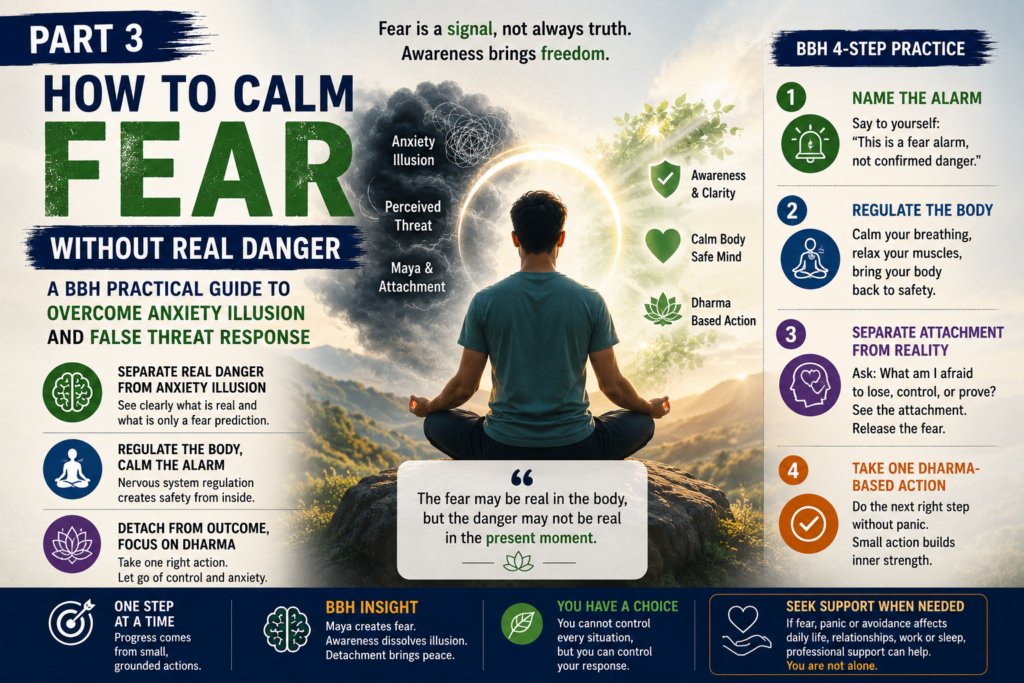
Healing fear without danger requires both body regulation and inner clarity. If the body is highly activated, deep thinking may not work immediately. The body first needs a signal of safety. Then the mind can examine the fear more clearly.
This BBH practice is simple: name the alarm, regulate the body, separate attachment from reality, and take one Dharma-based action.
It does not ask the person to deny fear. It asks the person to respond to fear with awareness instead of becoming controlled by it.
For readers who need deeper support tools, the Healing Resources Hub can be used as a practical next step for continuing emotional healing, self-reflection, and nervous system work.
Step 1 — Name the Alarm
The first step is to name what is happening: “This is a fear alarm, not confirmed danger.”
This single sentence matters because it separates the body’s reaction from reality. The person is not saying the fear is fake. They are saying the danger is not yet confirmed.
Naming the alarm reduces confusion. It helps the mind stop merging with the fear.
Instead of “I am in danger,” the person can say, “My body is feeling danger.”
Step 2 — Regulate the Body First
When fear is strong, the body needs regulation before deep analysis. Slow breathing, relaxing the shoulders, feeling the feet on the floor, walking slowly, drinking water, or placing a hand on the chest can help the nervous system receive a safety signal.
This is especially important in a fear response without threat. The body is acting as if there is danger, so the body must be included in healing.
Readers who want a structured direction can explore the Nervous System Reset Program for Anxiety & Stress because calming the alarm system is often the foundation for reducing false danger anxiety.
Step 3 — Separate Attachment From Reality
After the body settles slightly, ask: “What am I afraid to lose, control, prove, or protect?”
This question reveals the attachment behind fear. Sometimes the fear is not only about the situation. It is about what the situation seems to threaten: safety, respect, identity, approval, money, health, relationship stability, or future control.
This is where Maya becomes visible. The mind may be attached to a specific outcome and then treat uncertainty as danger. When awareness sees the attachment, fear begins to lose some of its unconscious power.
Step 4 — Take One Dharma-Based Action
A Dharma-based action is a responsible action taken without panic. It is not avoidance, and it is not emotional overreaction. It is the next right step.
- Make the call.
- Check the document.
- Ask the expert.
- Step outside for a few minutes.
- Write the task down.
- Speak honestly.
- Rest if the body is exhausted.
- Take one action that matches reality, not imagination.
This step is powerful because action teaches the nervous system that the person can face life without being fully ruled by fear. The action does not have to be big. It only has to be real.
Final Reflection: Fear Is a Signal, Not Always Truth
Fear should be respected, but it should not always be worshipped as truth. Sometimes fear protects life. Sometimes fear points toward a real issue that needs attention. But sometimes fear is a false alarm created by anxiety, attachment, memory, and Maya.
The most important line to remember is this: the fear may be real in the body, but the danger may not be real in the present moment.
This distinction can change the way a person relates to anxiety.
- Instead of saying, “I am broken,” they can say, “My nervous system is alarmed.”
- Instead of saying, “My future is ruined,” they can say, “My mind is predicting danger.”
- Instead of saying, “I cannot face this,” they can say, “I can take one grounded step.”
This is not emotional weakness. This is emotional training.
- Fear without danger becomes lighter when awareness grows.
- Maya becomes weaker when the person stops treating every imagined outcome as final reality.
- Detachment becomes practical when the person acts responsibly without surrendering inner peace to every uncertain result.
When to Seek Professional Support
If fear, panic, avoidance, or the inability to go outside begins affecting daily life, relationships, sleep, work, or basic functioning, professional support is important.
Therapy, medical guidance, or trained mental health support can help a person understand the anxiety pattern safely.
This blog is for education and self-awareness. It does not replace professional care. Strong fear deserves compassion, not shame.
Continue Your Healing Journey
Fear without danger is not solved by force. It is softened through awareness, nervous system regulation, detachment, and one grounded action at a time.
Begin by understanding the alarm. Then calm the body. Then question the predicted threat. Then act from Dharma, not panic.
To continue this path, start with Start Here – Your Journey to Mental Clarity & Emotional Healing, explore the Healing Resources Hub, and use the Nervous System Reset Program for Anxiety & Stress for deeper regulation support.