Why Your Mind Fears Uncertainty (And How to Train It)
Why Uncertainty Causes Anxiety and How to Build Inner Stability

Uncertainty becomes painful when the mind cannot see what is coming, but the heart already feels that something precious may change. This is why fear of uncertainty psychology is not only about overthinking; it is about love, safety, health, responsibility, and the nervous system’s need for protection.
Thank you for reading this post, don't forget to subscribe!👉 When life feels unclear, uncertainty anxiety can make the body restless, the thoughts repetitive, and the heart emotionally tired. The fear of the unknown becomes even heavier when we are afraid of losing someone, failing our duty, or facing an outcome we cannot control.
👉 This blog explains how to handle uncertainty without suppressing pain, blaming yourself, or forcing fake positivity.
It also shows how fear and control become connected, why the mind keeps searching for answers, and how awareness, nervous system regulation, responsibility, prayer, and spiritual surrender can help you stay steady even when life does not give complete certainty.
What Is Fear of Uncertainty Psychology?
Fear of uncertainty psychology means the emotional and mental reaction that happens when the mind cannot predict what will happen next. The human brain does not like open loops. It wants answers, direction, safety, and closure. When life gives an unclear situation, the brain starts working harder to reduce emotional risk.
This can happen during health problems, money pressure, relationship confusion, family stress, business uncertainty, legal issues, or fear of losing someone. But uncertainty becomes much deeper when it is attached to love.
👉 When someone you love is unwell or when a precious bond feels fragile, the unknown does not feel like a small future question. It feels like a threat to your emotional world.
The mind wants certainty because certainty feels like safety. Even if the outcome is painful, knowing it gives the nervous system something to prepare for. But when nothing is clear, the body stays alert. It keeps watching, checking, thinking, and imagining.
👉 This is why uncertainty anxiety can become so tiring. You are not only thinking too much; your body is trying to protect you from what it cannot predict.
Read Also: what is detachment and how to practice conscious living
Why the Mind Treats the Unknown Like Danger
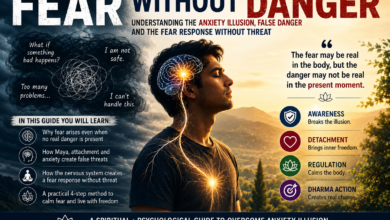
The brain is designed to predict. Prediction helps survival. If the brain can predict danger, it can prepare the body. But when the brain cannot predict, it may treat the unknown itself as danger.
This is why the fear of the unknown can feel physical.
- Your chest may tighten.
- Your stomach may feel heavy. Sleep may break.
- Your thoughts may repeat the same possibilities again and again.
- You may feel restless, helpless, confused, or emotionally tired even when nothing has fully happened yet.
The mind is not doing this to hurt you. It is trying to protect you. But when protection becomes constant scanning, it slowly turns into suffering.
👉 The same mind that wants to keep you safe can also trap you inside fear, checking, and emotional exhaustion.
Why Uncertainty Hurts More When Love and Health Are Involved
Uncertainty is difficult in any part of life, but it becomes more painful when love and health are involved.
When someone you love is unwell, the mind does not only ask,
- “What will happen?”
- It asks, “Will I lose this presence?
- Will these moments become memories only?
- Did I do enough? Will this bond continue beyond this life?”
This is where fear of uncertainty psychology becomes deeply human. The mind may already know that life changes, bodies are temporary, and every soul has its own journey.
But the heart does not release love just because the mind understands truth. The heart takes time. It holds memories, touch, routine, care, responsibility, and devotion.
A Personal Reflection: When Uncertainty Is About Someone You Love
There are times when uncertainty is not about money, career, or future plans. Sometimes uncertainty is sitting beside someone you love and watching their breathing, their eyes, their comfort, and their pain.
In those moments, the mind does not act like a calm philosopher. It becomes a mother, a protector, a watcher, and a frightened child at the same time.
I have felt this deeply through Jena’s health. When someone you love becomes unwell, you do not only fear the medical outcome.
- You fear the silence that may come after.
- You fear whether this journey together is reaching its last chapter.
- You fear whether all the love, care, memory, suffering, and devotion stored in your heart will have a place when physical presence changes.
With Jena, the pain was not only about possibly losing physical presence. The deeper pain was that she had become my child in my arms, my responsibility, my daily love, and a living part of my home.
👉 I changed my life around her comfort. I stayed close. I gave attention. I avoided many outside distractions because somewhere inside me, I wanted to become the safe motherly presence she deserved.
And when I looked into her eyes, I felt something simple and sacred:
“Mom, you are my safe place on this earth.”
That kind of love makes uncertainty painful. The mind may know that life can change, but the heart is not ready to release the presence it has protected with so much care.
From a spiritual view, I may understand that every soul has its own journey. I may pray that Krishna guides her toward a peaceful and beautiful soul journey. I may believe that her good karma will carry her forward.
👉 But even with faith, the human heart still cries. It still asks, “Will we meet again? Will this love remain? Will she know how deeply she was loved?”
This is why uncertainty cannot be explained only as overthinking. Sometimes uncertainty is love standing in front of impermanence. It is devotion facing the truth that control is limited.
Read Also: why letting go is so hard emotionally
Why the Mind Starts Searching, Checking, and Controlling
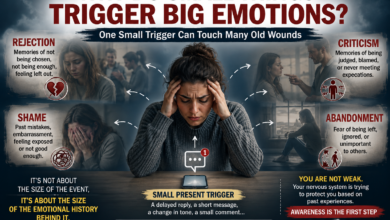
When life feels unclear, the mind naturally tries to control what it can. It may check signs, search for answers, ask repeated questions, watch every small change, and mentally prepare for every possible outcome. This is where fear and control become connected.
- Control is not always wrong. Sometimes control is responsibility.
- If someone is sick, you should act.
- You should care. You should observe.
- You should take practical steps.
- But suffering increases when the mind starts believing that control can guarantee the final outcome.
👉 Responsibility says, “I will do what is in my hands.”
👉 Control says, “If I do everything perfectly, nothing painful should happen.”
This difference matters. Responsibility gives dignity. Control creates panic. Responsibility helps you act. Control makes you blame yourself for things that may never fully belong to you.
When someone you love is unwell, you can give care, comfort, medicine, attention, safety, and prayer. But you cannot fully control the body’s limits, time, destiny, or the soul’s journey. This truth is painful, but it is also spiritually grounding.
Part 1 Closing: Uncertainty Hurts Because Love Is Real
The fear of the unknown becomes stronger when the heart is attached to something sacred. If you did not love deeply, uncertainty would not hurt this much. If the bond was not meaningful, the unknown would not shake you so deeply.
So the first step in how to handle uncertainty is not to force acceptance. It is to understand what is happening inside you.
Your mind is searching for safety.
Your body is reacting to possible loss.
Your heart is trying to protect what it loves.
You do not need to know every outcome to act with love today.
You do not need complete certainty to do your duty today. For now, the first training is this:
Do what is in your hands. Feel what is in your heart. Release what belongs to time, body, destiny, and the soul’s journey.
This is not easy. But it is honest. And honest awareness is the beginning of healing.
Why Uncertainty Creates Anxiety, Overthinking, and the Need for Control
When the future is unclear, the mind rarely stays quiet. It starts building possible outcomes, replaying old experiences, checking small signs, and searching for certainty. This is why fear of uncertainty psychology is closely connected with anxiety, overthinking, and control.
The mind is not only afraid of what may happen. It is afraid of not being ready for what may happen. This is why uncertainty anxiety can become so intense. The body feels as if it must prepare for every possible result before life gives a final answer.
The problem is that life does not always give quick answers. So the mind keeps working, the body stays alert, and peace feels far away.
Why the Brain Tries to Predict Everything
The brain is built to predict. It constantly tries to understand what is happening now and what may happen next. Prediction helps the nervous system feel safe.
👉 When the brain can predict, it relaxes a little.
👉 When the brain cannot predict, it becomes alert.
This is why the fear of the unknown often feels stronger than the actual event. Sometimes the imagined outcome creates more suffering than the reality itself.
For example, when someone you love is unwell, the mind may start imagining every possible future. It may think about recovery, decline, emergency, loss, regret, and responsibility. It may ask the same questions many times, even after some answers have already been given.
This is not because the mind is foolish. It is because the mind is trying to reduce danger through prediction. But uncertainty cannot always be solved by thinking.
Overthinking Is Often a Search for Safety
Many people blame themselves for overthinking.
👉 They say, “Why can’t I stop thinking?” But overthinking is usually not weakness. It is a safety strategy.
The mind keeps thinking because it believes one more thought may finally bring control. One more search. One more check. One more question. One more plan. One more possible answer.
👉 This creates a painful loop. The mind feels unsafe, so it thinks more. The more it thinks, the more dangers it imagines. The more dangers it imagines, the more unsafe the body feels.
This is how uncertainty anxiety becomes a cycle. The person is not only thinking about the future. The body is reacting as if the future danger is already present.
The Overthinking Cycle
The cycle usually looks like this:
- Something feels uncertain.
- The mind senses danger.
- The body becomes anxious.
- The mind searches for certainty.
- New possible problems appear.
- Anxiety increases.
- The mind checks again.
This is why how to handle uncertainty cannot only mean “think positively.” Positive thinking may help for a short time, but it does not always calm the nervous system.
The deeper work is learning how to stay present when the mind wants complete certainty.
Read Also: Detachment & Conscious Living
Fear and Control: Why the Mind Wants to Manage Everything
One of the most important parts of fear of uncertainty psychology is the link between fear and control.
When fear rises, the mind starts controlling. It may control routines, people, timing, food, medicine, work, conversations, money, decisions, prayers, and even emotions. Control gives the mind a temporary feeling of safety.
But control has a limit.
You can control your effort.
You can control your care.
You can control your response.
You can control the next right step.
But you cannot control every outcome.
This is where suffering begins.
Control Gives Temporary Relief, Not Real Peace
Control can feel useful because it reduces fear for a short time. When you check something, ask something, fix something, or plan something, the mind feels active. It feels like it is doing something.
But after a short time, the fear returns.
Then the mind needs another check, another reassurance, another answer, and another plan. This is why control can become addictive during uncertainty. The mind does not want control because it is bad. It wants control because it is scared.
👉 The issue is not responsibility. Responsibility is healthy. Responsibility says, “I will do what is needed.”
👉 The issue is emotional control. Emotional control says, “I must make sure nothing painful happens.”
👉 That promise is impossible.
Responsibility Is Not the Same as Control
There is a very important difference between responsibility and control.
👉 Responsibility says: “I will do what is in my hands.”
Control says: “If I do everything perfectly, nothing painful should happen.”
Responsibility is grounded. Control is fearful.
👉 Responsibility asks, “What is the next right action?”
Control asks, “How can I make sure nothing goes wrong?”
Responsibility brings dignity. Control creates pressure.
Responsibility allows action. Control creates self-blame.
When someone you love is unwell, responsibility may look like care, medicine, comfort, doctor support, food, presence, and prayer. These are beautiful actions. But control begins when the mind says, “If I do everything perfectly, the outcome must become what I want.”
That is where pain becomes heavier. Sometimes, even after full love and full effort, life still moves according to body, time, nature, karma, and destiny.
This does not mean your care failed. It means the final outcome was never fully in your hands.
Read Also: how detachment reduces anxiety and stress
How the Nervous System Reacts to the Fear of the Unknown
The fear of the unknown is not only mental. It is physical.
👉 When the brain senses uncertainty as danger, the nervous system may activate survival responses. You may feel restless, tired, alert, emotional, frozen, or panicked.
This is why uncertainty anxiety can make daily life difficult. You may want to work, eat, sleep, or focus, but the body keeps returning to the same fear.
- It feels as if your body is asking, “Are we safe yet?”
And when the answer is unclear, the body remains on guard.
Fight Response: Urgency and Irritation
In fight mode, uncertainty can make you feel urgent, irritated, or restless.
- You may want fast answers.
- You may feel angry at delays.
- You may become frustrated with people who do not understand your pain.
Under the anger, there is usually fear.
The body is trying to fight the unknown because it does not know how to surrender to it yet.
Flight Response: Searching, Checking, and Mental Running
In flight mode, the mind keeps moving. You may search online, call people, ask repeated questions, check symptoms, check messages, check signs, and keep planning.
This is the nervous system trying to escape helplessness.
It may feel productive, but often it leaves you more tired. This is very common in fear of uncertainty psychology. The mind keeps running because stillness feels unsafe.
Freeze Response: Numbness and Confusion
In freeze mode, the body slows down. You may feel blank, heavy, confused, or unable to decide. Even simple tasks may feel difficult.
👉 This does not mean you are lazy. It means the nervous system is overloaded.
When uncertainty stays too long, the body may protect itself by shutting down emotional energy.
Caregiver Exhaustion: Ignoring Your Own Needs
When love and responsibility are involved, uncertainty can also create caregiver exhaustion. You may focus so much on care, protection, medicines, routines, and emotional safety that you forget your own body.
👉 You may not sleep properly. You may skip meals. You may push your own fear aside because the one you love needs you.
This is understandable, but it can slowly break your strength.
That is why how to handle uncertainty must include caring for the caregiver too. You cannot pour safety into another life while completely abandoning your own nervous system.
Why Helplessness Becomes So Painful
Helplessness is one of the hardest emotions inside uncertainty. It appears when the heart wants to protect, but reality does not give full control.
👉 This is especially painful when love is involved. When you love someone deeply, your instinct is to save, protect, hold, comfort, and prevent pain. But uncertainty reminds you that love is powerful, yet not all-powerful.
That truth can break the heart.
One of the deepest wounds in uncertainty is this thought:
“I am doing everything I can, but I still cannot guarantee what will happen.”
This thought can create panic, guilt, anger, and sadness. But psychologically and spiritually, it can also become the beginning of surrender.
Not weak surrender.
Not careless surrender.
Not giving up.
But honest surrender.
The kind that says:
“I will do my duty completely, but I will not pretend that I am the owner of every outcome.”
This shift moves the mind from fearful control to conscious responsibility.
Part 2 Closing: The Problem Is Not That You Care Too Much
The problem is not that you care too much. Deep care is beautiful. Devotion is beautiful. Responsibility is beautiful.
The problem begins when fear makes the body believe everything must be controlled immediately.
Uncertainty shows where the mind wants certainty. Anxiety shows where the nervous system feels unsafe. Control shows where the heart is afraid of loss. But awareness helps you see the difference between what belongs to your duty and what belongs to life, time, body, destiny, and the soul’s journey.
- You can care deeply without collapsing completely.
- You can act responsibly without owning every outcome.
- You can love fully without using panic as proof of love.
This is where fear of uncertainty psychology becomes a path of growth. The unknown may still hurt, but slowly it becomes less like an enemy and more like a difficult teacher.
Read Also: how to gain control over your thoughts and emotions
How to Handle Uncertainty Without Suppressing Pain
Learning how to handle uncertainty does not mean becoming emotionless. It does not mean you stop caring, stop loving, or stop feeling fear. It means you slowly teach your mind and body that uncertainty is not always an emergency.
👉 This is the deeper healing inside fear of uncertainty psychology.
- The goal is not to remove every fear.
- The goal is to build enough inner stability that fear does not control every thought, every action, and every breath.
When love, health, and possible loss are involved, this training must be gentle.
- You cannot shame yourself into acceptance.
- You cannot force calm while the heart is hurting.
- You need a method that respects your pain while helping your nervous system return to steadiness.
Step 1: Name the Real Fear
When uncertainty anxiety rises, the mind may say, “I am anxious.” But anxiety is often only the surface. Under it, there may be a deeper fear.
Ask yourself:
“What am I truly afraid of?”
- Maybe the real fear is loss.
- Maybe it is regret.
- Maybe it is helplessness.
- Maybe it is being alone.
- Maybe it is not knowing whether you did enough.
- Maybe it is the fear that love will disappear if physical presence changes.
Naming the real fear reduces confusion. When fear stays vague, the mind fights a cloud. When fear becomes clear, the mind begins to understand what it is actually carrying.
This is not about making pain disappear. It is about becoming honest with yourself. Sometimes the most healing sentence is:
“This hurts because I love deeply.”
Pain is not always proof of weakness. Sometimes pain is proof that your bond is real.
Step 2: Separate What Is in Your Hands From What Is Not
A major part of fear and control is confusion between responsibility and outcome. The mind starts believing that if you care enough, check enough, pray enough, or plan enough, you should be able to prevent every painful result.
But life does not work that way.
To calm the mind, separate the situation into two clear parts.
In my hands
Care, medicine, comfort, attention, prayer, doctor support, communication, rest, food, presence, and the next right action.
Not fully in my hands
Final outcome, timing, body limits, destiny, other people’s choices, the future, and the soul’s journey.
This practice is powerful because it gives the mind a clean boundary. It tells the nervous system, “Here is where I act, and here is where I must slowly release.”
Responsibility brings dignity. Control creates panic. Responsibility says, “I will do what I can.” Control says, “I must guarantee what happens next.”
When you know the difference, you stop blaming yourself for what was never fully yours to control.
Step 3: Return to the Next Right Action
The fear of the unknown becomes overwhelming when the mind tries to live ten possible futures in one day. It thinks about tomorrow, next week, the final outcome, the worst case, the emotional emptiness, and the possible regret.
No nervous system can carry all of that at once.
Instead of asking, “What will happen?” ask:
“What is the next right action in my hands?”
The answer may be simple. Give care. Make one phone call. Sit near the one you love. Write the fear down. Drink water. Take rest. Pray honestly. Stop searching for ten minutes. Breathe slowly.
Small action brings the mind back from imagined futures into present responsibility.
This does not remove uncertainty, but it reduces overwhelm. The future may still be unclear, but the present becomes clearer. You may not know the final outcome, but you can know your next duty.
That small clarity matters.
Step 4: Calm the Nervous System Before Solving the Thought
Many people try to solve uncertainty only through thinking. But when the body is activated, thinking becomes fear-driven.
A panicked body does not think the same way as a regulated body. This is why nervous system care is not optional. It is part of emotional wisdom.
When uncertainty anxiety rises, try this simple grounding practice:
Breathe slowly. Relax your shoulders. Feel your feet on the floor. Place one hand on your chest. Look around the room and name five things you can see.
Then say:
“Right now, I am here. Right now, I will do only the next right thing.”
This does not erase pain. It does not solve the full problem. But it reduces the emergency signal inside the body.
Do not wait until you feel perfectly calm. You may not feel fully calm, and that is okay. The goal is not perfect peace. The goal is enough stability to act without panic leading everything.
Even a small reduction in fear can help the mind think more clearly.
Step 5: Use Writing to Empty the Mental Loop
Uncertainty often creates repeated thoughts. The same fear comes again and again because the mind is trying to finish an unfinished emotional loop.
Writing helps move fear out of the head and onto paper.
Use three simple headings:
1. What I am afraid of
Write honestly. Do not make it spiritual or polished. Write the raw fear.
2. What is in my hands today
Write only practical actions: care, food, medicine, rest, prayer, communication, routine, comfort, and presence.
3. What I must slowly release
Write what is not fully in your control: final outcome, timing, body limits, destiny, the soul’s journey, other people’s reactions, and future pain.
This practice supports how to handle uncertainty because it gives the mind structure. Fear becomes heavier when it stays vague. When you write it clearly, the mind stops fighting an invisible enemy.
Read Also: how to live consciously every day
Spiritual Awareness: Duty, Love, and Letting Go
Spiritual surrender is not giving up. It is not becoming careless. It is not pretending pain does not matter.
True surrender means:
“I will do my karma fully, but I will not torture myself by pretending I control every result.”
This is where Gita-based wisdom becomes deeply practical. You act with sincerity. You fulfill your duty. You give care. You protect where you can. You love with devotion. But you release the demand that the final outcome must obey your fear.
When the future is uncertain, duty becomes grounding. Duty tells the mind, “This is where your energy belongs.”
Not endless imagination.
Not self-blame.
Not panic.
Not fighting reality before it arrives.
Your energy belongs to the action in your hands.
When you know you have loved, cared, protected, and served with sincerity, something inside the soul becomes steadier. Pain may remain, but guilt reduces.
Prayer Is Not Only for the Outcome
Prayer can move beyond asking only for one result.
- You can pray for healing.
- You can pray for comfort.
- You can pray for strength.
- You can pray for a peaceful soul journey.
- You can pray that your love becomes pure and not fear-driven.
This kind of prayer gives the heart a place to rest when the mind cannot know everything.
Surrender does not mean you love less. It means you stop believing that panic is the only proof of love.
You still care.
You still act.
You still pray.
You still protect.
You still love.
But inside, you slowly say:
“I will not use panic as proof of love.”
That is not emotional coldness. That is mature devotion.
Love Does Not End When Presence Changes
One of the most painful parts of the fear of the unknown is the thought that love will disappear if physical presence changes. But love is not only physical presence. Love is also memory, devotion, care, sacrifice, prayer, and consciousness.
Physical presence is precious. Nobody should minimize that. Missing someone’s body, eyes, sound, routine, and nearness is real grief.
But the love itself does not become meaningless when presence changes.
A deeply honest truth is this:
“Love does not need physical presence to remain alive, but love needs real devotion.”
This does not erase grief. It does not make separation easy. But it gives love a larger meaning.
👉 If you loved with responsibility, became a safe place, gave comfort, protected, stayed present, and prayed with sincerity, then that love has already become part of your consciousness.
No uncertainty can make that devotion false.
Read Also: spiritual-psychology
A Simple Daily Practice for Uncertain Times
When uncertainty feels heavy, use this simple practice.
Morning: Set the Duty
Ask: “What is one thing in my hands today?”
Choose one realistic action.
Afternoon: Regulate the Body
Pause for two minutes. Breathe slowly. Relax your jaw. Drink water. Step away from overchecking if possible.
Tell yourself:
“I can care without collapsing.”
Evening: Release the Outcome
Before sleep, say or write:
“Today I did what I could. What is beyond me, I offer to time, truth, Krishna, and the soul’s journey.”
This practice trains the mind gently. It does not demand instant peace. It builds stability through repetition.
Read Also: Emotional Healing Roadmap
Conclusion: You Do Not Need Certainty to Love Well
You may never receive complete certainty from life. No one does. But you can still become steady inside uncertain reality.
- You can feel pain honestly.
- You can act with responsibility.
- You can regulate your nervous system.
- You can pray with devotion.
- You can release self-blame.
- You can love without demanding full control over the outcome.
The deepest answer to how to handle uncertainty is not to become fearless. It is to become sincere, present, regulated, and spiritually grounded while fear is still there.
- You can be afraid and still act with love.
- You can feel helpless and still do your duty.
- You can face the unknown and still remain connected to prayer, presence, and responsibility.
Uncertainty may still hurt. The future may still be unclear. The heart may still cry. But you can remind yourself:
“I did my duty with love. I cared with devotion. I was a safe place while life gave me the chance. What remains beyond my control, I release with prayer.”
That is not weakness.
That is love becoming conscious.
People Also Ask
1. What is fear of uncertainty psychology?
Fear of uncertainty psychology explains why the mind feels unsafe when it cannot predict what will happen next. It often creates anxiety, overthinking, checking, and the need for control.
2. Why does uncertainty cause anxiety?
Uncertainty causes anxiety because the brain prefers prediction and safety. When the outcome is unclear, the nervous system may stay alert and prepare for possible danger.
3. Why do I overthink when I am uncertain?
Overthinking is often the mind’s attempt to find safety. It keeps searching for answers because it believes one more thought may create control.
4. How do I handle uncertainty in life?
Handle uncertainty by naming the real fear, separating what is in your hands from what is not, calming your nervous system, and taking the next right action.
5. Why do I feel the need to control everything?
The need for control often comes from fear. When life feels unclear, control gives temporary relief, but it cannot guarantee every outcome.
6. Can uncertainty affect the body?
Yes. Uncertainty can affect the body through restlessness, tightness, poor sleep, tension, racing thoughts, and emotional exhaustion.
FAQ
1. Is fear of uncertainty normal?
Yes, fear of uncertainty is normal. The mind naturally wants safety, prediction, and emotional security when life feels unclear.
2. Is uncertainty anxiety the same as general anxiety?
Not exactly. Uncertainty anxiety specifically increases when the mind cannot predict an outcome or feel prepared for what may happen.
3. Why is the fear of the unknown so strong?
The fear of the unknown is strong because the brain may treat unclear outcomes as possible threats, even before anything has happened.
4. How can I reduce fear and control?
Reduce fear and control by focusing on responsibility instead of outcome. Ask, “What is in my hands today?” and act from there.
5. Can spirituality help with uncertainty?
Yes. Spirituality can help when it supports duty, prayer, surrender, and acceptance without suppressing natural human pain.
6. What is the best first step to handle uncertainty?
The best first step is to name the real fear clearly. Once fear becomes specific, the mind becomes less confused and easier to guide.
External References
- American Psychological Association — 10 Tips for Dealing With the Stress of Uncertainty
https://www.apa.org/topics/stress/uncertainty
APA explains that people with higher intolerance of uncertainty may feel less resilient during uncertain situations. - National Institute of Mental Health — Generalized Anxiety Disorder: What You Need to Know
https://www.nimh.nih.gov/health/publications/generalized-anxiety-disorder-gad
NIMH lists common anxiety symptoms such as excessive worry, restlessness, trouble relaxing, sleep difficulty, and physical tension. - Cleveland Clinic — Anticipatory Grief: Symptoms and How To Cope
https://health.clevelandclinic.org/dealing-with-anticipatory-grief
Cleveland Clinic explains anticipatory grief as grief that can begin before a loss, with symptoms like sadness, difficulty sleeping, and replaying scenarios. - American Psychological Association — Anxiety
https://www.apa.org/topics/anxiety
APA describes anxiety as involving tension, worried thoughts, and physical changes, often oriented toward future concerns.