How to Stop Seeking Validation When Ignored
Being Ignored Hurts: Rebuild Your Self-Worth


How to Stop Seeking External Validation When You Feel Ignored
Why Silence Hurts Your Self-Worth—and How to Return to Yourself
Blog Details
Parent Topic: Attachment, Self-Worth and Emotional Connection
Main Menu: Relationship
Submenu: Attachment & Connection
Current Blog URL: https://bioandbrainhealthinfo.com/how-to-build-self-esteem-after-attachment-wounds/
Main SEO Keyword: stop seeking external validation
Cluster Keyword 1: why being ignored hurts
Cluster Keyword 2: anxious attachment self-esteem
Cluster Keyword 3: self-esteem after rejection
Cluster Keyword 4: heal attachment wounds
Search Intent: Informational, emotional problem-solving and practical self-help
Content Type: Pain-based BBH authority guide
Word Count Target: 3,400–3,500 words
You sent one message.
At first, you expected an ordinary reply. Then an hour passed. You checked your phone. More time passed, and something inside you changed.
You reread your message and searched every sentence for a mistake. You wondered whether you had been too emotional, too available, too honest, or simply not important enough to answer.
The silence did not remain silence.
It became a judgment about you.
Perhaps you wanted to send another message. Perhaps you began explaining something that did not require an explanation. You may have considered apologizing without knowing what you had done wrong. You may even have become more helpful, more agreeable or more available because you hoped that being useful would make the person return.
When someone important ignores you, the pain may reach much further than the present moment. It may touch an old fear that love can disappear, closeness must be earned, and your value depends on whether another person chooses you.
This experience is not limited to romantic relationships. Sometimes the deepest silence comes from a parent whose love you spent years trying to earn.
When a parent does not call, does not ask how you are, rejects your needs or repeatedly gives another family member more emotional or practical support, the present pain can reopen a much older question:
“Why am I still not the one they choose?”
Learning to stop seeking external validation does not mean becoming cold, detached or indifferent. It means learning to care about connection without giving another person complete authority over your identity, dignity and emotional safety.
“I was not only waiting for my parents to call me. I was waiting for their call to prove that I mattered.”
That is where rebuilding self-worth begins—not with forced confidence, but with the decision to stop leaving yourself whenever another person becomes unavailable.
How to Stop Seeking External Validation: The Clear Answer
To stop seeking external validation, begin by separating three things that emotional pain often mixes together:
- What happened: Someone did not reply, became distant or behaved differently.
- What your wounded mind concluded: “I am not important,” “I have done something wrong,” or “I am being replaced.”
- What fear asks you to do: Chase, call, apologize, explain, overgive or abandon your needs.
The event may be real. The pain may be real. But the conclusion that you are worthless is not automatically true.
The practical healing process is:
Notice the trigger → regulate the body → name the fact → identify the painful meaning → delay the chase → choose one self-respecting action.
This does not guarantee that every relationship will recover. It gives you enough emotional space to understand what is happening.
You may discover that an old attachment wound is amplifying a relatively ordinary delay. You may discover that the other person is genuinely inconsistent or emotionally unavailable. Sometimes both are true.
The goal is not to convince yourself that every situation is harmless. The goal is to stop treating uncertainty as immediate proof that you do not matter.
Read Also: “return to yourself during relationship anxiety”
Why Being Ignored Hurts So Much
Understanding why being ignored hurts begins with recognising that human connection is rarely emotionally neutral.
Closeness can become linked with:
- safety;
- acceptance;
- belonging;
- hope;
- identity;
- protection;
- personal value.
When someone who once felt emotionally available becomes silent, your mind may not experience the change as a simple communication delay. It may interpret the silence as rejection.
Thoughts can quickly appear:
- Did I say something wrong?
- Was I too much?
- Are they losing interest?
- Why are they online but not answering me?
- How can they remain comfortable while I am suffering?
- What should I do so they love me again?
- Why am I always the one trying to repair everything?
At this point, you are no longer only waiting for information. You are waiting for the other person to restore your emotional safety.
That is why one reply can feel so powerful. It appears capable of ending the uncertainty, settling your body and proving that the relationship still exists.
The relief may be real—but temporary.
If your calm depends entirely on the next response, each new period of silence can reactivate the same fear.
When delayed communication becomes emotionally overwhelming, read Texting Anxiety and Attachment: Why Delayed Replies Hurt:
https://bioandbrainhealthinfo.com/why-delayed-replies-hurt-so-much/
The article explains how online silence, seen status, short replies and missing emotional cues can activate attachment fear.
Your pain does not prove you are weak. It may mean your mind and body have learned to treat emotional distance as a warning.
Understanding that warning is important. Allowing it to control every action is not necessary.
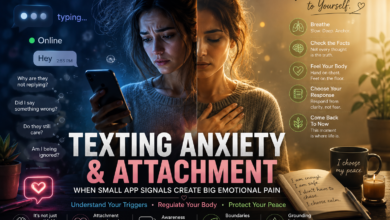
Image Placement 1: When Silence Becomes a Judgment
Where to place the image: Immediately after “Why Being Ignored Hurts So Much.”
Image idea: A person sitting beside an unanswered phone. Show three clear layers around the phone:
- Fact: No reply yet
- Fear: I am not important
- Reaction: I need to message again
Add an exit arrow:
Pause → Name the fact → Return to yourself
Emotional meaning: A communication delay can slowly turn into an identity wound.
Why the image helps the reader connect: Many readers do not notice the moment when waiting becomes self-rejection. This image teaches them to separate the event from the painful meaning created around it.
Image SEO title: Why Being Ignored Hurts Your Self-Worth
Image alt text: Unanswered message triggering rejection fear and external validation seeking
Image description: Educational emotional-health image showing how an unanswered message can move from a neutral event into self-blame, reassurance-seeking and reduced self-worth.
Image keywords: why being ignored hurts, unanswered message anxiety, external validation, rejection sensitivity, self-worth after rejection
What Happens Inside the Nervous System
Before your logical mind decides what the silence means, your body may already be reacting.
You may notice:
- tightness in your chest or throat;
- heaviness in your stomach;
- faster or shallow breathing;
- restlessness;
- repeated phone checking;
- difficulty eating or sleeping;
- anger that appears suddenly;
- numbness or emotional shutdown;
- inability to focus on work;
- a strong urge to call, explain or repair immediately.
The body may behave as though connection is not simply uncertain but endangered.
If emotional availability was unpredictable earlier in life, present-day distance may feel familiar. The current situation may be new, but the body may recognise the emotional atmosphere: waiting for care, waiting for reassurance, waiting to know whether you still belong.
This is why reassurance can feel urgent rather than optional.
A reply seems capable of stopping the discomfort. You check your phone because your nervous system is searching for a safety signal. When the reply comes, the body relaxes briefly. When another delay happens, the alarm returns.
This does not mean your nervous system is permanently damaged. It means it may have learned a protective response.
The first step is not to decide the entire future of the relationship while your body is activated. The first step is to create enough internal stability to think clearly.
Try this brief pause:
- Put both feet firmly on the floor.
- Exhale slightly longer than you inhale.
- Look around and name five neutral objects.
- Place your phone outside your immediate reach.
- Say: “This uncertainty is uncomfortable, but I do not need to solve it in panic.”
- Wait ten minutes before deciding what to send or do.
This small pause does not erase the pain. It interrupts the automatic movement from fear to chasing.
A regulated body cannot guarantee a comforting answer. It can help you respond with greater clarity, dignity and self-awareness.
Image Placement 2: External Validation and the Body-Alarm Cycle
Where to place the image: Immediately after the nervous-system explanation.
Image idea: A circular educational diagram:
Distance → Body alarm → Fear of rejection → Checking or chasing → Reassurance → Temporary relief → New uncertainty
Add a clear exit path:
Ground → Pause → Check facts → Delay reaction → Choose self-respect
Emotional meaning: Reassurance-seeking is often an attempt to end internal distress, not simply a desire for attention.
Why the image helps the reader connect: It explains the pattern without blaming or shaming the reader.
Image SEO title: External Validation and Nervous-System Cycle
Image alt text: Nervous-system cycle of rejection fear, reassurance-seeking and temporary relief
Image description: Diagram explaining how emotional distance can activate body alarm, repeated checking and temporary reassurance before uncertainty returns.
Image keywords: stop seeking external validation, nervous system regulation, reassurance-seeking cycle, anxious attachment, phone checking anxiety
Anxious Attachment, Self-Esteem and Reassurance
The relationship between anxious attachment self-esteem patterns can feel confusing because confidence may appear stable until an important relationship becomes uncertain.
When closeness feels secure, you may feel capable, peaceful and emotionally alive. When the other person becomes distant, your confidence may suddenly collapse.
Your self-esteem begins rising and falling according to:
- how quickly someone answers;
- whether their voice sounds warm;
- whether they initiate contact;
- how much attention they give;
- whether they approve of your needs;
- whether they seem pleased with you;
- whether they choose you over someone else.
This creates an exhausting emotional arrangement.
The other person’s behaviour becomes the main evidence you use to decide whether you are lovable.
A warm response means, “I am safe.”
A delayed response means, “Something is wrong.”
A disagreement means, “They may leave.”
A rejection means, “I am not valuable.”
This is how external approval can begin controlling internal identity.
One of the most confusing parts of attachment pain is that you may seek comfort from the same person whose behaviour activated the fear.
Their silence creates distress. Your mind then decides that only their response can end it.
The pattern becomes:
Distance
↓
Fear of rejection
↓
Loss of inner safety
↓
Checking, explaining or chasing
↓
Brief relief if they respond
↓
Stronger dependence on the next response
The reply may calm you, but it does not change the deeper belief that your worth depends on being answered.
When emotional attachment begins feeling larger than logic, read Why Emotional Attachment Feels So Intense?
https://bioandbrainhealthinfo.com/why-emotional-attachment-feels-intense/
When one person becomes your main source of peace, identity and reassurance, it may also help to understand what emotional dependency means:
https://bioandbrainhealthinfo.com/emotional-dependency-meaning/
Healthy relationships include reassurance, care and repair. The goal is not to become someone who never needs another person.
The goal is to stop making another person the sole authority over whether you deserve love and respect.
When Parental Approval Becomes Adult Validation-Seeking
Sometimes validation-seeking begins long before adult romantic relationships.
A child may learn that love feels safest when she is obedient, useful, successful, quiet, generous or emotionally easy to manage.
She may learn:
- Do not create difficulty.
- Do not ask for too much.
- Help everyone.
- Adjust yourself.
- Remain loyal.
- Accept unfairness.
- Be successful enough to make them proud.
- Keep trying until they finally choose you.
These rules may once have helped a child preserve emotional connection. In adulthood, the same rules can become self-abandonment.
In my own life, I spent years trying to earn love, approval and fairness from my parents. I adjusted myself, sacrificed, helped and kept hoping that one more effort would finally make me feel equally valued.
When my needs were rejected while another family member seemed to receive support more easily, I did not only feel disappointed. I began questioning what was wrong with me.
I tried to interpret painful behaviour in the kindest possible way because accepting the emotional truth felt too painful. I thought that perhaps I had misunderstood. Perhaps they were proud rather than jealous. Perhaps they loved me deeply but simply did not know how to show it. Perhaps one more sacrifice from me would finally create fairness.
I kept returning to the same hope.
But over time, I realised that I was not only asking for love. I was repeatedly handing over my self-worth and waiting for someone else to return it.
“Their silence hurt me, but my habit of sacrificing myself for a little approval hurt me even more.”
This is a deeply human pattern.
You may love your parents and still recognise what hurt you.
You may understand their limitations without pretending those limitations caused no pain.
You may grieve the love you wanted without spending the rest of your life proving that you deserve it.
The turning point is not always receiving an apology. Sometimes it is recognising that another person’s emotional capacity cannot remain the measure of your value.
Image Placement 3: Parental Approval and Adult Self-Abandonment
Where to place the image: Immediately after the parental-validation section.
Image idea: A split-life educational illustration.
Childhood lesson:
- Be useful
- Stay quiet
- Sacrifice
- Earn love
Adult pattern:
- Overgive
- Overexplain
- Accept unfairness
- Chase approval
Bottom message:
What protected you then may abandon you now.
Emotional meaning: Compassion for where the pattern began without turning it into a permanent identity.
Why the image helps the reader connect: It connects childhood approval-seeking with adult overgiving and self-abandonment.
Image SEO title: Parental Approval and Adult Validation-Seeking
Image alt text: Childhood approval patterns developing into adult self-abandonment and validation-seeking
Image description: Educational illustration connecting conditional parental approval with people-pleasing, overgiving, emotional self-abandonment and adult reassurance-seeking.
Image keywords: parental approval seeking, childhood attachment wounds, adult validation seeking, self-abandonment, conditional love
The Greater Injury: Leaving Yourself to Keep the Relationship
The other person’s silence may hurt, but the wound becomes deeper when you begin leaving yourself to preserve the connection.
Self-abandonment may look like:
- apologizing when you have not done anything wrong;
- saying yes when you are exhausted;
- becoming extra helpful after rejection;
- hiding your needs to avoid conflict;
- accepting confusing or cold behaviour;
- waiting for a reply before allowing yourself to eat or rest;
- overexplaining because being misunderstood feels unbearable;
- sacrificing money, time, health or work;
- tolerating unfairness because losing the relationship feels worse;
- treating someone else’s comfort as more important than your dignity.
You may call this loyalty.
You may call it patience.
You may call it understanding.
But beneath those qualities may be fear:
“If I stop trying, they may leave.”
That is the difference between love and emotional survival.
Love allows both people to remain human.
Emotional survival teaches one person to disappear so that the connection can continue.
To stop seeking external validation, ask a deeper question:
“Where did I leave myself in order to keep this person?”
Perhaps you left yourself when you stopped working and spent the day checking your phone.
Perhaps you left yourself when you accepted unequal treatment but continued trying harder.
Perhaps you left yourself when you treated your own need for fairness as selfish.
Perhaps you left yourself when you believed love required unlimited sacrifice.
This question is not designed to blame you. It is an invitation to return.
Self-Esteem and Self-Worth Are Not the Same
Self-esteem often relates to how confident, capable, attractive, successful or socially accepted you feel.
It can rise after praise and fall after criticism.
It can increase when work goes well and collapse when you face rejection.
Self-worth is deeper.
Self-worth is the belief that you still deserve dignity, care, safety and respect even when:
- someone misunderstands you;
- another person does not choose you;
- a relationship changes;
- you make a mistake;
- your work is rejected;
- your family treats you unfairly;
- you do not receive validation.
You may feel rejected without becoming worthless.
You may feel hurt without becoming unlovable.
You may want a reply without begging for one.
You may care deeply without sacrificing your identity.
This distinction is essential when rebuilding self-esteem after rejection.
Self-compassion can support this process. It does not mean pretending that harmful behaviour is acceptable. It means refusing to use pain as a reason to attack yourself.
Instead of asking, “What is wrong with me?” try asking:
- What happened?
- What did I need?
- What did I fear?
- What boundary or support would help now?
- How can I care for myself without denying reality?
What Happened, What You Believed and What You Can Do
| What happened | Wounded interpretation | Possible body response | Validation-seeking response | Self-respecting response |
|---|---|---|---|---|
| Your message was unanswered | “I am not important.” | Restlessness or chest tightness | Sending repeated messages | Separate the silence from your value |
| A parent did not call | “I do not matter to them.” | Sadness, anger or heaviness | Trying harder to earn attention | Grieve the pain without proving your worth |
| Someone became distant | “They are leaving me.” | Fear or panic | Overexplaining | Ask for clarity once, then observe |
| Their tone changed | “I did something wrong.” | Racing thoughts | Immediate apology | Wait, regulate and check the facts |
| Attention was followed by withdrawal | “I must earn their interest again.” | Urge to chase | Becoming more available | Notice whether inconsistency is a pattern |
| Your need was rejected | “My needs are a burden.” | Shame or numbness | Hiding future needs | Respect the answer without rejecting yourself |
| Conflict occurred | “The relationship is over.” | Urgency or fear | Giving up your position | Communicate clearly without begging |
This table is not meant to convince you that every fear is false.
Sometimes distance genuinely communicates unwillingness, disinterest, avoidance or emotional limitation.
The healing task is to receive that information without turning it into a judgment against your humanity.
Seven Practical Ways to Stop Seeking External Validation
1. Name the Fact Without Adding a Verdict
Write down only what objectively happened.
Fact: “My message has not been answered.”
Do not immediately add:
- They do not care.
- I embarrassed myself.
- I am not lovable.
- I always ruin relationships.
- Someone else is more important.
A fact may still be painful, but it is clearer and smaller than the complete story fear creates.
2. Identify the Meaning Your Mind Created
Complete this sentence:
“When they did not respond, I decided it meant…”
Your answer may reveal the older belief:
- I am not enough.
- I am too much.
- People always leave.
- My needs are inconvenient.
- I matter only when I am useful.
- I need to sacrifice more to be loved.
Naming the belief helps you see that a belief can feel true without being the full truth.
3. Notice What Happened in Your Body
Ask:
- Where did I feel the reaction first?
- Did my breathing change?
- Did I become restless, frozen, angry or numb?
- What action did my body urgently want me to take?
The urge to chase is not always wise guidance. Sometimes it is an alarm seeking immediate relief.
4. Delay the Fear-Based Action
Do not force yourself to promise that you will never contact the person again.
Choose a smaller boundary:
- wait twenty minutes;
- write the message but do not send it yet;
- put the phone in another room;
- complete one work task;
- eat something;
- take a short walk;
- speak with a safe person;
- pray, journal or sit quietly.
The goal is not to manipulate the other person. It is to stop fear from writing every message.
5. Use One Self-Worth Reminder
Choose one sentence:
- “Their response is information, not my identity.”
- “I can feel rejected without becoming worthless.”
- “I want clarity, but I will not beg for dignity.”
- “I can care about this connection and still care for myself.”
- “Uncertainty hurts, but self-abandonment will not make me safer.”
- “Their limitations are not the measurement of my value.”
Repeat it slowly.
This is not empty positive thinking. It is an emotional boundary.
6. Choose One Self-Respecting Action
Self-trust grows when you keep small promises to yourself.
Your action may be:
- returning to work;
- eating a proper meal;
- taking prescribed medicine;
- bathing or changing clothes;
- caring for your home or pets;
- declining something you cannot manage;
- resting without permission;
- stopping repeated explanations;
- setting a financial or emotional boundary.
For more support, read The Role of Self-Trust in Healing Attachment: How to Build It Back:
https://bioandbrainhealthinfo.com/role-of-self-trust-in-healing-attachment/
7. Evaluate the Relationship After You Feel Calmer
Do not use attachment language to dismiss every concern as your personal wound.
Ask:
- Is this person generally consistent?
- Can we discuss misunderstandings respectfully?
- Do they communicate when they need space?
- Do they use silence to punish or control?
- Do I feel safe expressing ordinary needs?
- Is repair mutual?
- Are their words and actions reasonably aligned?
- Am I always expected to adjust while they remain unchanged?
Learning to stop seeking external validation does not require tolerating emotionally harmful behaviour. It helps you evaluate the behaviour without collapsing into self-blame.
For a broader understanding of how attachment can create emotional suffering, read:
https://bioandbrainhealthinfo.com/why-attachment-causes-emotional-suffering/
Secure Communication Without Begging for Reassurance
Secure communication is clear, respectful and limited.
It does not attack the other person, but it does not erase your need.
You might say:
“I noticed some distance between us. I would like to understand what changed when you are ready to discuss it.”
Or:
“The uncertainty is difficult for me. Please let me know whether you need time or whether you no longer want to continue this conversation.”
Or:
“I care about resolving this, but repeated silence is not a communication pattern I can continue indefinitely.”
Secure communication is not about finding perfect words that make rejection impossible.
It means communicating honestly without abandoning your dignity.
Secure communication can support healthier repair, but it cannot replace safety, boundaries, or professional help when abuse, coercion, humiliation, or fear is present.
Attachment Trigger or Present Relationship Problem?
Not every painful reaction comes only from the past.
Sometimes the present relationship is genuinely confusing or unhealthy.
A person may repeatedly:
- offer closeness and then withdraw;
- promise communication but disappear;
- use silence after disagreements;
- expect access to you while remaining unavailable;
- mock your need for clarity;
- return only when they need attention, money, work or emotional care;
- create fear, humiliation or confusion.
Your history may intensify your reaction, but that does not automatically make the present behaviour acceptable.
Healing requires two forms of honesty:
- “My old wound may be amplifying this pain.”
- “This relationship may also be giving me real reasons to feel unsafe.”
You do not have to choose between blaming yourself and condemning the other person.
You can regulate your body, gather information, communicate once, observe the pattern and make a boundary-based decision.
Image Placement 4: Attachment Trigger or Unsafe Pattern?
Where to place the image: After “Attachment Trigger or Present Relationship Problem?”
Image idea: A two-column comparison.
Old attachment trigger
- Fear appears before enough facts
- One delay feels catastrophic
- The person is usually consistent
- Your mind quickly predicts abandonment
Present unhealthy pattern
- Silence is repeated or punitive
- Boundaries are mocked
- Communication remains deliberately confusing
- Coercion, humiliation or fear is present
Bottom message:
Both can be true: regulate yourself and evaluate the pattern.
Emotional meaning: The reader does not have to blame herself for every concern.
Why the image helps the reader connect: It balances personal responsibility with relationship discernment and safety.
Image SEO title: Attachment Trigger Versus Unhealthy Communication
Image alt text: Comparison between an attachment trigger and an unhealthy communication pattern
Image description: Educational chart distinguishing internal attachment activation from repeated silence, coercion, humiliation or unsafe relationship behaviour.
Image keywords: attachment trigger, unhealthy communication, emotional withdrawal, silent treatment, relationship boundaries
Five-Minute Self-Worth Reset
Use this exercise when rejection or silence begins controlling your day.
Step 1: What Happened?
Write only the observable event.
My answer:
Step 2: What Did My Mind Say?
Write the first painful interpretation.
My answer:
Step 3: What Old Belief Was Activated?
Choose one:
- I am not enough.
- I am too much.
- I am easy to leave.
- My needs are a burden.
- I matter only when I am useful.
- I must sacrifice to receive love.
- Other: ____________________________
Step 4: What Happened in My Body?
- Chest tightness
- Stomach heaviness
- Restlessness
- Numbness
- Anger
- Crying urge
- Repeated phone checking
- Other: ____________________________
Step 5: Where Did I Begin Leaving Myself?
- I stopped working.
- I ignored food or rest.
- I wanted to apologize unnecessarily.
- I began overexplaining.
- I accepted behaviour that hurt me.
- I decided my value depended on their response.
Step 6: What Is the Self-Respecting Truth?
Complete:
“This hurts, but it does not prove…”
Step 7: What One Action Brings Me Back Today?
This is how learning to stop seeking external validation becomes a lived practice instead of an abstract idea.
BBH Support Resource
Want a Simple Tool to Practise This?
Download the BBH Secure Communication and Self-Worth Worksheet to reflect on:
- what triggered you;
- what happened inside your body;
- what fear or old belief became activated;
- what reassurance you wanted;
- what hidden need was underneath the reaction;
- where you began abandoning yourself;
- what safer words you can use next time;
- what self-respecting action will help you return to yourself.
Download the free PDF:
[Add direct PDF download link here]
Prefer to Receive It by Email?
Email info@bioandbrainhealthinfo.com and write:
“Send me the Secure Communication and Self-Worth Worksheet.”
The worksheet is designed for personal reflection and can also help you organise your thoughts before speaking with an appropriate mental-health professional.
Continue With the BBH Anxiety and Emotional Clarity Workbook
A single worksheet can help you understand one difficult moment. A structured workbook can help you notice patterns across repeated triggers, anxious thoughts, body reactions, reassurance-seeking and relationship boundaries.
The upcoming BBH Anxiety and Emotional Clarity Workbook is designed to help readers:
- identify recurring anxiety and attachment triggers;
- separate facts from fear-based interpretations;
- track body reactions and reassurance-seeking;
- understand hidden emotional needs;
- practise grounding and self-regulation;
- prepare clearer questions for professional support;
- rebuild self-trust through practical daily exercises.
Available on Amazon soon.
[Add Amazon purchase link after the product page is live]
The workbook is an educational self-reflection resource and is not a substitute for diagnosis, therapy, medical treatment or emergency support.
People Also Ask
1. Why do I need validation when someone ignores me?
Being ignored may activate fears of rejection, abandonment or not being important. A reply can then feel like proof that the relationship is safe and that you still matter. Healing involves acknowledging the pain while separating another person’s response from your basic worth.
2. Can anxious attachment cause low self-esteem?
Anxious attachment patterns may contribute to unstable self-esteem when confidence depends heavily on closeness, reassurance or approval. However, one strong reaction does not establish an attachment style. Patterns should be understood in the broader context of your experiences and relationships.
3. Why does being ignored make me feel worthless?
Silence may become connected with earlier experiences of emotional inconsistency, conditional affection or rejection. The present event can activate an older belief such as “I am not important.” That belief may feel powerful without being an objective measure of your worth.
4. How do I stop chasing someone for reassurance?
Pause before sending another message, regulate your body, write down the facts, identify the fear behind the urge and choose one action that supports your own life. You can request clarity without repeatedly trying to force security from an unavailable person.
5. Can attachment wounds affect adult relationships?
Attachment wounds may influence how adults experience closeness, conflict, trust, distance and reassurance. They can contribute to fear-based interpretations and protective behaviours. These patterns do not determine your future, and healthier responses can be learned.
Frequently Asked Questions
1. How do I stop seeking external validation?
Notice when another person’s behaviour becomes a judgment about your identity. Calm the body, separate facts from interpretations, delay reassurance-seeking and choose one action that protects your dignity and daily life.
2. How can I heal attachment wounds?
You may begin to heal attachment wounds by building self-awareness, regulating emotional reactions, developing boundaries, strengthening self-trust and experiencing safer relationships. Professional support may be helpful when the pattern causes persistent distress.
3. What is the difference between self-esteem and self-worth?
Self-esteem often relates to confidence, performance or approval. Self-worth is the deeper belief that you deserve dignity and care even when you fail, face rejection or do not receive validation.
4. How long does it take to reduce validation-seeking?
There is no fixed timeline. Progress often develops gradually through repeated awareness, emotional regulation, healthier relationships and self-respecting action. The goal is not never needing reassurance; it is no longer losing yourself without it.
5. When should I seek professional support?
Consider professional support when distress is persistent, affects sleep, appetite, work, health or daily functioning, or when a relationship involves abuse, coercion, threats, humiliation or fear.
YMYL Safety Note
This article is for education and self-reflection. It does not diagnose an attachment style or replace therapy, medical care, emergency assistance or individual mental-health treatment. Seek qualified support when distress is persistent, significantly affects daily functioning or involves concerns about abuse or personal safety.
Personal Note
For many years, I believed love meant adjusting, sacrificing, helping, waiting and proving that I deserved a place in someone’s heart.
When my parents became distant, rejected my needs or appeared to make another family member more important, I did not only feel hurt. I began questioning my value.
I wondered what more I needed to do, give or become so that I would finally feel equally loved.
I kept trying to understand their behaviour in the kindest possible way because accepting the emotional truth was painful. I told myself that perhaps I had misunderstood them. I believed that one more effort from me might repair everything.
But the deeper truth was that I had learned to sacrifice myself for small amounts of approval.
My turning point came when I stopped asking only, “Why do they not treat me equally?” and began asking, “What do I need to remain peaceful, emotionally stable and self-respecting?”
I now understand that another person’s emotional capacity is not the measurement of my value.
I can love my parents and still recognise what hurt me. I can grieve what I did not receive without spending the rest of my life begging for it. I can stop proving, stop chasing and stop leaving myself behind.
Their silence may still hurt me, but it no longer has the right to define me.
Conclusion: Their Response Is Information, Not Your Identity
Learning to stop seeking external validation is not about pretending that you do not need love.
It is about refusing to destroy yourself when love feels uncertain.
It means recognising when silence becomes self-blame, when fear becomes chasing and when reassurance-seeking begins controlling your body, work, health and dignity.
You can want clarity without begging for it.
You can feel rejected without becoming worthless.
You can care without disappearing.
You can communicate without repeatedly proving your value.
You can acknowledge an old wound while also recognising a present unhealthy pattern.
Most importantly, you can learn to return to yourself before another person returns to you.
That is the deeper meaning of healing external validation: not emotional isolation, but a safer and more respectful relationship with your own worth.
Related BBH Reading
- Texting Anxiety and Attachment: Why Delayed Replies Hurt
https://bioandbrainhealthinfo.com/why-delayed-replies-hurt-so-much/ - The Role of Self-Trust in Healing Attachment: How to Build It Back
https://bioandbrainhealthinfo.com/role-of-self-trust-in-healing-attachment/ - Why Emotional Attachment Feels So Intense?
https://bioandbrainhealthinfo.com/why-emotional-attachment-feels-intense/ - What Is Emotional Dependency Meaning? Causes and Healing
https://bioandbrainhealthinfo.com/emotional-dependency-meaning/ - Why Attachment Causes Emotional Suffering
https://bioandbrainhealthinfo.com/why-attachment-causes-emotional-suffering/
External References
- American Psychological Association
Attachment Bonds: Understanding Our Closest Relationships
https://www.apa.org/news/podcasts/speaking-of-psychology/attachment-bonds - Harvard Health Publishing
The Power of Self-Compassion
https://www.health.harvard.edu/healthbeat/the-power-of-self-compassion - National Institute of Mental Health
Caring for Your Mental Health
https://www.nimh.nih.gov/health/topics/caring-for-your-mental-health - National Institute of Mental Health
My Mental Health: Do I Need Help?
https://www.nimh.nih.gov/health/publications/my-mental-health-do-i-need-help - Royal College of Psychiatrists
Coping After a Traumatic Event
https://www.rcpsych.ac.uk/mental-health/mental-illnesses-and-mental-health-problems/coping-after-a-traumatic-event