Vitamin B12 Deficiency and Brain Fog
Can Low B12 Cause Brain Fog? Signs & Help

Brain Health › Vitamins & Minerals · Evidence-informed education · Updated November 2026
Thank you for reading this post, don't forget to subscribe!You sit down to finish a familiar task, but your thoughts feel unusually slow. You reread the same paragraph. You forget what you planned to say. Even a simple decision seems to take extra effort.
It can be frightening when concentration that once felt effortless becomes unreliable. You may blame poor motivation or stress. Yet some changes in thinking also deserve a medical assessment. Vitamin B12 deficiency and brain fog can be connected, particularly when memory problems occur alongside fatigue, tingling, or balance changes.
This guide explains what vitamin B12 does, how deficiency may affect cognition, which other conditions can resemble it, and how clinicians investigate and treat it. Its purpose is to help you ask better questions—not diagnose yourself from a checklist.
Yes. Vitamin B12 deficiency can contribute to reduced concentration, short-term memory problems, and cognitive changes. However, brain fog is a description of symptoms, not a medical diagnosis, and low B12 is only one of several possible causes. NICE specifically recognises cognitive difficulties as possible symptoms of deficiency, even without anaemia.
1. What Does Vitamin B12 Deficiency and Brain Fog Feel Like?
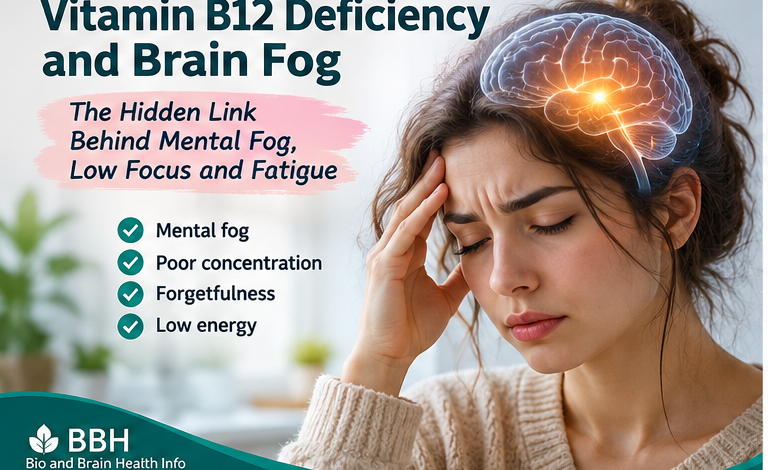
Brain fog is an informal term for feeling mentally cloudy or less sharp than usual. People describe difficulty concentrating, forgetfulness, slow thinking, or trouble finding words. Some cannot follow complicated conversations as comfortably as before; others lose track of work halfway through a task.
These experiences can affect confidence. A person may check emails repeatedly, avoid challenging tasks, or worry about making mistakes. Yet none of these signs proves a vitamin deficiency. The important questions are whether symptoms are new, how long they have lasted, what else is happening physically, and whether daily functioning is changing.
Why concentration trouble can create a worry cycle
A few lapses in attention may lead to worry about memory. Worry then competes for attention, making ordinary tasks feel even harder. This is an illustrative psychological pattern, not a test for B12 deficiency. Physical and emotional factors can coexist; neither should be dismissed.
For coping ideas when worry is prominent, see BBH’s Anxiety Survival Guide. Emotional strategies can support wellbeing, but they cannot replace medical evaluation of unexplained neurological symptoms.
2. How Vitamin B12 Supports the Brain and Nervous System
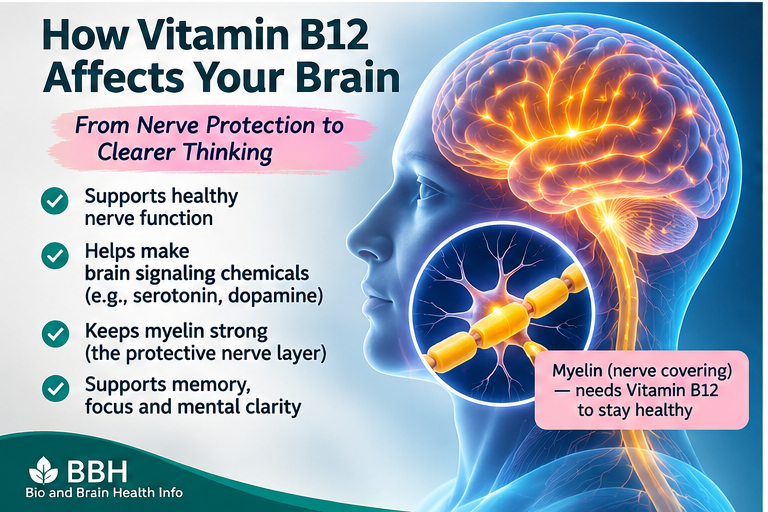
Vitamin B12, or cobalamin, plays a part in DNA synthesis, normal red blood cell formation, and essential metabolic reactions. It also supports neurological function, including processes involved in maintaining the myelin that surrounds many nerve fibres.
Myelin helps nerve signals travel effectively. Significant or prolonged deficiency can disturb nervous-system function, sometimes affecting sensation, walking, or cognition. It would nevertheless be misleading to assume that every person with brain fog has damaged myelin. Symptoms have many possible mechanisms, and diagnosis requires clinical context.
Does taking extra B12 automatically boost memory?
No. Correcting a genuine deficiency may improve symptoms attributable to that deficiency. But research does not establish extra B12 as a universal memory enhancer for people whose B12 status is already adequate. The objective is appropriate nutrition and treatment, not increasingly high doses in the hope of achieving exceptional brain performance.
3. Vitamin B12 Deficiency Symptoms and Neurological Warning Signs
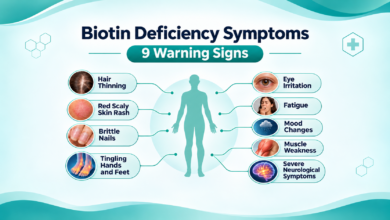
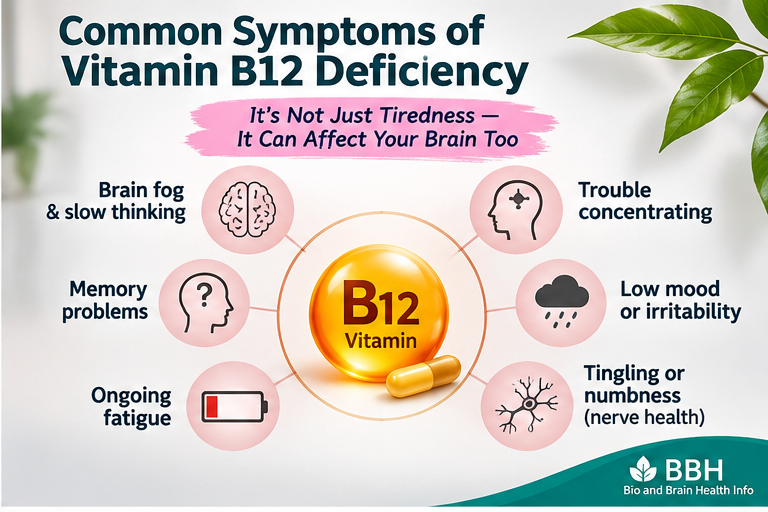
Recognised vitamin B12 deficiency symptoms range from tiredness and a sore tongue to tingling, balance difficulties and cognitive changes. They vary considerably between individuals and do not always develop together.
| Possible symptom | What someone may notice | Suggested response |
|---|---|---|
| Brain fog | Reduced mental clarity or concentration | Discuss persistent symptoms with a clinician |
| Memory changes | Forgetfulness or difficulty retaining information | Seek assessment for new or progressive changes |
| Fatigue | Unexpected weakness or low stamina | Consider a broader medical assessment |
| Tingling | Pins and needles or altered sensation | Arrange timely medical review |
| Balance problems | Unsteady walking or falls | Obtain prompt medical assessment |
| Mood changes | Low mood, irritability or anxiety | Review mental and physical health together |
| Sore tongue | Inflammation or discomfort | Discuss possible causes with a professional |
Can there be brain fog without anaemia?
Yes. A particularly important content gap in discussions of vitamin B12 deficiency and brain fog is the mistaken belief that normal blood counts rule it out. NICE explicitly advises that absence of anaemia or macrocytosis must not be used to exclude B12 deficiency. Neurological changes sometimes occur without those blood findings.
4. Why Does B12 Deficiency Develop?
Inadequate dietary intake is one cause, but absorption is just as important. The body must release B12 from food and absorb it using processes involving the stomach, intrinsic factor, and small intestine.
Dietary patterns
Animal-derived foods contain natural B12. People who avoid these foods, especially those following vegan diets without reliably fortified foods or supplements, may not get enough. Vegetarian diets can also be insufficient depending on actual intake.
Absorption problems
Autoimmune gastritis can impair intrinsic-factor production. Certain intestinal diseases and previous digestive surgery can also interfere with absorption. Someone can therefore consume B12-containing foods yet still develop deficiency.
Medicines and other risks
Long-term metformin use and some acid-suppressing medicines are relevant to B12 assessment. Older adults and people with gastrointestinal conditions may also face greater risk. Recreational nitrous oxide exposure is another important consideration because it may impair B12 function.
Do not stop prescribed medicines because of a possible deficiency. Instead, bring a complete medication and supplement list to the clinician reviewing symptoms.
5. Low B12 and Memory Problems: What Else Could Cause Brain Fog?
Low B12 and memory problems are associated in recognised clinical guidance, but the same cognitive complaints can appear with many conditions. Difficulty focusing after sleepless nights, for example, does not necessarily indicate a vitamin deficiency.
| Possible contributor | Helpful context |
|---|---|
| Inadequate sleep | Attention and alertness suffer when sleep is disrupted |
| Anxiety or depression | Worry, low mood and reduced concentration may overlap |
| Medication effects | New or changed medicines may coincide with cognitive symptoms |
| Iron deficiency or anaemia | Tiredness may make mental work harder |
| Thyroid disorders | Some thyroid conditions cause fatigue and cognitive complaints |
| Glucose disturbances | High or low glucose can affect how a person feels and thinks |
| Neurological illness | Progressive, unusual, or focal signs require evaluation |
No home symptom checklist can safely distinguish these causes. Assessing the whole person matters more than focusing on a single nutrient. Readers struggling with disrupted sleep may also find BBH’s Sleep Anxiety Guide useful alongside appropriate medical care.
6. Vitamin B12 Deficiency and Brain Fog: Blood Tests and Borderline Results
Clinical testing begins with symptoms, examination findings and medical history. NICE recommends total B12 or active B12 as initial tests in appropriate patients. A full blood count is often helpful, but normal blood-cell measurements do not necessarily exclude neurological deficiency.
| Test | Purpose | Limitation |
|---|---|---|
| Total B12 | Measures circulating vitamin B12 | Borderline values may need more interpretation |
| Active B12 | Measures holotranscobalamin | Reference thresholds and context matter |
| Full blood count | Examines anaemia and cell characteristics | Normal results do not exclude deficiency |
| Methylmalonic acid (MMA) | Can help clarify uncertain B12 results | Kidney function and other factors affect levels |
| Homocysteine | May contribute to selected evaluations | Not specific to B12 deficiency |
What if B12 is borderline rather than clearly low?
A borderline result is not a diagnosis by itself. Clinicians may consider the laboratory method, symptoms, prior supplements, risk factors and follow-up testing. The need for treatment can differ depending on the clinical situation.
Should supplements begin before testing?
Recent B12 supplementation can affect laboratory interpretation, so discussing testing before starting supplements may be helpful when symptoms are not urgent. Severe or progressive neurological symptoms require prompt care; necessary treatment should not be delayed for an ideal testing sequence.
7. Vitamin B12 Deficiency Treatment: Oral Tablets or Injections?
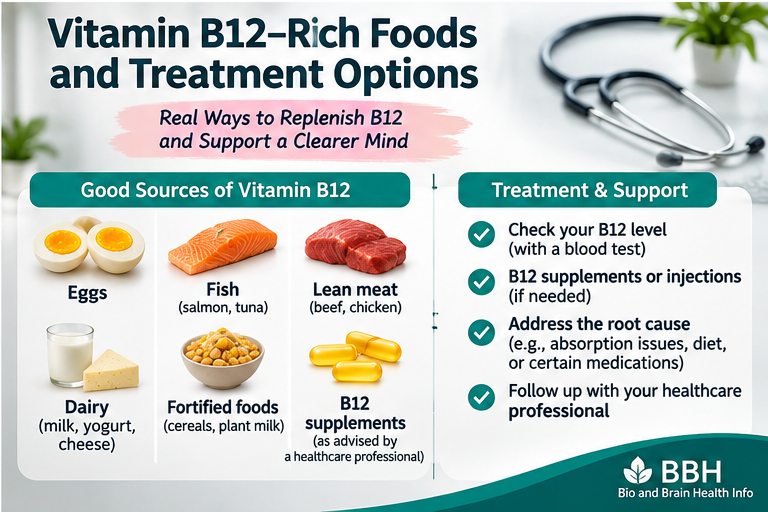
Appropriate vitamin B12 deficiency treatment depends on the cause, severity, absorption and whether neurological symptoms are present. Some people can use oral replacement; others may need intramuscular injections. NICE recommends lifelong intramuscular replacement for certain irreversible causes such as autoimmune gastritis or complete removal of the stomach or terminal ileum.
| Situation | Possible approach |
|---|---|
| Insufficient dietary B12 | Oral replacement and reliable dietary sources |
| Malabsorption | Clinician-selected oral or injected replacement |
| Serious neurological involvement | Urgent assessment and prompt treatment |
| Irreversible cause | Long-term or lifelong replacement, as appropriate |
| Symptoms persisting | Reassessment of response and alternative causes |
How quickly does brain fog improve after treatment?
There is no guaranteed schedule. NICE notes that some symptoms may begin improving within two weeks, although improvement may take up to three months and full recovery may take longer. Prolonged neurological injury can sometimes leave persistent problems. This is why promises such as “one injection clears brain fog instantly” are misleading.
When vitamin B12 deficiency and brain fog coexist, correcting a confirmed deficiency is important, but improvement can also depend on sleep, medicines, other illnesses and the duration of symptoms. A clinician should reassess symptoms that worsen or fail to improve.
8. B12-Rich Foods and Daily Requirements
For most adults, the US National Institutes of Health lists a recommended dietary allowance of 2.4 micrograms of vitamin B12 daily; pregnancy requires 2.6 micrograms and lactation 2.8 micrograms. These are dietary reference amounts, not treatment doses for diagnosed deficiency.
| Food | Source type | Practical note |
|---|---|---|
| Fish and shellfish | Natural B12 | Amount varies by species and portion |
| Meat and poultry | Natural B12 | Choose according to personal dietary needs |
| Eggs and dairy | Natural B12 | Useful options for some vegetarians |
| Fortified breakfast cereal | Added B12 | Check the nutritional label |
| Fortified plant milk | Added B12 | Not every product contains B12 |
| Fortified nutritional yeast | Added B12 | Only products specifically fortified qualify |
Indian and international meal examples
In India, practical choices may include curd, milk, eggs where suitable, fish or meat for those who eat them, or verified fortified products. In other countries, yogurt, fish, eggs, and fortified cereal or plant milk may be convenient. Ordinary lentils, vegetables, fruit and nuts are nutritious but are not dependable natural B12 sources.
If you follow a vegan diet, arrange a reliable B12 source through fortified foods or appropriate supplementation. A food-first approach alone may also be insufficient when absorption is impaired.
For the broader nutrition context, see Vitamins and Minerals for Brain Health.
9. The BBH Five-Step Plan for Vitamin B12 Deficiency and Brain Fog
This practical framework is for organising observations and healthcare conversations. It is not a validated diagnostic test.
1. Observe: Record memory lapses, concentration difficulties, fatigue, tingling, balance changes and how they affect daily life.
2. Review: List your diet, supplements, prescribed medicines, digestive conditions and previous laboratory results.
3. Investigate: Discuss persistent or progressive symptoms with a qualified professional. Ask whether B12 testing or other investigations are appropriate.
4. Follow treatment: If deficiency is confirmed, follow the agreed replacement plan rather than changing doses yourself.
5. Reassess: Monitor meaningful changes and seek review when symptoms persist, worsen or return.
For vitamin B12 deficiency and brain fog, a seven-day record can help document symptoms while the underlying cause is evaluated. A diary may clarify patterns but cannot replace laboratory assessment or examination.
10. Folate, B12 and the Risk of Misleading Blood Results
Vitamin B12 and folate both contribute to red blood cell formation and DNA synthesis, and deficiencies can share some blood findings. Taking folic acid may improve certain blood abnormalities while neurological problems from underlying B12 deficiency remain untreated. That is why taking several high-dose supplements without evaluating symptoms is not a reliable solution.
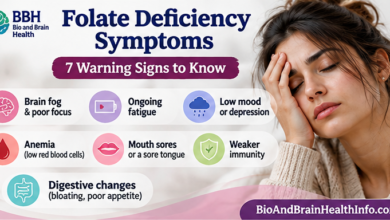
Readers exploring other nutrients can also read BBH’s Folate Deficiency Symptoms guide. Folate and B12 should be assessed in the context of an individual’s symptoms and risk factors rather than assumed to be interchangeable.
11. People Also Ask
Can low B12 cause brain fog without anaemia?
Yes. Neurological and cognitive symptoms can occur without anaemia or enlarged red blood cells. Evaluation should consider symptoms and appropriate B12 testing rather than blood count alone.
Can vitamin B12 deficiency cause forgetfulness?
Yes. Short-term memory and concentration problems are recognised possible symptoms. Forgetfulness is not specific to B12 deficiency and should be assessed in context.
Does B12 improve memory immediately?
No immediate improvement is guaranteed. Improvement after treating deficiency may take weeks or months, and extra supplementation is not proven to enhance memory in everyone.
Which blood test checks B12 deficiency?
Total or active B12 is commonly used first. If results remain uncertain, tests such as methylmalonic acid may be appropriate.
Can metformin contribute to low B12?
Yes. Long-term metformin can reduce B12 levels in some patients. Discuss risk and testing with your clinician; do not stop a prescribed diabetes medicine yourself.
12. Frequently Asked Questions
Is brain fog from vitamin B12 deficiency permanent?
Many symptoms improve with timely treatment, but prolonged neurological complications can sometimes persist. Early clinical evaluation is valuable.
Can vegetarians develop vitamin B12 deficiency?
Yes. Intake depends on eggs, dairy, fortified foods or supplements, while some people also have absorption problems independent of diet.
Are B12 injections always better than tablets?
No. The appropriate route depends on the cause and severity of deficiency, absorption and clinical circumstances.
Can I start a supplement without a blood test?
Preventive supplementation can be appropriate in some dietary patterns, but unexplained cognitive or neurological symptoms should be assessed. Starting supplements may complicate diagnostic interpretation.
What if brain fog continues despite B12 treatment?
Ask for reassessment. Persistent symptoms may reflect incomplete recovery, treatment questions, or another contributor such as sleep, medicines, thyroid problems or glucose disturbances.
13. Free BBH Support Resource: Brain Fog Symptom Tracker
A free seven-day record for tracking changes in memory, concentration, energy, sleep, tingling, medicines and questions for a medical appointment.
Download Free B12 Brain Fog Tracker (PDF)
A free seven-day symptom diary for appointment preparation.
This resource helps organise observations; it does not diagnose B12 deficiency.
If persistent symptoms also lead to worry or isolation, visit BBH’s Support Resources and Start Here pages for additional educational support. These resources are not treatments for a medical deficiency.
14. A Compassionate, Evidence-Based Conclusion
Vitamin B12 deficiency and brain fog are medically relevant, but a cloudy mind does not automatically mean that one vitamin is missing. Recognising warning signs, understanding absorption risks, arranging appropriate tests and following clinical treatment are more useful than chasing instant fixes.
When your thinking feels unclear, respond with curiosity and appropriate care—not self-blame.
There is value in taking cognitive changes seriously without assuming the worst. The aim is to understand the cause, act on reliable evidence, and seek support early when symptoms affect daily life.
Medical Sources and Further Reading
- NICE: Vitamin B12 Deficiency in Over 16s: Diagnosis and Management
- NIH Office of Dietary Supplements: Vitamin B12 — Health Professional Fact Sheet
- NHS: Vitamin B12 or Folate Deficiency Anaemia: Symptoms
- NHS: Vitamin B12 or Folate Deficiency Anaemia: Treatment
BBH editorial health education. This post does not claim independent clinical review or first-hand medical testimony.