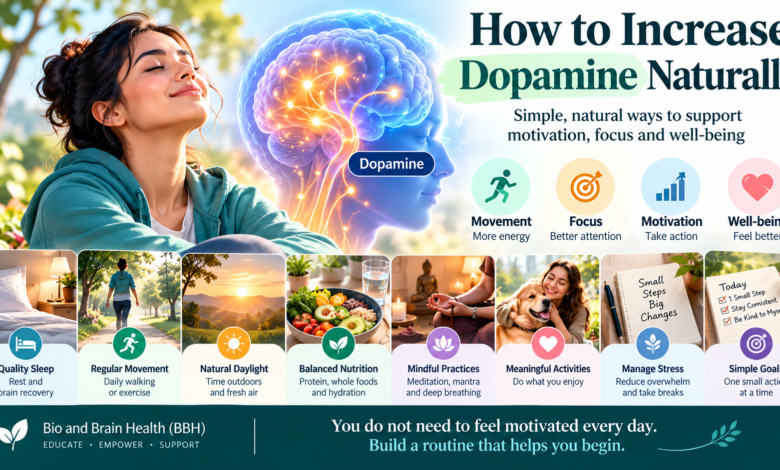
Natural Ways to Increase Dopamine and Support Motivation Many people explore natural ways to increase dopamine when they struggle with low motivation, mental fatigue, difficulty concentrating, or inconsistent daily habits.
While dopamine plays an important role in motivation and reward-related learning, these experiences do not necessarily indicate low dopamine levels.
Quality sleep, balanced nutrition, regular movement, meaningful activities, spiritual reflection, and manageable daily goals can support healthy brain function and emotional well-being.
The key is not chasing an instant dopamine boost but building sustainable habits that make it easier to take action and remain consistent.
Read This :- How Your Nervous System Controls Emotional Reactions
Why planning feels easier than taking action Planning lets you picture the outcome. You can organize your tasks, imagine success, and feel hopeful without yet doing the difficult parts. Action asks more: you must focus, make decisions, move your body or use sustained mental effort, manage interruptions, and tolerate the possibility of mistakes.
Imagine deciding to write a book. You can list twenty chapters in one sitting. Writing the first chapter requires choosing words, developing ideas, handling uncertainty, and staying with the work even when it feels slow.
An unfamiliar task may also trigger concerns such as Where do I begin? What if I fail? How long will this take?
The amygdala contributes to the brain’s processing of emotionally important and potentially threatening information, while prefrontal networks contribute to planning and regulation. These systems work together; the amygdala does not automatically classify every new task as dangerous.
Planning lets us imagine success, while taking action requires focus, decisions, and effort. Small, specific steps can make starting easier. Dopamine is involved in effort and reward learning, but it does not alone decide whether you act. Motivation also depends on your health, habits, environment, attention, and the perceived value and difficulty of a task.
“A plan describes the future. A small, specific action creates a way to begin.”
If you repeatedly start strong but lose consistency, our article on why habits don’t stick explores the emotional and practical barriers that can make routines difficult.
Please Read This :- Why Habits Don’t Stick
8 natural habits that support motivation and brain health 1. Protect your sleep Poor sleep can make concentration, emotional regulation, and effortful work harder. Most adults need at least seven hours of sleep, although individual needs vary.
Keep a reasonably consistent schedule and address ongoing insomnia or excessive daytime sleepiness with a clinician. Sleep is a foundational health habit—not a guaranteed dopamine “reset.”
2. Walk and move your body Regular movement supports physical and mental well-being. A comfortable 20-minute walk can be an approachable personal target; shorter walks also count.
If you sit for long periods, try a gentle movement break every two hours. Move your legs and shoulders, and stretch your neck gently without forcing painful ranges. Build toward activity guidelines as suitable for your health.
3. Foods That Support Dopamine Production If you are exploring how to increase dopamine naturally, daily nutrition is a reasonable place to begin.
Eggs, milk, yogurt, lentils, beans, nuts, seeds and fish provide protein and amino acids including tyrosine and phenylalanine, which the body uses in dopamine synthesis.
These foods that support dopamine production contribute to overall nutritional health, but eating extra tyrosine does not automatically raise dopamine in the brain. A balanced eating pattern suited to your individual medical needs matters more than a single “dopamine food.”
4. Spend some time in daylight Daylight helps regulate your body clock, which influences alertness and sleep timing. If practical, get outdoor light during your waking day without staring at the sun. Avoid rigid claims that a particular duration directly increases dopamine by a fixed percentage.
Please Read This :- Dopamine & Brain Chemistry & Brain Health
5. Make the starting step smaller Replace “finish everything today” with “open the document and work for ten minutes.” A precise, achievable starting step reduces ambiguity. A clear place, time, and action can help translate intentions into behaviour.
6. Keep meaningful pleasure in your day Spend time on hobbies, music, social connection, nature, or caring for a pet. Enjoyment is not wasted time.
In a small experimental study, pleasurable musical experiences were associated with dopamine release in reward-related brain regions—but this does not mean every song produces the same biological effect. Read the research on music and reward .
7. Support stress recovery Stress may show up as tension, racing thoughts, avoidance, or mental fatigue. Take a short pause, notice what you need, breathe comfortably, and then choose a manageable next step.
Relaxation practices can help some people feel more settled, but they should not be marketed as dopamine treatments. Explore how the nervous system relates to emotions .
8. Reduce interruptions and digital overload If notifications repeatedly interrupt work, put your phone out of reach for a short block. Schedule check-in times instead of relying on constant willpower. A “dopamine detox” does not literally remove dopamine from your brain; it can be more accurate to talk about changing distracting habits.
Foods That Support Dopamine Production Choosing foods that support dopamine production is one way to provide your brain with nutrients needed for healthy functioning.
Protein-rich foods such as eggs, milk, yogurt, fish, lentils, beans, nuts, and seeds contain amino acids, including tyrosine and phenylalanine, which the body uses to synthesize dopamine.
Including foods that support dopamine production in a balanced diet also helps provide protein, vitamins, and minerals essential for overall brain health.
However, eating more tyrosine-rich foods does not automatically increase dopamine levels in the brain. Rather than relying on specific supplements or quick fixes, focus on a varied diet, adequate sleep, regular movement, and consistent daily habits.
Combining foods that support dopamine production with these healthy lifestyle practices can support your overall well-being and motivation.
Natural Ways to Increase Dopamine and Support Motivation Many people search for natural ways to increase dopamine when they experience low motivation, mental fatigue, difficulty concentrating, or inconsistent daily habits.
Dopamine plays an important role in motivation, movement, and reward learning, but these experiences do not necessarily indicate low dopamine levels.
Commonly recommended natural ways to increase dopamine include quality sleep, balanced nutrition, regular physical activity, enjoyable experiences, and meaningful daily routines.
These practices support overall brain health and emotional well-being, although they do not guarantee a measurable increase in dopamine.
When exploring natural ways to increase dopamine, focus on sustainable lifestyle changes rather than quick fixes.
Walking, spiritual reflection, mindful breathing, reducing digital distractions, and completing small achievable tasks may help improve consistency and make daily responsibilities easier to manage.
Please Read This :- Mental Health Guide for Beginners – Start Here for Emotional Healing
Can mantra, mala, prayer and spiritual reading help you focus? For some people, a sense of peace begins with spiritual practice rather than a productivity technique. Reading a few pages of a meaningful text, repeating a mantra, or sitting quietly with a mala can create structure, reflection, and a familiar moment of attention.
Mantra repetition asks you to bring the mind back whenever it wanders. Studies of meditation and chanting suggest possible benefits for stress and attention, although the evidence varies by practice and study design.
A small imaging study of Yoga Nidra investigated dopamine changes during meditation; that finding cannot be generalized to all prayer, mala or shloka practices.
Gentle breathing may help relaxation. Let your breath be natural and comfortable; do not force it to match every bead. Spiritual practice can be personally meaningful without requiring a claim that it “heals the amygdala” or directly boosts dopamine.
BBH MIND–BODY–PURPOSE ROUTINE
A Gentle Daily Rhythm Read a few pages of spiritual or reflective writing.
Walk for around 20 minutes if appropriate, and take
03 · Attention Spend 5–10 comfortable minutes with a mantra,
Identify one concrete responsibility and begin
Important:
Eight simple habits can support motivation and well-being, from daily walking and mindful breathing to spiritual reading and building consistent routines. When motivation disappears: the BBH PAUSE–START–REPEAT method You do not have to wait for a perfect mood to return to something meaningful. The following is a BBH editorial self-management framework—not a validated medical intervention.
BBH ACTION FRAMEWORK
PAUSE – START – REPEAT STEP 01
PAUSE Ask: Is this fatigue, uncertainty,
STEP 02
START Choose one visible action small enough
STEP 03
REPEAT Keep a realistic routine and return
A person with clear goals may still have days of low motivation. Routines can reduce repeated decisions and make it easier to start, but dopamine remains part of normal brain function even when behaviour is habitual. Discipline does not switch dopamine off.
Try this: “After breakfast, I will open my document and write for ten minutes.” A specific time, cue and action can make execution less ambiguous than “I will work when I feel ready.”
If your plan falls apart after three days Review the barrier instead of doubling the pressure. Was the task too large? Were you tired? Was the timing unrealistic? Adjust the minimum action, establish a clear cue, and begin again. You may find our guide to building habits that last helpful.
What to Do When You Feel Stuck What You Notice Possible Barrier Try This You plan but never begin Unclear or intimidating first step Define a ten-minute starter task You feel exhausted each morning Sleep, stress or a health issue Review sleep; seek assessment if persistent Your phone keeps winning Frequent interruptions Use a short notification-free block You lose consistency after a few days An overly ambitious plan Lower the minimum; resume the next day You no longer enjoy much Possible low mood or other health concern Ask a healthcare professional for support
BBH SCIENCE & EVIDENCE CHECK
Claims to Treat Carefully
✓ Well Established
Dopamine plays important roles in movement and motivation. Adequate sleep, balanced nutrition, and regular physical activity support general health and healthy brain functioning.
● Promising but Variable
Some meditation practices may support attention and stress management. Experimental research has also observed dopamine responses to certain pleasurable activities, although effects vary between individuals and circumstances.
⚠ Not Established
There is insufficient evidence to promise a guaranteed dopamine increase from mantra chanting, cold showers, particular foods, seven-day dopamine detoxes, or any exact daily routine.
BBH Note:
A Realistic 7-Day Consistency Practice Small daily actions can help you build a routine without waiting for perfect motivation.
Day One Action Reflection 01 Record sleep and energy When does starting feel hardest? 02 Spend time in daylight How does your schedule feel? 03 Walk or move comfortably What movement do you enjoy? 04 Try spiritual reading or quiet reflection Did it help you settle? 05 Work on one ten-minute task What made beginning easier? 06 Reduce one digital interruption What distracted you? 07 Review and repeat one habit What is sustainable next week?
BBH Note:
This is a self-reflection practice. It does not measure dopamine or replace medical evaluation.
People Also Ask 1. How can I increase dopamine naturally? Support sleep, movement, adequate nutrition, enjoyable activity, and meaningful routines. These practices support healthy functioning but do not guarantee higher measured dopamine.
2. What foods help dopamine production? Protein-rich foods provide amino acids involved in dopamine synthesis, but eating more of a specific food does not necessarily raise dopamine in the brain.
3. Can walking help motivation? Walking offers physical and mental health benefits and can be an approachable first action when you feel stuck.
4. Can music release dopamine? Researchers have observed dopamine release during intense pleasurable responses to music in a small experimental study. Responses vary.
5. Does a dopamine detox work? Not as a literal neurotransmitter detox. Reducing disruptive digital habits may still improve concentration and time management.
Frequently Asked Questions 1. Why can I plan easily but struggle to act? Execution adds effort, uncertainty, attention demands, and time. A smaller, clearly defined starting step may help.
2. Is low motivation proof of low dopamine? No. Many emotional, physical, and environmental factors can influence motivation, and symptoms alone cannot diagnose a dopamine problem.
3. Does mantra chanting increase dopamine? Evidence is insufficient to say that mantra chanting reliably increases dopamine. It may still support attention and calm for some people.
4. Do disciplined people need less dopamine? No. Dopamine remains involved in normal brain function. Established routines can reduce dependence on changing feelings of readiness.
5. Should I take dopamine supplements? Do not self-prescribe them to treat fatigue or poor motivation. Supplements can have adverse effects or interact with medications; seek professional advice.
If low mood accompanies difficulty taking action, you may also find our BBH article on feeling sad for no clear reason relevant. Persistent symptoms deserve individual assessment.
Health and Safety Note Natural habits can support brain health and well-being, but they cannot diagnose or treat dopamine deficiency, depression, ADHD, Parkinson’s disease, or other conditions. Persistent fatigue, loss of pleasure, significant mood
Do not change prescribed medication or take dopamine-related supplements without appropriate
Final thought: you do not need perfect motivation There may be mornings when your plans feel larger than your energy. That does not make the goals meaningless. You can pause, understand the barrier, and choose a smaller beginning.
For some people, a walk helps. For others, a favourite song, a quiet mantra, or opening one work document creates the first movement of the day.
“Consistency is not the absence of difficult days.
— BIO AND BRAIN HEALTH (BBH)
That is a more sustainable way to think about how to boost dopamine naturally : support the whole person, not just a single neurotransmitter.
FREE BBH PRINTABLE RESOURCE
7-Day Natural Motivation & Make plans easier to follow with a free, four-page printable worksheet for sleep, movement, energy, meaningful reflection, daily barriers, and one manageable action.
It includes theBBH PAUSE–START–REPEAT framework.
Download the Free 7-Day Tracker (PDF)
This tracker is for self-reflection and does not measure dopamine or replace medical care.