You wake up feeling tired, even after a night’s sleep. Your attention slips during a familiar task. Perhaps your legs feel unusually weak, or your feet have started tingling. These experiences can be unsettling—and they deserve more than a quick assumption that you simply need to try harder.
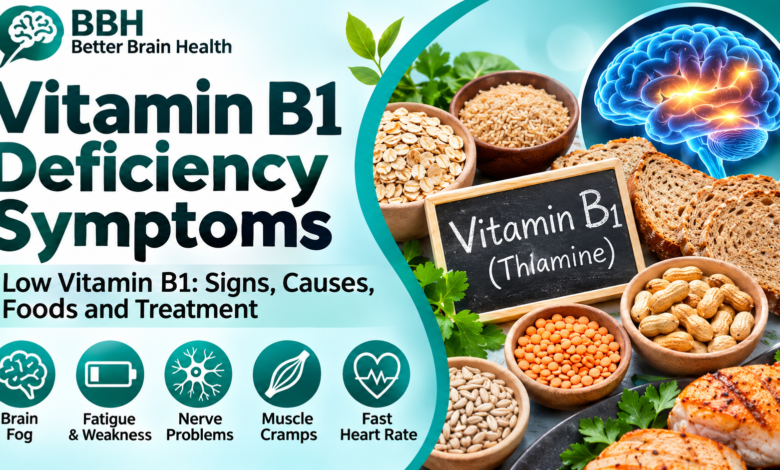
Thank you for reading this post, don't forget to subscribe!Vitamin B1 deficiency symptoms can include fatigue, poor appetite, irritability, muscle weakness and peripheral nerve problems. More serious deficiency can affect the brain and heart. But these signs are not unique to low B1: sleep disorders, anemia, thyroid conditions, medication effects and many other causes can produce similar problems.
Vitamin B1 Deficiency Symptoms: Quick Answer
Vitamin B1, also called thiamine, helps cells release usable energy from food and supports normal nerve function. Deficiency can cause fatigue, appetite changes, tingling and weakness. Severe deficiency may cause confusion, coordination problems or heart complications. A clinician considers symptoms, nutrition and risk factors together rather than diagnosing deficiency from one symptom alone.
In This Guide
Explore the key topics covered in this article:
Symptoms | Brain and Nerves | Causes | Food Sources | Daily Needs | Assessment | Treatment | Practical Steps | PAA | FAQ
1. Vitamin B1 and Brain Health: Why Thiamine Matters
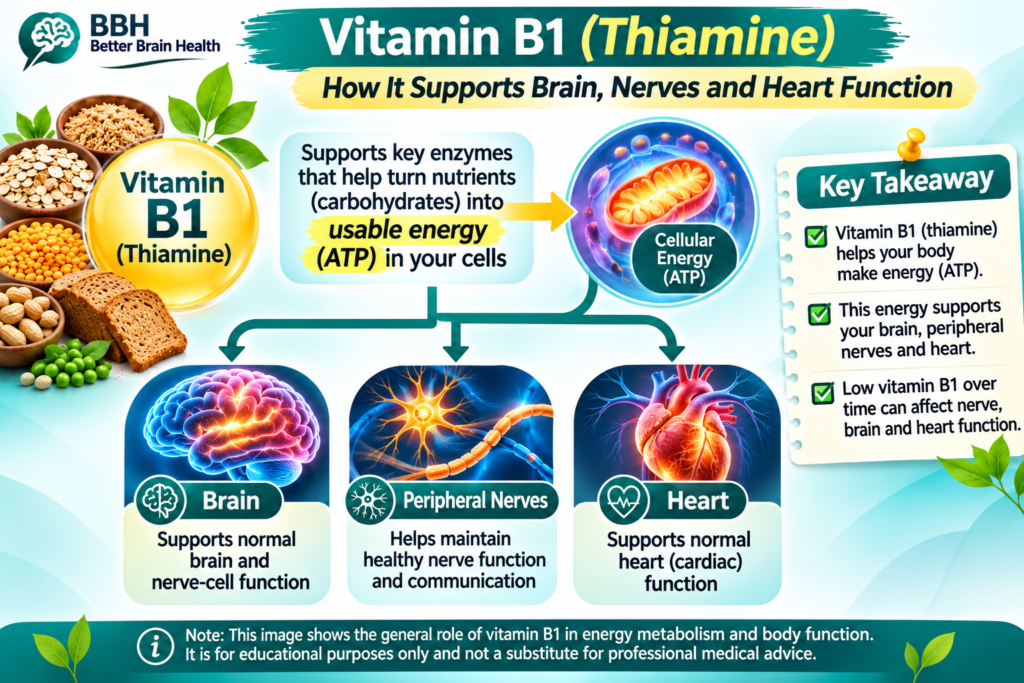
The brain needs a continuous supply of energy. Thiamine helps enzymes involved in carbohydrate metabolism, including processes that allow cells to generate energy. Nerve tissue and the heart are especially vulnerable when these systems are disrupted.
Thiamine is water-soluble, and the body stores relatively little of it. A steady supply through food is important. That does not mean that taking more than you need will sharpen memory or cure low motivation. Correcting a true deficiency is different from using high-dose supplements as a general brain booster.
2. Vitamin B1 Deficiency Symptoms: Early and Severe Signs
Early signs versus urgent neurological symptoms
Early thiamine deficiency symptoms may be vague. A person may notice low energy, reduced appetite, irritability or difficulty completing ordinary activities. These signs can also occur for many unrelated reasons, so they are clues to discuss—not proof of a deficiency.
When reviewing vitamin B1 deficiency symptoms, pay attention to how long changes have lasted, whether they are worsening, and whether risk factors such as prolonged vomiting or inadequate nutrition are present. A symptom diary can help you explain these details to a clinician.
Vitamin B1 Deficiency Symptoms and Warning Signs
| Possible Symptom | What It May Mean | What to Do |
|---|---|---|
| Fatigue or reduced appetite | Can occur early, but is nonspecific | Review nutrition and persistent symptoms with a clinician |
| Tingling or numbness | Possible peripheral nerve involvement | Seek assessment, particularly if progressive |
| Muscle weakness | May reflect neurological or other medical causes | Arrange evaluation rather than self-treating |
| Swelling, breathlessness or rapid heartbeat | Can indicate serious heart or other problems | Seek prompt medical attention |
| Confusion, abnormal eye movements, trouble walking | Possible serious neurological illness | Seek emergency medical care |
Medical disclaimer: These symptoms are not specific to vitamin B1 deficiency. A qualified healthcare professional should evaluate symptoms and possible causes.
Some people search for low vitamin B1 symptoms after noticing brain fog. Difficulty concentrating may accompany significant nutritional problems, but brain fog is not a specific test for thiamine deficiency. It is important to consider the whole medical picture.
3. Thiamine Deficiency Symptoms and Nerve Health
Thiamine-dependent pathways help nerve cells meet their energy needs. With prolonged or severe deficiency, peripheral nerves may be damaged, leading to numbness, tingling, reduced reflexes or weakness.
Historically, severe deficiency has been called beriberi; some forms predominantly affect nerves, while others affect the cardiovascular system.
Wernicke encephalopathy can occur in people with major nutritional depletion, including after prolonged vomiting or certain gastrointestinal surgeries—not only in people with alcohol use disorder. If it is not treated promptly, lasting memory problems can develop.

4. Vitamin B1 Deficiency Causes and Risk Factors
Who is at higher risk of thiamine deficiency?
Vitamin B1 deficiency causes include inadequate intake, reduced absorption, increased losses or increased requirements. Risk can rise with prolonged poor nutrition, alcohol use disorder, bariatric surgery, persistent vomiting, some serious illnesses and certain dialysis or diuretic situations.
It is not appropriate to assume that stress, anxiety or a busy schedule alone caused low B1. A healthcare professional can review the pattern of symptoms, diet, medicines and medical conditions to decide whether deficiency is plausible.
5. Vitamin B1 Foods: Practical Indian and International Choices
Foods high in vitamin B1 for everyday meals
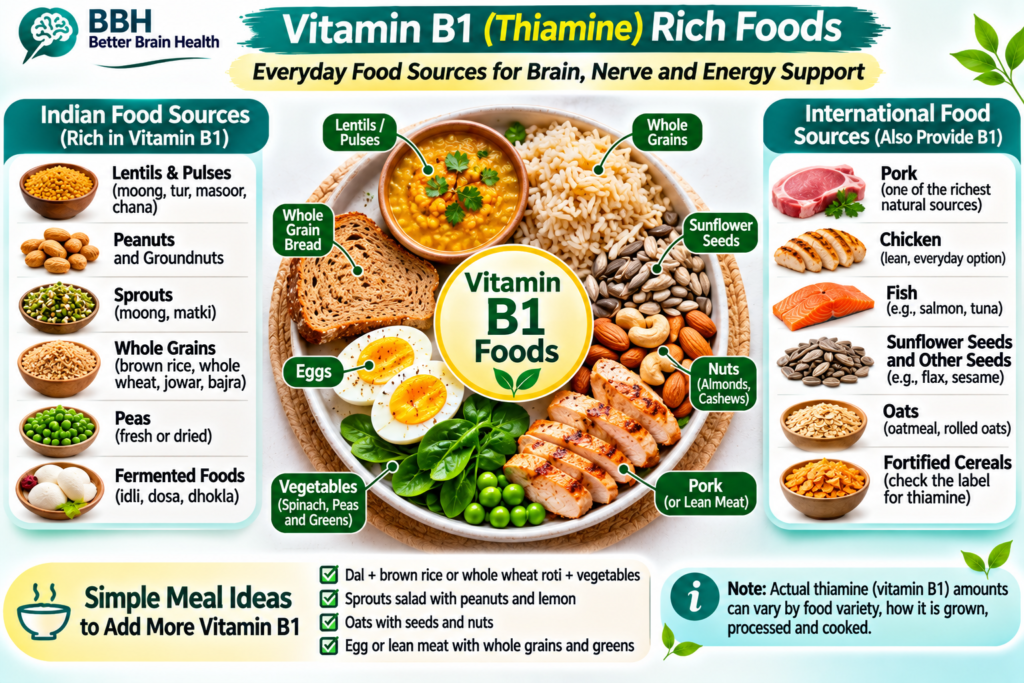
Many vitamin B1 foods are familiar and affordable. Whole grains, legumes, seeds, pork and enriched or fortified grain products can contribute thiamine. The amount varies with portion size, preparation and fortification.
For readers comparing vitamin B1 foods, the goal is consistent dietary variety rather than one supposed superfood. Lentils, seeds and grain products can contribute different amounts depending on portions and preparation.
Vitamin B1 Foods: Indian and International Sources
Including a variety of vitamin B1 foods
can help support normal energy metabolism and nerve function.
The following table compares familiar Indian foods with
international examples of dietary thiamine sources.
Nutrition note: Thiamine content varies according to food type, serving size, processing and cooking methods. Not all foods listed contain equal amounts of vitamin B1. A varied diet supports general nutrition but does not replace treatment for a diagnosed deficiency.
White rice and refined flour can contain less naturally occurring thiamine than less-refined grains unless enriched. A diverse, adequate diet is a more reliable everyday approach than depending on one supposedly miraculous food.
Vitamin B1 Daily Requirements: How Much Thiamine Do You Need?
The recommended daily allowance (RDA) for vitamin B1, also called thiamine, varies by life stage.
These values represent general US dietary recommendations for healthy adults.
| Group | US Recommended Daily Allowance |
|---|---|
| Adult Men | 1.2 mg |
| Adult Women | 1.1 mg |
| Pregnancy | 1.4 mg |
| Breastfeeding | 1.4 mg |
Source: NIH Office of Dietary Supplements — Thiamin
.These RDAs apply to adults aged 19 years and older. Pregnancy and breastfeeding recommendations apply to the relevant life stages. Individual medical needs may differ, and these values are not treatment doses for deficiency.
These are general dietary reference amounts for healthy people, not doses for treating a deficiency. Requirements and medical decisions can differ by individual circumstances.
7. How Doctors Assess Vitamin B1 Deficiency Symptoms
A clinician may ask about diet, alcohol exposure, vomiting, weight changes, surgery, medicines and the progression of neurological symptoms. Examination and selected laboratory investigations may be appropriate. Specialized whole-blood thiamine diphosphate testing is sometimes used, but no single routine symptom checklist confirms deficiency.
A search for vitamin B1 deficiency symptoms cannot replace an examination. A clinician considers the overall pattern and may evaluate other explanations for fatigue, weakness, or numbness, including conditions unrelated to nutrition.
For suspected Wernicke encephalopathy, immediate treatment is essential and must not be postponed while awaiting testing. For persistent but non-emergency symptoms, ask a healthcare professional which investigations actually fit your circumstances.
8. Thiamine Deficiency Treatment and Supplement Safety
When oral supplements or medical treatment may be needed
Thiamine deficiency treatment depends on severity and cause. A clinician may prescribe oral thiamine for suitable cases or give thiamine by injection for serious deficiency, suspected Wernicke encephalopathy or certain absorption problems. Correcting the underlying nutritional or medical cause is also important.
Thiamine deficiency treatment should address both the deficiency and its underlying cause. People with ongoing vomiting, impaired absorption or severe neurological symptoms may need a different approach from someone with mildly inadequate dietary intake.
There is no established US tolerable upper intake level for thiamine due to limited evidence of toxicity from oral intake, but this does not make every high-dose product necessary or injectable treatment risk-free. Do not use supplements to delay medical care for progressive weakness, confusion or coordination problems.
9. Practical Steps for Low Vitamin B1 Symptoms
Vitamin B1 Deficiency Symptoms: A Practical Action Framework
If you are concerned about signs of vitamin B1 deficiency,
use these four steps to organise your observations,
improve food variety and prepare for medical advice.
Vitamin B1 Deficiency Symptoms: Practical Steps
Use this simple four-step framework to understand possible signs of vitamin B1 deficiency and prepare for a conversation with a healthcare professional.
1. NOTICEWrite down when fatigue, tingling, | 2. NOURISHInclude varied foods containing |
3. CHECKDiscuss persistent symptoms, | 4. FOLLOW THROUGHFollow the agreed treatment |
Important:
This is a practical reflection framework, not a diagnostic tool. If you are searching for signs of vitamin B1 deficiency, use
this framework to prepare for an informed conversation, not to diagnose yourself.
Important: This is a practical reflection framework, not a diagnostic tool. If you are searching for signs of vitamin B1 deficiency, use these steps to prepare for an informed conversation with a healthcare professional, not to diagnose yourself.
Practical Questions About B1 Symptoms, Food and Treatment
Vitamin B1 deficiency symptoms — what to know
A symptom checklist can help you describe changes, but vitamin B1 deficiency symptoms cannot be confirmed from a checklist alone.
If vitamin B1 deficiency symptoms persist, discuss them with a qualified clinician, especially when nutrition or absorption may be affected.
Thiamine deficiency symptoms — what to know
Because thiamine deficiency symptoms overlap with other conditions, clinicians consider the full medical picture.
Tracking thiamine deficiency symptoms over time can help you explain what has changed without trying to diagnose yourself.
Some thiamine deficiency symptoms are subtle, while sudden confusion or walking difficulties require urgent assessment.
Thiamine deficiency symptoms may involve both the nervous system and the cardiovascular system.
A food diary cannot establish whether thiamine deficiency symptoms are caused by inadequate intake or another medical problem.
Vitamin B1 deficiency causes — what to know
Vitamin B1 deficiency causes include prolonged low intake and circumstances that interfere with absorption or increase losses.
Understanding vitamin B1 deficiency causes helps distinguish everyday dietary gaps from higher-risk medical situations.
A clinician may review vitamin B1 deficiency causes such as prolonged vomiting, gastrointestinal surgery and alcohol use disorder.
Not all vitamin B1 deficiency causes can be addressed through diet alone.
Identifying vitamin B1 deficiency causes is important because preventing recurrence may require treating the underlying problem.
Vitamin B1 foods — what to know
When choosing vitamin B1 foods, consider legumes, whole grains, fortified cereals and other varied food sources.
Vitamin B1 foods can fit into everyday meals such as dal with whole grains or beans with enriched bread.
A varied menu of vitamin B1 foods is more practical than relying on a single so-called superfood.
Check food labels when comparing vitamin B1 foods, since enrichment and serving sizes vary.
Thiamine deficiency treatment — what to know
Thiamine deficiency treatment depends on severity, symptoms and the underlying cause.
For suspected serious neurological deficiency, thiamine deficiency treatment should not wait for a home food diary.
A clinician may select oral or injectable approaches to thiamine deficiency treatment based on the clinical situation.
After thiamine deficiency treatment, follow-up may address nutrition, absorption and ongoing risk factors.
10. People Also Ask About Vitamin B1 Deficiency
Can vitamin B1 deficiency cause brain fog?
It can contribute to cognitive difficulties in some deficiency states, but brain fog has many possible causes and does not establish low thiamine.
What are the first signs of low thiamine?
Fatigue, reduced appetite, irritability and weakness may occur, although these signs are nonspecific.
Can vitamin B1 deficiency cause tingling feet?
Yes. Peripheral nerve involvement can cause tingling or numbness. Persistent or worsening symptoms need assessment.
Who is most at risk of thiamine deficiency?
Risk is higher with inadequate nutrition, prolonged vomiting, alcohol use disorder, certain gastrointestinal surgeries and selected medical conditions.
Can diet alone correct severe vitamin B1 deficiency?
No. Severe deficiency and suspected neurological complications require prompt medical treatment rather than dietary changes alone.
11. Vitamin B1 Deficiency FAQs
Is vitamin B1 the same as vitamin B12?
No. Both are B vitamins, but they perform different functions and have different deficiency patterns.
Can a person have low B1 while eating enough calories?
Yes. Diet quality, absorption problems, increased requirements and other factors can affect thiamine status.
Are thiamine supplements useful for everyone?
Not automatically. They are important in some deficiency or high-risk situations, but extra thiamine has not been shown to universally improve focus in well-nourished people.
Does cooking affect thiamine in food?
It can. Thiamine is water-soluble and can be lost during some cooking and processing methods.
How long does recovery take?
It varies with severity, the cause and whether neurological injury has occurred. Some symptoms may improve promptly with appropriate treatment, while others can persist.
Explore Related BBH Brain Health Guides
Understanding vitamin B1 deficiency symptoms is one
part of learning about brain health and nutrition.
These BBH resources offer additional education and
practical support. Anxiety, fatigue and motivation
difficulties do not automatically indicate a
vitamin or mineral deficiency.
Vitamins and Minerals for Brain Health — Parent pillar guide explaining essential
nutrients and their roles in brain function.
Vitamins & Minerals — Explore the complete BBH nutrient article collection.
Brain Health — Main learning hub for brain function,
cognitive wellbeing and healthy habits.
Start Here — Find introductory resources for emotional
wellbeing and mental clarity.
- BBH Support Resources — Access practical self-help tools and
additional educational support.
BBH learning note:
These resources are educational and do not replace individual medical assessment or treatment.
13. Scientific References
- NIH Office of Dietary Supplements: Thiamin — Health Professional Fact Sheet
- NIH Office of Dietary Supplements: Thiamin — Consumer Fact Sheet
- MedlinePlus: Beriberi
Free PDF Worksheet: Vitamin B1 Food & Symptom Tracker
Use this printable seven-day tracker to note meals, energy, focus, possible symptoms and questions for a healthcare professional. It is an observation tool, not a deficiency test or treatment plan.
BBH Support Resource
Need help organizing your notes? Download the BBH Vitamin B1 Food & Symptom Tracker
above, or email info@bioandbrainhealthinfo.com
with the subject Send Me the Vitamin B1 Tracker.
Medical safety note:
This educational article cannot diagnose or treat a deficiency. Seek urgent medical attention for new confusion, severe walking difficulty or abnormal eye movements, especially with nutritional risk factors. Sudden one-sided weakness or speech difficulty also requires emergency care.
Do not delay care to try supplements at home.
BBH editorial note:
Feeling tired or mentally slower does not tell you which nutrient, if any, is missing. The useful
question is not “Which supplement will fix me?” but “What symptoms, risks and other explanations should be assessed?”
This is an editorial reflection, not a personal medical testimonial.
Written by Shubhangi Halande for Bio & Brain Health Info (BBH).
Educational information only; no clinical review is implied. Last editorial draft: November 2026. Verify reference updates and links before publication.
Explore Vitamin B1 in detail:
Thiamine supports normal energy metabolism and nerve function. Learn about vitamin B1 deficiency symptoms
including possible warning signs, food sources, risk factors and when medical assessment is needed.