Vitamin B5 Benefits: Brain, Energy & Health
Vitamin B5 Deficiency: Signs and Symptoms

Do you wake up tired, struggle to concentrate, or wonder whether a missing vitamin is affecting your brain? It is tempting to blame one nutrient for every difficult day. But fatigue and mental fog have many possible causes, and most people get enough vitamin B5 from ordinary foods.
Thank you for reading this post, don't forget to subscribe!Quick Answer: What Are the Benefits of Vitamin B5?
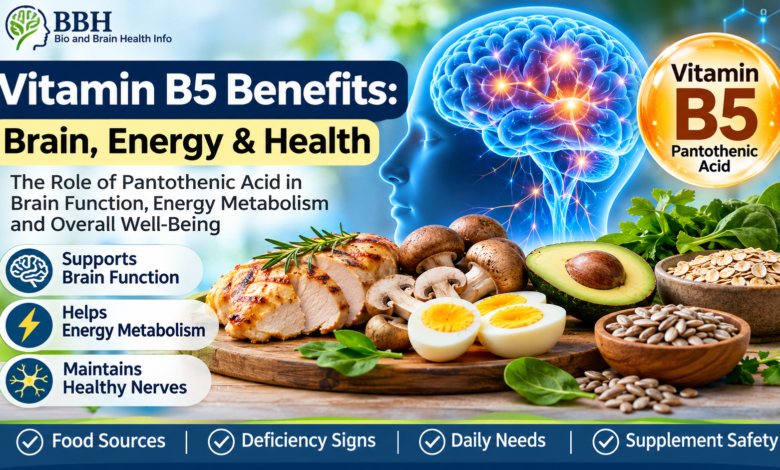
Vitamin B5, also known as pantothenic acid, is an essential nutrient that helps the body produce coenzyme A (CoA), a molecule involved in energy metabolism, fatty acid synthesis and normal cellular function.
Adequate vitamin B5 intake supports the biological processes needed for healthy brain and nerve function. However, there is insufficient evidence that taking extra vitamin B5 improves memory, mood, concentration or energy in people with adequate intake.
Scientific source: NIH Office of Dietary Supplements — Pantothenic Acid
Research and editorial transparency: Evidence checked 7 November 2026 against the NIH Office of Dietary Supplements and National Academies reference materials. Educational content prepared for BBH; no independent clinical review is claimed. This page should be reviewed when authoritative recommendations change.
Evidence summary: This article distinguishes established nutritional functions from proposed supplement effects. Source: NIH Office of Dietary Supplements, Pantothenic Acid—Health Professional Fact Sheet. The NIH fact sheet describes normal physiology, rare deficiency, intake recommendations, and safety; it does not establish cognitive benefits from extra B5 in adequately nourished adults.
What Are Vitamin B5 Benefits for Brain Health?
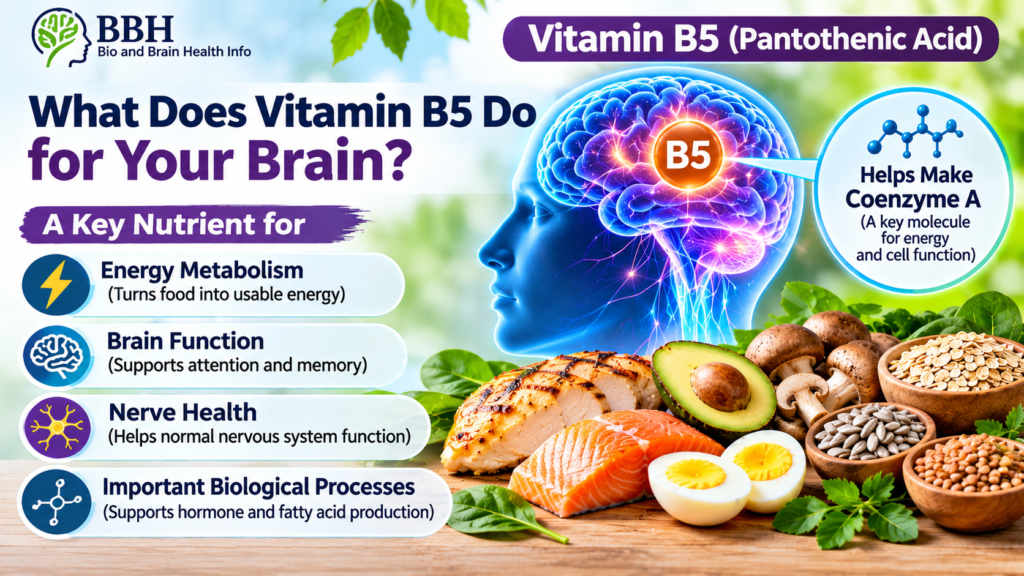
The best-established vitamin B5 benefits come from its role in normal metabolism—not from claims that a supplement can instantly sharpen the mind. Pantothenic acid helps the body produce coenzyme A (CoA), which participates in reactions throughout the body.
Energy metabolism and brain cells
Brain cells require a reliable energy supply. CoA participates in processing carbohydrates, fats and proteins so cells can use energy from food. This is a necessary biological function, but taking more B5 than you need does not necessarily make you feel more energetic.
Acetylcholine and nerve signaling
CoA is involved in making acetyl-CoA, a building block used to synthesize acetylcholine. This neurotransmitter is involved in attention, memory and muscle activation. That pathway does not prove that B5 supplements improve concentration or prevent dementia.
Vitamin B5 Deficiency Symptoms: What to Know
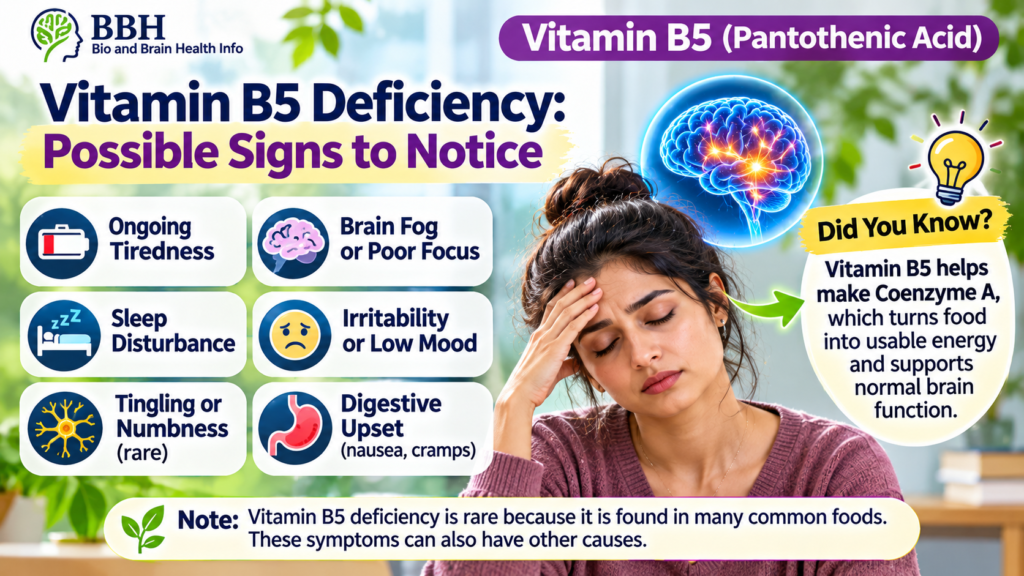
Vitamin B5 deficiency is rare because pantothenic acid is found in many foods. Severe deficiency has been associated with fatigue, irritability, sleep problems, gastrointestinal symptoms, and numbness or burning sensations in the hands and feet. These signs are nonspecific and cannot confirm a B5 deficiency.
Can low vitamin B5 cause brain fog?
There is not strong direct clinical evidence that isolated B5 deficiency is a common cause of everyday “brain fog.” Poor sleep, medication effects, anemia, thyroid conditions, vitamin B12 deficiency and other issues may be more relevant.
Persistent or worsening symptoms deserve an appropriate medical assessment rather than self-diagnosis.
For broader guidance on emotional and cognitive symptoms, see BBH’s daily anxiety management guide and guide to understanding loneliness. These address related experiences, not vitamin B5 deficiency.
Who Might Have Difficulty Getting Enough Pantothenic Acid?
People eating a varied diet generally obtain sufficient B5. Severe undernutrition and highly restricted dietary intake can increase the risk of inadequate intake. Rare genetic conditions involving pantothenate metabolism are separate medical disorders and should not be confused with ordinary dietary deficiency.
Foods High in Vitamin B5: A Food-First Approach
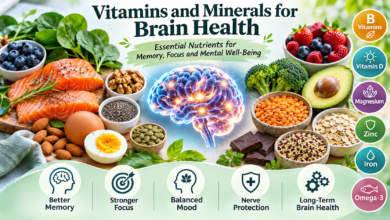
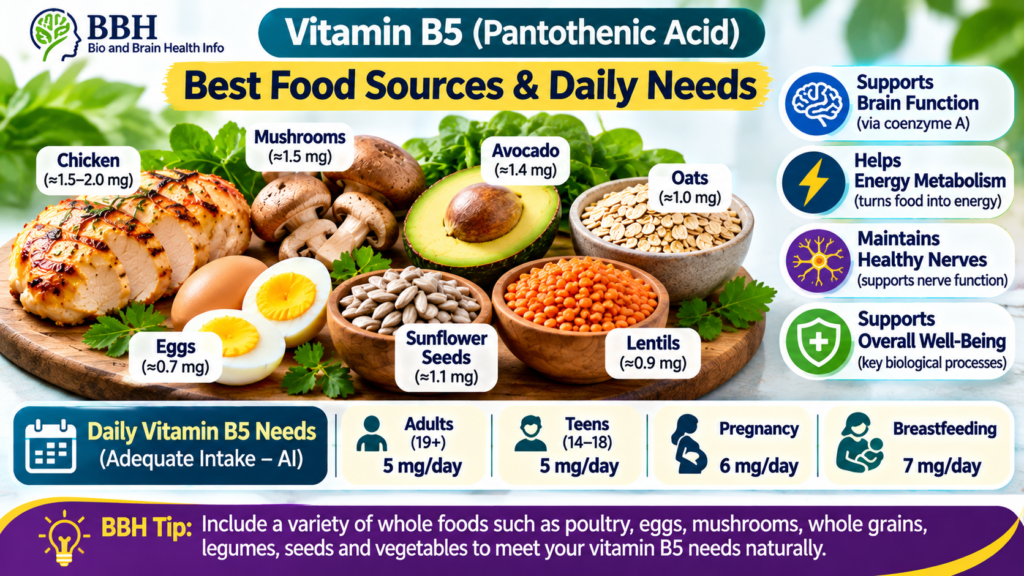
Vitamin B5 food sources include poultry, beef, organ meats, mushrooms, eggs, sunflower seeds, whole grains, dairy foods, legumes and avocados. Amounts vary with portion size and processing.
Vitamin B5 Food Sources: Simple Everyday Meals
Vitamin B5, also known as pantothenic acid, is found in many everyday foods. A varied diet containing protein foods, vegetables, whole grains and legumes can help most people meet their daily vitamin B5 needs.
| Food Group | Examples | Simple Meal Idea |
|---|---|---|
| Protein foods | Eggs, chicken, fish | Eggs with whole-grain toast |
| Plant proteins | Lentils, beans, sunflower seeds | Dal with vegetables and seeds |
| Vegetables and fruits | Mushrooms, avocado | Mushroom and vegetable stir-fry |
| Grains and dairy | Whole grains, milk, yogurt | Oats with yogurt |
Evidence-based nutrition note: Vitamin B5 content varies by food type, portion size and preparation method. These meal ideas support dietary variety but do not guarantee a specific vitamin B5 intake.
Scientific reference: NIH Office of Dietary Supplements — Pantothenic Acid
A varied eating pattern is more useful than searching for a single “miracle” food. If you follow a restricted diet or have difficulty eating enough, a registered dietitian can help.
Vitamin B5 Daily Requirement: How Much Is Enough?
US adequate intake (AI) levels are 5 mg daily for adults aged 19 and older, 6 mg during pregnancy and 7 mg during lactation. Children have age-specific recommendations. An AI is a reference intake estimate, not a prescription for supplementation. National guidance may differ.
How Much Vitamin B5 Do You Need Daily?
The amount of vitamin B5 (pantothenic acid) needed each day varies by age and life stage. The US National Academies established Adequate Intake (AI) values because available evidence was insufficient to establish a Recommended Dietary Allowance (RDA).
| Age or Life Stage | US Adequate Intake |
|---|---|
| Adults, 19+ | 5 mg/day |
| Pregnancy | 6 mg/day |
| Lactation (Breastfeeding) | 7 mg/day |
| Children, 9–13 years | 4 mg/day |
| Children, 4–8 years | 3 mg/day |
Scientific note: Adequate Intake (AI) is an estimated daily intake level considered sufficient for most healthy people. It is
not a treatment dose or a recommendation to take supplements. Most people can obtain vitamin B5 through a varied diet.
Scientific reference: NIH Office of Dietary Supplements — Pantothenic Acid: Health Professional Fact Sheet
What Does Research Actually Prove About Vitamin B5?
The distinction between a nutrient being essential and a supplement being effective as a treatment matters. Evidence for normal vitamin B5 function is strong; evidence for using extra B5 to treat everyday brain fog or mood symptoms is not established.
Vitamin B5 Benefits: What Does Scientific Evidence Say?
Understanding the difference between established biological functions and proven supplement benefits
is important. The following evidence summary explains what research supports about vitamin B5 (pantothenic acid) and where scientific uncertainty remains.
| Scientific Claim | Evidence Level | What Readers Should Understand |
|---|---|---|
| Vitamin B5 is needed to form coenzyme A. | Established biochemistry | Vitamin B5 is necessary for normal metabolism. This does not prove that additional supplementation improves memory or cognitive performance. |
| Vitamin B5 deficiency can cause fatigue or burning sensations in the feet. | Documented in rare deficiency | These symptoms are nonspecific and may have several other causes. Symptoms alone cannot diagnose vitamin B5 deficiency. |
| Vitamin B5 supplements improve memory or mood. | Insufficient clinical evidence | Vitamin B5 supplements should not replace appropriate medical assessment or evidence-based treatment for cognitive or mental health symptoms. |
| Very high supplemental doses of vitamin B5 are harmless. | Safety not established | Large doses have caused gastrointestinal effects, including diarrhea. The absence of an established tolerable upper intake level does not prove that unlimited doses are safe. |
Evidence interpretation: These labels summarize the available scientific knowledge; they are not formal GRADE ratings. Nutrient necessity, deficiency symptoms and supplement effectiveness are separate questions requiring different types of evidence.
Scientific reference: NIH Office of Dietary Supplements — Pantothenic Acid: Health Professional Fact Sheet
Evidence interpretation based primarily on the NIH professional fact sheet. “Insufficient evidence” does not mean a benefit has been definitively disproved.
Vitamin B5 Supplements: Benefits, Limits and Safety
Many multivitamins and B-complex supplements contain pantothenic acid. For most people with adequate dietary intake, there is no established brain-health advantage to taking extra B5. Claims that it treats anxiety, depression, burnout or memory loss are not supported by convincing clinical evidence.
No tolerable upper intake level has been established, but very high intakes—around 10 grams per day—have been associated with diarrhea and other gastrointestinal effects.
“No upper limit” does not mean unlimited amounts are safe. Ask a qualified clinician before using high-dose products, particularly if you take medications or manage a medical condition.
Please Read This : niacin-deficiency-symptoms-signs-and-causes
Vitamin B5 versus other B vitamins
B vitamins have distinct functions. Vitamin B12 and folate are important in different pathways and may be relevant in selected evaluations of anemia or neurological symptoms. Do not assume a B-complex supplement can identify or correct the cause of your symptoms.
BBH also explores the broader connections between self-control and everyday functioning and the mind’s response to uncertainty. These are psychology resources, not substitutes for medical testing.
Practical BBH Vitamin B5 Food and Symptom Check
For seven days, record meals, sleep hours, energy levels and any persistent symptoms. Look for dietary variety and patterns you can discuss with a professional. A symptom diary cannot diagnose a vitamin deficiency.
Vitamin B5 Food and Symptom Tracker: What to Record
Tracking your food intake, sleep, symptoms and supplements can help you understand your daily habits and prepare useful information for a healthcare consultation. This simple vitamin B5 tracker supports observation,
not self-diagnosis.
| Track | What to Record | Why It Helps |
|---|---|---|
| Food | Meals and key food groups | Shows overall dietary variety and eating patterns. |
| Sleep | Bedtime, waking time and sleep duration | Provides useful context when discussing fatigue and concentration difficulties. |
| Symptoms | What happened, when it started and how long it lasted | Helps communicate symptom patterns more clearly during a healthcare consultation. |
| Supplements | Product name, dose and frequency | Helps a healthcare professional review supplement exposure, possible interactions and safety. |
Medical safety note: Fatigue, tingling, poor concentration and sleep changes can have many causes. A symptom diary cannot confirm
vitamin B5 deficiency. Seek medical advice for persistent, worsening or unexplained symptoms.
Scientific reference: NIH Office of Dietary Supplements —Pantothenic Acid
People Also Ask About Vitamin B5 Benefits
1. What does vitamin B5 do for the brain?
It supports coenzyme A production and normal cellular metabolism. Extra B5 has not been proven to improve cognition when intake is adequate.
2. Does vitamin B5 help with fatigue?
Adequate intake supports normal metabolism, but supplements are not an established treatment for unexplained fatigue.
3. Is vitamin B5 deficiency common?
No. Deficiency is rare because B5 occurs in many common foods.
4. What foods are rich in pantothenic acid?
Examples include organ meats, mushrooms, poultry, eggs, sunflower seeds and whole grains.
5. Can vitamin B5 improve memory?
There is insufficient evidence that taking extra B5 improves memory in people without deficiency.
Frequently Asked Questions
1. Is pantothenic acid the same as vitamin B5?
Yes. Pantothenic acid is the scientific name for vitamin B5.
2. Can I take vitamin B5 every day?
You need it regularly from food. Whether a supplement is appropriate depends on your individual circumstances.
3. Can low B5 cause tingling feet?
Severe deficiency has been associated with burning or numb sensations, but many other causes are possible.
4. Does vitamin B5 reduce stress?
There is insufficient evidence to recommend B5 supplementation as a treatment for psychological stress.
5. Should I request a vitamin B5 blood test?
Routine testing is not generally used for nonspecific tiredness. Discuss symptoms and relevant risks with a clinician.
BBH Support Resource
Free Vitamin B5 Food & Symptom Tracker
Want to understand your daily food habits and prepare useful information for a healthcare appointment?
Download the free BBH Vitamin B5 Food & Symptom Tracker.
This printable worksheet includes a seven-day food diary, sleep and energy observations, symptom notes, supplement tracking and questions to discuss with a healthcare professional .Free Vitamin B5 Food & Symptom Tracker
Download Free Vitamin B5 Tracker (PDF)
Medical note: This worksheet is for educational tracking only. It cannot diagnose vitamin B5 deficiency or replace professional medical assessment.
Need help accessing the worksheet?
Email info@bioandbrainhealthinfo.com with the subject Send Me the Vitamin B5 Tracker.
Continue exploring: BBH Start Here | BBH Support Resources
How BBH Evaluated the Evidence
This educational article uses the US National Institutes of Health (NIH) Office of Dietary Supplements as its primary reference for vitamin B5 (pantothenic acid) physiology, dietary sources, deficiency symptoms, intake recommendations and supplement safety.
Dietary reference intake values are cross-checked against the National Academies of Sciences,
Engineering, and Medicine. Established biochemical mechanisms are distinguished from clinical evidence. For example, vitamin B5 is essential for coenzyme A production, but this does not establish that taking additional vitamin B5 improves memory, mood or fatigue in people with adequate nutrient intake.
Research Limitations
Vitamin B5 deficiency is uncommon, and direct clinical evidence supporting vitamin B5 supplements as treatments for cognitive difficulties, low mood or fatigue is limited.
This article is an educational evidence summary, not a systematic review, clinical guideline or independently clinician-reviewed publication. Its content should not be interpreted as individualized medical advice.
Primary scientific reference: NIH Office of Dietary Supplements — Pantothenic Acid: Health Professional Fact Sheet
Scientific References and Evidence Standards
- NIH Office of Dietary Supplements — Pantothenic Acid: Health Professional Fact Sheet.
- NIH Office of Dietary Supplements — Pantothenic Acid: Consumer Fact Sheet.
- National Academies — Dietary Reference Intakes for B Vitamins and Choline.
About the Author
Written by Shubhangi Halande
Bio and Brain Health Info (BBH) Category: Brain Health → Vitamins & Minerals
This article is published for general health education and draws on established scientific references, including the NIH Office of Dietary Supplements.
Editorial transparency: This article does not claim personal testimony, independent clinical review or individualized medical advice.