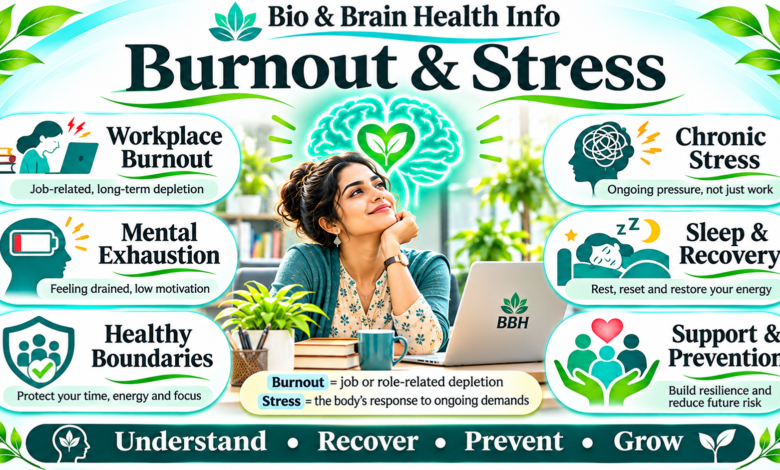
BBH educational overview: Understand burnout, chronic stress, exhaustion, healthy boundaries and evidence-informed options for support.
Thank you for reading this post, don't forget to subscribe!Burnout and stress can both affect sleep, energy and concentration, but they do not mean exactly the same thing. Recognizing burnout symptoms and the causes of chronic stress can help you decide whether changes in your work environment, daily routines or professional support may be needed.
Quick Answer
Stress is a response to challenging demands and can affect sleep, concentration, mood and physical health. Burnout, in the WHO ICD-11 description, specifically refers to chronic workplace stress that has not been successfully managed. It is considered an occupational phenomenon rather than a medical diagnosis. Not all tiredness is burnout, and symptoms that continue or worsen deserve an appropriate evaluation.
Burnout vs Stress: What Is the Difference?
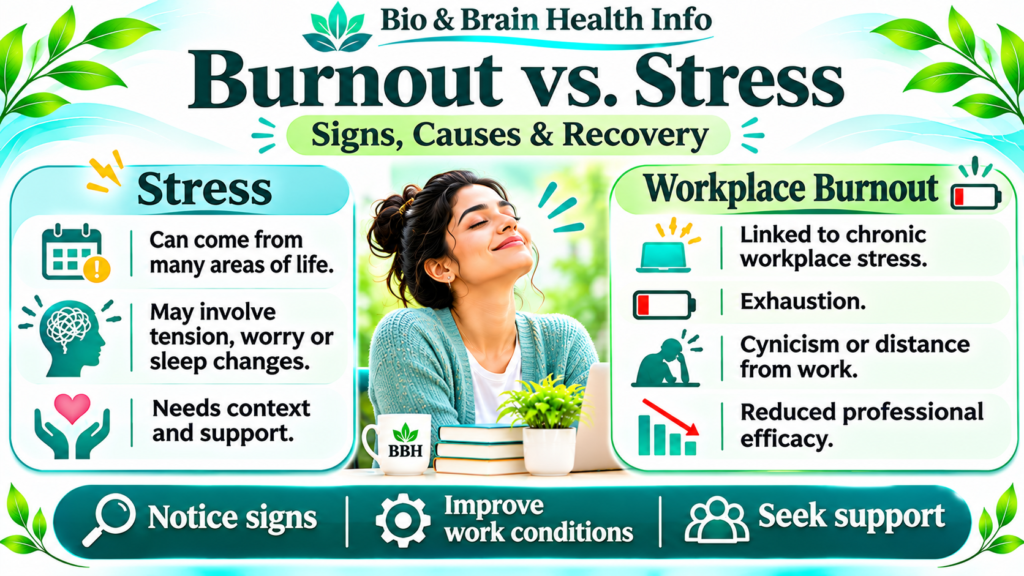
Stress may arise from work, caregiving, relationships, financial uncertainty or health concerns. Burnout is defined by the World Health Organization in the occupational context and includes exhaustion, greater mental distance or cynicism toward a job, and reduced professional efficacy. It should not be treated as a diagnosis of depression or anxiety, although symptoms can overlap. WHO: Burnout as an occupational phenomenon.
Common Signs of Ongoing Stress and Exhaustion
Signs can include irritability, fatigue, difficulty focusing, sleep disruption, muscle tension and feeling overwhelmed. These signs are not specific to burnout and can have physical, medication-related or mental health causes. New symptoms or significant functional changes should not be dismissed as stress alone.
Why Work Conditions Matter
High workloads, low control, unclear expectations, bullying and insufficient support can contribute to occupational stress. Individual habits are helpful but not a substitute for safer workloads, supportive management and appropriate workplace changes. NIOSH: Preventing worker burnout.
Supporting Recovery From Chronic Stress
Supportive steps may include establishing workable rest periods, reducing avoidable demands, discussing changes in work expectations, maintaining regular meals and sleep routines, and connecting with supportive people. These are general well-being strategies rather than a universal treatment. Individual recovery needs depend on health, responsibilities and workplace circumstances.
Sleep, Movement and Daily Health
Consistent sleep opportunities, appropriate physical activity, relaxation practices and regular nutrition may support mental and physical well-being. Persistent insomnia, severe fatigue, unexplained weakness or changes in functioning can warrant an assessment for medical and mental health conditions. NIMH: Caring for mental health.
Stress, Anxiety and Depression Can Overlap
Burnout, anxiety and depression can share difficulties with concentration, energy and motivation, but they are not interchangeable. Significant low mood, hopelessness, panic symptoms or persistent distress deserve individualized clinical assessment. Do not diagnose yourself using an online checklist.
When to Seek Professional or Urgent Care
Consider professional help if symptoms persist, worsen or disrupt work, relationships or basic daily tasks. Seek immediate care for severe chest pain, trouble breathing, fainting or new neurological symptoms. If there is an immediate risk of self-harm or another mental health emergency, contact local emergency services or urgent in-person help.
Burnout and Stress: Frequently Asked Questions
What are common burnout symptoms?
Workplace burnout may involve exhaustion, greater mental distance or cynicism about work, and reduced professional efficacy. These experiences can overlap with other health conditions, so they should not be used as a stand-alone diagnosis.
Can burnout and depression occur together?
Yes. Some symptoms overlap, and a person may experience both. Depression can affect life beyond work and requires its own professional evaluation and treatment plan. Read more in our Depression guides.
How long does burnout recovery take?
There is no universal recovery timeline. Work demands, access to support, health conditions and changes to the conditions driving stress can all influence progress. Seek clinical assessment when symptoms are ongoing or affect daily functioning.
Related BBH Mental Health Guides
Anxiety & Overthinking · Emotional Healing · Depression · Mind & Emotions · Support Resources.