Grandiose Narcissist Signs: Why You Feel Small
When Their Ego Makes You Feel Small and Unheard


You may enter a conversation hoping to feel understood, yet leave feeling ignored, confused, afraid, or emotionally exhausted. Recognising grandiose narcissist signs can help you make sense of this pattern without rushing to diagnose someone.
Thank you for reading this post, don't forget to subscribe!A grandiose narcissist in a relationship may dismiss your success, dominate discussions, resist correction, or blame others when things go wrong. Understanding how grandiose narcissists treat partners also explains why repeated interactions can slowly weaken self-trust.
This kind of grandiose narcissist behaviour may create a cycle in which you keep explaining, hoping for connection, and becoming disappointed again.
You may even ask, “Why do I feel small around a narcissist?” The answer often lies in repeated emotional invalidation, unequal responsibility, and the pressure to protect another person’s ego.
This article will help you recognise the pattern, understand its impact, and protect your peace with boundaries.
Grandiose Narcissist Signs: Why You Feel Small
You may enter a conversation hoping to feel close, understood or respected. Instead, you leave feeling smaller than before.
You may feel ignored when you speak, afraid to correct them, confused by their reaction and exhausted from explaining the same pain repeatedly. They may dismiss your success, become angry when challenged or insist that they did their best—even when their choices contributed to the problem.
The most painful part is that you may still want interaction.
You may keep hoping that one calm conversation will help them listen, accept responsibility or understand how their behaviour affects you. Yet every attempt ends with another argument, another disappointment or another reason for you to question yourself.
Recognising grandiose narcissist signs can help you understand this pattern. However, these signs cannot diagnose Narcissistic Personality Disorder. A diagnosis must be made by a qualified mental-health professional after a complete assessment.
The purpose of this article is not to label, defeat or expose another person. It is to help you recognise repeated behaviour, understand why you feel emotionally diminished and decide what may protect your peace.
BBH clarity: You do not need to prove that someone has a personality disorder before taking repeated dismissal, intimidation or emotional harm seriously.
What Are the Most Common Grandiose Narcissist Signs?
Common grandiose narcissist signs may include exaggerated self-importance, entitlement, admiration-seeking, limited empathy, superiority, exploitation and a strong reaction to criticism.
A person showing these patterns may expect to be treated as exceptional.
- They may dominate conversations, exaggerate their achievements or dismiss people they consider less important.
- They may also struggle to accept responsibility when their decisions create problems.
The repeated pattern matters more than one isolated incident.
Everyone can become defensive, boastful or self-focused occasionally. Grandiose narcissistic traits become more concerning when they appear consistently across relationships and repeatedly harm other people.
Quick overview of possible signs
| Behaviour you may notice | How it may affect you |
|---|---|
| They require frequent praise | You feel responsible for maintaining their confidence |
| They dismiss your success | You begin minimising your achievements |
| They expect special treatment | Your needs are treated as less important |
| They react strongly to correction | You become afraid to speak honestly |
| They blame other people | You carry guilt that does not belong to you |
| They dominate conversations | You feel unheard and emotionally invisible |
| They struggle to show empathy | Your pain feels inconvenient to them |
| They refuse meaningful repair | The same conflicts keep returning |
| They compete with people close to them | Connection begins to feel like a contest |
| They exaggerate their contribution | Your effort becomes overlooked |
These behaviours do not automatically prove a clinical disorder. They are signals to observe carefully—especially when they create a long-term pattern of inequality, fear or emotional exhaustion.
Grandiose Narcissist Signs Are Not the Same as Confidence
Confidence and grandiosity can look similar at first.
A confident person may speak proudly about an achievement. They may enjoy recognition and believe in their abilities. However, healthy confidence does not require another person to become smaller.
A confident person can usually:
- appreciate someone else’s success;
- receive reasonable feedback;
- admit a mistake;
- listen without dominating;
- respect another person’s boundaries;
- remain connected without always being superior.
By contrast, grandiose narcissist behaviour may depend on maintaining a position of superiority. The person may not simply want to feel capable. They may need to feel more capable, important or intelligent than everyone around them.
That distinction matters.
The problem is not that someone feels good about themselves. The problem begins when their self-image repeatedly requires your silence, admiration or emotional reduction.
Grandiose Narcissist Signs That Are Easy to Miss
Some grandiose narcissist signs are obvious. Others are concealed behind charm, achievement, confidence or social success.
A person may appear generous, entertaining and impressive in public. People may admire their confidence. They may tell compelling stories about their accomplishments and know how to make a strong first impression.
Because of this public image, you may struggle to explain what happens privately.
You may hear:
- “They are always so kind to me.”
- “They seem very confident.”
- “They have helped so many people.”
- “Perhaps you misunderstood them.”
- “They are only trying to motivate you.”
This can deepen your confusion.
You are not only managing the behaviour. You are also carrying the gap between how the person appears publicly and how you feel around them privately.
1. They need to be the most important person in the room
They may redirect conversations toward their accomplishments, struggles, knowledge or sacrifices.
Even when you share something important, the discussion may quickly become about them.
- If you discuss a success, they may compare it with something they achieved.
- If you describe pain, they may explain why they have suffered more.
Over time, you may stop sharing because you already know the conversation will not remain with you.
2. They dismiss or compete with your success
A grandiose person may have difficulty celebrating an achievement that does not enhance their own status.
They may minimise what you accomplished, change the subject or explain why your success was easy. They may also claim that their advice, sacrifice or influence caused your progress.
You may begin shrinking your achievements to avoid jealousy, criticism or another exhausting comparison.
That is one way how grandiose narcissists treat partners may slowly damage confidence: the partner learns that shining comes with an emotional cost.
3. They expect admiration but offer little recognition
They may expect praise for ordinary responsibilities while treating your effort as something they were already entitled to receive.
When you support them, it may be considered normal. When they offer limited support, it may be presented as a major sacrifice.
This creates an unequal emotional economy. Their contributions are celebrated; yours disappear into expectation.
4. They react strongly when corrected
Reasonable feedback may be experienced as disrespect, betrayal or humiliation.
They may become angry, dismissive or contemptuous. They may attack your character rather than discuss the original concern. Some may withdraw, punish through silence or bring up unrelated mistakes from your past.
Mayo Clinic notes that people with Narcissistic Personality Disorder may have difficulty handling criticism and may respond with impatience, anger, contempt or belittling behaviour.
Not every defensive reaction indicates narcissism. The concern is the repeated inability to hear feedback without punishing the person who offered it.
5. They believe their intentions erase the impact
You may explain that something hurt you, but they answer:
- “I did my best.”
- “I was only trying to help.”
- “You misunderstood me.”
- “You are focusing only on the negative.”
- “After everything I have done, this is what I receive?”
Their intention may become the only fact that matters.
But healthy repair requires more than defending intention. It requires curiosity about impact.
A person can believe they did their best and still accept that their behaviour caused harm. When someone uses good intention to avoid every form of accountability, the relationship cannot move forward.
6. They make other people responsible for failure
When plans go wrong, they may quickly identify someone else as the cause.
They may blame a partner, employee, family member, economy, friend or circumstance without seriously examining their own decisions.
This is not ordinary frustration. It becomes a pattern of avoiding self-reflection while assigning shame to other people.
You may gradually become the designated explanation for everything that is not working.
To understand this pattern more deeply, read about recognising blame-shifting behaviour.
7. They listen mainly to defend themselves
They may hear your words but not receive your emotional experience.
While you speak, they may prepare a defence, search for a contradiction or wait for an opportunity to redirect the conversation. Your pain becomes a courtroom in which they must prove their innocence.
You may finish talking without feeling heard.
The absence of listening is especially painful because you are not necessarily asking them to agree with everything. You are asking them to remain emotionally present long enough to understand why something mattered to you.
8. They treat disagreement as disloyalty
In a healthy relationship, two people can disagree without threatening the relationship itself.
In grandiose narcissist behaviour, disagreement may be treated as disrespect. The person may expect loyalty to mean agreement, praise or compliance.
You may learn to edit your thoughts before speaking. You may calculate the safest words, timing and tone. Eventually, you may lose touch with what you genuinely think because your attention is constantly focused on managing their reaction.
9. They struggle to offer meaningful repair
An apology may sound like:
- “I am sorry you feel that way.”
- “I already said sorry; what more do you want?”
- “Fine, everything is my fault.”
- “You made me react.”
- “I apologised, so you must move on.”
These statements may end the conversation without repairing the injury.
Meaningful repair includes acknowledgement, responsibility, concern and changed behaviour. Without those elements, apologies may become temporary resets before the same pattern returns.
10. They make closeness feel like a hierarchy
You may not feel like an equal partner, friend or family member. You may feel like an audience, assistant, supporter or emotional target.
Your value may appear connected to how well you protect their self-image.
When you praise, agree or serve their needs, the relationship may feel calm. When you need support, disagree or establish a boundary, affection may become uncertain.
That instability can make connection feel conditional.
Grandiose Narcissist Signs in a Relationship
A grandiose narcissist in a relationship may initially appear confident, decisive, ambitious and protective.
These qualities can feel attractive. You may believe you have found someone who knows what they want and can lead through difficult situations.
The problem becomes clearer when confidence begins turning into control.
The person may decide what matters, which feelings are reasonable and who deserves attention. Your emotional needs may be treated as excessive, while their needs are presented as urgent.
How a grandiose narcissist may treat a partner
How grandiose narcissists treat partners varies from person to person, but some partners describe patterns such as:
- being interrupted repeatedly;
- having accomplishments minimised;
- being criticised in private;
- being compared with other people;
- being expected to provide constant reassurance;
- being blamed for the person’s dissatisfaction;
- receiving affection mainly when compliant;
- being punished for boundaries;
- being excluded from important decisions;
- being treated as responsible for repairing every conflict.
The emotional harm is not always loud.
Sometimes it appears through a thousand small moments in which your experience is corrected, dismissed or made secondary.
Public Charm and Private Dismissal
One confusing aspect of a grandiose narcissist in a relationship is the contrast between public charm and private impact.
In public, they may appear:
- warm;
- entertaining;
- generous;
- socially skilled;
- confident;
- helpful;
- highly respected.
In private, you may experience:
- contempt;
- impatience;
- correction;
- emotional absence;
- competition;
- blame;
- conditional affection.
The public image can make you doubt your own experience.
You may wonder whether you are too sensitive or difficult. You may think that if everyone else appreciates them, the problem must be you.
But a person can be socially impressive and still create an emotionally unsafe private relationship.
The correct question is not, “Does everyone think they are wonderful?”
The more useful question is, “What happens repeatedly when I have a need, express disagreement or ask them to accept responsibility?”

Why Do You Feel Small Around a Grandiose Narcissist?
The question “Why do I feel small around a narcissist?” often appears after repeated experiences—not one disagreement.
You may feel small because your emotional reality is constantly reduced.
Your success may be minimised. Your pain may be debated. Your opinions may be corrected before they are understood. Your boundaries may be treated as personal attacks.
Eventually, you may stop asking, “Is this behaviour fair?”
Instead, you begin asking, “How can I explain myself better?”
That shift is important.
It means your attention has moved away from evaluating the relationship and toward managing the other person.
You keep hoping for interaction
You may still want closeness with them.
This does not make you weak or foolish.
Human beings naturally seek connection, understanding and repair. When a relationship matters, you may keep returning because you remember better moments or believe the right words will finally create mutual understanding.
You may enter the conversation thinking:
- “This time I will remain calm.”
- “This time I will explain more clearly.”
- “This time they may understand.”
- “This time they may accept the truth.”
- “This time we may finally repair the relationship.”
Then the conversation ends in the same emotional place.
You feel ignored, afraid, confused, disappointed or exhausted.
Repeated dismissal weakens self-trust
When someone repeatedly tells you that your perception is wrong, you may begin checking every emotion before trusting it.
You may ask:
- “Am I overreacting?”
- “Was I unfair?”
- “Did I explain badly?”
- “Should I apologise again?”
- “Perhaps I expected too much.”
Self-reflection is healthy. Chronic self-doubt is different.
When one person reflects continuously while the other refuses to examine themselves, “working on the relationship” can become a one-person responsibility.
Fear changes how you communicate
You may start rehearsing conversations in advance.
You choose words carefully. You avoid certain subjects. You wait for the right mood. You soften your request so much that the original need disappears.
This is sometimes described as walking on eggshells.
The nervous system learns from repetition. When honesty repeatedly leads to anger, contempt or punishment, your body may begin preparing for danger before the conversation starts.
You may experience:
- tightness in the chest;
- rapid heartbeat;
- stomach discomfort;
- mental blankness;
- trembling;
- difficulty finding words;
- an urgent need to explain;
- exhaustion after the interaction.
These responses do not prove the other person is a narcissist. They show that the interaction may no longer feel emotionally safe to your body.
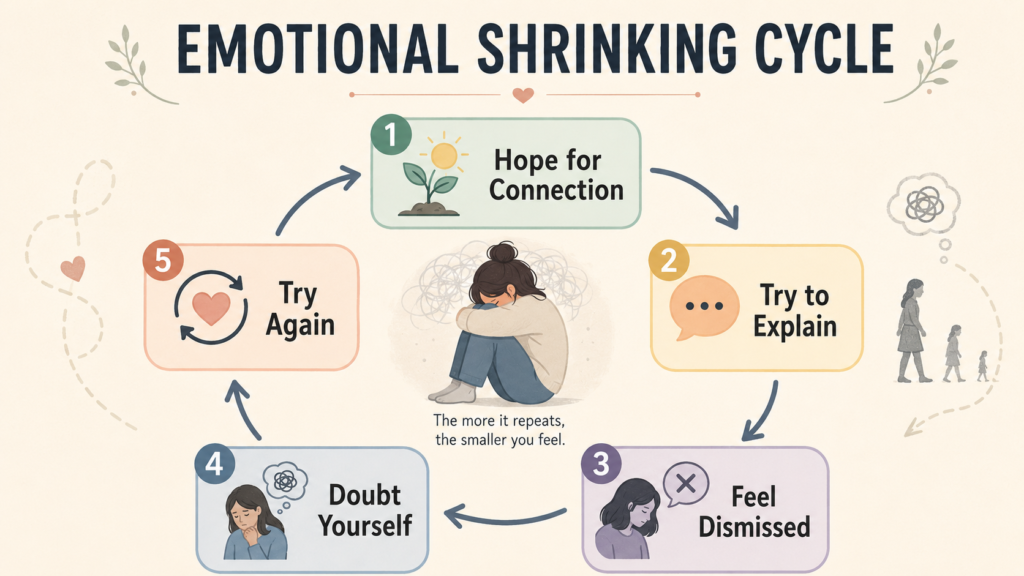
The Emotional Shrinking Cycle
The emotional pattern may look like this:
Hope for connection → Try to explain → Feel dismissed → Doubt yourself → Try harder → Become exhausted → Hope again
This cycle continues because the desire for repair remains alive.
You are not only responding to what happened. You are also responding to the hope that the relationship could become what you need it to be.
Grandiose Narcissist Behaviour and the Nervous System
Repeated grandiose narcissist behaviour may affect more than your thoughts.
When interactions become unpredictable, your nervous system may begin monitoring the person for signs of conflict.
You may notice their facial expression, voice, silence or movement before recognising your own feelings. You may quickly sense whether it is safe to speak.
This is not necessarily a conscious decision. It can become an automatic protective pattern.
Fight
You argue intensely because you desperately want the truth to be acknowledged.
Flight
You avoid conversations, leave the room or emotionally withdraw.
Freeze
Your mind becomes blank when they raise their voice or challenge your memory.
Fawn
You agree, apologise, flatter or minimise yourself to restore peace.
These responses are not character flaws. They may be attempts to survive an emotionally difficult interaction.
However, when the body remains organised around another person’s reactions, your own life becomes smaller.
You may lose energy for work, creativity, friendships, rest and decision-making because so much emotional capacity is spent preparing for or recovering from conflict.
Traits Versus Narcissistic Personality Disorder
It is important to distinguish grandiose traits from a clinical diagnosis.
A person may occasionally behave arrogantly, seek admiration or react defensively without having Narcissistic Personality Disorder.
NPD involves a persistent pattern that affects several areas of life. Clinical features may involve grandiosity, a need for admiration, entitlement, exploitation, limited empathy and significant relationship difficulties.
Only a qualified mental-health professional can make that diagnosis.
You can read more about the clinical criteria for narcissistic personality disorder.
You may also find it useful to understand how covert narcissism can appear differently.
Why the distinction matters
Careless diagnosis can:
- oversimplify complicated behaviour;
- increase stigma;
- distract from other explanations;
- make readers feel responsible for proving a label;
- turn relationship guidance into amateur clinical judgment.
You do not need certainty about a diagnosis to respond to harmful behaviour.
You can say:
- “This conversation is becoming disrespectful.”
- “I will not continue while I am being insulted.”
- “My needs also matter.”
- “I need time away from this discussion.”
- “I will judge change by consistent behaviour.”
Behaviour can be addressed without declaring what disorder another person has.
Understanding Empathy Difficulties
One reason how grandiose narcissists treat partners can feel so painful is that the partner may repeatedly seek empathy and receive defence instead.
Empathy does not require perfect agreement.
It means being able to recognise that another person has an emotional experience worth understanding.
A person may intellectually understand that you are hurt but still resist emotionally engaging with that pain—especially when acknowledging it would require responsibility.
You may hear explanations when you need presence. You may receive advice when you need listening. You may be corrected when you need comfort.
For a deeper explanation, read about understanding emotional empathy difficulties.
The practical question is not only whether they can understand your feelings.
Ask:
Do they make room for your feelings when those feelings are inconvenient to them?
A Behaviour and Emotional-Impact Reality Check
| Repeated behaviour | Possible emotional impact | Grounded response |
|---|---|---|
| They dismiss your success | You minimise yourself | Share your achievements with emotionally safe people |
| They blame you for their choices | You carry misplaced guilt | Separate your responsibility from theirs |
| They become angry when corrected | You stop speaking honestly | Use brief boundaries instead of long arguments |
| They demand admiration | You feel responsible for their mood | Stop providing reassurance under pressure |
| They dominate every discussion | You feel invisible | End conversations that do not allow mutuality |
| They refuse accountability | You explain endlessly | Judge change through behaviour, not promises |
| They punish boundaries | You fear saying no | Strengthen outside support and plan boundaries safely |
| They alternate charm and dismissal | You become confused | Track the repeated pattern, not only the best moments |
How to Protect Your Peace Around Grandiose Behaviour
Protecting your peace does not require winning every argument.
In many cases, the attempt to prove the truth becomes another pathway into emotional exhaustion.
You may calmly express your feelings. You may name the behaviour and state what needs to change. But you cannot force another person to become self-reflective.
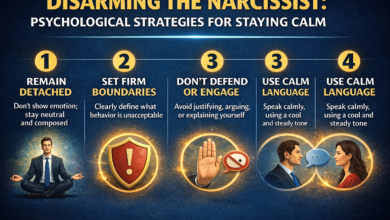
1. Describe behaviour instead of arguing about labels
Rather than saying, “You are a narcissist,” focus on what happened.
For example: “When I share an achievement and you immediately minimise it, I feel dismissed.”
Or: “I am willing to discuss the problem, but I will not continue while I am being insulted.”
Specific language keeps you grounded in observable reality.
2. Stop over-explaining
When someone repeatedly refuses to understand, more words may not create more understanding.
Over-explaining can come from the hope that one perfect sentence will finally make them listen.
Try stating the point clearly once or twice. Then observe the response.
Understanding is not measured by whether they agree with you. It is measured by whether they can listen, reflect and respond respectfully.
3. Set a boundary around your action
A boundary is not an order controlling another adult.
It states what you will do.
Examples:
- “If shouting begins, I will leave the conversation.”
- “I will not discuss private matters in front of other people.”
- “I will respond after I have had time to think.”
- “I will not accept insults as part of conflict.”
- “If financial decisions affect me, I need full information.”
4. Do not make your peace dependent on their admission
You may want them to say:
- “I was wrong.”
- “I hurt you.”
- “I caused part of this problem.”
- “Your success matters.”
- “I should have listened.”
That acknowledgement may feel necessary for closure.
But waiting indefinitely for someone else’s accountability can keep your emotional life tied to their resistance.
You are allowed to trust a repeated pattern even when the other person denies it.
5. Rebuild your relationship with yourself
Work on yourself—not because their behaviour is your fault, but because your inner life deserves protection.
This may include:
- writing down what happened;
- reconnecting with trusted people;
- noticing what you feel before explaining it;
- returning to neglected goals;
- practising decisions without seeking their approval;
- seeking qualified counselling;
- creating routines that restore calm;
- allowing yourself to succeed visibly again.
Read Also : understanding-narcissism
6. Use distance when interaction repeatedly causes harm
Distance is not always revenge.
Sometimes it is the amount of space needed for your nervous system to stop preparing for the next disappointment.
Distance may mean:
- shorter conversations;
- fewer personal disclosures;
- communicating in writing;
- avoiding unnecessary arguments;
- limiting visits;
- separating financial matters;
- taking a temporary break;
- ending contact when safety or well-being requires it.
The correct level of distance depends on the relationship, your practical circumstances and your safety.
7. Let the relationship reveal whether mutual repair is possible
A relationship cannot be carried by one person alone.
Repair requires two people willing to:
- listen;
- reflect;
- acknowledge impact;
- accept appropriate responsibility;
- respect boundaries;
- change repeated behaviour.
One person can improve their communication. One person cannot create mutuality alone.
Can a Grandiose Narcissist Change?
Change may be possible, but it cannot be created through your effort alone.
Meaningful change generally requires:
- some recognition of the problem;
- willingness to tolerate uncomfortable feedback;
- accountability without constant blame;
- sustained motivation;
- consistent behavioural change;
- professional treatment where appropriate.
Psychotherapy is commonly used in treating Narcissistic Personality Disorder. However, treatment works only when the person participates.
Promises made during conflict are not the same as sustained change.
Look for evidence such as:
- listening without retaliation;
- fewer repeated violations;
- genuine apologies;
- respect for boundaries;
- willingness to seek help;
- consistent behaviour over time.
For further reading, see whether narcissistic patterns can change over time.
When the Problem Is More Than a Difficult Personality
Not every grandiose or insensitive person is abusive.
However, a relationship may involve abuse or coercive control when there are repeated patterns of:
- threats;
- stalking;
- physical violence;
- sexual coercion;
- financial control;
- isolation;
- monitoring;
- destruction of property;
- intimidation;
- preventing access to help;
- severe humiliation;
- threats involving children, pets or employment.
If confronting the person may increase danger, prioritise safety rather than proving your point.
Contact a trusted local domestic-abuse service, qualified professional or emergency service when appropriate.
Safety note: Online information cannot assess your individual risk. Where threats, violence or coercive control are present, seek personalised local support and avoid making a high-risk confrontation without a safety plan.
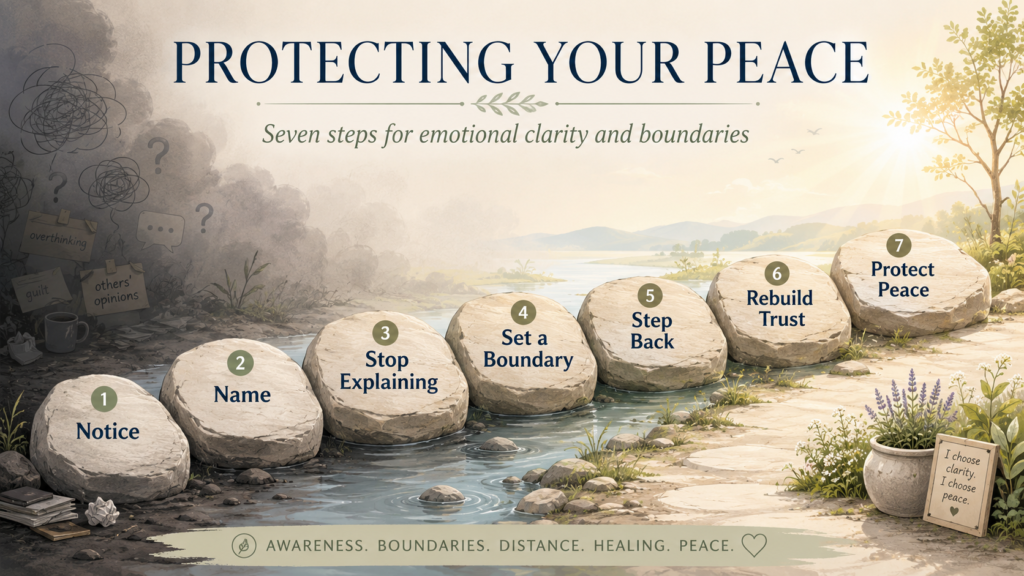
Seven Steps for Protecting Your Peace
- Notice the repeated behaviour.
- Name its emotional impact privately and honestly.
- Stop explaining when the conversation becomes circular.
- Set a boundary based on what you will do.
- Step back from interactions that repeatedly cause harm.
- Rebuild self-trust through supportive relationships and independent action.
- Protect your peace without waiting for permission or agreement.
Read Also : narcissism
People Also Ask
What are the main grandiose narcissist signs?
Possible signs include exaggerated self-importance, entitlement, admiration-seeking, superiority, limited empathy, exploitation and difficulty tolerating criticism. One behaviour is not enough to diagnose a disorder. Look for persistent patterns and their effect on relationships.
How does a grandiose narcissist behave in a relationship?
They may dominate conversations, minimise a partner’s achievements, expect special treatment and react defensively when challenged. The partner may gradually feel unheard, inferior or afraid to communicate honestly.
Why do grandiose narcissists become angry when corrected?
Correction may threaten the superior self-image they work to maintain. They may respond with defensiveness, contempt, blame, withdrawal or anger. Not every defensive reaction indicates narcissism, but repeated punishment for reasonable feedback can make a relationship emotionally unsafe.
What is the difference between confidence and grandiose narcissism?
Healthy confidence allows humility, accountability, empathy and appreciation of another person’s success. Grandiose narcissistic patterns are more likely to require superiority, admiration and special treatment at the expense of mutual respect.
Should you argue with a grandiose narcissist?
Long arguments often become circular when the other person is more focused on protecting their self-image than understanding the issue. State the concern clearly, avoid diagnostic labels and use boundaries when communication becomes disrespectful or unproductive.
Final Clarity: You Do Not Need a Diagnosis to Protect Yourself
Recognising grandiose narcissist signs is not about collecting evidence to defeat someone.
It is about understanding what happens to you in the relationship.
- Do you repeatedly feel small, ignored, afraid, confused or exhausted?
- Do you enter conversations wanting connection but leave disappointed?
- Do you spend more time managing their reaction than expressing your truth?
- Do you keep trying to create repair while the other person refuses to examine themselves?
These questions matter.
You can speak honestly about harmful behaviour. You can invite mutual reflection. But you do not have to spend your life correcting someone who turns every disagreement into an attack against your peace.
The goal is not to win recognition from someone who repeatedly withholds it.
The goal is to return to yourself.
Read Also : trauma-recovery-start-your-healing-journey-today
A Personal Note From BBH
Sometimes the deepest exhaustion does not come from conflict itself.
It comes from repeatedly hoping that one more explanation will finally create understanding.
You may think:
- “Perhaps I did not explain it correctly.”
- “Maybe they will listen when they are calmer.”
- “Perhaps this time they will understand what I feel.”
- So you try again.
But when every conversation leaves you feeling ignored, blamed or emotionally injured, the problem may not be your ability to explain.
You can speak honestly about what hurts you, but you cannot force another person to examine themselves. You cannot create accountability inside someone else. You cannot build mutuality alone.
Please do not abandon your peace while trying to make another person accept a truth they are determined to avoid.
Work on yourself—not because their behaviour is your fault, but because your emotional life deserves care, stability and protection.
A healthy relationship flows when both people are willing to listen, accept responsibility and repair. One person cannot hold the entire relationship forever.
Sometimes distance is not rejection. Sometimes it is how you stop becoming smaller.
Frequently Asked Questions
Are all grandiose people narcissists?
No. Someone can behave arrogantly, brag or seek attention without having Narcissistic Personality Disorder. A diagnosis requires a persistent pattern, significant impairment and professional assessment.
Do grandiose narcissists know they hurt people?
Awareness varies. Some may recognise the impact but minimise it, while others may have limited insight into their behaviour. What matters practically is whether they acknowledge harm and change their actions consistently.
Why do I feel emotionally exhausted around this person?
Repeatedly monitoring reactions, defending your reality and trying to create understanding can consume significant emotional energy. Your body may also remain alert before and during difficult interactions.
Should I tell someone that they are a narcissist?
Applying a diagnostic label usually does not resolve the behaviour and may escalate conflict. Focus instead on specific actions, their impact and the boundary you need.
When should I seek professional or outside support?
Consider support when the relationship causes persistent distress, fear, loss of confidence or difficulty functioning. Seek urgent local help when there are threats, stalking, violence, coercive control or immediate danger.
Read Also : Community Support – Free Zoom Healing Space
Educational Disclaimer
This article is intended for education and emotional clarity. It cannot diagnose Narcissistic Personality Disorder or replace personalised advice from a qualified mental-health professional. If a relationship includes threats, violence, coercive control or immediate danger, seek appropriate local support.
External References
Mayo Clinic — Narcissistic Personality Disorder: Symptoms and Causes
https://www.mayoclinic.org/diseases-conditions/narcissistic-personality-disorder/symptoms-causes/syc-20366662
Mayo Clinic — Narcissistic Personality Disorder: Diagnosis and Treatment
https://www.mayoclinic.org/diseases-conditions/narcissistic-personality-disorder/diagnosis-treatment/drc-20366690
American Psychiatric Association — Diagnostic and Statistical Manual of Mental Disorders, DSM-5-TR
https://www.psychiatry.org/psychiatrists/practice/dsm
NHS — Personality Disorders
https://www.nhs.uk/mental-health/conditions/personality-disorder/
National Domestic Violence Hotline — What Is Emotional Abuse?
https://www.thehotline.org/resources/what-is-emotional-abuse/