Why Covert Narcissists Dismiss Your Emotional Pain?
When Their Caring Disappears After You Share Pain?

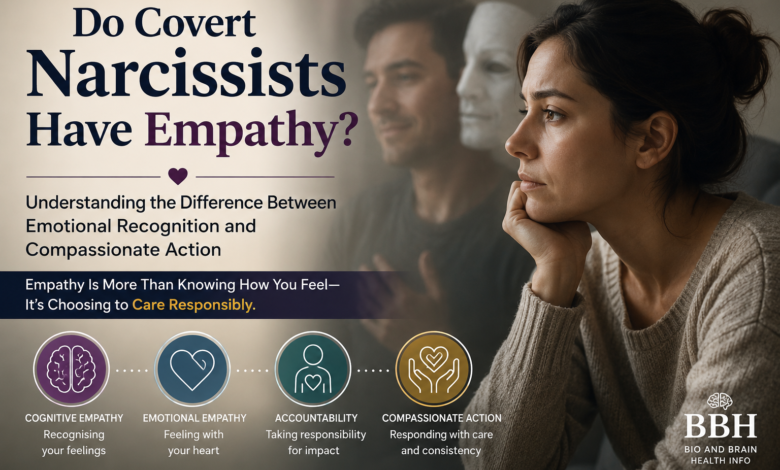
Do covert narcissists have empathy, or do they only appear caring when the relationship feels easy for them? This question becomes painful when someone seems sensitive and attentive, yet dismisses your suffering when you explain how their behaviour affected you.
Thank you for reading this post, don't forget to subscribe!Understanding covert narcissist empathy requires more than deciding whether a person cares. The connection between narcissism and empathy can be complicated. Someone may recognise your emotions but struggle to stay present when empathy requires accountability, humility, or change.
This is where emotional empathy deficits may become visible. A person may understand that you are hurt without responding to the depth of your pain. In discussions about cognitive empathy narcissism, this means someone may identify your feelings accurately but still fail to offer consistent compassion, repair, or changed behaviour.
This article explains why empathy may appear in one moment and disappear in another, and how this pattern can affect your nervous system, self-trust, and emotional safety.
Why Covert Narcissists Dismiss Your Emotional Pain
There may have been moments when this person seemed unusually sensitive to your emotions.
- They noticed when your voice changed.
- They understood what made you afraid.
- They remembered something painful from your past.
- They may have offered comfort, spoken gently, or told you that they understood you better than anyone else.
Then you tried to talk about something they had done that hurt you.
Suddenly, the caring disappeared.
You were told to move on. You heard that it was not a big deal, that life happens this way, or that you were taking things too personally. Instead of sitting with your suffering, they gave you advice, defended themselves, changed the subject, or explained why your reaction was the real problem.
That emotional contradiction can leave you asking: Do covert narcissists have empathy, or was I imagining the caring moments?
The answer is not as simple as saying that every person with narcissistic traits has no empathy. Some people may recognise another person’s feelings accurately and may even show warmth at certain times.
However, their empathy can become inconsistent when listening would require accountability, humility, changed behaviour, or tolerating uncomfortable shame.
The most important question is therefore not only whether they can recognise pain.
It is whether their understanding leads to care, responsibility, respect, repair, and meaningful change.
“What confused me most was that the caring disappeared when I raised my pain. I was told to move on, that it was not a big deal, and that life happens this way. But no one stopped to understand how deeply I was suffering.”
Do Covert Narcissists Have Empathy? The Direct Answer
A person with covert or vulnerable narcissistic traits may show some forms of empathy, but that empathy may be selective, inconsistent, defensive, or limited during conflict.
- They may understand that you are hurt.
- They may correctly identify why you are hurt.
- They may know which words would calm you.
Yet understanding an emotion is not the same as emotionally sharing it, responding compassionately, accepting responsibility, or changing the behaviour that caused the harm.
This distinction helps explain why covert narcissist empathy can feel convincing during peaceful moments but disappear when the relationship becomes emotionally demanding.
Some people may be more empathic when:
- they feel appreciated or admired;
- they are not being challenged;
- helping supports their preferred self-image;
- the emotional issue does not require them to admit fault;
- they feel in control of the interaction.
Their response may change when your pain is connected to their behaviour. At that point, concern can be replaced by minimising, defensiveness, blame, withdrawal, irritation, or emotional instruction.
This does not prove that a person has narcissistic personality disorder. Only a qualified mental-health professional can diagnose a personality disorder. It does, however, show why repeated behaviour matters more than isolated moments of tenderness.
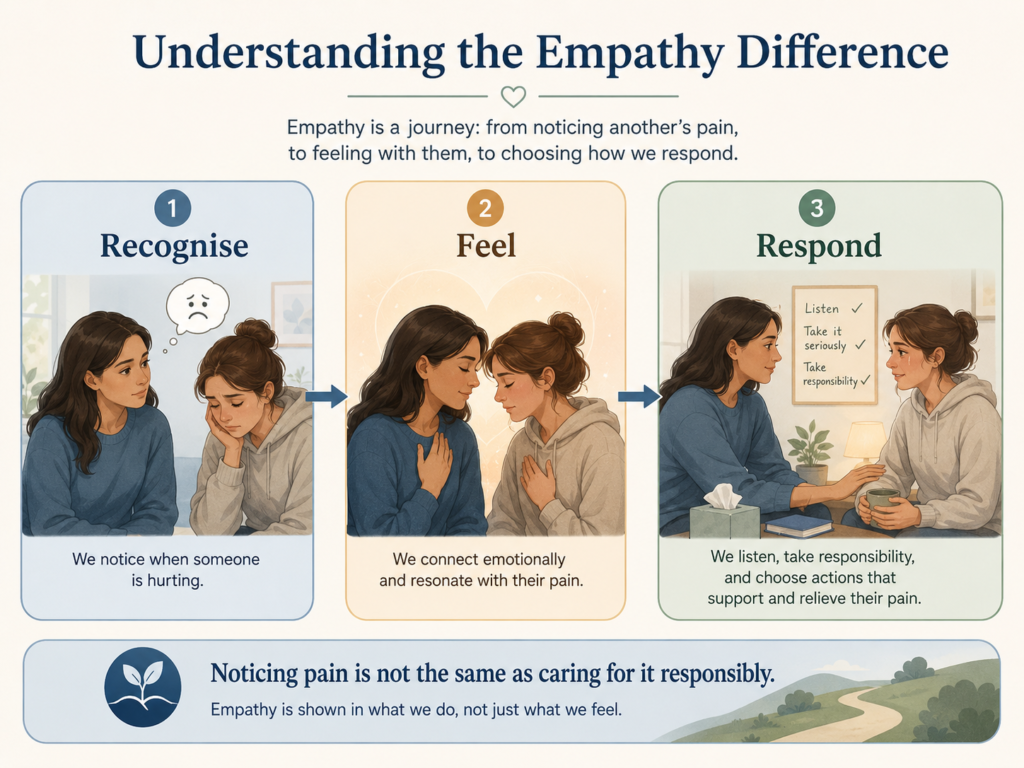
Covert Narcissist Empathy: Three Different Layers
The question “Can covert narcissists feel empathy?” becomes clearer when we separate empathy into different layers.
| Type of empathy | What it means | How it may appear in a relationship |
|---|---|---|
| Cognitive empathy | Understanding what another person may be thinking or feeling | They accurately identify that you feel rejected, frightened, ashamed, or lonely |
| Emotional empathy | Emotionally resonating with another person’s experience | Your sadness creates genuine concern rather than irritation or inconvenience |
| Compassionate empathy | Understanding and feeling concern, followed by helpful action | They listen, accept impact, respect boundaries, repair the harm, and try to change |
A person may be strong in cognitive empathy but weaker in emotional or compassionate empathy.
They may know exactly what you feel and still respond in a way that protects their image rather than your emotional safety. They might say the correct words, but the conversation does not lead to repair.
This is one reason discussions about cognitive empathy narcissism matter. Emotional understanding can sometimes exist without enough emotional responsibility.
Cognitive Empathy in Narcissism
Cognitive empathy allows someone to read emotional cues, understand another person’s perspective, and anticipate reactions.
This ability is not automatically harmful. It is an ordinary human capacity. But when it is not supported by concern, conscience, accountability, and respect, it may leave the other person feeling studied rather than held.
You may think:
- “They know exactly why I am hurting.”
- “They understand which words affect me.”
- “They can explain my feelings better than I can.”
- “Why, then, do they repeat the same behaviour?”
The painful answer may be that recognising your emotions does not automatically mean those emotions will guide their decisions.
Emotional Empathy Deficits During Conflict
Emotional empathy deficits may become more visible during disagreement.
When you say, “That hurt me,” the person may hear:
- “You are a bad person.”
- “You are losing control.”
- “You are being criticised.”
- “You are not special or good enough.”
- “You are being exposed.”
Instead of staying connected to your pain, they may become absorbed in protecting themselves from shame or criticism.
The emotional focus then shifts.
You entered the conversation hoping to discuss your hurt. You leave the conversation defending your tone, your memory, your sensitivity, or your right to have feelings.
Why Their Caring May Disappear When You Raise Your Pain
The caring moments may not always have been entirely false. Human behaviour is more complicated than that.
A person may feel affection, need closeness, enjoy being supportive, or genuinely want to see themselves as caring. Yet their capacity to remain empathic may weaken when connection requires something emotionally difficult from them.
That difficult requirement might be:
- admitting they caused harm;
- listening without controlling the conclusion;
- tolerating another person’s disappointment;
- apologising without adding an excuse;
- respecting a boundary they dislike;
- changing behaviour consistently;
- allowing your reality to exist beside their own.
This is where the difference between empathy and accountability becomes visible.
Empathy Without Accountability Is Not Enough
Someone may say:
“I understand that you are upset.”
But then add:
“You are making too much of it.”
They may say:
“I never wanted to hurt you.”
But refuse to discuss the behaviour that continues hurting you.
They may comfort you after a conflict but react the same way again the following week.
The moment of comfort may have felt real. Yet comfort without accountability cannot create lasting emotional safety.
| What you observe | What it may show | What to look for next |
|---|---|---|
| They understand why you are upset | Cognitive empathy may be present | Do they accept the impact of their behaviour? |
| They become emotional when confronted | Shame or self-protection may be activated | Does the conversation return to your pain? |
| They apologise beautifully | They may know the language of repair | Does their behaviour change consistently? |
| They comfort you after hurting you | Affection and harm may coexist | Does the same harmful cycle repeat? |
| They are empathic toward others but dismiss you | Empathy may be selective during intimacy or conflict | Are your needs regularly treated as criticism? |
| They call you too sensitive | Attention is being moved away from the original harm | Can they discuss what happened without attacking your character? |
For a deeper explanation of how apparent care can become influence or control, read when empathy becomes emotional influence:
Read Also : empathetic-narcissism-when-empathy-becomes-control
Narcissism and Empathy Are More Complex Than “Has It” or “Does Not Have It”
Online conversations often present narcissism and empathy as a simple yes-or-no issue.
Real psychological functioning is usually more complex.
Empathy can fluctuate according to context, emotional capacity, motivation, stress, personality structure, defensiveness, and the closeness of the relationship.
A person may appear compassionate in public but become emotionally unavailable in private. They may care when helping earns appreciation but withdraw when the same person asks them to take responsibility.
This does not mean every inconsistent person is narcissistic.
People can become defensive because of immaturity, trauma history, limited emotional skills, avoidant attachment, stress, or fear of conflict. One dismissive conversation is not enough to identify a personality pattern.
The safer question is:
What happens repeatedly when I express pain, ask for accountability, or create a boundary?
Patterns provide more useful information than labels.
Covert Narcissism Is Not a Separate DSM Diagnosis
“Covert narcissism” is commonly used to describe a more vulnerable, hidden, sensitive, defensive, or withdrawn presentation of narcissistic traits. It is not a separate diagnosis in the DSM-5-TR.
A person may appear insecure rather than openly grandiose. They may communicate superiority indirectly, feel easily slighted, withdraw when criticised, or seek reassurance through victimhood, sensitivity, or moral positioning.
These descriptions should not be used to diagnose a partner, relative, colleague, or friend.
For clinical clarity, read how covert narcissism differs from a formal diagnosis: covert-narcissism-dsm-diagnosis-clarity
You may also read the BBH guide to clinical criteria for narcissistic personality disorder: dsm-5-criteria-for-narcissistic-personality-disorder
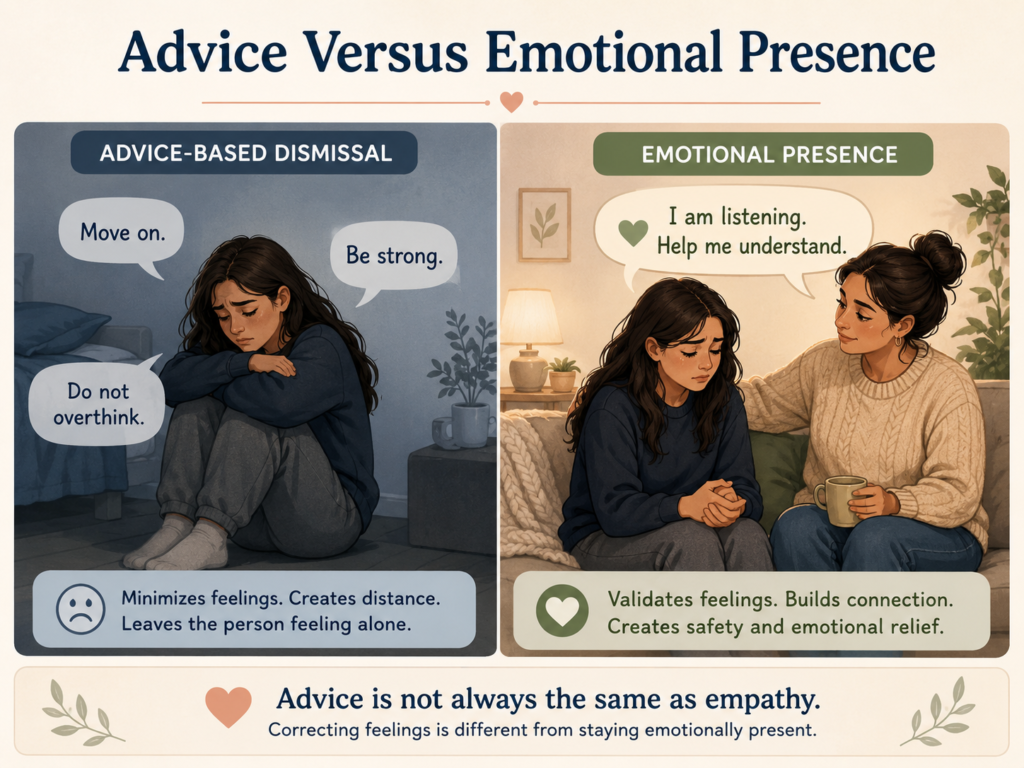
Why Being Given Advice Can Feel Like Emotional Abandonment
Sometimes you are not ignored completely.
Instead, you are given knowledge.
You may hear:
- “You need to be stronger.”
- “Everyone has problems.”
- “Do not think about it.”
- “Life is like this.”
- “Just move on.”
- “You are creating stress for yourself.”
The person may believe they are helping. Yet advice can become a way of escaping emotional presence.
Advice moves quickly toward a solution. Empathy first slows down enough to understand the experience.
When you are crying, you may not need a lecture about resilience. You may need someone to say:
“I can see that this affected you deeply.”
“Tell me what part hurts most.”
“I may not fully understand yet, but I want to listen.”
“Did something I do contribute to this pain?”
“Sometimes a person gives you knowledge because sitting with your suffering feels uncomfortable to them. But being advised is not the same as being understood.”
Knowledge has value. Perspective has value. Solutions have value.
But timing matters.
When knowledge is used to move you away from your pain before the pain has been heard, it can feel like emotional dismissal disguised as help.
The Nervous System Impact of Inconsistent Caring
Your nervous system does not evaluate a relationship only through words.
It learns through repetition.
When tenderness and dismissal alternate, the body may struggle to predict what will happen next.
- One day you feel seen. The next day your pain is minimised.
- One conversation brings closeness.
- Another leaves you crying and unable to sleep.
This unpredictability can create heightened emotional monitoring.
You may begin noticing:
- small changes in tone;
- delayed messages;
- facial expressions;
- silence;
- signs of irritation;
- whether it feels safe to raise a concern;
- whether you need to soften your words;
- whether the person is emotionally available today.
This constant scanning uses mental and physical energy.
You may cry after conversations, replay every sentence, lose sleep, or wonder whether you explained yourself incorrectly. Your mind keeps returning to the interaction because it is trying to solve an emotional contradiction:
“They care about me, but they do not care for my pain.”
The nervous system often keeps searching for certainty when the relationship gives mixed signals.
Read Also: narcissism – Even Explore More – understanding-narcissism
Why You Keep Overthinking After the Conversation
Overthinking is not always a sign that you are irrational.
Sometimes the conversation did not reach emotional completion.
The original question was never answered. The hurt was never acknowledged. Responsibility was never clarified. Instead, the discussion ended with you being told that you misunderstood, reacted too strongly, or created the problem.
Your mind then returns to the event, trying to establish what was real.
You may ask:
- “Did I explain it badly?”
- “Was I too sensitive?”
- “Did they mean to hurt me?”
- “Am I expecting too much?”
- “Was the caring real?”
- “Why did I leave feeling guilty when I was the one who was hurt?”
For more support around emotional exhaustion, read why emotionally difficult relationships drain the nervous system: why-you-feel-drained-in-relationships
Why Hope Can Keep You Emotionally Attached
- You may already understand the pattern intellectually.
- You may recognise that the person repeatedly dismisses your pain.
- You may know that apologies do not lead to change.
- You may see that the caring disappears when accountability enters the room.
Yet emotionally, you may still hope.
- You hope that one day they will understand you properly.
- You hope that the kind version will become consistent.
- You hope that the relationship will finally feel as safe as it sometimes appears.
- You hope that your patience, love, explanation, or loyalty will help the person recognise your suffering.
This hope does not mean you are foolish.
Attachment is not governed only by logic. It is shaped by longing, memory, fear, loneliness, relief, and the human need for connection.
The Mind Can Understand Before the Heart Is Ready
A painful truth may become intellectually obvious before it becomes emotionally acceptable.
You can see what is happening while still resisting what it means.
Accepting the pattern may require accepting that:
- the relationship may not become what you hoped;
- the person may never understand you in the way you need;
- caring moments do not erase repeated harm;
- love does not automatically create emotional capacity;
- your healing may have to begin without their validation.
That grief can be enormous.
“I was not losing myself because I could not understand what was happening. I was losing myself because, emotionally, I was not ready to accept what I already understood.”
How Repeated Dismissal Can Make You Lose Yourself
The deepest loss may not be only trust in the other person.
It may be trust in yourself.
When you repeatedly hear:
- “You are too sensitive.”
- “You misunderstood me.”
- “You always create problems.”
- “This is not a big deal.”
You may begin to treat your own emotions as unreliable.
Instead of asking, “What is this experience doing to me?” you start asking, “Will they agree that I have a right to feel this?”
Your emotional reality becomes dependent on their approval.
Over time, this may leave you feeling:
- empty;
- helpless;
- weak;
- deeply alone;
- afraid to trust another relationship;
- unsure what you genuinely feel;
- disconnected from your own needs;
- dependent on outside reassurance.
This is one of the most damaging aspects of repeated emotional invalidation.
You do not lose yourself all at once. You lose yourself in small moments when you silence what you know to preserve the connection.
For a deeper discussion, read how repeated blame and control damage self-trust: toxic-narcissist-traits-self-trust
Was I Imagining Everything?
No one outside your relationship can confirm every intention or explain every moment.
But your emotional experience still matters.
You do not need to prove that every caring moment was false. You do not need to prove a diagnosis. You do not need to solve the other person’s entire psychology before you protect yourself.
You can hold two truths at once:
The person may have shown real affection in certain moments.
The relationship may still have repeatedly harmed your self-trust and emotional safety.
The more useful question is not:
“Was every good moment fake?”
It is:
“Does the complete pattern allow me to feel heard, respected, safe, and able to remain myself?”
The Empathy and Accountability Pattern Chart
Use this chart to observe the full relationship pattern rather than judging one isolated moment.
| Relationship moment | Emotionally safer response | Concerning repeated response |
|---|---|---|
| You say you were hurt | They listen and ask questions | They minimise, interrupt, or blame |
| You describe the impact | They acknowledge your experience | They argue only about their intention |
| You ask for change | They discuss a realistic adjustment | They call you controlling or demanding |
| You create a boundary | They may dislike it but respect it | They punish, shame, withdraw, or threaten |
| They apologise | The apology includes responsibility | The apology is followed by excuses |
| Time passes | Behaviour gradually changes | The same cycle returns without repair |
The Repeating Cycle
Pain occurs → you explain → they feel criticised → blame shifts → you doubt yourself → tenderness returns → hope returns → the behaviour repeats.
One cycle does not diagnose narcissism. Repetition, emotional impact, absence of repair, and loss of self-trust are what deserve attention.
Read Also : Mental Health Guide for Beginners – Start Here for Emotional Healing
How to Protect Yourself Without Diagnosing Anyone
The goal is not to become obsessed with proving whether the other person is a covert narcissist.
The goal is to stop abandoning yourself while searching for an answer.
1. Write Down the Facts Before Interpreting Them
After a painful interaction, write:
- What happened?
- What exact words were used?
- What did I ask for?
- How did they respond?
- Was responsibility taken?
- Has this happened before?
- Did anything change afterwards?
Facts help separate the event from the emotional fog surrounding it.
2. Name the Feeling and the Need
Try:
“I feel dismissed, and I need my experience to be heard.”
“I feel anxious, and I need clarity.”
“I feel emotionally unsafe, and I need distance.”
“I feel confused, and I need time before responding.”
A feeling is not proof of another person’s diagnosis. It is still valuable information about your internal state.
3. Pause Before Explaining Again
Repeated explanation can become an attempt to obtain emotional permission for your pain.
Ask:
“Have I already explained this clearly?”
“Is the problem lack of information, or lack of willingness?”
“Am I explaining to create understanding, or begging to be believed?”
Sometimes clarity comes from stopping the repeated explanation and observing what the person does with what they already know.
4. Measure Care Through Behaviour
Do not judge empathy only through tears, comforting words, emotional speeches, promises, gifts, or temporary closeness.
Look for:
- willingness to listen;
- respect for your reality;
- acceptance of impact;
- accountability without blame;
- respect for boundaries;
- sustained behavioural change;
- repair after conflict.
Emotionally safe empathy becomes visible through action.
5. Return Emotional Authority to Yourself
Ask:
“What do I already know?”
“What have I been afraid to accept?”
“What does my body repeatedly tell me after these interactions?”
“What would I advise someone I deeply loved?”
“What choice would help me remain connected to myself?”
Your goal is not to become emotionally hard. It is to become emotionally anchored.
A Personal Note: Losing Touch With Who I Am
What confused me most was not that the person never cared. It was that the caring seemed to disappear when I raised my pain.
I was told to move on, that it was not a big deal, and that life happens this way. The words sounded practical, but the person did not sit with me long enough to understand the depth of my suffering.
When I cried, I was often given knowledge or advice. But advice did not make me feel emotionally understood. I did not need someone to solve my whole life in that moment. I needed someone to recognise that my pain was real.
When I heard, “You are too sensitive,” “You misunderstood me,” or “You always create problems,” I began questioning my own emotional reality. Afterwards, I would cry, lose sleep, and replay the conversation repeatedly.
I kept hoping that one day the relationship would change. I hoped the person would finally understand me and that the caring would become consistent.
The pattern left me feeling empty, helpless, weak, and deeply alone. It became difficult to trust relationships because I had slowly placed too much emotional control in another person’s hands.
The deepest loss was losing touch with who I was, what I already understood, and what strength I already carried within me.
I could see what was happening. Yet emotionally, I was not ready to accept what it meant.
Sometimes the mind recognises reality before the heart is ready to live by it.
Healing began when I stopped asking only why the other person could not understand me and started asking:
- “What do I already have within me?”
- “What truth have I been silencing?”
- “How can I hold, calm, and protect myself?”
- “Why am I losing myself when I already understand what is happening?”
Self-knowledge takes time. Inner strength takes emotional effort. It grows when we become safe enough inside ourselves to hear our own voice clearly.
This does not mean every relationship follows the same pattern. But in many relationships, we give another person so much control over our emotional reality that we forget how to support ourselves.
Healing begins when we take some of that control back.
Read Also : why emotionally difficult relationships drain the nervous system
“Sometimes we search outside ourselves for an answer while forgetting the strength we already carry. When we place too much emotional control in another person’s hands, we can lose contact with the part of us that knows how to listen, protect, and care for ourselves.”
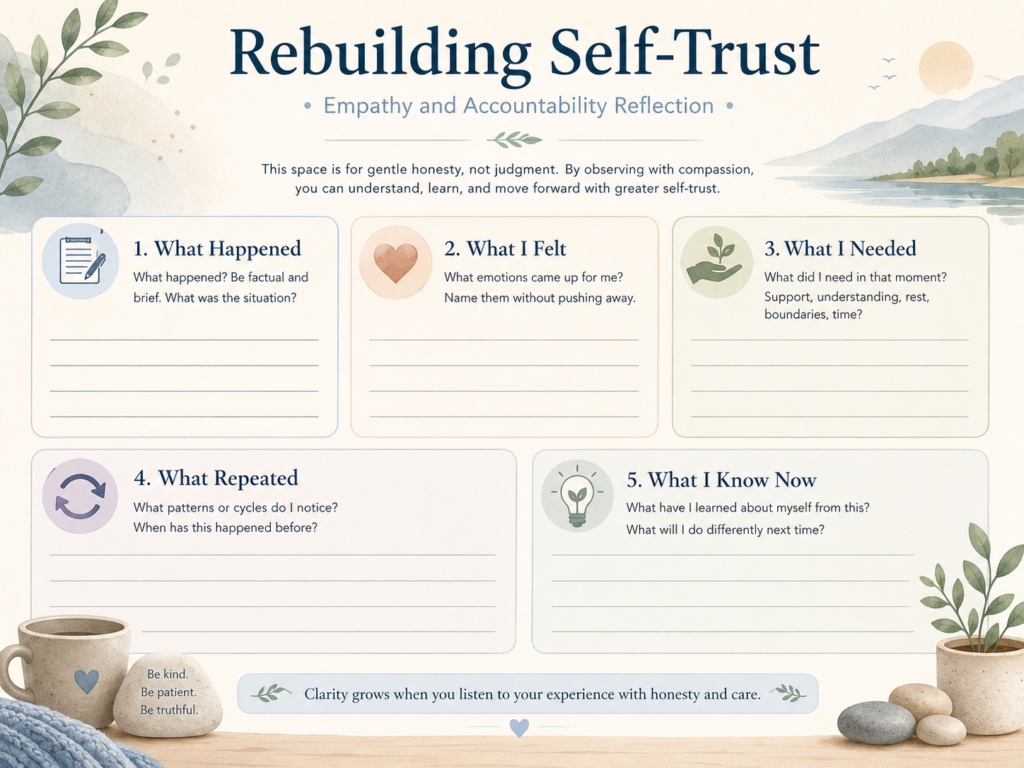
BBH Empathy and Accountability Reflection
Use these five questions after a difficult interaction:
- What exactly happened, without explaining or defending anyone?
- How did my body and emotions respond?
- What did I need in that moment?
- Did the person show listening, accountability, and change?
- What do I already know but feel afraid to accept?
This reflection is not intended to diagnose another person.
It is designed to help you hear yourself again.
Can a Person With Narcissistic Traits Change?
Change is possible in human beings, but it cannot be created by another person’s patience alone.
Meaningful change generally requires the person to:
- recognise the pattern;
- accept responsibility;
- tolerate emotional discomfort;
- want to understand their impact;
- seek appropriate help when needed;
- practise new responses consistently;
- respect other people’s limits;
- continue changing even when praise or immediate rewards are absent.
An apology may be sincere in the moment and still be insufficient.
The stronger evidence of change is what happens after the apology.
You cannot love someone into accountability by carrying all the emotional responsibility yourself.
Read Also :emotional-healing-roadmap
People Also Ask
1. Do covert narcissists have empathy?
Some people with covert narcissistic traits may understand another person’s emotions, but their empathy can be inconsistent. They may appear caring when they feel secure yet become dismissive or defensive when empathy requires accountability, behavioural change, or tolerance of criticism.
2. Can covert narcissists feel empathy?
They may experience certain forms of empathy, affection, concern, or emotional attachment. However, recognising or feeling another person’s pain does not automatically produce compassion, responsibility, respect for boundaries, or lasting change.
3. Why does a covert narcissist seem caring at first?
Early caring may reflect genuine affection, a desire for closeness, enjoyment of being needed, or a wish to appear sensitive. The more important test is whether concern remains present when conflict, disappointment, boundaries, or accountability appear.
4. Why does their empathy disappear during conflict?
Conflict may activate shame, defensiveness, insecurity, or fear of criticism. The person may become focused on protecting their self-image, causing your original pain to be minimised, redirected, or treated as an attack.
5. Can a covert narcissist love someone?
A person with narcissistic traits may experience affection, attachment, longing, and dependence. However, emotionally safe love also requires mutual respect, empathy, accountability, boundaries, and the ability to repair harm.
Frequently Asked Questions
1. Is covert narcissism an official diagnosis?
No. Covert narcissism is not a separate DSM-5-TR diagnosis. It is a commonly used term describing a more vulnerable or hidden presentation of narcissistic traits. Only a qualified clinician can diagnose narcissistic personality disorder.
2. What is the difference between cognitive and emotional empathy?
Cognitive empathy is the ability to understand what another person may feel. Emotional empathy involves emotionally resonating with that experience. Compassionate empathy adds responsible and supportive action.
3. Can someone understand my feelings and still hurt me?
Yes. Emotional awareness does not always produce mature behaviour. A person may understand your feelings yet respond through defensiveness, self-interest, fear, habit, poor regulation, or unwillingness to accept responsibility.
4. How can I tell whether empathy is genuine?
Look beyond emotional words and isolated caring moments. Genuine empathy is more trustworthy when it includes listening, accountability, respect for boundaries, repair, concern for impact, and consistent behavioural change.
5. Should I tell someone that they are a covert narcissist?
It is often more useful and safer to discuss specific behaviours and their impact. Focus on what happened, what you need, what boundary is necessary, and whether the relationship allows respectful repair.
YMYL and Relationship Safety Note
This article is for educational and emotional-awareness purposes. It cannot diagnose narcissistic personality disorder or determine whether a particular person is a covert narcissist. Diagnosis requires assessment by a qualified mental-health professional.
Understanding empathy patterns can support greater clarity, but it cannot replace safety, firm boundaries, or professional help when abuse, coercion, humiliation, threats, or fear are present.
Secure communication can support healthier repair, but it cannot replace safety, boundaries, or professional help when abuse, coercion, humiliation, or fear is present.
If you feel controlled, threatened, unsafe, or at risk of harm, contact an appropriate local professional, support organisation, trusted person, or emergency service.
Read Also : how repeated blame and control damage self-trust
Final Reflection: Stop Asking Only Whether They Understand
The question “Do covert narcissists have empathy?” may help you begin understanding a confusing relationship.
But it should not become the only question.
A person may understand your emotions and still fail to protect them.
They may care in certain moments and still be unable or unwilling to repair repeated harm.
They may offer tenderness and still leave you doubting your reality.
Your healing does not require a final verdict about everything they felt.
It requires clarity about what the complete pattern is doing to you.
Ask:
- Do I feel heard?
- Can I express pain without being punished?
- Are boundaries respected?
- Does accountability exist?
- Does behaviour change?
- Can I remain connected to this person without becoming disconnected from myself?
- Empathy is not proven only by understanding your pain.
Emotionally safe empathy is revealed by what someone does after they understand it.
And your strength begins to return when you stop waiting for another person to authorise what you already know.
BBH Support Resource
Want a simple tool to understand the pattern more clearly?
Download the BBH Empathy and Accountability Reflection Worksheet to compare emotional words with listening, responsibility, boundary respect, repair, and consistent behavioural change.
Email info@bioandbrainhealthinfo.com and write:
“Send me the Empathy and Accountability Reflection Worksheet.”
EXTERNAL REFERENCES
- Website: Mayo Clinic
Page title: Narcissistic Personality Disorder — Symptoms and Causes
URL: https://www.mayoclinic.org/diseases-conditions/narcissistic-personality-disorder/symptoms-causes/syc-20366662 - Website: Cleveland Clinic
Page title: Narcissistic Personality Disorder: Symptoms and Treatment
URL: https://my.clevelandclinic.org/health/diseases/9742-narcissistic-personality-disorder - Website: National Center for Biotechnology Information, StatPearls
Page title: Narcissistic Personality Disorder
URL: https://www.ncbi.nlm.nih.gov/books/NBK556001/ - Website: PubMed Central
Article title: Empathy in Narcissistic Personality Disorder: From Clinical and Empirical Perspectives
URL: https://pmc.ncbi.nlm.nih.gov/articles/PMC4415495/ - Website: PubMed Central
Article title: The Dark Side of Empathy in Narcissistic Personality Disorder
URL: https://pmc.ncbi.nlm.nih.gov/articles/PMC10097942/
AUTHOR AND REVIEW TRUST ELEMENTS
Written by: Shubhangi Halande
Editorial approach: Psychological education, lived emotional reflection, relationship-pattern awareness, and practical self-trust support
Medical review: Add a qualified professional reviewer only if the article has genuinely been reviewed
Last reviewed: Add the real publication or revision date
Disclaimer: Link to the BBH disclaimer page
About the author: BBH author or About page