Prediabetes: Symptoms, Tests & Prevention
Prediabetes: Early Signs and Blood Tests

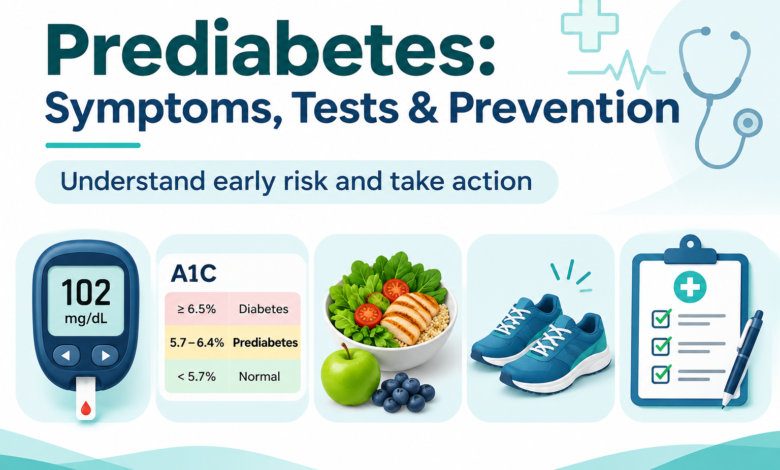
Prediabetes symptoms are often difficult to recognize because many people feel completely well while their blood glucose is gradually rising. A routine blood test may be the first indication that glucose regulation is changing. Hearing the word “prediabetes” can be unsettling, but the result is an opportunity to learn more about risk and take meaningful preventive action.
Thank you for reading this post, don't forget to subscribe!This educational BBH guide explains prediabetes blood sugar levels, the prediabetes A1C range, testing options and what research says about prediabetes prevention. It also addresses a common question—how to reverse prediabetes—without promising permanent reversal or ignoring individual differences.
Quick answer: What is prediabetes?
Prediabetes means blood glucose is higher than the usual range but below the threshold used to diagnose diabetes. It generally signals increased risk for future type 2 diabetes and cardiovascular problems. Many people have no clear symptoms. Laboratory A1C, fasting plasma glucose or oral glucose tolerance testing can identify risk; lifestyle intervention can substantially reduce progression to type 2 diabetes.
In This Guide
- What Prediabetes Means
- Prediabetes Symptoms and Early Signs
- Causes and Risk Factors
- Prediabetes Tests and A1C Range
- US, UK, Canada and Australia Ranges
- What Test Results Really Mean
- Prediabetes Prevention: Proven Steps
- Eating for Blood Glucose and Heart Health
- Movement and Weight Management
- How to Reverse Prediabetes: Realistic Goals
- Medication and Metformin
- Retesting and Long-Term Follow-Up
- Pregnancy and Other Special Cases
- A Practical 7-Day Starting Plan
- Frequently Asked Questions
- Related BBH Reading and Support
- Scientific References and Disclaimer
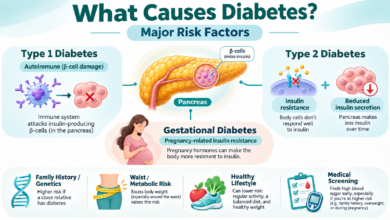
What Is Prediabetes?
After a meal, the body normally responds to rising glucose by releasing insulin. Insulin helps tissues use or store glucose. In many people who develop prediabetes, muscle, liver and fat tissues become less responsive to insulin, while pancreatic beta cells cannot fully compensate. Glucose begins to rise above the usual range.
Prediabetes is not the same as a diagnosis of type 2 diabetes. It is also not a guarantee that diabetes will occur. Some people progress, some remain in the intermediate range, and some return to a lower glucose range. Outcomes depend on initial risk, age, health conditions, treatment and sustained behavior changes.
A single result offers a snapshot, not a complete prediction. That is why clinicians consider repeat testing, cardiovascular risk and personal circumstances rather than simply applying a label.
Prediabetes Symptoms: Can You Notice Early Signs?
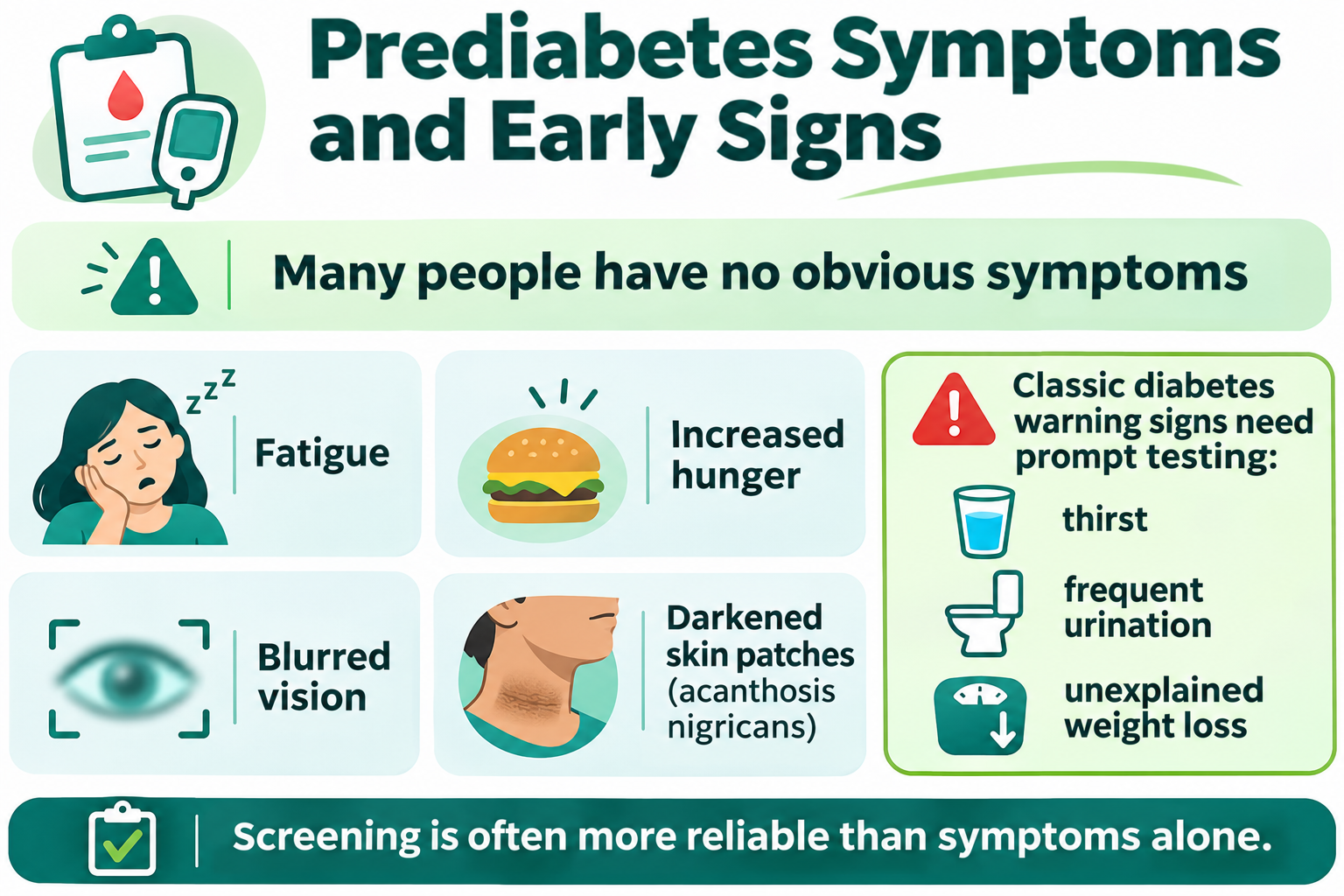
Most people with early abnormal glucose regulation do not have obvious prediabetes symptoms. That can make the condition easy to miss, particularly when someone is younger or feels physically active. Screening is therefore more reliable than waiting for changes in thirst or energy.
Common prediabetes symptoms versus diabetes warning signs
Thirst, frequent urination, unexplained weight loss, blurry vision or marked fatigue can occur with significant hyperglycemia, including diabetes. They should prompt timely assessment, not be treated as proof of mild prediabetes. Persistent fatigue is nonspecific and may have many other causes.
Darkened, thickened skin around the neck or underarms—called acanthosis nigricans—may be associated with insulin resistance. It is a reason to discuss risk factors, not a diagnostic test.
Do not wait for symptoms
New excessive thirst, frequent urination, unexpected weight loss or significant blurred vision should prompt medical testing. Vomiting, deep breathing, confusion or unusual drowsiness can indicate an emergency and require urgent medical care.
Prediabetes Causes and Risk Factors
Prediabetes generally develops through a combination of insulin resistance, pancreatic insulin-response changes and genetic or environmental influences. Risk varies widely. Body-fat distribution, physical activity, dietary patterns, family history, sleep and some medical conditions can all influence the likelihood of abnormal glucose regulation.
Who should discuss screening?
Adults with overweight or obesity, a close relative with type 2 diabetes, a history of gestational diabetes, high blood pressure, abnormal blood lipids, cardiovascular disease or polycystic ovary syndrome may benefit from risk-based assessment. Certain ancestry groups face elevated risk at lower BMI values; for people of Asian ancestry, US criteria can call for screening at BMI 23 when another risk factor is present.
Age matters, but younger adults and adolescents can also be affected. In children, screening decisions should follow pediatric guidelines rather than the adult schedule. Prediabetes risk is not a measure of self-discipline or personal worth.
Prediabetes Tests: A1C, Fasting Glucose and OGTT
The most useful prediabetes blood sugar levels come from accredited laboratory testing. Home meters can support diabetes care, but they are not the preferred tools for diagnosing prediabetes.
Prediabetes A1C range: What does HbA1c measure?
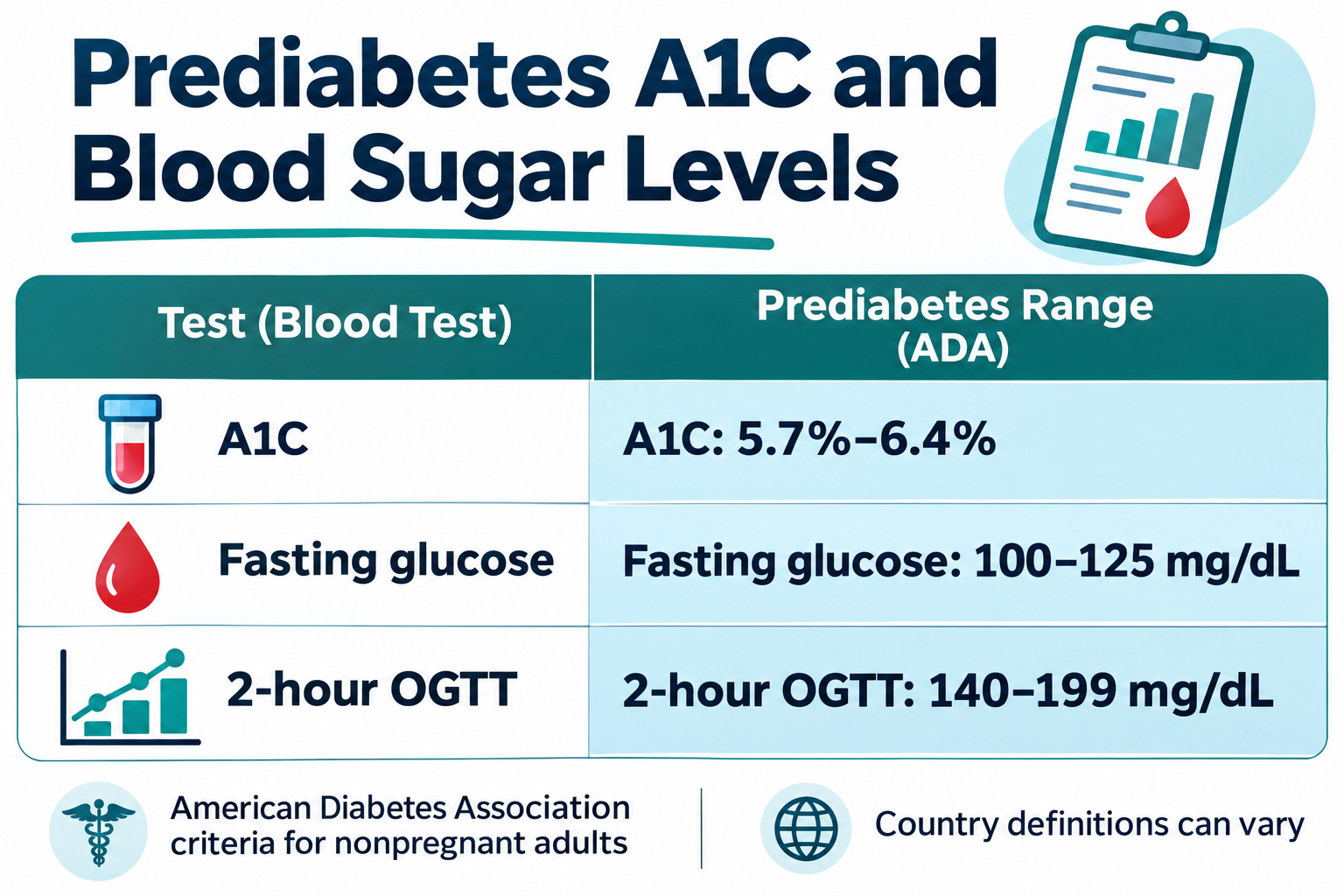
A1C, also written HbA1c, estimates average glucose exposure over roughly two to three months. Under American Diabetes Association criteria, the prediabetes A1C range is 5.7%–6.4% (39–47 mmol/mol). A1C does not require fasting, but it may be unreliable in situations affecting red blood cells or hemoglobin.
Fasting plasma glucose test
Fasting plasma glucose is measured after a clinician-specified fast, generally at least eight hours. In the US, 100–125 mg/dL (5.6–6.9 mmol/L) is the prediabetes range. A single slightly elevated result may need confirmation or follow-up.
Oral glucose tolerance test
During a 75-gram oral glucose tolerance test, the two-hour laboratory measurement evaluates how the body handles a standardized glucose challenge. A result of 140–199 mg/dL (7.8–11.0 mmol/L) indicates impaired glucose tolerance under commonly used criteria. Preparation and test selection should follow the clinician’s instructions.
Prediabetes Blood Sugar Levels: Country Differences
Here is an important gap in many online guides: a laboratory value may be classified differently across countries. The American Diabetes Association uses a lower A1C threshold than the commonly cited UK and Canadian high-risk categories. Australia also uses its own pathways for screening and diagnosis. Patients should use their local laboratory interpretation and clinician guidance rather than assuming one country’s threshold applies everywhere.
These categories are not perfect equivalents. The UK high-risk fasting range is broader than the Canadian impaired-fasting-glucose range. Some national organizations emphasize additional risk tools or glucose tolerance testing. If you move countries or read an overseas health article, compare both the number and the diagnostic framework.
What Your Prediabetes Test Result Means
Someone with an A1C of 5.8% may meet the ADA prediabetes criterion even though it does not meet the UK’s commonly used high-risk HbA1c threshold. Conversely, an abnormal fasting result can raise concern even if A1C is below the relevant cutoff. That does not mean either test is automatically wrong.
Why A1C and glucose tests may disagree
A1C reflects longer-term glucose exposure whereas fasting glucose captures one point in time. Variation, recent illness and differences in physiology can influence results. Anemia, hemoglobin variants, certain transfusions or conditions affecting red-cell turnover may interfere with A1C interpretation. Your clinician may use another test if A1C and glucose results do not fit together.
For most people, results near diagnostic boundaries should lead to a discussion about confirmation and future monitoring, not immediate self-treatment. A glucose level in the diabetes range requires assessment for diabetes rather than being described as prediabetes.
Prediabetes Prevention: What Actually Works?
Effective prediabetes prevention focuses on habits that can be sustained, not drastic restrictions or short-term detox products. Randomized prevention studies provide stronger evidence for structured lifestyle programs than for most supplements marketed as glucose remedies.
A practical evidence-based prevention target
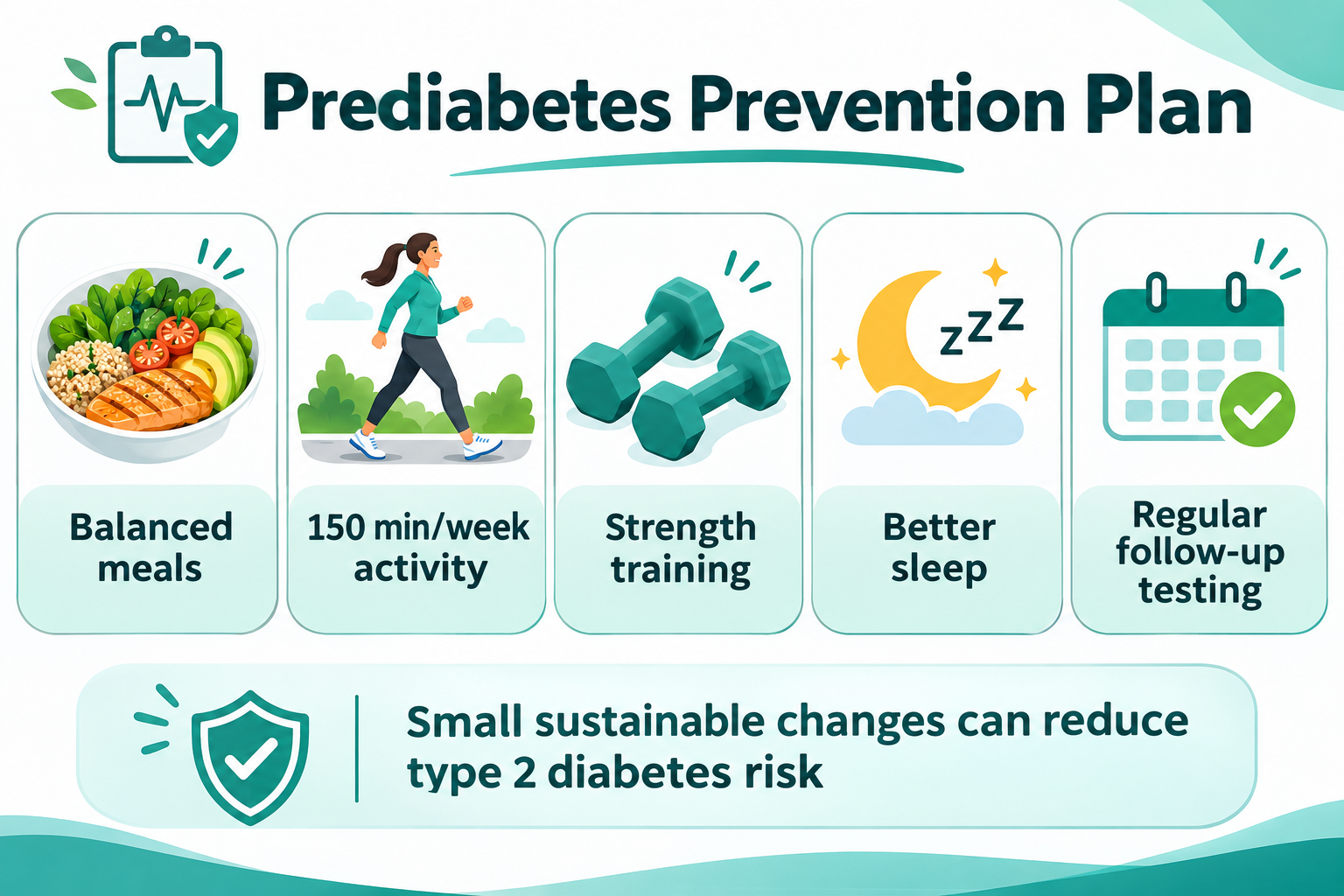
The landmark Diabetes Prevention Program studied adults at high risk and found that intensive lifestyle intervention lowered type 2 diabetes incidence by approximately 58% over about three years. The program emphasized modest weight reduction, healthier eating and at least 150 minutes of moderate physical activity weekly. The benefit is a research-group result, not a promise for every individual.
For adults with overweight or obesity who are at high risk, current ADA guidance commonly recommends a goal of at least 5%–7% weight loss when medically appropriate. Someone who is already at a healthy weight may benefit from improving activity, dietary quality or other risk factors without pursuing weight loss.
What the evidence supports
Structured, sustained lifestyle changes can substantially delay or reduce progression to type 2 diabetes. They do not guarantee that future diabetes will never develop.
Prediabetes Diet: Eating for Glucose and Heart Health
There is no universal menu for everyone with prediabetes. A Mediterranean-style dietary pattern, a thoughtfully planned lower-carbohydrate approach or another nutritionally adequate eating plan may work when tailored to personal preferences, culture, medical needs and access to food.
A flexible plate approach
A practical meal may include non-starchy vegetables, a protein-rich food, an appropriate portion of whole grains or other carbohydrate-containing foods, and unsaturated fats. Beans, lentils, nuts, fruit and minimally processed foods can contribute fiber and micronutrients. Portion needs vary with energy demands and medical conditions.
Indian and international meal examples
An Indian lunch might pair dal with vegetables, curd and a portion of roti or rice. Another option is grilled fish or tofu with vegetables and whole grains. Breakfast may include vegetable oats, eggs with whole-grain toast, or unsweetened yogurt with fruit and nuts. These examples are flexible choices, not prescribed diets.
Reducing sugary drinks and frequent consumption of highly processed foods may make it easier to improve overall dietary quality. There is no need to label every food as forbidden. People with food insecurity or eating disorders need especially individualized and non-stigmatizing guidance.
Prediabetes Exercise, Sleep and Weight Management
Moderate movement improves insulin sensitivity and contributes to cardiovascular health. Many adults can work toward 150 minutes of moderate activity weekly, such as brisk walking, cycling or swimming. Resistance exercise can also support muscle function and metabolic health. People with heart, mobility or other medical conditions should adapt activities with clinical advice.
Small changes that fit real life
Short walks after meals, a standing break during long workdays and active commuting may help create a routine. Consistency is often more valuable than intensity. For someone who is not currently active, gradually increasing movement is generally more practical than immediately attempting demanding workouts.
Regular sleep, stress management and avoiding smoking also support overall health. Meditation may improve coping and help sustain a routine, but it has not been established as a stand-alone way to prevent diabetes. Prediabetes management should consider blood pressure, cholesterol, sleep apnea and cardiovascular risk, not just glucose alone.
How to Reverse Prediabetes: What Is Realistic?
The phrase how to reverse prediabetes is widely searched, but the word “reverse” can suggest a certainty that evidence does not support. Some people return to glucose values below the prediabetes threshold with sustained lifestyle changes or medical treatment. Others continue to have elevated results even after improving their habits.
Can prediabetes go back to normal?
Yes, some people experience a return to glucose levels below the diagnostic cutoff. That outcome does not erase genetic susceptibility or future risk. Continued follow-up remains worthwhile. The more useful question is often how to reduce the chance of future diabetes and protect cardiovascular health over time.
How long does improvement take?
There is no universal timeline. A1C reflects approximately two to three months of glucose exposure, so changes may become visible on a follow-up test after several months. Timing should be decided with a clinician. Crash dieting, unverified supplements and medication changes without professional advice are not safe shortcuts.
Does Prediabetes Need Medication?
Not everyone with prediabetes needs medication. Lifestyle intervention is foundational for many people, while clinicians may consider metformin for certain adults at particularly high risk of developing type 2 diabetes.
When might metformin be discussed?
The ADA’s 2026 prevention recommendations suggest considering metformin in high-risk adults, especially those aged 25–59 years with BMI at least 35 kg/m², higher fasting glucose or A1C, or a history of gestational diabetes. Suitability depends on individual circumstances, kidney function, side effects and other factors. Metformin should not be started without a prescribing clinician.
What about supplements and herbs?
Products promoted for “blood sugar balance” are not substitutes for testing, a balanced diet or proven prevention programs. Evidence and safety vary widely. Some supplements may interact with medication or contain undeclared ingredients. Discuss any product with a professional who knows your medical history.
Prediabetes Follow-Up: When to Retest
Monitoring matters because a person can feel well even as their glucose pattern changes. US ADA guidance generally advises yearly diabetes testing for people with prediabetes, while some patients may need earlier reassessment. NICE also recommends at least annual blood testing for identified high-risk individuals.
What to record between visits
A record may include dates of tests, A1C or fasting glucose results, blood pressure, relevant medicines, physical activity goals and questions for the next appointment. Tracking should support constructive decisions rather than encourage anxiety about every number. Home finger-prick tests are not required routinely for every person with prediabetes.
When results worsen, clinicians may review nutrition, physical activity, sleep, medications, other medical conditions or the need for further diagnostic testing. A referral to a dietitian or structured diabetes prevention program can add practical support.
Prediabetes in Pregnancy, PCOS and Young People
Prediabetes thresholds are not a substitute for pregnancy-specific screening or gestational diabetes diagnosis. People who are pregnant or planning pregnancy should receive individualized advice. A history of gestational diabetes is an important risk factor for later type 2 diabetes and may warrant ongoing screening after pregnancy.
Polycystic ovary syndrome may be associated with insulin resistance, but not everyone with PCOS has prediabetes. Children and adolescents require age-appropriate screening decisions and tailored support. For all groups, avoid assuming that a single diet, medication or weight target fits everyone.
Seven-Day Prediabetes Prevention Starting Plan
Instead of attempting a complete lifestyle overhaul, begin with a manageable sequence of actions. This plan is for habit-building; it is not a medical prescription.
For many people, prediabetes prevention works best as an ongoing process. A small achievable habit repeated consistently can provide a stronger foundation than a brief extreme routine.
Frequently Asked Questions About Prediabetes
What are the first prediabetes symptoms?
Many people have no obvious prediabetes symptoms. A laboratory test is the reliable way to identify intermediate glucose levels. New classic diabetes symptoms warrant prompt assessment.
What is the normal A1C and prediabetes A1C range?
In US ADA guidance, below 5.7% is outside the prediabetes A1C category, while 5.7%–6.4% indicates prediabetes. Other national frameworks commonly use 6.0%–6.4% as the high-risk HbA1c range.
Do prediabetes blood sugar levels always become diabetes?
No. Individual outcomes differ. Some people remain stable, some improve, and some develop type 2 diabetes. Risk reduction and follow-up matter.
Can I learn how to reverse prediabetes without medicine?
Some people improve their test results with sustained lifestyle changes. However, no single diet or activity plan guarantees reversal, and some higher-risk individuals may benefit from medication discussion.
Does prediabetes mean I must stop eating rice or fruit?
No. A balanced eating pattern can include culturally familiar carbohydrate foods. Portion sizes, food quality and overall patterns matter more than blanket bans.
Is fasting glucose enough to diagnose prediabetes?
Fasting plasma glucose is one accepted test, but A1C and OGTT can offer different information. Test selection and interpretation should be individualized.
Related BBH Reading and Support
Explore more health guides
Scientific References and Medical Disclaimer
- ADA Standards of Care in Diabetes—2026: Diagnosis and Classification
- ADA Standards of Care in Diabetes—2026: Prevention or Delay
- CDC: Prediabetes and Prevention
- NIDDK: Recommended Tests for Identifying Prediabetes
- NICE: Type 2 Diabetes Prevention
- Diabetes Canada: Screening and Diagnosis
- Diabetes Australia: Screening for Type 2 Diabetes
- NIDDK: A1C Test Limitations
Medical and editorial disclaimer
This article is for general education and does not provide a personal diagnosis or treatment plan. Screening thresholds vary by country and patient circumstances. Discuss individual test results, medicines and prevention goals with a qualified clinician. Seek prompt medical care for new diabetes symptoms and urgent care for severe illness. Independent clinical review is not claimed.
ARTICLE BY