Positive Parenting Strategies for Pune Families
Positive Parenting in Pune: Practical Tips


Positive parenting strategies for Pune families can help caregivers guide children aged 8–15 with warmth, boundaries and realistic expectations. This evidence-informed guide considers school pressure, changing adolescent needs, extended-family caregiving and everyday challenges in Pune. Positive parenting does not mean permissiveness or promising that every conflict will disappear.
Thank you for reading this post, don't forget to subscribe!What Positive Parenting Means
Positive parenting combines warmth, clear expectations, age-appropriate autonomy and respectful guidance. It does not mean saying yes to every request, removing consequences or expecting children to feel happy all the time. Parents can set firm boundaries while treating children with dignity. The American Academy of Pediatrics advises healthy discipline that teaches behaviour rather than relying on physical punishment or humiliation. Research on supportive parenting generally links warmth and consistent boundaries with favourable developmental outcomes, but no single method guarantees a result for every family. Families differ in culture, resources, disability needs and stress. The first useful question is not “How can I control my child?” but “What skill does my child need, and what support will help them learn it?” This perspective encourages teaching, modelling and repairing mistakes. It also recognises that a parent’s ability to stay consistent depends on sleep, work, finances and support from other adults.
Positive Parenting Strategies for Pune Families: Begin With Connection
A dependable relationship makes everyday guidance easier to understand. Connection can be as simple as a brief conversation after school, sharing a meal, reading together or listening without immediately giving advice. Children do not need elaborate entertainment every day. They benefit when adults notice their feelings and interests. Try asking, “What was difficult today?” and allowing a pause before responding. Reflect what you hear: “You felt left out when the group started without you.” This does not mean agreeing with every interpretation. It communicates attention. When a child has had a difficult day, solving the problem immediately may be less helpful than first checking whether they want comfort, advice or practical help. Parents in busy households can protect a short, realistic connection ritual rather than aiming for uninterrupted hours. The goal is reliability, not perfection. A child who feels listened to may be more willing to discuss safety, mistakes and school problems.
Clear Boundaries Without Harsh Punishment
Boundaries explain what is safe, fair and expected. Effective boundaries are specific, understandable and reasonably consistent. Instead of “Behave properly,” say, “We speak without hitting, and we put the tablet away during dinner.” Explain the reason when appropriate and offer a limited choice: “You can finish your game now or save it for tomorrow, but the device stays outside the bedroom tonight.” A logical consequence should be related, proportionate and respectful, not humiliating. If a child spills water while playing carelessly, helping clean up teaches responsibility. Threatening withdrawal of affection does not. Adults should avoid hitting, shaming, frightening or using comparisons as discipline. Children sometimes resist even reasonable limits; that does not automatically mean the approach has failed. Stay calm, repeat the expectation and revisit it later. If aggression is persistent or severe, consider stress, developmental needs and professional support rather than escalating punishment.
Age 8–11: Cooperation and Growing Responsibility
Children aged eight to eleven are developing independence but still need reminders, predictable transitions and adult modelling. Visual checklists, clear household routines and manageable responsibilities can help. Invite a child to prepare their schoolbag, care for belongings or contribute to a family task with guidance. Praise the specific process: “You checked tomorrow’s timetable and packed what you needed.” Avoid praising only marks, obedience or winning. School-age children often care deeply about fairness and peer acceptance. Listen to friendship concerns without assuming every disagreement requires parental intervention. Encourage problem-solving: ask what happened, what each person needed and what options might be fair. Do not force a child to apologise before they understand the impact of their behaviour. For children with learning, communication or attention differences, simplify instructions and adjust expectations. Independence grows through practice and supportive feedback, not through abrupt withdrawal of help.
Age 12–15: Respect, Privacy and Shared Decisions
Adolescents increasingly seek privacy, peer belonging and influence over decisions affecting their lives. Parents remain important, but lectures and public embarrassment may undermine communication. Involve teenagers in setting expectations for homework, sleep, social activities and devices. Ask them to explain their reasoning, then discuss safety and non-negotiable limits. A teenager may disagree respectfully without being disrespectful. Practise conversations about consent, online privacy, friendships, substance use and trusted adults before a crisis occurs. Avoid routinely sharing a teenager’s personal struggles with relatives or posting them online without consent. Growing autonomy should be paired with practical skills, such as planning a budget, organising assignments and seeking help. Parents can provide more freedom as responsibility and circumstances allow, while maintaining supervision where safety requires it. A 15-year-old is still developing judgement; expecting adult-level consistency is unrealistic.
Listening and Emotion Coaching
Emotion coaching begins with recognising a feeling, setting a safe limit when needed and helping the child choose a response. A parent might say, “You are angry that the game ended. It is okay to feel angry, but throwing the controller could hurt someone.” After the child settles, discuss alternatives such as asking for a warning, taking a break or expressing frustration in words. Adults can model the same process when they are stressed. Children do not learn emotional regulation from being told simply to calm down. They learn through repeated experiences of co-regulation, predictable boundaries and practice. Not every child wants to talk immediately. Some benefit from movement, drawing or quiet time before conversation. If emotional outbursts are intense, frequent or disruptive, consider sleep, bullying, disability needs, family stress and qualified assessment. Avoid interpreting every difficult emotion as manipulation.
Positive Parenting Strategies for Pune Families During School Pressure
Academic expectations can create conflict when marks become the main measure of a child’s worth. Ask about learning, effort and support needs before discussing grades. Help children break assignments into manageable steps and communicate with teachers when workloads are excessive. Avoid comparing siblings, neighbours or classmates. Praise strategies such as asking questions, reviewing mistakes and preparing consistently. Children may struggle because of sleep loss, learning differences, anxiety, bullying or unclear instructions rather than laziness. If a child is regularly studying late into the night, review commitments instead of automatically adding tuition. A supportive approach does not mean ignoring academic responsibilities. It means setting realistic goals, tracking progress without shame and recognising the child’s broader development. Celebrate interests outside exams, including creativity, relationships and physical activity. For adolescents, include them in decisions about subjects and extracurricular priorities while offering accurate information about options.
Family Conflict and Repair After Mistakes
All families experience disagreements. What matters is how adults manage conflict and repair harm. When a parent shouts, a clear apology can model responsibility: “I raised my voice. That was not respectful. Next time I will take a pause.” An apology does not remove a reasonable boundary; it separates the limit from the hurtful delivery. Avoid asking children to mediate adult financial or relationship problems. They can be informed in age-appropriate ways without carrying adult responsibilities. If conflict occurs between caregivers, try to avoid involving children in loyalty tests or using them to deliver messages. Children should know that disagreements are not their fault and that they can seek support. Persistent intimidation, violence or threats require safety planning and professional help, not merely better communication tips. Family repair is an ongoing practice, not a one-time speech.
Sleep, Meals and Physical Activity Support Behaviour
A child’s behaviour is influenced by physical needs. The American Academy of Sleep Medicine recommends 9–12 hours of sleep per 24 hours for ages 6–12 and 8–10 hours for ages 13–18. WHO guidance for ages 5–17 recommends an average of at least 60 minutes of moderate-to-vigorous physical activity daily across the week, with individual adaptations where needed. Regular meals, hydration, movement and rest support daily functioning, but they are not cures for behavioural or mental-health conditions. Parents should avoid turning food or exercise into punishment. A child returning from a long school commute may need a snack and recovery time before homework. During hot weather or monsoon disruptions in Pune, adjust outdoor plans safely. If sleep problems, fatigue, appetite changes or physical symptoms persist, consult a qualified clinician. Healthy routines should support wellbeing without creating another source of pressure.
Digital Parenting and Online Safety
Digital parenting requires more than counting screen minutes. Consider what the child is doing, whether online activity disrupts sleep or relationships, and what safety risks are present. Agree on age-appropriate expectations for device use, privacy, respectful messaging and reporting uncomfortable interactions. Teach children not to share passwords, addresses or intimate images. Discuss cyberbullying, manipulation and the limits of AI-generated answers. Parents should model device boundaries, especially during family conversations. Avoid sudden, unexplained surveillance that discourages children from asking for help, while retaining necessary safety supervision. For teenagers, negotiate greater responsibility as skills develop. A child who uses technology creatively or for school is not necessarily experiencing the same effects as one who scrolls late into the night. Review family agreements regularly rather than assuming one rule fits every age.
Neurodiversity, Disability and Individual Needs
Parenting strategies should adapt to children rather than forcing every child into one behavioural template. Autistic children, children with ADHD, learning differences, communication needs or physical disabilities may benefit from visual instructions, sensory breaks, predictable transitions or assistive tools. Avoid demanding eye contact or treating sensory distress as intentional defiance. Ask what environmental changes could make a task manageable. A child who struggles to begin homework may need smaller steps or a quieter space. Children with anxiety or trauma histories may need additional emotional safety and specialist support. Parents should seek qualified assessment for persistent concerns instead of diagnosing from social media. Respectful accommodations do not mean removing all expectations; they make meaningful participation more accessible. Include the child’s perspective and strengths in any plan. An approach that works for one sibling may not suit another.
Pune-Specific Parenting: Undri, Hadapsar and Hinjewadi
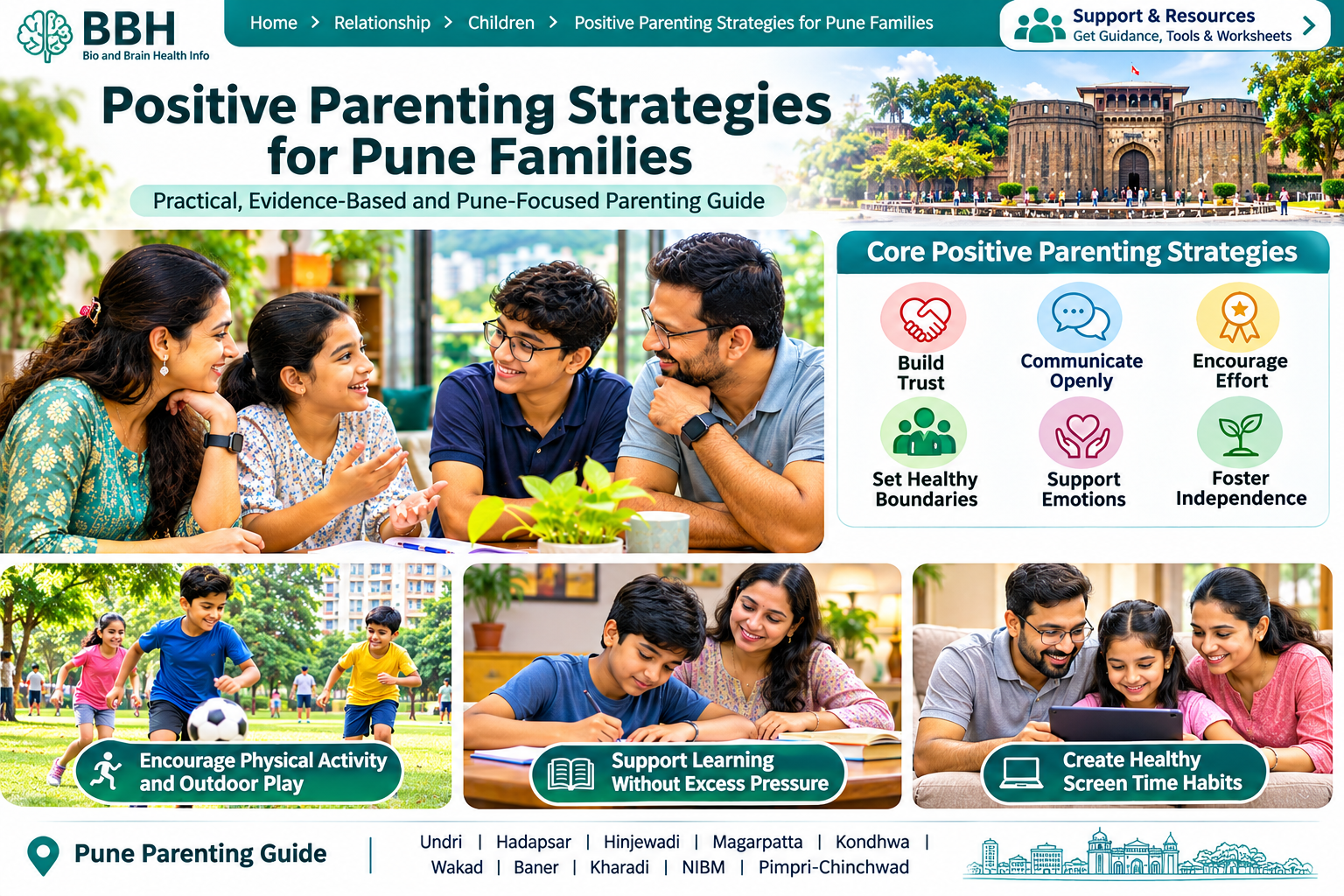
Local context matters because schedules, school travel and family support differ. In Undri, Hadapsar and Hinjewadi, parents can review their actual commute and school pickup arrangements before scheduling tuition or extracurricular activities. Families in Magarpatta, Kondhwa and Wakad may need different routines; the same applies to Baner, Kharadi, NIBM and Pimpri-Chinchwad. No neighbourhood inherently creates better parenting outcomes. Instead, map the real pressures on your household: travel time, shift work, caregiver availability, safe play spaces and school demands. A nearby supervised hobby activity may be more practical than a distant programme with an impressive advertisement. In multilingual homes, children may express complex emotions more easily in Marathi, Hindi, English or another familiar language. Allow communication in the language that supports understanding. When considering outside programmes, verify safeguarding practices, staff qualifications, accessibility and realistic claims.
Content Gap: Parenting When Caregivers Disagree
Many parenting guides assume two caregivers share the same rules. Real families may include grandparents, separated parents, extended relatives or caregivers with different work schedules. Inconsistent expectations can confuse children, but complete uniformity is not always possible. Start with a few shared non-negotiables: safety, respectful treatment, school attendance and essential health needs. Write down simple expectations that all caregivers can understand. Discuss disagreements privately rather than asking a child to choose sides. If one adult prefers strict punishment while another favours conversation, focus on a common goal and the evidence against physical or humiliating discipline. Children can adapt to minor household differences when adults explain them calmly. More serious conflict, coercion or unsafe care requires additional support. This practical coordination framework is a BBH educational suggestion, not a validated clinical intervention. It addresses a common gap between ideal parenting advice and complex family arrangements.
A Practical 30-Day Positive Parenting Plan
Week one: observe patterns without blame. Notice when conflicts happen, what precedes them and what helps the child recover. Week two: choose one predictable connection ritual, such as ten minutes of listening after school. Week three: agree on one clear boundary and practise explaining it calmly, including what happens when it is crossed. Week four: review the plan with the child and other caregivers. Ask what felt fair, which moments improved and where support is still needed. Keep notes descriptive rather than labelling a child good or bad. Do not attempt to transform every family habit in a month. If serious distress, aggression, school refusal or safety concerns persist, seek qualified help. The 30-day plan is an original educational planning aid, not a scientifically validated treatment or guarantee of improved behaviour. Sustainable change is more important than a perfect checklist.
When to Seek Professional Support
Consult a paediatrician, child psychologist or other appropriately qualified professional when a child has persistent anxiety, significant behaviour changes, repeated school refusal, severe sleep problems, developmental concerns or difficulties that interfere with daily life. Seek urgent help for immediate danger, abuse or threats of self-harm. A professional can assess medical, developmental, school and family factors and suggest individualised care. Parents should not rely on one article to diagnose ADHD, autism, depression or trauma. Bring specific examples, approximate dates, school observations and the child’s own perspective when possible. Seeking help is compatible with positive parenting; it recognises that some challenges require more than household strategies. Choose providers who explain their approach, respect confidentiality and involve the child appropriately.
Frequently Asked Questions
Does positive parenting mean no discipline?
No. It involves clear expectations and teaching consequences without physical punishment or humiliation.
Can positive parenting work with teenagers?
Yes, but adolescents need more shared decision-making, privacy and responsibility alongside safety boundaries.
What if grandparents use different rules?
Agree on a few essential expectations, discuss differences privately and keep communication respectful.
Are expensive parenting classes necessary?
No. Everyday listening, predictable boundaries and supportive routines can be valuable. Some families benefit from structured, evidence-based professional programmes.
What if my child continues to struggle?
Review the environment and seek qualified assessment if difficulties are persistent, severe or impair functioning.
BBH Navigation, Support and Related Reading
BBH provides educational parenting information. BBH Young Minds is exploring future Pune activities; venues, staff, dates, registration and services are not confirmed. For general educational enquiries or future updates, email info@bioandbrainhealthinfo.com. Please do not email sensitive information about a child.
Main menu: Relationship · Submenu: Children · Support Resources
Related BBH articles
- Parenting with a Narcissist: Protecting Children
- Respectful Relationships in Parenting
- Building Self-Esteem After Attachment Wounds
- Narcissistic Parenting and Psychological Impact
- Narcissistic Parent and Child Impact
These links address related family wellbeing themes; they do not establish that every suggested parenting practice has been experimentally tested.
Research Sources, Limitations and Disclaimer
Further reading: American Academy of Pediatrics: HealthyChildren; CDC Parenting Resources; UNICEF Parenting; WHO Physical Activity; and AASM Sleep Duration Consensus Statement.
Evidence note: broad guidance on nonviolent discipline, supportive communication, sleep and activity informs this article. The Pune examples and BBH 30-day framework are practical educational suggestions, not tested clinical protocols. No clinical review is claimed.