NarcissismNarcissism Identity

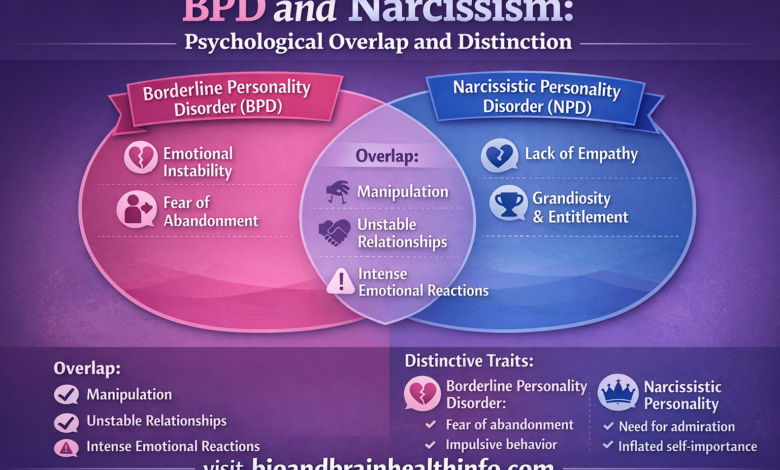
BPD and Narcissism: Psychological Overlap and Distinction

BPD and Narcissism Differences: Emotional Regulation and Personality Patterns

A BPD and narcissism comparison explores cluster B personality traits through emotional regulation issues, personality disorder comparison, and therapy approaches to understand why similar behaviors may arise from very different emotional motivations.

Thank you for reading this post, don't forget to subscribe!

“When we understand emotional motivation instead of judging behavior, clarity replaces confusion.”

Sometimes two emotional patterns can look similar from the outside while carrying completely different inner worlds.

Confusion often grows when we see behavior but cannot see the emotional need underneath it.

Even after leaving, the nervous system can stay on alert because it learned unpredictability as normal. Regulation returns through consistency, not force.


BPD and Narcissism

A BPD and narcissism comparison often explores cluster B personality traits through emotional regulation issues, personality disorder comparison, and therapy approaches, yet many people quietly wonder, “Am I misunderstanding behavior or losing clarity about myself?”

Confusion arises when trauma responses are mistaken for identity rather than adaptive survival strategies. Emotional intensity or emotional distance does not automatically define character.

If you feel uncertain, you are not alone — these patterns reflect complex psychological dynamics, not personal flaws.

This article will help you understand what’s happening — without labels, blame, or self-attack.


REASON FOR THIS BLOG -BPD and Narcissism

To clarify why BPD and narcissism are often confused by explaining emotional motivations and psychological overlap, helping readers separate trauma-based reactions from identity while maintaining a compassionate, non-diagnostic perspective.


INNER SEARCH MIRROR – BPD and Narcissism

You may be asking:

  • Is this BPD or narcissistic behavior?

  • Why do emotional reactions feel intense or confusing?

  • Are empathy differences real or misunderstood?

  • Why do relationship patterns feel unstable?

  • Does trauma history shape emotional responses?

  • Am I misinterpreting emotional signals?

Please Explore This Blog bpd-and-narcissist-couple-relationship-cycle-explained


 PSYCHOLOGICAL EXPLANATION – BPD and Narcissism

BPD and Narcissism: Psychological Overlap and Emotional Motivation

A BPD and narcissism comparison involving cluster B personality traits, emotional regulation issues, personality disorder comparison, and therapy approaches shows how similar behaviors can emerge from different emotional motivations.

Emotional intensity may reflect fear of abandonment or regulation challenges, while emotional distancing may protect identity or self-image.

These patterns develop as adaptive survival responses shaped by experience.

Understanding motivation rather than judging behavior reduces self-blame and clarifies that intent and reaction are not always the same.

Psychological PatternCore Motivation
Emotional intensityAttachment safety
Emotional distancingIdentity protection
Validation seekingEmotional stability

Personal note: Clarity often begins when we explore emotional meaning instead of assigning labels.


NERVOUS SYSTEM EXPLANATION – BPD and Narcissism

Within a BPD and narcissism dynamic involving cluster B personality traits, emotional regulation issues, personality disorder comparison, and therapy approaches, nervous system responses activate before conscious thought.

Fight, flight, freeze, or fawn reactions can shape emotional tone and communication style.

These biological reactions explain sudden emotional escalation or withdrawal without assuming intentional harm.

Common warning signs:

  • Rapid emotional escalation

  • Sensitivity to perceived rejection

  • Emotional shutdown during conflict

  • Physical tension or numbness

  • Post-interaction exhaustion

Personal note: Many people feel relief when they realize reactions begin in the body, not only in personality.


CORE DISTINCTION -BPD and Narcissism

Identity vs Survival Responses

Survival responses exist to protect emotional safety, while identity reflects deeper values and conscience.

In a BPD and narcissism comparison involving cluster B personality traits, emotional regulation issues, personality disorder comparison, and therapy approaches, survival strategies can resemble personality traits but do not define identity.

Emotional reactions shaped by past adaptation are protective responses, not permanent character definitions.

Authority emerges when this distinction becomes clear: survival seeks immediate safety, while identity remains steady beneath emotional fluctuation.

TRAUMA VS NARCISSISM – BPD and Narcissism

In a BPD and narcissism comparison involving cluster B personality traits, emotional regulation issues, personality disorder comparison, and therapy approaches, behaviors may look similar yet arise from different motivations.

Trauma responses often include remorse, reflection, and willingness toward accountability, while protective patterns may focus on preserving identity and emotional control.

Understanding motivation reduces self-labeling without diagnosis.

Trauma ResponseProtective Pattern
Reflects afterwardDeflects responsibility
Shows remorseMinimizes impact
Seeks repairProtects self-image

Personal note: Relief begins when intention becomes clearer than behavior alone.

Please Explore This Blog bpd-and-narcissist-relationship-dynamics-explained


GROWTH DIRECTION – BPD and Narcissism

Healing within a BPD and narcissism understanding shaped by cluster B personality traits, emotional regulation issues, personality disorder comparison, and therapy approaches often appears subtle.

Signs include slower emotional reactions, increased internal space, and choosing peace over urgency.

Growth is less about fixing and more about gentle awareness, allowing emotional stability to develop naturally.

Personal note: Progress often feels like quiet steadiness rather than dramatic change.


HEALING COMPASS / ORIENTATION TABLE

Healing unfolds gradually through calm awareness and steady integration.

StageGentle Orientation
Awareness“I notice patterns clearly.”
UnderstandingEmotional meaning becomes clearer
RegulationNervous system settles more often
BoundariesEnergy feels safer
IntegrationSelf-trust grows slowly

Insight becomes stability when understanding develops without pressure.

Please Explore This Blog bpd-and-npd-explained-differences-overlap

🌿 10 Signs — BPD and Narcissism


Emotional Intensity vs Emotional Protection

In BPD and narcissism comparisons, cluster B personality traits may appear similar, yet emotional regulation issues and personality disorder comparison show how therapy approaches differ based on underlying emotional motivation.


Attachment Needs Influence Behavior

BPD and narcissism patterns often reflect cluster B personality dynamics where emotional regulation issues shape interpersonal reactions and therapy approaches focus on different emotional needs.


Empathy Expression Feels Different

Within BPD and narcissism overlap, personality disorder comparison highlights empathy expressed differently through emotional regulation issues influenced by cluster B personality traits and trauma patterns.


Conflict Responses Reveal Internal Motivation

BPD and narcissism dynamics show distinct emotional regulation issues during conflict, where therapy approaches focus on understanding cluster B personality responses rather than judging behavior.


Emotional Reactivity vs Emotional Control

Cluster B personality traits within BPD and narcissism may display emotional reactivity or emotional distancing, shaped by personality disorder comparison and therapy approaches.


Identity Stability Varies Between Patterns

BPD and narcissism comparisons highlight how emotional regulation issues influence identity experience through cluster B personality dynamics.


Validation Needs Drive Communication

Personality disorder comparison shows that BPD and narcissism communication styles reflect emotional regulation issues shaped by underlying attachment needs.


Relationship Cycles Feel Intense but Different

BPD and narcissism interpersonal patterns may look similar externally yet differ internally through cluster B personality traits and therapy approaches.


Self-Protection Appears Similar but Feels Different

Emotional regulation issues within BPD and narcissism may create similar defensive behaviors while therapy approaches reveal different motivations.


Healing Focus Requires Understanding Motivation

BPD and narcissism understanding improves when personality disorder comparison focuses on emotional regulation issues and cluster B personality context rather than labeling individuals.


🌱 CLOSING NOTE

Understanding BPD and narcissism through cluster B personality traits, emotional regulation issues, personality disorder comparison, and therapy approaches is not about labeling people but about recognizing emotional motivations beneath behavior. Awareness reduces confusion and self-blame, allowing calmer understanding to replace emotional overwhelm. Healing begins when patterns are viewed with curiosity, compassion, and clarity rather than judgment.

Please Explore This Blog relationship-cycles-bpd-and-npd-relationship-dynamics

🌿 A Whole-System View of the Human Healing Process

Related Articles

Back to top button