Borderline Narcissist Traits: Emotional Patterns Explained
Overlap Between BPD and Narcissism

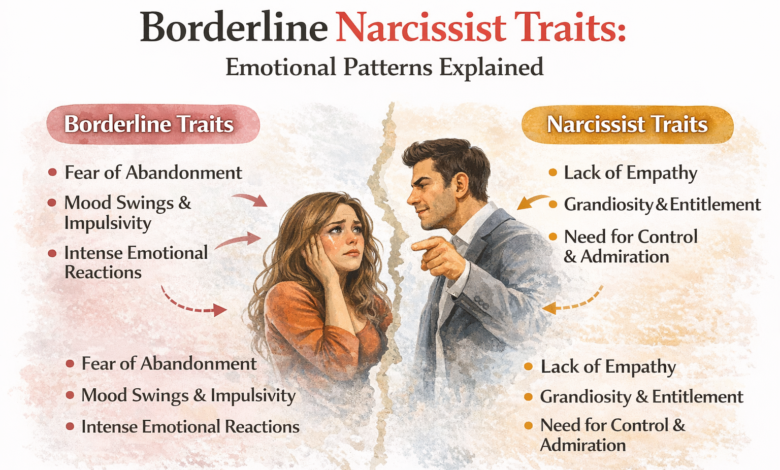
A borderline narcissist pattern may involve BPD vs narcissism overlap, personality disorder traits, emotional dysregulation, and identity instability that create confusion about emotional reactions and relational behavior.
Sometimes what looks like the same behavior comes from very different emotional needs — and clarity begins when we understand the motivation beneath the reaction.
Sometimes two emotional patterns can look similar on the surface, yet carry completely different inner experiences.
Confusion often comes not from lack of awareness, but from trying to understand behavior without seeing the emotional need underneath.
Even after leaving, the nervous system can stay on alert because it learned unpredictability as normal. Regulation returns through consistency, not force.
INTRODUCTION -Borderline Narcissist Traits
A borderline narcissist pattern may include BPD vs narcissism overlap, personality disorder traits, emotional dysregulation, and identity instability that make people question, “Am I losing myself or misunderstanding the situation?”
The confusion often arises when trauma responses are mistaken for identity rather than adaptive survival strategies.
Emotional intensity does not automatically define character or intention.
If you feel uncertain about emotional patterns or relational behavior, you are not alone — these experiences reflect complex dynamics, not personal failure.
This article will help you understand what’s happening — without labels, blame, or self-attack.
REASON FOR THIS BLOG -Borderline Narcissist Traits
To help readers understand the overlap and differences between emotional patterns often described as borderline or narcissistic, while separating trauma-based reactions from identity — offering clarity without diagnosis or judgment.
INNER SEARCH MIRROR – Borderline Narcissist Traits
You may be asking yourself:
-
Am I dealing with borderline traits or narcissistic behavior?
-
Why do emotional reactions feel so intense?
-
Is this emotional dysregulation or personality difference?
-
Why does identity feel unstable in relationships?
-
Am I overreacting or missing something deeper?
-
Why does confusion remain even after distance?
Please Explore This Blog borderline-or-narcissist-psychological-differences
PSYCHOLOGICAL EXPLANATION -Borderline Narcissist Traits
Borderline Narcissist Emotional Adaptation Patterns
A borderline narcissist dynamic involving BPD vs narcissism overlap, personality disorder traits, emotional dysregulation, and identity instability can develop through different emotional needs that appear similar externally.
Survival conditioning may shape reactions toward seeking reassurance or protecting self-image, creating overlapping behaviors without identical motivations.
Understanding adaptation reduces self-blame and clarifies that intent and emotional regulation challenges are not the same.
| Psychological Pattern | Internal Function |
|---|---|
| Emotional intensity | Connection seeking |
| Self-protection | Avoid perceived threat |
| Identity shifts | Maintain stability |
Personal note: Observing patterns rather than personalities often brings the first sense of relief.
NERVOUS SYSTEM EXPLANATION – Borderline Narcissist Traits
Borderline Narcissist Patterns Through the Nervous System
Within a borderline narcissist dynamic shaped by BPD vs narcissism overlap, personality disorder traits, emotional dysregulation, and identity instability, the nervous system may respond rapidly to perceived rejection or threat.
Fight, flight, freeze, or fawn responses activate before conscious reasoning, which explains sudden emotional escalation.
These reactions are biological safety mechanisms rather than deliberate choices, helping reduce shame around emotional reactivity.
Common warning signs:
-
Sudden emotional overwhelm
-
Fear of abandonment or criticism
-
Rapid mood shifts
-
Physical tension during conflict
-
Emotional exhaustion afterward
Personal note: Many people feel calmer when they understand reactions begin in the body before thought.
CORE DISTINCTION -Borderline Narcissist Traits
Identity vs Survival Responses
Survival responses protect emotional safety; identity reflects deeper values, conscience, and long-term self-direction.
In a borderline narcissist dynamic involving BPD vs narcissism overlap, personality disorder traits, emotional dysregulation, and identity instability, survival strategies may resemble personality traits.
However, protection is not identity. Emotional reactions shaped by past experiences do not define character or worth.
Authority emerges when this distinction becomes clear: survival adapts to circumstances, while identity remains stable beneath emotional fluctuation.
Please Explore This Blog borderline-vs-narcissist-clinical-comparison
TRAUMA VS NARCISSISM – Borderline Narcissist Traits
Borderline Narcissist: Trauma Responses vs Control Motivation
In a borderline narcissist dynamic involving BPD vs narcissism overlap, personality disorder traits, emotional dysregulation, and identity instability, behaviors may look similar but motivation differs.
Trauma responses often include remorse and reflection, while control-based patterns avoid accountability.
Understanding motivation reduces self-labeling and supports clearer emotional interpretation without diagnosis.
| Trauma Response | Control Pattern |
|---|---|
| Reflects afterward | Deflects responsibility |
| Shows remorse | Minimizes impact |
| Seeks repair | Protects self-image |
Personal note: Relief often begins when we compare intentions instead of judging behavior alone.
GROWTH DIRECTION -Borderline Narcissist Traits
Borderline Narcissist Patterns and Gentle Growth Orientation
Healing within a borderline narcissist dynamic shaped by BPD vs narcissism overlap, personality disorder traits, emotional dysregulation, and identity instability often unfolds quietly.
Signs include slower emotional reactions, increased inner space, and choosing peace over intensity.
Growth becomes less about fixing and more about noticing patterns with gentleness.
Personal note: Progress sometimes appears as calm pauses where strong reactions once lived.
HEALING COMPASS / ORIENTATION TABLE -Borderline Narcissist Traits
Healing moves through gradual stages that restore internal steadiness.
| Stage | Gentle Orientation |
|---|---|
| Awareness | “I notice patterns clearly.” |
| Understanding | Emotions begin making sense |
| Regulation | Nervous system settles more often |
| Boundaries | Energy feels safer |
| Integration | Self-trust grows steadily |
Insight becomes stability when understanding is allowed to deepen at a natural pace.
Please Explore This Blog bpd-and-narcissism-psychological-overlap