NarcissismNarcissism & Personality Patterns

Communal Narcissism: Selfless Persona That Seeks Recognition

The Narcissist Who Looks Selfless but Isn’t

Communal narcissism describes a personality pattern where altruistic narcissism, virtue signaling, social validation seeking, and covert grandiosity shape helping behaviors that appear selfless but often maintain identity through admiration or moral recognition.

Thank you for reading this post, don't forget to subscribe!

“Not every act of kindness comes from emptiness or fullness — sometimes it comes from a quiet need to be seen as good.”

Sometimes the person who helps everyone feels invisible without helping.

The confusion stays because care and control were mixed together, making kindness feel like identity rather than choice.

Even after leaving, the nervous system can stay on alert because it learned unpredictability as normal. Regulation returns through consistency, not force.


INTRODUCTION -Communal Narcissism

Communal narcissism explained often creates confusion because altruistic narcissism, virtue signaling, social validation seeking, and covert grandiosity can look like genuine kindness.

The core fear many readers carry is: Am I wrong for feeling uncomfortable with someone who seems helpful?

The misunderstanding lies between trauma reactions and identity judgment.

Feeling unsettled does not mean you are critical or ungrateful — it reflects emotional perception responding to subtle dynamics.

This article will help you understand what’s happening — without labels, blame, or self-attack.


REASON FOR THIS BLOG – Communal Narcissism

To clarify how helping behavior can sometimes mask identity needs, and to reduce self-doubt when kindness feels confusing — offering psychological understanding without diagnosing or judging individuals.


INNER SEARCH MIRROR -Communal Narcissism

Sometimes readers arrive here carrying quiet questions like:

  • Why does their help feel heavy instead of safe?

  • Why do I feel guilty when I set boundaries?

  • Why do they need recognition after helping?

  • Why does kindness feel like pressure?

  • Am I misinterpreting generosity?

  • Why do I feel small beside their “goodness”?

  • Why does leaving still feel emotionally confusing?

Please Explore This Blog bpd-and-narcissism-psychological-overlap

Communal Narcissism Explained — Psychological Adaptation

Communal narcissism explained through psychology shows that helping behaviors may become identity structures rather than purely relational choices.

Altruistic narcissism, virtue signaling, social validation seeking, and covert grandiosity often develop as adaptive strategies where approval reinforces self-worth.

The motivation centers on maintaining a “good helper” self-image, not necessarily harming others.

This distinction reduces self-blame for those feeling uneasy.

Psychological conditioning teaches that admiration equals safety, creating patterns where giving becomes tied to identity stability rather than mutual emotional exchange.

Communal Narcissism Explained — Nervous System Dynamics

From a nervous system perspective, communal narcissism explained shows how behaviors emerge before conscious intention.

Fight, flight, or freeze responses can attach to identity roles, including “rescuer” or “helper.”

Altruistic narcissism, virtue signaling, social validation seeking, and covert grandiosity may regulate internal anxiety through external validation. R

eactions happen faster than thought, which explains emotional intensity around recognition.

Possible warning signs:

  • Discomfort when unnoticed

  • Overhelping despite exhaustion

  • Emotional withdrawal when unappreciated

  • Heightened sensitivity to criticism

  • Identity tied to being needed

Please Explore This Blog borderline-vs-narcissist-clinical-comparison

Identity vs Survival Responses — Communal Narcissism Explained

Communal narcissism explained becomes clearer when separating identity from survival responses.

Survival responses protect emotional safety through roles learned over time; identity reflects deeper values, conscience, and authentic connection.

Altruistic narcissism, virtue signaling, social validation seeking, and covert grandiosity may function as protective strategies rather than true personality essence.

Survival seeks reassurance; identity seeks meaning. Recognizing this difference prevents harsh labeling and allows compassionate understanding.

Authority comes from clarity: behaviors may look similar externally, but motivation and inner orientation reveal whether actions arise from protection or genuine relational presence.

Communal Narcissism Explained — Trauma vs Narcissism

FocusTrauma ResponseCommunal Narcissism Pattern
MotivationSafety or fear reductionIdentity reinforcement through helping
RemorseReflects and adjusts quicklyMay defend helpful image
ReflectionCurious about impactFocused on recognition
AccountabilityAccepts responsibilitySeeks validation first

Altruistic narcissism, virtue signaling, social validation seeking, and covert grandiosity differ mainly in motivation, not outward behavior.

Communal Narcissism Explained — Gentle Growth Orientation

Healing begins when awareness softens judgment. Recognizing altruistic narcissism, virtue signaling, social validation seeking, and covert grandiosity without blame restores agency gradually.

Signs of healing include slowing reactions, noticing emotional space, and choosing calm connection instead of performance.

Growth is less about changing others and more about reclaiming internal steadiness, where kindness becomes choice rather than obligation.


HEALING COMPASS / ORIENTATION TABLE – Communal Narcissism

StageInner Orientation
Awareness“I notice patterns without attacking myself.”
Separation“Behavior and identity are different.”
Regulation“My nervous system can learn safety again.”
Rebuilding“Connection grows through authenticity.”
Protection“Boundaries support calm presence.”

A healing compass provides direction without pressure — movement happens through steady understanding, not urgency.

Please Explore This Blog borderline-or-narcissist-psychological-differences

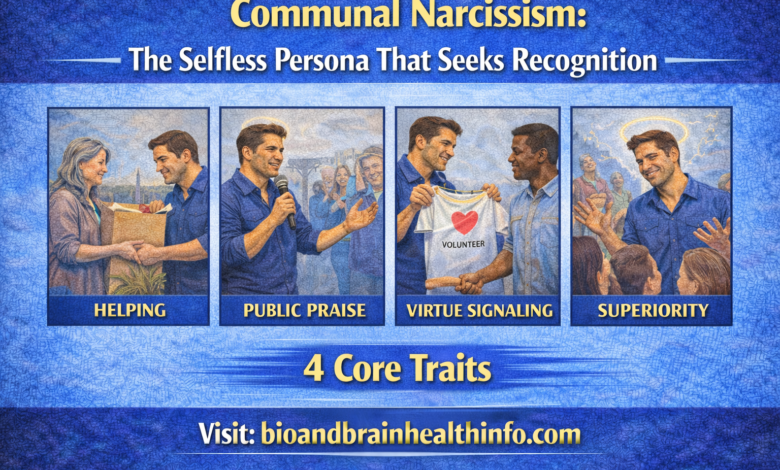
10 Sign Communal Narcissism: The Selfless Persona That Seeks Recognition


Public Helping With Hidden Validation

Communal narcissism often appears through visible generosity. The person helps publicly but internally tracks admiration levels. This altruistic narcissism creates a subtle emotional contract — support is given, but recognition becomes the unspoken expectation sustaining self-worth.


Moral Superiority Through Kindness

Virtue signaling may show as strong ethical positioning or visible compassion. While behavior seems selfless, identity depends on appearing morally elevated. This reinforces communal narcissism by connecting helping behavior directly with social approval.


Praise-Seeking Beneath Service

Helping actions may feel authentic yet consistently lead toward environments where applause exists. Social validation seeking becomes a stabilizing mechanism, reinforcing the selfless persona while quietly feeding identity needs.


Quiet Grandiosity in Caring Roles

Covert grandiosity hides behind humility or sacrifice narratives. The individual may see themselves as uniquely understanding or emotionally advanced, strengthening a special helper identity tied to communal narcissism.


Emotional Investment Linked to Visibility

Hidden ego patterns appear when motivation shifts based on audience size or recognition level. The helper role becomes less about connection and more about maintaining a valued social identity.


Difficulty Accepting Criticism

Feedback may feel threatening because it challenges the selfless image. Altruistic narcissism protects identity by reframing criticism as misunderstanding rather than exploring emotional impact.


Over-Identification With Helper Role

The person may struggle to separate personal worth from helping behaviors. Virtue signaling reinforces belonging through moral visibility rather than internal stability.


Emotional Withdrawal When Recognition Drops

Reduced praise can trigger disengagement or disappointment. Social validation seeking drives participation levels, revealing dependency on external affirmation.


 Subtle Comparison With Other Helpers

Covert grandiosity appears through internal comparison — feeling more insightful, compassionate, or dedicated than others without openly expressing superiority.


Self-Worth Tied to Being Needed

Hidden ego patterns link value with indispensability. Helping becomes a way to secure relational importance rather than purely mutual connection.


Closing Note – Communal Narcissism

Communal narcissism does not always mean intentional harm. Many behaviors grow from adaptation rather than conscious manipulation. Awareness allows separation between genuine care and identity protection, helping relationships shift toward authenticity without blame or harsh labeling.

Please Explore This Blog borderline-narcissist-traits-emotional-patterns

🌿 A Whole-System View of the Human Healing Process


Medical / Ethical Positioning – Communal Narcissism

Communal Narcissism: The Selfless Persona That Seeks Recognition reminds us that behavior must be understood ethically without labeling people as fixed identities.

The mind interprets threat through meaning-making processes shaped by history, context, and social reinforcement.

Ethical care focuses on safety, clarity, and responsibility rather than judgment.

Interpretation AreaEthical Understanding
Threat perceptionMeaning shaped by past experiences
Confusion responseProtective mental organization
Social identityReinforced by external feedback
Healing directionAwareness before intervention

Psychological Layer – Communal Narcissism

Communal narcissism interacts with altruistic narcissism by shaping internal narratives about worth through helping roles.

The mind interprets confusion as identity uncertainty, leading individuals to attach value to roles rather than internal stability.

Psychological healing focuses on separating intention from identity so meaning becomes flexible rather than rigid.

Psychological ProcessInner Experience
Role attachmentSelf defined by helping
Validation loopsExternal approval shaping identity
Narrative formationMeaning built around usefulness
Cognitive flexibilityLearning new interpretations

Nervous System Layer – Communal Narcissism

Communal Narcissism: The Selfless Persona That Seeks Recognition can involve automatic body reactions that maintain safety through social connection.
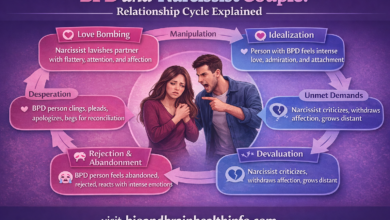
The nervous system reads approval as regulation and rejection as threat, triggering fight, flight, freeze, or appease responses before conscious thought.

Body ResponseProtective Function
Appease responseMaintain relational harmony
Freeze responseAvoid internal conflict
Hyper-attunementMonitor others’ reactions
Stress activationPrepare for social evaluation

Mental Health Layer – Communal Narcissism

Communal Narcissism: The Selfless Persona That Seeks Recognition may influence emotional clarity when prolonged stress ties self-worth to external roles.
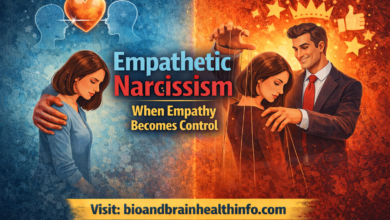
Over time, energy depletion and decision fatigue appear because identity becomes performance-based rather than internally grounded.

Mental Health ImpactExperience
Emotional exhaustionConstant performance pressure
Reduced clarityConfusion about genuine desire
Anxiety spikesFear of losing validation
Self-trust erosionDifficulty making independent choices

Identity Layer (Inner Continuity & Meaning)

Communal Narcissism: The Selfless Persona That Seeks Recognition does not erase core values.
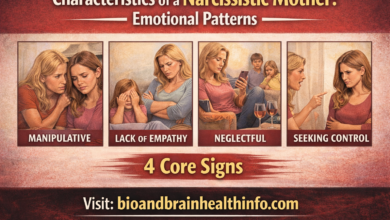
Identity remains deeper than adaptation; conscience and empathy exist beneath survival patterns.

Healing involves rediscovering intrinsic meaning separate from recognition or comparison.

Identity ElementInner Continuity
ValuesStable beneath behavior
ConscienceGuides authentic action
Self-definitionBeyond roles or labels
Meaning-makingEvolves with awareness

Reflective Support Layer (Including AI)

Communal Narcissism: The Selfless Persona That Seeks Recognition can be explored safely through reflective tools that mirror thoughts without directing conclusions.
Journaling, mindful dialogue, or AI-based reflection allows observation without pressure, helping awareness develop naturally.

Reflective ToolSupport Function
JournalingExternalize internal patterns
ConversationClarify emotional language
AI reflectionNeutral mirroring of thoughts
Mindful pausesCreate cognitive space

Please Explore This Blog borderline-and-narcissist-couple-dynamics

Healing becomes clearer when viewed as a whole-system process.

Communal Narcissism: The Selfless Persona That Seeks Recognition involves layered interactions between meaning, psychology, nervous system regulation, mental health, identity continuity, and reflective support.

Tools like journaling, conversation, or AI can mirror internal patterns without imposing direction, allowing awareness to emerge gradually.

Rather than forcing change, the system reorganizes through understanding — where insight reduces internal conflict, regulation increases emotional flexibility, and identity reconnects with intrinsic values beyond performance or recognition.

PERSONAL NOTE -Communal Narcissism

Understanding Communal Narcissism: The Selfless Persona That Seeks Recognition changed how I interpret helping behaviors that once felt confusing or contradictory.

Sometimes kindness can carry hidden expectations, not because someone is evil, but because identity became linked with being admired for caring.

Recognizing patterns like altruistic narcissism allowed me to stop reacting with self-blame and instead observe relational dynamics with calm distance.

The deeper insight was that clarity grows when we separate intention from impact. We can appreciate generosity while also noticing when it becomes tied to recognition or control.

This shift does not create judgment; it restores neutrality. When understanding replaces confusion, emotional space opens — and we respond from awareness rather than from reaction.


COSMIC / PHILOSOPHICAL TAKEAWAY -Communal Narcissism

“Not every light shines to illuminate others; sometimes it shines to be seen.”

Communal Narcissism: The Selfless Persona That Seeks Recognition reminds us that human behavior exists between genuine care and unconscious self-protection.

Altruistic narcissism, virtue signaling, social validation seeking, and covert grandiosity often arise from deeper needs for belonging and meaning rather than intentional harm.

From a wider perspective, humanity learns through reflection — discovering where giving becomes identity and where identity becomes performance.

Growth happens when awareness softens rigid roles, allowing compassion without illusion.

True connection emerges when helping flows naturally rather than as proof of worth. In this way, understanding becomes not criticism but liberation — a return to authentic presence beyond comparison.

Please Explore This Blog blame-shifting-narcissist-why-you-always-feel-wrong


FINAL CLOSING -Communal Narcissism

Communal Narcissism: The Selfless Persona That Seeks Recognition can feel confusing because behaviors appear caring while emotional dynamics feel heavy.

Altruistic narcissism, virtue signaling, social validation seeking, and covert grandiosity do not mean something is wrong with you for feeling uncertain or drained.

Human systems adapt to maintain safety and belonging, and recognition-based patterns often develop slowly over time.

Healing begins not by judging others or yourself but by observing calmly and restoring internal boundaries. Nothing is wrong with you for reacting to complexity.

With safety and understanding, what adapted can soften again. Allow clarity to unfold at your own pace; awareness itself is already movement toward steadiness.


FAQ SECTION -Communal Narcissism

1. What is communal narcissism?

Communal narcissism describes individuals who seek admiration through appearing helpful, moral, or selfless while still needing recognition and validation.

2. Is communal narcissism the same as kindness?

No. Genuine kindness is flexible and empathic; communal narcissism often ties helping behavior to praise or identity reinforcement.

3. Why is it hard to recognize?

Because behaviors look positive externally, confusion arises when emotional interactions feel subtly pressured or controlling.

4. Can communal narcissism be unconscious?

Yes. Many patterns develop from insecurity or identity needs rather than deliberate manipulation.

5. How does altruistic narcissism affect relationships?

It can create imbalance where one person feels obligated to appreciate or validate constant helping behavior.

6. Is virtue signaling always narcissistic?

Not necessarily. Motivation and emotional flexibility matter more than outward actions.

7. Why do I feel guilty questioning a helpful person?

Social conditioning encourages gratitude, making boundary-setting feel uncomfortable even when needed.

8. Can people change these patterns?

Awareness and reflective work can increase authentic empathy and reduce recognition-seeking behaviors.

9. How do I respond calmly?

Focus on observing patterns rather than labeling individuals; clarity reduces emotional reactivity.

10. Does noticing communal narcissism make me judgmental?

No. Understanding dynamics supports healthier relationships without blame.


FINAL CLOSING -Communal Narcissism

Communal Narcissism: The Selfless Persona That Seeks Recognition highlights how complex human motives can be.

Altruistic narcissism, virtue signaling, social validation seeking, and covert grandiosity often reflect attempts to feel secure within relationships rather than clear malicious intent.

Recognizing patterns is not about confrontation but about restoring internal balance. When you slow down and observe without urgency, clarity naturally replaces confusion.

Nothing is wrong with you for needing space to understand emotional dynamics. Safety grows gradually through awareness, not force.

Let this understanding become a quiet anchor — one that supports gentle boundaries, deeper compassion, and a calmer relationship with yourself and others.


🌿 Final Blog Footer — Bio & Brain Health Info

Written by Lex, founder of Bio & Brain Health Info — exploring the intersections of psychology, spirituality, and emotional recovery through calm, trauma-aware understanding.

✨ Insight & Reflection
Healing does not begin when answers arrive — it begins when self-attack stops.
Clarity grows in spaces where safety is restored.

🧠 Learn
Narcissism • Emotional Healing • Spiritual Psychology

🌍 A Moment for You
💡 Pause for two minutes. Let your body settle before moving on.

🧭 If This Article Helped, Your Next Questions Might Be:

• What is covert narcissism vs communal narcissism?
• Why helping behaviors sometimes feel emotionally heavy
• How recognition-seeking patterns develop psychologically
• Nervous system responses to relational imbalance

✨ Cosmic Family Invitation
You are not here by accident. If these words reached you, clarity was already beginning.
We rise together — different souls, one journey. 🕊️

📩 Connect with us
info@bioandbrainhealthinfo.com
Telegram: @bioandbrainhealthinfo
WhatsApp Channel: Punehealth

Lex | Bio & Brain Health Info
Cosmic Family — Different Souls, One Journey.


REFERENCES & CITATION – Communal Narcissism

  1. American Psychiatric Association — Narcissistic Personality Overview
    https://www.psychiatry.org

  2. DSM-5-TR Diagnostic Criteria Overview
    https://www.psychiatry.org/psychiatrists/practice/dsm

  3. Psychology Today — Communal Narcissism Concept
    https://www.psychologytoday.com

  4. Frontiers in Psychology — Narcissism Research Studies
    https://www.frontiersin.org

  5. National Institute of Mental Health
    https://www.nimh.nih.gov

  6. APA Dictionary of Psychology
    https://dictionary.apa.org

  7. Journal of Personality and Social Psychology
    https://www.apa.org/pubs/journals/psp

  8. Cleveland Clinic Mental Health Resources
    https://my.clevelandclinic.org

  9. Verywell Mind Psychological Education
    https://www.verywellmind.com

  10. Greater Good Science Center — Social Behavior Research
    https://greatergood.berkeley.edu

Related Articles

Back to top button