Relationship Cycles: BPD and NPD Relationship Dynamics
Relationship Cycles Explained: BPD and NPD Relationship Dynamics

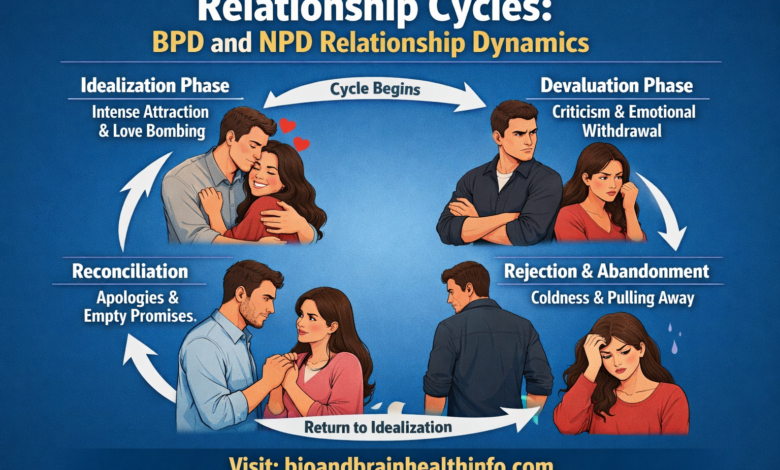
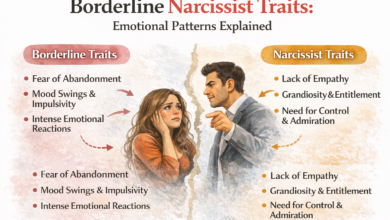
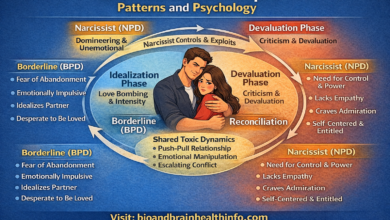
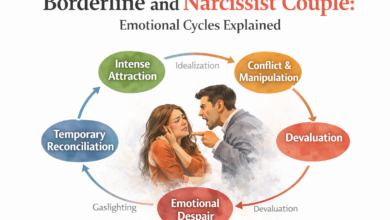
Relationship cycles often appear within BPD and NPD relationship dynamics where trauma bonding, push pull dynamics, emotional volatility, and repeating relationship cycles create intense emotional patterns that can feel powerful yet confusing to understand.
“Understanding patterns is not about judging relationships — it is about restoring clarity so emotional safety becomes possible.”
Sometimes what keeps a relationship alive is not love alone but emotional familiarity shaped by repeated patterns.
Even after leaving, the nervous system can stay on alert because it learned unpredictability as normal. Regulation returns through consistency, not force.
Relationship Cycles
Understanding relationship cycles can feel overwhelming when BPD and NPD relationship dynamics involve trauma bonding, push pull dynamics, emotional volatility, and repeating relationship cycles that blur the line between connection and survival.
Many people quietly wonder, “Am I losing myself?” when reactions feel unfamiliar or intense.
The misunderstanding often lies between trauma responses and identity, creating unnecessary self-doubt.
These experiences are often adaptive responses rather than personal flaws.
This article will help you understand what’s happening — without labels, blame, or self-attack.
REASON FOR THIS BLOG – Relationship Cycles
This article exists to clarify emotional patterns within intense relationships and help readers separate trauma-based reactions from identity. The purpose is understanding and emotional safety — not diagnosis, blame, or pressure.
INNER SEARCH MIRROR – Relationship Cycles
You may recognize yourself if you quietly ask:
-
Why do relationship patterns repeat even when I understand them?
-
Why does emotional closeness feel both safe and unsafe?
-
Why do push–pull dynamics feel impossible to escape?
-
Why does emotional volatility feel stronger than logic?
-
Why do calm moments feel unfamiliar?
-
Why do relationship cycles continue even after distance?
Please Explore This Blog bpd-narcissism-overlap-psychology-explained
PSYCHOLOGICAL EXPLANATION – Relationship Cycles
Understanding relationship cycles within BPD and NPD relationship dynamics helps explain how trauma bonding, push pull dynamics, emotional volatility, and repeated relationship cycles develop through adaptation rather than intention.
The mind learns patterns that attempt to maintain emotional connection while protecting against perceived loss or threat.
Over time, survival conditioning reinforces familiar responses, making certain relational rhythms feel inevitable.
Recognizing adaptation reduces self-blame and shifts attention toward understanding rather than judgment.
Personal note: Many readers feel relief when patterns are seen as learned responses rather than fixed identity traits.
Example:
| Adaptation | Purpose |
|---|---|
| Emotional intensity | Maintain connection |
| Withdrawal | Reduce overwhelm |
| Repetition | Seek predictability |
| Conflict loops | Attempt resolution |
NERVOUS SYSTEM EXPLANATION – Relationship Cycles
In relationship cycles, emotional volatility can often be understood through nervous system activation.
Trauma bonding and push pull dynamics may signal perceived threat, triggering fight, flight, or freeze responses before conscious thought begins. This explains why reactions can feel immediate and difficult to control.
The nervous system prioritizes safety by reacting quickly, sometimes amplifying emotional intensity even when logic suggests calm.
Warning signs may include:
-
sudden emotional surges
-
urgency to reconnect or withdraw
-
heightened sensitivity to tone
-
rapid mood shifts
-
difficulty calming after conflict
Personal note: Biological responses often happen before awareness forms.
CORE DISTINCTION – Relationship Cycles
Identity vs Survival Responses
Understanding relationship cycles requires distinguishing survival responses from identity.
Within BPD and NPD relationship dynamics, trauma bonding and push pull dynamics may reflect emotional volatility shaped by protection strategies rather than core character.
Survival responses aim to maintain safety or connection during perceived threat, while identity reflects deeper values, conscience, and long-term meaning.
Survival is temporary adaptation; identity is enduring continuity. When individuals recognize this distinction, self-blame softens and clarity grows.
Authority emerges when people understand that protective patterns can exist without defining who they truly are.
Please Explore This Blog bpd-npd-relationship-patterns-and-psychology
TRAUMA VS NARCISSISM -Relationship Cycles
Understanding relationship cycles within BPD and NPD relationship dynamics helps reduce self-labeling when trauma bonding, push pull dynamics, emotional volatility, and repeating relationship cycles create confusion.
The focus is motivation: trauma responses often include remorse, reflection, and willingness to repair, while protective narcissistic patterns may prioritize emotional safety over accountability.
Personal note: Many readers feel relief when motivation is explored rather than identity labels.
| Focus | Trauma-Based Response | Protective Narcissistic Pattern |
|---|---|---|
| Remorse | Often present | Less emphasized |
| Reflection | Self-questioning | Self-protection |
| Accountability | Growth-oriented | Defensive stance |
GROWTH DIRECTION -Relationship Cycles
Growth within relationship cycles emerges when BPD and NPD relationship dynamics are understood gently.
Trauma bonding softens as push pull dynamics slow, emotional volatility decreases, and repeating relationship cycles lose urgency.
Signs of healing may include increased pauses, quieter emotional reactions, and choosing peace over intensity.
Personal note: Healing often begins when individuals stop forcing change and allow awareness to guide gradually.
HEALING COMPASS / ORIENTATION TABLE
Understanding becomes stability when insight transforms into gentle direction.
| Stage | Orientation |
|---|---|
| Awareness | “I can observe patterns calmly.” |
| Stabilization | “Safety can grow slowly.” |
| Understanding | “My reactions have context.” |
| Integration | “Identity remains steady.” |
| Protection | “Boundaries support peace.” |
This compass offers a map toward clarity, helping readers move from confusion toward grounded understanding without pressure.
Please Explore This Blog bpd-vs-narcissist-clinical-differences-explained
🌿 10 Signs Relationship Cycles: BPD and NPD Relationship Dynamics
🔹 1. Intensity Feels Like Deep Connection
Within relationship cycles, BPD and NPD relationship dynamics may involve trauma bonding where push pull dynamics and emotional volatility create repeating relationship cycles that make emotional intensity feel meaningful even when stability is missing.
🔹 2. Push–Pull Patterns Become Predictable
In recurring relationship cycles, trauma bonding combined with push pull dynamics and emotional volatility reinforces repeating relationship cycles, causing connection and distance to alternate in ways that feel familiar despite emotional exhaustion.
🔹 3. Conflict Escalates Quickly
Many relationship cycles involve trauma bonding and push pull dynamics where emotional volatility leads to rapid conflict escalation, strengthening repeating relationship cycles through heightened emotional reactions rather than calm resolution.
🔹 4. Emotional Highs Follow Emotional Lows
Inside relationship cycles, trauma bonding and push pull dynamics may amplify emotional volatility, creating repeating relationship cycles where intense closeness is followed by sudden emotional withdrawal.
🔹 5. Leaving Feels Difficult Despite Awareness
Some relationship cycles continue because trauma bonding and push pull dynamics combined with emotional volatility make repeating relationship cycles feel emotionally necessary even when logically understood as harmful.
🔹 6. Calm Moments Feel Unfamiliar
In persistent relationship cycles, trauma bonding and push pull dynamics can normalize emotional volatility, making stable or peaceful periods feel unusual compared to the intensity of repeating relationship cycles.
🔹 7. Emotional Responsibility Feels Uneven
Many relationship cycles shaped by trauma bonding and push pull dynamics involve emotional volatility that creates repeating relationship cycles where one or both partners feel responsible for maintaining emotional balance.
🔹 8. Identity Feels Blurred During Conflict
During intense relationship cycles, trauma bonding and push pull dynamics may heighten emotional volatility, reinforcing repeating relationship cycles where individuals struggle to distinguish personal identity from emotional reactions.
🔹 9. Reconnection Feels Urgent After Distance
Some relationship cycles involve trauma bonding and push pull dynamics where emotional volatility drives repeating relationship cycles marked by urgent reconciliation attempts after periods of conflict or separation.
🔹 10. Emotional Patterns Continue After Separation
Even when distance occurs, relationship cycles shaped by trauma bonding and push pull dynamics may persist through emotional volatility, maintaining repeating relationship cycles within memory and nervous system responses.
🌱 Closing Note – Relationship Cycles
These patterns are not judgments about people but frameworks for understanding emotional dynamics with compassion. Awareness of relationship cycles allows space for clarity without blame. Healing often begins when individuals observe patterns gently, allowing stability and self-trust to grow through consistency rather than pressure.
Please Explore This Blog can-a-narcissist-ever-change-long-term
🌿 A Whole-System View of the Human Healing Process
🩺 Medical / Ethical Positioning – Relationship Cycles
Understanding relationship cycles ethically means recognizing how trauma bonding influences how the mind interprets threat, confusion, and meaning without reducing people to labels.
Ethical positioning prioritizes clarity, consent, and emotional safety.
Education helps individuals explore patterns responsibly while preserving dignity and encouraging curiosity instead of judgment.
Personal note: Ethical framing often reduces fear around exploring complex emotional topics.
| Ethical Focus | Purpose |
|---|---|
| Context awareness | Reduce misunderstanding |
| Neutral language | Avoid labeling |
| Transparency | Build trust |
| Safety-first lens | Support autonomy |
🧠 Psychological Layer – Relationship Cycles
Within relationship cycles, push pull dynamics shape how the mind interprets relational experiences, assigning meaning to emotional unpredictability.
Psychological processing seeks coherence by linking past learning with present interactions.
Understanding these internal narratives helps clarify why certain reactions feel inevitable without assuming intentional harm.
Personal note: Meaning-making often happens automatically before conscious awareness.
| Psychological Process | Function |
|---|---|
| Narrative building | Create coherence |
| Pattern linking | Predict outcomes |
| Emotional interpretation | Assign meaning |
| Cognitive filtering | Reduce uncertainty |
⚡ Nervous System Layer – Relationship Cycles
In relationship cycles, emotional volatility may reflect automatic bodily responses designed to maintain safety.
The nervous system detects subtle cues and reacts rapidly to perceived unpredictability, activating protection mechanisms before conscious thought.
These responses aim to preserve stability rather than create conflict.
Personal note: Understanding body reactions often softens self-blame.
| Body Response | Protective Purpose |
|---|---|
| Hyper-alertness | Detect risk early |
| Muscle tension | Prepare action |
| Emotional surge | Mobilize response |
| Withdrawal impulse | Prevent overwhelm |
🧩 Mental Health Layer – Relationship Cycles
Prolonged relationship cycles shaped by trauma bonding may gradually influence clarity, emotional energy, and self-trust.
Continuous stress can narrow focus toward perceived threats, making decision-making feel heavier.
Mental health changes often reflect adaptation to repeated emotional intensity rather than weakness.
Personal note: Many readers realize exhaustion reflects adaptation, not failure.
| Impact Area | Experience |
|---|---|
| Focus | Reduced clarity |
| Emotional energy | Faster depletion |
| Self-trust | Increased doubt |
| Perspective | Narrowed thinking |
🌱 Identity Layer (Inner Continuity & Meaning) – Relationship Cycles
Even within intense relationship cycles, identity remains deeper than push pull dynamics or emotional volatility.
Values and conscience continue beneath survival responses, offering continuity even when emotions fluctuate.
Healing involves reconnecting with inner meaning rather than reshaping identity entirely.
Personal note: Identity often stays intact despite temporary emotional confusion.
| Identity Element | Inner Stability |
|---|---|
| Values | Guide direction |
| Conscience | Supports reflection |
| Meaning | Maintains continuity |
| Self-awareness | Encourages growth |
🤝 Reflective Support Layer (Including AI) – Relationship Cycles
Exploring relationship cycles through reflection tools such as journaling, supportive dialogue, or AI mirroring allows observation of emotional volatility without directing conclusions.
These supports create gentle distance from immediate reactions, helping individuals witness thoughts and feelings without pressure to change.
Personal note: Reflection often slows emotional intensity naturally.
| Reflective Tool | Role |
|---|---|
| Journaling | Externalize thoughts |
| Conversation | Expand perspective |
| AI reflection | Neutral mirroring |
| Mindful pause | Create awareness |
🌿 Integrated Whole-System Understanding – Relationship Cycles
Healing within relationship cycles becomes clearer when trauma bonding, push pull dynamics, emotional volatility, and psychological meaning-making are viewed as interconnected layers rather than isolated problems.
The mind interprets meaning, the body protects safety, mental health reflects accumulated adaptation, identity maintains continuity, and reflective tools create space for insight.
Understanding these layers together shifts focus from fixing oneself toward compassionate awareness.
Stability emerges gradually as curiosity replaces self-criticism, allowing emotional patterns to soften naturally through consistent safety and understanding.
Personal note: Integration often begins when people stop fighting their reactions and start observing them.
| Healing Layer | Contribution |
|---|---|
| Psychological | Meaning-making |
| Nervous system | Safety regulation |
| Identity | Inner continuity |
| Reflection | Gentle awareness |
PERSONAL NOTE – Relationship Cycles
While exploring relationship cycles, I have seen how trauma bonding and push pull dynamics can quietly make emotional volatility feel normal, even when repeating relationship cycles create confusion.
Many people begin to question themselves instead of recognizing that patterns often form through adaptation rather than intention.
My own understanding shifted when I stopped trying to define people through labels and instead focused on understanding relational patterns with curiosity.
Insight grows when emotional experiences are observed without self-attack, allowing awareness to replace blame.
Readers often discover relief when they understand that intense reactions are signals of learned responses rather than proof of personal failure.
Healing begins gently when we allow ourselves to explore patterns without forcing conclusions or turning complexity into identity.
Please Explore This Blog can-narcissist-love-psychology
COSMIC / PHILOSOPHICAL TAKEAWAY
“Patterns repeat not to trap us, but to reveal what still seeks understanding.”
Within relationship cycles, trauma bonding, push pull dynamics, emotional volatility, and recurring relationship cycles reflect humanity’s attempt to find connection while protecting emotional safety.
From a broader perspective, relationships become mirrors showing where attachment and protection meet.
Philosophically, growth is less about escaping patterns instantly and more about understanding the lessons hidden within repetition.
Emotional intensity often signals unresolved meaning rather than permanent dysfunction. When individuals observe patterns with compassion instead of judgment, clarity expands naturally.
Over time, repeated cycles can become pathways toward self-awareness, transforming confusion into wisdom and allowing individuals to relate to themselves and others with deeper understanding.
FAQ SECTION – Relationship Cycles
1. Why do relationship cycles repeat?
Repeated emotional experiences can reinforce familiar patterns that feel predictable even when they are uncomfortable.
2. What is trauma bonding?
Trauma bonding refers to emotional attachment strengthened through cycles of intensity and relief.
3. Why do push–pull dynamics feel addictive?
Alternating closeness and distance can activate emotional anticipation and deepen attachment.
4. Is emotional volatility always unhealthy?
Not necessarily; intensity becomes challenging when it prevents stability or clarity.
5. Why does leaving feel difficult?
Emotional familiarity and nervous system learning can maintain attachment even after awareness.
6. Are relationship cycles intentional?
Many patterns arise automatically rather than through conscious choice.
7. Can awareness change patterns?
Understanding reduces self-blame and creates space for different responses.
8. Why does calm feel uncomfortable at first?
The nervous system may be accustomed to intensity, making stability feel unfamiliar.
9. Is healing possible without blame?
Yes. Compassionate understanding often supports deeper change.
10. What is the first sign of recovery?
Reduced urgency and increased emotional clarity.
FINAL CLOSING – Relationship Cycles
Understanding relationship cycles through trauma bonding, push pull dynamics, emotional volatility, and repeating relationship cycles does not require judgment or urgency.
Nothing is wrong with you for reacting strongly within complex emotional dynamics; many responses develop as protective adaptations rather than personal flaws.
Healing often begins when pressure to fix or analyze everything immediately is released. You are allowed to move slowly, observe gently, and rediscover emotional stability at your own pace.
Let this understanding become an invitation toward curiosity rather than self-criticism.
With safety and understanding, what adapted for survival can soften again, allowing identity, calm, and self-trust to return naturally over time.
🌿 Final Blog Footer — Bio & Brain Health Info
Written by Lex, founder of Bio & Brain Health Info — exploring the intersections of psychology, spirituality, and emotional recovery through calm, trauma-aware understanding.
✨ Insight & Reflection
Healing does not begin when answers arrive — it begins when self-attack stops.
Clarity grows in spaces where safety is restored.
🧠 Learn
Narcissism • Emotional Healing • Spiritual Psychology
🌍 A Moment for You
💡 Pause for two minutes. Let your body settle before moving on.
🧭 If This Article Helped, Your Next Questions Might Be:
These questions are natural continuations — not obligations.
✨ Cosmic Family Invitation
You are not here by accident. If these words reached you, clarity was already beginning.
We rise together — different souls, one journey. 🕊️
📩 Connect with us
info@bioandbrainhealthinfo.com
Telegram: @bioandbrainhealthinfo
WhatsApp Channel: Punehealth
Lex | Bio & Brain Health Info
Cosmic Family — Different Souls, One Journey.
Please Explore This Blog a-narcissist-meaning-traits-and-psychology-explained
REFERENCES & CITATION – Relationship Cycles
-
American Psychiatric Association — DSM Overview
https://www.psychiatry.org/psychiatrists/practice/dsm -
National Institute of Mental Health — Personality Disorders
https://www.nimh.nih.gov -
Mayo Clinic — Narcissistic Personality Disorder
https://www.mayoclinic.org/diseases-conditions/narcissistic-personality-disorder -
Cleveland Clinic — Borderline Personality Disorder
https://my.clevelandclinic.org/health/diseases/9762-borderline-personality-disorder -
Psychology Today — Trauma Bonding
https://www.psychologytoday.com -
Polyvagal Institute — Nervous System Regulation
https://www.polyvagalinstitute.org -
Harvard Health Publishing — Emotional Regulation
https://www.health.harvard.edu -
National Alliance on Mental Illness (NAMI)
https://www.nami.org -
The Attachment Project — Attachment Styles
https://www.attachmentproject.com -
Verywell Mind — Trauma Responses
https://www.verywellmind.com