Emotional Immaturity Narcissist Mind
Why Narcissists React Like Emotionally Immature Children

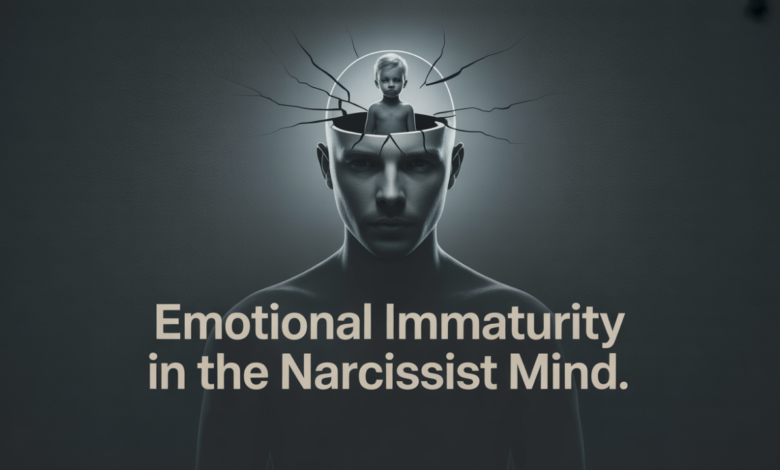
Emotional immaturity in narcissists is often driven by emotional dysregulation, narcissistic coping mechanisms, and fragile ego narcissism, which together limit authentic narcissist emotional growth.
Thank you for reading this post, don't forget to subscribe!OPENING QUOTE
Some wounds confuse more than they hurt.
You leave the situation, but your body stays braced—waiting for the next shift that once arrived without warning.
Even after leaving, the nervous system can stay on alert because it learned unpredictability as normal. Regulation returns through consistency, not force.
Emotional Immaturity Narcissist
Emotional immaturity narcissist dynamics often leave a quiet but persistent fear: “Am I losing myself?”
You may notice lingering self-doubt, emotional dysregulation, or a sense that your reactions no longer belong to you. This is where many people misunderstand what’s happening—confusing trauma responses with identity.
What looks like weakness or confusion is often a learned survival pattern shaped by narcissistic coping, fragile ego narcissism, and disrupted emotional safety.
None of this means you are broken. It means your nervous system adapted to stay protected. The loss you feel is not who you are—it is the cost of staying alert for too long.
With understanding, narcissist emotional growth can be discussed without turning pain into labels or blame.
This article will help you understand what’s happening — without labels, blame, or self-attack.
REASON FOR THIS BLOG
To help readers understand why confusion and self-doubt persist after exposure to emotional immaturity, and to separate trauma-based reactions from identity—without judgment, diagnosis, or blame.
INNER SEARCH MIRROR
You might recognize yourself in these quiet questions:
Why do I doubt myself even after leaving?
Why do small reactions still feel so intense?
Why does calm feel unfamiliar now?
Why do I keep replaying old moments?
Why does my body react before my mind?
Why do I feel changed without choosing to be?
Why does understanding not immediately bring relief?
If you’re asking these questions, you’re not alone—and you’re not imagining the impact.
Emotional Immaturity Narcissist Patterns Explained Without Self-Blame
Emotional immaturity narcissist dynamics often train people to adapt rather than respond freely. Over time, emotional dysregulation becomes a learned adjustment—not a choice—because unpredictability rewards vigilance.
What appears as overthinking or emotional intensity is usually the nervous system doing its job.
In these environments, narcissistic coping develops around maintaining control, while fragile ego narcissism struggles with accountability or emotional repair.
The key distinction is intent versus reaction: one person avoids inner discomfort, the other adapts to survive it.
This pattern limits narcissist emotional growth, but it also explains why others feel confused long after interactions end.
Personal note: I understood this more clearly when I noticed how quickly my body reacted before my thoughts could catch up.
Please Explore This Blog why-narcissists-lack-empathy
Emotional Immaturity Narcissist Reactions Through the Nervous System Lens
Emotional immaturity narcissist reactions are best understood through biology, not character judgments. The nervous system operates on speed, not logic.
When emotional dysregulation is present, the body moves into protection before conscious thought. This is why narcissistic coping often looks reactive rather than reflective—especially when fragile ego narcissism feels threatened.
Fight, flight, or freeze responses activate automatically, narrowing emotional range and reducing flexibility.
Over time, this blocks narcissist emotional growth, not because change is impossible, but because safety feels conditional.
Common warning signs:
Sudden defensiveness
Emotional shutdown
Blame shifting
Heightened control
Inability to pause
Personal note: Once I learned this, I stopped taking immediate reactions as personal truth.
Identity vs Survival Responses
Survival responses exist to protect. Identity exists to guide.
When survival is active, the system prioritizes safety over values. This is not a flaw—it is design. But identity operates differently. Identity reflects conscience, empathy, accountability, and choice.
Confusion arises when survival behavior is mistaken for selfhood. You may think, “This is who I’ve become,” when in reality, it is who you had to be temporarily.
Survival narrows. Identity integrates. Survival reacts. Identity reflects. The goal is not to eliminate survival responses but to stop mistaking them for your character.
When this distinction is clear, shame loosens its grip—and self-trust has space to return.
Emotional Immaturity Narcissist vs Trauma Responses: The Key Relief Distinction
A common fear is mistaking trauma responses for narcissism. Emotional immaturity narcissist patterns are driven by self-protection without reflection, while trauma reactions arise from overwhelm with conscience still intact.
Emotional dysregulation can appear in both, but motivation differs. Narcissistic coping prioritizes ego safety, whereas trauma responses prioritize nervous system relief.
Fragile ego narcissism resists responsibility to avoid shame, while trauma survivors often feel excessive responsibility.
Narcissist emotional growth is limited by avoidance of remorse, not by distress itself.
Contrast (motivation-based):
Trauma: feels remorse after reactions
Narcissism: deflects remorse
Trauma: reflects later
Narcissism: avoids reflection
Trauma: seeks repair
Narcissism: resists accountability
Personal note: This distinction ended my fear of mislabeling myself.
Please Explore This Blog neural-basis-of-narcissism
Emotional Immaturity Narcissist Dynamics and a Calm Growth Direction
Understanding emotional immaturity narcissist dynamics is not about fixing anyone—it is about regaining orientation. Healing does not require urgency; it unfolds through gentleness.
As emotional dysregulation settles, nervous system space increases, allowing clearer choices. Narcissistic coping patterns lose influence when you stop engaging them internally.
Fragile ego narcissism thrives on pressure, while calm boundaries reduce its impact. Narcissist emotional growth is not your responsibility, but your own stability is.
Signs of healing often appear quietly: slower reactions, less rumination, and a growing preference for peace over proving. Progress looks like fewer explanations and more discernment.
Personal note: I noticed growth when silence started feeling safer than justification.
Healing Compass: From Survival Awareness to Inner Stability
Healing is not a straight line—it is a reorientation. This compass offers direction, not instruction.
| Stage | Orientation |
|---|---|
| Awareness | “This reaction is protection, not identity.” |
| Stabilization | “My body is learning safety again.” |
| Differentiation | “I can feel without becoming the feeling.” |
| Integration | “I respond more than I react.” |
| Grounded Self | “I choose peace without abandoning myself.” |
Each stage restores stability by separating survival from selfhood. There is no deadline here—only consistency. With time, the nervous system trusts predictability again, and clarity replaces confusion naturally.