BPD NPD Relationship: Patterns and Psychology
Love or Chaos? Understanding BPD–Narcissist Relationship Patterns

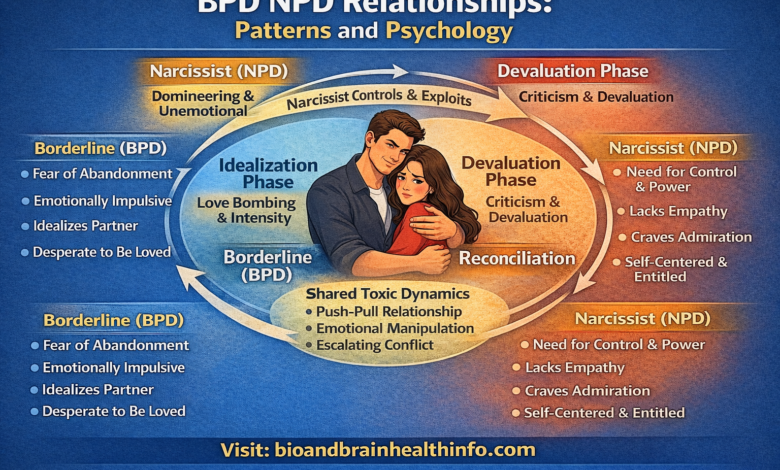
Bpd npd relationship discussions often arise when conflict escalation, attachment wounds, emotional dependency, and toxic relationship patterns create intense emotional cycles that appear confusing but follow understandable psychological dynamics.
Thank you for reading this post, don't forget to subscribe!“Intensity is not always connection; sometimes it is two nervous systems trying to feel safe.”
Sometimes relationships feel intense not because something is wrong with you, but because familiar emotional patterns are being activated beneath awareness.
Even after leaving, the nervous system can stay on alert because it learned unpredictability as normal. Regulation returns through consistency, not force.
BPD NPD Relationships
Understanding a bpd npd relationship can feel confusing when conflict escalation, attachment wounds, emotional dependency, and toxic relationship patterns create powerful emotional cycles that blur clarity.
Many people quietly wonder, “Am I losing myself or just reacting to stress?”
The misunderstanding often lies between trauma responses and identity, leading to unnecessary self-blame.
These reactions are frequently adaptive responses rather than personal flaws.
This article will help you understand what’s happening — without labels, blame, or self-attack.
REASON FOR THIS BLOG – BPD NPD Relationships
This article exists to clarify emotional patterns that appear chaotic but follow understandable psychological dynamics. The goal is to reduce confusion and help readers separate relational patterns from personal identity — without diagnosis or judgment.
INNER SEARCH MIRROR -BPD NPD Relationships
You may recognize yourself if you wonder:
Why does connection turn into conflict quickly?
Why do intense emotions feel addictive?
Why does distance feel unbearable sometimes?
Why do relationship patterns repeat even with awareness?
Why does emotional closeness also feel unsafe?
Why do I question my own reactions afterward?
Please Explore This Blog female-narcissist-over-50-aging-personality-patterns
PSYCHOLOGICAL EXPLANATION – BPD NPD Relationships
A bpd npd relationship may involve attachment wounds that shape emotional dependency and contribute to conflict escalation.
These dynamics often emerge from survival conditioning where early relational learning influences how connection and threat are interpreted.
Toxic relationship patterns can develop when both individuals attempt to regulate emotional safety through familiar reactions rather than conscious intention.
Understanding this psychological layer separates intent from reaction, reducing self-blame while increasing clarity.
Many behaviors reflect adaptation to emotional environments rather than deliberate harm.
Personal note: Psychological understanding often softens harsh self-judgment.
Example:
| Adaptation | Protective Purpose |
|---|---|
| Emotional intensity | Seek reassurance |
| Withdrawal | Reduce overwhelm |
| Reassurance seeking | Maintain connection |
| Conflict loops | Restore emotional balance |
NERVOUS SYSTEM EXPLANATION – BPD NPD Relationships
Within a bpd npd relationship, conflict escalation may reflect nervous system activation rather than conscious choice.
Attachment wounds and emotional dependency can heighten sensitivity to perceived rejection, triggering fight, flight, or freeze responses before rational thought.
Toxic relationship patterns may therefore feel automatic because the body prioritizes safety over reflection.
Emotional reactions often occur rapidly, making individuals feel out of control even when they desire calm communication.
Warning signs may include:
rapid emotional shifts
heightened defensiveness
urgency to reconnect or withdraw
difficulty calming after conflict
physical tension during conversations
Personal note: Biology often acts before understanding.
CORE DISTINCTION – BPD NPD Relationships
Identity vs Survival Responses
Understanding a bpd npd relationship requires distinguishing identity from survival responses.
Conflict escalation and emotional dependency may arise from attachment wounds and learned protection strategies rather than personal character.
Survival responses exist to reduce perceived emotional threat; identity reflects deeper values, conscience, and long-term intention.
Toxic relationship patterns often blur this distinction, causing individuals to believe reactions define who they are.
Authority emerges when readers understand that protective behaviors can exist without defining identity. Recognizing this difference restores self-trust and creates space for compassionate understanding.
Please Explore This Blog can-narcissist-love-psychology
TRAUMA VS NARCISSISM – BPD NPD Relationships
Understanding a bpd npd relationship becomes clearer when conflict escalation, attachment wounds, emotional dependency, and toxic relationship patterns are viewed through motivation rather than behavior alone.
Trauma responses often include remorse, reflection, and willingness toward accountability, while protective narcissistic patterns may prioritize emotional safety over self-examination.
Recognizing this distinction helps reduce self-labeling and restores compassionate understanding.
Personal note: Relief often begins when people explore motivations instead of identities.
| Focus | Trauma Response | Protective Narcissistic Pattern |
|---|---|---|
| Remorse | Often present | Less emphasized |
| Reflection | Self-questioning | Self-protection |
| Accountability | Growth-oriented | Defensive stance |
GROWTH DIRECTION-
Growth within a bpd npd relationship understanding emerges gently when conflict escalation and emotional dependency are observed without urgency.
Attachment wounds become clearer, and toxic relationship patterns lose intensity as awareness increases.
Signs of healing may include slowing emotional reactions, creating small pauses before responding, and choosing calm presence over emotional escalation.
Personal note: Healing often begins when individuals allow themselves to slow down rather than force change.
HEALING COMPASS / ORIENTATION TABLE
Healing becomes steadier when insight transforms into gentle orientation rather than pressure.
| Stage | Orientation |
|---|---|
| Awareness | “I can notice patterns calmly.” |
| Stabilization | “Safety can grow gradually.” |
| Understanding | “My reactions have context.” |
| Integration | “Identity is deeper than patterns.” |
| Protection | “Boundaries support peace.” |
This compass offers direction without urgency, helping readers move from confusion toward grounded emotional clarity.
Please Explore This Blog can-a-narcissist-ever-change-long-term
🌿 10 Signs BPD NPD Relationships: Patterns and Psychology
🔹 1. Emotional Intensity Quickly Escalates Into Conflict
Within a bpd npd relationship, conflict escalation may arise from attachment wounds and emotional dependency, creating toxic relationship patterns where emotional reactions intensify rapidly and both partners struggle to regain calm balance.
🔹 2. Push–Pull Connection Patterns Feel Familiar
A bpd npd relationship may involve conflict escalation linked to attachment wounds, where emotional dependency reinforces toxic relationship patterns through cycles of closeness followed by sudden withdrawal.
🔹 3. Emotional Reassurance Feels Urgent
In a bpd npd relationship, attachment wounds combined with emotional dependency can increase conflict escalation, contributing to toxic relationship patterns driven by strong needs for reassurance or validation.
🔹 4. Arguments May Intensify Quickly
Within a bpd npd relationship, conflict escalation often reflects attachment wounds interacting with emotional dependency, reinforcing toxic relationship patterns that feel overwhelming despite intentions to maintain connection.
🔹 5. Emotional Highs and Lows Become Cyclical
A bpd npd relationship may involve conflict escalation where attachment wounds and emotional dependency create toxic relationship patterns marked by intense closeness followed by emotional distance.
🔹 6. Fear of Abandonment or Rejection Shapes Behavior
In a bpd npd relationship, attachment wounds may heighten emotional dependency, increasing conflict escalation and contributing to toxic relationship patterns driven by perceived threat to connection.
🔹 7. Defensive Reactions Appear During Emotional Stress
Within a bpd npd relationship, conflict escalation may arise when attachment wounds trigger emotional dependency, reinforcing toxic relationship patterns shaped by protective responses rather than intentional harm.
🔹 8. Communication Feels Emotionally Charged
A bpd npd relationship often includes conflict escalation where attachment wounds amplify emotional dependency, sustaining toxic relationship patterns that make calm communication feel difficult.
🔹 9. Reconciliation Feels Urgent After Conflict
In a bpd npd relationship, emotional dependency influenced by attachment wounds may accelerate reconciliation attempts after conflict escalation, reinforcing toxic relationship patterns that repeat over time.
🔹 10. Emotional Patterns Continue Even After Distance
Understanding a bpd npd relationship shows how attachment wounds and emotional dependency can maintain conflict escalation internally, sustaining toxic relationship patterns even when partners are physically apart.
🌱 Closing Note
These signs are not labels but frameworks for understanding emotional patterns with compassion. Awareness reduces self-blame and allows individuals to observe relational dynamics calmly, helping clarity emerge without pressure or judgment.
Please Explore This Blog can-a-narcissist-be-cured-therapy-reality
🌿 A Whole-System View of the Human Healing Process
🩺 Medical / Ethical Positioning – BPD NPD Relationships
Understanding a bpd npd relationship ethically means recognizing how attachment wounds shape perception without turning complex dynamics into rigid labels.
Ethical positioning explores how the mind interprets threat, confusion, and meaning through context, responsibility, and emotional safety.
The goal is education that promotes clarity while protecting dignity and avoiding oversimplification.
Personal note: Ethical framing often allows readers to approach difficult insights with less fear.
| Ethical Focus | Purpose |
|---|---|
| Context awareness | Prevent misinterpretation |
| Neutral language | Reduce stigma |
| Emotional safety | Support reflection |
| Responsibility balance | Avoid blame narratives |
🧠 Psychological Layer – BPD NPD Relationships
Within a bpd npd relationship, emotional dependency may influence how the mind interprets relational events.
Psychological processing seeks coherence by linking past experiences with current reactions, especially when attachment wounds create strong meaning around connection and loss.
Understanding this helps explain why emotional reactions feel deeply personal even when shaped by learned patterns.
Personal note: Meaning-making often happens before conscious analysis.
| Psychological Process | Role |
|---|---|
| Narrative creation | Organize experiences |
| Pattern linking | Predict outcomes |
| Emotional framing | Assign significance |
| Cognitive filtering | Reduce uncertainty |
⚡ Nervous System Layer – BPD NPD Relationships
In a bpd npd relationship, conflict escalation may reflect automatic nervous system activation rather than intentional harm.
The body responds to perceived relational threat by mobilizing protective responses before conscious thought occurs.
These reactions aim to preserve safety and stability, even when they unintentionally reinforce emotional cycles.
Personal note: Recognizing automatic responses often softens self-criticism.
| Body Reaction | Protective Purpose |
|---|---|
| Hyper-alertness | Detect threat |
| Emotional surge | Mobilize defense |
| Withdrawal impulse | Reduce overload |
| Defensive tone | Maintain control |
🧩 Mental Health Layer – BPD NPD Relationships
Repeated exposure to toxic relationship patterns within a bpd npd relationship may gradually influence clarity, emotional energy, and self-trust.
Prolonged emotional intensity can narrow focus toward perceived risks, making decision-making feel heavier.
These changes often reflect adaptation to sustained stress rather than personal weakness.
Personal note: Many people discover that exhaustion signals adaptation, not failure.
| Impact Area | Experience |
|---|---|
| Focus | Reduced clarity |
| Emotional energy | Faster depletion |
| Self-trust | Increased doubt |
| Perspective | Heightened sensitivity |
🌱 Identity Layer (Inner Continuity & Meaning) – BPD NPD Relationships
Even within a bpd npd relationship, identity remains deeper than emotional dependency or attachment wounds.
Values and conscience continue beneath survival responses, offering continuity even when reactions fluctuate.
Healing often involves reconnecting with internal meaning rather than rebuilding identity entirely.
Personal note: Identity usually remains intact despite emotional confusion.
| Identity Element | Inner Stability |
|---|---|
| Values | Guide direction |
| Conscience | Support reflection |
| Meaning | Maintain coherence |
| Self-awareness | Encourage growth |
🤝 Reflective Support Layer (Including AI)
Exploring a bpd npd relationship through reflective tools helps individuals observe conflict escalation without immediate judgment.
Journaling, supportive conversations, or AI reflection create space to notice patterns safely.
These tools mirror thoughts without directing conclusions, allowing emotional insight to emerge naturally.
Personal note: Reflection often introduces calm simply through observation.
| Reflective Tool | Function |
|---|---|
| Journaling | Externalize thoughts |
| Dialogue | Expand perspective |
| AI reflection | Neutral mirroring |
| Mindful pauses | Increase awareness |
🌿 Integrated Whole-System Understanding – BPD NPD Relationships
Healing within a bpd npd relationship becomes clearer when attachment wounds, emotional dependency, conflict escalation, and toxic relationship patterns are viewed as interconnected layers rather than isolated problems.
Psychological interpretation creates meaning, the nervous system protects safety, mental health reflects accumulated stress, identity maintains continuity, and reflective tools offer space for insight.
Seeing these layers together shifts focus from fixing oneself toward compassionate understanding.
Over time, integration allows emotional patterns to soften naturally, helping individuals move toward stability without forcing change or abandoning self-trust.
Personal note: Integration often begins when curiosity replaces judgment.
| Healing Layer | Contribution |
|---|---|
| Psychological | Meaning-making |
| Nervous system | Safety regulation |
| Identity | Inner continuity |
| Reflection | Gentle awareness |
Please Explore This Blog break-up-narcissist-psychological-stages
PERSONAL NOTE – BPD NPD Relationships
While studying patterns within a bpd npd relationship, I have noticed how conflict escalation and emotional dependency can make people question their identity rather than recognize adaptation shaped by attachment wounds.
Many individuals interpret toxic relationship patterns as personal failure instead of understanding them as emotional learning developed through survival.
My perspective shifted when I began observing relational dynamics through curiosity rather than judgment.
Understanding patterns gently allowed clarity to emerge without forcing conclusions. Readers often feel relief when they realize that intense reactions may reflect attempts to protect connection rather than flaws in character.
Growth begins when emotional experiences are explored with humility, allowing awareness to replace self-criticism and helping identity feel steady even when relationships feel complex.
COSMIC / PHILOSOPHICAL TAKEAWAY
“Relationships often reveal where protection meets longing, showing us both our wounds and our capacity to grow.”
Understanding a bpd npd relationship through conflict escalation, attachment wounds, emotional dependency, and toxic relationship patterns highlights how human connection exists between vulnerability and protection.
From a broader perspective, relational intensity may represent attempts to feel safe while seeking closeness simultaneously.
Emotional patterns are not fixed identities but evolving responses shaped by experience. When individuals observe relationship dynamics with compassion rather than fear, confusion gradually transforms into insight.
Growth emerges not by eliminating complexity but by integrating understanding, allowing people to relate to themselves with patience and deeper acceptance.
FAQ SECTION -BPD NPD Relationships
1. What is a BPD NPD relationship?
It refers to relational patterns where emotional dynamics may feel intense due to differing emotional regulation styles.
2. Why do conflict cycles repeat?
Conflict escalation can occur when emotional triggers activate learned responses.
3. How do attachment wounds affect relationships?
Attachment wounds may increase sensitivity to perceived rejection or distance.
4. Is emotional dependency unhealthy?
Dependency becomes challenging when it replaces self-trust or personal boundaries.
5. Are toxic relationship patterns always intentional?
Many patterns develop automatically rather than through conscious choice.
6. Why does leaving feel difficult?
Emotional familiarity and nervous system learning can maintain attachment.
7. Can understanding patterns reduce pain?
Yes. Awareness often reduces self-blame and increases clarity.
8. Are intense emotions a sign of incompatibility?
Not necessarily; emotional regulation differences can influence experiences.
9. Can healing happen without blaming anyone?
Yes. Understanding focuses on patterns rather than assigning fault.
10. What is the first sign of progress?
Greater emotional pause and reduced urgency during conflict.
Please Explore This Blog bpd-vs-narcissist-clinical-differences-explained
FINAL CLOSING -BPD NPD Relationships
Understanding a bpd npd relationship through conflict escalation, attachment wounds, emotional dependency, and toxic relationship patterns invites compassion rather than judgment.
Nothing is wrong with you for reacting strongly within complex emotional dynamics; many responses develop as protective adaptations rather than flaws.
Healing often begins when urgency fades and curiosity grows. You are allowed to move slowly, observe gently, and rediscover emotional stability at your own pace.
Let understanding become a quiet invitation toward clarity instead of pressure to change immediately.
With safety and understanding, what adapted for survival can soften again, allowing calm and self-trust to return naturally.
🌿 Final Blog Footer — Bio & Brain Health Info
Written by Lex, founder of Bio & Brain Health Info — exploring the intersections of psychology, spirituality, and emotional recovery through calm, trauma-aware understanding.
✨ Insight & Reflection
Healing does not begin when answers arrive — it begins when self-attack stops.
Clarity grows in spaces where safety is restored.
🧠 Learn
Narcissism • Emotional Healing • Spiritual Psychology
🌍 A Moment for You
💡 Pause for two minutes. Let your body settle before moving on.
🧭 If This Article Helped, Your Next Questions Might Be:
These questions are natural continuations — not obligations.
✨ Cosmic Family Invitation
You are not here by accident. If these words reached you, clarity was already beginning.
We rise together — different souls, one journey. 🕊️
📩 Connect with us
info@bioandbrainhealthinfo.com
Telegram: @bioandbrainhealthinfo
WhatsApp Channel: Punehealth
Lex | Bio & Brain Health Info
Cosmic Family — Different Souls, One Journey.
REFERENCES & CITATION – BPD NPD Relationships
American Psychiatric Association — DSM Overview
https://www.psychiatry.org/psychiatrists/practice/dsmNational Institute of Mental Health — Personality Disorders
https://www.nimh.nih.govMayo Clinic — Narcissistic Personality Disorder
https://www.mayoclinic.org/diseases-conditions/narcissistic-personality-disorderCleveland Clinic — Borderline Personality Disorder
https://my.clevelandclinic.org/health/diseases/9762-borderline-personality-disorderPsychology Today — Relationship Dynamics
https://www.psychologytoday.comPolyvagal Institute — Nervous System Regulation
https://www.polyvagalinstitute.orgHarvard Health Publishing — Emotional Regulation
https://www.health.harvard.eduNational Alliance on Mental Illness (NAMI)
https://www.nami.orgAttachment Project — Attachment Theory
https://www.attachmentproject.comVerywell Mind — Emotional Dependency
https://www.verywellmind.com