Trust Issues Causes : Trust Feels Difficult Today.
Why Trust Feels Hard in the Modern World

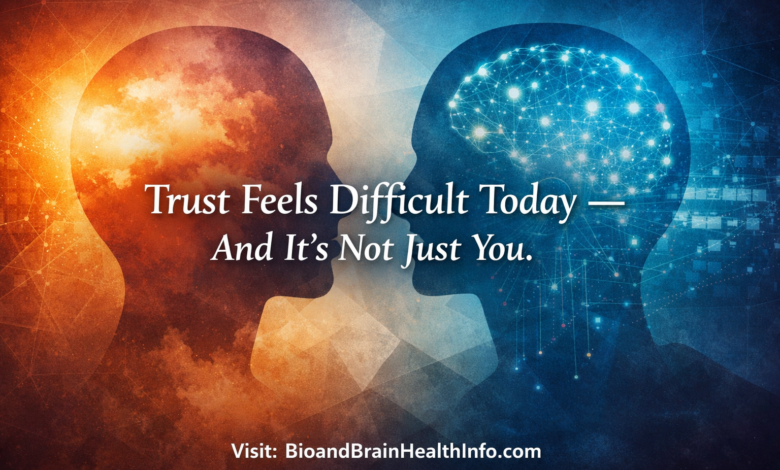
Trust issues causes often go deeper than betrayal alone, because why trust is difficult today is strongly linked to nervous system dysregulation, self doubt and overthinking, and unresolved emotional trust issues that quietly shape how we perceive safety and connection.
Thank you for reading this post, don't forget to subscribe!There was a time when I thought trust was simple. Either you trust someone, or you don’t. Either you are confident, or you are not. But over time, I realized something uncomfortable — trust feels harder today, not because we are weaker, but because we are overstimulated, under-regulated, and constantly comparing ourselves to unrealistic standards.
Trust is not just emotional. It is biological. It is shaped by nervous system dysregulation, past emotional neglect, attachment wounds, and even digital culture.
And sometimes, when we say we have “trust issues,” what we actually have is exhaustion.
Emotional Opening — When Trust Feels Harder Than It Should
There is a quiet confusion that comes when you notice that trust does not come easily anymore. You want to trust. You want to feel secure in your decisions, in your relationships, in your own perception.
And yet, something inside hesitates. You double-check. You overthink. You replay conversations. You question your own judgment. Trust feels fragile.
Not because you are incapable — but because something deeper feels unstable.
This is not weakness.
This is often the beginning of understanding the real trust issues causes beneath the surface.
🔎 Insight:
Trust rarely collapses suddenly; it erodes slowly through internal instability.
⭐ Introduction — Trust Issues Causes
Many people ask, why trust is difficult today? The common answers focus on betrayal, disappointment, or bad experiences. But the deeper trust issues causes are often biological and psychological before they are relational.
This article explores:
- how emotional neglect shapes emotional trust issues
- how nervous system dysregulation makes safety feel uncertain
- why self doubt and overthinking weaken internal validation
- how cultural overstimulation amplifies distrust
- how spiritual misalignment clouds clarity
Research in trauma psychology demonstrates that prolonged stress can alter emotional regulation and perception (van der Kolk, 2014).
Similarly, Polyvagal Theory explains that the nervous system constantly scans for safety or threat, shaping how secure or guarded we feel (Porges, 2011).
Trust is not just relational.
Trust is regulatory.
When regulation weakens, trust weakens.
🔎 Insight: Trust Issues Causes
Trust is a regulated internal state, not just a moral decision.
Please Explore This Blog spiritual-awakening-after-suffering-ego-collapse
My Story — When I Realized It Was Not Just About People
There was a time when I thought my difficulty with trust was about others. I believed I needed better people, clearer communication, stronger boundaries.
But over time, something uncomfortable became clear: even in safe environments, I still felt hesitation.
I would:
- analyze decisions repeatedly
- seek reassurance even after clarity
- doubt myself after making choices
- struggle with internal validation
This was not simply relational distrust. It was internal instability.
Later I understood that nervous system dysregulation was influencing perception. When the body remains mildly activated, the mind becomes cautious.
When the mind becomes cautious, self doubt and overthinking increase. When overthinking increases, emotional trust issues multiply.
It was not that I lacked intelligence.
It was that my system did not feel safe.
That distinction changed everything.
🔎 Insight: Trust Issues Causes
Many trust issues causes originate inside the nervous system, not outside in people.
Inner Search Mirror — Questions That Reveal Hidden Patterns
Pause and reflect honestly.
- Do I struggle to relax even when nothing is wrong?
- Do I replay conversations long after they end?
- Do I need repeated reassurance before feeling stable?
- Do I fear being misunderstood more than being wrong?
- Does uncertainty trigger disproportionate anxiety?
If these resonate, you may not simply have “trust issues.” You may be experiencing the effects of emotional trust issues rooted in dysregulation.
When the nervous system is chronically activated, the brain prioritizes threat detection. That amplifies self doubt and overthinking. It also explains why trust is difficult even when circumstances are stable
Trust requires safety.
Safety requires regulation.
🔎 Insight:
Overthinking is often the mind’s attempt to compensate for emotional instability.
Why This Blog Exists — Awareness Without Blame – Trust Issues Causes
This blog is not written to diagnose or judge. It exists to reframe trust issues causes as systemic rather than personal failure.
Many of us were not taught:
- emotional self-awareness
- healthy attachment modeling
- nervous system regulation
- how to differentiate intuition from anxiety
Without these foundations, internal validation becomes fragile. And when internal validation is fragile, trust — both in self and others — becomes difficult.
Understanding reduces shame.
Structure reduces confusion.
Clarity increases stability.
🔎 Insight: Trust Issues Causes
Trust strengthens when blame decreases and understanding increases.
Reflection Disclaimer – Trust Issues Causes
This is not therapy or diagnosis — only reflection and understanding.
Self-trust and relational trust do not replace professional care. In severe cases of trauma, anxiety, or attachment disruption, professional guidance is support — not weakness.
Take what resonates. Leave what does not.
🔎 Insight: Responsible reflection strengthens credibility.
Please Explore This Blog ego-dissolution-and-inner-clarity-emotionally-free
⭐ The Emotional & Nervous System Architecture of Trust Breakdown
Trust does not disappear randomly.
It weakens through patterned instability.
1️⃣ Emotional Neglect and Insecure Attachment
When early emotions were minimized, dismissed, or misunderstood, the nervous system learned that vulnerability is unsafe. This becomes one of the primary trust issues causes later in life. Emotional trust issues often begin with unmet emotional attunement.
🔎 Insight: When emotional safety was inconsistent, adult trust becomes cautious.
2️⃣ Fear of Abandonment
Fear of abandonment amplifies attachment anxiety. Small relational shifts feel threatening. This hyper-sensitivity feeds self doubt and overthinking.
🔎 Insight: Fear magnifies neutral situations into perceived threats.
3️⃣ Hyper-Responsibility for Others’ Emotions
If you grew up managing others’ moods, you may over-monitor relational stability. This constant scanning activates nervous system dysregulation.
🔎 Insight: Over-functioning in relationships weakens internal security.
4️⃣ Emotional Suppression
Suppressing feelings disrupts internal validation. Without emotional self-awareness, perception becomes distorted, contributing to emotional trust issues.
🔎 Insight: Suppressed emotion returns as mistrust.
5️⃣ Self-Doubt as a Learned Strategy
Self doubt and overthinking often function as protective mechanisms. The brain attempts to prevent mistakes through excessive analysis.
🔎 Insight: Overthinking is fear seeking control.
⭐ The Nervous System’s Role in Why Trust Is Difficult – Trust Issues Causes
Trust requires physiological safety. Without it, perception shifts toward vigilance.
6️⃣ Chronic Sympathetic Activation
When the body stays in mild fight-or-flight, threat detection increases. Polyvagal Theory explains this safety scanning mechanism (Porges, 2011). This biological instability is a core trust issues cause.
🔎 Insight: A vigilant nervous system struggles to relax into trust.
7️⃣ Cortisol and Stress Hormones
Chronic stress elevates cortisol, which impairs emotional regulation. This reinforces self doubt and overthinking patterns.
🔎 Insight: Biochemistry influences belief.
8️⃣ Sleep Deprivation
Sleep disruption weakens executive function and emotional stability. Without regulation, why trust is difficult becomes biologically understandable.
🔎 Insight: Exhaustion amplifies insecurity.
9️⃣ Trauma-Induced Hypervigilance
Trauma alters perception and emotional processing (van der Kolk, 2014). Hypervigilance makes safety feel uncertain even in stable environments.
🔎 Insight: Trauma reshapes perception before behavior.
🔟 Dysregulated Breathing Patterns
Chronic shallow breathing maintains sympathetic activation. Breath instability contributes to nervous system dysregulation and relational tension.
🔎 Insight: Breath influences belief in safety.
Please Explore This Blog trust-issues-causes-modern-world
⭐ Cognitive Distortions That Fuel Emotional Trust Issues – Trust Issues Causes
Perception is not neutral. It is filtered.
1️⃣1️⃣ Catastrophic Thinking
Minor uncertainty escalates into imagined disaster. This strengthens self doubt and overthinking loops.
🔎 Insight: Catastrophizing erodes rational evaluation.
1️⃣2️⃣ Confirmation Bias Toward Betrayal
Once distrust is expected, evidence is filtered selectively. This maintains emotional trust issues.
🔎 Insight: The brain protects existing narratives.
1️⃣3️⃣ Projection
Unresolved insecurity is projected onto others. Trust becomes difficult because internal instability is externalized.
🔎 Insight: Internal fear often disguises itself as external suspicion.
1️⃣4️⃣ Mind Reading Assumptions
Assuming others’ negative intentions increases relational instability.
🔎 Insight: Assumptions reduce clarity.
1️⃣5️⃣ Identity Fragility
When identity is built on performance rather than clarity, rejection feels existential.
🔎 Insight: Fragile identity amplifies distrust.
⭐ Cultural & Environmental Trust Disruption – Trust Issues Causes
Trust does not exist in a vacuum. Culture influences perception.
1️⃣6️⃣ Digital Overstimulation
Constant exposure to curated realities increases comparison and insecurity. This is a modern trust issues cause.
🔎 Insight: Overexposure weakens self-grounding.
1️⃣7️⃣ Performance-Based Worth
Society rewards productivity over authenticity. Performance pressure increases why trust is difficult.
🔎 Insight: Conditional worth weakens unconditional trust.
1️⃣8️⃣ Instant Gratification Culture
Trust requires repetition and patience. Instant reward culture reduces tolerance for slow building.
🔎 Insight: Speed undermines stability.
1️⃣9️⃣ Fear-Based Media
Threat-driven content maintains vigilance. Vigilant systems struggle with relaxation.
🔎 Insight: Chronic fear reduces relational openness.
2️⃣0️⃣ Spiritual Disconnection
When meaning frameworks collapse, identity becomes fragile. Teachings from the Bhagavad Gita emphasize clarity through detachment and Sattva cultivation.
Spiritual misalignment is a subtle trust issues cause because meaning stabilizes perception.
🔎 Insight: Meaning stabilizes trust.
⭐ Repair & Rebuilding Trust Framework – Trust Issues Causes
Rebuilding Trust Is a Systemic Repair, Not a Quick Decision
If trust issues causes are biological, psychological, emotional, and cultural — then rebuilding trust must also be multi-layered.
You cannot repair trust with affirmations while your nervous system remains dysregulated.
You cannot fix emotional trust issues while suppressing emotion.
You cannot eliminate self doubt and overthinking without restructuring perception.
Trust is rebuilt through repeated evidence of internal safety.
🔎 Insight: Trust grows from consistency, not intensity.
Please Explore This Blog ego-dissolution-and-spiritual-transformation
⭐ Dimension 1 — Nervous System Stabilization
Before relational trust improves, nervous system regulation must improve.
1️⃣ Regulate the Body First – Trust Issues Causes
Daily rhythm restores stability:
- fixed sleep schedule
- reduced late-night stimulation
- consistent nutrition
- breathwork (slow exhale focus)
- regular physical movement
When nervous system dysregulation decreases, why trust is difficult becomes less intense. Polyvagal-informed regulation lowers baseline threat perception (Porges, 2011).
🔎 Insight: A calm body makes trust biologically possible.
2️⃣ Interrupt Stress Hormone Cycles – Trust Issues Causes
Chronic cortisol sustains vigilance. Simple interventions:
- morning sunlight exposure
- caffeine reduction
- stress journaling before sleep
- slow diaphragmatic breathing
Reducing physiological stress reduces emotional trust issues.
🔎 Insight: Hormonal stability strengthens perception clarity.
⭐ Dimension 2 — Cognitive Repair – Trust Issues Causes
Trust is also rebuilt in thinking patterns.
3️⃣ Reduce Catastrophic Projection
When self doubt and overthinking begin, ask:
- What evidence supports this fear?
- What evidence contradicts it?
- Am I reacting to past memory or present reality?
This disrupts automatic threat amplification.
🔎 Insight: Questioning fear weakens its authority.
4️⃣ Replace Assumptions With Clarification
Instead of mind-reading, ask directly.
Assumptions fuel trust issues causes.
Clarification rebuilds relational stability.
🔎 Insight: Clarity reduces distortion.
5️⃣ Keep Micro-Commitments to Yourself
Trust with others improves when internal validation improves. Start small:
- Wake at agreed time
- Finish one task fully
- Maintain one boundary
Consistency builds neural evidence of reliability.
🔎 Insight: Small promises build big confidence.
⭐ Dimension 3 — Emotional Integrity – Trust Issues Causes
Trust collapses when emotions are denied.
6️⃣ Name Before You React
Label emotion accurately:
“I feel anxious.”
“I feel threatened.”
“I feel uncertain.”
Emotion labeling reduces amygdala reactivity and improves regulation (Lieberman et al., 2007).
🔎 Insight: Naming emotion reduces emotional escalation.
Please Explore This Blog silent-ego-in-success-and-inner-stability
7️⃣ Stop Self-Betrayal – Trust Issues Causes
Each time you ignore your discomfort to please others, internal trust weakens. Rebuilding requires:
- respecting your limits
- saying no without apology
- acknowledging resentment early
🔎 Insight: Self-abandonment erodes trust faster than external betrayal.
8️⃣ Rebuild Internal Validation
Instead of asking, “Do they approve?”
Ask, “Does this align with my values?”
Internal validation reduces emotional trust issues and dependency patterns.
🔎 Insight: Approval dependence destabilizes identity.
⭐ Dimension 4 — Spiritual Realignment – Trust Issues Causes
Psychological repair stabilizes behavior.
Spiritual clarity stabilizes meaning.
9️⃣ Detach From Outcome – Trust Issues Causes
The Bhagavad Gita teaches in 2.47:
Act without attachment to fruit.
Psychologically, detachment reduces anxiety linked to uncertainty.
Uncertainty tolerance strengthens trust capacity.
🔎 Insight: Attachment magnifies fear; detachment reduces threat perception.
🔟 Cultivate Sattva (Clarity) – Trust Issues Causes
Reduce Rajas (restlessness):
- limit overstimulation
- reduce comparison
Reduce Tamas (inertia):
- structured routine
- moderate discipline
Increase Sattva:
- reflection
- calm environments
- balanced lifestyle
Clarity stabilizes perception. Stable perception rebuilds trust.
🔎 Insight: Clarity is the spiritual foundation of trust.
⭐ Rebuilding Relational Trust – Trust Issues Causes
Trust is relational evidence over time.
1️⃣1️⃣ Gradual Vulnerability
Do not overshare to test loyalty.
Share gradually.
Observe response consistency.
Trust grows in stages.
🔎 Insight: Gradual exposure reduces relational shock.
1️⃣2️⃣ Evaluate Patterns, Not Moments
Single mistakes do not define safety.
Repeated patterns do. Distinguishing isolated behavior from chronic behavior prevents reactive withdrawal.
🔎 Insight: Pattern recognition protects without paranoia.
1️⃣3️⃣ Strengthen Secure Attachment Behaviors
Practice:
- direct communication
- emotional honesty
- consistent boundaries
- calm correction
Secure behaviors reduce emotional trust issues over time.
🔎 Insight: Stability invites stability.
⭐ Identity Reconstruction – Trust Issues Causes
Many trust issues causes stem from identity confusion.
1️⃣4️⃣ Separate Fear From Intuition
Fear feels urgent and loud.
Intuition feels calm and clear.
Learning this distinction reduces self doubt and overthinking.
🔎 Insight: Intuition is quiet; anxiety is loud.
1️⃣5️⃣ Redefine Strength
Strength is not hyper-independence.
Strength is regulated vulnerability.
Reframing strength reduces defensive patterns.
🔎 Insight: Guardedness is not resilience.
⭐ Long-Term Trust Maintenance – Trust Issues Causes
1️⃣6️⃣ Weekly Regulation Audit
Ask:
- Was I reactive or reflective this week?
- Did I act from fear or clarity?
- Did I abandon myself anywhere?
Reflection maintains nervous system regulation.
🔎 Insight: Review prevents relapse into autopilot.
1️⃣7️⃣ Reduce Overexposure to Fear-Based Inputs
Limit:
- negative news cycles
- comparison-driven media
- emotionally triggering content
Overexposure reinforces why trust is difficult.
🔎 Insight: Information diet shapes emotional tone.
1️⃣8️⃣ Accept Imperfection in Relationships
No human offers total predictability.
Expecting perfection amplifies trust issues causes.
🔎 Insight: Acceptance reduces anxiety.
1️⃣9️⃣ Repair Quickly After Conflict
Fast repair reduces emotional residue.
Unresolved conflict reinforces insecurity.
🔎 Insight: Repair strengthens bonds more than avoidance.
2️⃣0️⃣ Return to Regulation Before Conclusion
Never make major trust decisions while dysregulated.
Pause.
Regulate.
Then evaluate.
🔎 Insight: Regulation precedes accurate judgment.
Please Explore This Blog spirituality-as-spirit-science-15-laws-consciousness-suffering
✅ FAQ: Trust Issues, Nervous System & Trust Issues Causes
1) What are the main trust issues causes?
Trust issues causes often include nervous system dysregulation, insecure attachment, emotional neglect, and repeated self doubt and overthinking. When your system stays in protection mode, safety feels uncertain even without real danger.
Support: Trust improves when internal regulation improves.
2) Why trust is difficult even when nothing is wrong?
Why trust is difficult is often not about the situation—it’s about the body’s threat response. If your nervous system is dysregulated, uncertainty can feel unsafe, so the mind scans for problems and creates emotional trust issues.
Support: Calm physiology makes trust more natural.
3) Can nervous system dysregulation cause trust problems?
Yes. Nervous system dysregulation increases vigilance, sensitivity to change, and threat detection. This makes you interpret neutral events as risky and can worsen emotional trust issues over time.
Support: Regulation lowers baseline suspicion.
4) How does self doubt and overthinking affect trust?
Self doubt and overthinking weaken internal validation. When you keep second-guessing your perception, you stop trusting your decisions—then you start doubting others too.
Support: Trust grows when you build evidence of clarity and consistency.
5) Are trust issues always caused by betrayal?
No. Betrayal is one cause, but many trust issues causes come from chronic stress, emotional neglect, inconsistent caregiving, or earlier relationships that trained the mind to expect instability.
Support: The nervous system learns patterns, not facts.
6) How can I fix emotional trust issues?
Start with nervous system regulation: sleep, breathwork (slow exhale), reduced overstimulation, and steady routines. Then address thinking patterns that fuel self doubt and overthinking through evidence-based questioning and clear boundaries.
Support: Trust repair is systemic, not motivational.
7) Why do I trust others but not myself?
This happens when internal consistency is weak—broken promises to yourself, ignored boundaries, or suppressed emotions. Emotional trust issues often begin inside when your system learns, “I can’t rely on me.”
Support: Small commitments rebuild self-trust quickly.
8) How do I know if my trust problem is anxiety-based?
If your trust fear is urgent, looping, and worst-case focused, it is often anxiety-driven and linked to nervous system dysregulation. If it is calm, clear, and specific to repeated evidence, it is discernment.
Support: Anxiety is loud; clarity is quiet.
9) How long does it take to rebuild trust?
There is no fixed timeline. Trust rebuild depends on how long nervous system dysregulation has been present, how strong self doubt and overthinking patterns are, and how consistent safe experiences become.
Support: Trust returns through repetition, not intensity.
10) Can emotional trust issues be healed completely?
Most people can heal significantly, but the goal is not perfect certainty. It is regulated resilience—being able to trust without collapsing when uncertainty appears.
Support: Stable trust is flexible, not rigid.
⭐ Final Authority Close — The Quiet Repair of Trust / Trust Issues Causes
Trust is not disappearing in the modern world.
It is being strained by overstimulation, nervous system dysregulation, emotional suppression, and performance-driven identity. The real trust issues causes are rarely about weakness. They are about instability — biological, psychological, and spiritual.
When the nervous system remains guarded, trust feels dangerous.
When self doubt and overthinking dominate perception, clarity weakens.
When emotional trust issues remain unprocessed, connection feels risky.
When attachment replaces awareness, fear replaces discernment.
Trust does not return through force. It returns through alignment.
Alignment between:
- body and breath
- thought and evidence
- emotion and expression
- action and value
- effort and detachment
The teachings of the Bhagavad Gita remind us that clarity grows when attachment softens. Modern neuroscience reminds us that regulation restores safety. Psychology reminds us that identity stabilizes through consistency.
Integrated spiritual psychology teaches something simple: Trust Issues Causes
Trust strengthens when your system feels safe, your perception feels clear, and your behavior feels aligned.
You do not rebuild trust by convincing yourself.
You rebuild trust by becoming consistent with yourself.
Not perfect.
Consistent.
The world today is loud. The nervous system is overstimulated. Comparison is constant. Fear is monetized.
Under these conditions, why trust is difficult becomes understandable. But understandable does not mean unchangeable.
Trust can be rebuilt.
Slowly. Structurally. Repeatedly.
Not by ignoring fear — but by regulating it. Not by suppressing doubt — but by questioning it. Not by clinging to outcomes — but by aligning with responsibility.
Trust does not need drama. It needs rhythm. And rhythm returns when biology stabilizes, psychology clarifies, emotion integrates, and spirituality anchors perception.
If you feel that trust has been fragile — within yourself or with others — it does not mean you are broken.
It means your system is asking for regulation, clarity, and alignment.
That is repair. And repair is possible.
📌 References & Suggested URLs – Trust Issues Causes
🔹 Trust & Attachment Theory
“Attachment Theory and Close Relationships” — APA Dictionary of Psychology
https://dictionary.apa.org/attachment-theory
🔹 Trust Psychology
Why Trust is Difficult in Relationships — Psychology Today
https://www.psychologytoday.com/us/articles/200906/why-trust-is-so-hard
🔹 Nervous System & Regulation
Polyvagal Theory Explained — Stephen Porges (official resource)
https://www.stephenporges.com/about-polyvagal-theory
🔹 Self-Doubt & Overthinking
How Self-Doubt Impacts Decision-Making — Verywell Mind
https://www.verywellmind.com/how-self-doubt-affects-your-life-5207189
🔹 Emotional Trust Issues / Healing
Emotional Trust and Healing After Betrayal — PsychCentral
https://psychcentral.com/relationships/how-to-rebuild-trust
🔹 Trauma & Trust
Trauma’s Effects on the Brain — National Institute of Mental Health (NIMH)
https://www.nimh.nih.gov/health/topics/post-traumatic-stress-disorder-ptsd
📎 How to Use These in Your Blog – Trust Issues Causes
📍 In-Text Reference Examples
“Attachment insecurity is a key factor in trust issues causes, often rooted in early caregiver patterns (APA Dictionary of Psychology).”
“Psychologists note that why trust is difficult often relates to internal regulation, not relational instability (Psychology Today).”
“Nervous system dysregulation reinforces threat responses and emotional mistrust (Polyvagal Theory).”
📍 At the End — Reference Section – Trust Issues Causes
References
APA Dictionary of Psychology. (n.d.). Attachment theory and close relationships. https://dictionary.apa.org/attachment-theory
Psychology Today. (n.d.). Why trust is so hard. https://www.psychologytoday.com/us/articles/200906/why-trust-is-so-hard
Porges, S. (n.d.). About Polyvagal Theory. https://www.stephenporges.com/about-polyvagal-theory
Verywell Mind. (n.d.). How self-doubt affects your life. https://www.verywellmind.com/how-self-doubt-affects-your-life-5207189
PsychCentral. (n.d.). How to rebuild trust. https://psychcentral.com/relationships/how-to-rebuild-trust
National Institute of Mental Health. (n.d.). Post-traumatic stress disorder. https://www.nimh.nih.gov/health/topics/post-traumatic-stress-disorder-ptsd