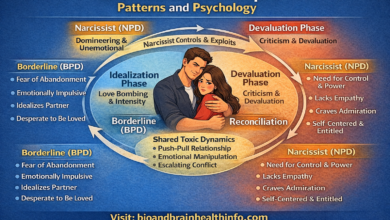
characteristics of narcissistic parenting, authoritarian parenting, emotional manipulation parenting, family power dynamics, attachment issues
The characteristics of narcissistic parenting often involve authoritarian parenting styles, emotional manipulation parenting dynamics, family power dynamics, and attachment issues that shape emotional safety, identity development, and relationship expectations.
“Understanding patterns does not assign blame; it restores clarity.”
“Some childhood environments teach us how to behave before they teach us how to feel, leaving clarity to arrive years later.”
Even after distance, emotional patterns may linger because the nervous system learned structure through control rather than safety.
Even after leaving, the nervous system can stay on alert because it learned unpredictability as normal. Regulation returns through consistency, not force.
INTRODUCTION – Characteristics of Narcissistic Parenting
The characteristics of narcissistic parenting often appear through authoritarian parenting expectations, emotional manipulation parenting patterns, family power dynamics, and attachment issues that create subtle emotional disorientation.
Many people quietly wonder whether their reactions mean they are unstable or overly sensitive. The deeper misunderstanding is confusing learned relational adaptation with identity itself.
Emotional confusion is rarely a flaw; it often reflects growing up within structured emotional hierarchies rather than mutual connection.
This article will help you understand what’s happening — without labels, blame, or self-attack.
REASON FOR THIS BLOG – Characteristics of Narcissistic Parenting
This article explores how power structures within parenting environments shape emotional perception and attachment patterns, helping readers separate internalized relational rules from authentic self-awareness.
INNER SEARCH MIRROR – Characteristics of Narcissistic Parenting
TRAUMA VS NARCISSISM – Characteristics of Narcissistic Parenting
Understanding the characteristics of narcissistic parenting helps reduce self-labeling fears when authoritarian parenting, emotional manipulation parenting, family power dynamics, and attachment issues are discussed.
The difference lies in motivation — not outward behavior.
Trauma Response
Narcissistic Pattern
Reflects after conflict
Protects self-image
Feels remorse
Minimizes impact
Accepts accountability
Redirects responsibility
Personal note: Genuine self-questioning usually signals awareness rather than narcissism.
GROWTH DIRECTION – Characteristics of Narcissistic Parenting
Recognizing the characteristics of narcissistic parenting within authoritarian parenting environments and emotional manipulation parenting patterns shaped by family power dynamics and attachment issues often brings quiet shifts.
Healing may look like noticing emotional pauses, allowing slower reactions, and valuing calm over intensity.
Progress emerges through gentle awareness rather than forceful change.
Personal note: Stability often begins when emotional urgency decreases naturally.
HEALING COMPASS / ORIENTATION TABLE
Stage
Gentle Orientation
Recognition
“My experience has context.”
Separation
“Patterns are learned, not identity.”
Regulation
“Slowing down creates clarity.”
Integration
“I can choose connection differently.”
Protection
“Peace grows through boundaries.”
This compass offers direction without pressure — a steady map supporting emotional stability rather than immediate transformation.
🌿 10 Signs — Characteristics of Narcissistic Parenting: Psychological Impact
1️⃣ Characteristics of Narcissistic Parenting — Emotional Hierarchy Over Mutual Connection
Authoritarian parenting environments may emphasize obedience over emotional dialogue. Children often learn that compliance maintains safety, shaping later difficulty expressing disagreement or trusting personal emotional needs without external validation.
2️⃣ Characteristics of Narcissistic Parenting — Subtle Influence Through Emotional Signals
Emotional manipulation parenting may involve tone shifts, withdrawal, or approval tied to behavior. This creates heightened sensitivity to emotional cues, influencing decision-making and internal confidence long after childhood.
3️⃣ Characteristics of Narcissistic Parenting — Power Structures Shape Identity Roles
Family power dynamics can establish invisible rules about who leads emotionally. Children may adopt adaptive roles that maintain balance but later struggle with autonomy or equal partnership in relationships.
4️⃣ Characteristics of Narcissistic Parenting — Attachment Patterns Become Conditional
Attachment issues may develop when affection feels inconsistent. Emotional closeness becomes linked to performance or emotional regulation of others, creating uncertainty about secure connection.
5️⃣ Approval Functions as Emotional Currency
Authoritarian parenting structures may reinforce achievement as proof of worth. This can create internal pressure where self-value depends on productivity rather than intrinsic identity.
6️⃣ Emotional Expression Feels Strategized
Emotional manipulation parenting may teach children to manage reactions carefully. Over time, authenticity feels risky, leading to internal monitoring before sharing thoughts or feelings openly.
7️⃣ Loyalty Linked to Stability
Family power dynamics sometimes encourage emotional loyalty over personal boundaries. Adults may later confuse self-protection with disconnection because early environments valued unity above individuality.
8️⃣ Fear of Disapproval Shapes Relationships
Attachment issues can manifest as anxiety around rejection or conflict. Individuals may anticipate negative outcomes even in safe relationships, reflecting early relational learning rather than present reality.
9️⃣ Characteristics of Narcissistic Parenting — Emotional Logic Overrides Personal Needs
Authoritarian parenting may prioritize external order over internal experience, leading to difficulty identifying personal preferences or recognizing emotional exhaustion until it becomes overwhelming.
🔟 Calm Feels Unfamiliar Initially
Emotional manipulation parenting environments often normalize intensity. When stability appears later, the nervous system may interpret calm as unfamiliar rather than safe until new patterns develop gradually.
🌱 Closing Note
Recognizing the characteristics of narcissistic parenting and their psychological impact is not about blame but about understanding learned relational patterns. Awareness allows individuals to separate identity from adaptation, creating space for self-compassion and gradual change without urgency or pressure.
🌿 A Whole-System View of the Human Healing Process
🩺 Medical / Ethical Positioning – Characteristics of Narcissistic Parenting
Understanding the characteristics of narcissistic parenting through ethical awareness helps the mind reinterpret threat, confusion, and meaning without turning understanding into blame.
Within emotional manipulation parenting environments, perception may organize around emotional safety rather than objective reality.
Ethical healing emphasizes informed awareness, recognizing internal interpretation patterns while respecting complexity and avoiding simplified judgments about people or past experiences.
Ethical Focus
Interpretation Shift
Safety awareness
Notice internal signals
Context sensitivity
Meaning evolves over time
Autonomy
Personal responsibility grows
Compassionate clarity
Understanding without accusation
Personal note: Ethical insight often reduces pressure to reach absolute conclusions.
🧠 Psychological Layer – Characteristics of Narcissistic Parenting
The characteristics of narcissistic parenting may influence how authoritarian parenting systems create internal rulebooks that shape meaning-making.
Rather than reacting to events themselves, the mind interprets emotional signals through learned expectations about hierarchy, approval, and belonging.
Healing begins when individuals recognize these interpretive frameworks and allow flexibility to replace rigid internal narratives.
Psychological Pattern
Meaning Process
Internal rules
Learned relational scripts
Emotional filtering
Prioritizing harmony
Self-evaluation
Seeking safety signals
Expectation mapping
Predicting outcomes
Personal note: Awareness often shifts interpretation more effectively than analysis alone.
⚡ Nervous System Layer – Characteristics of Narcissistic Parenting
The characteristics of narcissistic parenting may condition the body to respond automatically to subtle relational cues connected to family power dynamics.
Instead of clear threat signals, the nervous system may react to tone, pacing, or silence, activating protective responses rapidly.
These reactions demonstrate biological learning aimed at preserving safety.
Body Response
Protective Purpose
Sudden alertness
Scan relational shifts
Breath changes
Prepare for adjustment
Emotional withdrawal
Reduce exposure
Rapid compliance
Maintain stability
Personal note: The body often recognizes patterns before conscious awareness catches up.
🌱 Mental Health Layer – Characteristics of Narcissistic Parenting
Within the characteristics of narcissistic parenting, attachment issues may influence cognitive energy and emotional clarity over time.
Prolonged relational monitoring can shape attention patterns, making decision-making slower or self-trust feel uncertain.
This reflects adaptive mental workload rather than inability or weakness.
Mental Effect
Gentle Understanding
Decision fatigue
Continuous evaluation
Emotional exhaustion
High internal vigilance
Reduced clarity
Competing internal signals
Self-doubt
Mixed relational feedback
Personal note: Mental fog often signals overload rather than lack of capability.
🧭 Identity Layer (Inner Continuity & Meaning)
Despite the characteristics of narcissistic parenting, identity remains grounded beneath survival adaptations linked to emotional manipulation parenting.
Values and conscience develop independently from learned relational roles.
Healing involves rediscovering internal continuity — recognizing that authenticity persists even when external expectations shaped behavior.
Identity Element
Stable Quality
Values
Inner compass remains steady
Conscience
Guides ethical decisions
Authentic desires
Gradually reappear
Personal meaning
Evolves through insight
Personal note: Identity often feels clearer when external expectations lose authority.
🤝 Reflective Support Layer (Including AI)
Exploring the characteristics of narcissistic parenting can benefit from reflective tools that mirror thought processes without directing conclusions, especially when examining family power dynamics.
Structured journaling, reflective dialogue, or AI-based exploration allows gradual clarification by externalizing internal patterns safely.
Reflective Tool
Supportive Function
Writing reflection
Organize complex thoughts
Dialogue
Regulated perspective shift
AI mirroring
Neutral pattern recognition
Silent pauses
Integrate awareness slowly
Personal note: Reflection becomes transformative when curiosity replaces urgency.
🌌 Integrated Whole-System Perspective – Characteristics of Narcissistic Parenting
The characteristics of narcissistic parenting influence ethical perception, psychological interpretation, bodily reactions, and identity continuity simultaneously.
Healing occurs when these layers align gently rather than through forced change.
Tools like journaling, calm conversation, or AI reflection support gradual reorganization of meaning, helping individuals reinterpret attachment issues and relational expectations without rejecting their history.
A whole-system view recognizes that stability grows through consistent understanding, allowing emotional safety and personal clarity to emerge naturally over time.
Integrated Layer
Healing Direction
Ethical awareness
Contextual understanding
Psychological flexibility
New meaning formation
Nervous system regulation
Consistent safety signals
Reflective support
Gentle integration
Personal note: Whole-system healing often feels like rediscovering balance rather than creating something new.
PERSONAL NOTE – Characteristics of Narcissistic Parenting
Understanding the characteristics of narcissistic parenting helped me realize how authoritarian parenting patterns and emotional manipulation parenting environments can quietly shape perception without obvious awareness.
Family power dynamics and attachment issues often influence how safety is interpreted, yet insight grows when reactions are observed without judgment.
Over time, clarity emerged not through analyzing every memory but by noticing how learned responses operated automatically. Healing began when attention shifted from questioning identity toward understanding adaptation.
This perspective created space for compassion instead of self-criticism and allowed emotional stability to develop gradually.
“Clarity returned for me when I stopped asking what was wrong with me.”
COSMIC / PHILOSOPHICAL TAKEAWAY
“Meaning transforms experience more than explanation ever can.”
The characteristics of narcissistic parenting, along with authoritarian parenting structures, emotional manipulation parenting dynamics, family power dynamics, and attachment issues, reveal how human growth unfolds through interpretation rather than events alone.
Experiences may shape perception, yet awareness allows individuals to reclaim authorship of their internal narrative.
Healing is less about rewriting history and more about integrating understanding into present awareness.
When meaning evolves, emotional confusion begins to soften, allowing identity to emerge beyond inherited relational patterns.
Growth becomes a quiet unfolding where compassion replaces urgency and clarity develops naturally through patient observation.
FAQ SECTION -Characteristics of Narcissistic Parenting
1. What are the main characteristics of narcissistic parenting?
Patterns often include emotional hierarchy, conditional validation, or focus on control rather than mutual emotional connection.
2. Is authoritarian parenting always narcissistic?
No. Some authoritarian styles focus on structure without emotional manipulation; context and impact matter.
3. How does emotional manipulation parenting affect adults later?
It can influence decision-making, emotional boundaries, and self-trust through learned relational expectations.
4. Why do attachment issues develop in these environments?
Inconsistent emotional safety may create uncertainty about connection and trust.
5. Can family power dynamics affect identity development?
Yes. Hierarchical emotional systems may shape self-perception and relational behavior.
6. Is emotional confusion a sign of weakness?
No. It often reflects adaptation to complex relational environments.
7. Can healing happen without confronting parents?
Yes. Internal clarity and emotional regulation can develop independently.
8. Why does calm sometimes feel unfamiliar?
The nervous system may be accustomed to intensity rather than stability.
9. How long does recovery take?
Healing progresses gradually through consistent safety and awareness.
10. Can identity remain intact after difficult parenting?
FINAL CLOSING – Characteristics of Narcissistic Parenting
Recognizing the characteristics of narcissistic parenting and understanding how authoritarian parenting, emotional manipulation parenting patterns, family power dynamics, and attachment issues influence emotional experience is not about blame — it is about clarity.
Nothing is wrong with you for adapting to complex environments. Many responses developed as ways to maintain connection and safety, and with understanding, what once felt automatic can soften gradually.
Healing does not require urgency or perfection; it grows through steady awareness and gentle self-respect. If this article resonated, allow it to be an invitation toward calm reflection rather than pressure for immediate change.
Stability develops slowly, and choosing peace is already meaningful progress.
Written by Lex, founder of Bio & Brain Health Info — exploring the intersections of psychology, spirituality, and emotional recovery through calm, trauma-aware understanding.
✨ Insight & Reflection Healing does not begin when answers arrive — it begins when self-attack stops. Clarity grows in spaces where safety is restored.
🌍 A Moment for You 💡 Pause for two minutes. Let your body settle before moving on.
🧭 If This Article Helped, Your Next Questions Might Be: These questions are natural continuations — not obligations.
✨ Cosmic Family Invitation You are not here by accident. If these words reached you, clarity was already beginning. We rise together — different souls, one journey. 🕊️