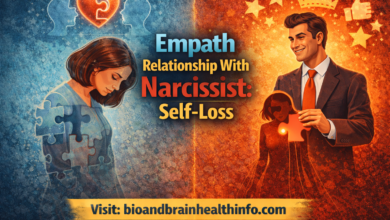
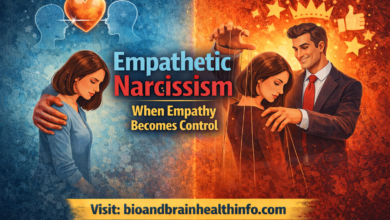
Codependent Relationship With Narcissist: Psychology Behind
Why You Stay Despite Emotional Pain

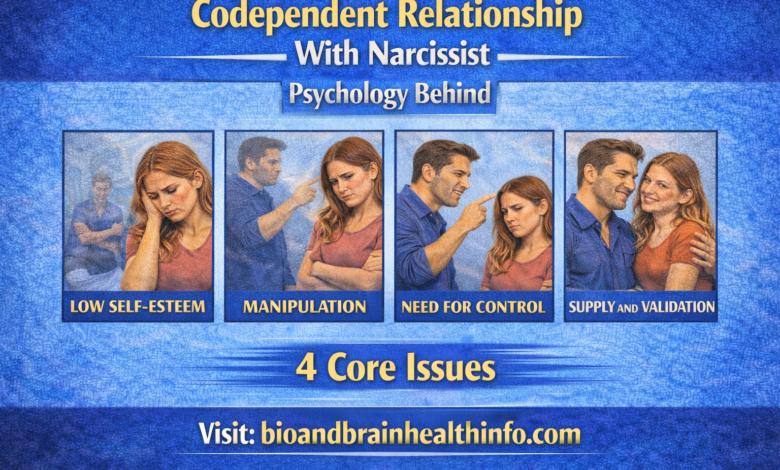
A codependent relationship with narcissist dynamics often forms through trauma bonding relationship patterns, self-worth issues, emotional enmeshment, and boundary struggles that create emotional pain yet make leaving feel confusing rather than simple.
“Sometimes staying is not weakness — it is a nervous system trying to preserve connection while slowly searching for safety.”
Sometimes the heart stays attached long after clarity arrives, not because you are weak but because connection became the language of safety.
Leaving does not instantly reset emotional wiring; it only begins a slow unwinding.
Even after leaving, the nervous system can stay on alert because it learned unpredictability as normal. Regulation returns through consistency, not force.
INTRODUCTION – Codependent Relationship With Narcissist
In a Codependent Relationship With Narcissist, many people quietly fear, “Am I losing myself or imagining the pain?”
Trauma bonding relationship patterns, self-worth issues, emotional enmeshment, and boundary struggles can create emotional confusion that feels personal rather than situational.
The misunderstanding often lies in believing reactions define identity when they may reflect adaptation to relational pressure.
If you feel stuck between love and exhaustion, you are not broken — you are responding to a complex dynamic.
This article will help you understand what’s happening — without labels, blame, or self-attack.
REASON FOR THIS BLOG – Codependent Relationship With Narcissist
To clarify how relational patterns form inside emotionally intense connections and help readers understand the psychology behind staying — separating survival responses from identity without judgment or diagnosis.
INNER SEARCH MIRROR – Codependent Relationship With Narcissist
You may have searched quietly, trying to understand something that feels confusing rather than obvious.
-
Why do I feel responsible for their emotions?
-
Why does leaving feel harder than staying?
-
Why do I doubt my memory after arguments?
-
Why do I feel deeply attached even when hurt?
-
Why do boundaries create anxiety?
-
Why does calm disappear during conflict?
-
Why do I feel both needed and invisible?
Please Explore This Blog communal-narcissism-explained-helping-behavior-hidden-ego
Codependent Relationship With Narcissist: Psychological Adaptation
A Codependent Relationship With Narcissist dynamic often develops through repeated emotional reinforcement where connection and validation become linked with relief from tension.
Trauma bonding relationship cycles strengthen attachment by alternating closeness and distance, shaping learned expectations about safety.
Self-worth issues may grow when approval becomes conditional, creating emotional enmeshment where personal needs blur with relational stability.
This does not mean intention equals weakness; it reflects survival conditioning where the mind adapts to maintain connection, even when the relationship imbalance creates distress.
Codependent Relationship With Narcissist: Nervous System Response
In a Codependent Relationship With Narcissist, the nervous system reacts before conscious thought.
Emotional instability can activate fight, flight, or freeze responses, making reactions feel automatic rather than chosen.
Attachment wounds may sensitize the brain to relational signals, interpreting distance as threat and closeness as relief.
Common early warning signs:
-
Sudden anxiety during silence
-
Overexplaining to restore harmony
-
Physical tension before conflict
-
Emotional exhaustion after interactions
-
Hyperfocus on others’ moods
These responses reflect protective biology, not personal failure.
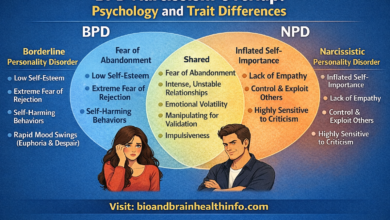
Please Explore This Blog borderline-or-narcissist-psychological-differences
Identity vs Survival Responses
Survival responses protect connection; identity reflects values and conscience.
In a Codependent Relationship With Narcissist, emotional reactions may appear inconsistent, but they often arise from adaptive mechanisms rather than character flaws.
Survival prioritizes safety, reducing conflict or seeking validation to maintain stability. Identity, however, includes empathy, reflection, and internal awareness.
When behavior feels confusing, ask whether it reflects protection or purpose.
Recognizing this distinction reduces shame and restores clarity: adaptation explains reactions, while identity remains deeper and more stable than temporary coping patterns.
Codependent Relationship With Narcissist: Trauma Response vs Narcissism
In a Codependent Relationship With Narcissist, behaviors may look similar but motivation differs.
Trauma bonding relationship patterns often include remorse, self-reflection, and accountability, while protective survival responses arise from attachment wounds.
Emotional enmeshment reflects connection-seeking, not manipulation.
| Trauma Response | Narcissistic Pattern |
|---|---|
| Feels guilt and reflects | Avoids accountability |
| Seeks repair | Defends image |
| Questions self | Blames others |
| Wants mutual safety | Prioritizes control |
Codependent Relationship With Narcissist: Gentle Growth Direction
Healing within a Codependent Relationship With Narcissist begins through awareness rather than force. Trauma bonding relationship awareness slowly reduces emotional enmeshment as self-worth issues soften.
Signs of healing include slower reactions, clearer boundaries without urgency, and choosing peace over emotional instability.
Growth is not sudden separation from patterns but gradual realignment with internal safety and relational clarity.
HEALING COMPASS / ORIENTATION TABLE – Codependent Relationship With Narcissist
| Stage | Orientation |
|---|---|
| Awareness | “I notice patterns without blame.” |
| Understanding | “My reactions have meaning.” |
| Regulation | “Slowing down is safe.” |
| Rebuilding | “Boundaries can feel calm.” |
| Integration | “Identity stays steady beyond conflict.” |
Please Explore This Blog borderline-vs-narcissist-clinical-comparison
🔟 10 Signs — Codependent Relationship With Narcissist: Psychology Behind Emotional Patterns
Trauma Bonding Relationship
In a Codependent Relationship With Narcissist, trauma bonding relationship patterns create intense attachment through alternating closeness and distance. Emotional highs and lows reinforce connection even when discomfort appears, making separation feel psychologically difficult despite awareness of imbalance.
Self-Worth Issues
Self-worth issues develop when validation depends on another’s approval. Within a Codependent Relationship With Narcissist, personal value becomes linked to keeping harmony, causing individuals to prioritize emotional safety of the other over internal stability.
Emotional Enmeshment
Emotional enmeshment occurs when identity boundaries blur. In a Codependent Relationship With Narcissist, feelings of responsibility for another’s mood increase dependency, creating confusion between empathy and over-functioning within relational identity.
Boundary Struggles
Boundary struggles reflect difficulty separating needs. A Codependent Relationship With Narcissist often leads to delayed self-expression, where maintaining connection feels safer than asserting limits, reinforcing control-based relational dynamics.
Dependency Cycle
The dependency cycle repeats through reassurance-seeking followed by withdrawal. Inside a Codependent Relationship With Narcissist, emotional regulation becomes externally focused, strengthening attachment wounds over time.
Narcissistic Validation
Narcissistic validation reinforces emotional imbalance. In a Codependent Relationship With Narcissist, brief moments of approval activate hope, deepening trauma bonding relationship patterns and sustaining attachment despite instability.
Emotional Instability
Emotional instability appears as rapid shifts between closeness and doubt. Within a Codependent Relationship With Narcissist, nervous system responses become reactive, reflecting survival adaptation rather than personality weakness.
Conflict Cycles
Conflict cycles repeat because unresolved attachment wounds trigger defensive communication. A Codependent Relationship With Narcissist often includes reconciliation without structural change, reinforcing emotional enmeshment patterns.
Rescue Patterns
Rescue patterns arise from empathy combined with self-worth issues. In a Codependent Relationship With Narcissist, attempts to fix or stabilize the partner replace self-focus, sustaining relational imbalance.
Identity Confusion
Identity confusion develops when personal values are overshadowed by relational survival. A Codependent Relationship With Narcissist gradually shifts attention from inner stability toward external approval, creating emotional dependency.
🌿 Closing Note
Understanding the psychology behind a Codependent Relationship With Narcissist does not assign blame. Patterns form through attachment wounds and survival conditioning. Awareness gently separates identity from reaction, allowing clarity to emerge without self-attack or urgency.
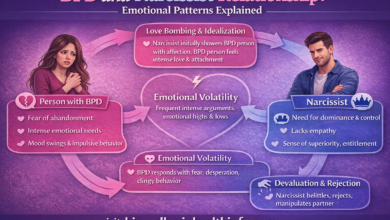
Please Explore This Blog bpd-and-narcissist-couple-relationship-cycle-explained
🌿 A Whole-System View of the Human Healing Process
Medical / Ethical Positioning – Codependent Relationship With Narcissist
In a Codependent Relationship With Narcissist, ethical understanding separates human response from pathology. The mind interprets threat through context, not weakness.
Confusion often reflects relational unpredictability rather than disorder.
Ethical positioning recognizes survival intelligence while avoiding labeling, supporting clarity without assigning blame or diagnosis.
| Interpretation Layer | Ethical Meaning |
|---|---|
| Threat scanning | Brain predicts safety risks |
| Confusion response | Meaning-making under stress |
| Emotional intensity | Adaptive survival signaling |
| Withdrawal or compliance | Context-driven protection |
Psychological Layer – Codependent Relationship With Narcissist
A Codependent Relationship With Narcissist reshapes cognitive frameworks through relational learning.
The mind interprets ambiguity as responsibility, linking attachment wounds to self-evaluation.
Psychological patterns form through repetition, not intention, causing individuals to overanalyze reactions while under-recognizing environmental influence.
| Psychological Process | Function |
|---|---|
| Pattern prediction | Anticipating emotional shifts |
| Hyper-responsibility | Attempting relational stability |
| Meaning distortion | Internalizing external behavior |
| Cognitive looping | Searching for certainty |
Nervous System Layer – Codependent Relationship With Narcissist
Within a Codependent Relationship With Narcissist, the nervous system prioritizes safety automatically.
The body reacts before conscious thought, interpreting subtle cues as signals of risk or closeness.
These responses are protective reflexes, not personal failure.
| Body Response | Protective Purpose |
|---|---|
| Fight activation | Regain control |
| Flight response | Reduce overwhelm |
| Freeze state | Prevent escalation |
| Fawn behavior | Maintain connection safety |
Mental Health Layer – Codependent Relationship With Narcissist
Long-term exposure to a Codependent Relationship With Narcissist can influence mental clarity by shifting attention toward emotional monitoring.
Energy becomes focused on predicting reactions, which gradually reduces self-trust and internal certainty, even when insight exists.
| Impact Area | Observable Effect |
|---|---|
| Attention focus | Hypervigilance |
| Emotional regulation | Increased fatigue |
| Self-evaluation | Doubt amplification |
| Decision-making | Delayed clarity |
Identity Layer (Inner Continuity & Meaning)
Despite relational pressure within a Codependent Relationship With Narcissist, identity remains intact beneath adaptation.
Values and conscience continue functioning even when survival responses dominate.
Healing involves rediscovering continuity between action and authentic self rather than rebuilding identity from zero.
| Identity Element | Inner Stability Role |
|---|---|
| Core values | Internal compass |
| Moral awareness | Reflection capacity |
| Emotional sensitivity | Empathy strength |
| Personal meaning | Direction toward growth |
Reflective Support Layer (Including AI)
Support tools can help individuals in a Codependent Relationship With Narcissist observe thoughts without immediate reaction.
Reflective practices mirror internal experience, creating distance between emotion and identity.
Journaling, dialogue, or AI-based reflection encourages awareness without directing conclusions, allowing self-generated insight.
| Reflective Tool | Support Function |
|---|---|
| Journaling | Externalizes thoughts |
| Guided conversation | Clarifies perception |
| AI reflection | Neutral mirroring |
| Somatic check-ins | Body awareness integration |
Integration Layer — Whole-System Healing Perspective
Healing from a Codependent Relationship With Narcissist occurs when multiple layers align gradually rather than through sudden change.
Medical ethics maintain safety, psychology reframes meaning, the nervous system learns regulation through repetition, and identity reconnects with core values.
Reflective tools support integration by creating steady observation spaces. Progress often appears subtle: reduced urgency, increased internal clarity, and greater tolerance for uncertainty.
Whole-system healing focuses on restoring coherence between body responses, thoughts, and values rather than eliminating emotional experience.
| Integration Focus | Healing Outcome |
|---|---|
| Awareness | Reduced confusion |
| Regulation | Greater nervous system safety |
| Meaning-making | Restored perspective |
| Identity alignment | Sustainable growth |
Please Explore This Blog bpd-and-narcissist-relationship-dynamics-explained
PERSONAL NOTE – Codependent Relationship With Narcissist
Understanding a Codependent Relationship With Narcissist did not begin for me through theory alone but through observing how intelligent people slowly question their own emotional reality.
The shift happens quietly: you stop trusting your internal signals and start measuring yourself through relational stability.
What became clear over time is that patterns like trauma bonding relationship and emotional enmeshment are not signs of weakness but adaptations to unpredictability.
Insight grows when we stop asking why we stayed and start asking what the nervous system learned about safety.
Healing felt less like “leaving a person” and more like reconnecting with internal clarity.
“Clarity returned for me when I stopped asking what was wrong with me.”
COSMIC / PHILOSOPHICAL TAKEAWAY
“The soul does not lose itself in difficult relationships; it learns where illusion ends and truth begins.”
A Codependent Relationship With Narcissist often reflects deeper human themes — attachment, longing for validation, and the search for belonging.
Patterns such as trauma bonding relationship, emotional enmeshment, self-worth issues, and boundary struggles reveal how humans naturally seek connection even under stress.
From a wider perspective, healing is not rejection of past love but integration of experience into wisdom. Growth happens when awareness replaces unconscious repetition.
The universe does not punish sensitivity; it refines perception through experience.
Over time, clarity returns not through force but through gentle recognition of what aligns with authentic identity and what was learned through survival.
Please Explore This Blog bpd-and-npd-explained-differences-overlap
FINAL CLOSING – Codependent Relationship With Narcissist
A Codependent Relationship With Narcissist can leave lasting emotional echoes, yet these responses are signs of adaptation rather than personal failure.
Trauma bonding relationship patterns and emotional enmeshment often develop when safety feels uncertain, and recognizing them is already part of healing.
Regulation grows slowly through consistency, not pressure. Self-worth issues and boundary struggles soften when internal awareness replaces urgency.
Nothing is wrong with you for responding to intense relational dynamics; your nervous system learned survival in complex environments.
Healing invites patience, curiosity, and self-respect — not perfection. You do not need to rush toward resolution; clarity unfolds naturally when safety becomes familiar again.
FAQ SECTION – Codependent Relationship With Narcissist
1. Why does a codependent relationship with narcissist feel addictive?
Because emotional highs and lows activate reward and stress cycles in the nervous system, creating attachment reinforcement.
2. Is trauma bonding relationship the same as love?
No. Trauma bonding involves cycles of relief after distress, which can feel intense but differs from stable emotional safety.
3. Why is leaving emotionally difficult even when I know it’s unhealthy?
Emotional enmeshment and attachment patterns link identity and connection, making separation feel like loss of stability.
4. Do self-worth issues cause codependency?
They can contribute, but relational learning and attachment history also play significant roles.
5. Can a codependent narcissist relationship become healthy?
Change requires awareness, accountability, and consistent behavioral shifts from both individuals.
6. Why do I keep trying to fix the relationship?
Rescue patterns may develop when connection feels tied to personal value or safety.
7. How do boundary struggles form?
When boundaries were ignored or unsafe earlier in life, the nervous system may prioritize harmony over self-protection.
8. Does emotional instability mean I am the problem?
No. Emotional reactivity often reflects nervous system adaptation rather than identity flaws.
9. Can healing happen without cutting contact immediately?
For some people, internal clarity and boundary development can begin even before external changes.
10. What is the first sign of recovery?
Increased self-awareness and reduced urgency to react emotionally.
FINAL CLOSING – Codependent Relationship With Narcissist
If you recognize yourself within a Codependent Relationship With Narcissist, remember that awareness itself signals movement toward healing.
Trauma bonding relationship patterns, emotional enmeshment, self-worth issues, and boundary struggles formed through adaptation, not failure.
Nothing is wrong with you for reacting to harm. With safety and understanding, what adapted can soften again.
Healing is not about erasing the past but learning to relate to yourself with steadiness. Take small moments to pause, breathe, and notice your internal experience without judgment.
Growth unfolds through gentle consistency rather than dramatic change.
🌿 Final Blog Footer — Bio & Brain Health Info
Written by Lex, founder of Bio & Brain Health Info — exploring the intersections of psychology, spirituality, and emotional recovery through calm, trauma-aware understanding.
✨ Insight & Reflection
Healing does not begin when answers arrive — it begins when self-attack stops.
Clarity grows in spaces where safety is restored.
🧠 Learn
Narcissism • Emotional Healing • Spiritual Psychology
🌍 A Moment for You
💡 Pause for two minutes. Let your body settle before moving on.
🧭 If This Article Helped, Your Next Questions Might Be:
• How trauma bonding forms in relationships
• Identity vs survival responses after emotional abuse
• Nervous system healing after relational trauma
✨ Cosmic Family Invitation
You are not here by accident. If these words reached you, clarity was already beginning.
We rise together — different souls, one journey. 🕊️
📩 Connect with us
info@bioandbrainhealthinfo.com
Telegram: @bioandbrainhealthinfo
WhatsApp Channel: Punehealth
Lex | Bio & Brain Health Info
Cosmic Family — Different Souls, One Journey.
REFERENCES & CITATION – Codependent Relationship With Narcissist
-
American Psychological Association — Narcissistic Personality Overview
https://www.apa.org -
National Institute of Mental Health — Personality Disorders
https://www.nimh.nih.gov -
Cleveland Clinic — Codependency and Relationship Patterns
https://my.clevelandclinic.org -
Psychology Today — Trauma Bonding Explained
https://www.psychologytoday.com -
Harvard Health Publishing — Emotional Regulation and Attachment
https://www.health.harvard.edu -
Verywell Mind — Narcissistic Relationship Dynamics
https://www.verywellmind.com -
Mayo Clinic — Mental Health and Relationship Stress
https://www.mayoclinic.org -
National Domestic Violence Hotline — Emotional Abuse Patterns
https://www.thehotline.org -
Journal of Personality Disorders (Guilford Press)
https://guilfordjournals.com -
Frontiers in Psychology — Attachment and Trauma Research
https://www.frontiersin.org