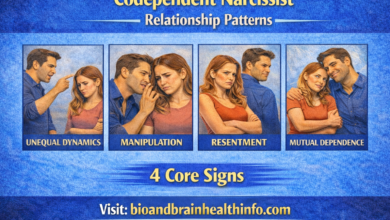
Codependent and Narcissist Relationship Cycle
The Push-Pull Dynamic Between Codependent and Narcissist

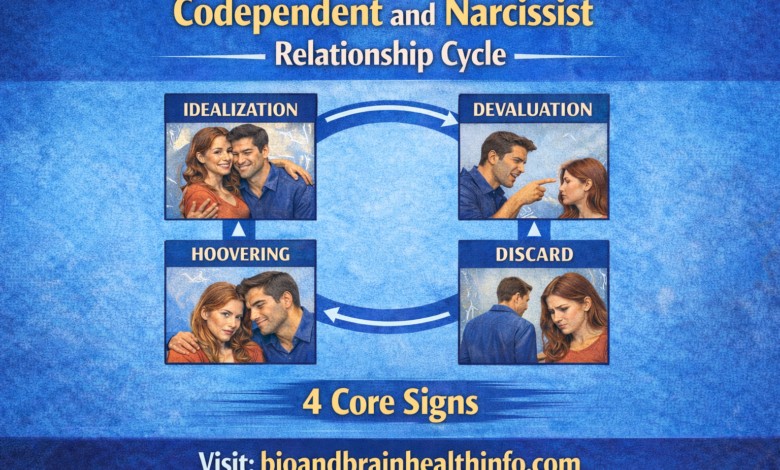
The codependent and narcissist relationship often develops through attachment wounds that create an emotional cycle shaped by toxic bonding and control patterns, leading many people to question their reactions rather than understanding the relational dynamic itself.
Thank you for reading this post, don't forget to subscribe!“Sometimes the strongest emotional pull is not love or weakness — but a nervous system trying to find safety inside a familiar cycle.”
“Some relationships feel impossible to leave not because you are weak — but because your nervous system learned connection through unpredictability and emotional intensity. Even distance does not immediately silence what the body learned.”
Even after leaving, the nervous system can stay on alert because it learned unpredictability as normal. Regulation returns through consistency, not force.
INTRODUCTION – Codependent and Narcissist Relationship
The codependent and narcissist relationship cycle explained often creates deep confusion, especially when attachment wounds combine with emotional cycle patterns, toxic bonding, and control patterns that make people question their own identity.
Many readers fear: “Am I losing myself, or is something wrong with me?”
The truth is that these reactions usually reflect adaptation, not personal failure. Emotional intensity can blur boundaries between trauma responses and identity, leading to self-blame instead of understanding.
This article will help you understand what’s happening — without labels, blame, or self-attack.
REASON FOR THIS BLOG – Codependent and Narcissist Relationship
This article exists to clarify why the codependent and narcissist relationship dynamic creates confusion and emotional loops, helping readers separate attachment-driven reactions from identity — without diagnosis or judgment.
INNER SEARCH MIRROR -Codependent and Narcissist Relationship
You might recognize yourself here if you have wondered:
Why do I feel pulled back even after conflict?
Why does emotional closeness feel intense and unstable?
Am I responsible for fixing the relationship imbalance?
Why does separation feel physically uncomfortable?
Is this attachment wounds or real connection?
Why do cycles repeat even when I understand them?
Why does calm sometimes feel unfamiliar?
Please Explore This Blog
PSYCHOLOGICAL EXPLANATION – Codependent and Narcissist Relationship
The codependent and narcissist relationship often develops through attachment wounds where emotional cycle patterns reinforce toxic bonding and control patterns over time.
Psychological adaptation occurs when one partner learns to regulate through connection while the other maintains emotional dominance.
This does not mean intention is always harmful; instead, behaviors become reinforced because they temporarily reduce anxiety or restore familiar relational roles.
| Adaptation | Psychological Meaning |
|---|---|
| Over-giving | Seeking stability |
| Withdrawal | Protecting autonomy |
Personal note: Many people misinterpret adaptation as weakness, when it is often survival learning.
NERVOUS SYSTEM EXPLANATION – Codependent and Narcissist Relationship
In a codependent and narcissist relationship, attachment wounds and emotional cycle intensity activate the nervous system before conscious thought, especially during toxic bonding moments or control pattern conflicts.
Fight, flight, freeze, or fawn responses arise automatically because the brain associates emotional unpredictability with danger and connection simultaneously.
Common nervous system signs:
Sudden anxiety during distance
Relief after reconciliation
Emotional over-focus on partner reactions
Difficulty resting after conflict
Rapid mood shifts
Personal note: The body reacts first; understanding often arrives later.
Identity vs Survival Responses – Codependent and Narcissist Relationship
Within the codependent and narcissist relationship cycle, attachment wounds and emotional cycle patterns can blur identity with survival behavior.
Survival responses aim to maintain connection or reduce emotional threat, while identity reflects deeper values and conscience.
Over-functioning, rescuing, or adapting does not define who someone is; these behaviors represent learned strategies shaped by toxic bonding and control patterns.
Survival protects safety.
Identity expresses truth.
When this distinction becomes clear, self-blame reduces and awareness strengthens.
Please Explore This Blog
TRAUMA VS NARCISSISM -Codependent and Narcissist Relationship
Within the codependent and narcissist relationship cycle, attachment wounds, emotional cycle repetition, toxic bonding, and control patterns can make trauma responses look similar to narcissistic behavior.
The difference lies in motivation.
| Trauma-Based Response | Narcissistic Pattern |
|---|---|
| Shows remorse | Protects self-image |
| Reflects inward | Avoids reflection |
| Accepts accountability | Shifts responsibility |
Personal note: The presence of genuine reflection usually indicates healing rather than narcissism.
GROWTH DIRECTION -Codependent and Narcissist Relationship
Understanding the codependent and narcissist relationship cycle allows attachment wounds, emotional cycle awareness, toxic bonding recognition, and control pattern insight to soften reactivity.
Growth often appears as slower emotional responses, clearer boundaries, and a quiet shift toward internal steadiness.
Healing tends to unfold through gentleness, not urgency.
Personal note: Real progress often feels calmer rather than dramatic.
HEALING COMPASS / ORIENTATION TABLE
| Stage | Gentle Orientation |
|---|---|
| Awareness | “I see the emotional cycle clearly.” |
| Understanding | “My reactions have context.” |
| Regulation | “Slowing creates stability.” |
| Integration | “New choices become possible.” |
| Protection | “Peace grows through boundaries.” |
This compass translates insight into grounded direction, supporting stability without pressure or forcing change.
Please Explore This Blog
10 Signs of Codependent and Narcissist Relationship Cycle
1️⃣ Emotional High–Low Pattern
The codependent and narcissist relationship often begins with strong emotional closeness followed by sudden distance. Attachment wounds may intensify emotional highs and lows, creating confusion between genuine intimacy and nervous system activation linked to earlier relational experiences.
2️⃣ Rescue and Withdrawal Loop
An emotional cycle develops where one partner attempts repair or rescue while the other withdraws or dominates. The pattern feels familiar rather than healthy, reinforcing dependency even when both individuals recognize imbalance.
3️⃣ Intense Bond Despite Conflict
Toxic bonding occurs when emotional intensity creates a strong attachment despite recurring distress. The connection feels meaningful yet unstable, making separation emotionally difficult even when awareness grows.
4️⃣ Power Shifts in Interaction
Control patterns may appear through subtle emotional shifts, such as approval withdrawal or conditional validation. These dynamics create uncertainty that reinforces the relational cycle rather than resolving it.
5️⃣ Over-Responsibility for Harmony
Attachment wounds can lead one partner to assume responsibility for maintaining emotional stability. This behavior often develops from early learning where safety depended on emotional adaptation.
6️⃣ Repeating Conflict Themes
The emotional cycle repeats similar disagreements with different details but identical emotional outcomes. The pattern maintains familiarity even when both partners attempt change.
7️⃣ Strong Pull After Distance
Periods of separation often increase emotional longing due to toxic bonding reinforcement. The nervous system associates reconciliation with relief, strengthening attachment despite unresolved issues.
8️⃣ Emotional Monitoring
Control patterns may lead to constant monitoring of mood, tone, or reactions. This hyper-awareness develops as a protective adaptation rather than conscious choice.
9️⃣ Difficulty Defining Self
Attachment wounds can blur identity boundaries, making it harder to distinguish personal needs from relational expectations. Emotional alignment becomes prioritized over authenticity.
🔟 Push–Pull Relationship Rhythm
The codependent and narcissist relationship cycle often stabilizes around a push–pull rhythm where closeness and distance alternate, maintaining connection through intensity rather than consistency.
🌿 Closing Note
Recognizing these signs does not mean diagnosing anyone; it simply reveals relational patterns shaped by attachment wounds, emotional cycle repetition, toxic bonding, and control patterns. Awareness reduces self-blame and allows understanding to grow gradually, creating space for calmer choices without urgency or pressure.
Please Explore This Blog
🌿 A Whole-System View of the Human Healing Process
Medical / Ethical Positioning – Codependent and Narcissist Relationship
Within the codependent and narcissist relationship cycle, attachment wounds or emotional cycle confusion can lead people to interpret threat through past experiences rather than present reality.
Ethical understanding avoids diagnosis and focuses on patterns that shape perception.
Healing begins by recognizing how meaning is constructed internally rather than imposed externally.
| Ethical Focus | Meaning |
|---|---|
| Observation | Understanding patterns without labeling |
| Context | Behaviour linked to history |
| Safety | Regulation before interpretation |
| Responsibility | Awareness without blame |
Personal note: Ethical clarity protects both compassion and boundaries.
Psychological Layer – Codependent and Narcissist Relationship
In the codependent and narcissist relationship, toxic bonding or control patterns influence how the mind interprets emotional signals.
The brain often assigns meaning based on familiarity rather than accuracy, reinforcing relational expectations.
Psychological healing involves noticing interpretations rather than immediately believing them.
| Psychological Process | Role |
|---|---|
| Pattern recognition | Identifies repeated dynamics |
| Emotional memory | Guides perception |
| Meaning-making | Shapes reactions |
| Cognitive reframing | Expands perspective |
Personal note: Understanding interpretation softens self-judgment.
Nervous System Layer – Codependent and Narcissist Relationship
During a codependent and narcissist relationship cycle, attachment wounds and emotional cycle triggers activate automatic bodily responses.
The nervous system reacts quickly to protect safety, often before conscious thought emerges.
Regulation develops through predictable experiences rather than sudden change.
| Nervous Response | Protective Function |
|---|---|
| Fight | Defending boundaries |
| Flight | Creating distance |
| Freeze | Minimizing threat |
| Fawn | Maintaining connection |
Personal note: The body protects first; awareness follows later.
Mental Health Layer – Codependent and Narcissist Relationship
In the codependent and narcissist relationship, prolonged emotional intensity can influence clarity, energy, and self-trust.
Toxic bonding patterns may create mental fatigue or confusion, not because something is wrong with the person but because chronic stress narrows perspective.
| Mental Impact | Experience |
|---|---|
| Emotional exhaustion | Reduced resilience |
| Rumination | Repetitive thinking |
| Self-doubt | Uncertain identity |
| Hyper-focus | Constant monitoring |
Personal note: Mental strain often reflects adaptation, not weakness.
Identity Layer (Inner Continuity & Meaning)
Even within a codependent and narcissist relationship cycle, deeper identity remains intact beneath emotional adaptation.
Control patterns may influence behaviour, but values and conscience continue to exist independently of survival strategies.
| Identity Aspect | Meaning |
|---|---|
| Values | Inner compass |
| Conscience | Moral awareness |
| Authenticity | True self beyond roles |
| Agency | Capacity to choose differently |
Personal note: Identity remains stable even when behaviour adapts.
Reflective Support Layer (Including AI)
Reflection tools such as journaling, supportive conversation, or AI can help individuals observe emotional cycle patterns without directing conclusions.
In a codependent and narcissist relationship, reflective distance allows thoughts to become visible rather than overwhelming.
| Reflective Tool | Support Function |
|---|---|
| Journaling | Externalizing thoughts |
| Dialogue | Expanding perspective |
| AI reflection | Structured mirroring |
| Quiet pauses | Emotional integration |
Personal note: Reflection offers clarity without forcing decisions.
Please Explore This Blog
Integrated Whole-System Reflection – Codependent and Narcissist Relationship
Healing from a codependent and narcissist relationship rarely occurs through a single insight; it unfolds across emotional cycle awareness, attachment wounds understanding, and gradual shifts away from toxic bonding and control patterns.
Whole-system healing means allowing mind, body, and identity to reorganize at their own pace.
Tools like reflective conversation or journaling create gentle structure where new meanings can emerge without pressure, enabling stability to develop naturally rather than through force.
| Whole-System Element | Role in Healing |
|---|---|
| Awareness | Recognizing patterns |
| Regulation | Supporting safety |
| Integration | Aligning understanding |
| Reflection | Creating insight |
Personal note: Healing often feels like quiet alignment rather than dramatic transformation.
PERSONAL NOTE – Codependent and Narcissist Relationship
Understanding the codependent and narcissist relationship cycle changed how I viewed emotional intensity and attachment wounds.
For a long time, emotional cycle confusion can feel like personal failure rather than learned survival shaped by toxic bonding or control patterns.
What helped most was recognizing that reactions often develop as protective adaptations, not identity flaws. Clarity did not arrive through forcing decisions but through slowly observing patterns without self-attack.
When awareness replaces judgment, emotional energy shifts naturally toward stability. Growth became less about changing others and more about understanding internal responses with patience.
Insight emerges quietly when we stop trying to fix ourselves and instead begin listening to what the nervous system is communicating.
COSMIC / PHILOSOPHICAL TAKEAWAY
“Human relationships mirror unfinished lessons — not to trap us, but to reveal what seeks understanding.”
The codependent and narcissist relationship cycle reflects deeper themes of attachment wounds, emotional cycle repetition, toxic bonding, and control patterns that arise wherever safety and identity meet.
Philosophically, these dynamics reveal how humans search for belonging through familiarity, even when familiarity brings discomfort.
Growth is not about rejecting connection but understanding the patterns that shape it. When awareness expands, relationships become teachers rather than enemies.
Healing is less about escaping experience and more about seeing clearly enough to choose differently.
Every cycle carries information; when understood gently, it becomes a doorway toward self-trust rather than self-blame.
FINAL CLOSING – Codependent and Narcissist Relationship
The codependent and narcissist relationship cycle does not define who you are. Attachment wounds, emotional cycle intensity, toxic bonding, and control patterns are learned relational responses, not permanent identity traits.
Nothing is wrong with you for reacting strongly to emotional environments that shaped your nervous system over time. Healing often looks quiet — slowing down, noticing patterns, and allowing clarity to replace urgency.
You do not need to rush decisions or prove strength through immediate change. Understanding itself is already movement toward stability.
If this article offered recognition, let that recognition settle gently. Awareness grows through patience, and peace emerges when safety becomes more familiar than struggle.
FAQ SECTION – Codependent and Narcissist Relationship
1. Why does a codependent and narcissist relationship feel addictive?
Because emotional cycle intensity and attachment wounds create strong psychological reinforcement through alternating closeness and distance.
2. Is codependency the same as weakness?
No. It usually reflects adaptive strategies developed to maintain connection or emotional safety.
3. Can toxic bonding feel like real love?
Yes. Emotional intensity can feel meaningful, even when relational patterns remain unstable.
4. Why is leaving emotionally difficult even when I know the pattern?
The nervous system associates familiarity with safety, making separation feel threatening.
5. Does recognizing control patterns mean diagnosing someone?
No. Observing patterns focuses on understanding dynamics, not labeling individuals.
6. Can both partners change the relationship dynamic?
Change becomes possible when awareness and regulation increase, though outcomes vary.
7. Why do attachment wounds affect adult relationships?
Early relational learning shapes expectations of closeness, conflict, and safety.
8. How do emotional cycles repeat even after understanding them?
Habitual nervous system responses continue until new experiences reinforce different patterns.
9. Is recovery about ending relationships?
Not necessarily. Healing focuses on clarity and stability rather than specific outcomes.
10. What is the first sign of healing?
Reduced urgency and increased ability to observe emotions without immediate reaction.
🌿 FINAL BLOG FOOTER — Bio & Brain Health Info
Written by Lex, founder of Bio & Brain Health Info — exploring the intersections of psychology, spirituality, and emotional recovery through calm, trauma-aware understanding.
✨ Insight & Reflection
Healing does not begin when answers arrive — it begins when self-attack stops.
Clarity grows in spaces where safety is restored.
🧠 Learn
Narcissism • Emotional Healing • Spiritual Psychology
🌍 A Moment for You
💡 Pause for two minutes. Let your body settle before moving on.
🧭 If This Article Helped, Your Next Questions Might Be:
These questions are natural continuations — not obligations.
✨ Cosmic Family Invitation
You are not here by accident. If these words reached you, clarity was already beginning.
We rise together — different souls, one journey. 🕊️
📩 Connect with us
info@bioandbrainhealthinfo.com
Telegram: @bioandbrainhealthinfo
WhatsApp Channel: Punehealth
Lex | Bio & Brain Health Info
Cosmic Family — Different Souls, One Journey.
REFERENCES & CITATIONS – Codependent and Narcissist Relationship
American Psychological Association — Narcissistic Personality Overview
https://www.apa.orgCleveland Clinic — Codependency Explained
https://my.clevelandclinic.orgNational Institute of Mental Health — Personality Disorders
https://www.nimh.nih.govPsychology Today — Trauma Bonding Research Articles
https://www.psychologytoday.comVerywell Mind — Attachment Styles Overview
https://www.verywellmind.comHarvard Health Publishing — Stress and Emotional Regulation
https://www.health.harvard.eduNICABM — Trauma and Nervous System Learning
https://www.nicabm.comPubMed Research Database — Relationship Psychology Studies
https://pubmed.ncbi.nlm.nih.govThe Gottman Institute — Relationship Patterns Research
https://www.gottman.comStanford Medicine — Emotional Processing Studies
https://med.stanford.edu