AI for Narcissistic Abuse Recovery: Trauma Bond Help & Signs
Can AI Help You See a Trauma Bond?

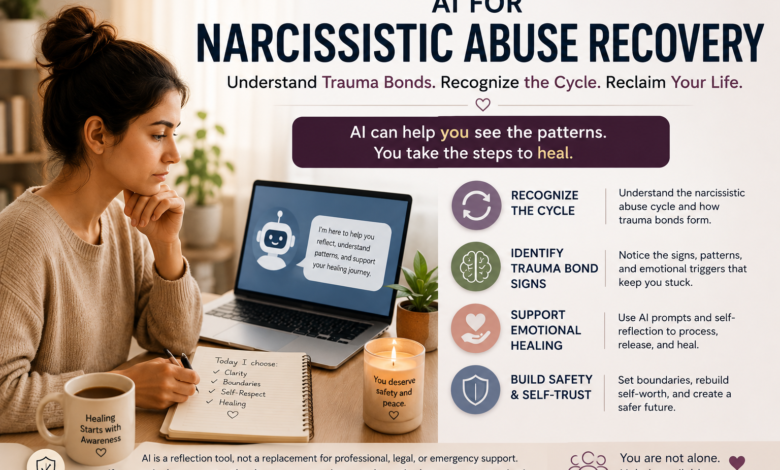
If you are searching for AI for narcissistic abuse recovery, you may not be looking for a machine to tell you what to do. You may be looking for clarity because your mind feels confused, your emotions feel attached, and the same relationship pattern keeps repeating.
Thank you for reading this post, don't forget to subscribe!This blog is important because trauma bond help is not only about “leaving” or “moving on”; it is about understanding why the narcissistic abuse cycle can make pain feel like love, fear feel like loyalty, and silence feel safer than truth.
Here, you will learn how AI can support reflection, organize repeated incidents, and help you notice trauma bond signs without replacing therapy, legal help, or human support.
The unique value of this blog is its safety-first BBH approach: it combines AI self-reflection, nervous system awareness, emotional pattern tracking, and practical emotional abuse recovery steps so you can move from confusion toward clarity without blaming yourself.
What Is a Trauma Bond in Narcissistic Abuse?
A trauma bond is not simple love, and it is not weakness. It is a painful attachment that can form when emotional care and emotional harm become mixed together in the same relationship.
One moment the person may give affection, attention, apology, or hope. Another moment they may create fear, blame, silence, rejection, or confusion. Over time, the nervous system may begin to wait for relief from the same person who created the pain.
This is why trauma bond help must be gentle and realistic. A person may understand logically that the relationship is unhealthy, but emotionally still feel pulled back.
The body may remember the love-bombing, the apology, the promise, or the temporary calm after conflict. This creates an internal battle: one part wants freedom, and another part still waits for the old version of the person to return.
For deeper understanding of attachment and suffering, link here: why attachment causes emotional suffering
Why the Bond Feels Like Love but Behaves Like Fear
One of the hardest trauma bond signs is the feeling that fear and love have become emotionally mixed. The reader may miss the person after being hurt.
- They may feel guilty for creating distance.
- They may feel panic when there is no message, no apology, or no emotional reassurance.
- This is not because they are foolish.
- It often happens because the nervous system has learned to connect relief with reconnection.
In a healthy bond, love usually creates safety, respect, steadiness, and emotional freedom. In a trauma bond, the attachment often creates anxiety, self-doubt, obsession, and fear of abandonment.
The person may keep replaying conversations, searching for hidden meaning, or wondering if they caused the abuse.
This is where AI for narcissistic abuse recovery can become useful as a reflection tool. AI cannot diagnose the other person, but it can help the reader organize repeated patterns and separate facts from emotional panic.
Simple Reader Check
Ask yourself gently:
- do you feel more attached after conflict than after peace?
- Do you feel desperate for the person to return after they hurt you?
- Do you keep explaining their behavior because the good moments felt so powerful?
These questions do not diagnose a relationship, but they can help you notice whether the attachment is creating safety or emotional survival.
Why the Narcissistic Abuse Cycle Is So Hard to See
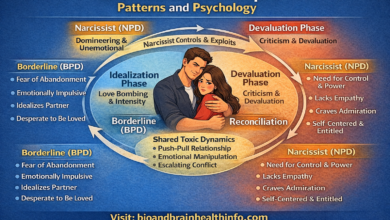
The narcissistic abuse cycle can be difficult to recognize because it rarely feels abusive at the beginning. It may start with intense attention, emotional closeness, admiration, promises, or a feeling of being specially chosen.
This early phase can create strong hope. Later, the same relationship may shift into criticism, distance, blame, gaslighting, emotional withdrawal, or sudden punishment. Then, when the person returns with apology, affection, or explanation, the mind may feel relieved instead of protected.
This cycle can confuse memory. The reader may ask, “Which version is real?” They may remember the beautiful moments and minimize the painful ones.
They may wait for the loving phase to return. This is why emotional abuse recovery requires pattern awareness, not only emotional strength. A single incident may be explained away, but repeated cycles reveal the deeper structure.
For related emotional clarity, link here: emotional detachment vs emotional suppression
The Cycle Often Repeats Before the Mind Names It
Many people do not recognize the narcissistic abuse cycle while they are inside it.
- They only feel emotionally exhausted, confused, attached, guilty, or afraid.
- The cycle may look like love-bombing, devaluation, discard, hoovering, and temporary repair.
But to the person living through it, it may feel like hope followed by pain, then silence, then panic, then relief.
This pattern becomes stronger when the reader starts doubting their own perception.
They may say, “Maybe I am too sensitive,” “Maybe they are stressed,” or “Maybe I should have explained better.”
These thoughts can keep the cycle alive because the focus moves away from repeated behavior and back toward self-blame.
A safer question is not, “How do I prove they are narcissistic?” A safer question is, “What repeated pattern is affecting my emotional safety?”
What AI Can Notice in Repeated Patterns
AI can help organize what the overwhelmed mind struggles to hold clearly. For example, a reader can write a neutral timeline of events and ask AI to identify repeated emotional patterns, repeated phrases, repeated apologies, repeated blame shifts, or repeated moments of fear.
This does not mean AI becomes the authority over the relationship. It simply helps the reader see structure where emotions feel chaotic.
How AI for Narcissistic Abuse Recovery Can Help Safely
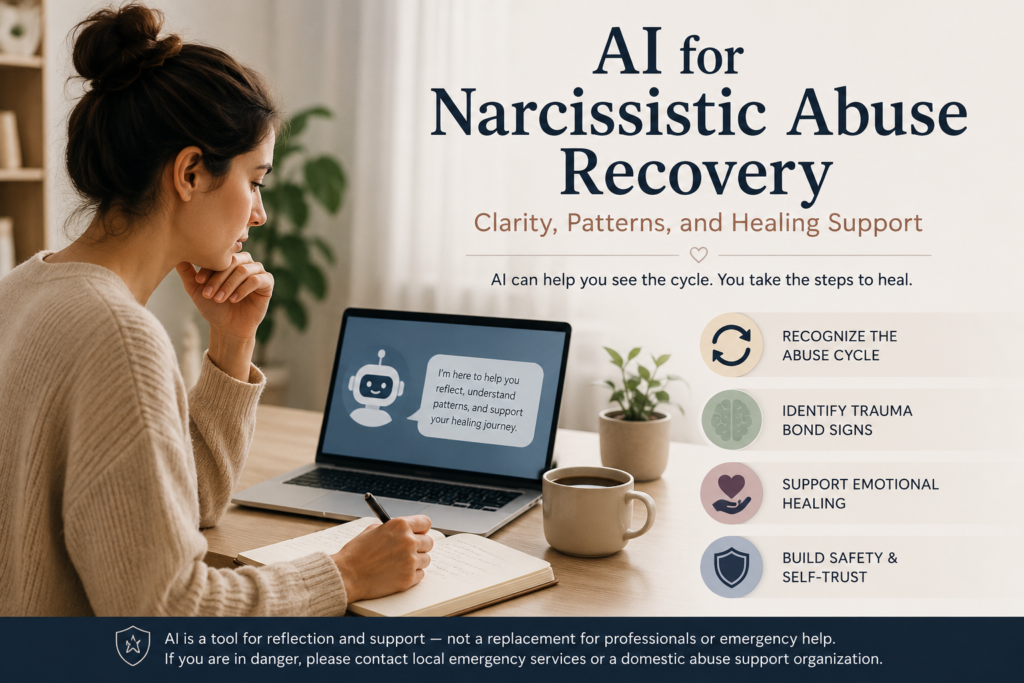
The safest way to use AI for narcissistic abuse recovery is not to ask, “Is this person a narcissist?” A better use is to ask for help organizing confusing experiences. AI can help the reader turn emotional chaos into a clearer timeline. It can help separate facts, feelings, assumptions, fears, and repeated relationship patterns.
This can be especially useful for people in the USA, UK, Canada, and Australia who are looking for private first-step reflection before speaking to a therapist, advocate, or trusted support person.
The important boundary is this: AI should support awareness, not replace human safety. It cannot know the full relationship, diagnose abuse, predict danger, or provide emergency protection.
But it can help someone prepare better notes, better questions, and better self-reflection. In that way, AI becomes a mirror for patterns, not a judge of people.
For deeper emotional regulation support, link here: how detachment helps control emotions
AI Can Help You Separate Events From Emotions
A trauma bond often makes everything feel urgent. One message can create hope. One silence can create fear. One apology can erase a week of pain. When emotions are this intense, the mind may struggle to remember events accurately.
AI can help by asking simple reflection questions: What happened? What did I feel? What pattern has happened before? What boundary did I ignore? What support do I need now?
This is especially helpful for recognizing trauma bond signs such as emotional dependency, fear of losing the person, defending harmful behavior, craving apology, or feeling unable to trust your own judgment.
AI does not heal the trauma bond by itself, but it can help slow the confusion enough for the reader to see what their nervous system is reacting to.
“Help me organize these relationship events into a neutral timeline. Do not diagnose anyone. Help me separate facts, emotions, repeated patterns, and possible questions I can discuss with a therapist or trusted support person.”
This prompt keeps the focus on clarity, not blame.
A Human Reminder Before You Continue
The goal of emotional abuse recovery is not to shame yourself for staying, returning, hoping, or feeling attached. The goal is to understand the emotional pattern clearly enough to make safer choices.
Trauma bonds often survive in confusion. They become weaker when the pattern becomes visible, named, and supported with real human help.
“The first sign of healing is not becoming strong overnight; it is finally seeing the cycle clearly without blaming yourself.”
This is where BBH’s approach is different. This blog does not treat AI as a magic solution. It treats AI as one reflection tool inside a larger healing path that includes awareness, nervous system regulation, boundaries, trusted support, and safety.
If you feel unsafe, threatened, controlled, stalked, or at risk of harm, AI is not enough. In that moment, human support and local emergency or domestic abuse services matter more than digital reflection.
For broader healing direction, link here: what is conscious living
How AI Can Help You Identify Trauma Bond Signs Safely
One reason trauma bond signs are difficult to recognize is that they often appear inside ordinary emotional confusion.
A person may not say, “I am trauma bonded.” They may say, “I know this relationship hurts me, but I still miss them,” or “I feel anxious when they disappear, but relieved when they return.”
This is where AI for narcissistic abuse recovery can support reflection, not by diagnosing the other person, but by helping the reader slow down and observe repeated patterns.
AI can help organize journal entries, messages, emotional reactions, conflict timelines, apology cycles, and moments of fear or guilt. When the mind is overwhelmed, everything feels personal.
But when the same pattern appears again and again, the reader may begin to see that the issue is not only one argument or one bad day. It may be part of a larger narcissistic abuse cycle that affects emotional safety.
Read Also : AI & CBT
Read Also : AI Therapy
Read Also : AI therapy and self-help tools
Trauma Bond Signs AI May Help You Reflect On
AI can help the reader reflect on patterns such as craving contact after being hurt, defending the person who caused pain, feeling responsible for their mood, waiting for apology, fearing abandonment, or feeling addicted to short moments of kindness.
These are not signs of weakness. They are often signs that the nervous system has learned to survive through emotional uncertainty.
A useful AI reflection may ask: “What pattern repeats before I feel panic?” “What happens after I set a boundary?” “Do I feel safe, or only relieved when conflict stops?”
These questions help the reader move from self-blame into observation. This matters because trauma bond help should not shame the attachment. It should help the person understand why the attachment became so strong.
Read Also link here: AI chatbot for emotional support
Use AI for Reflection, Not Final Judgment
AI should not be used to declare, “This person is a narcissist,” or “This relationship is definitely abuse.” That kind of final judgment needs proper human context, professional support, and safety awareness.
The safer way is to use AI to organize facts, feelings, and repeated patterns so the reader can speak more clearly with a therapist, advocate, counselor, doctor, or trusted person.
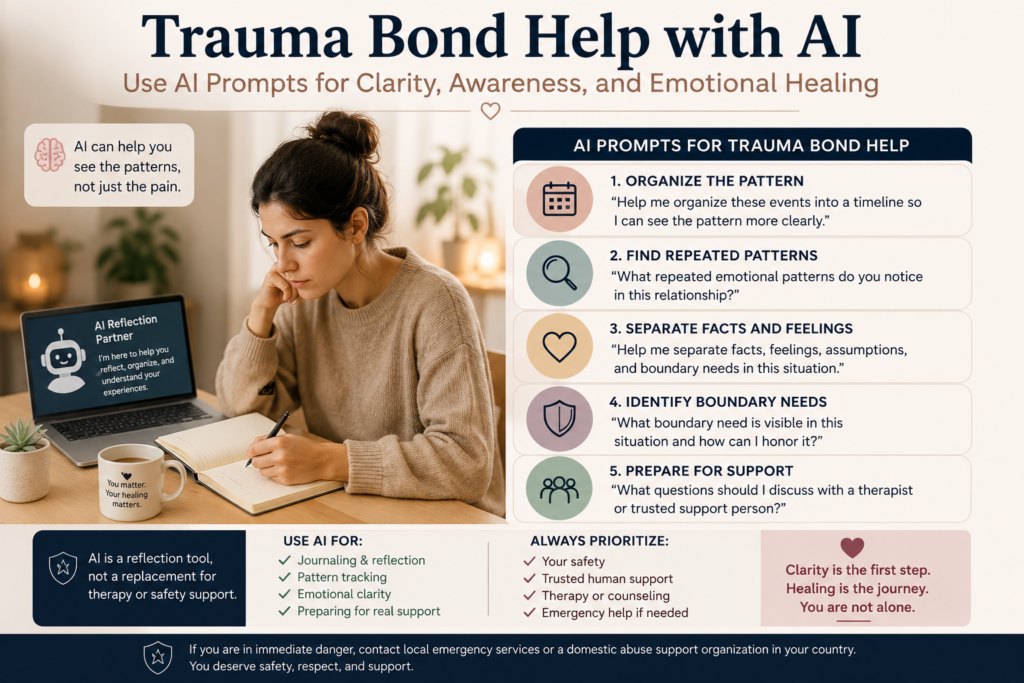
AI Prompts for Trauma Bond Help
The most useful way to use AI for trauma bond help is through careful prompts. The goal is not to ask AI for emotional permission to leave, stay, forgive, confront, or return.
The goal is to ask AI to help organize confusion into clearer categories. A trauma bond often makes the mind jump between love, fear, guilt, hope, and self-doubt. Good prompts can help separate these layers.
For example, instead of asking, “Is this narcissistic abuse?” the reader can ask, “Help me identify repeated relationship patterns in this journal without diagnosing anyone.”
This keeps the focus on clarity. Another useful prompt is: “Separate facts, feelings, assumptions, and boundary needs from this situation.”
This helps reduce emotional flooding and gives the reader a stronger base for emotional abuse recovery.
Read Also : Trauma
Read Also : Relationship Trauma
Read Also: relationship trauma recovery
Prompt Set for Emotional Pattern Tracking
Here are safe AI prompts the reader can use:
“Help me organize these events into a timeline.”
“What repeated emotional pattern appears in this relationship?”
“Separate what happened from what I felt.”
“What boundary need is visible in this situation?”
“What questions should I discuss with a therapist or trusted support person?”
These prompts are useful because they do not turn AI into a judge. They turn AI into a structure tool. This is the strongest and safest use of AI for narcissistic abuse recovery: helping the reader see repeated cycles without forcing a conclusion.
Prompt Set for Nervous System Regulation
AI can also support calming after emotional confusion. A reader may ask:
“Give me a five-minute grounding exercise after a triggering conversation.”
“Help me name my emotions without blaming myself.”
“Give me a short script to pause before replying.”
“Help me write one fact, one feeling, and one boundary need.”
This type of support matters because the narcissistic abuse cycle often keeps the body in stress. The reader may feel urgency to explain, reply, apologize, or fix the relationship immediately. Nervous system regulation gives the person a pause before reacting.
Read Also: AI self-reflection prompts
What AI Cannot Do in Emotional Abuse Recovery
This section is important because emotional abuse recovery needs safety, not overdependence on technology.
AI cannot replace a therapist, domestic abuse advocate, legal professional, emergency service, or trusted human support system.
It cannot fully understand hidden danger, coercive control, stalking, threats, financial control, physical violence, or the risk that may exist outside the text a reader provides.
For readers in the USA, UK, Canada, and Australia, this matters deeply. If there is danger, fear of harm, threats, violence, child safety concern, stalking, or self-harm thoughts, AI reflection is not enough.
The next step should be real human help through local emergency services, domestic abuse support services, crisis lines, medical care, or a trusted person who can help with safety planning.
AI Cannot Replace Therapy, Legal Help, or Emergency Support
AI can help organize thoughts, but it cannot protect someone from danger.
- It can help prepare notes for therapy, but it is not therapy.
- It can help draft questions, but it cannot give legal advice.
- It can help a person notice trauma bond signs, but it cannot safely evaluate every risk in an abusive situation.
This boundary makes the article more trustworthy. The goal is not to make the reader dependent on AI. The goal is to help the reader use AI as one small clarity tool while rebuilding self-trust, safety, and human connection.
Safety-First Disclaimer
Use AI only for reflection, journaling, pattern tracking, and preparation.
Do not use AI as your only support if you feel unsafe.
If you are in immediate danger, contact local emergency services or a domestic abuse support organization in your country.
Why Your Nervous System May Crave the Cycle
A trauma bond can feel confusing because the body may crave the same cycle the mind wants to escape.
After conflict, distance, silence, or rejection, the nervous system may feel anxious and unsafe. When the person returns with kindness, apology, affection, or attention, the body may feel relief.
That relief can be mistaken for love, even when the larger relationship pattern is harmful.
This is why trauma bond help must include nervous system awareness.
- The reader is not only dealing with thoughts; they are dealing with emotional conditioning.
- The body may become used to intensity, apology, fear, and relief.
- Calm can feel unfamiliar after repeated chaos.
Calm May Feel Unsafe After Chaos
During emotional abuse recovery, peace may feel strange at first. The reader may miss the intensity, even when they know it was harmful. They may confuse boredom with disconnection and chaos with passion. Healing means slowly teaching the nervous system that safety does not need to feel dramatic.
A strong recovery step is to pause before reacting. Instead of asking, “Why do I still miss them?” ask, “What is my nervous system trying to regulate through this attachment?” This question creates compassion and clarity at the same time.
Emotional Abuse Recovery, Safety, and Rebuilding Self-Trust
How to Use AI Without Becoming Dependent on It
The safest purpose of AI for narcissistic abuse recovery is to help you build clarity, not dependence. If every painful emotion leads you back to AI for reassurance, the tool may slowly become another place where you search for permission instead of rebuilding self-trust.
The better use is different: use AI to organize your thoughts, name repeated patterns, prepare questions, and then take one real human step toward safety and recovery.
This matters because a trauma bond often damages self-trust. You may doubt your memory, minimize your pain, or feel guilty for protecting yourself. AI can help you slow the emotional noise, but it should not become the final authority over your life.
The goal is not to ask technology, “Am I allowed to feel this?” The goal is to reach a point where you can say, “I can see the pattern, I can respect my nervous system, and I can choose support that protects me.”
Use AI to Build Clarity, Then Take Human Steps
After using AI for journaling or pattern tracking, take one grounded human step. That step may be speaking with a therapist, contacting a domestic abuse support service, telling a trusted friend, saving important notes, creating a safety plan, or simply taking space before replying. Trauma bond help becomes stronger when reflection leads to real-world protection.
AI may help you write better questions, but a trained professional or support organization can help you understand safety, risk, trauma recovery, and next steps with more care.
This is especially important for readers in the USA, UK, Canada, and Australia, where local domestic abuse services, crisis lines, therapists, and legal-support organizations may provide country-specific help.
The 3-Step AI Safety Rule
Use this simple rule:
1. Track the pattern.
Write what happened without exaggerating or minimizing.
2. Regulate the body.
Pause, breathe, ground yourself, and avoid replying from panic.
3. Speak to a safe human when needed.
If fear, danger, control, or emotional collapse is present, human support matters more than AI support.
For broader support direction, Read Aslo: Start Here – Your Journey to Mental Clarity & Emotional Healing
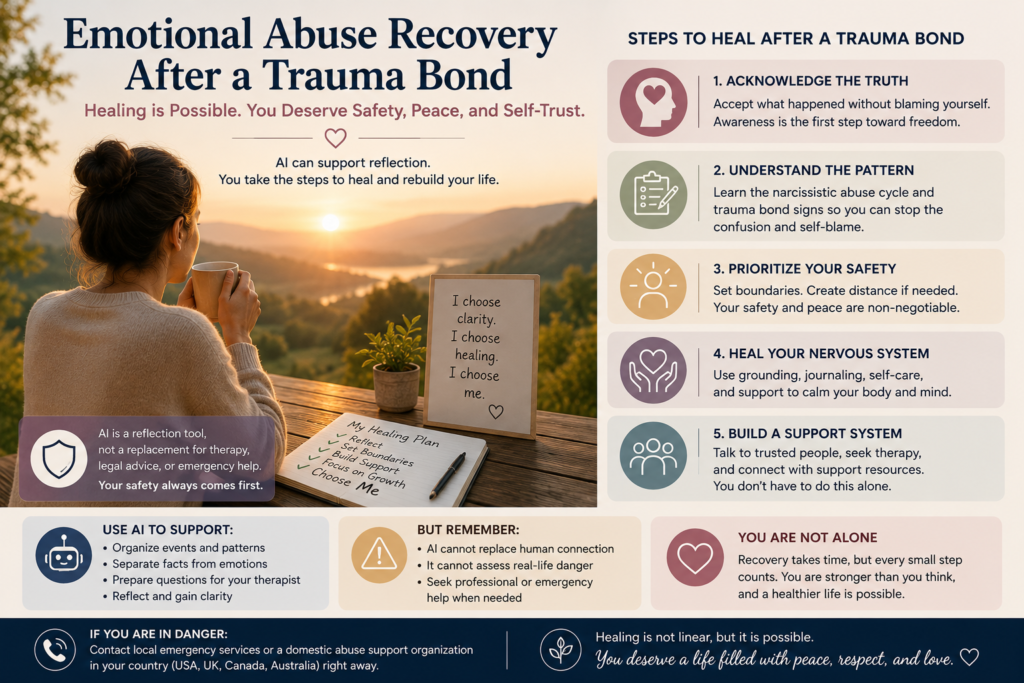
Emotional Abuse Recovery After a Trauma Bond
Emotional abuse recovery after a trauma bond is not only about leaving a person or blocking a number. It is about rebuilding the inner parts of you that learned to survive through fear, hope, guilt, and emotional uncertainty.
A trauma bond can make you feel as if your identity has become tied to someone else’s approval, anger, silence, or return. Recovery slowly brings your attention back to your own emotional safety.
This process may include grieving the version of the relationship you wanted, accepting the pattern you actually lived through, and learning to trust your own signals again. It may also include nervous system regulation, therapy, boundary practice, and education about the narcissistic abuse cycle.
The most important point is this: you do not need to shame yourself for needing time. Trauma bonding can create deep confusion, and healing from confusion requires patience, not self-attack.
Recovery Is Not Only Leaving; It Is Relearning Safety
Many people think recovery begins only when the relationship ends. But emotional recovery often begins earlier, when you start noticing the truth without immediately blaming yourself.
You may begin by writing down what happened, naming trauma bond signs, learning about emotional manipulation, or recognizing how often you excuse behavior that hurts you.
After a relationship ends, recovery still continues. The nervous system may crave contact. The mind may replay memories. You may miss the person and still know the relationship was not safe. This does not mean you failed. It means your body and emotions need time to detach from the cycle.
Daily Healing Practice
Try this simple daily practice:
Write one fact, one feeling, and one boundary need.
Example:
Fact: “They ignored my boundary again.”
Feeling: “I feel anxious and guilty.”
Boundary need: “I need space before responding.”
This practice supports emotional abuse recovery because it teaches the mind to separate reality from fear.
Read Also: Trauma Recovery
When to Seek Immediate Human Help
AI can support reflection, but it is not enough when safety is at risk. If there are threats, stalking, physical violence, coercive control, sexual pressure, isolation, financial control, child safety concerns, or thoughts of self-harm, the situation needs human support immediately. \
In those moments, AI for narcissistic abuse recovery should not be your main support system.
Readers in the USA, UK, Canada, and Australia should contact local emergency services if they are in immediate danger. If the danger is not immediate but the relationship feels unsafe, contacting a domestic abuse hotline, therapist, doctor, counselor, legal-aid service, or trusted support person can be a safer next step.
Emotional abuse can become more dangerous when someone tries to leave, set boundaries, or expose the pattern, so safety planning matters.
AI Is Not Enough When Safety Is at Risk
A serious limitation of AI is that it only sees the information you type. It cannot see the other person’s behavior in real life.
It cannot know whether someone may become violent, whether your device is monitored, whether your location is safe, or whether contacting someone may increase risk.
That is why human support is essential when abuse, fear, or control is present.
AI may help you prepare notes, but safety decisions should involve trained human support whenever possible. This is not meant to create fear. It is meant to keep the healing process grounded, realistic, and protective.
Read Also : Nervous System Regulation After Emotional Abuse
Final Takeaway: AI Can Support Clarity, but Healing Needs Safety
AI can help you organize confusion, notice repeated relationship patterns, and reflect on trauma bond signs without immediately falling into self-blame.
It can help you prepare questions, create timelines, separate facts from feelings, and understand why the narcissistic abuse cycle can feel so emotionally powerful. Used carefully, AI can become a helpful clarity tool.
But healing needs more than clarity. True trauma bond help also needs nervous system safety, boundaries, education, trusted people, and professional support when needed. AI should not become a replacement for therapy, legal help, emergency support, or real human connection.
The deepest purpose of emotional abuse recovery is not to prove that someone else was wrong. It is to return to yourself with more honesty, safety, and self-respect.
“The first sign of healing is not becoming strong overnight; it is finally seeing the cycle clearly without blaming yourself.”
Frequently Asked Questions About AI and Trauma Bond Help
Can AI help with narcissistic abuse recovery?
AI can support AI for narcissistic abuse recovery by helping you organize events, journal emotional patterns, and prepare questions for a therapist or trusted support person. It should not diagnose abuse, replace therapy, or make safety decisions for you.
What are the signs of a trauma bond?
Common trauma bond signs include missing someone who hurt you, feeling panic when they withdraw, defending harmful behavior, blaming yourself, and feeling relief when the person returns. Trauma bonding can become stronger when harm and affection repeat in cycles. (Psychology Today)
What is the narcissistic abuse cycle?
The narcissistic abuse cycle often includes idealization, devaluation, discard, and sometimes hoovering, where the person tries to pull you back into the relationship. This repeating pattern can create confusion, hope, fear, and emotional dependence. (Verywell Mind)
Can AI detect emotional abuse?
AI may help you notice repeated patterns such as blame-shifting, withdrawal, apology cycles, or gaslighting language, but it cannot confirm abuse with full real-life safety context. Use AI as a reflection tool, then speak with a trained human professional if the situation feels unsafe.
Is trauma bond help possible without therapy?
Some first steps can begin with education, journaling, boundaries, and support from trusted people, but therapy or domestic abuse support is strongly recommended when fear, control, stalking, threats, or emotional collapse is present. Real safety should never depend only on AI.
FAQ
Is AI safe for trauma bond help?
AI can be safe for trauma bond help when used for journaling, pattern tracking, grounding, and preparing questions. It becomes unsafe if you use it as your only support during danger, coercive control, violence, stalking, or crisis.
Why do I miss someone who emotionally abused me?
You may miss them because the nervous system learned to connect relief with their return. In trauma bonding, painful moments and caring moments can alternate, making attachment feel powerful even when the relationship is harmful. (PubMed)
Can AI replace a therapist for emotional abuse recovery?
No. AI can support reflection, but it should not replace therapy, crisis care, legal advice, or domestic abuse services. Research and expert commentary warn that AI mental health tools need caution because they lack full clinical context and human judgment. (PMC)
What should I ask AI after a confusing relationship argument?
Ask AI to separate facts, feelings, assumptions, repeated patterns, and boundary needs. A safe prompt is: “Help me organize this situation without diagnosing anyone, and give me questions I can discuss with a therapist or trusted support person.”
When should I seek immediate human help?
Seek immediate human help if there are threats, violence, stalking, coercive control, child safety concerns, sexual pressure, financial control, or self-harm thoughts. If you are in immediate danger, contact emergency services or a domestic abuse support organization in your country.
External References
- Psychology Today — Trauma Bonding
URL: https://www.psychologytoday.com/us/basics/trauma-bonding - PubMed — Emotional Attachments in Abusive Relationships
URL: https://pubmed.ncbi.nlm.nih.gov/8193053/ - Verywell Mind — Narcissistic Abuse Cycle
URL: https://www.verywellmind.com/narcissistic-abuse-cycle-stages-impact-and-coping-6363187 - HelpGuide — Narcissistic Abuse: Recognize the Signs and Start Healing
URL: https://www.helpguide.org/relationships/domestic-abuse/narcissistic-abuse - National Domestic Violence Hotline — USA
URL: https://www.thehotline.org/ - 1800RESPECT — Australia
URL: https://1800respect.org.au/ - Stanford HAI — Dangers of AI in Mental Health Care
URL: https://hai.stanford.edu/news/exploring-the-dangers-of-ai-in-mental-health-care