DSM-5 Narcissistic: Criteria Explained Simply
Clinical Definition of Narcissism

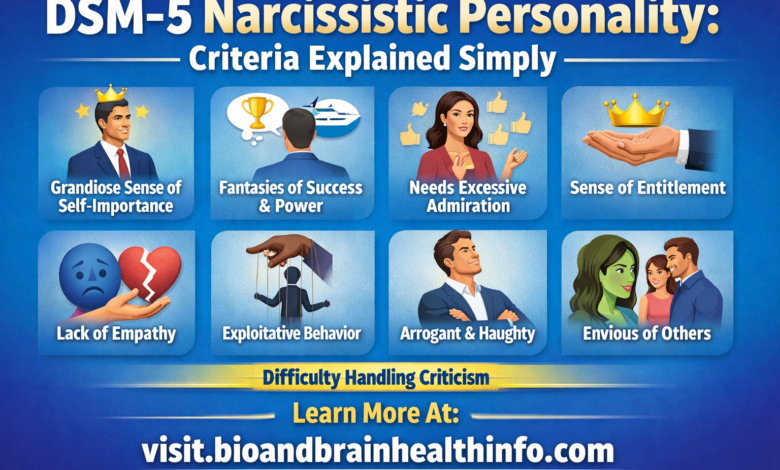
DSM-5 narcissistic personality definitions describe DSM criteria narcissism used in personality disorder diagnosis, outlining NPD traits within clinical psychology to clarify how the clinical definition of narcissism differs from everyday language.
Thank you for reading this post, don't forget to subscribe!Clinical definitions are tools for understanding patterns — not verdicts about a person’s worth.
Clinical language can feel heavy when applied to human relationships, yet definitions exist to understand patterns — not to reduce people to labels.
Even after leaving, the nervous system can stay on alert because it learned unpredictability as normal. Regulation returns through consistency, not force.
🧠 INTRODUCTION – DSM-5 Narcissistic Personality
DSM 5 narcissistic personality definitions explain DSM criteria narcissism used in personality disorder diagnosis, describing NPD traits within clinical psychology frameworks.
Many readers worry, “Does this definition mean someone — or even me — is permanently flawed?”
The misunderstanding comes from confusing clinical description with identity judgment. These criteria are tools for understanding patterns, not proof of worth or failure.
This article will help you understand what’s happening — without labels, blame, or self-attack.
🌱 REASON FOR THIS BLOG – DSM-5 Narcissistic Personality
To clarify how DSM clinical definitions work and reduce fear created by misunderstood psychological language — helping readers separate educational understanding from self-labeling or diagnosing others.
🔍 INNER SEARCH MIRROR – DSM-5 Narcissistic Personality
You may recognize these questions:
What does DSM criteria narcissism actually mean?
Is personality disorder diagnosis permanent?
Do NPD traits describe behavior or identity?
Why does clinical psychology sound so rigid?
Can someone relate to traits without having a disorder?
Am I misusing psychological labels?
How do clinicians decide what qualifies?
Please Explore This Blog empath-relationship-with-narcissist-self-loss
🧠 PSYCHOLOGICAL EXPLANATION – DSM-5 Narcissistic Personality
DSM 5 narcissistic personality frameworks within clinical psychology describe DSM criteria narcissism used in personality disorder diagnosis by identifying patterns rather than defining character.
NPD traits often develop as adaptive strategies shaped by environment and emotional protection.
Understanding this helps separate intent from reaction and reduces self-blame.
| Behavior Pattern | Psychological Function |
|---|---|
| Grandiosity or defensiveness | Protection of self-image |
Personal note: Clinical language becomes clearer when seen as descriptive rather than judgmental.
🌿 NERVOUS SYSTEM EXPLANATION – DSM-5 Narcissistic Personality
Within DSM 5 narcissistic personality models, clinical psychology recognizes that NPD traits linked to DSM criteria narcissism and personality disorder diagnosis may involve nervous system responses shaped by threat perception.
Fight, flight, or freeze reactions can influence emotional regulation, making reflective awareness difficult when discomfort increases.
Warning signs:
Rapid defensiveness
Emotional shutdown
Control seeking
Avoidance of vulnerability
Sudden withdrawal
Personal note: Biological protection can appear as emotional rigidity.
🧭 CORE DISTINCTION – DSM-5 Narcissistic Personality
DSM 5 narcissistic personality criteria describe patterns, not identity. Clinical psychology separates DSM criteria narcissism used in personality disorder diagnosis from inherent worth.
NPD traits reflect survival strategies developed to protect against emotional threat, while identity includes values, conscience, and capacity for change.
Survival = protective adaptation.
Identity = deeper human essence beyond behavior.
Authority emerges when we understand clinical language without turning it into personal judgment.
🌿 TRAUMA VS NARCISSISM – DSM-5 Narcissistic Personality
DSM 5 narcissistic personality criteria within clinical psychology help distinguish DSM criteria narcissism used in personality disorder diagnosis from trauma adaptations.
NPD traits differ primarily in motivation:
| Trauma-Based Pattern | Narcissistic Pattern |
|---|---|
| Remorse present | Remorse minimized |
| Reflection increases | Reflection resisted |
| Accountability grows | Responsibility deflected |
Personal note: Self-questioning usually reflects emotional awareness, not pathology.
🌿GROWTH DIRECTION – DSM-5 Narcissistic Personality
Understanding DSM 5 narcissistic personality through DSM criteria narcissism and clinical psychology encourages balanced perspective.
Personality disorder diagnosis frameworks describe patterns, yet NPD traits may evolve through reflection and emotional safety.
Signs of growth include slower defensiveness, increased accountability, and choosing steadiness over reactivity.
Personal note: Real growth often appears as quiet consistency rather than dramatic change.
🌿 HEALING COMPASS / ORIENTATION TABLE
| Stage | Orientation |
|---|---|
| Awareness | “I observe patterns without labeling.” |
| Understanding | “Clinical definitions clarify, not judge.” |
| Regulation | “Calm supports reflection.” |
| Integration | “Values guide responses.” |
| Stability | “Clarity replaces confusion.” |
Insight becomes sustainable when knowledge turns into gentle internal alignment rather than pressure.
Please Explore This Blog empathetic-narcissism-when-empathy-becomes-control
🌿 10 Signs — DSM-5 Narcissistic Personality Criteria Explained
1️⃣ DSM-5 Narcissistic Personality — Persistent Grandiosity Patterns
DSM 5 narcissistic personality descriptions include grandiosity appearing consistently across situations. This may involve exaggerated self-importance or expectations of recognition, reflecting psychological patterns rather than temporary emotional reactions.
2️⃣ DSM Criteria Narcissism — Strong Need for Admiration
DSM criteria narcissism often describe a persistent need for admiration or validation. Attention becomes linked to emotional stability, suggesting reliance on external affirmation rather than internal regulation.
3️⃣ Personality Disorder Diagnosis — Entitlement Expectations
Within personality disorder diagnosis frameworks, entitlement may appear as expectations of special treatment or difficulty accepting limits, reflecting learned coping strategies rather than intentional malice.
4️⃣ NPD Traits — Limited Empathic Perspective
NPD traits may include challenges recognizing others’ emotional experiences consistently. Empathy can fluctuate depending on perceived threat or personal investment.
5️⃣ Clinical Psychology — Sensitivity to Criticism
Clinical psychology research notes heightened sensitivity to criticism despite outward confidence. Defensive responses may arise when self-image feels threatened.
6️⃣ DSM-5 Narcissistic Personality — Idealization and Devaluation Cycles
DSM 5 narcissistic personality patterns sometimes involve shifting between idealizing and devaluing others, reflecting unstable internal regulation rather than deliberate emotional manipulation alone.
7️⃣ DSM Criteria Narcissism — Focus on Status or Achievement
DSM criteria narcissism can include strong focus on status, success, or recognition as methods for maintaining identity stability and emotional security.
8️⃣ Personality Disorder Diagnosis — Difficulty Accepting Responsibility
Personality disorder diagnosis discussions often note challenges acknowledging personal fault. Responsibility may feel threatening to self-image, triggering protective responses.
9️⃣ NPD Traits — Boundary Challenges
NPD traits may involve difficulty recognizing interpersonal boundaries, especially when personal needs feel urgent or emotionally activated.
🔟 Clinical Psychology — Consistent Pattern Across Contexts
Clinical psychology emphasizes that DSM 5 narcissistic personality patterns require consistency across environments and time, distinguishing clinical criteria from occasional personality tendencies.
🌱 Closing Note
DSM 5 narcissistic personality criteria provide structured understanding through DSM criteria narcissism, personality disorder diagnosis frameworks, NPD traits, and clinical psychology research. These descriptions help clinicians identify patterns — not judge individuals — supporting clarity without turning human complexity into fixed labels.
Please Explore This Blog empaths-and-narcissists-why-they-attract
🌿 A Whole-System View of the Human Healing Process
🛡️ Medical / Ethical Positioning — DSM-5 Narcissistic Personality Context
DSM 5 narcissistic personality definitions within clinical psychology clarify DSM criteria narcissism used in personality disorder diagnosis without assigning moral judgment.
The mind often interprets diagnostic language as threat to identity, creating confusion between description and condemnation.
Ethical positioning reframes criteria as structured observation tools, reducing fear while preserving dignity.
| Ethical Focus | Purpose |
|---|---|
| Neutral terminology | Prevent stigma |
| Structured criteria | Increase clarity |
| Contextual understanding | Avoid oversimplification |
| Diagnostic boundaries | Protect fairness |
Personal note: Ethical framing often softens defensive reactions to clinical language.
🧠 Psychological Layer — Interpretation and Meaning
Within DSM 5 narcissistic personality discussions, psychological interpretation shapes how DSM criteria narcissism are understood.
When individuals encounter personality disorder diagnosis language, the mind may experience identity tension, creating resistance or confusion.
Meaning-making processes determine whether criteria are seen as explanation or accusation.
| Psychological Process | Function |
|---|---|
| Identity preservation | Maintain coherence |
| Cognitive reframing | Reduce anxiety |
| Meaning integration | Clarify context |
| Defensive distancing | Protect self-image |
Personal note: Interpretation often influences reaction more than the criteria themselves.
🌿 Nervous System Layer — Automatic Protection
DSM 5 narcissistic personality patterns described in clinical psychology may activate nervous system defenses when identity feels challenged.
NPD traits linked to DSM criteria narcissism can trigger fight, flight, or freeze responses before reflective processing occurs, reinforcing protective behaviors.
| Nervous System Reaction | Protective Role |
|---|---|
| Rapid defensiveness | Guard self-image |
| Emotional shutdown | Reduce overwhelm |
| Heightened arousal | Monitor threat |
| Avoidance | Maintain stability |
Personal note: Biological responses can intensify psychological rigidity.
🧭 Mental Health Layer — Impact on Clarity and Energy
When personality disorder diagnosis discussions arise, prolonged relational stress may influence clarity and energy levels.
NPD traits can both affect and be affected by sustained emotional strain. Mental processing may narrow, prioritizing stability over growth.
| Mental Health Effect | Description |
|---|---|
| Cognitive narrowing | Focus on defense |
| Emotional fatigue | Energy depletion |
| Reduced flexibility | Slower adaptation |
| Increased sensitivity | Heightened vigilance |
Personal note: Mental strain sometimes precedes deeper integration.
🌱 Identity Layer — Inner Continuity & Meaning
DSM 5 narcissistic personality criteria describe behavioral patterns, not inherent worth. Clinical psychology distinguishes DSM criteria narcissism from core identity.
Even when NPD traits dominate, values and conscience may remain accessible beneath survival responses.
| Identity Element | Inner Stability |
|---|---|
| Core values | Guide direction |
| Conscience | Enables accountability |
| Meaning | Evolves over time |
| Authentic self | Exists beyond traits |
Personal note: Identity continuity can remain intact despite diagnostic language.
🤍 Reflective Support Layer (Including AI)
Engaging with DSM 5 narcissistic personality concepts through journaling, structured dialogue, or AI reflection can support personality disorder diagnosis understanding without self-labeling.
Reflection tools help separate DSM criteria narcissism from emotional reactivity.
| Reflective Tool | Function |
|---|---|
| Journaling | Clarify thoughts |
| Clinical discussion | Provide context |
| AI mirroring | Neutral reflection |
| Slow questioning | Encourage insight |
Personal note: Reflection strengthens understanding when curiosity replaces fear.
🌿 Integrated Whole-System Perspective – DSM-5 Narcissistic Personality
DSM 5 narcissistic personality criteria within clinical psychology intersect psychological interpretation, nervous system protection, mental health regulation, identity continuity, and reflective insight.
Understanding DSM criteria narcissism through personality disorder diagnosis frameworks requires recognizing that patterns operate across systems simultaneously.
Healing and awareness develop gradually when knowledge integrates across cognitive, emotional, and biological layers rather than being applied as a fixed label.
| Whole-System Layer | Role |
|---|---|
| Ethical clarity | Prevent stigma |
| Psychological insight | Interpret meaning |
| Nervous system safety | Enable reflection |
| Identity integration | Sustain growth |
Personal note: Integration often replaces fear with measured understanding.
Please Explore This Blog empathy-and-narcissism-psychological-differences
🌿 PERSONAL NOTE — DSM-5 Narcissistic Personality
Learning about DSM 5 narcissistic personality frameworks changed how I view clinical language. At first, DSM criteria narcissism sounded rigid, almost like a final judgment.
Over time, understanding personality disorder diagnosis within clinical psychology helped me see that NPD traits describe patterns, not identity.
The most important shift was realizing that clinical definitions are tools for clarity, not weapons for labeling.
When I stopped treating diagnostic language as absolute truth and instead saw it as structured observation, confusion reduced.
Insight grew when I understood that psychology seeks patterns to guide understanding — not to reduce human complexity into fixed categories.
🌌 COSMIC / PHILOSOPHICAL TAKEAWAY — DSM-5 Narcissistic Personality
“A map describes the terrain, but it is never the terrain itself.”
DSM 5 narcissistic personality definitions within clinical psychology provide structured understanding through DSM criteria narcissism, personality disorder diagnosis, and NPD traits.
Yet philosophy reminds us that all models simplify reality to make it understandable. Human identity exists beyond any framework.
Awareness grows when we hold both structure and humility — recognizing that definitions guide observation but cannot fully contain human experience.
True wisdom emerges when clinical language becomes a tool for compassion rather than separation.
Please Explore This Blog communal-narcissism-explained-helping-behavior-hidden-ego
🌿 FAQ SECTION — DSM-5 Narcissistic Personality
1. What is DSM-5 narcissistic personality?
It refers to clinical criteria used by professionals to describe patterns associated with narcissistic personality disorder.
2. Do DSM criteria narcissism diagnose someone automatically?
No. Diagnosis requires trained clinical evaluation and multiple factors.
3. Are NPD traits common in many people?
Some traits may appear occasionally without meeting diagnostic thresholds.
4. Is personality disorder diagnosis permanent?
Diagnosis describes patterns at a point in time and does not define a person’s future.
5. Why does clinical psychology use structured criteria?
Standard criteria help ensure consistency and fairness in assessment.
6. Can someone change if they meet DSM criteria narcissism?
Change depends on insight, motivation, and supportive environments.
7. Are clinical definitions meant for everyday labeling?
No. They are designed for professional use within specific contexts.
8. Why do DSM terms feel harsh?
Clinical language prioritizes clarity over emotional tone, which can feel impersonal.
9. Can trauma influence NPD traits?
Yes. Life experiences may shape behavioral patterns described in clinical frameworks.
10. Should I diagnose someone using DSM-5?
Clinical diagnosis should only be made by trained professionals.
🌿 FINAL CLOSING — DSM-5 Narcissistic Personality
Understanding DSM 5 narcissistic personality criteria can feel overwhelming at first, especially when DSM criteria narcissism, personality disorder diagnosis, NPD traits, and clinical psychology terminology appear strict or final.
Remember that clinical frameworks aim to clarify patterns, not define worth.
Nothing is wrong with you for feeling confused by diagnostic language; it often sounds more absolute than it truly is.
With calm understanding, clinical knowledge becomes a tool for perspective rather than judgment.
You are allowed to learn gradually, interpret gently, and hold compassion for yourself and others while clarity grows.
Nothing is wrong with you for reacting to harm. With safety and understanding, what adapted can soften again.
🌿 FINAL CALM CLOSING- DSM-5 Narcissistic Personality
DSM 5 narcissistic personality definitions exist to help understanding, not to create fear. Human beings remain more complex than any framework.
You are invited to take only what brings clarity and leave what creates pressure. Understanding grows quietly, one insight at a time.
🌿 Final Blog Footer — Bio & Brain Health Info
Written by Lex, founder of Bio & Brain Health Info — exploring the intersections of psychology, spirituality, and emotional recovery through calm, trauma-aware understanding.
✨ Insight & Reflection
Healing does not begin when answers arrive — it begins when self-attack stops.
Clarity grows in spaces where safety is restored.
🧠 Learn
Narcissism • Emotional Healing • Spiritual Psychology
🌍 A Moment for You
💡 Pause for two minutes. Let your body settle before moving on.
🧭 If This Article Helped, Your Next Questions Might Be:
These questions are natural continuations — not obligations.
✨ Cosmic Family Invitation
You are not here by accident. If these words reached you, clarity was already beginning.
We rise together — different souls, one journey. 🕊️
📩 Connect with us
info@bioandbrainhealthinfo.com
Telegram: @bioandbrainhealthinfo
WhatsApp Channel: Punehealth
Lex | Bio & Brain Health Info
Cosmic Family — Different Souls, One Journey.
📚 REFERENCES & CITATIONS – DSM-5 Narcissistic Personality
1. American Psychiatric Association — Diagnostic and Statistical Manual of Mental Disorders (DSM-5-TR)
https://www.psychiatry.org/psychiatrists/practice/dsm
2. American Psychiatric Association — Personality Disorders Overview
https://www.psychiatry.org/patients-families/personality-disorders
3. Mayo Clinic — Narcissistic Personality Disorder: Symptoms & Causes
4. National Institute of Mental Health (NIMH) — Personality Disorders
https://www.nimh.nih.gov/health/topics/personality-disorders
5. Cleveland Clinic — Narcissistic Personality Disorder (NPD)
https://my.clevelandclinic.org/health/diseases/9742-narcissistic-personality-disorder
6. American Psychological Association (APA Dictionary of Psychology) — Narcissistic Personality Disorder
https://dictionary.apa.org/narcissistic-personality-disorder
7. National Library of Medicine (PubMed Central) — Stability and Change in Personality Disorders
https://www.ncbi.nlm.nih.gov/pmc/articles/PMC5144810/
8. World Health Organization (WHO) — Mental Disorders
https://www.who.int/news-room/fact-sheets/detail/mental-disorders
9. Harvard Health Publishing — Understanding Personality Disorders
https://www.health.harvard.edu/a_to_z/personality-disorders-a-to-z
10. National Alliance on Mental Illness (NAMI) — Personality Disorders
https://www.nami.org/About-Mental-Illness/Mental-Health-Conditions/Personality-Disorders