Female Narcissist Symptoms: Patterns Without Self-Blame
Recognizing Patterns Without Labeling

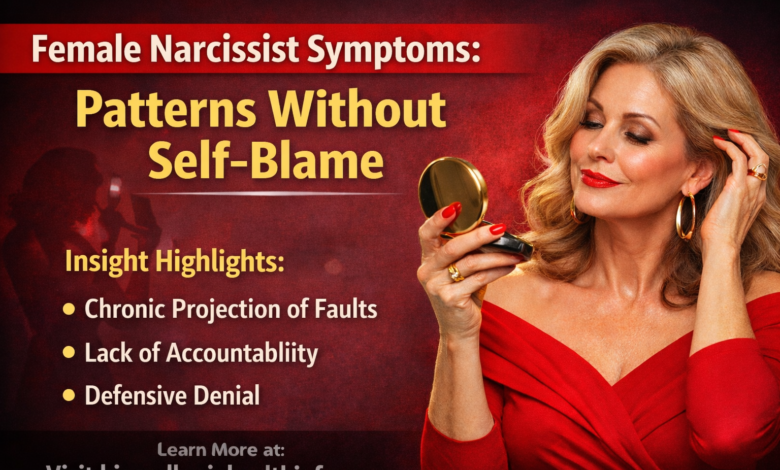
Understanding female narcissist symptoms may involve recognizing narcissism symptoms women patterns such as subtle entitlement behavior, shifting empathy imbalance, and forms of emotional exploitation that influence relationships while remaining difficult to define clearly.
Thank you for reading this post, don't forget to subscribe!Sometimes what confuses us most is not obvious harm, but subtle shifts that slowly change how safe we feel inside relationships.
Even after leaving, the nervous system can stay on alert because it learned unpredictability as normal. Regulation returns through consistency, not force.
🧠 Female Narcissist Symptoms
Understanding female narcissist symptoms can feel overwhelming because patterns associated with narcissism symptoms women, subtle entitlement behavior, shifting empathy imbalance, and forms of emotional exploitation often appear gradually rather than dramatically.
Many people carry a quiet fear: Am I losing my sense of self, or am I misinterpreting what is happening?
The misunderstanding frequently arises when trauma responses are mistaken for personality flaws, leading to self-doubt instead of clarity.
Emotional reactions may reflect adaptation to confusing relational dynamics rather than weakness or over-sensitivity.
You are not alone for questioning your perception; these experiences are common when boundaries and expectations become unclear. Recognizing patterns can restore perspective without forcing conclusions.
This article will help you understand what’s happening — without labels, blame, or self-attack.
🤝 REASON FOR THIS BLOG
To help readers recognize emotional patterns that create confusion and to separate adaptive responses from identity — offering clarity that reduces self-blame without diagnosis or judgment.
🔎 INNER SEARCH MIRROR
You may recognize yourself here if you’ve asked:
Why do I feel responsible for someone else’s emotions?
Why does confidence disappear after certain interactions?
Why do apologies feel expected even when I’m unsure why?
Why does empathy feel one-sided?
Why do I doubt my memory or perception afterward?
Why does emotional closeness feel unpredictable?
Why does distance sometimes feel like relief?
Please Explore This Blog female-word-for-narcissist-language-psychology
🧠 PSYCHOLOGICAL EXPLANATION – Female Narcissist Symptoms
When exploring female narcissist symptoms, patterns associated with narcissism symptoms women, subtle entitlement behavior, shifting empathy imbalance, and emotional pressure through emotional exploitation may influence how individuals interpret relationships.
Humans naturally adapt to maintain connection and predictability; when interactions feel inconsistent, the mind may increase self-monitoring or emotional compliance to restore stability.
These reactions reflect survival conditioning rather than personal weakness. Separating intent from reaction allows individuals to observe patterns without assigning motives or blaming themselves.
Understanding adaptation helps reframe confusion as a response to environmental dynamics rather than evidence of personal failure.
| Situation | Common Adaptation |
|---|---|
| Mixed emotional signals | Increased self-doubt |
(Personal note: many people feel relief when they realize adaptation is a form of intelligence.)
⚡ NERVOUS SYSTEM EXPLANATION- Female Narcissist Symptoms
Experiences connected to female narcissist symptoms may activate automatic responses when narcissism symptoms women dynamics include subtle entitlement behavior, noticeable empathy imbalance, or emotional strain through emotional exploitation.
The nervous system prioritizes safety before conscious reasoning, triggering fight, flight, freeze, or appease reactions.
Emotional responses often occur milliseconds before thought, which explains why individuals may feel reactive even when they understand situations logically.
Common early warning signs:
Sudden tension during conversations
Overthinking afterward
Emotional exhaustion
Increased people-pleasing
Difficulty trusting perception
(Personal note: understanding biology often replaces shame with clarity.)
⭐ CORE DISTINCTION – Female Narcissist Symptoms
Identity vs Survival Responses
Survival responses exist to protect safety; identity reflects values, conscience, and deeper character.
When relational patterns feel unpredictable, individuals may adopt protective behaviors such as over-explaining, emotional withdrawal, or heightened sensitivity.
These responses are adaptive strategies, not reflections of identity. Identity remains steady even when behavior changes under stress. Confusing survival reactions with personal identity often leads to unnecessary self-criticism.
Authority begins when individuals recognize that reactions shaped by context do not define who they are. Protection is temporary; identity is enduring.
Separating the two restores self-trust, reduces internal conflict, and allows emotional steadiness to grow naturally without pressure.
Please Explore This Blog female-word-for-narcissist-language-psychology
🌿 TRAUMA VS NARCISSISM – Female Narcissist Symptoms
When exploring female narcissist symptoms, fear often arises that personal reactions resemble narcissism symptoms women patterns, especially when subtle entitlement behavior, visible empathy imbalance, or experiences of emotional exploitation create confusion.
Relief comes from comparing motivation rather than behavior. Trauma responses typically seek safety and connection, while narcissistic patterns may prioritize maintaining control or protecting self-image.
Observing differences in remorse, reflection, and accountability helps reduce self-labeling without needing diagnosis.
| Trauma Adaptation | Narcissistic Pattern (General) |
|---|---|
| Shows remorse | Protects self-image first |
| Reflects after conflict | Avoids deep reflection |
| Accepts accountability | Minimizes responsibility |
| Seeks repair | Maintains influence |
(Personal note: the ability to reflect often signals emotional awareness rather than dysfunction.)
🌱 GROWTH DIRECTION – Female Narcissist Symptoms
Understanding female narcissist symptoms through narcissism symptoms women dynamics, subtle entitlement behavior, ongoing empathy imbalance, and emotional strain linked to emotional exploitation can shift focus from confusion toward calm orientation.
Growth may appear as quieter emotional reactions, clearer internal boundaries, or reduced need to justify oneself repeatedly. Healing often unfolds slowly; noticing small moments of steadiness is itself meaningful progress.
Choosing peace does not mean avoidance but reflects alignment with emotional safety.
Slowing down allows clarity to deepen naturally, restoring agency without pressure to change everything at once.
(Personal note: genuine progress often feels subtle before it feels strong.)
🧭 HEALING COMPASS / ORIENTATION TABLE
Healing becomes sustainable when insight transforms into a simple internal map rather than overwhelming analysis.
A gentle orientation helps readers move from confusion toward stability without urgency or pressure.
| Stage | Inner Orientation |
|---|---|
| Awareness | “I notice patterns without judging.” |
| Regulation | “My body learns safety gradually.” |
| Clarity | “Understanding reduces self-blame.” |
| Boundaries | “Protection supports calm.” |
| Integration | “I return to myself slowly.” |
These stages are fluid rather than linear. Viewing healing as an orientation encourages patience and reinforces stability, helping individuals develop trust in their own pace while allowing understanding to deepen naturally.
Please Explore This Blog first-signs-of-narcissism-early-indicators
🌿 5 Core Breakthrough Insights – Female Narcissist Symptoms
1. Female Narcissist Symptoms: Recognition Begins With Pattern Awareness
Understanding female narcissist symptoms often starts when subtle patterns linked to narcissism symptoms women, recurring entitlement behavior, visible empathy imbalance, and forms of emotional exploitation become recognizable rather than confusing.
Many individuals initially focus on isolated incidents instead of broader relational dynamics. A breakthrough occurs when patterns are observed over time, allowing emotional reactions to make sense without self-blame.
Recognition does not require labeling another person; it simply clarifies how certain interactions affect internal stability. This shift reduces rumination and restores perspective.
Observing consistent emotional outcomes rather than specific words or events often provides deeper clarity.
Awareness creates space for emotional neutrality, helping individuals step back from reactive interpretation and move toward calmer understanding.
2. Female Narcissist Symptoms: Entitlement May Appear Subtle Rather Than Obvious
A second insight about female narcissist symptoms involves recognizing how narcissism symptoms women may present through understated entitlement behavior rather than overt dominance.
Emotional expectations may remain unspoken, creating an empathy imbalance where one person gives more understanding than they receive.
Quiet forms of emotional exploitation can emerge when relational roles feel fixed over time. The breakthrough occurs when individuals recognize that subtle pressure can exist without aggression.
Understanding this dynamic reduces confusion about why interactions feel emotionally draining despite appearing socially acceptable.
Clarity develops when individuals observe recurring expectations rather than judging isolated behaviors, allowing emotional boundaries to form naturally without confrontation or self-criticism.
3. Female Narcissist Symptoms: Emotional Confusion Often Reflects Adaptation
Within experiences involving female narcissist symptoms, emotional confusion may arise from narcissism symptoms women patterns where entitlement behavior and shifting empathy imbalance create unpredictable relational signals.
Repeated exposure to subtle emotional exploitation can lead individuals to overanalyze or question their own perception. A major breakthrough occurs when confusion is reframed as adaptive learning rather than weakness.
The mind attempts to maintain connection and predictability, which explains heightened sensitivity or self-monitoring. Recognizing adaptation reduces internal conflict and restores trust in emotional responses.
Instead of searching for definitive answers, individuals may begin observing how emotional patterns evolve, allowing clarity to emerge gradually through consistent awareness.
4. Female Narcissist Symptoms: Empathy Imbalance Shapes Relationship Dynamics
Another key insight regarding female narcissist symptoms is how narcissism symptoms women may include subtle entitlement behavior that creates an empathy imbalance within relationships.
Emotional energy may flow unevenly, leading one person to carry more responsibility for harmony or repair. Over time, this dynamic can resemble emotional exploitation even when interactions appear calm on the surface.
The breakthrough comes when individuals notice how emotional investment differs between people.
Understanding imbalance allows observers to shift attention toward their own internal needs rather than constantly adjusting to others.
This awareness encourages emotional neutrality and supports the development of steady boundaries grounded in self-respect rather than reaction.
5. Female Narcissist Symptoms: Clarity Emerges When Identity Is Separated From Reaction
A final breakthrough in understanding female narcissist symptoms involves separating personal identity from reactions shaped by narcissism symptoms women dynamics.
Subtle entitlement behavior, ongoing empathy imbalance, and experiences of emotional exploitation may trigger protective responses such as withdrawal or heightened sensitivity.
These reactions do not define identity; they reflect adaptive strategies. When individuals distinguish between who they are and how they respond under stress, self-trust begins to return.
This insight reduces shame and allows emotional steadiness to develop naturally. Clarity grows when reactions are viewed as information rather than personal flaws, creating space for compassionate awareness and grounded decision-making.
🌙 Closing Note
Insight deepens when patterns are observed without urgency or judgment. Recognizing emotional dynamics allows you to step out of self-blame and into calm understanding. Awareness itself is a form of protection, and from that place, steadier choices and clearer boundaries emerge naturally.
Please Explore This Blog female-vulnerable-narcissist-traits-explained
🌿 A Whole-System View of the Human Healing Process
🩺 Medical / Ethical Positioning — Female Narcissist Symptoms
Understanding female narcissist symptoms through an ethical lens requires recognizing how the mind interprets threat, confusion, and meaning without transforming observation into diagnosis.
Within discussions of narcissism symptoms women, ethical positioning focuses on education rather than labeling, acknowledging that perception is shaped by context, personal history, and emotional experience.
When individuals interpret relational dynamics, the brain often seeks certainty quickly; ethical awareness slows this process, encouraging curiosity instead of judgment.
This perspective supports psychological safety while allowing clarity to emerge through reflection rather than reactive conclusions.
| Ethical Focus | Meaning |
|---|---|
| Neutral observation | See patterns without labels |
| Context awareness | Behavior shaped by environment |
| Emotional safety | Reduce reactive thinking |
| Responsibility | Focus on self-awareness first |
(Personal note: ethical framing often creates emotional calm before deeper insight.)
🧠 Psychological Layer — Female Narcissist Symptoms
In understanding female narcissist symptoms, the mind interprets emotional threat through meaning-making systems influenced by entitlement behavior.
When interactions feel unequal or confusing, psychological adaptation may develop through narrative formation — the brain builds explanations to restore predictability.
This process can lead individuals to internalize responsibility for relational tension. Healing begins when interpretation shifts from self-blame to observation.
Recognizing psychological filtering allows individuals to differentiate between perception and reality, reducing emotional intensity and fostering cognitive flexibility.
| Psychological Process | Role |
|---|---|
| Narrative building | Creates meaning |
| Pattern recognition | Detects repetition |
| Emotional filtering | Prioritizes safety |
| Cognitive adjustment | Updates beliefs |
(Personal note: changing interpretation often changes emotional experience.)
⚡ Nervous System Layer — Female Narcissist Symptoms
Experiences involving female narcissist symptoms may activate automatic body responses when empathy imbalance creates unpredictability.
The nervous system evaluates safety continuously, adjusting breath, muscle tone, and attention before conscious awareness occurs. These reactions are protective mechanisms rather than chosen behaviors.
Individuals may notice subtle physiological shifts such as tension or withdrawal when emotional cues feel inconsistent.
Understanding these responses helps separate biological protection from intentional emotional decisions, reducing confusion and restoring bodily trust.
| Body Reaction | Protective Purpose |
|---|---|
| Breath change | Increase alertness |
| Muscle tightening | Prepare for action |
| Emotional numbing | Reduce overload |
| Attention narrowing | Focus on potential threat |
(Personal note: the body often senses imbalance before the mind understands it.)
🧩 Mental Health Layer — Female Narcissist Symptoms
Long-term exposure to relational dynamics involving female narcissist symptoms and emotional exploitation may gradually influence mental clarity and energy levels.
Prolonged cognitive monitoring — constantly interpreting emotional signals — increases mental load, leading to fatigue and reduced confidence in decision-making.
Mental health impact often appears subtle, emerging as decreased motivation or persistent overthinking rather than dramatic distress.
Healing involves simplifying internal dialogue and allowing uncertainty without immediate resolution.
| Mental Impact | Experience |
|---|---|
| Cognitive strain | Overthinking loops |
| Emotional fatigue | Reduced energy |
| Decision hesitation | Slower choices |
| Self-trust decline | Increased doubt |
(Personal note: mental exhaustion often reflects prolonged complexity rather than personal weakness.)
🌱 Identity Layer (Inner Continuity & Meaning) — Female Narcissist Symptoms
Even when navigating female narcissist symptoms, identity remains distinct from adaptive responses influenced by narcissism symptoms women experiences.
Values, conscience, and long-term purpose continue beneath survival strategies shaped by relational stress. Identity is not erased by protective behaviors; it simply becomes less visible while safety is assessed.
Reconnecting with inner continuity allows individuals to move from reactive adaptation toward intentional living.
| Identity Element | Inner Meaning |
|---|---|
| Values | Guide decisions |
| Conscience | Maintain integrity |
| Authenticity | Stable self-core |
| Purpose | Direction beyond reaction |
(Personal note: identity remains steady even when behavior adapts.)
🔎 Reflective Support Layer (Including AI) — Female Narcissist Symptoms
Reflective tools support individuals exploring female narcissist symptoms by helping process thoughts shaped by entitlement behavior patterns without directing conclusions.
Journaling, trusted conversations, or AI reflection provide structured mirrors that externalize internal dialogue.
Reflection increases distance between experience and interpretation, allowing patterns to become observable rather than overwhelming.
Support functions best when it encourages curiosity instead of certainty.
| Reflective Tool | Function |
|---|---|
| Journaling | Organize thoughts |
| Dialogue | Expand perspective |
| AI reflection | Structured mirroring |
| Mindful observation | Increase awareness |
(Personal note: reflection becomes powerful when it invites exploration instead of judgment.)
🌿 Integration Layer — Female Narcissist Symptoms
Integration occurs when insights about female narcissist symptoms shaped by empathy imbalance settle naturally into daily awareness.
Rather than forcing change, individuals begin responding with slower reactions and clearer emotional boundaries.
Integration transforms knowledge into lived stability, allowing patterns to be recognized without emotional overwhelm.
| Integration Stage | Inner Movement |
|---|---|
| Awareness | Recognize patterns calmly |
| Regulation | Slow emotional response |
| Boundaries | Protect energy gently |
| Integration | Stable self-connection |
(Personal note: integration often feels subtle but deeply stabilizing.)
Please Explore This Blog female-narcissists-so-cruel-explained
🌿 PERSONAL NOTE -Female Narcissist Symptoms
While exploring female narcissist symptoms, I have repeatedly observed how conversations around narcissism symptoms women can unintentionally create fear or oversimplification.
Real-life insight shows that emotional dynamics rarely exist as fixed categories; instead, they unfold gradually through relational patterns and personal interpretation.
Many readers arrive feeling confused because experiences involving entitlement behavior, subtle empathy imbalance, or perceived emotional pressure feel deeply personal.
Over time, I have learned that clarity emerges when we step away from trying to define others and instead focus on understanding emotional impact and internal response.
This shift restores calm perspective without denying complexity.
Awareness becomes less about labeling and more about recognizing patterns that support self-trust and emotional steadiness.
🌌 COSMIC / PHILOSOPHICAL TAKEAWAY
“Understanding is not about deciding who someone is — it is about remembering who you are.”
Reflecting on female narcissist symptoms through lenses such as narcissism symptoms women, subtle entitlement behavior, shifting empathy imbalance, and experiences of emotional exploitation reminds us that human relationships exist within evolving layers of perception and meaning.
Growth does not always require dramatic change; often it arises through quiet recognition. Philosophically, awareness allows individuals to observe patterns without becoming defined by them.
Life invites understanding not as judgment but as expansion of perspective. When we hold complexity gently, emotional clarity becomes possible without losing compassion.
In this way, healing becomes a process of returning to inner balance rather than trying to control or fully resolve external dynamics.
🌿 FINAL CLOSING – Female Narcissist Symptoms
If learning about female narcissist symptoms or reflecting on experiences shaped by narcissism symptoms women, subtle entitlement behavior, ongoing empathy imbalance, or emotional strain connected to emotional exploitation has brought recognition, allow that awareness to settle slowly.
Nothing is wrong with you for reacting to complexity; emotional responses often reflect adaptive intelligence rather than weakness.
Healing grows through consistency and gentle clarity rather than urgency. You are allowed to observe without rushing to conclusions or forcing change.
With safety and understanding, what adapted for protection can soften again.
Let this insight be an invitation toward steadiness — a reminder that clarity develops gradually, and self-trust returns when understanding replaces self-attack.
Please Explore This Blog female-narcissist-traits-in-relationships
❓ FAQ SECTION – Female Narcissist Symptoms
1. What are female narcissist symptoms?
They describe observable patterns in behavior or relational dynamics, understood educationally rather than diagnostically.
2. Are narcissism symptoms women different from men?
Expression may vary due to social and relational conditioning, though underlying traits can overlap.
3. What is entitlement behavior?
It refers to expectations of special treatment or emotional prioritization within relationships.
4. What does empathy imbalance mean?
It describes uneven emotional investment where one person consistently gives more understanding.
5. Is emotional exploitation always intentional?
Not necessarily; patterns may arise from learned coping strategies rather than conscious planning.
6. Why do I doubt myself after interactions?
Mixed emotional signals can disrupt internal certainty and increase self-monitoring.
7. Can awareness alone help healing?
Yes, recognizing patterns often reduces confusion and restores emotional clarity.
8. Does understanding patterns mean diagnosing someone?
No — education focuses on recognizing dynamics, not labeling individuals.
9. Why do boundaries feel difficult?
Long-term relational expectations may condition emotional responsibility toward others.
10. How does self-trust return?
Through consistency, reflection, and reconnecting with personal values over time.
🌿 Final Blog Footer — Bio & Brain Health Info
Written by Lex, founder of Bio & Brain Health Info — exploring the intersections of psychology, spirituality, and emotional recovery through calm, trauma-aware understanding.
✨ Insight & Reflection
Healing does not begin when answers arrive — it begins when self-attack stops.
Clarity grows in spaces where safety is restored.
🧠 Learn
Narcissism • Emotional Healing • Spiritual Psychology
🌍 A Moment for You
💡 Pause for two minutes. Let your body settle before moving on.
🧭 If This Article Helped, Your Next Questions Might Be:
These questions are natural continuations — not obligations.
✨ Cosmic Family Invitation
You are not here by accident. If these words reached you, clarity was already beginning.
We rise together — different souls, one journey. 🕊️
📩 Connect with us
info@bioandbrainhealthinfo.com
Telegram: @bioandbrainhealthinfo
WhatsApp Channel: Punehealth
Lex | Bio & Brain Health Info
Cosmic Family — Different Souls, One Journey.
📚 REFERENCES & CITATION – Female Narcissist Symptoms
American Psychological Association — Personality Disorders Overview
https://www.apa.org/topics/personality-disordersNational Institute of Mental Health — Personality Disorders
https://www.nimh.nih.gov/health/topics/personality-disordersPsychology Today — Narcissism Explained
https://www.psychologytoday.com/us/basics/narcissismCleveland Clinic — Trauma and Stress Response
https://health.clevelandclinic.org/trauma-response/Harvard Business Review — Personality and Power Dynamics
https://hbr.org/topic/power-and-influenceGreater Good Science Center — Emotional Regulation Research
https://greatergood.berkeley.edu/PubMed — Personality Research Studies
https://pubmed.ncbi.nlm.nih.gov/World Health Organization — Mental Health Resources
https://www.who.int/teams/mental-health-and-substance-useVerywell Mind — Narcissistic Traits Overview
https://www.verywellmind.com/narcissistic-personality-disorder-425426Stanford Organizational Behavior Research
https://www.gsb.stanford.edu/faculty-research/academic-areas/organizational-behavior