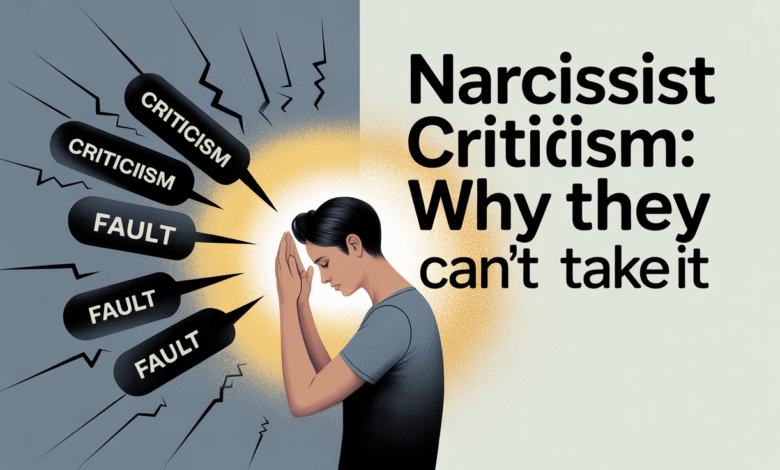
Narcissist criticism is complex—narcissists can’t take criticism, yet they’re always criticizing others. Learn the truth about narcissism and criticism, plus tips for criticizing a narcissist safely.
Thank you for reading this post, don't forget to subscribe!Narcissist criticism is one of the hardest challenges in relationships. Narcissists are quick to point out flaws in others yet cannot tolerate even the smallest critique directed at them.
This paradox leaves partners, family members, and colleagues feeling confused and drained. Why are they always criticizing, but so defensive when the tables turn?
Narcissism and criticism are deeply connected: their fragile self-image depends on tearing others down while avoiding accountability.
In this blog, we’ll explore how narcissists use criticism, why they can’t take it, and how you can protect your mental health and self-worth.
1. Narcissist Always Criticizing -Narcissist Criticism
A narcissist criticizes to feel powerful. By constantly pointing out flaws, they make others insecure and dependent on their approval. Their endless judgment covers everything—appearance, choices, even minor habits.
It creates a toxic dynamic where you feel you can never measure up. This cycle ensures they remain the “superior” figure in the relationship.
Recognizing this pattern helps you understand it’s not your failure, but their strategy to control. Narcissist criticism says more about their insecurity than your worth.
Once you see this, you can stop internalizing their words and start setting healthier emotional boundaries.
2. Criticism as Projection
Narcissists often criticize others to project their own insecurities outward. For example, if they fear being lazy, they may call others “unmotivated.”
This tactic allows them to avoid facing their own weaknesses by putting the spotlight on someone else. Many wonder, why is a narcissist always criticizing?
The answer lies here: criticism becomes a mirror, reflecting their hidden flaws. By projecting, they maintain the illusion of superiority.
Understanding this mechanism allows you to detach from their judgment—it isn’t about you, but about the fears they cannot admit. Projection is their shield, but it doesn’t define your truth.
3. Why Narcissists Can’t Take Criticism
Criticizing a narcissist often feels impossible because they can’t tolerate even mild feedback. Their fragile ego interprets critique as a personal attack.
Even gentle suggestions can trigger anger, defensiveness, or the silent treatment. This is why people say, “a narcissist can’t take criticism.” For them, criticism isn’t guidance—it’s humiliation.
Their self-image is so fragile that any crack feels unbearable. Understanding this helps you see that their explosive reaction is not about the content of your words but about their fear of exposure.
You can’t change their response, but you can change how much power it has over you.
Please enjoy reading can-narcissists-give-compliments
4. Narcissism and Shame
At the root of narcissism lies deep, unhealed shame. Criticism scratches this hidden wound, which is why they respond with such intensity.
While others see feedback as a chance to grow, narcissists see it as proof they are “not enough.” This is why narcissist criticism of others is constant—it distracts them from their own shame.
Unfortunately, their inability to handle feedback makes relationships painful. Understanding that shame drives their defensiveness helps you stop blaming yourself.
You didn’t trigger their shame—you just touched a wound they’ve carried for years. Their reaction is about them, not you.
5. Criticizing a Narcissist Backfires
Many people think confronting a narcissist with criticism will bring change, but often it backfires. Instead of listening, they deny, gaslight, or twist your words back on you.
This leaves you doubting yourself, wondering if you were wrong. Can you ever criticize a narcissist safely?
Only in small, factual ways—and even then, expect resistance. Their defensiveness makes open communication nearly impossible.
The safest approach is to limit confrontation and instead set boundaries. You cannot “fix” them with criticism, but you can protect yourself from the cycle of blame and retaliation that usually follows.
6. Defensive Reactions
When criticized, narcissists often react with predictable defenses: anger, silent treatment, blame-shifting, or counterattacks. For instance, if you point out their lateness, they may accuse you of being controlling.
This turns the situation around, making you the “problem.” Such defensive reactions are part of why narcissists can’t take criticism. They protect their fragile self-esteem by deflecting responsibility.
Recognizing these patterns helps you avoid taking their words personally. Instead of getting pulled into arguments, you can stay calm and clear.
Their defensiveness is a shield—but once you see it, you no longer need to carry its weight.
7. Criticism in Relationships
In relationships, narcissist criticism is relentless. Partners often feel they can’t do anything right—every action, word, or decision becomes a target.
Yet, when the partner tries to express concerns, the narcissist reacts with anger. This one-sided exchange erodes self-esteem and makes the partner feel small. Why do narcissists criticize so much?
Because it reinforces their dominance. They rely on criticism to maintain control. Recognizing this imbalance is key. Healthy relationships allow feedback on both sides; narcissistic ones don’t.
By seeing this clearly, you can stop blaming yourself for the imbalance and begin reclaiming your self-worth.
8. Criticism in Families
Narcissist criticism doesn’t stop with partners—it often affects entire families. Narcissistic parents may constantly criticize their children, leaving them with lifelong wounds of inadequacy.
Siblings may be compared harshly, creating competition and resentment. Children raised in such environments often struggle with self-esteem well into adulthood.
Can narcissists give healthy criticism? Rarely—because their words are meant to control, not to nurture. Recognizing this dynamic helps survivors understand their past and heal from it.
Breaking free means learning that constant criticism was never a measure of your worth but a reflection of the parent’s unresolved issues.
Please enjoy reading how-does-someone-become-a-narcissist
9. Criticism at Work
Workplace narcissists use criticism strategically to maintain dominance. A narcissistic boss may highlight small mistakes publicly while ignoring successes. Colleagues may feel belittled or undervalued.
Yet, when the narcissist is criticized, they retaliate—sometimes by undermining, sabotaging, or spreading blame. This double standard leaves teams frustrated and toxic environments brewing.
Why is narcissism and criticism so linked in work settings? Because professional hierarchies give them room to mask cruelty as “feedback.”
Recognizing this allows you to respond with professionalism, protect your self-esteem, and avoid internalizing unfair words. Their criticism is not truth—it’s a power play.
10. Healthy vs Toxic Criticism
Healthy criticism offers constructive guidance, helping people grow. Toxic narcissist criticism, however, is destructive. Instead of focusing on improvement, it tears down self-esteem.
How do you know the difference? Healthy criticism is specific, balanced, and respectful. Toxic criticism is vague, harsh, and repetitive, with no solution offered.
Narcissists thrive on the toxic kind, because it maintains control. Understanding this distinction allows you to accept feedback from healthy sources while rejecting damaging words from unhealthy ones.
Not all criticism is equal—recognizing the difference is key to protecting your emotional health.
11. Protecting Yourself – Narcissist Criticism
Facing constant narcissist criticism can leave you drained. The best defense is learning to set boundaries. You don’t have to absorb their words as truth.
Instead, you can observe their criticism with detachment, reminding yourself: this is about them, not me. Protecting yourself means refusing to internalize negativity.
Journaling, therapy, or supportive friendships can help rebuild self-esteem. The more you affirm your value, the less power their criticism holds.
You cannot stop them from criticizing, but you can stop yourself from believing it. That is where your real power lies.
12. Responding Safely
Sometimes, criticizing a narcissist is unavoidable, especially in family or workplace settings. The key is to keep it neutral, factual, and brief. Instead of attacking their character, focus only on specific behaviors.
Even then, expect pushback. Narcissists rarely accept accountability. The safest response often isn’t confrontation but protecting your boundaries and limiting emotional engagement.
Ask yourself: is it worth the fight? If not, walk away. You gain strength not by winning arguments, but by refusing to be pulled into cycles of blame. Responding safely means valuing your peace above their reactions.
Spiritual Perspective –Narcissist Criticism
Spiritually, criticism is meant to uplift, not harm. Narcissist criticism carries negative energy that can cloud your aura. Their inability to take criticism stems from ego attachment, not soul truth.
Protecting yourself through meditation, prayer, or grounding rituals helps shield your energy. Spirit reminds us that self-worth is divine and untouchable—no harsh words can alter your true light.
When you stop chasing validation from narcissists, their criticism loses power. Instead, you align with higher truth, where love, compassion, and self-acceptance replace toxic judgment.
Spiritual growth comes when you see through illusion and honor your inner strength.
Please enjoy reading identify-narcissist-protect-yourself
Psychological Perspective – Narcissist Criticism
Psychology shows that narcissist criticism stems from fragile self-esteem and defense mechanisms. By constantly criticizing, they project insecurity outward.
By rejecting criticism, they shield themselves from shame. Intermittent criticism paired with rare praise creates dependency, a cycle that mirrors addictive behavior.
For survivors, this leads to anxiety, self-doubt, and depression. Psychologists encourage recognizing these patterns and developing internal validation.
Therapy provides tools to separate your identity from their words, building resilience. Understanding the psychological roots of criticism empowers you: their attacks are not objective truths but defense strategies.
Once you see this, their power weakens dramatically.
Philosophical Perspective – Narcissist Criticism
Philosophers have long debated the value of criticism. Constructive critique fosters wisdom, but destructive criticism reflects illusion.
Narcissism and criticism expose this divide: narcissists tear others down without truth or fairness, yet reject valid feedback themselves.
Stoic philosophy reminds us that virtue exists independent of praise or blame. True worth lies in character, not external words.
By adopting this view, you detach from toxic criticism and anchor your value in your actions. Philosophy offers clarity: a narcissist’s words are shadows, not reality.
The pursuit of truth requires us to rise above shallow judgment and live authentically.
Mental Health Perspective – Narcissist Criticism
From a mental health lens, constant narcissist criticism is damaging. Being judged daily creates self-doubt, anxiety, and even depression.
Partners, children, or coworkers of narcissists often feel they can never do enough. This erodes confidence over time. When criticizing a narcissist, survivors face gaslighting or retaliation, further undermining their well-being.
Mental health professionals recommend self-care, boundaries, and therapy to rebuild esteem. Healing means recognizing criticism as manipulation, not truth.
By reframing experiences and developing resilience, survivors regain confidence. Protecting mental health requires refusing to let their words define you. Your identity is stronger than their negativity.
Please enjoy reading can-a-narcissist-be-in-love
New Point of View – Narcissist Criticism
In today’s digital age, narcissist criticism extends beyond personal interactions into online spaces. Social media gives them platforms to criticize, shame, or control publicly while maintaining a perfect image.
Yet, when they receive online criticism themselves, they may react with rage or attempts to silence critics.
Can narcissists take criticism online? Rarely. Instead, they block, attack, or smear others.
This digital dimension shows how narcissism adapts but doesn’t change. Recognizing this helps you treat online criticism lightly.
Protecting your digital boundaries—through mindful engagement and self-affirmation—keeps you safe from toxic energy, both offline and online.
🌙 Conclusion – Narcissist Criticism
Narcissists exist in a double bind: they constantly criticize others, yet cannot tolerate criticism themselves. This paradox stems from insecurity, shame, and fragile self-esteem.
Their words often harm rather than help, leaving partners, families, and colleagues feeling inadequate. But understanding these dynamics empowers you.
Criticism from a narcissist is not truth—it is projection, control, and illusion. Protect yourself by setting boundaries, refusing to internalize toxic words, and strengthening inner validation.
Criticizing a narcissist may not change them, but you can change how you respond. Your worth remains steady, no matter how loudly they criticize.
❓ FAQ: Narcissist Criticism
1. Do narcissists give criticism fairly?
No, narcissists rarely give fair criticism. Their judgment is often exaggerated, vague, or harsh, intended to belittle others. Unlike constructive feedback, narcissist criticism is designed to weaken confidence and maintain their control in relationships or workplaces.
2. Why are narcissists always criticizing?
Narcissists criticize to project insecurity and maintain superiority. By pointing out flaws in others, they protect their fragile self-esteem and create dependency. This constant criticism keeps people seeking approval, reinforcing the narcissist’s dominance and emotional control.
3. Can narcissists take criticism themselves?
Narcissists can’t take criticism well. Even gentle feedback feels like an attack on their identity. Their fragile ego interprets critique as rejection or humiliation, often leading to explosive anger, defensiveness, or silent withdrawal as self-protection.
4. What happens if you criticize a narcissist?
Criticizing a narcissist often backfires. They may deny wrongdoing, gaslight, attack you verbally, or shift blame. Instead of reflecting, they escalate conflict. This response protects their ego but damages communication and leaves you feeling silenced or guilty.
5. Why does narcissist criticism hurt so much?
Narcissist criticism targets your vulnerabilities. It is repetitive, personal, and delivered without care. Over time, it erodes confidence and self-worth, leaving emotional scars. Recognizing it as projection, not truth, helps lessen the pain and reclaim power.
6. Is criticizing a narcissist ever safe?
Rarely. If necessary, it’s best to keep it neutral, brief, and focused on behavior, not identity. Even then, expect resistance. Protect yourself emotionally, and avoid expecting lasting change from direct confrontation with a narcissist.
Please enjoy reading identifying-narcissistic-behavior-7-signs-youre-dealing-with-a-narcissist
7. Do narcissists criticize in families too?
Yes, narcissistic parents often criticize children harshly, creating lifelong feelings of inadequacy. This favoritism and comparison damages siblings and family bonds. Recognizing these patterns is vital for healing and breaking cycles of emotional harm in adulthood.
8. How does narcissist criticism affect mental health?
Constant criticism damages self-esteem, increases anxiety, and can lead to depression. Survivors often internalize negative words, believing they’re not enough. Therapy, boundaries, and self-validation practices help rebuild confidence and protect mental health from long-term harm.
9. Are narcissist criticism and control linked?
Yes, criticism is a form of control. By keeping others insecure, narcissists maintain power in relationships or workplaces. Recognizing this connection helps you detach emotionally, set boundaries, and protect your self-worth from manipulation.
10. How can I protect myself from narcissist criticism?
Set strong boundaries, limit emotional engagement, and remind yourself that their words reflect their insecurity, not your truth. Support systems, therapy, and affirmations help you detach from toxic criticism and strengthen your inner validation.
📚 Reading References
American Psychiatric Association – DSM-5-TR: Diagnostic and Statistical Manual of Mental Disorders
https://psychiatry.org/psychiatrists/practice/dsmCraig Malkin – Rethinking Narcissism
https://www.harpercollins.com/products/rethinking-narcissism-craig-malkinBrené Brown – Daring Greatly
https://brenebrown.com/book/daring-greatly/Lundy Bancroft – Why Does He Do That?
https://www.penguinrandomhouse.com/books/10333/why-does-he-do-that-by-lundy-bancroft/W. Keith Campbell & Joshua D. Miller – The Handbook of Narcissism and Narcissistic Personality Disorder
https://www.wiley.com/en-us/The+Handbook+of+Narcissism+and+Narcissistic+Personality+Disorder%3A+Theoretical+Approaches%2C+Empirical+Findings%2C+and+Treatments-p-9780470611567Sam Vaknin – Malignant Self-Love: Narcissism Revisited
https://www.narcissistic-abuse.com/