Can Narcissist Love? Psychology Behind Real vs Perceived Love
Love With a Narcissist: What’s Real and What’s Not

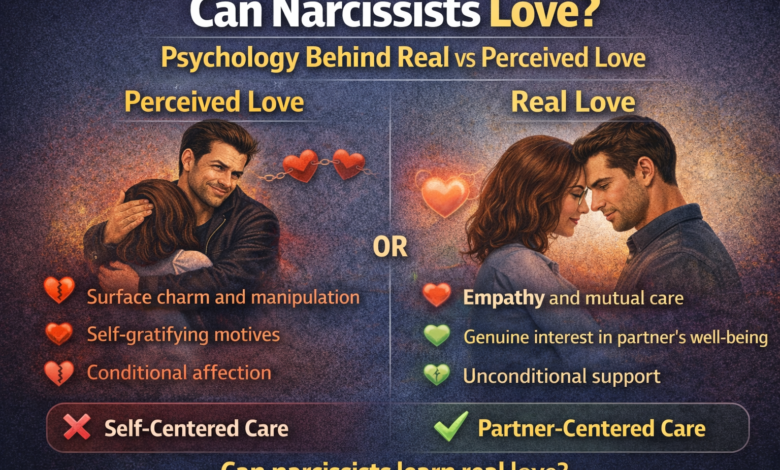
Can narcissist love is often misunderstood because narcissistic attachment patterns, emotional intimacy issues, empathy limits, and complex relationship dynamics can create connections that feel deeply intense yet emotionally confusing.
Thank you for reading this post, don't forget to subscribe!Love can feel real even when emotional safety is missing — understanding the difference helps restore clarity without blaming yourself.
Some connections stay inside us longer than the relationship itself, because the nervous system remembers intensity even when the mind chooses distance.
Even after leaving, the nervous system can stay on alert because it learned unpredictability as normal. Regulation returns through consistency, not force.
Can Narcissist Love?
Can narcissist love is a question many people ask when narcissistic attachment feels powerful yet confusing.
Emotional intimacy issues, empathy limits, and complex relationship dynamics can make affection feel real while still leaving deep emotional uncertainty.
The core fear is often: Was the love real, or did I imagine it?
This confusion is not identity failure — it is emotional reactivity shaped by experience. Understanding this difference reduces self-blame and restores perspective.
This article will help you understand what’s happening — without labels, blame, or self-attack.
REASON FOR THIS BLOG
To provide calm psychological clarity about whether can narcissist love truly exists, while separating emotional experiences from personality labels. The intention is understanding — not diagnosis, judgment, or blame.
INNER SEARCH MIRROR
Sometimes people search for answers because something inside already feels unclear.
• Did they love me or just need me?
• Why did affection feel intense but unstable?
• Was emotional closeness real or conditional?
• Why do I still feel attached after leaving?
• Am I confusing trauma with love?
• Why did empathy feel inconsistent?
• Is something wrong with how I experience relationships?
Please Explore This Blog narcissist-husband-traits-emotional-impact
PSYCHOLOGICAL EXPLANATION -Can Narcissist Love
From a psychological perspective, can narcissist love depends less on emotional intensity and more on emotional capacity.
Narcissistic attachment often develops around self-protection rather than mutual vulnerability.
Emotional intimacy issues arise when closeness triggers insecurity, creating cycles of idealization and distance.
Empathy limits may reduce emotional attunement, even when affection exists.
This does not automatically mean absence of feeling — rather, relationship dynamics may prioritize self-regulation over shared emotional experience.
Example:
| Intent | Reaction |
|---|---|
| Desire connection | Pull close intensely |
| Fear vulnerability | Create distance |
NERVOUS SYSTEM EXPLANATION- Can Narcissist Love
The nervous system responds to unpredictability faster than conscious thought.
When emotional intimacy issues combine with fluctuating attention or approval, the brain interprets this as intermittent reward — strengthening attachment patterns.
Fight, flight, or freeze reactions may activate even during loving moments because safety feels inconsistent.
Empathy limits can unintentionally trigger emotional reactivity in partners.
Warning signs:
• Sudden emotional highs and lows
• Strong longing after distance
• Hypervigilance to mood changes
• Fear of abandonment spikes
• Physical tension during conflict
CORE DISTINCTION – Can Narcissist Love?
Identity vs Survival Responses
Survival responses aim to protect emotional stability; identity reflects deeper values and conscience. When asking can narcissist love, it helps to distinguish between emotional behavior and inner capacity.
Survival patterns may include emotional withdrawal or self-focus during stress, while identity involves empathy, reflection, and willingness to repair.
Emotional intensity alone does not define love. True connection grows where values support mutual safety — not only where attraction or attachment feels strong.
Understanding this difference restores clarity without self-blame.
Please Explore This Blog a-narcissist-meaning-traits-and-psychology-explained
TRAUMA VS NARCISSISM – Can Narcissist Love
Trauma Response vs Narcissistic Pattern
Fear often comes from self-labeling. Compare motivation rather than behavior when asking can narcissist love.
| Trauma Response | Narcissistic Pattern |
|---|---|
| Feels remorse after conflict | Avoids accountability consistently |
| Reflects on impact | Deflects responsibility |
| Seeks repair after rupture | Maintains control dynamic |
| Empathy fluctuates under stress | Empathy limits remain stable |
Emotional intimacy issues and relationship dynamics may look similar outwardly, but inner intention — remorse, reflection, accountability — reveals the difference.
GROWTH DIRECTION – Can Narcissist Love?
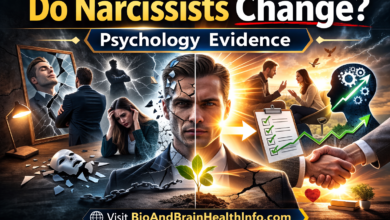
Growth begins with awareness, not force. When exploring can narcissist love, healing often shows as slower emotional reactions, clearer boundaries around narcissistic attachment, and increased sensitivity to empathy limits without self-judgment.
Emotional intimacy issues soften through consistency rather than urgency.
Choosing peace may look like observing relationship dynamics calmly, noticing emotional regulation improving, and allowing clarity to emerge naturally instead of chasing certainty.
HEALING COMPASS / ORIENTATION TABLE
Understanding becomes stability when translated into gentle direction.
| Stage | Inner Shift |
|---|---|
| Awareness | “I can observe without blaming myself.” |
| Separation of identity | “My reactions are not my identity.” |
| Regulation | “Slowing down restores clarity.” |
| Boundaries | “Safety matters alongside connection.” |
| Integration | “I choose relationships aligned with emotional truth.” |
Please Explore This Blog 5-types-of-narcissist-blame-shifting-explained
10 Signs — Can Narcissist Love? Psychology Behind Real vs Perceived Love
Emotional Expression vs Emotional Regulation
Love may appear intense yet unstable. Narcissistic attachment can create closeness driven by validation rather than mutual understanding.
Emotional warmth may exist, but regulation often depends on external admiration, creating cycles where affection fluctuates depending on perceived control or admiration within the relationship dynamic.
Connection Without Deep Reciprocity
Emotional intimacy issues may limit depth despite strong bonding language. Genuine closeness requires mutual vulnerability, but interactions may stay surface-level or conditional. The partner may feel seen temporarily, yet emotional exchange may not consistently deepen or sustain long-term emotional safety.
Empathy That Appears Situational
Empathy limits may show as moments of care followed by emotional withdrawal. The ability to respond emotionally may exist, but it often becomes inconsistent when personal needs feel threatened. Love may be expressed through actions yet struggle to maintain awareness of the partner’s internal experience.
Love Linked to Admiration Cycles
Relationship dynamics may revolve around admiration and validation rather than shared growth. Affection increases when admiration is present but decreases when criticism arises. This pattern can feel passionate yet unstable because connection becomes tied to emotional reinforcement rather than mutual understanding.
Idealization Followed by Distance
The question “can narcissist love” often emerges when early idealization shifts into emotional distance. Intense early connection may feel authentic but may gradually transform into withdrawal when vulnerability challenges self-image or control dynamics within the relationship.
Attachment That Feels Urgent
Narcissistic attachment may create urgency and closeness quickly. Emotional intensity can mimic deep love, yet stability may depend on reassurance. When reassurance decreases, emotional closeness may fluctuate, leaving partners unsure whether affection reflects genuine connection or emotional dependency.
Difficulty Holding Shared Emotional Space
Emotional intimacy issues may limit the ability to stay present during difficult conversations. Conflict may trigger defensiveness rather than curiosity. Love may still exist emotionally, but the capacity to remain open during discomfort becomes restricted, impacting long-term relational safety.
Emotional Understanding Without Consistent Action
Empathy limits sometimes appear as intellectual understanding without behavioral change. A partner may acknowledge feelings verbally but struggle to adjust actions consistently. This difference between awareness and sustained behavior can create confusion about whether love is authentic or performative.
Conflict Focused on Self-Protection
Relationship dynamics may prioritize self-protection over shared repair. During disagreements, focus may shift toward defending identity rather than repairing connection. This does not always mean absence of love but indicates difficulty balancing personal vulnerability with mutual emotional responsibility.
Love That Exists but Feels Conditional
Can narcissist love remains complex because affection may be genuine yet conditional. Emotional connection can exist alongside self-focused patterns. Real love may appear in moments, but sustaining it requires emotional maturity, accountability, and willingness to tolerate vulnerability without control.
🌿 Closing Note
Understanding whether narcissistic attachment, emotional intimacy issues, empathy limits, or relationship dynamics influence connection allows clarity without self-blame. The question is not only whether love exists — but whether love feels safe, reciprocal, and emotionally sustainable over time.
Please Explore This Blog 2-narcissists-together-relationship-psychology
🌿 A Whole-System View of the Human Healing Process
Healing is rarely linear because human experience operates across multiple layers at once. Emotional understanding, biological regulation, identity continuity, and reflective awareness interact together.
When exploring whether Can Narcissist Love relates to emotional patterns like narcissistic attachment, growth becomes clearer when viewed through a whole-system lens rather than a single psychological explanation.
🧭 Medical / Ethical Positioning – Can Narcissist Love?
Ethically, mental health discussions require separating behavior from identity. Human reactions often reflect adaptive responses to perceived threat rather than fixed character flaws.
In conversations about Can Narcissist Love, clinicians focus on patterns of emotional safety, meaning-making, and interpersonal functioning instead of labels.
Ethical care emphasizes context, consent, and non-pathologizing language to reduce harm while maintaining psychological clarity.
| Focus Area | Ethical Understanding |
|---|---|
| Threat perception | Brain prioritizes safety over accuracy |
| Meaning-making | Experiences shaped by past learning |
| Emotional bias | Protective interpretation patterns |
| Clinical neutrality | Avoid moral labeling |
🧠 Psychological Layer – Can Narcissist Love?
Psychologically, individuals interpret relationship signals through internal models formed by early emotional experiences.
These models shape expectations around closeness, rejection, and control. When examining narcissistic attachment or emotional intimacy issues, the mind often filters reality through survival narratives rather than objective awareness.
Healing begins when interpretations become flexible enough to allow alternative meanings without immediate defensive reactions.
| Psychological Process | Impact |
|---|---|
| Internal narratives | Influence relationship expectations |
| Cognitive filters | Highlight threat or validation |
| Emotional memory | Shapes perception of closeness |
| Adaptive beliefs | Maintain stability under stress |
⚡ Nervous System Layer -Can Narcissist Love?
The nervous system responds automatically before conscious thought evaluates events.
In relational dynamics connected to Can Narcissist Love, physiological states influence behavior: fight may appear as defensiveness, flight as emotional withdrawal, and freeze as silence or shutdown.
These reactions are protective reflexes designed to preserve safety when emotional unpredictability is sensed.
| Automatic Response | Protective Purpose |
|---|---|
| Fight | Preserve identity or control |
| Flight | Avoid overwhelm |
| Freeze | Reduce perceived threat |
| Fawn | Maintain relational stability |
🧩 Mental Health Layer – Can Narcissist Love?
Long-term emotional stress affects clarity, decision-making, and internal trust.
Persistent relational tension linked to empathy limits or emotional intimacy issues can reduce cognitive flexibility, making it harder to distinguish emotional reality from perceived threat.
Mental health stabilization involves restoring emotional predictability, allowing attention to shift from survival vigilance toward reflective awareness and balanced evaluation.
| Stress Effect | Result |
|---|---|
| Cognitive overload | Reduced clarity |
| Emotional fatigue | Lower resilience |
| Hypervigilance | Constant scanning |
| Self-doubt | Erosion of confidence |
🌱 Identity Layer (Inner Continuity & Meaning) – Can Narcissist Love?
Identity represents enduring values beneath shifting emotional states. Even when survival responses dominate behavior, deeper conscience and meaning systems remain intact.
Exploring whether narcissistic attachment prevents genuine love requires distinguishing between temporary coping strategies and stable identity qualities.
Healing supports reconnection with core values that exist independently from reactive patterns.
| Identity Element | Stabilizing Role |
|---|---|
| Core values | Anchor decision-making |
| Conscience | Guides ethical behavior |
| Self-awareness | Enables reflection |
| Meaning-making | Supports resilience |
🤝 Reflective Support Layer (Including AI) -Can Narcissist Love?
Reflective tools such as journaling, therapeutic dialogue, or AI conversations help individuals observe thoughts without immediate judgment.
Rather than directing change, reflective spaces mirror internal patterns, allowing insight to emerge organically.
When questioning Can Narcissist Love, reflection supports differentiation between emotional perception and behavioral reality without forcing conclusions.
| Reflective Tool | Function |
|---|---|
| Journaling | Externalizes thoughts |
| Dialogue | Creates perspective shift |
| AI reflection | Neutral mirroring |
| Guided questioning | Encourages curiosity |
🌿 Integrated Whole-System Insight – Can Narcissist Love?
Healing develops when psychological interpretation, nervous system regulation, identity stability, and reflective awareness align.
Instead of forcing emotional change, sustainable growth emerges through consistent safety experiences that reshape internal expectations gradually.
Exploring whether narcissistic attachment affects love requires recognizing that transformation occurs through repeated relational experiences, not sudden insight alone.
Whole-system healing invites patience, layered understanding, and compassionate observation rather than rigid conclusions about personality or emotional capacity.
| Integrated Process | Outcome |
|---|---|
| Regulation + reflection | Increased emotional clarity |
| Identity awareness | Stable self-concept |
| Psychological flexibility | Reduced reactivity |
| Relational safety | Sustainable connection |
🌿 PERSONAL NOTE -Can Narcissist Love?
While exploring Can Narcissist Love? Psychology Behind Real vs Perceived Love, one insight became clear to me: people often search for certainty when what they truly need is clarity.
Questions about narcissistic attachment or empathy limits usually come from lived emotional confusion rather than curiosity alone.
I learned that understanding relationship dynamics requires separating behavior from identity, otherwise we either excuse harm or attack ourselves unfairly.
Growth began when I stopped asking whether someone was capable of love and instead asked whether emotional safety and consistency existed.
That shift removed blame and replaced judgment with observation.
“Clarity returned for me when I stopped asking what was wrong with me.”
Please Explore This Blog 12-traits-of-a-narcissist-psychology-explained
🌌 COSMIC / PHILOSOPHICAL TAKEAWAY
“Love is not only what we feel — it is what we sustain when emotions fluctuate.”
Exploring Can Narcissist Love through psychology and relationship dynamics reveals something deeper about human nature.
Every person carries both connection and protection systems, and growth emerges when awareness replaces automatic reaction.
Emotional intimacy issues or empathy limits do not define the entire self; they reflect patterns shaped by experience.
From a broader perspective, relationships become mirrors where consciousness learns balance between closeness and individuality.
Healing is less about fixing another person and more about recognizing which connections align with emotional maturity, mutual respect, and genuine relational presence.
🌿 FINAL CLOSING – Can Narcissist Love?
Understanding Can Narcissist Love? Psychology Behind Real vs Perceived Love is not meant to create labels or final judgments.
It simply helps clarify patterns so you can relate to yourself and others with greater awareness.
Questions around narcissistic attachment, empathy limits, and relationship dynamics often arise from real emotional experiences, not weakness.
Nothing is wrong with you for feeling confused or searching for meaning. With safety and understanding, what adapted can soften again.
Healing does not demand perfection or immediate decisions; it grows through steady observation, gentle boundaries, and honest reflection.
You are allowed to move forward slowly, guided by clarity rather than pressure.
Please Explore This Blog 12-traits-of-a-narcissist-psychology-explained
❓ FAQ SECTION -Can Narcissist Love?
1. Can narcissists truly feel love?
Some individuals can experience attachment or affection, but emotional intimacy may be limited by defensive patterns.
2. Is narcissistic attachment the same as real love?
Not always. Attachment can exist without consistent empathy or mutual emotional presence.
3. Why do relationships with narcissistic traits feel intense?
Cycles of validation and withdrawal can activate strong emotional bonding patterns.
4. Can therapy help narcissistic traits change?
Therapy may increase self-awareness and behavioral regulation when genuine motivation exists.
5. Are empathy limits permanent?
Empathy can develop gradually, but progress varies based on willingness and psychological readiness.
6. Why do people stay despite emotional intimacy issues?
Trauma bonding, hope for change, and emotional investment can maintain attachment.
7. Is emotional withdrawal intentional manipulation?
Sometimes it reflects defensive coping rather than conscious strategy.
8. How do I know if love is healthy?
Healthy love includes consistency, emotional safety, accountability, and mutual respect.
9. Can self-awareness narcissism lead to growth?
Yes, increased reflection can support emotional maturity over time.
10. Should I diagnose someone based on behavior?
Focus on patterns and impact rather than labels; diagnosis belongs to clinicians.
🌿 FINAL CLOSING – Can Narcissist Love?
When exploring Can Narcissist Love, remember that understanding psychology is meant to reduce confusion, not increase fear.
Relationship dynamics are complex, and emotional intimacy issues often reflect protective adaptations rather than intentional harm alone.
You are allowed to step back, observe patterns, and choose environments that support emotional maturity and safety.
Nothing is wrong with you for reacting to uncertainty; clarity grows when pressure decreases. Let understanding guide you gently rather than pushing yourself toward rigid conclusions.
🌿 Final Blog Footer — Bio & Brain Health Info
Written by Lex, founder of Bio & Brain Health Info — exploring the intersections of psychology, spirituality, and emotional recovery through calm, trauma-aware understanding.
✨ Insight & Reflection
Healing does not begin when answers arrive — it begins when self-attack stops.
Clarity grows in spaces where safety is restored.
🧠 Learn
Narcissism • Emotional Healing • Spiritual Psychology
🌍 A Moment for You
💡 Pause for two minutes. Let your body settle before moving on.
🧭 If This Article Helped, Your Next Questions Might Be:
Understanding attachment patterns • Emotional regulation • Trauma-informed relationships
✨ Cosmic Family Invitation
You are not here by accident. If these words reached you, clarity was already beginning.
We rise together — different souls, one journey. 🕊️
📩 Connect with us
info@bioandbrainhealthinfo.com
Telegram: @bioandbrainhealthinfo
WhatsApp Channel: Punehealth
Lex | Bio & Brain Health Info
Cosmic Family — Different Souls, One Journey.
📚 REFERENCES & CITATION – Can Narcissist Love?
American Psychiatric Association — DSM-5 Personality Disorders
https://www.psychiatry.orgNational Institute of Mental Health — Personality Disorders Overview
https://www.nimh.nih.govMayo Clinic — Narcissistic Personality Disorder
https://www.mayoclinic.orgCleveland Clinic — Narcissistic Personality Traits
https://my.clevelandclinic.orgPsychology Today — Narcissism Research Overview
https://www.psychologytoday.comKernberg, O. — Object Relations Theory & Narcissism Research
https://www.ncbi.nlm.nih.govGunderson J.G. — Personality Disorder Clinical Studies
https://pubmed.ncbi.nlm.nih.govLinehan M. — Emotional Regulation Research
https://behavioraltech.orgJournal of Personality Disorders (Clinical Studies)
https://guilfordjournals.comAPA Monitor on Psychology — Treatment Approaches
https://www.apa.org