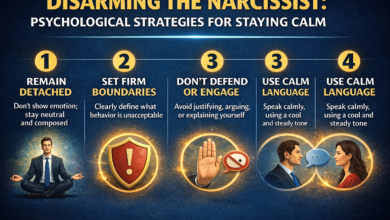
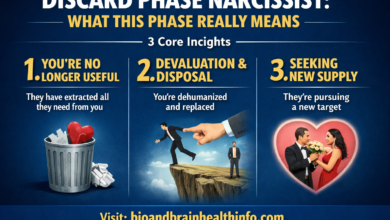
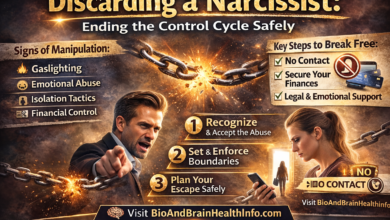
Female Narcissist Signs: Why You Feel Broken
Female Narcissist Traits That Destroy Self-Trust

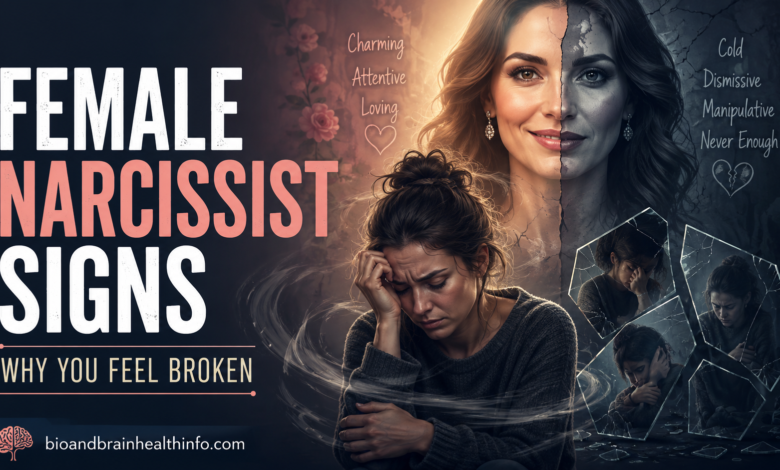
You may carefully rehearse every sentence before speaking, soften your needs and apologise before you even understand what went wrong. These female narcissist relationship signs can leave you emotionally hungry, afraid to speak and constantly trying to prove your love.
Thank you for reading this post, don't forget to subscribe!One day, you receive warmth and attention; the next, you face criticism, silence or emotional distance. Eventually, you may stop asking why the relationship feels unsafe and begin wondering whether you are the problem.
Recognising these patterns is not about diagnosing a woman from a checklist. It is about noticing repeated behaviour that may be weakening your boundaries, emotional safety and ability to trust your own feelings.
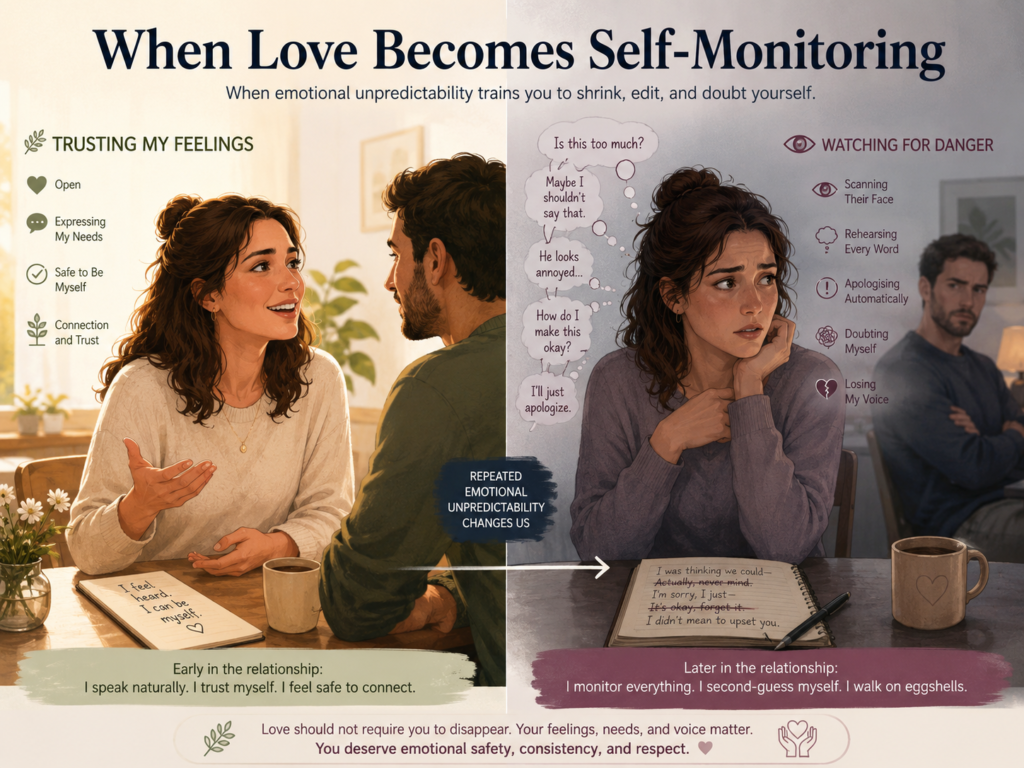
You may feel a tightness in your chest before an ordinary conversation. You may watch her face while speaking, searching for a sign that she is becoming annoyed. At night, you may replay what you said, wondering whether one different word could have prevented the conflict.
The deepest change may not be visible to anyone else. You may simply notice that you are becoming quieter, smaller and less certain of yourself.
“I was not only afraid of losing the relationship. I was slowly losing my ability to trust my own feelings.”
That loss of self-trust deserves to be taken seriously.
What Are Female Narcissist Relationship Signs?
Female narcissist relationship signs are recurring relationship patterns involving entitlement, admiration-seeking, inconsistent empathy, exploitation, blame shifting, emotional control or extreme sensitivity to criticism.
These behaviours may be direct and obvious, but they can also appear indirectly through guilt, silence, selective kindness, competition, victimhood or emotional withdrawal.
A woman can display narcissistic traits without having narcissistic personality disorder. A diagnosis requires a qualified professional to assess a persistent pattern across different areas of life. One selfish decision, one defensive argument or one difficult relationship period is not enough to diagnose someone.
The reader’s practical question therefore does not have to be:
“Can I prove that she is a narcissist?”
More useful questions may include:
- What happens when I express a need?
- Can she accept responsibility without immediately blaming me?
- Does she protect or exploit my vulnerability?
- Can I disagree without losing affection?
- Do my boundaries remain respected when she is upset?
- Am I becoming more secure in this relationship, or more afraid?
You do not need a clinical label before responding to persistent humiliation, manipulation, coercion, fear or emotional harm.
15 Female Narcissist Relationship Signs to Recognise
Not every sign will appear in every relationship. Look at repetition, emotional impact, accountability and what happens when you attempt to address the behaviour.
1. Your Feelings Repeatedly Become Secondary
You try to explain that something hurt you, but the conversation quickly becomes centred on her intentions, pain or sacrifices.
Instead of discussing your experience, you may hear:
- “You never appreciate me.”
- “You always make me the bad person.”
- “I cannot believe you would accuse me of that.”
- “You are too sensitive.”
You entered the conversation seeking understanding. You leave it comforting her, apologising or defending your character.
The original concern remains unresolved.
2. Affection Feels Conditional
Warmth may be strongest when you agree, praise, comply or meet her expectations.
When you say no, protect your time or hold a different opinion, the emotional temperature changes. She may become distant, critical or silent without openly explaining why.
You gradually learn an unspoken rule:
Connection is available when I behave correctly.
Love then stops feeling like a stable emotional bond and begins feeling like a reward you must continually earn.
3. Praise Turns Into Criticism
At the beginning, she may describe you as caring, intelligent, loyal or unlike anyone she has known.
Later, those same qualities become faults.
Your independence becomes selfishness.
Your sensitivity becomes weakness.
Your confidence becomes arrogance.
Your questions become attacks.
This contrast can make you work harder to recover the admiration you once received.
4. Disagreement Is Treated as Disloyalty
Healthy partners can disagree without threatening the relationship.
In a controlling pattern, a different opinion may be interpreted as disrespect, rejection or betrayal. You may be expected to support her version of events, take her side in every conflict and confirm that she is right.
Neutrality may also be punished.
There is little room for two separate minds. You must either agree completely or risk being treated as an enemy.
5. She Rewrites What Happened
You may remember the conversation clearly, yet later hear:
- “I never said that.”
- “That is not what happened.”
- “You misunderstood.”
- “You are twisting everything.”
- “Your past trauma is making you imagine things.”
Everyone can remember details differently. The warning sign is a repeated pattern in which your memory is automatically dismissed while her account becomes the only acceptable reality.
Over time, you may start saving messages or mentally reviewing conversations because you no longer trust your own perception.
6. She Becomes the Victim When Confronted
You raise a specific concern, but the discussion becomes evidence of how cruel, ungrateful or unsupportive you are.
Her pain may be genuine. However, genuine emotion does not remove responsibility.
A person can feel hurt by feedback and still recognise the impact of their behaviour. When victimhood repeatedly blocks accountability, repair becomes nearly impossible.
7. Silence Is Used as Punishment
Taking time to calm down can be healthy when it is communicated clearly:
“I am overwhelmed. I need some time, but I will return to this conversation tonight.”
Punitive silence is different.
There is no reassurance, agreed return or respectful explanation. Contact disappears until you apologise, give up your boundary or prove your loyalty.
Your anxiety becomes the pressure that forces you to comply.
8. Your Boundaries Trigger Guilt or Retaliation
A reasonable boundary such as “I will not continue while I am being insulted” may be treated as rejection or selfishness.
You may hear:
- “You have changed.”
- “A loving partner would not need boundaries.”
- “Someone has turned you against me.”
- “You only care about yourself.”
A healthy partner may feel disappointed by a limit, but they do not continually punish you for having one.
9. Your Success Becomes Competition
A supportive partner does not have to feel perfect about every achievement, but they can usually celebrate what matters to you.
In some relationships, your progress is minimised, compared or redirected. Your partner may become distant when you receive praise, point out flaws in your achievement or claim responsibility for your success.
Eventually, you may hide good news to protect the relationship.
10. Public and Private Behaviour Feel Different
Others may see her as generous, charming, compassionate or endlessly helpful.
In private, you experience contempt, criticism, emotional coldness or control.
The difference can make you doubt yourself:
“Everyone else thinks she is wonderful. Maybe I am the problem.”
Public kindness does not disprove private harm. Some people behave differently when reputation, admiration or consequences are involved.
11. You Become Responsible for Her Emotions
You may feel required to prevent her anger, soothe her insecurity, protect her image and manage every disappointment.
Her emotions become your full-time responsibility, while your feelings are treated as inconvenient.
You are no longer simply participating in a relationship. You are constantly regulating its atmosphere.
12. Apologies Contain Blame
An apology may sound like:
- “I am sorry, but you pushed me.”
- “I am sorry you took it that way.”
- “I would not have said it if you had listened.”
- “Fine, I am always the villain.”
These statements may end the immediate disagreement without creating real accountability.
A repairing apology identifies the behaviour, acknowledges its impact and leads to consistent change.
13. Your Vulnerability Is Later Used Against You
During a quiet moment, she may invite you to share childhood wounds, fears, insecurities or past mistakes.
You believe you are being understood.
Later, that information appears in conflict.
Your fear of abandonment is used to call you needy. Your trauma is used to question your stability. A private mistake is transformed into evidence that your character is defective.
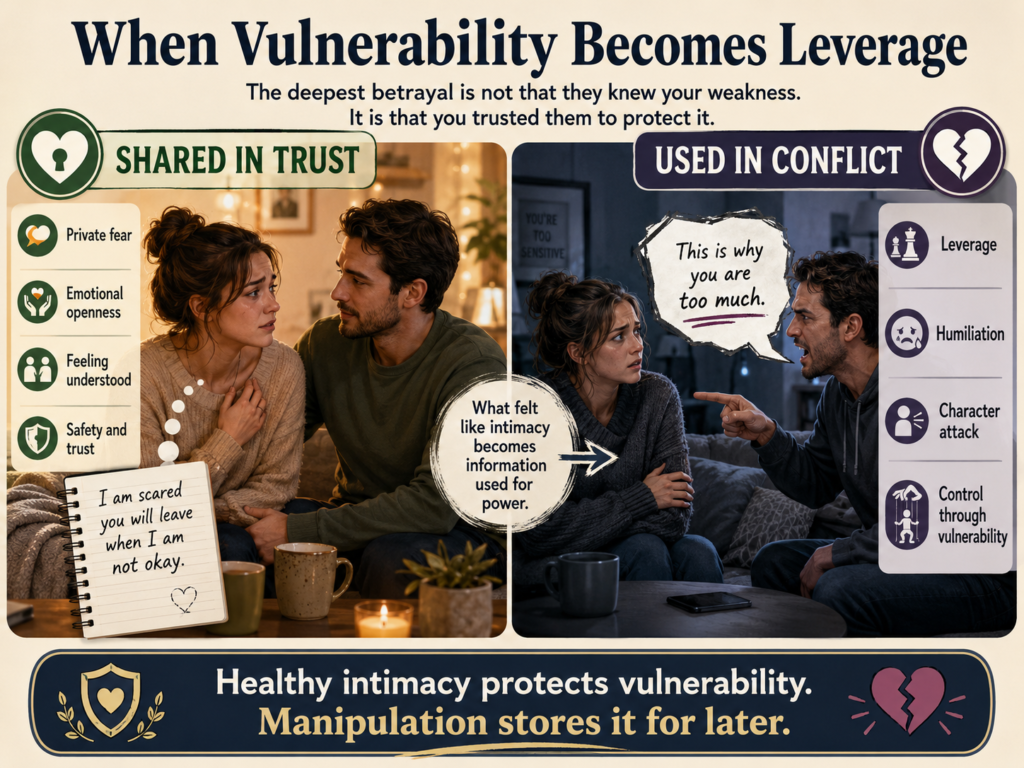
Healthy intimacy protects vulnerability. It does not convert vulnerability into leverage.
14. You Constantly Question Your Character
You may have entered the relationship believing you were caring, competent and reasonable.
Now you repeatedly ask whether you are selfish, unstable, disloyal, abusive or impossible to love.
Self-reflection is healthy. Chronic identity confusion is different.
When every disagreement becomes a judgment of your entire character, you stop examining one event and start defending your worth as a human being.
15. You Feel Smaller Than You Used to Feel
This may be the clearest sign of the relationship’s impact.
You speak less freely. You avoid people. You hide achievements. You question harmless preferences. You feel guilty for needing privacy, rest or respect.
Whatever label ultimately applies, a relationship that repeatedly makes you afraid, isolated or unable to trust yourself deserves attention.
Common Female Narcissist Relationship Traits
Some female narcissist relationship traits appear openly through entitlement, criticism or a need to dominate. Others appear through subtle guilt, emotional withdrawal or selective affection.
Possible patterns include:
- Expecting special consideration
- Becoming highly reactive to criticism
- Needing repeated admiration or reassurance
- Showing empathy when it supports her image
- Resisting responsibility for emotional harm
- Competing with a partner’s success
- Treating boundaries as rejection
- Using affection to reward compliance
- Expecting loyalty without mutual accountability
- Protecting reputation more strongly than the relationship
These female narcissist relationship traits should not be used as a home diagnostic test. Many behaviours can also arise from insecurity, trauma, poor emotional skills, immaturity or other psychological difficulties.
The more useful question is whether the pattern is repeated and whether it changes after honest communication.
A person who lacks skills may still show curiosity, remorse and genuine effort. A person committed to control may repeatedly redirect blame and punish every attempt at change.
Looking at female narcissist relationship traits over time is more informative than judging someone by one bad day or one affectionate period.
For a deeper explanation of how control, criticism and blame can damage perception, read Toxic Narcissist Traits That Damage Self-Trust and Emotional Safety.
How Female Narcissist Partner Behavior Affects You
Searches about female narcissist partner behavior often focus on what the woman does. However, the emotional impact on the partner is equally important.
| Repeated relationship pattern | What you may begin to believe |
|---|---|
| Affection follows compliance | “Love must be earned.” |
| Disagreement causes withdrawal | “Speaking honestly is dangerous.” |
| Blame is continually reversed | “Every conflict is probably my fault.” |
| Private information is weaponised | “Emotional openness is unsafe.” |
| Praise becomes criticism | “I must work harder to become worthy again.” |
| Public charm hides private harm | “Nobody will believe me.” |
| Boundaries trigger punishment | “Protecting myself makes me selfish.” |
| Kindness returns unpredictably | “The loving version will return if I try harder.” |
Evaluate female narcissist partner behavior through what happens during disappointment, conflict and boundary setting—not only during affectionate periods.
Ask:
- Does respect remain when I disagree?
- Can she apologise without blaming me?
- Does she protect information shared in confidence?
- Are my needs treated as legitimate?
- Can I make an independent decision without emotional punishment?
- Does change continue after the immediate crisis passes?
Healthy relationships are not conflict-free. They are relationships in which conflict can eventually lead to understanding, accountability and repair.
Female Covert Narcissist Signs Can Be Difficult to Recognise
Not all narcissistic behaviour is loud, boastful or openly commanding.
Some female covert narcissist signs may appear through chronic victimhood, indirect guilt, hypersensitivity, passive aggression, quiet competition or withdrawal.
Possible patterns include:
- Appearing fragile whenever accountability is required
- Expecting you to anticipate unspoken needs
- Expressing envy through criticism disguised as concern
- Withdrawing warmth instead of naming anger
- Describing herself as continually misunderstood
- Using helpfulness to create obligation
- Competing while denying any competition
- Displaying empathy publicly but dismissing you privately
- Treating reasonable feedback as humiliation
- Using disappointment to influence your choices
These female covert narcissist signs can be difficult to identify because the behaviour may look wounded rather than controlling.
Her pain may be real. Her insecurity may also be real.
But pain does not justify repeated humiliation, coercion or retaliation.
Understanding where behaviour may come from is not the same as accepting its impact.
For more on inconsistent empathy, read Why Covert Narcissists Dismiss Your Emotional Pain.
Female Narcissist Manipulation Tactics Using Vulnerability
Certain female narcissist manipulation tactics rely less on direct demands and more on emotional information.
A person may listen closely when you describe:
- What you fear most
- What happened in childhood
- Why rejection feels painful
- What makes you feel ashamed
- Which relationships you have lost
- Where you feel insecure
- What you regret
At first, this attention may feel like intimacy.
You may think:
“Finally, someone understands the parts of me I usually hide.”
The betrayal occurs when that information returns during conflict.
Your fear becomes evidence that you are unstable.
Your old wound becomes proof that you are too sensitive.
Your private mistake becomes a character attack.
Your need for reassurance becomes a reason to humiliate you.
Among the most painful female narcissist manipulation tactics is the conversion of emotional knowledge into power.
The deepest betrayal may not be that the person discovered your weakness. It may be that you trusted them to protect it.
“Sometimes I felt they behaved well with me only to discover my vulnerable points, analyse my character and learn which reactions could later be used to break me down.”
This experience can make future openness feel dangerous.
Healing does not require becoming emotionally closed to everyone. It requires learning to share gradually and observing whether the other person treats your inner world with care.
Why You May Begin Doubting Your Own Feelings
Repeated mixed signals can create internal confusion.
One day, the relationship feels close and loving. The next day, a minor disagreement produces coldness or contempt.
Your mind tries to find a rule that will make the relationship predictable.
You analyse:
- Your tone
- Your timing
- Your facial expression
- Your text messages
- Whether you were too emotional
- Whether you asked for too much
- Whether you should apologise
This is how female narcissist relationship signs can gradually produce self-monitoring.
You stop asking whether the behaviour was fair and begin asking how you could have prevented it.
Confusion can become attachment glue because every return of affection gives temporary relief. That relief may feel unusually intense after a period of rejection.
The nervous system may interpret the end of distress as proof that the relationship is deeply meaningful.
Relief, however, is not always the same as safety.
How Emotional Unpredictability Affects the Nervous System
When communication repeatedly feels unpredictable, your body may prepare for danger before conflict begins.
Possible reactions include:
- Chest tightness
- Shaking or internal restlessness
- Rapid heartbeat
- Stomach heaviness
- Difficulty concentrating
- Rehearsing conversations
- Checking messages repeatedly
- Trouble sleeping
- Emotional numbness
- Freezing during confrontation
- Apologising automatically
- Feeling exhausted after ordinary contact
These reactions do not diagnose your partner.
They indicate that your body is experiencing significant stress.
Your nervous system is not offering a clinical label. It is offering information about your lived experience.
You may notice that kindness brings immediate physical relief. This can make reconnection feel essential even when the larger pattern remains harmful.
The cycle may look like this:
Connection → tension → criticism or withdrawal → alarm → pursuit → temporary affection → relief → renewed hope
To explore this cycle further, read AI for Narcissistic Abuse Recovery: Trauma Bond Help and Signs.
Attachment Wounds Can Make the Pattern Feel Familiar
People who experienced inconsistent affection, conditional approval or emotional neglect earlier in life may tolerate unpredictability for longer.
This does not mean they caused the relationship dynamic.
It means the emotional rule may feel familiar:
“I must be useful, quiet or accommodating to remain loved.”
A person may then believe:
- If I explain better, she will understand.
- If I become calmer, she will stop withdrawing.
- If I sacrifice more, the relationship will feel secure.
- If I leave, I have failed someone who needs me.
- If I prove my loyalty, I will receive stable love.
Compassion can be valuable. But compassion without boundaries can become self-abandonment.
Your history may explain why you stayed hopeful. It does not require you to continue accepting the same pattern.
Normal Conflict or a Persistent Harmful Pattern?
Every relationship includes defensiveness, misunderstanding and emotional mistakes.
The distinction lies in repetition, accountability, fear and repair.
| Occasional relationship difficulty | Persistent harmful pattern |
|---|---|
| The person reflects after calming down | Accountability is repeatedly avoided |
| Both experiences receive attention | One person’s feelings always dominate |
| An apology leads to change | Apologies reset the cycle without change |
| Boundaries may disappoint but remain respected | Boundaries trigger punishment |
| Conflict stays connected to the issue | Conflict becomes a character attack |
| Vulnerabilities remain private | Personal disclosures become weapons |
| Support may be imperfect but genuine | Your success repeatedly creates competition |
| Time apart is communicated clearly | Silence is used to create anxiety |
| Both partners influence decisions | One person must continually comply |
| The relationship gradually feels safer | You become increasingly afraid |
Looking at female narcissist relationship signs across several months can be more informative than judging the relationship by one argument or one affectionate period.
Do not demand perfection before calling a relationship healthy. But do not reduce persistent harm to “normal conflict” simply because good moments also exist.
Read Also : Always on Edge? How to Calm Your Nervous System
Practical Safety Steps After Recognising the Pattern
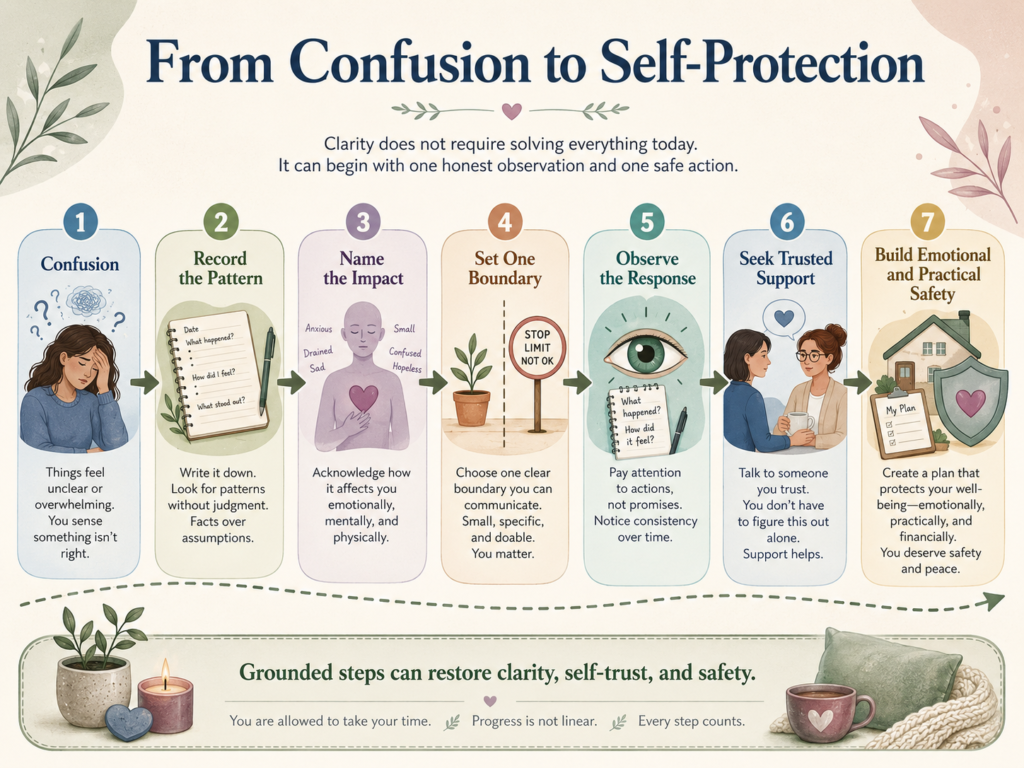
Recognition should lead toward clarity and protection—not endless analysis.
1. Record the Pattern Privately
Write down:
- What happened
- What was said
- What need or boundary you expressed
- What happened afterward
- How your body reacted
- Whether meaningful repair occurred
This is not about building an obsessive case against someone.
It is about seeing the pattern without relying entirely on memory during emotional distress.
Protect your records if your devices are monitored.
2. Name the Impact
Instead of focusing only on whether the other person intended harm, identify what is happening to you.
For example:
- “I am afraid to speak.”
- “I am losing sleep.”
- “I no longer trust my decisions.”
- “I feel pressured to apologise.”
- “I am becoming isolated.”
- “I feel unsafe when she becomes angry.”
Impact matters even when intention remains uncertain.
3. Set One Clear Boundary
Choose a boundary that is specific and realistic:
“I will continue this conversation when we can speak without insults.”
“I am not comfortable discussing that private information.”
“I will make this decision after I have had time to think.”
“I will not answer repeated calls while I am working.”
Long explanations are not always necessary.
4. Observe the Response
A boundary provides information.
Observe whether the person:
- Disagrees but respects it
- Seeks clarification
- Negotiates fairly
- Punishes you
- Threatens the relationship
- Attacks your character
- Recruits other people
- Becomes briefly kind and later retaliates
Actions are often more informative than promises.
5. Reconnect With Trusted Support
Talk to a trusted person, counsellor or appropriate support service.
Isolation can make female narcissist partner behavior harder to evaluate because you have no calm external perspective.
Choose someone who can listen without dismissing your experience or forcing you into a decision that may not be safe.
6. Protect Financial and Digital Privacy
Where control or coercion may be present, consider:
- Changing passwords from a safe device
- Activating two-factor authentication
- Reviewing shared accounts
- Securing identity and financial documents
- Checking location-sharing settings
- Keeping emergency contacts accessible
- Protecting access to medication and money
Do not make sudden changes if doing so could increase immediate danger.
7. Build Emotional and Practical Safety
A safety plan may include:
- One trusted contact
- Emergency money
- Important documents
- Medication
- Safe transport
- A place to stay
- Local emergency or domestic-abuse contacts
- A discreet signal for asking for help
Leaving can sometimes increase danger. Seek specialised support when threats, stalking, coercion or violence are present.
Secure communication can support healthier repair, but it cannot replace safety, boundaries, or professional help when abuse, coercion, humiliation, or fear is present.
Can a Relationship With Narcissistic Traits Improve?
Meaningful change requires more than an emotional apology after a crisis.
Positive indicators include:
- Genuine curiosity about your experience
- Specific accountability
- Respect for boundaries
- Ability to tolerate disagreement
- Reduced retaliation
- Consistent behaviour over time
- Voluntary professional help
- Concern for impact, not only intention
Be cautious when change appears only after you prepare to leave and disappears once the relationship feels secure again.
Promises, tears, gifts and affection can be emotionally powerful. They are not the same as sustained behavioural change.
You cannot love another person into accountability.
Your sincerity cannot create empathy or responsibility on someone else’s behalf.
Read Also : emotional-healing-roadmap
You Do Not Need a Diagnosis to Take Your Pain Seriously
Understanding female narcissist relationship signs may help you find language for your experience. Your protection, however, should not depend on proving a diagnosis.
Perhaps the person has narcissistic personality disorder.
Perhaps she has narcissistic traits, trauma, emotional immaturity, another psychological condition or no formal diagnosis.
The label may remain uncertain.
The impact can still be clear:
- You are afraid to speak.
- Your boundaries are punished.
- Your vulnerabilities are weaponised.
- Your confidence is declining.
- You feel controlled or humiliated.
- You are living in fear.
- Repair does not occur.
A diagnosis may help explain behaviour. It does not excuse abuse.
The absence of a diagnosis does not make harmful behaviour acceptable.
People Also Ask
What are the clearest female narcissist relationship signs?
Common patterns include conditional affection, blame shifting, inconsistent empathy, punishment after boundaries, admiration-seeking, competition and using private information during conflict. One behaviour cannot diagnose narcissistic personality disorder. Consider whether the pattern is persistent and whether it is damaging your safety, dignity or self-trust.
How does a female narcissist treat her partner?
Possible female narcissist partner behavior may include praising and later criticising a partner, linking affection to compliance, shifting emotional responsibility, dismissing needs or punishing disagreement. Behaviour varies between people, so focus on recurring actions and whether genuine accountability and repair are possible.
What are common female covert narcissist signs?
Possible female covert narcissist signs include chronic victimhood, indirect guilt, passive aggression, selective empathy, hypersensitivity to feedback, quiet competition and emotional withdrawal. These behaviours may also have other causes, which is why a qualified professional is needed for diagnosis.
Why do I keep doubting myself in the relationship?
Repeated denial, shifting explanations, criticism and unpredictable affection can weaken trust in your own perception. You may become focused on preventing conflict rather than evaluating whether the behaviour is fair. Recording patterns and seeking a grounded outside perspective may help restore clarity.
Can someone with narcissistic traits genuinely love a partner?
No checklist can measure another person’s internal capacity for love. The practical question is whether the relationship consistently includes empathy, respect, accountability, safety and room for both people. Claimed love does not make repeated humiliation, coercion or emotional control acceptable.
Read Also : narcissism
Frequently Asked Questions
Should I tell my partner that she is a narcissist?
Directly applying a diagnostic label during conflict is unlikely to create productive change and may increase defensiveness. Discuss specific behaviour, impact and boundaries instead. If you fear retaliation, coercion or violence, seek professional or specialist safety guidance before confronting the person.
Am I too sensitive if the relationship affects my body?
No. Chest tightness, shaking, sleeplessness, stomach distress or emotional shutdown can be genuine stress reactions. These symptoms do not prove narcissism, but they indicate that your body is struggling. A healthcare or mental-health professional can help you assess both physical and psychological causes.
Can couples therapy help?
Couples therapy may help when both partners can participate honestly and safely. It may be unsuitable during active coercive control or abuse because information disclosed in therapy can sometimes be used later. Individual and specialist support may be safer when power and fear are significant concerns.
Why do I still miss her after recognising harmful behaviour?
You may miss affection, hope, companionship, identity or the relief that followed reconciliation. Attachment does not disappear merely because you understand a harmful pattern. Missing someone is an emotional experience; it is not proof that returning is safe.
How can I rebuild self-trust?
Begin with small acts. Name one feeling without immediately arguing against it. Record one pattern. Make one independent decision. Reconnect with one trustworthy person. Maintain one reasonable boundary. Self-trust often returns through repeated evidence that you can hear and protect yourself.
Read Also: understanding-narcissism
Personal Note
I understand why an emotionally sincere person keeps believing.
We may assume that because we would protect another person’s vulnerability, they will protect ours. Because our own love is genuine, we interpret temporary tenderness as proof of the same depth of care in them.
But love should not require constant self-abandonment.
Being emotionally understood is also not always the same as being emotionally safe. Someone may learn your reactions, wounds and weakest points without using that knowledge to care for you.
You may have trusted deeply because you were capable of deep love.
That does not make you foolish.
The healing direction is not to become cold or suspicious of everyone. It is to place trust where honesty is met with privacy, compassion, accountability and respect.
For further support, read Healing After a Narcissistic Relationship: Why You Still Miss Them.
You may also find Recovering Self-Worth After Narcissistic Abuse .
BBH Support Resource
Do You Keep Questioning What Is Happening in Your Relationship?
Download the BBH Relationship Pattern and Self-Trust Worksheet to reflect on:
- Recurring behaviour
- What happens when you express a need
- Emotional and physical reactions
- Boundaries that may be crossed
- Evidence of repair or repeated harm
- Trusted support
- Safer next steps
Download the free worksheet:
[BBH Relationship Pattern and Self-Trust Worksheet – PDF]
This worksheet is designed for personal reflection and education. It cannot diagnose another person or replace professional mental-health, medical, legal, domestic-abuse or emergency support.
YMYL Safety Note
This article is for education and self-reflection. It cannot diagnose narcissistic personality disorder or replace individual medical, psychological, legal or domestic-abuse support. If you are experiencing threats, stalking, coercion, sexual violence, physical danger or fear of retaliation, contact local emergency services or a qualified domestic-abuse organisation from a safe device.
Final Reflection
The most important evidence may not be whether you can prove that another person fits every item on a narcissism checklist.
It may be what has gradually happened inside you.
- Your voice has become quieter.
- Your body prepares for conflict before you speak.
- You feel emotionally hungry while continually giving more.
- You share less because vulnerability no longer feels protected.
Recognising female narcissist relationship signs is not an invitation to hate, diagnose or publicly expose someone. It is an invitation to stop abandoning your own experience.
Understanding female narcissist relationship signs should return your attention to emotional safety—not trap you in endless analysis of another person.
You may have stayed because the loving moments felt real. You may have forgiven because you believed repair was possible. You may have tried harder because losing the relationship felt unbearable.
None of this makes you weak.
But your emotional depth cannot create love, empathy or respect on another person’s behalf.
Healthy love does not require you to surrender your memory, dignity, boundaries or identity. It does not study your wounds to gain power. It does not make safety dependent on obedience.
You do not have to solve your entire future today.
Begin with one honest question:
Am I being loved as a complete person—or am I being trained to abandon myself so the relationship can continue?
Your answer deserves to be heard.
External References
Mayo Clinic
Narcissistic Personality Disorder: Symptoms and Causes
https://www.mayoclinic.org/diseases-conditions/narcissistic-personality-disorder/symptoms-causes/syc-20366662
American Psychiatric Association
What Is Narcissistic Personality Disorder?
https://www.psychiatry.org/news-room/apa-blogs/what-is-narcissistic-personality-disorder
American Psychiatric Association
What Are Personality Disorders?
https://www.psychiatry.org/patients-families/personality-disorders/what-are-personality-disorders
Cleveland Clinic
Narcissistic Personality Disorder: Symptoms and Treatment
https://my.clevelandclinic.org/health/diseases/9742-narcissistic-personality-disorder