How to Live Consciously Every Day: Practical Guide to Awareness
How Conscious Living Changes Your Mind, Emotions and Daily Life

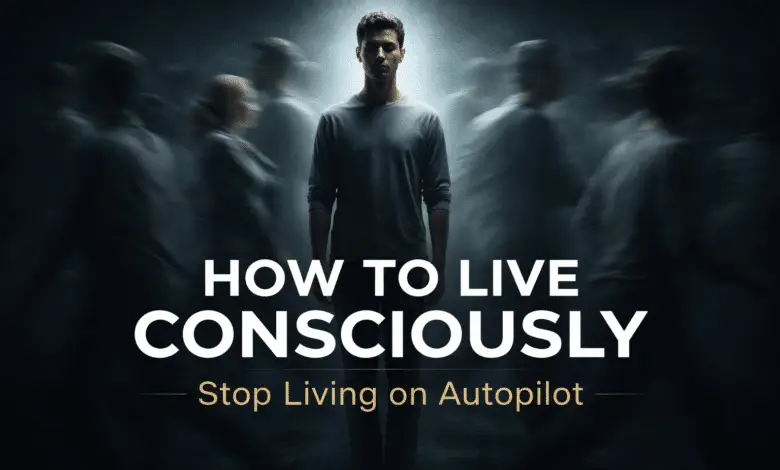
Learning how to live consciously every day is not about becoming perfect or emotionally detached from life. It is about developing a daily awareness practice that helps you notice your thoughts, emotions, and reactions before they control your behavior.
Thank you for reading this post, don't forget to subscribe!Through mindfulness in daily life, you begin to see how unconscious patterns shape your decisions, relationships, and emotional suffering.
Over time, building conscious living habits allows you to respond with greater intention instead of reacting on autopilot.
This creates deeper emotional clarity and self awareness, helping you understand yourself more honestly and live with greater peace, stability, and purpose.
How to Live Consciously Every Day Starts With Seeing How Unconsciously You Live
Most people searching how to live consciously every day are not actually asking for spirituality.
They are asking because they are tired.
Tired of reacting the same way.
Tired of overthinking the same situations.
Tired of knowing better—but still doing the same things.
That is where conscious living truly begins.
It begins when you realize: “I understand my patterns… but I still keep repeating them.”
For me, learning how to live consciously every day did not start from peace.
It started from pain.
There was a period in my life when my emotions controlled everything.
One trigger could destroy my whole day.
One painful memory could make my body freeze.
One rejection, one fear, one uncertainty—and suddenly my mind would spiral into overthinking, helplessness, and emotional collapse.
At that time, I thought the problem was life.
But later I realized: The deeper problem was not life itself. The deeper problem was that I was living unconsciously inside my own mind.
My thoughts were running without awareness.
My emotions were dictating my behavior.
My wounds were shaping my decisions.
My nervous system was reacting before my logic could even think.
That is how most people live.
Not consciously.
Not intentionally.
But automatically.
And until you see that clearly, you cannot truly begin how to live consciously every day in a real, practical way.
What Does It Actually Mean to Live Consciously Every Day?
Many people think conscious living means:
- Meditating for hours
- Becoming spiritually detached
- Staying calm all the time
- Never feeling emotional again
That is not reality.
Conscious Living Means Awareness Before Reaction
To live consciously every day means: You notice what is happening inside you before blindly reacting to it.
It means:
- You observe your thoughts before believing them
- You feel emotions before acting from them
- You pause before reacting impulsively
- You choose response over automatic behavior
That is real daily awareness practice.
Conscious living is not perfection.
It is: Awareness entering the space where autopilot once ruled.
Read Also: What Is Conscious Living? Meaning Explained
Why Most People Struggle With Conscious Living Habits
If conscious living sounds simple, why is it so hard?
Because knowledge alone does not create awareness.
You can know everything about psychology, spirituality, trauma, nervous systems, and mindfulness in daily life—
…and still remain unconscious in your behavior.
Why?
Because awareness is not information.
Awareness is practiced observation.
Your Nervous System Reacts Before Your Logic
One reason mindfulness in daily life feels difficult is because your body reacts faster than your mind thinks.
When fear rises…
- Heart rate increases
- Muscles tighten
- Thoughts race
- Panic begins
- Old survival patterns activate
At that point, your nervous system is not asking: “What is the wise response?”
It is asking: “How do I survive this discomfort immediately?”
That is why people:
- Text impulsively
- React in anger
- Over-explain
- Beg for reassurance
- Avoid hard truths
- Return to unhealthy patterns
They are not acting from awareness.
They are acting from activation.
Your Conditioning Is Older Than Your Intentions
Another reason learning how to live consciously every day is difficult:
Because your unconscious patterns have been repeated for years.
Think about it:
If for ten years your system learned to:
- Fear abandonment
- Panic during uncertainty
- Seek validation from others
- Overthink every problem
- Attach peace to outcomes
Then awareness alone will not erase that overnight.
Your conscious mind may say: “Stay calm.”
But your conditioning says: “Danger. Panic. React now.”
This is why conscious living habits take repetition.
You are not just learning awareness.
You are retraining your entire internal system.
Read Also: how to practice detachment in daily life
My Experience: The Moment I Realized Awareness Was Different From Knowledge
For a long time, I believed understanding should automatically create healing.
I thought: “If I understand my emotions, why do I still feel controlled by them?”
That confusion broke me for a while.
Because intellectually I understood many things:
- I knew attachment was hurting me
- I knew fear was distorting my thinking
- I knew overthinking solved nothing
- I knew emotional reactions damaged my peace
Yet despite knowing all this—
I still reacted.
I still spiraled.
I still suffered.
I still lost peace to temporary situations.
Then I realized something that changed everything: Knowledge is not awareness. Awareness is what happens in the moment of activation.
You do not know whether you are conscious
when life is calm.
You discover it when:
- Someone triggers your wound
- Fear enters your body
- Uncertainty appears
- Reality does not go your way
- Your emotions demand immediate reaction
That is the true test of emotional clarity and self awareness.
Why Awareness Feels Uncomfortable at First
One reason many people quit practicing conscious living:
Because awareness initially increases discomfort.
Why?
Because when you stop distracting yourself…
You begin to see:
- Your patterns clearly
- Your emotional addictions clearly
- Your attachments clearly
- Your ego reactions clearly
- Your self-sabotage clearly
And that can be painful.
Awareness Removes Illusion
Before awareness:
- You blame others
- You justify reactions
- You call attachment “love”
- You call fear “logic”
- You call control “care”
But when awareness develops…
You begin to see truth.
And truth can hurt before it heals.
This is where many spiritual traditions call it Maya—
the illusion created by unconscious perception.
From a psychological lens: Maya is not fantasy. It is distorted perception created by attachment, fear, ego, and conditioning.
Learning how to live consciously every day means slowly seeing through that distortion.
The Core Shift: Conscious Living Is Not About Controlling Thoughts
Many people misunderstand daily awareness practice.
They think conscious living means:
- Stop negative thoughts
- Never feel anxious
- Force positivity
- Control every emotion
No.
That is suppression—not awareness.
Real Conscious Living Looks Like This
Instead of saying: “Why am I thinking this?”
You begin saying: “Interesting… this thought is appearing again.”
Instead of: “I need to stop feeling this.”
You begin saying: “This emotion is present right now.”
Instead of: “I must fix this immediately.”
You begin saying: “Let me observe before reacting.”
That is mindfulness in daily life.
Not control.
Observation.
Read Also : Maya Meaning in Psychology: The Illusion of Perception
The First Rule of Conscious Living
If you remember only one thing from this blog, remember this: You cannot change what you do not observe.
Most people try to improve behavior
without first observing behavior.
They try to:
- Fix anger without studying triggers
- Stop overthinking without noticing patterns
- Build discipline without understanding avoidance
- Heal attachment without seeing emotional dependency
That never works long term.
Because transformation begins with observation.
Part 1 Closing Reflection
Learning how to live consciously every day is not about becoming perfect.
It is about becoming aware enough to notice:
- When you are reacting unconsciously
- When your nervous system is activated
- When your thoughts are distorting reality
- When your patterns are driving behavior
Before conscious living becomes action…
It first becomes observation.
And that is where your real journey begins. The person who starts observing their mind has already begun leaving autopilot.
The Practical System for How to Live Consciously Every Day When Emotions Take Over
Understanding the idea of conscious living is useful, but most people do not struggle because they lack information. They struggle because the moment emotion rises, all their knowledge disappears and their nervous system takes control.
This is why many people understand psychology, mindfulness, and self-awareness intellectually yet still repeat the same emotional patterns.
The true challenge of how to live consciously every day is not understanding awareness when life is calm—it is remembering awareness when your body is activated, your thoughts are racing, and your emotions are demanding immediate reaction.
This is where conscious living stops being philosophy and becomes practical skill. Real mindfulness in daily life is not tested when everything is peaceful.
It is tested when someone disappoints you, when uncertainty enters your future, when rejection wounds your ego, when fear grips your body, or when an old emotional pattern gets triggered again.
In those moments, your mind will try to convince you that reacting immediately is necessary.
It will tell you to fix, chase, argue, panic, overthink, or control. Conscious living means learning how to pause inside that activation and move through a structured awareness process before you let emotion dictate your behavior.
Step 1: Begin With Daily Awareness Practice by Observing Your Internal State
The first step in how to live consciously every day is learning to interrupt the automatic reaction cycle with one powerful question:
What Is Happening Inside Me Right Now?
This question sounds simple, but it changes everything because most people focus immediately on the external problem while ignoring the internal reaction.
They think only about what the other person did, what the situation means, what might happen next, or how to make the discomfort stop.
Conscious living begins when you stop focusing outward first and instead turn awareness inward.
Ask yourself what is happening in your body and mind in this moment. Notice whether your chest is tight, your breathing is shallow, your thoughts are racing, or your stomach feels heavy. Identify the emotion present beneath the surface.
Is it fear, anger, helplessness, rejection, shame, grief, insecurity, or loss of control?
This is the foundation of emotional clarity and self awareness because until you can accurately identify what is happening within you, you will remain controlled by unconscious emotional reactions.
Step 2: Examine How the Thought Is Affecting Your Physical and Emotional State
Once you notice what is happening inside you, the next part of daily awareness practice is evaluating the impact of the thought or situation on your nervous system. Many people assume that because a thought feels urgent, it must be important. But urgency is not always truth. Often, urgency is simply activation.
- Ask yourself how this thought is affecting your physical and emotional state.
- Is it increasing tension in your body?
- Is it creating panic, pressure, emotional heaviness, or mental chaos?
- Is your nervous system moving toward regulation or dysregulation?
This matters because conscious living requires learning to distinguish between clarity and activation. If a thought is making your body more unstable, more reactive, and more distressed, that usually means you are not thinking from grounded awareness—you are thinking from emotional survival mode.
One of the most overlooked parts of mindfulness in daily life is recognizing that your body often reveals the truth before your mind does.
A dysregulated body cannot produce stable thinking. If your nervous system is in panic, fear, or emotional overwhelm, your interpretation of reality is likely distorted.
Step 3: Separate Reality From Mental Projection
A critical part of how to live consciously every day is learning to ask whether you are responding to reality or reacting to mental projection. Many people are not suffering from the present moment itself; they are suffering from what their mind is adding to the present moment.
They react not only to what is happening, but to imagined futures, remembered pain, catastrophic assumptions, and emotional interpretations.
This is why you must ask yourself whether the situation truly requires this level of emotional investment.
- Is the problem actually occurring right now, or is your mind projecting possible outcomes?
- Are you reacting to the present, or are you reliving past wounds through current circumstances?
- Is this pain coming from reality, or from fear attached to what this situation might mean?
This is where the concept of Maya becomes practical. In spiritual language, Maya refers to illusion. In psychological terms, Maya is the distortion created when fear, attachment, ego, and conditioning alter your perception of reality.
Much of emotional suffering comes not from reality itself, but from unconscious interpretation layered on top of reality. Learning how to live consciously every day means repeatedly separating facts from mental distortion.
Step 4: Ask What You Would Advise Someone Else in This Same Situation
One of the most effective ways to strengthen emotional clarity and self awareness is to temporarily remove yourself from the emotional center of the problem. Emotional activation creates bias. It makes your suffering feel unique, urgent, and impossible to navigate rationally.
A simple way to break that bias is to ask what advice you would give someone else if they came to you with this exact situation.
- If your friend were overthinking this same problem, would you tell them to panic for three days?
- If someone you cared about were emotionally spiraling over the same issue, would you advise them to destroy their peace, lose sleep, and abandon their priorities?
Usually the answer is no. You would offer them calm, perspective, patience, and grounded thinking.
This perspective shift matters because many people possess wisdom for others but lose access to that wisdom when emotionally activated themselves. Conscious living means learning to extend that same perspective inward.
Step 5: Identify Whether This Is a Repeated Pattern or a New Reality
Another essential part of conscious living habits is asking whether the current thought is truly new or simply a repeated pattern wearing a different face. Many people live inside loops without realizing it.
The same emotional themes keep appearing through different situations, relationships, fears, and circumstances. The names change, but the inner pattern remains identical.
Ask yourself honestly whether you have felt this before.
- Have you reacted this way in previous situations?
- Does this emotional spiral follow a familiar script?
- Is this the same fear of abandonment, the same fear of failure, the same fear of rejection, the same need for control, the same insecurity repeating again?
If the answer is yes, then you are not facing a new truth. You are facing an old pattern. Recognizing repeated patterns is one of the most powerful forms of mindfulness in daily life because it helps you stop treating recurring emotional loops as fresh emergencies.
Step 6: Evaluate Whether This Is Worth Your Time, Peace, and Energy
One of the most mature questions in how to live consciously every day is this: Is this truly worth the amount of life energy I am giving it? Most people never ask this.
They assume that if something hurts, they must keep thinking about it. If something feels unresolved, they must keep mentally engaging with it. If a thought repeats, it must deserve attention.
But conscious living requires a different standard. You must ask whether this issue deserves your time, your emotional bandwidth, your peace, and your nervous system energy.
- Is this worth burning hours of mental space?
- Is obsessing over this helping your future?
- Is giving this thought constant attention improving your life?
- Or is it simply draining your focus from more meaningful growth, learning, and action?
Sometimes awareness means realizing that a thought is not false—but still not worth your peace.
Step 7: Delay Reaction and Use the 72-Hour Rule
Not every emotional state requires immediate action. One of the strongest conscious living habits you can build is delaying emotionally driven decisions.
When highly activated, your mind believes urgency equals importance, but many things lose emotional intensity when given time and space.
If a situation does not require immediate action, write it down. Observe it. Let it sit. Revisit it after twenty-four to seventy-two hours.
During that delay, emotional activation often decreases and clarity increases naturally. Problems that felt overwhelming in the moment often become manageable—or irrelevant—once your nervous system stabilizes.
This practice is not avoidance. It is intelligent emotional regulation. Learning how to live consciously every day means understanding that delayed response is often wiser than immediate reaction.
Part 2 Closing Reflection
Real conscious living is not abstract philosophy. It is the practical ability to interrupt emotional momentum and bring awareness into moments where you once operated unconsciously.
It is the discipline of observing your internal state, checking reality against distortion, identifying repeated patterns, protecting your energy, and refusing to let temporary emotion dictate permanent decisions.
The person who learns to pause in the middle of emotional activation has already changed their life more than they realize.
Read Also : Attachment and Suffering: 10 Reasons Your Mind Can’t Let Go
How to Make Conscious Living a Daily Practice Instead of a Temporary Insight
Understanding awareness is valuable, and learning the practical framework for emotional regulation is powerful, but none of it creates transformation unless it becomes part of your daily life. This is where many people fail in the journey of how to live consciously every day.
They have moments of clarity, moments of insight, and moments of deep self-awareness, yet within days they return to old reactions because awareness was treated as inspiration rather than practice.
Conscious living only becomes stable when it is repeated often enough to reshape your normal way of thinking, feeling, and behaving.
The truth is that your unconscious patterns were not created in one day. They were built through years of repeated thoughts, repeated emotional reactions, repeated interpretations of reality, and repeated habits of avoidance, attachment, fear, and control.
That means learning how to live consciously every day requires repetition as well. Awareness must be practiced consistently until it stops feeling like something you do and starts becoming who you are.
Why Conscious Living Habits Must Be Practiced Daily
Most people underestimate the importance of repetition. They assume that because they intellectually understand a concept, their behavior should automatically change. But the nervous system does not change through understanding alone. It changes through repeated lived experience.
Every time you pause instead of react, your brain learns a new pathway. Every time you observe a thought without obeying it, your mind becomes slightly less controlled by unconscious patterns.
Every time you delay emotional action and allow clarity to return, your nervous system learns that discomfort can be tolerated without panic. This is why conscious living habits matter so much.
They are not small rituals; they are the daily repetitions that slowly rewire your internal system.
Conscious living is not built in dramatic breakthroughs. It is built in quiet moments of repeated awareness.
Morning Practice: Start the Day With Daily Awareness Practice Before the World Enters
How you begin your day often shapes the quality of your awareness for the rest of it. If the first thing you do every morning is check messages, react to stress, scroll social media, or mentally enter survival mode, your nervous system begins the day externally focused and unconsciously reactive.
To build mindfulness in daily life, you need at least a few moments each morning where awareness comes before stimulation.
A simple morning daily awareness practice can begin by sitting quietly for five minutes before engaging with the outside world. During that time, observe what thoughts are present without trying to control them. Notice your emotional baseline.
Ask yourself what state your body is in and what energy you are bringing into the day.
Then set one simple intention such as, “Today I will notice before I react,” or, “Today I will protect my peace before pleasing others.”
This is not about becoming perfectly calm every morning. It is about reminding your mind that awareness leads the day—not unconscious momentum.
Midday Practice: Use Real-Time Awareness Throughout the Day
The middle of the day is where conscious living is actually tested. Morning routines are helpful, but true how to live consciously every day is measured in real-world moments—during conversations, disappointments, work stress, relationship triggers, setbacks, and uncertainty.
This is where you apply the awareness framework from Part 2.
When you feel emotional activation rising during the day, pause before reacting and run the internal process you have built.
- Observe what is happening inside you.
- Check whether your body is activated.
- Ask whether this is reality or projection.
Identify whether this is a repeated pattern. Decide whether the situation deserves your peace and energy. If needed, delay the response instead of reacting immediately.
These small pauses may seem insignificant, but this is exactly how emotional clarity and self awareness become embodied. You are teaching your system that awareness, not urgency, leads behavior.
Evening Practice: Reflection Builds Self-Awareness Faster Than Most People Realize
One of the most powerful tools for how to live consciously every day is evening reflection. Most people move through their entire day unconsciously and never pause to examine what happened internally. As a result, they repeat patterns without learning from them.
Each evening, spend a few minutes reviewing your day honestly. Ask yourself where you reacted unconsciously, where you stayed aware, what triggered you most strongly, what emotional pattern repeated, and what situation drained more energy than it deserved.
Reflect on whether you protected your peace or abandoned it. Notice where awareness was present and where old conditioning still took over.
This process develops emotional clarity and self awareness rapidly because reflection transforms daily experience into learning. Without reflection, pain repeats. With reflection, pain teaches.
Read Also : Detachment & Awareness
Why Progress in Conscious Living Feels Slow at First
Many people quit because they expect immediate transformation. They believe that once they start practicing awareness, they should quickly stop overthinking, reacting, feeling anxious, or repeating old patterns.
But real conscious living develops slowly because you are retraining patterns built over years.
At first, you may only notice your reactions after they happen. Then you begin noticing during the reaction. Eventually, you notice before the reaction fully forms.
- That progression is growth.
- The goal is not instant perfection.
- The goal is gradually shortening the gap between unconscious impulse and conscious awareness.
This is the real process of mindfulness in daily life. Awareness enters a little earlier each time until eventually it becomes your natural first response.
Conscious Living Does Not Remove Emotion—It Changes Your Relationship With It
An important truth many people miss is that learning how to live consciously every day does not mean becoming emotionless.
Conscious people still feel fear, sadness, anger, grief, attachment, uncertainty, and pain. The difference is that they are no longer fully ruled by those emotions.
Emotions stop becoming commands and start becoming information. Thoughts stop becoming truth and start becoming mental events.
Pain stops becoming identity and starts becoming experience. This is the deeper purpose of conscious living: not the removal of difficulty, but the creation of inner stability within difficulty.
Final Personal Reflection
For me, conscious living was never about becoming perfectly peaceful or spiritually detached from all pain. It was about finally realizing that most of my suffering did not come only from life itself—it came from how unconsciously I was reacting to life.
It came from believing every thought, obeying every fear, attaching to every outcome, and letting every emotional storm dictate my behavior.
The more I practiced awareness, the more I understood something simple but life-changing: Peace does not come from controlling life. Peace comes from learning not to lose yourself inside life.
That is what how to live consciously every day truly means.
- It means noticing what is happening inside you before it controls you.
- It means protecting your peace more than your impulses.
- It means choosing awareness over autopilot, one moment at a time.
And eventually, after enough repetition, awareness stops feeling like effort.
It becomes your nature.
Read Also: Emotional Healing Roadmap – Step-by-Step Guide to Inner Stability
Personal Note
Clarity did not return to my life when the world became easier.
It returned when I stopped letting every thought, emotion, and fear decide who I would be that day.
FAQ — How to Live Consciously Every Day
1. What does it mean to live consciously every day?
Living consciously every day means being aware of your thoughts, emotions, and behaviors before automatically reacting to them. It involves making decisions with intention, practicing self-awareness, and responding to life from clarity instead of unconscious habits.
2. How can I start living more consciously in daily life?
You can start by pausing before reacting, observing your thoughts, noticing emotional triggers, reflecting on your behavior, and asking yourself whether your actions are aligned with peace, values, and awareness.
3. Why is it so hard to live consciously every day?
It is difficult because most people operate through unconscious conditioning, nervous system reactions, emotional patterns, and habitual thinking. Conscious living requires retraining these automatic responses through repeated awareness practice.
4. Does mindfulness help with conscious living?
Yes. Mindfulness in daily life helps you notice thoughts, emotions, and bodily sensations without immediately reacting to them, which strengthens your ability to live consciously and respond with awareness.
5. Can conscious living reduce overthinking?
Yes. Learning how to live consciously every day can reduce overthinking by helping you observe thoughts without automatically believing or following them, creating space between thinking and reacting.
6. How do conscious living habits improve emotional health?
Conscious living habits improve emotional health by increasing emotional regulation, reducing impulsive reactions, improving self-awareness, and helping you respond to triggers with greater stability and clarity.
7. What is the difference between conscious living and mindfulness?
Mindfulness is one tool used within conscious living. Mindfulness focuses on present-moment awareness, while conscious living includes broader intentional behavior, emotional awareness, self-reflection, and value-based decision making.
8. Can conscious living help with relationships?
Yes. Conscious living improves relationships by helping you communicate with awareness, manage emotional triggers, establish healthier boundaries, and respond thoughtfully rather than react impulsively.
9. How long does it take to develop conscious living habits?
Developing conscious living habits takes time and repetition. Progress usually happens gradually as awareness begins to appear earlier in your reactions and daily decisions.
10. Is conscious living a spiritual or psychological practice?
It can be both. Conscious living is often discussed spiritually, but it is also deeply psychological because it involves self-awareness, emotional regulation, nervous system regulation, and intentional behavioral change.
People Also Ask
How do you live consciously every day in real life?
You live consciously every day by observing your thoughts, emotions, and reactions before acting on them. This includes pausing before reacting, reflecting on your behavior, and making intentional decisions instead of living on autopilot.
What are the benefits of living consciously every day?
Living consciously improves emotional regulation, decision-making, self-awareness, mental clarity, and inner peace. It helps reduce impulsive reactions, overthinking, and unconscious behavioral patterns over time.
Why do most people live unconsciously?
Most people live unconsciously because they operate through habitual thinking, emotional conditioning, nervous system reactions, and repeated behavioral patterns formed over years without awareness.
How can I become more conscious of my thoughts and emotions?
You become more conscious by practicing self-observation, pausing before reacting, journaling, reflecting on emotional triggers, and noticing recurring thought patterns without immediately believing them.
What is the difference between conscious living and mindfulness?
Mindfulness is the practice of present-moment awareness, while conscious living is the broader lifestyle of making intentional decisions through self-awareness, emotional regulation, and thoughtful action.
Can conscious living improve mental health?
Conscious living can support mental health by helping reduce emotional reactivity, improve self-awareness, strengthen coping skills, and create healthier behavioral responses to stress and triggers.
How do conscious habits change your life over time?
Conscious habits gradually retrain the brain and nervous system by reinforcing awareness, improving emotional regulation, and replacing automatic reactions with intentional responses.
Why is self-awareness important for conscious living?
Self-awareness is essential because you cannot change patterns you do not recognize. Conscious living begins with noticing your thoughts, emotions, triggers, and behaviors clearly.
How does emotional awareness help you live consciously?
Emotional awareness helps you identify what you are feeling before emotions control your actions, allowing you to respond thoughtfully instead of reacting impulsively.
Can conscious living reduce anxiety and overthinking?
Yes, conscious living can reduce anxiety and overthinking by teaching you to observe thoughts without immediately reacting to them, which creates space between mental activity and behavior.
Psychology / Self-Awareness / Mindfulness References
- Mindful – What Is Mindfulness?
https://www.mindful.org/what-is-mindfulness/ - Psychology Today – Self-Awareness
https://www.psychologytoday.com/us/basics/self-awareness - Verywell Mind – How to Be More Self-Aware
https://www.verywellmind.com/how-to-be-more-self-aware-4164379 - Harvard Health – Mindfulness Meditation Improves Emotional Health
https://www.health.harvard.edu/mind-and-mood/mindfulness-meditation-may-ease-anxiety-mental-stress
Nervous System / Emotional Regulation References
- Cleveland Clinic – Emotional Regulation Skills
https://health.clevelandclinic.org/emotional-regulation/ - Psychology Today – Emotional Regulation
https://www.psychologytoday.com/us/basics/emotion-regulation
Habit / Behavior Change References
- James Clear – Identity-Based Habits
https://jamesclear.com/identity-based-habits - Verywell Mind – Habit Formation Psychology
https://www.verywellmind.com/what-is-a-habit-2795237
Spiritual / Awareness / Gita Support (Optional Integration)
- Bhagavad Gita Chapter 2 – Self-Control & Steady Wisdom
https://www.holy-bhagavad-gita.org/chapter/2 - Bhagavad Gita Chapter 6 – Mind Discipline / Awareness
https://www.holy-bhagavad-gita.org/chapter/6