Narcissistic parenting traits: how do I know if I am a narcissist
How Do I Know If I Am a Narcissist in My Family Life or Just a Strict Parent?

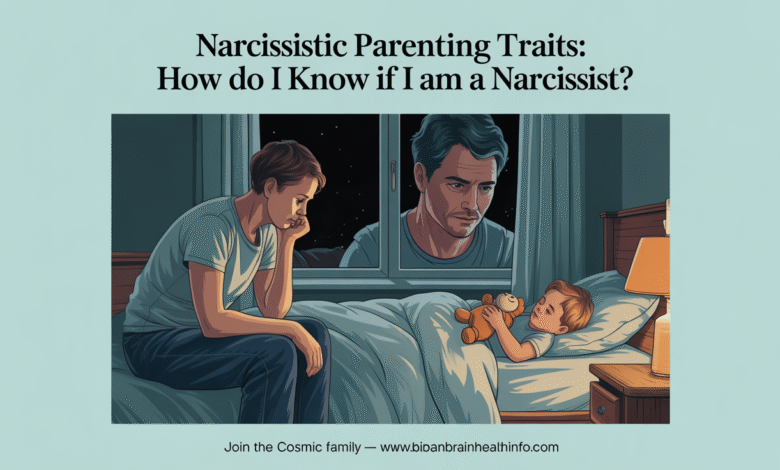
Introduction—The Silent Guilt of Parenting
Narcissistic parenting traits, family relationship psychology, control vs care in parenting, and emotional neglect in families together reveal how love can heal or harm the soul within a home.
Thank you for reading this post, don't forget to subscribe!Many parents silently wrestle with the question: how do I know if I am a narcissist in the way I raise my children?
They wonder, “Am I being protective, or am I being controlling? Am I setting discipline, or am I making my child live in fear?”
This confusion is not trivial. Modern psychology has studied narcissistic parenting traits, family relationship psychology, control vs care in parenting, and the effects of emotional neglect in families. These four lenses help us distinguish between love-based strictness and ego-driven control.
Narcissistic Parenting Traits—What They Look Like
Researchers describe narcissistic parenting traits as patterns where parents use children to fulfill their needs rather than nurturing the child’s individuality. These traits may include:
Parents expect their children to achieve success in order to validate them.
The school is punishing children for expressing emotions that challenge authority.
Children are constantly comparing themselves to others.
Instead of engaging in open communication, they resort to guilt or manipulation.
Parents showing narcissistic parenting traits often don’t realize the harm. To them, it looks like “teaching responsibility.” But to children, it feels like being unloved unless perfect.
Please enjoy reading narcissism-in-romantic-relationships-i-am-a-narcissist
Narcissistic Parenting Traits vs Discipline – Narcissistic parenting traits
Not all strictness equals narcissism. Clear rules, boundaries, and guidance are essential for growth. The difference lies in intent. Healthy discipline empowers a child; narcissistic parenting traits disempower.
For example:
Discipline says, “Finish your homework because learning is important.”
Narcissistic control says, “If you don’t score highest, you embarrass me.”
This difference defines whether strictness builds confidence or crushes it.
Family Relationship Psychology—Understanding Dynamics
Family relationship psychology explains that families are ecosystems of power, love, and communication. Each role—parent, child, sibling—carries invisible expectations.
When narcissistic parenting traits dominate, family relationship psychology shows predictable results: children may develop low self-esteem, perfectionism, or difficulty forming trusting relationships.
Healthy family relationship psychology, on the other hand, balances authority with empathy. Parents become guides, not rulers.
Family Relationship Psychology and Power Balance
The balance of power defines whether a family nurtures or controls. In homes dominated by narcissistic parenting traits, power is one-sided.
The parent’s needs eclipse the child’s. In healthy family relationship psychology, authority is respected, but love is unconditional.
Philosophically, families reflect society: domination breeds rebellion; empathy breeds respect.
Please enjoy reading narcissism-and-ambition-how-do-i-know-if-i-am-a-narcissist
Control vs Care in Parenting—The Fine Line
One of the hardest dilemmas is control vs care in parenting. Every parent must set boundaries: curfews, study routines, and safety rules. But when rules become about control rather than care, children feel trapped.
Signs of toxic control:
The teacher was dismissing the child’s feelings.
All decisions are made without any input.
They view obedience as more important than emotional connection.
Signs of care:
I am explaining the reasons behind the rules.
When the child experiences pressure, they should listen.
We modify our expectations according to the child’s uniqueness.
This is where the question “How do I know if I am a narcissist?” arises most often—when parents fear their care is mistaken for control.
Control vs Care in Parenting and Mental Health
Studies in family relationship psychology show that when parenting tips turn into excessive control, children face higher risks of anxiety, depression, and rebellion.
The pressure to live up to impossible standards makes them question their worth.
But when care is balanced with guidance, children grow with resilience. Control vs care in parenting is not about avoiding rules—it is about keeping love visible behind them.
Emotional Neglect in Families—The Invisible Wound
Perhaps the most overlooked issue is emotional neglect in families. Unlike abuse, neglect is silent. Parents provide food, shelter, and education but fail to provide emotional presence.
Emotional neglect in families manifests in the following ways:
I seldom inquire about feelings.
We are ignoring a child’s inner world.
I assume that silence means everything is fine.
This wound often leads children to feel unseen, even in comfortable homes. Spiritually, it is as damaging as open conflict. A hungry soul cannot thrive on material comfort alone.
Emotional Neglect in Families—Real Stories
Consider Meera, a teenager whose parents worked long hours. They gave her gifts and vacations but never asked about her fears. She excelled in school yet cried alone at night.
This is emotional neglect in families—not visible to outsiders, but deeply felt by the child.
Adults like Meera often grow up doubting their emotions, fearing intimacy, and asking, “Am I broken? Or am I narcissistic for needing more?” In truth, the answer lies in childhood wounds, not arrogance.
Conclusion—Strictness or Narcissism?
In closing Part 1, the question “How do I know if I am a narcissist in family life?” is not meant to shame parents but to awaken them.
We explored narcissistic parenting traits and how they differ from healthy discipline.
We studied family relationship psychology and the balance of power at home.
We reflected on control vs care in parenting, which defines whether rules uplift or suffocate.
And we saw the silent damage of emotional neglect in families.
Transition to Part 2: Next, we will explore how these patterns shape adult children, repeat across generations, and how families can heal through therapy, forgiveness, and spiritual wisdom.
Please enjoy reading narcissism-in-friendships-how-do-i-know-if-i-am-a-narcissist
When Parenting Echoes Across Generations
The question “How do I know if I am a narcissist?” becomes even more haunting when parents see their children mirror their own behaviors.
Discipline becomes criticism, love becomes pressure, and silence becomes neglect. What begins as survival often turns into a cycle repeated through generations.
Understanding narcissistic parenting traits, family relationship psychology, control vs care in parenting, and the subtle pain of emotional neglect in families helps us see how wounds are passed down—and how they can finally be healed.
Narcissistic Parenting Traits in Adult Children
Studies show that children raised with narcissistic parenting traits often struggle as adults. They may:
Overwork themselves to earn approval.
Fear intimacy, equating love with control.
Repeat patterns with their children.
This cycle shows how narcissistic parenting traits are not just individual behaviors but family legacies. Breaking them requires awareness, not shame.
Narcissistic Parenting Traits—Generational Cycles
Generational cycles often repeat silently. A father who was shamed for failure may shame his son unconsciously. A mother who felt unseen may expect her daughter to overperform.
These are not always acts of ego but echoes of family relationship psychology shaped by pain.
Understanding narcissistic parenting traits as inherited patterns allows families to forgive and rebuild, instead of merely blaming.
Family Relationship Psychology and Healing
The field of family relationship psychology emphasizes that healing is possible when communication replaces silence. Families that reflect openly on their patterns grow stronger.
Therapies such as family counseling help identify where control vs care in parenting has been misapplied, where emotional neglect in families occurred, and how relationships can be rebuilt with trust.
Family Relationship Psychology in Cultural Context – Narcissistic parenting traits
Cultural factors also matter. Many Asian households view strictness as a sign of love. In Western contexts, independence is prioritized. Both carry risks.
In Asian families, control vs care in parenting often leans too far into control.
In Western families, emotional neglect may occur when the pursuit of independence overshadows emotional closeness.
By understanding cultural nuances in family relationship psychology, parents can blend discipline with empathy.
Please enjoy reading narcissism-and-physical-appearance-i-am-a-narcissist
Control vs Care in Parenting—Finding Balance
The debate of control vs care in parenting is eternal. Children need guidance, but they also need freedom. A healthy balance looks like:
Establishing boundaries while allowing for choice is crucial.
I am teaching responsibility without fear.
We are correcting behavior without attacking identity.
When parents master this balance, strictness no longer feels like ego. Instead, it feels like love with direction.
Control vs. Care in Parenting—Spiritual Reflection
Spiritual texts affirm this principle. Krishna guided Arjuna firmly but never stripped him of choice. This is divine control vs care in parenting—direction without domination, wisdom without humiliation.
Parents inspired by this model can guide firmly but gently, with compassion at the root of every boundary.
Emotional Neglect in Families—Breaking the Silence
One of the hardest wounds is emotional neglect in families. Unlike visible abuse, neglect hides. Parents often do not realize that absence, dismissiveness, or silence creates pain.
Breaking the cycle requires:
We should be regularly asking children about their feelings.
I am openly apologizing for my mistakes.
We are creating safe spaces for vulnerability.
By acknowledging emotional neglect in families, parents transform silence into dialogue.
Emotional Neglect in Families—A Path of Love – Narcissistic parenting traits
Consider Anil, a father who never heard “I love you” from his parents. He grew up believing affection was weakness.
With therapy, he realized he had repeated this neglect with his son. By beginning small—a daily conversation, a gentle affirmation—Anil broke the pattern.
His story shows that emotional neglect in families can be healed when love becomes intentional.
Please enjoy reading narcissism-and-money-how-do-i-know-if-i-am-a-narcissist
From Guilt to Growth—The Parent’s Awakening
For parents asking, “How do I know if I am a narcissist?” guilt is often the first stage of awakening. True narcissists rarely ask this question. Those who worry are usually parents who care but fear they’ve hurt their children.
The key is shifting from guilt to growth:
Reflect on narcissistic parenting traits with honesty.
Use insights from family relationship psychology to restore balance.
Reframe control vs care in parenting through love.
Repair wounds of emotional neglect in families with presence.
Spiritual Guidance for Families – Narcissistic parenting traits
Spiritual traditions emphasize compassion over perfection. Parenting is considered a service, not ownership.
When parents treat children as souls entrusted by God, authority softens into responsibility. This vision transforms fear of ego into the joy of stewardship.
Conclusion—Families Can Heal – Narcissistic parenting traits
In closing Part 2, the question of how I know if I am a narcissist in family life shifts from fear to opportunity.
In Part 1, we explored narcissistic parenting traits, family relationship psychology, control vs care in parenting, and the silent damage of emotional neglect in families.
In Part 2, we saw how these patterns affect adult children, repeat across generations, and can be healed through awareness, therapy, cultural balance, and spiritual guidance.
The truth is simple: being strict does not make you narcissistic. What matters is intention. Control without love becomes harm; discipline with compassion becomes guidance.
Final Call to Action: Join our Cosmic Family, where parents and children learn together, break cycles of neglect, and rediscover the balance between guidance and unconditional love.
Cosmic family – Narcissistic parenting traits
🌿 This article is part of the Cosmic Family initiative — a sacred movement to awaken mental health, soulful connection, and spiritual awareness in a disconnected world. Join us at bioandbrainhealthinfo.com and be part of the healing. 🌿
“This is not a brand. This is not a product. This is a calling — a collective journey of souls ready to heal, awaken, and rise together.”
🕊️ We are not here to sell you anything. We are here to remind you of who you truly are. 🌌
At the conclusion, you can remind them:
Thank you for walking this journey with me. Everything here is from the soul, not a certification — only shared pain, sacred texts, and spiritual growth.
Join Today
Telegrame http://@bioandbrainhealthinfo
Email info@bioandbrainhealthinfo.com
📖 Disclaimer and Heartfelt Intention – Narcissistic parenting traits
This blog is not written by someone with formal degrees in psychology, medicine, or theology. It is born from lived experience, deep inner healing, and sacred study of ancient scriptures like the Bhagavad Gita, Bible, and Quran.
We do not claim to diagnose or cure, but to share, reflect, and heal together.
If you are struggling with mental health, please also seek support from licensed professionals.
🙏 This is a spiritual offering, not a commercial one. No products, no sponsors — only shared humanity, divine connection, and the voice of lived truth.
People Also Ask – Narcissistic parenting traits
Q1: How do I know if I am a narcissist parent?
If you constantly seek validation through your child’s achievements and ignore their feelings, you may show narcissistic parenting traits.
Q2: What is the difference between discipline and narcissistic parenting?
Discipline teaches responsibility with love; narcissistic parenting traits use control, fear, or guilt to enforce obedience.
Q3: How does family relationship psychology explain narcissistic parenting?
It shows that power imbalance—when the parent’s needs outweigh the child’s—creates long-term emotional struggles in children.
Q4: What is control vs care in parenting?
Care sets boundaries with empathy; control imposes rules for authority’s sake, often damaging the parent-child bond.
Q5: What is emotional neglect in families?
It is when parents provide material needs but fail to give emotional presence, leaving children feeling unseen and unloved.
YouTube video – Narcissistic parenting traits
Narcissistic Parents: Oddly Specific Traits Their Abused Adult Children Have
How Much Control Should I Have Over My Kids?
9 signs YOU experienced childhood emotional neglect
📝 Parenting Reflection Worksheet – Narcissistic parenting traits
(Downloadable/Printable)
Part 1—Self-Check: Am I Showing Narcissistic Parenting Traits?
Circle Yes / No
Do I feel embarrassed when my child does not meet my expectations?
Do I sometimes use guilt (“after all I’ve done for you”) instead of open dialogue?
Do I expect my child to make me look successful to others?
Do I dismiss or minimize my child’s emotions when they conflict with rules?
Do I notice myself comparing my child with others often?
Part 2—Family Relationship Psychology Reflection
Answer in 2–3 sentences each.
How is power balanced in my home—do decisions flow only from me, or do we share input?
Do I treat my child as a soul with uniqueness, or as an extension of myself?
What roles (guide, ruler, nurturer, friend) do I most often take in family life?
Part 3 — Control vs Care in Parenting
Mark each statement as Control or Care.
“You must do this because I said so.”
“I am setting this boundary because it keeps you safe.”
“Your grades reflect on me.”
“I want to hear how you feel before we decide.”
Reflect: How many of your daily statements lean toward control? How many toward care?
Part 4—Emotional Neglect in Families
Journal for 10 minutes:
When was the last time I asked my child how they are feeling, not just what they are doing?
What emotions do I avoid showing in front of my child?
Do I assume my child is fine if they are silent?
Part 5—Growth Steps
Write down 3 small actions you will take this week to shift from control to care:
✨ Final Reflection:
Parenting is not about perfection—it is about presence. Each small shift you make from ego to empathy rewrites your family’s future.
👉 Call to Action: Join our Cosmic Family to share your reflections, learn with other parents, and heal together: www.bioandbrainhealthinfo.com
Cities & Research Institutions – Narcissistic parenting traits
| City | Academic / Research Focus |
|---|---|
| Glasgow, UK | Longitudinal studies on children’s perceptions of parental emotional neglect and control, and the resulting psychopathology. libjournals.unca.edu+13PMC+13MDPI+13 |
| (Various, USA) | Qualitative analysis (using Reddit forums) of how narcissistic parenting influences adult romantic relationships. MDPI |
| (General) | Research into maternal narcissistic traits and child maladjustment within dyadic parent-child studies. SpringerLink |
Further Reading & Full URLs
**Children’s Perceptions of Parental Emotional Neglect and Control and Psychopathology** (Glasgow context)
Full Text URL:
https://www.ncbi.nlm.nih.gov/pmc/articles/PMC3170712/
Wikipedia+15PMC+15Psychology Today+15“Never Learned to Love Properly”: A Qualitative Study on Narcissistic Parents’ Impact on Adult Children’s Romantic Relationships
Full Text URL:
https://www.mdpi.com/2076-0760/12/3/159
ScienceDirect+5MDPI+5Newport Institute+5Maternal Narcissism and Child Maladjustment: A Dyadic Study
Full Text URL:
https://link.springer.com/article/10.1007/s12144-024-06993-4
PMC+15SpringerLink+15MDPI+15Newport Institute