Empathetic Narcissism: When Empathy Becomes Control
When Empathy Is Used for Control

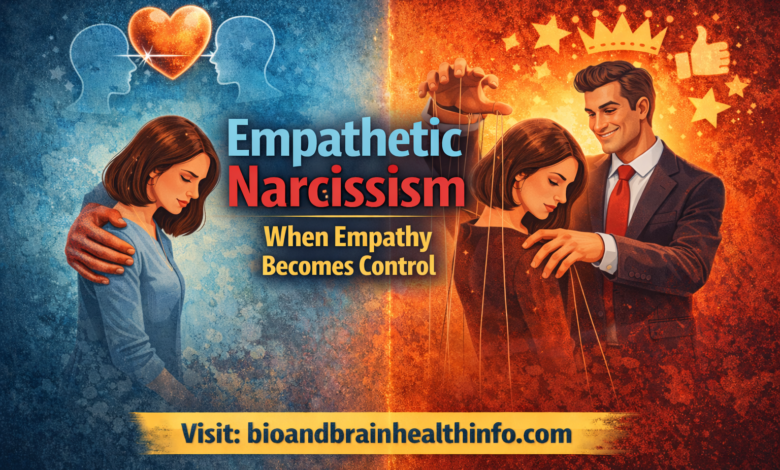
Empathetic narcissism can involve communal narcissism, pseudo empathy, emotional manipulation, and hidden narcissism patterns that make care appear genuine while subtly shaping control.
Thank you for reading this post, don't forget to subscribe!“Not all warmth is safety. Sometimes it is strategy wrapped in understanding.”
Sometimes what feels like empathy is actually influence wearing a gentle voice.
“Sometimes confusion does not come from obvious harm but from warmth that quietly redirects your reality.
Even after leaving, the nervous system can stay on alert because it learned unpredictability as normal. Regulation returns through consistency, not force.”
🌱 Introduction – Empathetic Narcissism
Some people appear deeply caring, socially aware, and emotionally intelligent — yet interactions leave you feeling subtly managed or confused.
The core fear is not “Are they bad?” but “Why does something feel off?”
Many misunderstand empathetic narcissism as simple kindness or mistake manipulation for concern. This is not about diagnosing someone; it is about understanding relational dynamics.
This article will help you understand what’s happening — without labels, blame, or self-attack.
🧭 REASON FOR THIS BLOG – Empathetic Narcissism
To clarify how empathy can sometimes coexist with control dynamics and to separate relational impact from identity judgments — offering understanding without diagnosing or blaming anyone.
🔎 INNER SEARCH MIRROR – Empathetic Narcissism
You may quietly wonder:
Why does kindness sometimes feel heavy or confusing?
Why do I feel guided instead of understood?
Why does doubt appear after emotional conversations?
Why do I question my own reactions?
Why does leaving not immediately bring calm?
Why do supportive words still feel controlling?
Why is clarity slow even when I understand logically?
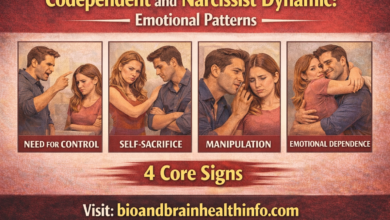
Please Explore This Blog empathy-and-narcissism-psychological-differences
🧠 PSYCHOLOGICAL EXPLANATION – Empathetic Narcissism
Empathetic narcissism may involve communal narcissism, pseudo empathy, emotional manipulation, and hidden narcissism patterns that shape relational dynamics through subtle influence rather than overt dominance.
Individuals often adapt psychologically by prioritizing harmony or validation, leading to confusion between genuine care and strategic empathy.
This adaptation is not weakness; it reflects survival conditioning where maintaining connection feels safer than questioning intention.
| Situation | Adaptation |
|---|---|
| Mixed emotional signals | Increased self-monitoring |
Personal note: Understanding adaptation reduces the urge to blame yourself for staying engaged.
🧬 NERVOUS SYSTEM EXPLANATION – Empathetic Narcissism
Empathetic narcissism involving communal narcissism, pseudo empathy, emotional manipulation, and hidden narcissism can activate automatic nervous system responses.
The brain interprets inconsistency as potential threat, triggering fight, flight, or freeze reactions before conscious evaluation begins.
These responses aim to maintain safety by scanning for emotional cues, which may explain why clarity feels delayed.
Possible warning signs:
Heightened alertness during conversations
Overthinking small interactions
Sudden emotional shutdown
Seeking reassurance repeatedly
Difficulty relaxing after contact
Personal note: The body often reacts faster than understanding can follow.
🧭 CORE DISTINCTION – Empathetic Narcissism
Survival responses exist to protect stability; identity reflects values, conscience, and authentic intention.
Within empathetic narcissism dynamics, communal narcissism, pseudo empathy, emotional manipulation, and hidden narcissism may shape behavior patterns, but they do not define who you are.
Survival adjusts rapidly to maintain connection or reduce perceived threat, while identity remains consistent beneath adaptation.
Authority comes from recognizing that reactions are strategies developed under pressure, not permanent traits.
When survival patterns are mistaken for identity, self-doubt grows; when distinguished clearly, clarity and self-trust return.
🌿 TRAUMA VS NARCISSISM – Empathetic Narcissism
Empathetic narcissism involving communal narcissism, pseudo empathy, emotional manipulation, and hidden narcissism can create fear of becoming “the problem.”
Comparing motivation helps reduce self-labeling.
| Trauma Response | Narcissistic Motivation |
|---|---|
| Remorse present | Image protection |
| Reflection attempts | Defensiveness |
| Accountability effort | Blame shifting |
Personal note: Understanding intention often softens harsh self-judgment.
🌱 GROWTH DIRECTION – Empathetic Narcissism
Within empathetic narcissism dynamics shaped by communal narcissism, pseudo empathy, emotional manipulation, and hidden narcissism, healing often begins with slowing rather than fixing.
Signs of change may include noticing internal signals earlier, allowing space before responding, and choosing peace over proving understanding.
Personal note: Growth tends to feel subtle — more like quiet alignment than dramatic transformation.
🧭 HEALING COMPASS / ORIENTATION TABLE
Healing can follow gentle stages:
| Stage | Orientation |
|---|---|
| Awareness | “I notice patterns calmly.” |
| Stabilizing | “Safety supports clarity.” |
| Understanding | “Reactions had meaning.” |
| Integration | “I move at my pace.” |
| Protection | “Boundaries support peace.” |
This compass offers direction without pressure, helping insight translate into steady internal stability.
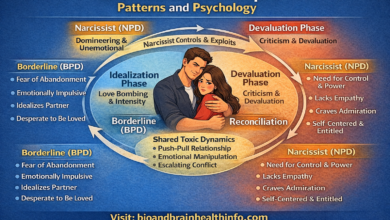
Please Explore This Blog empaths-and-narcissists-why-they-attract
🌿 10 Signs — Empathetic Narcissism: When Empathy Becomes Control
1. Empathetic Narcissism: When Care Quietly Redirects Decisions
Empathetic narcissism may appear as deep understanding, yet conversations subtly shift toward influencing your choices. You may feel supported while gradually adjusting your preferences to align with theirs. The control feels gentle, not forceful, which makes the dynamic harder to recognize.
2. Communal Narcissism: Public Generosity, Private Superiority
Communal narcissism often presents as visible kindness and moral leadership. Yet privately, recognition and admiration may feel essential. Acts of help can become intertwined with maintaining a respected image rather than mutual connection.
3. Pseudo Empathy: Understanding Words Without Emotional Presence
Pseudo empathy sounds validating but lacks emotional reciprocity. Responses may mirror your feelings while subtly reframing them to fit another narrative. You leave the conversation unsure whether you were truly heard.
4. Emotional Manipulation: Kindness Linked to Subtle Obligation
Emotional manipulation does not always look aggressive. It may appear as thoughtful support that later becomes a reminder of what is owed. Gratitude shifts into quiet pressure.
5. Hidden Narcissism: Sensitivity Masking Control
Hidden narcissism can involve appearing vulnerable or misunderstood while maintaining quiet influence. Emotional sensitivity becomes a shield that discourages questioning intentions.
6. Empathetic Narcissism: Support That Shapes Your Identity
Empathetic narcissism may encourage your growth, yet subtly define who you should become. Advice feels insightful but gradually narrows your independent thinking.
7. Communal Narcissism: Helping as a Path to Moral Authority
Communal narcissism may create environments where helping reinforces moral status. The relationship can begin to revolve around who is perceived as more caring or enlightened.
8. Pseudo Empathy: Validation Followed by Redirection
Pseudo empathy can validate your pain briefly before steering the focus elsewhere. The pattern leaves emotional resolution incomplete, increasing confusion rather than clarity.
9. Emotional Manipulation: Calm Tone, Strategic Framing
Emotional manipulation may operate through calm reasoning and strategic framing. You may feel guided toward conclusions that benefit someone else more than you.
10. Hidden Narcissism: Subtle Superiority Beneath Softness
Hidden narcissism often hides beneath humility. Subtle cues of superiority may surface when challenged, revealing discomfort with equal emotional footing.
🌱 Closing Note
These signs describe relational patterns, not permanent identities. Empathetic narcissism and related dynamics such as communal narcissism, pseudo empathy, emotional manipulation, and hidden narcissism explain how control can feel compassionate. Recognizing patterns calmly restores clarity without turning empathy into suspicion. Understanding reduces confusion — and clarity supports steadiness.
Please Explore This Blog communal-narcissism-explained-helping-behavior-hidden-ego
🌿 A Whole-System View of the Human Healing Process
🩺 Medical / Ethical Positioning — Empathetic Narcissism Explained
In empathetic narcissism explained through relational ethics, the mind often interprets threat through inconsistency rather than overt harm.
Ethical healing focuses on understanding meaning-making rather than assigning blame.
This approach prioritizes autonomy, emotional consent, and clarity about impact versus intention, allowing individuals to regain interpretive stability without diagnosing or labeling others.
| Ethical Element | Function |
|---|---|
| Context awareness | Understand relational patterns |
| Impact focus | Recognize emotional effects |
| Autonomy respect | Protect self-agency |
| Neutral language | Reduce escalation |
Personal note: Ethical clarity often reduces internal confusion faster than emotional analysis.
🧠 Psychological Layer — Meaning Construction and Interpretation
Within empathetic narcissism explained dynamics, communal narcissism can shape how people interpret relational signals.
The psyche attempts to reduce ambiguity by creating coherent stories about behavior, sometimes over-attributing intention.
Psychological healing involves expanding interpretation range, allowing multiple meanings instead of rigid conclusions, which restores cognitive flexibility.
| Psychological Function | Role |
|---|---|
| Narrative building | Create understanding |
| Attribution patterns | Assign meaning |
| Expectation shaping | Predict behavior |
| Reframing capacity | Adjust perception |
Personal note: When interpretation softens, emotional rigidity often decreases naturally.
🧬 Nervous System Layer — Automatic Protection Responses
In empathetic narcissism explained contexts involving pseudo empathy, the body reacts before conscious reasoning.
Automatic signals scan tone, facial expression, and emotional shifts to assess safety.
These rapid responses protect stability by preparing action or withdrawal, often without deliberate choice.
| Body Reaction | Protective Goal |
|---|---|
| Increased alertness | Detect change |
| Freeze response | Reduce risk |
| Emotional numbing | Preserve energy |
| Rapid analysis | Maintain control |
Personal note: Bodily reactions are protective reflexes, not personal failures.
🌱 Mental Health Layer — Effects of Prolonged Stress on Clarity
Empathetic narcissism explained through emotional manipulation reveals how prolonged stress may reduce clarity and confidence.
Continuous ambiguity can drain mental energy, making decision-making slower and self-trust fragile.
Mental health restoration includes understanding that reduced clarity reflects overload, not incapacity.
| Mental Impact | Result |
|---|---|
| Cognitive fatigue | Slower processing |
| Emotional saturation | Reduced tolerance |
| Decision hesitation | Doubt increases |
| Motivation fluctuation | Energy shifts |
Personal note: Naming overload often restores compassion toward oneself.
🧭 Identity Layer (Inner Continuity & Meaning)
Even within empathetic narcissism explained experiences involving hidden narcissism, identity remains intact beneath adaptation.
Values, conscience, and internal direction persist despite external influence.
Healing reconnects individuals with continuity rather than creating a new self, emphasizing recognition over reconstruction.
| Identity Aspect | Stability Source |
|---|---|
| Values | Personal alignment |
| Conscience | Ethical grounding |
| Reflection | Self-awareness |
| Choice | Agency remains |
Personal note: Identity often feels distant, yet it rarely disappears.
🤝 Reflective Support Layer (Including AI)
Empathetic narcissism explained through reflective practices highlights how journaling, dialogue, or AI tools mirror thoughts without directing decisions.
Reflection organizes internal experience, creating distance between emotion and interpretation.
This process supports clarity while preserving autonomy.
| Reflective Tool | Function |
|---|---|
| Journaling | External processing |
| Conversation | Perspective testing |
| AI reflection | Structured mirroring |
| Creative writing | Emotional integration |
Personal note: Reflection works best when it clarifies rather than instructs.
🌿 Integrated Whole-System Reflection
Empathetic narcissism explained through a whole-system lens shows that healing involves ethical awareness, psychological interpretation, nervous system regulation, mental clarity, identity continuity, and reflective support working together.
Rather than fixing one area alone, integration allows multiple systems to rebalance gradually. When these layers align, confusion transforms into grounded understanding.
Healing becomes less about eliminating experiences and more about restoring harmony between interpretation, emotion, and self-direction.
| Integration Element | Outcome |
|---|---|
| Ethical awareness | Balanced perspective |
| Psychological insight | Flexible thinking |
| Nervous system safety | Reduced reactivity |
| Identity continuity | Stable self-trust |
Personal note: Integration feels like alignment rather than dramatic change.
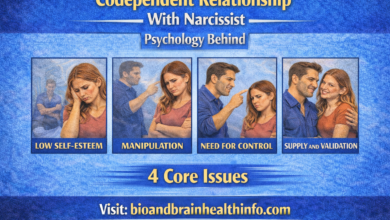
Please Explore This Blog codependent-relationship-with-narcissist-psychology-behind
🌿 PERSONAL NOTE – Empathetic Narcissism
While exploring empathetic narcissism explained through lived observation, I noticed how communal narcissism sometimes appears as genuine care while pseudo empathy, emotional manipulation, or hidden narcissism create subtle confusion rather than obvious harm.
The deeper realization was that clarity arrives when we stop asking who is right or wrong and instead understand relational impact.
Insight grows quietly when we recognize adaptation without self-attack.
Many people assume confusion means weakness, but often it reflects sensitivity to complexity.
Understanding patterns gently allows self-trust to return without dramatic confrontation or emotional intensity.
🌌 COSMIC / PHILOSOPHICAL TAKEAWAY – Empathetic Narcissism
“Awareness is not about judging experience — it is about seeing clearly without losing compassion.”
Empathetic narcissism explained through a broader human lens reminds us that communal narcissism, pseudo empathy, emotional manipulation, and hidden narcissism are not simply individual traits but relational patterns shaped by meaning, fear, and perception.
Human interactions exist between intention and impact, where empathy and control may coexist in subtle ways.
Understanding these dynamics expands consciousness rather than creating division.
Healing becomes less about proving someone wrong and more about aligning with truth calmly.
When clarity grows, relationships become mirrors that teach awareness rather than sources of self-blame.
🌱 FINAL CLOSING – Empathetic Narcissism
If you recognize elements of communal narcissism, pseudo empathy, emotional manipulation, or hidden narcissism in your experiences, nothing is wrong with you for feeling confused or unsettled.
Empathetic narcissism explained through awareness shows that reactions often arise from adaptation, not failure.
With safety and understanding, what adapted can soften again. Healing does not require urgency or confrontation; it grows through steady clarity and compassionate observation.
You are allowed to move slowly, to learn without pressure, and to rebuild trust in your own perception without needing perfect answers.
Please Explore This Blog closet-narcissist-traits-hidden-narcissism
❓ FAQ SECTION – Empathetic Narcissism
1. What is empathetic narcissism?
A relational pattern where empathy appears present but may subtly influence or control interactions.
2. Is communal narcissism always harmful?
Not necessarily; impact depends on intention, awareness, and relational balance.
3. How can pseudo empathy be recognized?
It may sound validating but leaves you feeling redirected rather than understood.
4. Does emotional manipulation always look aggressive?
No. It can appear calm, supportive, or logical while shaping outcomes indirectly.
5. What makes hidden narcissism difficult to notice?
Soft presentation and vulnerability can mask underlying control dynamics.
6. Why do I feel confused after supportive conversations?
Mixed signals between empathy and influence can create internal uncertainty.
7. Can understanding patterns reduce emotional stress?
Yes, clarity often decreases self-blame and restores perspective.
8. Does recognizing patterns mean ending relationships?
Not necessarily; awareness supports informed choices rather than forced decisions.
9. Is empathy itself a weakness?
No. Empathy becomes healthier when combined with clear boundaries.
🌿 FINAL CLOSING – Empathetic Narcissism
Empathetic narcissism explained through gentle understanding shows that communal narcissism, pseudo empathy, emotional manipulation, or hidden narcissism can create confusion without clear villains.
Nothing is wrong with you for reacting to complexity. With safety and understanding, what adapted can soften again.
Allow clarity to unfold naturally rather than forcing conclusions. Healing often begins when you step out of self-judgment and return to steady awareness.
Let this be an invitation to observe calmly, reconnect with your inner stability, and trust that insight grows at its own pace.
Please Explore This Blog codependent-and-narcissist-dynamic-explained
🌿 Final Blog Footer — Bio & Brain Health Info
Written by Lex, founder of Bio & Brain Health Info — exploring the intersections of psychology, spirituality, and emotional recovery through calm, trauma-aware understanding.
✨ Insight & Reflection
Healing does not begin when answers arrive — it begins when self-attack stops.
Clarity grows in spaces where safety is restored.
🧠 Learn
Narcissism • Emotional Healing • Spiritual Psychology
🌍 A Moment for You
💡 Pause for two minutes. Let your body settle before moving on.
🧭 If This Article Helped, Your Next Questions Might Be:
How does pseudo empathy affect nervous system safety?
What is the difference between empathy and emotional control?
How can boundaries support genuine compassion?
Why does clarity come slowly after confusing relationships?
✨ Cosmic Family Invitation
You are not here by accident. If these words reached you, clarity was already beginning.
We rise together — different souls, one journey. 🕊️
📩 Connect with us
info@bioandbrainhealthinfo.com
Telegram: @bioandbrainhealthinfo
WhatsApp Channel: Punehealth
Lex | Bio & Brain Health Info
Cosmic Family — Different Souls, One Journey.
📚 REFERENCES & CITATIONS – Empathetic Narcissism
1. American Psychological Association — Narcissistic Personality Traits Overview
https://www.apa.org/topics/personality-disorders/narcissistic-personality-disorder
2. National Library of Medicine — Empathy and Narcissism Research Review
https://www.ncbi.nlm.nih.gov/pmc/articles/PMC4415495/
3. Psychology Today — Communal Narcissism Explained
https://www.psychologytoday.com/us/blog/the-superhuman-mind/201703/communal-narcissism
4. Harvard Health Publishing — Understanding Emotional Manipulation and Social Dynamics
https://www.health.harvard.edu/blog/emotional-intelligence-and-relationships
5. Cleveland Clinic — Trauma Responses and Emotional Processing
https://my.clevelandclinic.org/health/articles/trauma-response
6. Greater Good Science Center (UC Berkeley) — Empathy Research and Social Behavior
https://greatergood.berkeley.edu/topic/empathy
7. National Institute of Mental Health — Stress and Emotional Regulation
https://www.nimh.nih.gov/health/topics/stress
8. World Health Organization — Mental Health and Emotional Wellbeing
https://www.who.int/health-topics/mental-health
9. Frontiers in Psychology — Narcissism and Interpersonal Dynamics (Peer-Reviewed)
https://www.frontiersin.org/articles/10.3389/fpsyg.2018.00001/full
10. Stanford Encyclopedia of Philosophy — Empathy and Moral Psychology
https://plato.stanford.edu/entries/empathy/