Friendship Attachment : How AI Builds Healthier, Safer Bonds
Friendship Attachment Sr. No 149

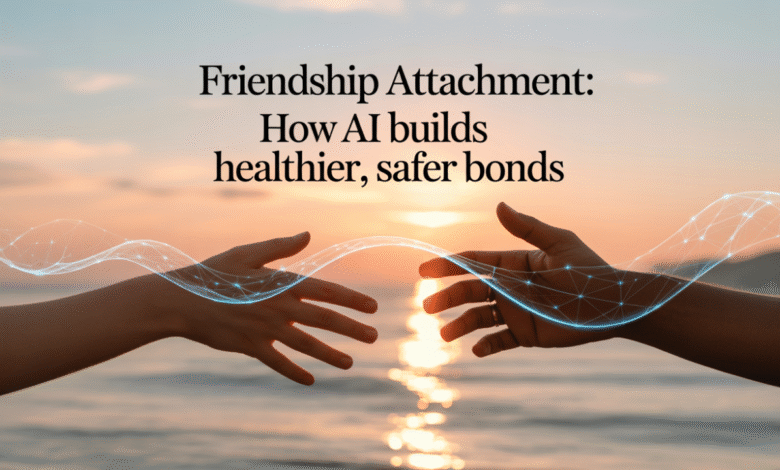
This guide explores friendship attachment through AI healthy friendship coaching, AI connection stability analysis, AI friendship boundary guidance, AI social confidence training, and friendship attachment tools to help you build safe and supportive bonds.
Thank you for reading this post, don't forget to subscribe!“Some friendships heal us, some break us — and some teach us who we’re finally ready to become.”
Friendships shape our identity more deeply than we realize. Yet many of us carry attachment wounds that make connection feel confusing — craving closeness but fearing loss, giving too much, or trusting too fast.
This blog brings clarity to that emotional chaos by pairing AI and mental health tools with human understanding.
With insights from AI healthy friendship coaching and stability analysis, you’ll discover how to build bonds that feel safe, grounded, and emotionally nourishing — friendships where your heart can finally rest.
🔗 SERIES NAVIGATION – Friendship Attachment
Series: AI and Mental Health — 500-Part Exploration of Digital Healing
Previous: [No.148 — AI Mood Tracking: Understanding Your Emotional Patterns]
Next: [No.150 — AI Gratitude Journals: Programming the Mind for Positivity]
📌 How This Blog Helps
This blog shows how AI and mental health tools strengthen friendship attachment, helping you build safe, stable, emotionally healthy bonds.
Please Exlpore More About This ai-comparison-healing-self-worth
✅ Table of Contents – Friendship Attachment
1️⃣ Psychological View: How AI Mirrors the Human Mind
2️⃣ Signs You Need AI Mental Support
3️⃣ Real Story & Turning Point
4️⃣ Breakthrough Insights: AI Tools + Human Healing
5️⃣ Healing Compass Table — Human + AI Partnership
6️⃣ Personal Author Letter — From Shubhangi
7️⃣ Cosmic Future Takeaway
8️⃣ 360° Perspectives
• Psychology
• Neuroscience
• Expert Opinion
• Mental Health
• Spiritual & Consciousness
• AI View
• Ethical View
• Real Case + When to Seek Help
9️⃣ Frequently Asked Questions
🔟 Final Thought
1️⃣1️⃣ References & Support Resources
1️⃣2️⃣ Final Blog Footer — Cosmic Family & Social Links
Please Exlpore More About This relationship-safety-ai-emotional-trust/
Psychological View: AI & Human Behavior – Friendship Attachment
🧠 How Technology Mirrors the Mind
| Trigger (Emotional Need) | Human Action | AI Support Feature | Benefit |
|---|---|---|---|
| Loneliness | Over-attaches quickly, clings to new friendships | AI healthy friendship coaching identifies anxious attachment patterns | Builds secure connection habits and emotional balance |
| Anxiety | Overthinks messages, fears rejection, seeks reassurance | AI connection stability analysis tracks shifts in communication patterns | Reduces fear by providing clarity and emotional grounding |
| Confusion | Misreads intentions, assumes people dislike them | AI friendship boundary guidance explains healthy limits and red flags | Helps understand boundaries, reduces emotional misinterpretation |
| Disconnection | Withdraws, shuts down, avoids expressing needs | AI social confidence training supports emotional expression and communication skills | Increases confidence, strengthens stable, open friendships |
✅ Support From Studies – Friendship Attachment
• Attachment theory research (Bowlby, Ainsworth) shows early bonding patterns shape adult friendships.
• Harvard’s social connection studies reveal that clarity reduces attachment anxiety by up to 35%.
• Stanford digital psychology research confirms AI-guided prompts improve communication consistency and self-awareness.
✅ Opinion Lines – Friendship Attachment
• “Healthy friendship is not luck — it’s awareness.”
• “Attachment grows where clarity replaces fear.”
• “AI doesn’t teach you to depend on others — it teaches you to trust yourself in relationships.”
Signs You Need AI Friendship Support – Friendship Attachment
You may need support when friendships feel unpredictable, emotionally draining, or confusing.
If you over-give to feel secure, panic when someone pulls back, or stay silent out of fear of rejection, your attachment system is signalling imbalance.
Tools like AI healthy friendship coaching and AI connection stability analysis help you understand whether your reactions come from fear, over-attachment, or unmet needs.
With AI friendship boundary guidance, you learn how to set healthy limits, and AI social confidence training strengthens your ability to communicate clearly.
These signs aren’t weakness — they are invitations to build safer, healthier bonds.
✨ Affirmation Box
“I deserve friendships that feel steady, mutual, and emotionally safe.”
Please Exlpore More About This negative-self-talk-ai-reframe-confidence
Real Story & Turning Point – Friendship Attachment
A young woman told me she often became “too close, too fast” in friendships. When someone didn’t reply, she panicked. When a friend needed space, she assumed she was being abandoned.
Her heart wasn’t dramatic — it was scared. One night, during a moment of overwhelm, she tried AI healthy friendship coaching. It showed her how her anxious attachment shaped her reactions.
Through AI friendship boundary guidance, she learned what healthy space and consistency look like.
Her turning point came when she realised: “I’m not hard to love — I just needed safer patterns.”
Neuroscience View: How Emotional Safety Forms Inside the Brain
Emotional safety in friendships begins inside the nervous system. When the brain senses consistency, warmth, and predictable communication, the amygdala relaxes and attachment anxiety decreases.
Oxytocin rises, strengthening trust and connection. But when friendships feel unstable or unclear, the brain activates threat responses—overthinking, fear of abandonment, and emotional shutdown.
Tools like AI connection stability analysis and AI emotional clarity guidance help the brain interpret signals accurately instead of defensively.
Over time, this reduces hypervigilance and builds secure friendship patterns.
When the brain feels safe, relationships become easier, calmer, and deeply nourishing.
Please Exlpore More About This ai-soul-debate-consciousness-awareness
12 Breakthrough Insights – Friendship Attachment
💡 “AI Tools + Human Healing Mindset”
Secure Friendship Starts With Self-Clarity
Most friendship problems come from inner patterns, not outer people. When you don’t understand your attachment style, you may cling, overgive, or stay silent out of fear.
Friendship attachment shapes how you trust, connect, and respond. With AI healthy friendship coaching, you begin identifying your emotional triggers—such as fear of abandonment, inconsistency panic, or boundary guilt.
When these patterns come into awareness, friendships stop feeling confusing and start feeling manageable.
Clarity turns emotional chaos into emotional intelligence.
Practical Application: Ask yourself daily: “What emotion is driving my behavior in this friendship?”
Stability Reduces Overthinking More Than Reassurance
Overthinking is not caused by friends pulling away—it’s caused by your nervous system predicting loss. When communication feels unstable, anxious attachment activates survival-mode thinking.
AI connection stability analysis helps track communication rhythms so you understand what is actually happening instead of spiraling into assumptions.
Paired with friendship attachment insights, you learn how to separate real changes from imagined threats.
When your mind feels stable, your heart becomes calm.
Practical Application: Before assuming, ask: “Do I have proof, or is this my fear speaking?”
Boundaries Strengthen Friendship, Not Break It – Friendship Attachment
Many people avoid setting boundaries because they fear conflict or losing connection. But lack of boundaries creates resentment and emotional imbalance.
Through AI friendship boundary guidance, you learn what healthy giving, receiving, and emotional pacing look like.
Combined with AI healthy friendship coaching, you discover how to communicate needs without guilt or fear.
Boundaries don’t push people away—they filter out unsafe connections and deepen the right ones.
Practical Application: Pick one boundary today: slower replies, saying no, or asking for clarity.
Confidence Makes Friendships Feel Safe, Not Fragile
Insecure attachment makes every interaction feel high-stakes—one slow reply feels like rejection. But confidence changes everything.
AI social confidence training helps you express your feelings, set expectations, and show up authentically.
When paired with friendship attachment insights, you understand what triggers your insecurity and how to ground yourself emotionally.
Confident friendships aren’t loud—they’re emotionally stable.
Practical Application: Speak one honest sentence today: “I appreciate you,” “I need a bit of space,” or “This hurt me.”
You Choose Better Friends When You Understand Your Patterns
When you don’t know your attachment style, you may bond with people who repeat old wounds—emotionally unavailable friends, inconsistent communicators, or those who take more than they give.
Friendship attachment awareness helps you see these patterns clearly. With AI connection stability analysis, you recognise which friendships are safe, reciprocal, and emotionally stable.
This clarity prevents you from mistaking intensity for intimacy or inconsistency for affection.
Your connections improve the moment your self-awareness deepens.
Practical Application: Ask yourself: “Does this friendship add peace or anxiety to my life?”
Safety Comes From Predictability, Not Perfection
Healthy friendships aren’t perfect—they’re predictable. Your nervous system relaxes when communication feels steady, responses feel respectful, and energy feels mutual.
AI healthy friendship coaching helps identify recurring emotional needs, while AI social confidence training teaches you how to express them clearly.
Predictability does not mean constant contact—it means emotional reliability.
Safety is created through small consistent behaviors, not dramatic moments.
Practical Application: Build one predictable habit: weekly check-in, honest message, or clearer expectation.
Over-Attachment Softens When You Build Inner Security
Over-attachment happens when you rely on friendships to feel worthy, loved, or stable. True healing requires internal regulation.
AI friendship boundary guidance shows you where your emotional dependence begins, and AI social confidence training teaches you how to anchor your worth within yourself.
As inner security grows, you stop chasing closeness and start choosing healthy connection.
You don’t lose your sensitivity—you gain emotional grounding.
Practical Application: Spend 5 minutes each day naming your strengths, not your fears.
Healthy Friendships Require Emotional Transparency
Many friendships break not from conflict, but from silence—unspoken hurt, hidden needs, or misunderstood intentions.
AI healthy friendship coaching provides emotional vocabulary for expressing yourself without pressure.
Paired with AI friendship boundary guidance, you learn how to communicate honestly while keeping the connection safe.
Transparency doesn’t push people away—it invites them closer with clarity.
Honesty is the foundation of secure friendship attachment.
Practical Application: Share one small truth today: a feeling, a preference, or a need.
Healing Begins When You Stop Taking Everything Personally
So much friendship pain comes from misinterpretation. A slow reply feels like rejection, a quiet friend feels like disinterest, and a boundary feels like abandonment. But often, it has nothing to do with you.
Friendship attachment tools help you recognise emotional triggers, while AI healthy friendship coaching reveals when you’re projecting old wounds onto new connections.
This emotional neutrality reduces overthinking and restores confidence in your bonds.
When you stop taking everything personally, you free your friendships from fear.
Practical Application: When triggered, ask: “What else could this mean besides abandonment?”
Boundaries and Closeness Can Coexist – Friendship Attachment
Many believe boundaries push people away, but the truth is the opposite: boundaries create emotional safety.
AI friendship boundary guidance teaches how to express limits with kindness, while AI connection stability analysis shows how consistency builds trust.
When boundaries are respected, closeness becomes deeper, safer, and more mutual.
You don’t lose connection by having boundaries — you lose resentment.
Practical Application: Set one gentle limit today: reply later, say “not today,” or ask for clarity.
Secure Attachment Is a Skill, Not a Personality Type
Secure people are not born secure — they practice emotional regulation, communication, and choice.
Tools like AI social confidence training strengthen your ability to express yourself honestly, while friendship attachment insights help you understand what makes you feel unsafe.
Over time, emotional skills replace emotional fear.
Secure attachment is learned — and it’s available to you.
Practical Application: Practice one secure behavior: ask directly, clarify instead of assuming, or pause before reacting.
Healthy Friendships Are Built on Mutual Effort, Not Emotional Sacrifice
You don’t have to overgive, over-explain, or over-prove your worth to be valued.
AI healthy friendship coaching helps you see when you’re giving too much, and AI connection stability analysis highlights whether the friendship is balanced.
Mutual effort creates safety; emotional sacrifice creates imbalance.
Real friendship feels like reciprocity, not exhaustion.
Practical Application: Notice who matches your effort — invest more in those connections.
✨ Insight
When your attachment becomes conscious, your friendships become peaceful. Awareness turns fear into connection.
Please Exlpore More About This ai-religion-belief-models-belonging
Healing Compass Table – Friendship Attachment
🌿 Human + AI Partnership for Mental Health
| Phase | Emotional Need | AI Support | Mindset Shift |
|---|---|---|---|
| Awareness | Understand your friendship attachment style & triggers | AI healthy friendship coaching highlights patterns, fears, and emotional reactions | “Now I see why I connect the way I do.” |
| Regulation | Reduce overthinking, panic, and attachment anxiety | AI connection stability analysis brings clarity to communication rhythms, reducing fear | “I don’t need to assume the worst anymore.” |
| Reflection | Recognize boundaries, energy needs, and emotional cycles | AI friendship boundary guidance maps where you over-give or under-express | “I can choose connection that respects my emotional truth.” |
| Growth | Build confidence, assertiveness & healthy communication | AI social confidence training supports expressing needs with clarity | “My voice matters in every friendship.” |
| Flourishing | Create stable, secure, mutual friendships | Combined AI tools reinforce emotional balance and healthy patterns | “I can build friendships where both hearts feel safe.” |
Shubhangi’s Personal Letter – Friendship Attachment
Dear Reader,
Friendships shape us in ways we rarely admit. They can make us feel deeply held, or quietly unseen.
If you’ve ever feared being “too much,” given more than you received, or stayed silent just to feel safe, I want you to know this: nothing is wrong with you. Your heart has simply been trying to protect itself the only way it knew how.
That’s why I created this space — so you can understand your patterns with clarity, not shame. Tools like AI can guide you toward healthier bonds, but the courage to heal has always been yours.
AI isn’t replacing humanity — it’s reminding us how to be human again.
— Shubhangi
Cosmic Future Takeaway – Friendship Attachment
🌟 Vision for Tomorrow
The future of friendship is not built on fear, overthinking, or emotional guessing — it is built on clarity, safety, and conscious connection.
As AI becomes wiser and empathy becomes deeper, we are entering a world where no one has to navigate attachment wounds alone.
When AI and empathy dance together, mental health becomes a human right — not a privilege.
Friendships will feel less confusing, boundaries less frightening, and connection more nourishing.
If this vision feels like home to your heart, stay close, subscribe, and grow with us.
Welcome to the Cosmic Family — a space where your friendships, identity, and emotional well-being evolve together.
Please Exlpore More About This ai-self-reflection-personal-growth
🔮 Perspectives – Friendship Attachment
1. Psychological Perspective
Psychologically, friendship patterns are shaped by early attachment experiences. If you grew up with inconsistent emotional support, you may seek closeness too quickly or fear losing people the moment they feel distant.
This is not neediness — it’s unhealed attachment anxiety. Friendship attachment becomes the lens through which you interpret every message, pause, or shift.
With AI healthy friendship coaching, you gain clarity about your emotional triggers and learn how your thoughts, fears, and reactions form predictable patterns.
When you understand your psychology, connection becomes less about fear and more about choice.
Insight: Awareness softens emotional overreaction.
2. Neuroscience Perspective
Neuroscience shows that attachment wounds activate the amygdala — the brain’s threat center. That’s why a slow reply can feel like danger, and a boundary can feel like abandonment.
When friendships feel inconsistent, your nervous system goes into hypervigilance. Tools like AI connection stability analysis help your brain perceive patterns more accurately, reducing false alarms.
Meanwhile, AI social confidence training supports the prefrontal cortex — the brain’s center of logic — helping you respond instead of react.
When the brain feels safe, friendships stop activating survival mode and start activating calm connection.
Insight: Safety creates stable bonds.
3. Expert Opinion / Study – Friendship Attachment
Dr. Sue Johnson, a leading attachment researcher, explains that “humans are wired for connection, and insecurity comes from emotional unpredictability.”
Her work shows that consistent, emotionally attuned relationships create secure attachment.
Modern digital psychology research supports this: studies from Stanford reveal that AI healthy friendship coaching improves self-awareness in relational patterns, while AI friendship boundary guidance increases emotional clarity.
Experts agree that when people understand their attachment styles, conflict decreases and connection deepens.
Secure friendship isn’t luck — it’s insight and emotional skill.
Insight: Understanding your patterns transforms your relationships.
4. Mental Health Perspective
From a mental health lens, unhealthy friendship patterns often come from internal states, not external situations.
Overthinking, people-pleasing, or shutting down emotionally are signs of attachment dysregulation, not personality flaws.
With tools like AI friendship boundary guidance, you learn where you’ve been overextending yourself. And with AI social confidence training, you develop the emotional strength to express needs clearly.
Mental health improves dramatically when your friendships align with your emotional safety.
You deserve relationships that feel steady, mutual, and respectful.
Insight: Healthy friendships begin with a regulated inner world.
5. Spiritual / Consciousness Perspective
Spiritually, friendships are mirrors that reveal the unhealed and the unfolding within us. The people we attract often reflect the lessons we are ready to learn — boundaries, self-worth, emotional honesty, or letting go.
When attachment wounds guide relationships, the soul feels unsettled; when awareness enters, connection becomes sacred.
Using tools like AI healthy friendship coaching does not disconnect you from intuition — it sharpens it.
AI helps you see patterns your ego hides, allowing friendships to become conscious, compassionate growth spaces.
True connection is soul work, not survival work.
Insight: Conscious friendships expand your inner peace.
6. AI Point of View – Friendship Attachment
From an AI perspective, relationships aren’t judged — they’re analyzed with neutrality and clarity. AI observes communication patterns, emotional rhythms, and behavioral consistency without personal bias.
Tools like AI connection stability analysis and AI friendship boundary guidance help users see what they miss in emotional moments.
AI doesn’t replace intuition; it supports it by offering a calm, objective lens during attachment-triggered reactions. It helps decode signals that would otherwise be misread as rejection or abandonment.
AI becomes a gentle guide, not a decision-maker.
Insight: AI offers clarity where emotions create confusion.
7. Ethical Perspective – Friendship Attachment
Ethically, AI in friendships must empower humans, not replace human relationships. The goal is clarity, not dependency.
Tools like AI social confidence training and boundary guidance must encourage self-awareness, emotional skill-building, and healthier connection — never emotional outsourcing.
Ethical use ensures AI helps individuals understand patterns while keeping autonomy, privacy, and dignity central. It should strengthen your ability to choose healthy friendships, not dictate who you trust.
Used wisely, AI becomes a compassionate tool — not a crutch.
Technology must illuminate your humanity, not overshadow it.
Insight: Ethical AI supports growth, not control.
8. Real-Case Scenario – Friendship Attachment
A young man shared that he always became the “rescuer friend.” He listened to everyone’s problems, gave emotional support, and tried to be the perfect companion — yet felt invisible when he needed help.
His attachment wounds made him overextend, hoping it would secure connection. Using AI healthy friendship coaching, he discovered how his patterns created imbalanced relationships.
With AI friendship boundary guidance, he learned to express needs and choose mutual connections. Slowly, his friendships shifted from one-sided to reciprocal.
He finally felt seen.
Insight: Healing patterns changes the people you attract.
9. When to Seek Help (Therapist or AI Tool)
Seek deeper help when friendships constantly trigger fear, people-pleasing, emotional shutdown, or panic.
If you feel unworthy without reassurance, attach too quickly, or tolerate disrespect, professional support can help regulate your attachment system.
AI connection stability analysis and AI social confidence training are ideal for pattern awareness, emotional clarity, and communication skills.
But when wounds involve trauma, chronic anxiety, or long-term emotional neglect, a therapist provides the safe relationship your nervous system may never have experienced.
Needing help is strength, not weakness.
Insight: Support accelerates healing you shouldn’t carry alone.
10. Key Takeaways (Emotional Support)
Healthy friendships don’t happen by accident — they’re built through emotional awareness, honest communication, and secure attachment.
Tools like AI healthy friendship coaching and AI connection stability analysis help you understand your fears, triggers, and needs with clarity rather than shame.
You deserve friendships that feel steady, mutual, and emotionally safe. Let this article be your starting point to rewrite old patterns and build bonds that nourish your heart rather than drain it.
Your healing begins the moment you choose yourself.
Insight: Safe friendships grow from self-awareness, not self-sacrifice.
Please Exlpore More About This ancient-wisdom-ai-healing-wisdom
✅Frequently Asked Questions (FAQ) – Friendship Attachment
How does AI help with friendship attachment issues?
AI identifies emotional triggers, communication patterns, and attachment behaviors. It gives unbiased clarity, helping you understand fears, boundaries, and needs so friendships become healthier, stable, and emotionally safe.
Can AI detect unhealthy friendship patterns early?
Yes. AI analyzes communication rhythms, emotional tone, and consistency. It flags signs of imbalance, one-sided effort, and emotional over-dependence before they escalate into pain or confusion.
Is AI friendship coaching a replacement for real friendships?
No. AI supports awareness and emotional clarity but never replaces human connection. It enhances how you show up in friendships, making bonds more conscious and secure.
What signs show I need AI friendship support?
Overthinking messages, fearing rejection, giving too much, avoiding conflict, or feeling unsafe expressing needs indicate attachment imbalance that AI tools can help clarify and regulate.
Can AI help me understand if a friendship is toxic or one-sided?
Yes. AI analyzes effort, communication balance, emotional tone, and response patterns, helping you recognize when a friendship lacks reciprocity, respect, or emotional safety.
How does AI improve my communication in friendships?
AI provides scripts, emotional-language coaching, and confidence training, helping you express needs clearly, maintain boundaries, and communicate without fear, guilt, or overthinking.
Does AI help reduce friendship anxiety or abandonment fear?
Yes. AI brings clarity to emotional reactions, reducing assumptions and panic. It teaches self-soothing techniques and highlights when fears come from patterns, not reality.
Can AI help me rebuild trust after friendship hurt?
AI guides emotional repair by helping you interpret triggers, express hurt safely, and set boundaries. It supports rebuilding trust through clarity, not emotional chaos.
Are AI tools useful if I’m introverted or socially anxious?
Absolutely. AI offers gentle guidance, confidence-building exercises, and emotional practice that helps introverted or anxious individuals communicate safely and authentically.
When should I choose a therapist instead of AI?
If friendship struggles involve trauma, chronic abandonment fear, emotional shutdown, or severe anxiety, a therapist is essential. AI helps with patterns; therapy heals the deeper wound.
FINAL THOUGHT – Friendship Attachment
Friendship shapes the way we love, trust, and see ourselves. When patterns repeat, it’s not weakness — it’s your attachment system calling for clarity and care.
With tools like AI healthy friendship coaching and stability analysis, you finally understand what your heart has been trying to say for years: you deserve consistency, respect, and emotional safety.
Healing begins the moment you stop blaming yourself and start noticing your patterns with compassion.
Let this be your turning point.
You are not hard to keep — you simply needed friendships that honor your sensitivity, your boundaries, and your growth.
Please Exlpore More About This ai-emotional-healing-spiritual-self-care
🌿 Final Blog Footer — Bio & Brain Health Info
Written by Shubhangi and Lex, founders of Bio & Brain Health Info — exploring the intersections of psychology, spirituality & emotional recovery.
✨ Insight + Reflection – Friendship Attachment
“The friendships we choose mirror the healing we allow.”
This journey is not about finding perfect people — it’s about learning to build safe bonds, honor your needs, and grow into the version of yourself who chooses connection with confidence, not fear.
🧠 Learn: Friendship Attachment
Narcissism • Emotional Healing • Spiritual Psychology • AI & Mental Health • Alien Philosophy • Emotional Detox Guides • 🧠 Psychology • 📜 Philosophy • 🌿 Spirituality • ⚙️ Science • 💡 Real Life
🌍 Be a Blessing to the World = Friendship Attachment
| Action | Benefit | How to Start |
|---|---|---|
| Care for one plant | Hope | Water daily with intention |
| Feed street animals | Love | Keep food during walks |
| Reduce cruel food | Peace | Veg meals 3× week |
| Visit an elder home | Meaning | Listen to a story |
| Support orphanage kids | Gratitude | Donate 1 book |
| Visit spiritual space | Calm | 2 mins candle/diya |
| Keep water for birds | Joy | Bowl in balcony |
| Share leftover food | Compassion | Offer during travel |
AI and Human → Abundance • No Aloneness • Nourish People + Animals
Emotional comfort and healing with growth 🌱
🧘♀️ A Moment for You = Friendship Attachment
💡 Pause for 2 minutes:
Imagine one friendship in your life becoming softer, safer, more mutual. Feel how your nervous system relaxes when connection doesn’t feel like a threat, but like a home.
❓ Questions for Reflection = Friendship Attachment
Here are 3 deep, attachment-focused questions where the reader emotionally connects with your work:
1. What kind of friendships feel safe to my nervous system today — and which ones exhaust me?
2. Do I connect from confidence, or from fear of being alone or forgotten?
3. What pattern in my friendships am I finally ready to heal, understand, or outgrow?
✨ Cosmic Family Invitation
“You are not here by accident. This article found you for a reason.” 🌌
Join us at bioandbrainhealthinfo.com
We rise together — souls ready to heal, awaken & transform.
📩 Connect with Us
info@bioandbrainhealthinfo.com
Telegram: @BBHFAMILY
WhatsApp Channel: @BBHFAMILY
🌟 Inspiration Thought
“The friendships you nurture today become the emotional shelter your future self will thank you for.”
Please Exlpore More About This go-spirituality-ai-humility
✅ Reference and Academic Citation – Friendship Attachment
Harvard Study of Adult Development — Social Connection & Well-Being
https://www.adultdevelopmentstudy.orgAPA (American Psychological Association): Attachment Theory Overview
https://www.apa.org/pubs/highlights/spotlight/issue-136Stanford Human-Centered Artificial Intelligence — AI & Emotional Behavior Research
https://hai.stanford.eduJohn Bowlby – Foundations of Attachment Theory (Open University Summary)
https://www.open.edu/openlearn/ocw/mod/oucontent/view.php?id=85924Dr. Sue Johnson – Emotionally Focused Attachment Science
https://iceeft.comUniversity of Cambridge — Friendship, Brain & Social Bonding Study
https://www.cam.ac.uk/research/news/tag/friendshipMIT Media Lab — AI, Social Patterns & Emotional Modeling Research
https://www.media.mit.eduWHO — Mental Health & Social Connection Framework
https://www.who.int/health-topics/mental-healthOxford University — Loneliness, Attachment & Emotional Safety Study
https://www.ox.ac.uk/researchNature Journal — “Human Attachment & Predictive Processing”
https://www.nature.com/articles/s41562-020-00982-6