Identity Loss From Narcissistic Mother: Enmeshment
When Identity Fades in a Narcissistic Mother Relationship

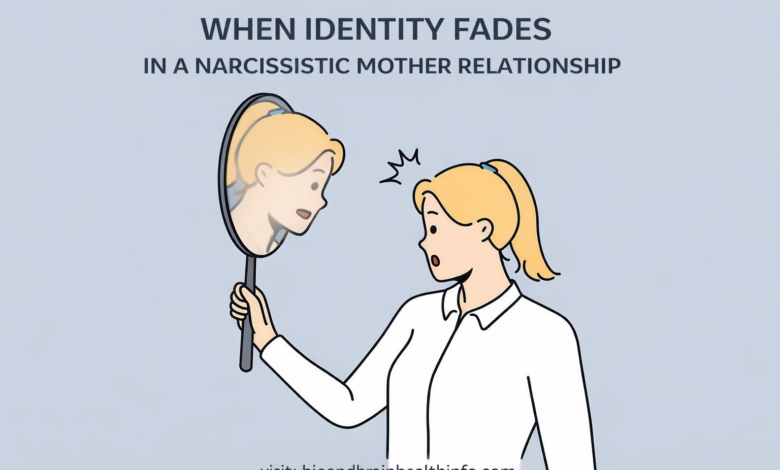
Identity loss from a narcissistic mother often develops through enmeshment and emotional abuse, where identity erosion occurs quietly and healing begins only after selfhood is separated from survival.
Thank you for reading this post, don't forget to subscribe!Some losses are not noticed when they happen.
They appear later, as confusion about who you are when no one is directing you.
Even after leaving, the nervous system can stay on alert because it learned unpredictability as normal. Regulation returns through consistency, not force.
Identity Loss From Narcissistic Mother
Identity loss from a narcissistic mother often carries a quiet fear: “Why do I feel empty or undefined when I should feel free?”
Many people mistake this for weakness, dependency, or a lack of maturity. In reality, identity erosion develops through long-term enmeshment and emotional abuse, where individuality was unsafe or discouraged.
When a child’s role is to reflect, regulate, or represent a parent, selfhood adapts by becoming relational rather than internal.
This is not a failure of character. It is a survival response shaped by context.
Healing begins when identity is separated from adaptation and self-blame loosens its grip.
This article will help you understand what’s happening — without labels, blame, or self-attack.
REASON FOR THIS BLOG
To help readers understand how identity confusion develops after maternal emotional enmeshment and to separate trauma-based adaptation from true selfhood — without judgment or diagnosis.
Please Explore This Blog emotional-withdrawal-after-narcissist
INNER SEARCH MIRROR
You may recognize yourself if you wonder:
Who am I without approval?
Why do I mirror others easily?
Why do my preferences feel unclear?
Why does independence feel unsafe?
Why do I feel responsible for others’ emotions?
Why do I feel empty after separation?
These questions do not mean identity is gone. They reflect how selfhood was shaped under relational pressure.
PSYCHOLOGICAL EXPLANATION -Identity Loss From a Narcissistic Mother Develops Through Adaptation
Identity loss from a narcissistic mother is psychological adaptation, not disappearance of self. When emotional abuse and enmeshment are present, the mind prioritizes connection over individuation.
Identity erosion occurs when a child learns that separateness leads to withdrawal, criticism, or instability. Intent was survival, not self-erasure.
Over time, preferences, boundaries, and self-definition remain underdeveloped because they were unsafe to express.
Healing does not create identity from nothing; it allows identity to surface once protection is no longer required.
| Then (Adaptation) | Now (Misread As) |
|---|---|
| Emotional attunement | No sense of self |
| Compliance | Weak identity |
| Relational focus | Dependency |
Personal note: I stopped feeling broken when I understood adaptation had a purpose.
NERVOUS SYSTEM EXPLANATION – Identity Loss From Narcissistic Mother
Identity loss from a narcissistic mother is reinforced through the nervous system. Fight, flight, freeze, or fawn responses activate automatically when autonomy once created threat.
The body learned that being distinct risked emotional rupture. These reactions happen before conscious thought.
Healing occurs as the nervous system experiences consistency without penalty.
Common body signals:
Anxiety when asserting needs
Numbness around choice
Hyper-awareness of others
Collapse after independence
Tension during self-expression
Personal note: My sense of self strengthened as my body stopped bracing.
Please Explore This Blog nervous-system-recovery-after-abuse
CORE DISTINCTION – Identity Loss From Narcissistic Mother
Identity vs Survival Responses
This distinction restores clarity.
Survival responses are relational strategies learned to preserve safety.
Identity is values, conscience, preference, and inner continuity.
Survival adapts.
Identity remains intact beneath adaptation.
| Survival | Identity |
|---|---|
| People-mirroring | Personal values |
| Emotional caretaking | Inner direction |
| Fear of separation | Capacity for autonomy |
| Role-based worth | Inherent selfhood |
Identity loss is not permanent damage. It is identity waiting for safety.
Identity Loss From a Narcissistic Mother Is Not Narcissism
A common fear after identity loss from a narcissistic mother is, “What if I’ve lost empathy or become self-centered?” This fear itself is informative.
Trauma responses aim to preserve connection and safety; narcissism aims to preserve control and superiority. Identity erosion through enmeshment and emotional abuse often increases remorse, not entitlement.
Reflection appears naturally. Accountability matters deeply. Motivation — not surface behavior — is the key difference.
| Trauma-Based Response | Narcissistic Pattern |
|---|---|
| Feels remorse | Avoids accountability |
| Reflects inward | Deflects blame |
| Seeks repair | Seeks dominance |
| Fears harm | Minimizes impact |
Personal note: My worry about causing harm told me my values were still intact.
GROWTH DIRECTION – Identity Loss From Narcissistic Mother
Identity loss from a narcissistic mother does not reverse through effort or confrontation. Growth emerges as the system experiences safety without role demands.
Healing becomes visible when urgency fades and choices feel less loaded. Identity repair shows up quietly — through steadier preferences, reduced self-monitoring, and a gentler relationship with autonomy.
Emotional abuse once required vigilance; recovery allows rest. Enmeshment loosens as peace becomes more important than explanation.
Gentle signs of healing:
Less pressure to perform
Clearer yes/no signals
Tolerance for solitude
Reduced emotional fusion
Choosing calm over justification
Personal note: My identity felt clearer when I stopped pushing it to appear.
Please Explore This Blog rebuilding-self-trust-after-narcissist
HEALING COMPASS / ORIENTATION TABLE
Healing from identity loss from a narcissistic mother unfolds in stabilizing stages. These stages do not demand action; they offer orientation.
Each phase restores trust gradually by separating survival from selfhood.
| Stage | Inner Orientation |
|---|---|
| Awareness | “My confusion makes sense.” |
| Safety | “I don’t need to define myself yet.” |
| Separation | “This role isn’t my identity.” |
| Reconnection | “My preferences matter.” |
| Integration | “I move from inner direction.” |
Identity returns as pressure lifts. Stability grows when clarity replaces self-interrogation.
Identity Loss Was Learned, Not Chosen
Identity loss from a narcissistic mother develops when connection is prioritized over self-definition.
In environments shaped by enmeshment, the child learns that safety comes from alignment rather than individuation. Identity erosion is not a disappearance of self, but a postponement of it.
Emotional abuse teaches vigilance and responsiveness, not self-expression. Healing begins when this learning is recognized as intelligent adaptation rather than weakness.
What feels like absence is often identity waiting for conditions where it can exist without risk.
Understanding this reframes confusion into coherence and replaces self-criticism with clarity.
Why Separation Can Feel Disorienting
After identity loss from a narcissistic mother, distance may feel emptier than expected. This happens because enmeshment trained identity to exist relationally rather than internally.
Identity erosion leaves a gap when external cues disappear. Emotional abuse conditioned constant reference to another’s needs, reactions, or moods.
Healing does not immediately fill this space; it stabilizes it. Disorientation is not regression — it is the nervous system adjusting to autonomy.
As internal reference points strengthen, meaning returns without being forced or constructed artificially.
Why Self-Doubt Appears During Healing
Self-doubt often intensifies during identity loss from a narcissistic mother because identity erosion becomes visible only when survival roles loosen.
Enmeshment once provided structure, even if it was limiting. Emotional abuse replaced self-trust with monitoring. Healing exposes this gap, not as failure, but as transition.
Doubt signals that old guidance systems are shutting down before new ones stabilize.
This phase is uncomfortable, yet temporary.
Selfhood reorganizes when given time and safety, not pressure to “know” immediately.
Please Explore This Blog confidence-after-narcissistic-abuse
Why Identity Returns Quietly – Identity Loss From Narcissistic Mother
Recovery from identity loss from a narcissistic mother is rarely dramatic. Identity erosion reverses through subtle consistency rather than breakthroughs.
Enmeshment dissolves as preferences reappear in small, ordinary choices. Emotional abuse once demanded vigilance; healing allows neutrality.
Identity shows up as steadiness — not confidence displays. You notice what fits, what drains, and what feels unnecessary.
This quiet return often goes unnoticed because it lacks urgency.
But this calmness is evidence that identity is no longer defending itself — it is inhabiting.
Why Peace Is the Marker of Integration – Identity Loss From Narcissistic Mother
The final shift in identity loss from a narcissistic mother is not certainty, but peace. Identity erosion no longer defines perception when enmeshment loosens fully.
Emotional abuse trained alertness; healing allows rest. Peace does not mean passivity — it reflects internal alignment.
Decisions feel simpler because they no longer require justification.
Identity operates without surveillance. This state may feel unfamiliar, even anticlimactic, yet it signals integration.
When calm replaces confusion, identity has stopped asking permission to exist.
🌱 Closing Note
Breakthroughs do not arrive as revelations. They arrive as reduced self-monitoring, gentler pacing, and growing trust in inner signals. When identity no longer needs explanation, healing is already underway.
🌐 A Whole-System View of the Human Healing Process
Identity recovery is not a single insight; it is a coordinated settling across systems. When identity loss from a narcissistic mother occurs, meaning, body signals, emotions, and values reorganize at different speeds.
Addressing one layer in isolation can create pressure or confusion. A whole-system view restores sequence: ethics first, then psychology, body regulation, mental capacity, identity continuity, and reflective support.
This order keeps healing humane, paced, and trustworthy.
🩺 Medical / Ethical Positioning – Identity Loss From a Narcissistic Mother
Ethical framing prevents confusion from turning into self-blame. With identity loss from a narcissistic mother, the mind seeks meaning under threat; clear boundaries around explanation (not diagnosis) stabilize understanding.
This layer names patterns without labeling people, keeping focus on experience rather than judgment.
It protects dignity while clarifying how identity erosion can occur without moral failure. When ethics lead, insight calms rather than escalates.
| Ethical Anchor | What It Prevents |
|---|---|
| Explain, don’t diagnose | Self-labeling |
| Describe patterns | Blame |
| Center safety | Urgency |
| Respect limits | Overreach |
Personal note: Ethical clarity stopped me from turning insight into accusation—of others or myself.
🧠 Psychological Layer – Identity Loss From a Narcissistic Mother
Psychologically, meaning is organized to preserve attachment. In identity loss from a narcissistic mother, prolonged enmeshment teaches the mind to define self through roles and reactions.
This layer explains how interpretations formed under pressure persist after conditions change. By separating learned meanings from present reality, coherence returns.
Thought patterns soften when context is restored; confusion eases without correction or debate.
| Psychological Task | Result |
|---|---|
| Re-contextualize meaning | Relief |
| Name adaptations | Compassion |
| Update assumptions | Clarity |
| Reduce rumination | Stability |
Personal note: Once context was clear, my thoughts stopped arguing.
Please Explore This Blog identity-loss-after-abusive-relationship
⚡ Nervous System Layer – Identity Loss From a Narcissistic Mother
The body learned safety before the mind understood it. With identity loss from a narcissistic mother, the nervous system encoded threat around autonomy during emotional abuse.
Responses activate automatically—before choice. Regulation arrives through consistent safety cues, not force.
As baseline calm returns, reactions lose intensity and options reappear.
| Body Signal | Protective Aim |
|---|---|
| Freeze | Avoid rupture |
| Fawn | Preserve bond |
| Hypervigilance | Anticipate shifts |
| Withdrawal | Reduce overload |
Personal note: My body relaxed once I stopped demanding certainty.
🧩 Mental Health Layer – Identity Loss From a Narcissistic Mother
Capacity matters. In identity loss from a narcissistic mother, prolonged stress depletes attention, energy, and confidence.
This layer restores bandwidth rather than pushing performance. When pressure lifts, motivation returns organically.
Stabilizing sleep, focus, and emotional range precedes insight and choice—without pathologizing normal depletion.
| Capacity Area | Gentle Effect |
|---|---|
| Energy | Permission to rest |
| Focus | Fewer loops |
| Mood | Neutral range |
| Confidence | Quiet return |
Personal note: Energy came back when I stopped proving resilience.
🧭 Identity Layer – Identity Loss From a Narcissistic Mother
Identity was never erased; it went offline to stay safe. With identity loss from a narcissistic mother, values and conscience remain intact beneath adaptation.
This layer reconnects inner continuity—preferences, limits, and moral sense—without performance.
Identity emerges as steadiness, not declarations.
| Identity Marker | What It Shows |
|---|---|
| Remorse | Conscience |
| Reflection | Awareness |
| Preference | Direction |
| Choice | Continuity |
Personal note: I recognized myself when choices felt simpler.
🤍 Reflective Support Layer (Including AI) – Identity Loss From a Narcissistic Mother
Reflective tools support healing by mirroring experience without directing it.
For identity loss from a narcissistic mother, journaling, conversation, or AI reflection slow loops and organize meaning while preserving agency.
This layer offers perspective—not prescriptions—so inner authority strengthens.
| Tool | Support Function |
|---|---|
| Journaling | Externalize safely |
| Conversation | Normalize |
| Reflection | Pattern clarity |
| AI mirroring | Witness, not lead |
Personal note: Being reflected—without advice—made thinking feel safe.
PERSONAL NOTE – Identity Loss From a Narcissistic Mother
For years, I believed something essential was missing in me. While exploring identity loss from a narcissistic mother, I realized the absence I felt wasn’t emptiness—it was protection.
I had learned to stay attuned outward because inward focus once carried risk.
When I stopped asking what was wrong with me, identity erosion made sense as adaptation, not damage.
Naming enmeshment helped me see how roles replaced selfhood, and how emotional abuse quietly shaped vigilance. Healing began when I allowed myself to be undefined without panic.
What returned first wasn’t confidence, but neutrality. From there, a steadier sense of self emerged—unforced, intact, and quietly trustworthy.
Please Explore This Blog self-worth-recovery-after-narcissist
COSMIC / PHILOSOPHICAL TAKEAWAY – Identity Loss From a Narcissistic Mother
“A river that bends around stone is not broken; it is guided.”
Identity loss from a narcissistic mother asks us to see human development as responsive to terrain. Identity erosion occurs where enmeshment restricts movement, not because the self fails to exist.
Emotional abuse trains the system to curve toward safety. Healing is the moment the river finds open ground—no longer pressing, no longer proving.
Meaning returns when pressure lifts. The self does not need reconstruction; it needs space.
In steadier conditions, what adapted realigns naturally, remembering its original direction.
FINAL CLOSING – Identity Loss From a Narcissistic Mother
If you recognize identity loss from a narcissistic mother, know this: confusion is not proof of absence.
Identity erosion reflects adaptation within enmeshment, shaped by emotional abuse—not a flaw in who you are. Healing does not require confrontation, speed, or certainty.
It unfolds as safety becomes consistent and self-attack quiets. You are allowed to be undefined while your system settles.
Nothing is wrong with you for reacting to harm. With safety and understanding, what adapted can soften again.
Take what steadies you here and leave the rest. Clarity arrives when pressure does not.
Please Explore This Blog learning-to-trust-again-after-abuse
FAQ SECTION
1. Is identity loss permanent after a narcissistic mother?
No. It reflects adaptation; identity returns as safety stabilizes.
2. Why do I feel empty after separation?
Because identity was relationally organized; internal reference points are re-forming.
3. Am I becoming narcissistic myself?
Concern for impact, remorse, and reflection strongly suggest you are not.
4. Do I need confrontation to heal?
No. Healing can occur without confrontation.
5. Why does autonomy feel anxious?
Autonomy once carried risk; the body is updating that memory.
6. How long does recovery take?
There is no fixed timeline. Stability matters more than speed.
7. Why does rest feel uncomfortable?
Rest may have signaled danger before; that association can change.
8. What if I don’t know who I am yet?
Not knowing is a valid, temporary stage of integration.
🌿 Final Blog Footer — Bio & Brain Health Info
Written by Lex, founder of Bio & Brain Health Info — exploring psychology, spirituality, and emotional recovery through calm, trauma-aware understanding.
✨ Insight & Reflection
Healing does not begin when answers arrive — it begins when self-attack stops.
Clarity grows where safety is restored.
🧠 Learn
Narcissism • Emotional Healing • Spiritual Psychology
🌍 A Moment for You
💡 Pause for two minutes. Let your body settle before moving on.
🧭 If This Article Helped, Your Next Questions Might Be:
How does the nervous system relearn safety?
What does healthy separation feel like?
How do boundaries restore identity?
✨ Cosmic Family Invitation
You are not here by accident. If these words reached you, clarity was already beginning.
We rise together — different souls, one journey. 🕊️
📩 Connect with us
info@bioandbrainhealthinfo.com
Telegram: @bioandbrainhealthinfo
WhatsApp Channel: Punehealth
Lex | Bio & Brain Health Info
Cosmic Family — Different Souls, One Journey.
REFERENCES & CITATION (Trusted Sources)
Bowlby, J. — Attachment and Loss
https://www.tavistockrelationships.org/research/attachment-theoryvan der Kolk, B. — The Body Keeps the Score
https://www.besselvanderkolk.com/resources/the-body-keeps-the-scoreSiegel, D. — The Developing Mind
https://drdansiegel.com/books/the-developing-mind/Herman, J. — Trauma and Recovery
https://www.basicbooks.com/titles/judith-lewis-herman/trauma-and-recovery/9780465098736/Porges, S. — Polyvagal Theory
https://www.polyvagalinstitute.org/whatispolyvagaltheoryHarvard Health — Childhood Emotional Neglect
https://www.health.harvard.edu/blog/emotional-neglect-in-childhood-202201272676National Institute of Mental Health — Trauma
https://www.nimh.nih.gov/health/topics/post-traumatic-stress-disorder-ptsdLinehan, M. — Emotional Regulation
https://behavioraltech.org/resources/faqs/dialectical-behavior-therapy-dbt/