Emotional Triggers Explained: Why Small Things Hurt So Much
Why Do Emotional Triggers Hurt So Much? Psychology Behind Strong Reactions


Sometimes small situations create surprisingly strong emotions—anger, sadness, anxiety, or frustration that feel bigger than the moment itself.
Thank you for reading this post, don't forget to subscribe!Understanding emotional triggers meaning helps explain why this happens. Emotional reactions are not always about the present situation; they are often connected to triggers psychology, past experiences, unresolved pain, and learned reaction patterns stored in the nervous system.
Many people blame themselves for being “too sensitive,” but emotional sensitivity is often a sign that something deeper has not been fully processed. Certain situations can activate trauma triggers, making the brain react as if old emotional pain is happening again.
👉 This blog will help you understand why emotional triggers happen, why small things hurt so much, and how your mind and body respond to emotional stress. You will learn the psychology behind triggers, how emotional patterns form, and how awareness can help you respond with clarity instead of emotional overwhelm
Emotional Triggers Meaning: Why Small Situations Feel Emotionally Bigger
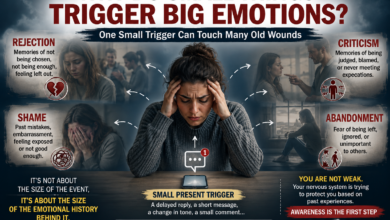
Many people believe they are “too emotional” or “too sensitive” when they react strongly to a situation that seems small from the outside. A delayed message, criticism, silence, rejection, or a broken promise may appear minor to others, yet internally it creates anxiety, anger, sadness, emotional shutdown, or overthinking. Understanding emotional triggers meaning helps explain why the mind and body react so intensely.
Emotional triggers are not random emotional outbursts. They are deeply connected to triggers psychology, emotional memory, unresolved experiences, and learned reaction patterns stored inside the nervous system.
A trigger is not simply about the current event. It is often about what the present situation reminds you of emotionally.
Many people carry emotional sensitivity without fully realizing it. They may appear calm externally but internally feel emotionally activated.
👉 This is why emotional sensitivity is not weakness—it is often a sign that your system remembers something painful.
Understanding trauma triggers becomes important because emotional reactions rarely come from one moment alone. The brain connects present experiences with past emotional memory.
Read Also: Many emotional triggers become stronger when emotional attachment turns into psychological dependence and fear of loss.
What Are Emotional Triggers? Meaning Explained in Simple Language
Emotional triggers are situations, words, behaviors, or experiences that create a strong emotional response inside you.
These triggers can come from:
- Rejection
- Betrayal
- Financial stress
- Being ignored
- Feeling unheard
- Broken trust
- Emotional abandonment
- Criticism
- Feeling taken advantage of
When someone asks, “What are emotional triggers?” the answer is not only psychological. Emotional triggers are also physical. Your body reacts through increased heart rate, tension, nervous system activation, or emotional overwhelm.
👉 This is why emotional triggers meaning cannot be understood only through thoughts. The body also participates in the emotional reaction.
Common Emotional Trigger Examples
Many people experience emotional triggers in everyday life without realizing it.
Examples include:
- Feeling ignored by someone important
- Receiving criticism from family or partner
- Not being respected after helping someone
- Financial betrayal
- Someone breaking trust
- Emotional rejection in relationships
These situations activate reaction patterns already stored inside emotional memory.
Why Small Things Hurt So Much Emotionally
One of the biggest questions people ask is:
Why do small things trigger strong emotions?
The answer is simple but deep.
Small situations hurt because they touch something emotionally unresolved.
A present event may look small, but emotionally it connects to:
- Old hurt
- Emotional insecurity
- Fear of abandonment
- Broken trust
- Unprocessed trauma
- Internal emotional sensitivity
This is where triggers psychology becomes important.
Your emotional system does not react only to facts. It reacts to meaning.
For example:
- Someone not answering your call may feel like rejection
- Someone delaying payment may feel like betrayal
- Someone ignoring you may activate abandonment feelings
This is why emotional reactions often feel bigger than the situation.
Triggers Psychology: How the Brain Creates Emotional Reactions
Understanding triggers psychology helps explain why emotions feel automatic.
The brain constantly scans for emotional safety.
When a situation feels similar to previous pain, the brain reacts quickly.
This reaction often happens before logic.
How Emotional Trigger Psychology Works
- Something happens externally
- Brain connects it to emotional memory
- Nervous system activates
- Emotional response begins
- Thought loop starts
This is why emotional triggers can feel immediate.
You may know logically that a situation is small, yet emotionally it feels impossible to ignore.
👉 Your brain is not asking: “Is this dangerous logically?”
👉 It asks: “Does this feel emotionally familiar?”
This creates strong reaction patterns.
Emotional Sensitivity: Why Some People Feel More Deeply
Many people struggle with emotional sensitivity.
They feel things deeply.
They overthink conversations.
They replay emotional moments.
They notice small emotional shifts.
But emotional sensitivity is not always weakness.
Emotional Sensitivity Meaning
Emotional sensitivity means your nervous system responds strongly to emotional experiences.
This can happen because of:
- Childhood environment
- Emotional neglect
- Repeated betrayal
- Trust issues
- Nervous system stress
- High emotional awareness
👉 Emotionally sensitive people often absorb emotional energy faster. They may feel hurt by situations that others ignore.
This is not because they are broken.
It is because their emotional system processes deeply.
Emotional Triggers and Reaction Patterns: Why Responses Repeat
One of the strongest parts of emotional triggers meaning is understanding repeated reaction patterns.
Reaction patterns are automatic emotional responses learned over time.
Examples:
- Feeling panic when ignored
- Becoming angry when disrespected
- Overthinking after conflict
- Emotional shutdown during criticism
- Fear after betrayal
These patterns repeat because the brain wants emotional protection.
👉 The mind believes: “If I react quickly, I stay safe.”
But often these patterns create suffering instead of protection.
Read Also: Practicing conscious living and emotional awareness helps you notice triggers before they become overwhelming reactions.
How Emotional Triggers Affect Daily Life
Emotional triggers do not stay inside one moment.
They affect:
- Relationships
- Trust
- Self-esteem
- Decision-making
- Sleep
- Eating patterns
- Nervous system regulation
This is why unresolved trauma triggers can slowly affect quality of life.
A person may appear functional externally but internally carry emotional pressure.
Emotional Triggers Meaning Is Not Weakness
One of the biggest misunderstandings about emotional triggers is believing they mean emotional weakness.
But triggers are not weakness.
Triggers are information.
They show:
- What hurts you
- What matters to you
- What remains unresolved
- Where emotional boundaries are missing
- Where emotional sensitivity exists
Understanding emotional triggers meaning gives you awareness.
👉 Awareness creates emotional clarity. Clarity creates healthier response patterns.
Reflection Questions for the Reader
👉 Ask Yourself:
- What situations trigger strong emotions inside me?
- Do I react to the present—or to emotional memory?
- What emotional pattern repeats most often in my life?
These questions begin emotional awareness.
👉 Emotional triggers meaning is not about being dramatic or emotionally unstable. Emotional triggers are signals that something inside you feels threatened, unresolved, or emotionally important.
Understanding triggers psychology, trauma triggers, emotional sensitivity, and repeated reaction patterns helps explain why small things hurt more than expected.
Triggers are not random. They are emotional messages from your nervous system.
The next step is understanding how trauma, memory, and the brain create these reactions.
Trauma Triggers and Emotional Memory — Why the Past Still Controls Your Reactions
Many emotional reactions are not only caused by the present moment.
They come from emotional memory.
This is where trauma triggers become important.
Trauma triggers happen when a present experience activates old emotional pain.
👉 Even if the current situation is different, your nervous system may react as if the past is happening again.
Emotional triggers meaning becomes deeper when we understand how memory influences reactions.
What Are Trauma Triggers?
Trauma triggers are emotional reactions connected to unresolved painful experiences.
They may come from:
- Childhood emotional neglect
- Financial betrayal
- Relationship rejection
- Loss
- Fear
- Emotional abandonment
When something resembles those experiences, the body reacts.
This creates emotional activation.
Trauma Triggers and Emotional Memory Connection
The brain stores emotional memory differently from factual memory.
You may forget details.
But the body remembers how something felt.
This is why trauma triggers can feel immediate.
The nervous system reacts before logic.
Why Trauma Triggers Feel So Strong – Emotional Trigger Psychology and Threat Detection
The brain wants safety.
When a situation feels emotionally unsafe, the brain activates:
- Fight
- Flight
- Freeze
This creates:
- Panic
- Emotional sensitivity
- Strong reaction patterns
- Overthinking
Emotional Sensitivity and Trauma Triggers
People with high emotional sensitivity often react strongly to emotional memory.
This does not mean weakness.
It means the nervous system remains alert.
Sensitive individuals may notice:
- Tone changes
- Silence
- Delayed replies
- Emotional distance
These small signals activate reaction patterns.
Read Also : Healthy emotional regulation often begins when you learn how to practice detachment in daily life.
Why Emotional Triggers Repeat
Repeated emotional reactions happen because the brain wants emotional prediction.
The brain repeats familiar emotional loops.
This is why triggers psychology matters.
When an emotional pattern repeats, the brain believes: 👉 “This keeps me safe.” But often it creates suffering.
Signs You Are Experiencing Trauma Triggers
Common signs include:
- Overreacting emotionally
- Feeling unsafe quickly
- Difficulty trusting
- Emotional overwhelm
- Strong emotional sensitivity
- Thinking about situations repeatedly
Understanding trauma triggers helps reduce self-blame.
Trauma triggers explain why emotional reactions often feel stronger than expected.
Understanding emotional memory, nervous system activation, and triggers psychology creates awareness.
👉 The past does not disappear automatically. But awareness helps reduce emotional repetition.
How to Respond to Emotional Triggers Without Losing Control
Understanding emotional triggers meaning is not enough.
The next step is learning how to respond.
Many people stay trapped in emotional reaction patterns.
Awareness helps interrupt automatic behavior.
How to Recognize Emotional Triggers in Real Time
When triggered, ask:
- What happened?
- What emotion appeared?
- What memory does this remind me of?
- What do I want to do right now?
These questions slow emotional reaction.
Emotional Trigger Psychology: Pause Before Reaction
The nervous system reacts quickly.
Awareness creates a pause.
This pause helps reduce automatic reaction patterns.
Emotional Sensitivity Is Not the Problem
Many people try to stop emotional sensitivity.
But the goal is not numbness.
The goal is emotional regulation.
Understanding emotional sensitivity creates self-compassion.
How to Break Emotional Reaction Patterns
Step 1: Identify Trigger
Understand what activates emotional pain.
Step 2: Notice Body Response
Observe:
- Tight chest
- Fast thoughts
- Anger
- Emotional overwhelm
Step 3: Delay Immediate Reaction
Pause before sending messages or reacting.
Step 4: Ask What Needs Attention
Triggers often reveal:
- Missing boundaries
- Emotional hurt
- Unspoken truth
Why Awareness Changes Emotional Triggers
Awareness creates separation.
You stop becoming the reaction.
Instead, you observe it.
This reduces emotional suffering.
Emotional Triggers Meaning and Healing
Healing does not mean never getting triggered.
Healing means:
- Recognizing emotional patterns
- Understanding trauma triggers
- Responding instead of reacting
- Creating emotional clarity
Final Reflection Questions
- What emotional trigger repeats most in my life?
- What emotional memory keeps activating?
- Where do I need stronger boundaries?
Emotional triggers meaning is not about weakness.
Triggers are emotional signals.
They show where emotional sensitivity, trauma triggers, and reaction patterns still exist.
👉 Awareness creates emotional freedom. When you understand triggers psychology, you stop fighting yourself. You begin understanding yourself.
People Also Ask (PAA) – Emotional Triggers Meaning
Why do emotional triggers hurt so much?
Emotional triggers hurt because they activate emotional memory, nervous system responses, and unresolved feelings connected to past experiences. A small present event may reactivate deeper emotional pain, making the reaction feel stronger than the situation itself. Understanding emotional triggers meaning helps explain why certain moments create overwhelming emotions.
What are emotional triggers in psychology?
In psychology, emotional triggers are situations, words, memories, or behaviors that create strong emotional reactions. Triggers psychology explains that emotional responses often come from learned reaction patterns, trauma triggers, or subconscious emotional associations stored in the brain and nervous system.
Why do small things trigger strong emotions?
Small things trigger strong emotions because they often connect to deeper emotional experiences. Emotional sensitivity and trauma triggers can make a minor situation feel emotionally larger. The brain reacts to meaning, memory, and emotional association rather than only the current event.
Are emotional triggers connected to trauma?
Yes, trauma triggers are closely connected to emotional reactions. Trauma can create emotional memory that remains active in the nervous system. When a similar experience happens later, the body reacts automatically, creating anxiety, anger, sadness, or emotional overwhelm.
How do I know if I am emotionally triggered?
You may be emotionally triggered if you experience sudden anger, sadness, panic, overthinking, emotional shutdown, or strong body sensations after a situation. Emotional triggers meaning becomes clearer when you notice repeated reaction patterns connected to certain people, situations, or memories.
Can emotional triggers be healed?
Yes, emotional triggers can become easier to manage through awareness, nervous system regulation, emotional understanding, and identifying repeated reaction patterns. Healing does not mean never feeling triggered—it means responding with greater awareness instead of automatic emotional reactions.
FAQ About Emotional Triggers Meaning
What is emotional triggers meaning?
Emotional triggers meaning refers to situations, experiences, or interactions that create strong emotional reactions. These triggers often come from emotional memory, past experiences, trauma triggers, or unresolved feelings that affect present reactions.
What causes emotional triggers?
Emotional triggers are caused by past emotional experiences, emotional sensitivity, trauma triggers, stress, fear, rejection, betrayal, or repeated reaction patterns. The brain connects present situations with emotional memory, creating strong emotional responses.
Why do emotional triggers feel uncontrollable?
Emotional triggers often feel uncontrollable because the nervous system reacts before logic. The body may enter fight, flight, or freeze mode, causing automatic emotional responses before the mind fully understands the situation.
Are emotional triggers a sign of weakness?
No, emotional triggers are not weakness. They are emotional signals showing where pain, sensitivity, unresolved emotions, or boundaries exist. Understanding emotional triggers meaning helps people respond with awareness rather than shame.
How can I stop reacting emotionally to triggers?
You can reduce emotional reactions by identifying triggers, noticing body responses, practicing awareness, pausing before reacting, and understanding repeated reaction patterns. Emotional regulation becomes easier when you understand the psychology behind triggers.
Can emotional sensitivity make triggers stronger?
Yes, emotional sensitivity can make triggers stronger because emotionally sensitive individuals often process emotions more deeply. This can increase awareness of emotional shifts, rejection, criticism, or emotional disconnection.
References for Blog
- Understanding Emotional Triggers – Cleveland Clinic
Explains emotional triggers, emotional memory, and nervous system responses.
Cleveland Clinic – Emotional Triggers Guide - Stress Response and Brain Activation – Harvard Health
Covers amygdala activation, stress response, and emotional regulation.
Harvard Health – Understanding the Stress Response - Self-Regulation and Emotional Response – Harvard Health
Explains emotional control, self-regulation, and response patterns.
Harvard Health – Self-Regulation Strategies - Psychotherapists’ Views on Triggering Factors – PMC Research
Research on trauma, interpersonal triggers, and emotional reactions.
PMC Research – Psychological Triggering Factors - Psychological Trauma Overview
Explains trauma, emotional memory, and nervous system reactions.
Psychological Trauma Overview - Trauma Trigger Definition and Mechanism
Explains how reminders activate emotional trauma responses.
Trauma Trigger Explanation