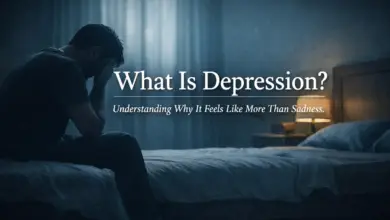
Financial Stress And Mental Health UK —Here’s How to Fight Back
financial stress and mental health: UK


Imagine this: It’s three in the morning. You’re looking at your phone and scrolling through your bank balance for the sixth time tonight. That awful feeling in your gut won’t go away. Rent is due tomorrow, the electricity bill has gone up again, and you don’t know how you’ll pay for your child’s school shoes. This scenario demonstrates the close connection between financial stress and mental health, which impacts various aspects of daily life.
Thank you for reading this post, don't forget to subscribe!This issue isn’t simply stress; it’s a mix of mental health and money problems that is becoming all too typical in the UK.
I’m not going to offer you another list of “10 ways to save money.” We both know it’s not that easy.
This series is about knowing why money troubles hurt so much, how they’re affecting us as a society, and, most importantly, what we can do to keep ourselves and each other safe.
1. The UK’s Silent Epidemic: Financial Stress And Mental Health
The Figures Don’t Lie
Let’s directly address the issue at hand:
• 67% of adults in the UK think that worrying about money makes them feel worse mentally.
• Among those under financial stress, 1 in 4 report experiencing suicidal thoughts.
Since the cost-of-living crisis started, trips to the doctor for anxiety and despair have increased. These numbers aren’t simply numbers; they are people we know, work with, or even ourselves.
Why Money Hurts So Much—Financial Stress And Mental Health
There is a scientific reason why financial stress feels like pain. When we don’t have enough money:
• Our brains react to stress in the same way as if we were in physical danger.
• When we are under a lot of stress for a long time, our bodies produce a lot of cortisol, which may cause:
o Problems sleeping
o Problems with digestion
o Weak immune systems
• The persistent uncertainty makes them feel “financial trauma.”
2. The Vicious Cycle: How Financial Stress And Mental Health
Make Money Problems Worse When You’re Stressed
Money troubles don’t simply cause financial stress; they also worsen it.
• Anxiety makes it tougher to stick to a budget.
• Depression takes away the energy required to look for better-paying jobs.
• Shame keeps many from getting treatment until it’s too late.
Stories from Real People: Financial Stress And Mental Health
• “After I lost my job, I would sit there for hours simply looking at bills. When I finally regained my focus, the late fines exacerbated my situation. – Mark, 42, from Birmingham
• “My ADHD meds help me get things done, but I’m always behind because I have to choose between food and prescriptions.” – Aisha, 28, from Manchester
This illustrates how financial stress and mental health issues can entrap individuals.
3. The Costs You Don’t See
No one discusses relationships that are under stress. Stress over money doesn’t remain in your bank account.
• One in five couples fights over money every week.
• Thirty-five percent of individuals skip social activities because they can’t afford them, which makes them feel alone.
• Parents are three times more likely to be depressed when they are having money problems.
The Cost to the Body
Chronic financial stress may cause: Financial Stress And Mental Health
• A higher risk of heart disease
• Chronic illnesses like diabetes to become worse
• Cells to age faster
4. Getting Out of the Cycle: Financial Stress And Mental Health
We need to reform the system, but here’s what can help right now:
For Your Brain: Financial Stress And Mental Health
• The Rule of Five Minutes: Set a timer for five minutes to work on one little financial chore when you feel overwhelmed. The Breathing Space Scheme lets you legally stop debt collection for 60 days while you obtain help.
• Check-Up for Benefits: 7 million Brits don’t get the aid they need. Use the Turn2Us calculator.
• Utility Hacks: If you inquire, many companies will give you grants and payment options.
Protection for a long time
It takes time to build resilience, but it’s important.
• “Stress-Proof” Budgeting: Make sure to give yourself modest, frequent rewards to avoid burnout.
• Safety nets for the community: time banks, mutual help organizations, and skill sharing
5. We Need to Talk About Solutions
That’s bigger than “personal responsibility.”
Changes in policy that might help:
• Mental health impact assessments for all economic policies
• Automatically signing up for perks like the Warm Home Discount
• Training for employers to recognize financial problems
Changing the Subject
We need to stop considering money problems as
❌ moral shortcomings.
The link between Financial Stress And Mental Health
The Bad Cycle of Money and Mood
Worrying about money not only affects your bank account but also penetrates your mind. Anxiety, restless nights, and even despair may set in, making it difficult to concentrate, work, or even enjoy life.
Moreover, poor mental health can complicate managing finances, thereby exacerbating the cycle.
People who are under financial stress and have mental health problems are more likely to:
• Feel anxious and depressed
• Have trouble sleeping
• Avoid looking at their bank accounts (which might make things worse)
• Feel alone or humiliated
Why This Is Important in the UK Right Now
Rising energy costs, inflation, and stagnating earnings are straining millions of Brits.
The Mental Health Foundation says that almost 1 in 4 individuals in the UK feels overwhelmed by money problems.
Many individuals are experiencing financial hardship and mental health issues without anyone being aware of it.
Signs that money problems are hurting your mental health
How can you tell whether your money problems are affecting your mental health?
These are some things to look out for:
1. Always Worried About Money
• Do you stay up all night worried about bills?
• Does looking at your bank account make you feel scared?
2. Putting off financial tasks
• Have you been overlooking messages from creditors?
• Are you delaying the creation of a budget due to its perceived difficulty?
3. Physical Symptoms:
• Headaches, tiredness, or stomach problems that don’t have an obvious cause
• More short-temperedness or mood swings
4. Withdrawing from social activities
• Not going to social gatherings because you can’t afford them
• Being ashamed to speak about money problems
If any of these seem similar, you’re not alone. The most important thing is that assistance is accessible.
Five NHS-Approved Ways to Deal with Money Problems and Mental Health Issues
1. Talk to someone (you’re not the only one).
Keeping your money problems to yourself just makes things worse. The NHS says you should:
• Talk to a friend or family member you trust.
• Call a free debt help agency (like StepChange or Citizens Help).
• Get therapy or counseling (via NHS Talking Therapies)
2. Make a Simple Budget (Yes, Really!)
Making a budget may seem monotonous, but it’s one of the finest ways to get back in charge. Use the 50/30/20 rule:
• 50% for necessities (rent, bills, food)
• 30% for desires (socializing, hobbies)
• 20% for savings or paying off debt
3. Take advantage of free mental health resources. – Financial Stress And Mental Health
Download PDF
• Online CBT classes for anxiety and sadness
• Mindfulness applications, such as “NHS-approved Headspace”
You can download the app from
App Store (iOS): https://apps.apple.com/app/headspace/id4993145008
Google Play (Android): https://play.google.com/store/apps/details?id=com.getsomeheadspace.android
• Crisis hotlines (like Samaritans and Shout)
UK & Ireland—Financial Stress And Mental Health
Samaritans (24/7 Emotional Support)
📞 116 123 (free) | 💻 https://www.samaritans.orgShout (Crisis Text Line—UK)
📱 Text “SHOUT” to 85258 | 💻 https://giveusashout.orgMind (Mental Health Support)
📞 0300 123 3393 | 💻 https://www.mind.org.uk
4. Put self-care first, even if you’re on a budget.
Mental health should always come first.
• Free exercise (like walking or working out on YouTube)
• Meditation or breathing techniques
• Cutting down on coffee and alcohol (they may make anxiety worse)
5. Know Your Rights (Debt Doesn’t Have to Control You)
• Breathing Space Scheme: You may take a 60-day break from talking to creditors.
• Universal Credit mental health concessions: You can get more help if you’re having trouble.
Where to Find Help: Free UK Services for Financial Stress And Mental Health
1. Help with debt:
• StepChange—free, private debt advice
• National Debtline—0808 808 4000
• Citizens Advice: Get assistance with bills and benefits in your area
2. Help with mental health: Financial Stress And Mental Health
• NHS Talking Therapies—You may refer yourself for counseling.
• Mind—0300 123 3393 (a mental health charity)
• Samaritans—116 123 (crisis help 24/7)
3. Programs for those who are having trouble with money:
• Local council support—discretionary housing payments
• Turn2Us—grants for people who are in a financial crisis
Getting rid of the stigma: It’s okay to ask for help
Many people suffer in silence due to embarrassment. But having money problems and mental health issues doesn’t mean you’re a failure; they’re just typical reactions to challenging situations.
The most important takeaway from this blog is that reaching out is a strength, not a weakness.
In the end, you’re stronger than you think.
Money difficulties might seem like they take over your life, but they don’t. You’re already making progress by taking tiny measures like talking to someone, accessing free resources, or simply admitting that you’re having a difficult time.
Even if they don’t feel that way right now, remember that money problems and mental health problems are just temporary.
You can get your life back on track with the appropriate help. Need Help Right Away?
• Call Samaritans at 116 123 (free, 24/7).
• Text SHOUT to 85258 for help in a crisis.
• Go to NHS Mental Health Services
You can do this. 💙
FAQ: Financial Stress And Mental Health in the UK
1. What effect does financial stress have on mental health in the UK?
In the UK, there is a significant connection between mental health problems and financial stress. Polls show
In the UK, 34% of individuals report experiencing anxiety due to money problems, 29% report feeling stressed, and 10% report feeling hopeless.
1. Those in debt or worried about money are more likely to be depressed, have trouble sleeping, and think about suicide.
2. Subjective stress, like worrying about payments, has a bigger effect on mental health than actual debt numbers.
2. Where can I receive assistance with my money problems and mental health in the UK?
Here are some free help services:
Charities for Mental Health:
Mind: Call 0300 123 3393 or go to mind.org.uk for help with money and mental health.
Samaritans: 24/7 emotional support (116 123).
Advice on debt:
StepChange: Free strategies to help you manage your debt (0800 138 1111).
National Debtline: Help in making a budget (0808 808 4000).
NHS: Free talking treatments with a GP referral
3. What are some useful techniques for dealing with money stress?
Important strategies:
Budgeting: Use MoneyHelper’s planner and other tools to keep track of your expenditures.
Take care of yourself by getting enough sleep, exercising, and staying away from harmful ways of coping, such as spending too much money.
Be honest: Talk to someone you trust or get expert help to feel less alone.
Delay purchases: For non-essential purchasing, set up a 24-hour “cooling-off” period.
4. Can money problems lead to mental health problems that last a long time?
Yes. Chronic money stress is linked to:
Depression: Worrying about money all the time raises the chance of depression.
Anxiety disorders: Uncertainty about your financial situation might cause feelings of anxiety.
Relationship strain: One in five individuals in the UK fights with their relationships over money, which makes their mental health worse.
5. How can being unemployed make money problems and mental health worse?
Being unemployed is a double burden:
61% of individuals in the UK worry about their monthly costs, and losing a job makes those worries worse.
Self-esteem: Not having a job makes people feel even worse about themselves since it makes them feel like they don’t have a purpose or identity.
Support: Citizens Advice and ACAS can help you understand your rights and benefits.
Important Points—Financial Stress And Mental Health
Money problems may make anxiety and depression worse; therefore, mental health and financial stress are very closely linked.
- Signs include trouble sleeping,
- avoiding things. Physical symptoms also need attention.
- There is free support in the UK via the NHS, StepChange, and Mind.
✅ Small things like budgeting,
✅ communicating, and
✅ Taking care of yourself may make a significant impact.
If this blog helps you, please pass it on to someone who may need it. Sometimes, having a chat can be the best way to get help.
*************************************************************************************************************
Here are properly linked sources for the key statistics and claims in the article, using only authoritative UK-based organizations and recent studies:
- UK-Specific Financial Stress Data:
- Money and Mental Health Policy Institute (“2024)—”The Cost of Living With a Mental Health Problem”
- Mental Health Foundation (2023)—”Money and Mental Health During the Cost of Living Crisis”
- ONS (2024)—”Cost of Living and Wellbeing in Great Britain”
- Health Impacts:
- NHS Digital (2023)—”Mental Health and Debt Report”
- The BMJ (2023)—”Financial Stress as a Risk Factor for Cardiovascular Disease”
- Mind UK (2024)—”Financial Stress and Suicide Risk”
- Policy and Support:
- Citizens Advice (2024)—”The Impact of the Cost of Living Crisis”
- StepChange Debt Charity (2024)—”Breathing Space Scheme Data”
- Turn2Us Benefits Calculator
- Employment and Benefits:
- TUC (2023)—”Zero Hours Contracts and Mental Health”
- Trussell Trust (2024)—”Food Bank Use Statistics”
- Joseph Rowntree Foundation (2024)—”UK Poverty Report”