How to Gain Control Over Your Thoughts and Emotions
How to Stop Mental Chaos and Build More Emotional Stability From Within

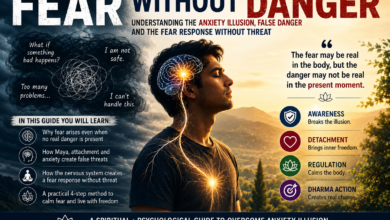
Most people search for how to control your thoughts and emotions when inner chaos starts becoming too heavy to carry. The mind feels loud, emotions feel intense, and even small triggers can disturb peace, focus, and daily functioning.
Thank you for reading this post, don't forget to subscribe!👉 But real emotional self control does not come from suppression, force, or pretending to be strong. It comes from understanding how to manage your thoughts, regulate emotional reactions, and build healthier mind and emotion control from within.
This blog will help you see why thoughts become overwhelming, why emotions often feel stronger than logic, and how emotional regulation techniques actually work in real life. More importantly, it will show you that peace is not emotional numbness or mental silence. It is awareness, understanding, and wiser response.
👉 If you want a deeper, more human explanation instead of generic advice, this blog will give you practical clarity, emotional insight, and a path you can actually apply.
How to Stop Mental Chaos and Build More Emotional Stability From Within
Why People Search for How to Control Your Thoughts and Emotions
Most people search for how to control your thoughts and emotions when life inside starts feeling harder than life outside. The mind becomes noisy, emotions become intense, and even small triggers begin affecting peace, sleep, focus, and daily functioning.
👉 A person may look fine from the outside, but internally they may be carrying fear, pressure, anger, sadness, overthinking, and emotional exhaustion all at once.
That is why this topic matters so deeply.
This is not just about “thinking positive.” It is about understanding why thoughts become so powerful, why emotions rise so quickly, and why inner stability feels difficult to hold.
👉 Real emotional self control is not built through force, suppression, or pretending to be okay. It begins when you start understanding your inner system instead of fighting it blindly.
“I learned that my emotions were not the enemy. My unconscious reaction was.”
This blog is designed to help readers who want more than shallow advice. It explains how to manage your thoughts, why your inner world can feel out of control, and how healthy mind and emotion control begins through awareness, regulation, and honesty with yourself.
What Does It Really Mean to Control Your Thoughts and Emotions?
Many people misunderstand how to control your thoughts and emotions from the beginning. They think control means never feeling disturbed, never reacting, or becoming mentally strong by shutting emotion down. But that is not real strength. That is often pressure wearing the mask of discipline.
Real control is not emotional suppression
Real emotional self control does not mean you never feel anger, fear, hurt, stress, or sadness. It means those feelings do not automatically lead your behavior. You still feel, but you do not become fully ruled by every thought and every emotional wave.
That is a healthier definition of mind and emotion control.
A person with real stability may still experience pain, but they pause sooner, recover faster, and understand more clearly what is happening inside them. That is why it also helps to understand the difference between emotional detachment and emotional suppression. Many people think they are controlling themselves, when they are actually only disconnecting from themselves.
Why the definition matters
If you define control in the wrong way, you will use the wrong methods. You will judge your feelings instead of understanding them.
👉 You will silence yourself instead of guiding yourself. You will try to dominate your inner world when what you really need is awareness.
That is why learning how to manage your thoughts is not only about thoughts. It is about your body, your emotional patterns, your nervous system, and your relationship with what you feel.
A healthier definition of inner control
Real control means:
- noticing what is happening inside you
- pausing before reaction takes over
- naming the emotion honestly
- slowing the body before forcing the mind
- choosing a wiser response
This is where real mind and emotion control begins.
Why Thoughts and Emotions Feel So Hard to Manage
People often ask, “Why do I know better, but still react this way?” That question matters because it shows that inner struggle is not only a mindset issue. It is often a full-system issue.
Thoughts and emotions feed each other
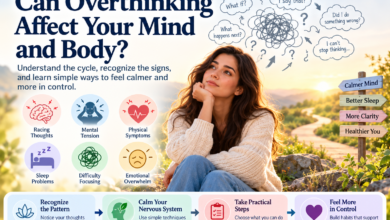
A painful thought can create emotional intensity. That emotional intensity then creates more painful thoughts. The mind starts building stories, the body becomes tense, and the feeling starts looking like truth.
This is one reason how to control your thoughts and emotions feels difficult even for intelligent and self-aware people.
That is why how to manage your thoughts cannot be reduced to positive thinking. It requires awareness of the loop itself.
A simple inner loop
A trigger happens.
The mind gives it meaning.
The body reacts.
Emotion rises.
More thoughts appear.
The reaction becomes stronger.
This is how mental chaos grows.
Old pain often mixes with present triggers
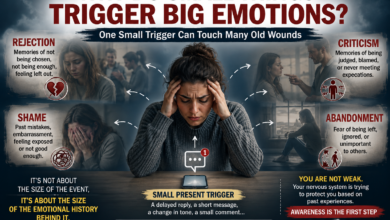
Sometimes the present moment is not the full reason a reaction feels so intense. A current situation may awaken older rejection, shame, fear, abandonment, helplessness, or anger. Then the reaction becomes bigger than the situation itself.
This is why many people search for how to control your thoughts and emotions and feel disappointed by simple advice. The pain is often layered. It is not only about what is happening now. It is also about what the present has touched inside you.
If this pattern feels familiar, it naturally connects with why you overreact emotionally and emotional triggers explained: why small things hurt so much.
“The mind became louder when I fought it blindly. It became softer when I started listening with awareness.”
Why Emotional Education Matters More Than People Realize
One hidden reason people struggle with emotional self control is that many were never truly taught how to understand their inner world.
Most people were taught performance, not emotional awareness
From childhood, people are often taught how to study, perform, compete, obey, and survive pressure. But very few are taught how to sit with fear, process anger, understand sadness, or calm emotional overload. That gap follows people into adulthood.
Later, the same person starts struggling with overthinking, inner chaos, or emotional suffering and thinks something is wrong with them. But often, it is not lack of worth. It is lack of emotional education.
This is why learning how to control your thoughts and emotions is part of growth, not weakness. It also connects naturally with what is conscious living and how to live consciously every day, because conscious living begins when awareness replaces autopilot.
Personal Reflection
For me, one of the biggest shifts came when I stopped asking how to force my emotions to disappear and started asking what they were trying to show me.
👉 I used to think peace meant silence or escape. Later I understood something deeper: peace comes from understanding, not domination.
“Peace came later for me. First came honesty.”
3 Questions to Ask Yourself Before Reading Further
Pause and reflect
- When I feel emotionally overwhelmed, do I try to understand what I feel, or do I try to suppress it quickly?
- Are my thoughts helping me see clearly, or are they increasing fear, pressure, and suffering?
- What would change in my life if I learned how to control your thoughts and emotions with more awareness instead of force?
How the Nervous System Shapes Your Thoughts, Emotions, and Reactions
If you want to truly understand how to control your thoughts and emotions, you have to understand the nervous system. Many people try to fix emotional pain only through thinking, but the mind does not work separately from the body.
A person may tell themselves to calm down, think better, or stop reacting, yet still feel panic, anger, helplessness, or pressure rising inside.
That happens because the body may already be reacting before the mind becomes clear.
This is why real emotional self control is not only mental discipline. It is also body awareness. It is also learning how stress, fear, memory, and emotional threat shape your internal state. Without that understanding, people often blame themselves for reactions that were already building underneath awareness.
“Sometimes the mind is not telling the truth. It is translating the body’s distress.”
That one insight can completely change how a person understands inner chaos.
Why the Body Reacts Before the Mind Understands
Many emotional moments begin below the level of clear thinking. The body senses stress, pressure, rejection, uncertainty, conflict, or overload, and the nervous system starts responding. Then the mind tries to explain that state.
The nervous system is always scanning
Your nervous system is always checking for:
- safety
- unpredictability
- rejection
- emotional pain
- conflict
- overload
When it senses a threat, even an emotional one, the body can react quickly. That reaction may include:
- chest tightness
- shallow breathing
- heavy stomach sensation
- racing heart
- mental urgency
- body tension
At that point, thoughts often become faster, harsher, and more fearful. This is why real mind and emotion control cannot come from thought correction alone. It also requires nervous system understanding and practical emotional regulation techniques.
Why emotional triggers feel bigger than the moment
A present event is not always the full reason for your reaction.
👉 Sometimes a small situation touches something older inside you. A delayed reply may awaken rejection. A harsh tone may awaken shame. Uncertainty may awaken fear. A setback may awaken helplessness.
Then the reaction is not only about now. It is about now plus everything it touched underneath.
That is why how to control your thoughts and emotions often feels harder than people expect. The present moment may be carrying emotional weight from the past.
This is also why your related articles on why you overreact emotionally and emotional triggers explained: why small things hurt so much fit naturally into this topic.
A simple trigger pattern
A small event happens.
Old pain gets touched.
The body reacts.
Emotion rises.
The mind creates a strong story.
Reaction feels urgent.
That is how inner loops become stronger.
Why Logic Often Fails in Emotional Overload
People often say, “I know better, but I still feel terrible.” That statement makes sense when you understand activation.
Knowing something is not the same as feeling safe
A person can know logically that a situation is small, but still feel a large emotional reaction.
👉 A person can know they should pause, but still feel pushed toward anger, panic, or shutdown. That is because logic and body state are not the same thing.
When the nervous system is overloaded, the mind may:
- predict worst-case outcomes
- replay pain repeatedly
- demand instant control
- become obsessed with explanation
- confuse urgency with truth
This is why how to manage your thoughts must include body awareness. If the body feels unsafe, the mind will often produce thoughts that match that state.
👉 Real emotional regulation techniques help the system return closer to safety so the mind can become more accurate again.
Why Suppression Does Not Create Real Control
Many people confuse emotional control with emotional suppression. They think strength means hiding what they feel, pushing it down, staying silent, or acting normal while suffering internally. But suppression does not create peace. It creates pressure.
Suppression vs regulation
This difference matters because many readers are trying hard, but using the wrong method.
| Suppression | Regulation |
|---|---|
| pushes emotion down | helps emotion move safely |
| judges the feeling | names the feeling honestly |
| increases inner pressure | reduces inner pressure |
| disconnects from self | reconnects with self |
| looks strong outside | builds stability inside |
Healthy emotional self control does not come from punishing yourself for feeling. It comes from understanding what you feel and learning how to respond without blindly obeying it. That is why real mind and emotion control grows through regulation, not force.
This naturally connects with emotional detachment vs emotional suppression, & Detachment & Awareness because many people mistake numbness for healing.
Why suppression often makes things worse
What is pushed down often returns as:
- overthinking
- irritability
- numbness
- sudden emotional outbursts
- anxiety
- night-time rumination
That is why how to manage your thoughts cannot be built on emotional hiding. Real emotional regulation techniques help you hold emotion more wisely instead of storing it until it explodes.
“The feeling I ignored did not disappear. It waited for a quieter moment and returned louder.”
That is what many people experience at night, in conflict, or when they are already tired.
Why Attachment Makes Thoughts and Emotions Stronger
Another reason people struggle with how to control your thoughts and emotions is attachment. The mind becomes louder when it grips too tightly. It may grip to people, outcomes, expectations, pain, revenge, identity, or certainty.
Attachment turns emotion into suffering
Emotion itself is not always the whole problem. The suffering becomes heavier when attachment adds pressure to it.
For example:
- fear plus attachment becomes panic
- sadness plus attachment becomes despair
- anger plus attachment becomes obsession
- uncertainty plus attachment becomes mental chaos
This is why how to manage your thoughts is deeply connected to detachment. Detachment does not mean not caring. It means not becoming fully controlled by what you think and feel. That is why this section links naturally with why attachment causes emotional suffering, how detachment helps control emotions, and Daily Awareness Habits That Change Your Life.
Awareness creates space before reaction
Awareness does not stop every emotional wave, but it changes what happens next. Without awareness, a person becomes the reaction. With awareness, a small inner space appears.
That space allows:
- observation before reaction
- naming before suppression
- reflection before impulse
- steadiness before damage
This is where real emotional self control begins to grow. It also connects with what is conscious living and Spiritual Learning , because conscious living begins when awareness becomes stronger than autopilot.
Personal Reflection
One of the biggest changes for me came when I stopped treating every mental storm like a character flaw. I started seeing that some thoughts were not wisdom. They were activation.
Some emotional floods were not proof that life was collapsing. They were signs that my system was overloaded and needed awareness, not punishment.
“The body was reacting before my mind could explain it. Once I understood that, I stopped blaming myself for every emotional flood.”
3 Questions to Ask Yourself Before Part 3
Pause and reflect
- When I feel emotionally overwhelmed, do I notice what my body is doing, or only the thoughts?
- Am I using suppression in the name of strength, or am I building real emotional self control through awareness?
- What would change if I treated regulation, detachment, and awareness as part of how to control your thoughts and emotions?