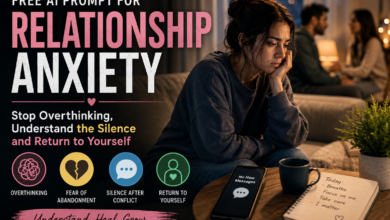
Why Do Small Things Trigger Big Emotions?
When Old Emotional Wounds React in the Present

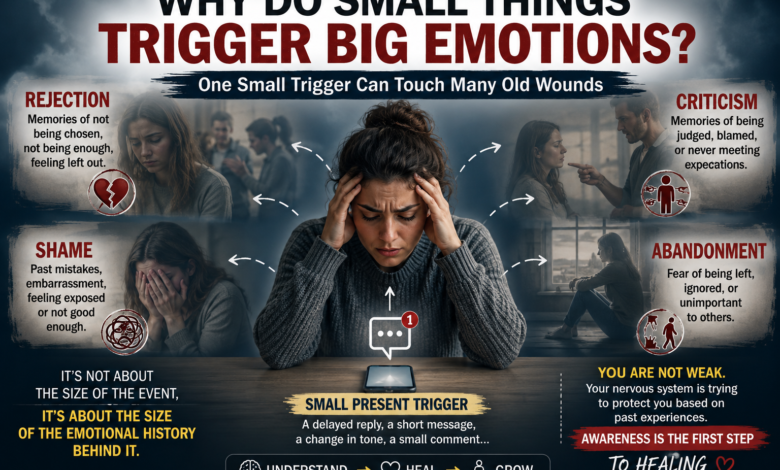
Why do small things trigger big emotions? Sometimes a delayed reply, one criticism, or a minor mistake feels heavier than the present moment should. This may happen because small things affect me not only through today’s event, but through past emotional triggers connected to rejection, shame, fear, or helplessness.
Thank you for reading this post, don't forget to subscribe!When old emotional wounds are activated, the nervous system response can appear before logical thinking returns. The body may tighten, the mind may overthink, and the emotion may feel difficult to control.
This does not always mean you are weak or overreacting. It may mean your system is linking the current situation with past pain.
In this guide, you will learn why minor events create intense reactions, how the body influences emotions, and how to calm yourself without suppressing what you feel. The goal is understanding, regulation, and healthier emotional responses.
Learn how brain health shapes emotions, stress, focus, and daily reactions.
Why Do Small Things Trigger Big Emotions?
Why do small things trigger big emotions? Sometimes a delayed reply, one critical comment, a minor mistake, or a change in someone’s tone feels heavier than the present moment should.
This may happen because small things affect me not only through today’s event, but through past emotional triggers connected to rejection, shame, fear, helplessness, or emotional neglect.
When old emotional wounds are activated, the nervous system response can appear before logical thinking returns. The body may tighten, the mind may overthink, and the emotion may feel difficult to control.
This does not automatically mean you are weak, dramatic, or incapable of handling life. It may mean your system is linking a current situation with earlier pain.
In this guide, you will learn why minor events create intense reactions, how emotional memory and the body interact, and how to calm yourself without suppressing what you feel.
The goal is not to become emotionless. The goal is to understand the reaction, reduce shame, and create a healthier response.
“My reaction looked bigger than the situation because the situation was not standing alone. It was touching many older wounds at the same time.”
Why Do Small Things Trigger Big Emotions?
Small situations can produce big feelings when the event carries a deeper personal meaning.
- A delayed message may represent rejection.
- A correction at work may feel like humiliation.
- A disagreement may awaken fear that the relationship will end.
- A small mistake may reactivate an old belief that you must be perfect to remain safe, respected, or loved.
The mind responds not only to visible facts but also to what the event appears to mean. One person may see a delayed reply and assume busyness; another may feel forgotten or abandoned. The event is the same. The inner meaning is not.
This is one reason why small things affect me can become such a painful question. The person often knows the event is manageable, yet the body and emotions do not feel manageable. The reaction is not necessarily about the size of the event. It may be about the size of the fear, memory, or meaning attached to it.
Strong reactions are more likely when sleep loss, illness, financial pressure, loneliness, conflict, or work overload have already reduced emotional capacity. The final trigger may be minor, but it lands in a system that is already full—like the last drop in an overflowing glass.
Explore more guidance on understanding emotional reactions and regulating intense emotions.
Why Small Things Affect Me More Than Expected
The phrase small things affect me may sound like self-criticism, but it is often a request for explanation. You are not only asking why you feel upset.
You are asking why your reaction seems stronger, longer, or more physical than the present situation appears to justify.
Several layers may operate together. The event may resemble earlier pain, threaten belonging or safety, arrive during exhaustion, or leave an information gap that fear quickly fills. You may also have learned to expect criticism, abandonment, or instability, making immediate resolution feel urgent.
None of these explanations means every reaction is accurate. A feeling can be real without every conclusion being true. Your fear may be genuine while the feared outcome remains uncertain. Your hurt may be valid while the meaning you assigned to the event still needs examination.
This distinction matters. Emotional healing is not about telling yourself, “Nothing happened.” It is about separating three things:
- What actually happened
- What it reminded you of
- What your mind predicted would happen next
When these three layers become mixed together, the present moment can feel much more dangerous than it is.
When Small Things Affect Me Because Stress Has Accumulated
Sometimes there is no single dramatic past event. Instead, the person has lived through many smaller experiences: repeated criticism, emotional dismissal, unpredictable reactions from others, pressure to remain quiet, lack of reassurance, or the belief that mistakes are unacceptable.
Over time, these experiences can shape expectation. You may begin to watch closely for changes in tone, facial expression, response time, or approval. The nervous system learns that small signals matter because small signals once predicted emotional pain.
This does not prove that every present signal is dangerous. It explains why your attention may move toward threat so quickly.
You may repeatedly wonder whether you did something wrong, whether another person is angry, or whether one mistake has damaged everything.
The mind is trying to prevent pain by finding certainty. Unfortunately, repeated checking, replaying, and analysing can keep the nervous system response active even when no new information is available.
Explore nervous system regulation for emotional overload and stress recovery
How Past Emotional Triggers Enter the Present
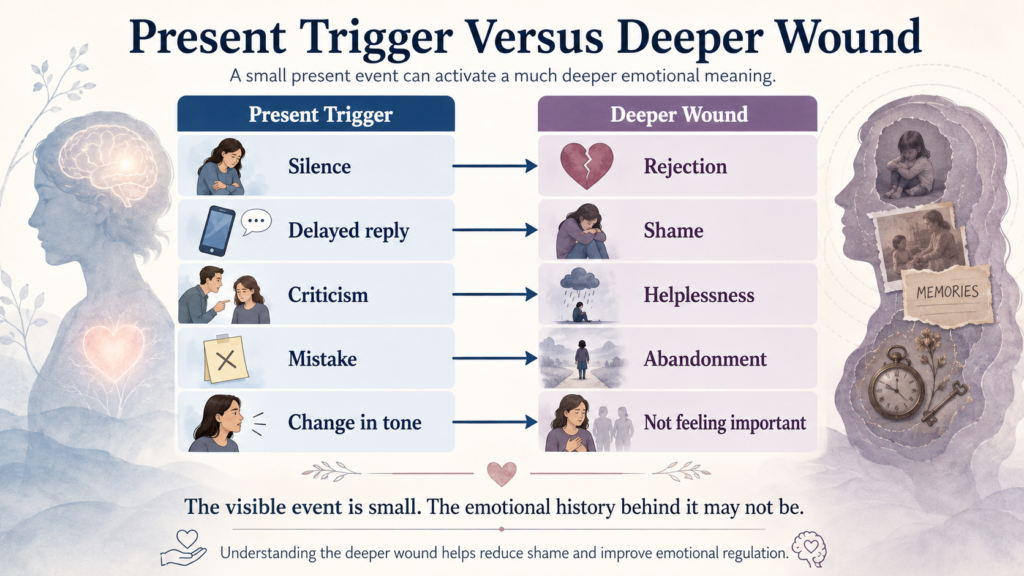
Past emotional triggers are not always clear memories. Sometimes they appear as a sudden body sensation, urgency, defensiveness, shame, numbness, or a strong need for reassurance.
A trigger is not the same as proof. It is a cue that your mind or body connects with something emotionally important. The cue may be a word, silence, tone, delay, location, conflict, expression, or type of uncertainty.
For example:
- interruption may connect with not being heard;
- delayed responses may connect with abandonment;
- criticism may connect with shame;
- withdrawal may connect with fear of being left;
- mistakes may connect with punishment or humiliation.
Past emotional triggers can operate outside full awareness. You may think you are reacting only to this person, this message, or this mistake. Yet the emotional intensity may include older experiences that were never fully processed, repaired, or safely expressed.
This is why the question why do small things trigger big emotions cannot be answered only by saying, “You are sensitive.” Sensitivity may be part of temperament, but it does not explain the specific fear, meaning, or memory involved.
A more useful question is:
“What does this small situation represent inside me?”
It may represent not being valued. It may represent losing control. It may represent being misunderstood, replaced, rejected, exposed, or blamed. Once you identify the meaning, the reaction becomes less mysterious.
When Old Emotional Wounds Become Activated
Old emotional wounds are unresolved areas of pain that still influence present expectations, reactions, or relationships. They may come from rejection, betrayal, humiliation, emotional neglect, unstable caregiving, loss, repeated criticism, bullying, unsafe relationships, or periods when you felt powerless and unsupported.
The phrase old emotional wounds does not mean you must label every painful experience as trauma. It also does not mean that your past permanently controls you. It means earlier experiences can shape what your system notices, fears, and tries to prevent.
Someone who was repeatedly ignored may become sensitive to silence. Someone shamed for mistakes may experience ordinary feedback as threatening. When old emotional wounds become activated, you may urgently seek reassurance or repair even while knowing that waiting would help.
The reaction may include:
- body tension;
- racing thoughts;
- anger;
- crying;
- repeated checking;
- withdrawal;
- emotional numbness;
- disrupted sleep;
- appetite changes;
- shame after the intensity falls.
These reactions are not moral failures. They are signals that your current coping capacity has been exceeded. However, understanding the origin of a reaction does not remove responsibility for what you do next.
Healing requires both compassion and accountability.
You can say:
“My reaction makes sense, but I still need a safer way to respond.”
Why Do Small Things Trigger Big Emotions After Rejection?
Rejection affects belonging, attachment, identity, and self-worth. Even a subtle sign of distance can feel powerful when earlier rejection remains emotionally active.
The present situation may be as small as a delayed reply. But the mind may rapidly create a larger story:
“They do not care.”
“I am no longer important.”
“I have been replaced.”
“This relationship is ending.”
“I will never receive closure.”
The body then reacts to the story as though the feared outcome has already been confirmed.
This is where past emotional triggers and present uncertainty combine. The person does not only feel the pain of waiting. They feel every meaning attached to waiting.
A helpful response is not to shame yourself for needing connection. It is to slow the movement from fact to conclusion.
Fact: The reply is delayed.
Unknown: Why the reply is delayed.
Fear: I am being abandoned.
Need: Clarity, reassurance, respect, or emotional safety.
Action: Wait for more information, regulate the body, and decide when or how to communicate.
This process does not dismiss intuition. It prevents fear from becoming certainty without evidence.
Read more about how thoughts, feelings, and emotional patterns influence your reactions
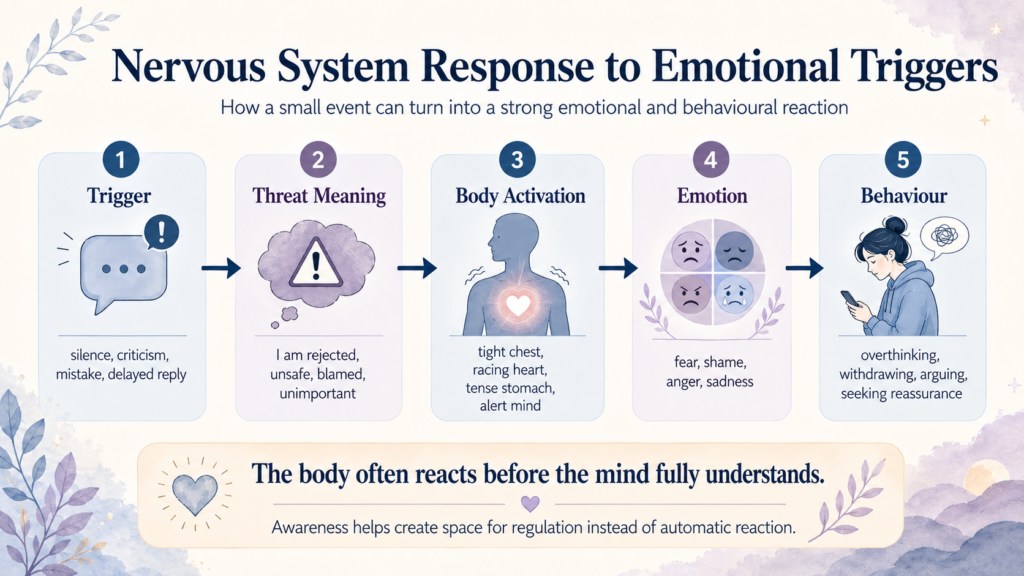
Understanding the Nervous System Response
A nervous system response is the body’s automatic attempt to prepare for something it perceives as important, stressful, or threatening.
The response can involve changes in:
- heart rate;
- breathing;
- muscle tension;
- attention;
- digestion;
- sleep;
- emotional intensity.
Your body does not wait for a long philosophical discussion before reacting. It uses fast pattern recognition. If a present situation resembles something that previously led to pain, the system may prepare before reflective thinking catches up.
This explains why you can know logically that a situation is manageable while still feeling activated.
The nervous system response may appear as:
Fight: anger, defensiveness, arguing, blaming, urgency
Flight: avoidance, restlessness, leaving, repeated distraction
Freeze: blankness, confusion, inability to decide or speak
Shutdown: numbness, exhaustion, withdrawal, lack of motivation
These are broad descriptions, not diagnoses. Sleep loss, illness, hunger, hormonal changes, financial strain, and relationship conflict can also make emotional regulation harder.
The Difference Between an Activated Mind and a Regulated Mind
An activated mind wants immediate certainty. A regulated mind can tolerate some uncertainty while gathering information.
An activated mind says: “Solve this now or something terrible will happen.”
A regulated mind says: “This matters, but I do not have to decide everything while I am overwhelmed.”
- An activated mind treats a prediction as a fact.
- A regulated mind separates what is known, unknown, feared, and needed.
- An activated mind may send repeated messages, argue, withdraw, overexplain, or repeatedly check.
- A regulated mind creates time between feeling and action.
| Activated state | More regulated state |
|---|---|
| “This proves I am unimportant.” | “This hurts, but I need more information.” |
| “I must fix this immediately.” | “I can pause before deciding what to do.” |
| “My emotion means danger is certain.” | “My emotion is information, not final proof.” |
| “The past is happening again.” | “This resembles the past, but I am in the present.” |
| “I cannot handle this feeling.” | “This feeling is intense, but it can change.” |
| “I need closure from them right now.” | “I can seek clarity without abandoning my stability.” |
Regulation is not passivity.
The calmer response may be communication, a boundary, distance, or acceptance that perfect closure may not come. The goal is to protect clarity and self-respect.
Why Overthinking Keeps the Emotional Trigger Alive
Overthinking often begins as an attempt to solve the problem. You replay the conversation, search for the moment something changed, and imagine what another person meant.
The mind may believe:
“If I understand every detail, I will find the answer and feel safe again.”
But when there is no new evidence, reflection can become repetition.
Past emotional triggers may grow stronger when each replay recreates body activation. The body does not always distinguish between the original event and a vivid mental replay. Each return to the conversation may produce more tension, anger, fear, or sadness.
Ask yourself:
- Am I discovering new information?
- Is this thinking leading to one useful action?
- Am I solving the problem or repeating the pain?
- Do I need more analysis, or does my body need regulation first?
Write down:
- the confirmed facts;
- your interpretation;
- your biggest fear;
- what you need;
- one possible next step.
Then step away from the thought for a while.
For deeper support, read How to Stop Overthinking and Calm Your Mind Naturally.
How to Calm Emotional Triggers Without Suppressing Them
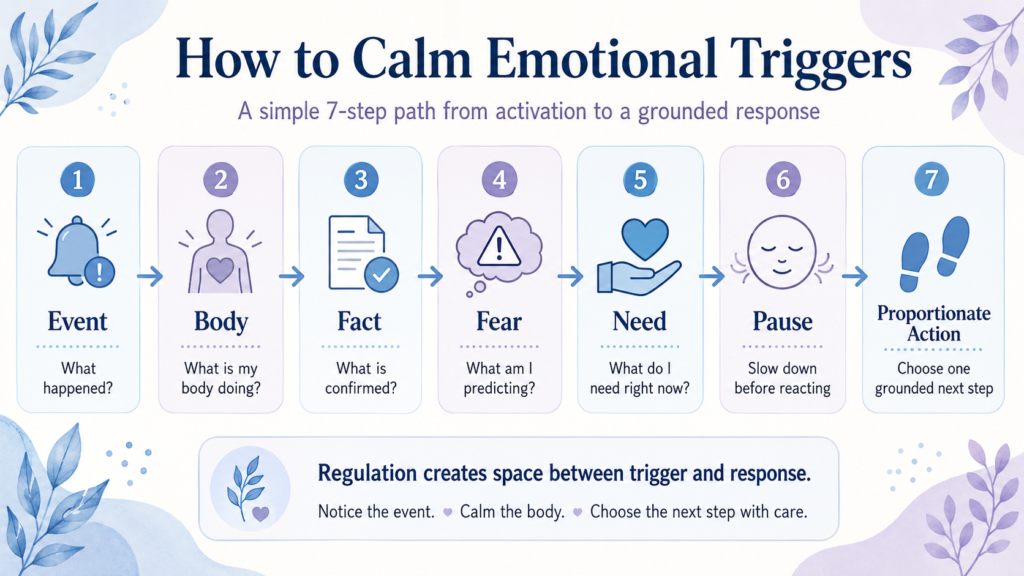
Calming emotional triggers does not mean pretending you are fine. It means lowering the intensity enough to understand what you feel and choose what to do.
1. Name the Present Event in One Sentence
Use neutral language.
For example:
“The reply is delayed.”
“The conversation ended without resolution.”
“I received criticism about my work.”
“The person’s tone changed.”
Avoid conclusions at this stage. Saying “They no longer care about me” is an interpretation, not a confirmed fact.
Neutral language stops fear and fact from immediately merging.
2. Notice the Body Before Analysing the Story
Notice what is happening physically.
You may feel:
- pressure in the chest;
- tension around the eyes or forehead;
- heaviness in the stomach;
- tight shoulders;
- restlessness;
- numbness;
- shakiness;
- fatigue;
- a blank mind;
- urgency to act.
You are not solving the emotion yet. You are recognising the nervous system response.
The body often needs support before the mind can think clearly.
3. Reduce Physical Urgency
Try one or two simple actions:
- lengthen your exhale;
- place both feet firmly on the floor;
- relax your jaw;
- walk slowly;
- drink water;
- eat if you have not eaten;
- step away from the phone;
- wash your face;
- sit somewhere quiet;
- sleep before making an important decision.
No single technique works for everyone. The aim is to send the body a message that immediate action is not required.
4. Separate Fact, Fear, Memory, and Need
Write four short lines.
Fact: What is confirmed?
Fear: What am I predicting?
Memory: What older experience does this resemble?
Need: What do I need now—clarity, rest, reassurance, boundaries, support, or time?
This exercise allows old emotional wounds to be acknowledged without allowing them to define the entire present situation.
You can also use the Free AI Fact vs Fear Tool when anxious predictions feel more convincing than the available evidence.
5. Delay High-Impact Communication
You do not have to ignore the issue. You may simply need to postpone the response.
Write the message without sending it.
Review it after the body settles. Remove accusations, mind-reading, repeated explanation, and emotional pressure.
Keep the request clear.
For example:
“Our conversation ended suddenly, and I felt unsettled. When you have time, I would like some clarity.”
This communicates your need without treating fear as fact.
6. Choose One Proportionate Action
A proportionate action matches the evidence and the importance of the situation.
It may involve:
- asking one direct question;
- requesting time;
- setting a boundary;
- apologising for harmful behaviour;
- gathering information;
- reducing contact;
- seeking support;
- returning to basic self-care;
- accepting that the answer may not come immediately.
The question is not:“How do I make this feeling disappear?”
The better question is: “What action protects both my emotional truth and my long-term well-being?”
7. Return to the Present Repeatedly
Old emotional wounds pull attention backwards. Anxiety pulls attention forwards. Regulation returns attention to what is happening now.
Remind yourself:
“This resembles the past, but it is not automatically the same. I can feel uncertainty without making a final conclusion. I can still take one healthy action.”
What Not to Do When Emotions Feel Intense
When asking why do small things trigger big emotions, notice which responses increase the intensity.
- Avoid making permanent decisions during a temporary emotional peak.
- Avoid sending repeated messages when one reply has not arrived.
- Avoid treating the strongest thought as the truest thought.
- Avoid assuming that urgency always means immediate action is necessary.
- Avoid repeatedly checking for reassurance when no new information is available.
- Avoid forcing yourself to solve the entire relationship, work problem, or future while your body is overwhelmed.
Do not use emotional regulation as a reason to tolerate abuse, coercion, manipulation, or repeated disrespect.
Regulation is not the same as silence or submission. It helps you respond with clearer boundaries.
Do not turn every intense reaction into a diagnosis. Emotional intensity can relate to ordinary stress, anxiety, grief, relationship strain, trauma-related symptoms, sleep problems, physical illness, medication effects, hormonal changes, or other conditions.
Self-compassion must remain connected to responsibility.
Saying “I was triggered” may explain behaviour, but it does not justify threats, cruelty, control, or repeated harm.
A healthier statement is:
“I understand why I reacted, and I am responsible for repairing what I can.”
How Old Emotional Wounds Affect Relationships
Old emotional wounds often become most visible in close relationships because closeness activates needs for safety, trust, belonging, and reassurance.
When someone matters deeply, even small changes can carry emotional weight.
- A delayed reply may feel like distance.
- A disagreement may feel like abandonment.
- A partner needing space may feel like rejection.
- A correction may feel like disrespect.
The person may then seek urgent reassurance, overexplain, withdraw, test the relationship, become defensive, or assume the worst.
These behaviours may temporarily reduce uncertainty, but they can also create pressure in the relationship.
A healthier relationship pattern involves learning to say:
“This situation is activating an older fear in me. I do not want to blame you, but I need clarity and respectful communication.”
This approach neither denies the emotional wound nor makes the other person fully responsible for healing it.
Healthy relationships require both people to communicate, repair, respect boundaries, and take responsibility for their behaviour.
For more support, read The Role of Self-Trust in Healing Attachment.
How Childhood Experiences Can Shape Past Emotional Triggers
Children learn emotional safety through repeated experiences.
A child who receives comfort after mistakes may learn:
“Mistakes can be repaired.”
A child who is criticised, mocked, ignored, or punished may learn:
“Mistakes are dangerous.”
A child whose emotions are consistently dismissed may learn:
“My feelings are unacceptable.”
A child exposed to unpredictable reactions may learn:
“I must constantly watch other people’s moods.”
These beliefs may continue into adulthood even when the original environment is no longer present.
This does not mean parents or caregivers must be perfect. No family provides perfect emotional regulation. The problem is usually repeated patterns without enough repair, reassurance, or safety.
Childhood emotional experiences may contribute to past emotional triggers, but adults can build new patterns through awareness, secure relationships, self-compassion, therapy, and consistent emotional regulation.
The past may explain the pattern. It does not have to become a permanent identity.
Explore spiritual psychology for emotional awareness, identity, attachment, and inner growth.
Can Sensitivity Be a Strength?
Sensitivity is not automatically a weakness.
Sensitive people may notice emotional details, changes in tone, the needs of others, creative meaning, and subtle relationship dynamics.
The problem is not sensitivity itself. The problem appears when sensitivity becomes fused with fear, shame, hypervigilance, or self-attack.
A sensitive nervous system may need:
- clearer boundaries;
- more recovery time;
- respectful communication;
- regular sleep;
- reduced overload;
- fewer emotionally chaotic relationships;
- permission to pause before responding.
The goal is not to become emotionally cold.
The goal is to keep sensitivity while reducing unnecessary suffering.
When Strong Emotional Reactions Need Professional Support
Consider speaking with a qualified mental health professional when emotional reactions repeatedly interfere with:
- sleep;
- work;
- eating;
- relationships;
- concentration;
- decision-making;
- self-care;
- daily responsibilities.
Professional support may also be helpful when:
- anger feels uncontrollable;
- panic is frequent;
- emotional numbness lasts for long periods;
- traumatic memories are involved;
- you experience dissociation;
- you feel unable to control impulsive behaviour;
- your relationships repeatedly become unstable;
- self-help strategies are not enough.
Professional support can help identify patterns, strengthen emotional regulation skills, and assess possible anxiety, trauma-related, mood, medical, or medication-related factors.
Seek urgent local support if you believe you may harm yourself or someone else, cannot remain safe, or are in immediate danger.
Safety note: This article is educational and does not replace diagnosis, therapy, medical care, or emergency support.
Learn how detachment and conscious living can support calmer, more intentional responses
People Also Ask
Why do small things trigger big emotions?
Small events can carry deeper emotional meaning. They may resemble earlier rejection, criticism, abandonment, shame, or helplessness. Stress and exhaustion can also reduce emotional capacity, causing a minor trigger to create a stronger nervous system response.
Why do little things upset me so much?
Little things may upset you when they touch an important fear or unmet need. The event may represent not being valued, losing control, making an unacceptable mistake, or being left. The reaction may also reflect accumulated stress rather than the event alone.
Is a strong nervous system response always caused by trauma?
No. A strong nervous system response may be connected to stress, anxiety, sleep loss, illness, grief, relationship strain, temperament, medication effects, hormonal changes, or other factors. Trauma is one possible explanation, not the only one.
Why does silence trigger me?
Silence creates uncertainty. If earlier silence meant punishment, abandonment, withdrawal, or emotional neglect, present silence may activate the same fear. The goal is to distinguish what silence means now from what it represented in the past.
Why do I feel ashamed after calming down?
Once the nervous system response decreases, reflective thinking may return. You may then judge what you said or did. Instead of collapsing into shame, identify what needs repair, apologise where appropriate, and create a plan for the next trigger.
Does calming down mean ignoring disrespect?
No. Regulation is not submission. Calming down helps you evaluate behaviour more accurately and choose a boundary, conversation, distance, or safety action without losing clarity.
Read Also: emotional-healing-roadmap
Frequently Asked Questions
Can old emotional wounds completely heal?
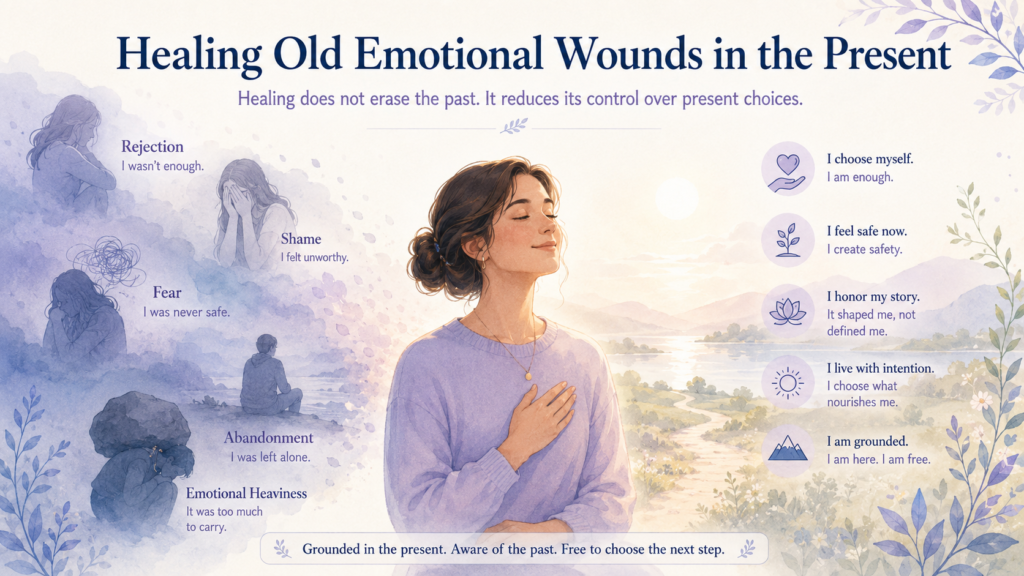
Old emotional wounds may become less intense and less controlling over time. Healing does not always mean forgetting what happened. It often means remembering without becoming overwhelmed and responding to the present with greater choice.
Why do I understand the situation logically but still feel emotional?
Logical understanding and emotional regulation are not always simultaneous. The reflective mind may know the event is manageable while the body still feels threatened. The nervous system may need time and repeated experiences of safety before the emotional intensity decreases.
Why do I need immediate closure?
Immediate closure may feel necessary when uncertainty activates fear of rejection, abandonment, humiliation, or loss of control. The mind may believe that receiving an answer will immediately restore safety. Sometimes clarity helps, but emotional stability must not depend entirely on another person responding.
Can overthinking make emotions stronger?
Yes. Repeatedly replaying a painful situation can recreate fear, tension, anger, and sadness. Reflection becomes useful when it produces new understanding or action. It becomes unhelpful when it only repeats the same emotional loop.
How long should I wait before responding to an emotional trigger?
There is no universal waiting period. Some situations require prompt communication, while others benefit from several hours or a full night of rest. The main question is whether you can communicate clearly without attacking, assuming, or acting impulsively.
Are emotional triggers a sign of weakness?
No. Emotional triggers show that something carries personal meaning. However, understanding a trigger does not remove responsibility for behaviour. Strength involves recognising the pattern and developing healthier responses.
Read Also: healing-resources-hub
Personal Note: The Reaction Is Not the Whole Identity
There were moments when I knew logically what was right but did not feel emotionally ready to accept it.
My mind returned to the situation because it was searching for clarity, repair, or a peaceful ending. I later understood that one silence could awaken earlier rejection, and one disagreement could bring back helplessness.
Time mattered.
After twenty-four or forty-eight hours, the facts had not always changed, but the emotional pressure had. I could see where fear had added meaning and what action was actually possible.
The lesson was not to distrust every emotion.
It was to stop asking an activated mind to make every final decision.
“The past can help me understand my reaction, but it cannot build my next step until I accept what is present.”
Final Answer: Your Emotion May Be Carrying More Than This Moment
Why do small things trigger big emotions?
Often, it is because the present situation is not emotionally standing alone. It may touch past emotional triggers, old emotional wounds, accumulated stress, unmet needs, or a nervous system response shaped by earlier experience.
Understanding this does not make every fear accurate or every reaction acceptable.
It helps replace shame with curiosity and impulsive action with a grounded process.
When small things affect me becomes the painful question, ask:
- What happened?
- What did it mean to me?
- What older feeling became activated?
- What is confirmed?
- What am I predicting?
- What do I need?
- What healthy action is possible now?
Your first reaction may be automatic.
Your next action can still become intentional.
image
Related BBH Guides
- Why Do I Overreact Emotionally—and How Can I Stop?
- Emotional Triggers Explained: Why Small Things Hurt So Much
- How to Stop Overthinking and Calm Your Mind Naturally
- Free AI Fact vs Fear Tool
- The Role of Self-Trust in Healing Attachment
External References
- National Institute of Mental Health. I’m So Stressed Out! Fact Sheet
https://www.nimh.nih.gov/health/publications/stress/ - National Institute of Mental Health. Post-Traumatic Stress Disorder
https://www.nimh.nih.gov/health/publications/post-traumatic-stress-disorder-ptsd - National Institute of Mental Health. Generalized Anxiety Disorder: What You Need to Know
https://www.nimh.nih.gov/health/publications/generalized-anxiety-disorder-gad - Villalta L, Smith P, Hickin N, Stringaris A. Emotion Regulation Difficulties in Traumatized Youth: A Meta-Analysis and Conceptual Review
https://pubmed.ncbi.nlm.nih.gov/29380069/ - Del Río-Casanova L, González A, Páramo M, Van Dijke A, Brenlla J. Emotion Regulation Strategies in Trauma-Related Disorders
https://pubmed.ncbi.nlm.nih.gov/26812780/