Stock Market Anxiety and Sleep Problems
Why Market Stress Keeps You Awake

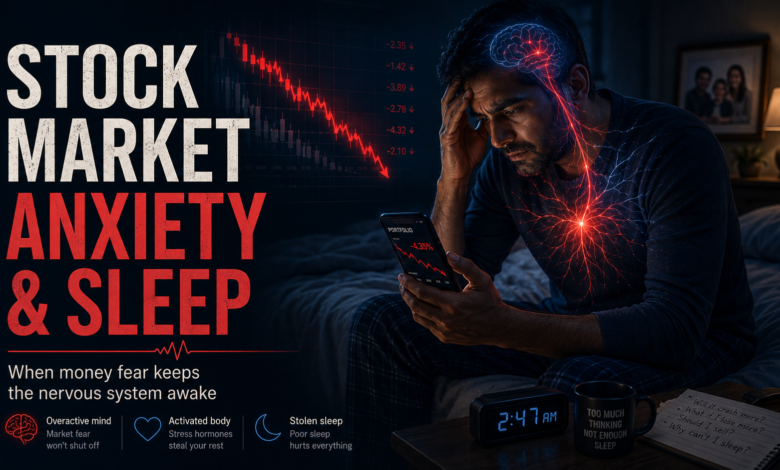
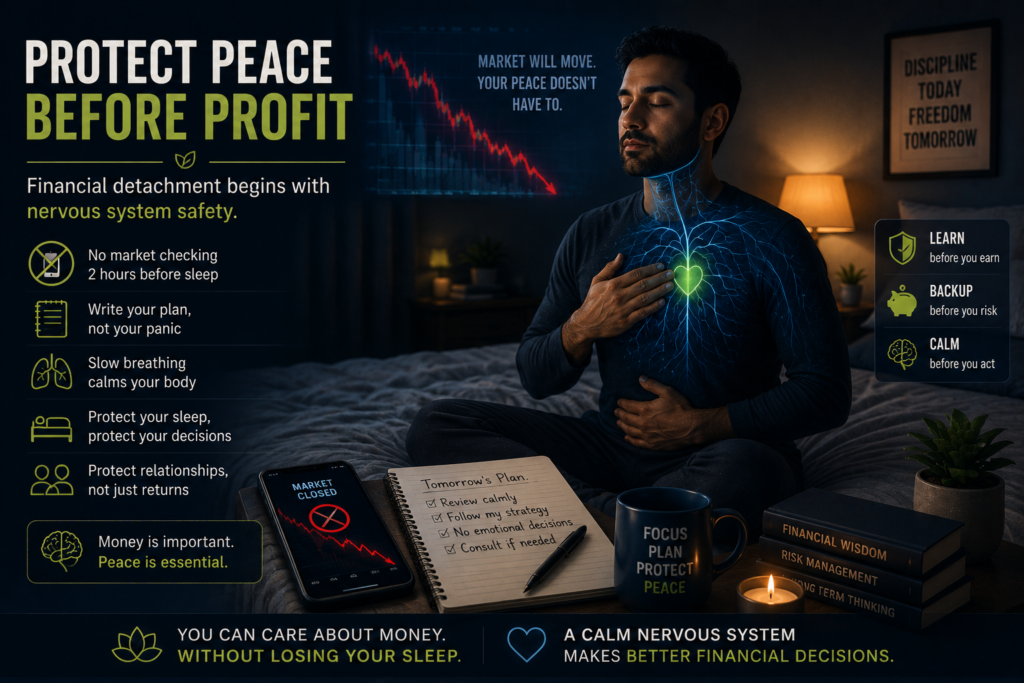
Stock market anxiety and sleep problems often begin when market loss, portfolio checking, and financial uncertainty keep the nervous system alert at night.
Thank you for reading this post, don't forget to subscribe!Many people experience stock market stress after losing money, and this can quickly turn into financial stress and sleep problems, money anxiety at night, and fear about the future.
When a person enters the market with hope, borrowed money, agent advice, or half-learning, financial uncertainty anxiety can disturb peace, relationships, body health, and sleep.
This blog is different because it does not only explain financial stress and sleep in a generic way. It shows why money anxiety at night becomes stronger when a person has no strong financial backup, no clear market learning, and no emotional capacity to handle uncertainty.
You will understand how financial uncertainty anxiety affects the body, why portfolio checking before bed keeps the brain alert, and when stepping back from the market may protect health better than chasing recovery.
This guide can help you protect sleep, peace, decisions, and relationships.
Why People Enter the Market With Hope, Not Full Preparation
Many people do not enter the stock market only because they understand risk deeply.
- Some enter because they see others earning.
- Some trust an agent.
- Some follow news channels, social media tips, friends, relatives, or market predictions.
- Some believe one good share can change their financial situation quickly.
This hope is understandable, especially when life already feels financially heavy.
But hope without preparation can become dangerous. When a person enters the market without strong learning, without emergency backup, and without a clear risk boundary, every market fall can feel like a personal attack.
The person may not only think, “My stock is down.” They may think, “My future is falling.” This is where stock market stress begins to enter the body, sleep, and relationships.
A healthy investment decision needs knowledge, patience, and emotional capacity. But when someone enters the market under pressure, the market becomes more than a financial space. It becomes a place where hope, fear, shame, and survival pressure all mix together.
When Stock Market Stress Becomes Emotional Stress
Stock market stress becomes more serious when the person starts connecting every loss with personal failure. A portfolio loss can trigger shame, regret, fear, anger, and self-blame.
The person may start thinking,
- “Why did I trust that advice?”
- “Why did I not exit earlier?”
- “How will I tell my family?”
- “How will I recover this money?”
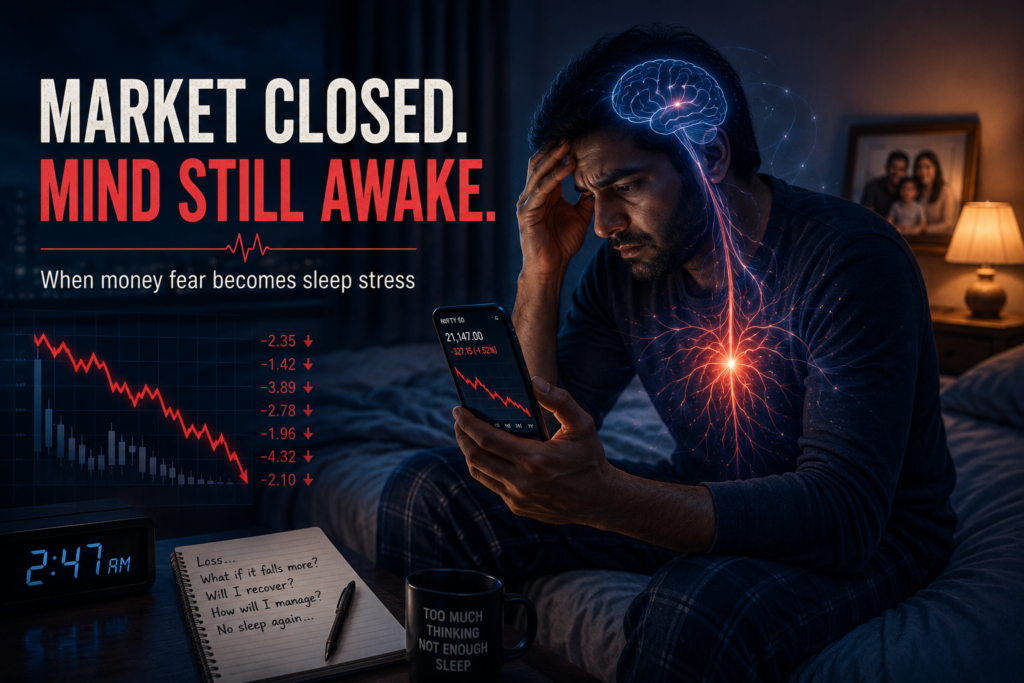
This emotional pressure can slowly become financial stress and sleep disturbance. At night, the mind has fewer distractions. The person may lie in bed replaying the same decision, checking the same share price, reading the same news, or hoping for a positive update before morning. Instead of sleep, the brain enters a problem-solving loop.
This is why the pain is not only financial. A person may lose peace before they lose everything.
They may become irritated with family, emotionally unavailable in relationships, and unable to focus on normal work. The body may feel tired, but the mind keeps searching for recovery.
The Hidden Pressure Behind “This Share Will Rise Soon”
One of the most painful traps in market anxiety is the sentence: “This share will rise soon.” Sometimes it may be based on research, but many times it becomes emotional hope.
The person does not want to accept loss, so they wait. Then they wait more. Then they may borrow money or add more funds because they believe recovery is close.
This hope can become a nervous system trap. Every new piece of news becomes a signal. Every small price movement becomes emotional relief or emotional shock.
The person may stop sleeping normally because the brain is waiting for safety from the market. This is where money anxiety at night becomes stronger.
How Financial Stress and Sleep Problems Begin Together
Financial stress and sleep problems often begin when the brain cannot separate market uncertainty from personal safety. If the person has invested survival money, borrowed money, family savings, or emotionally important money, the nervous system may treat market loss like real danger. The body may become tense, alert, and restless.
This is the deeper reason stock market anxiety and sleep problems become connected.
- The person is not awake only because they are thinking.
- They are awake because the body feels unsafe.
- The heart may beat faster.
- The stomach may feel tight.
- The shoulders may stay tense.
- The mind may jump from one future fear to another.
At this stage, normal sleep advice is not enough. Telling someone “just relax” does not work when their nervous system is reacting to money fear as a survival threat. They need a safer relationship with uncertainty, clearer financial boundaries, and stronger emotional regulation.
This is why understanding nervous system regulation becomes important for anyone facing stock market anxiety and sleep problems. When the body feels unsafe, the mind keeps searching for control through checking, overthinking, and fear-based decisions.
Learning how detachment reduces anxiety and stress can also help because emotional distance does not mean ignoring money; it means protecting sleep, peace, and decision-making from every market movement.
Why Money Anxiety at Night Feels Stronger Than Daytime Worry
Money anxiety at night feels stronger because silence gives fear more space. During the day, a person may stay busy with work, family, calls, or daily responsibilities. But at night, the mind becomes quieter, and hidden worries come forward. The person may start imagining future loss, debt pressure, family disappointment, or the fear of not recovering money.
This is where financial uncertainty anxiety becomes emotionally heavy. The stock market is uncertain by nature. War, inflation, economic pressure, company news, global markets, and sudden crashes can change direction quickly. A person who does not have the financial or emotional strength to tolerate uncertainty may feel trapped.
This does not mean the stock market is bad. It means the market requires preparation. Before entering risk, a person needs financial learning, financial backup, and nervous system strength. Without these, market uncertainty can damage sleep, peace, relationships, and mental health.
Stock market stress becomes heavier when the person connects every market fall with safety, family pressure, and personal failure.
This is why repeated anxiety and overthinking can become stronger at night, especially when the mind keeps replaying market loss, future fear, and financial pressure.
Practicing emotional acceptance during uncertainty can help because the goal is not to force the market to become certain, but to help the nervous system stop fighting reality every night.
3 Reader Questions
- Am I checking the market because I need real information, or because my nervous system wants temporary relief?
- Did I enter this market risk with learning and backup, or only with hope and pressure?
- Is my sleep suffering because I am treating market loss like personal failure?
“I have seen that people do not suffer only because money goes down. Many suffer because their hope, peace, family trust, and emotional safety start falling with it.”
Why Financial Uncertainty Anxiety Disturbs the Nervous System
Financial uncertainty anxiety becomes powerful because the stock market does not give the mind a clear ending. A person may want certainty, but the market moves through uncertainty.
Prices rise and fall. News changes quickly. Global events, war, inflation, company results, economic pressure, and sudden market reactions can shift the direction without warning.
For a calm and prepared investor, uncertainty may feel like part of the process. But for a person who has invested emotionally important money, borrowed money, emergency savings, or money they cannot afford to lose, uncertainty can feel like danger. The brain starts watching the market like it is watching for a threat.
This is why stock market anxiety and sleep problems often become body-based, not only thought-based. The person may logically know that the market is closed, but the body may still feel unsafe. Sleep becomes difficult because the nervous system is still waiting for financial danger to end.
Why the Brain Treats Market Loss Like Danger
The brain does not always separate financial danger from survival danger. When a person fears losing savings, family stability, borrowed money, or future security, the body may react as if something serious is happening right now. This can create tightness in the chest, fast heartbeat, stomach tension, restlessness, irritability, and racing thoughts.
This is where stock market stress becomes more than mental worry. The body begins preparing for action. It wants to fix, escape, recover, or control the situation. But the market cannot be controlled by worry. So the person becomes trapped between a nervous system that wants safety and a market that cannot promise certainty.
At night, this becomes worse because there is no immediate action available. The person cannot change yesterday’s decision. They cannot force the market to open green tomorrow. So the brain keeps repeating the same fear: “What if I lose more?” This repetition slowly damages sleep.
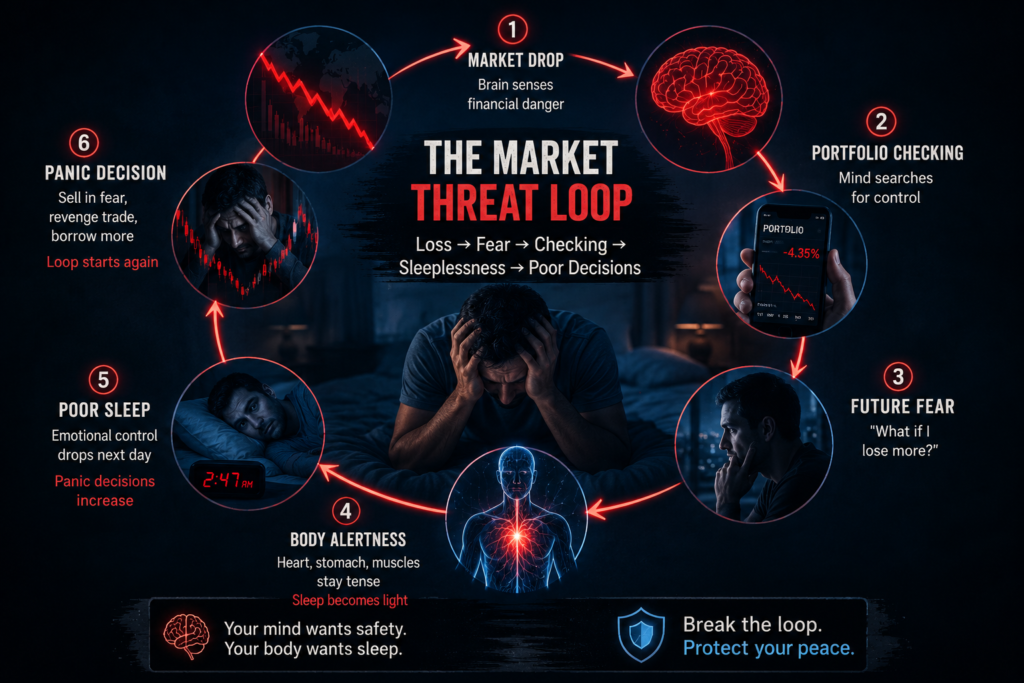
The Night-Time Market Threat Loop
Many people think they are only “checking once,” but repeated checking can become a loop. The phone gives temporary relief, but it also teaches the brain that danger needs constant monitoring. This is why money anxiety at night often grows stronger after checking portfolio, news, charts, or social media before bed.
| Stage | What Happens | Sleep Effect |
|---|---|---|
| Market Drop | Brain senses financial danger | Stress response starts |
| Portfolio Checking | Mind searches for control | Temporary relief, then more checking |
| Future Fear | “What if I lose more?” | Rumination increases |
| Body Alertness | Heart, stomach, muscles stay tense | Sleep becomes light and broken |
| Poor Sleep | Emotional control drops next day | Panic decisions increase |
This loop is dangerous because it does not only reduce sleep. It also reduces clarity. A sleep-deprived person may become more reactive, more fearful, and more likely to make decisions from panic instead of judgment.
Why Portfolio Checking Before Bed Keeps the Brain Awake
Portfolio checking before bed is one of the strongest triggers for financial stress and sleep problems. Red numbers create fear. Green numbers create excitement. Negative news creates panic. Positive news creates hope. All of these states can keep the nervous system active.
The brain needs a calm transition before sleep. But when the last input before bed is market movement, loss, prediction, or financial fear, the mind starts working instead of resting. Even if the person puts the phone away, the emotional signal remains active inside the body.
This is why the issue is not only screen time. The issue is emotional activation. The phone becomes a trigger because it carries uncertainty, hope, fear, regret, and pressure into the bedroom.
How Stock Market Anxiety and Sleep Loss Affect Decisions
Stock market anxiety and sleep problems become more serious when poor sleep starts affecting financial decisions. A tired brain is more emotional, less patient, and less able to separate fear from facts. After one bad night, a person may check more often, react faster, or make decisions just to reduce discomfort.
This can lead to panic selling, revenge trading, borrowing more money, entering risky positions, trusting tips without research, or trying to recover loss quickly. The person may believe they are making a financial decision, but many times they are trying to calm the nervous system.
That is why sleep matters in market behavior. Sleep is not separate from financial discipline. If the mind is exhausted, the ability to think long-term becomes weaker. The person may chase quick relief instead of making wise decisions.
This is why understanding brain and sleep health is important when discussing stock market anxiety and sleep problems. Poor sleep can weaken emotional regulation, increase fear-based reactions, and make a person more likely to panic sell, overcheck the market, or make financial decisions from stress instead of clarity.
When Financial Stress Enters Relationships
Financial stress rarely stays only inside the individual. It often enters the home. A person may hide losses from family, avoid honest conversations, become irritated, or feel ashamed. They may stop enjoying normal moments because the mind is still stuck in the market.
This is where stock market stress becomes relationship stress. Arguments may begin around money, trust, responsibility, or risk. A partner or family member may feel excluded, betrayed, or frightened. The person who lost money may feel judged, misunderstood, or emotionally alone.
The deeper pain is that the market loss starts affecting the emotional climate of the home. Peace becomes fragile. Conversations become tense. Sleep becomes disturbed. Confidence becomes low. The person may not only fear losing money; they may fear losing respect, trust, and emotional connection.
Financial stress and sleep problems often grow together because the mind keeps trying to solve money fear when the body needs rest.
This is where mental health and emotional stress need serious attention because financial pressure can affect sleep, mood, patience, and family communication. When the mind keeps replaying losses, hiding fear, or trying to recover quickly, anxiety and overthinking patterns can become stronger and make relationship stress more painful.
Why Strong Learning, Backup, and Emotional Capacity Matter
The stock market is not wrong, but the stock market is not emotionally safe for everyone in every situation.
- A person who enters without learning may depend on agents, tips, news, or hope.
- A person who enters without financial backup may feel every market fall like a survival threat.
- A person who enters without emotional capacity may panic when uncertainty rises.
This is why financial uncertainty anxiety needs a serious response. Before taking market risk, a person should ask three questions:
- Do I understand what I am doing?
- Can I afford this loss without damaging family stability?
- Can my nervous system tolerate uncertainty without panic decisions?
If the answer is no, then stepping back may be wiser than pushing deeper. Protecting peace is not weakness. Sometimes it is maturity. A person can learn, rebuild, create safer financial boundaries, and return later with more clarity.
This is why nervous system regulation for stress becomes just as important as market knowledge. Financial uncertainty anxiety cannot be handled only through charts, tips, or news updates; the body also needs the ability to pause, tolerate uncertainty, and avoid fear-based financial decisions.
3 Reader Questions
- Does my body feel unsafe even when I am only looking at numbers?
- Am I making financial decisions from clarity, or from poor sleep and panic?
- Has market stress started affecting my family peace, trust, or relationships?