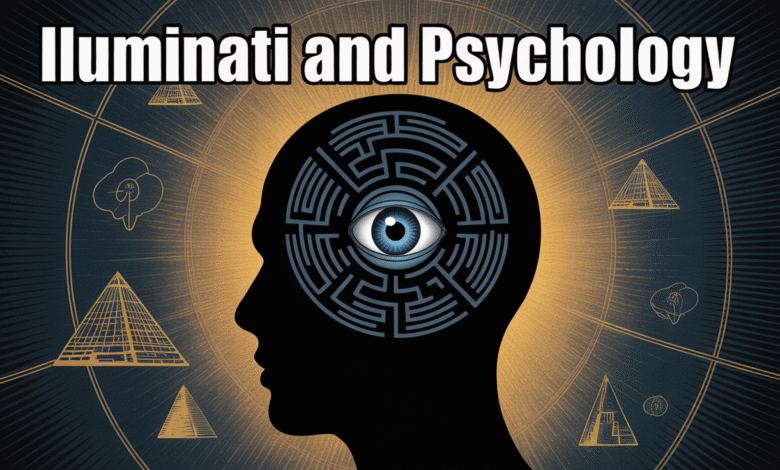
Illuminati and Psychology: Humans Believe in Hidden Powers
Illuminati and Psychology

1. What Is Happening in Today’s World?
We explore in this blog Illuminati and Psychology • Illuminati psychology • conspiracy belief • hidden fear • spiritual truth
Thank you for reading this post, don't forget to subscribe!In today’s digital world, Illuminati psychology has become one of the most discussed topics in online culture. Millions of people scroll through social media, searching for hidden signs, decoding images, and arguing about whether world events are the work of a secret society.
From celebrity performances to political speeches, audiences see evidence of conspiracy belief everywhere.
A pyramid in a music video, a symbolic gesture at a sports event, or even the design of a corporate logo becomes proof of hidden forces. Behind this fascination lies a deeper hidden fear—the belief that ordinary people are powerless, while unseen elites manipulate the world.
The popularity of these ideas shows not only suspicion of power but also humanity’s desire for deeper meaning. Many who explore Illuminati psychology are not just paranoid; they are searching for spiritual truth behind worldly chaos.
2. Why Is This Happening?
Why do people turn to Illuminati psychology instead of accepting simple explanations?
- Uncertainty: In times of crisis—pandemics, wars, financial crashes—people crave meaning. Conspiracy belief provides answers when reality feels random.
- Pattern-seeking: The human brain is wired to connect dots. A repeated number, a symbolic shape, or a ritual gesture feels like evidence of a hidden fear becoming real.
- Distrust of elites: Widespread inequality fuels suspicion that leaders and corporations hide the truth.
- Spiritual hunger: Many seekers interpret Illuminati myths as metaphors for the eternal struggle between illusion and spiritual truth.
Thus, Illuminati psychology grows because it meets both emotional and spiritual needs.
3. Truth or Fake?
Are conspiracies about the Illuminati grounded in reality—or are they projections of hidden fear?
- Truth: There is evidence that secrecy, manipulation, and power imbalances exist. History is full of hidden societies, covert operations, and propaganda. Illuminati psychology captures this real anxiety.
- Fake: The leap to one unified secret group controlling everything is unsupported. The human mind often amplifies conspiracy belief to create order where chaos exists.
In short: while real hidden influence exists, the belief in total control is a psychological exaggeration.
Please enjoy reading illuminati-and-media-influence-propaganda-narratives
4. Spiritual Acceptance: Scriptures on Illusion and Truth
Spiritual traditions across cultures address the same concerns raised by Illuminati psychology:
- Bible: Warns of false prophets and powers of darkness, echoing the idea of deception behind conspiracy belief.
- Bhagavad Gita: Teaches that Maya (illusion) blinds humans. Fear of hidden elites can itself be Maya, distracting from spiritual truth.
- Quran: Warns of those who corrupt while pretending to guide—parallel to suspicions of hidden fear hidden in leaders.
- Buddhism: Identifies Mara, the deceiver, as a symbol of fear and illusion, a close reflection of modern paranoia.
Each text reminds humanity that spiritual truth is stronger than fear, and no shadow has power over divine awareness.
5. Psychological Effect: The Mind in Fear – Illuminati and Psychology
The psychological consequences of Illuminati psychology are profound:
- Fear-driven perception: Believers see hidden patterns everywhere.
- Obsession: Some fall into endless research, scrolling through videos proving their conspiracy belief.
- Division: Communities fracture between skeptics and believers.
Yet there are also benefits:
- Awareness: Questioning authority sharpens critical thinking.
- Empowerment: Some find purpose in seeking truth, even if based on hidden fear.
- Spiritual growth: For some, conspiracy becomes a metaphor for the battle between illusion and spiritual truth.
6. Philosophical Effect: Fear, Illusion, and Meaning
Philosophy helps explain why Illuminati psychology thrives:
- Plato’s Allegory of the Cave: People mistake shadows for reality, much like believers interpret symbols as proof of hidden elites.
- Nietzsche: Described the human “will to power.” Belief in conspiracy may be projection of our own struggle with dominance.
- Vedanta: Teaches that illusion (Maya) tricks humanity into false fears. Hidden fear may simply be another mask of Maya.
- Existentialism: Suggests that even if hidden powers exist, individuals must find freedom by choosing authentic action and spiritual truth.
Thus, the myth reveals humanity’s eternal struggle with truth, illusion, and control.
7. Mental Health: When Fear Becomes Obsession
Belief in Illuminati psychology impacts mental health:
- Negative: Obsession with symbols creates paranoia, sleeplessness, and anxiety. Some fall into isolation, unable to trust society.
- Positive: Moderate suspicion inspires awareness, making people more conscious of media manipulation and political control.
The balance lies in grounding: faith, community, and mindfulness help turn hidden fear into wisdom, keeping seekers aligned with spiritual truth.
8. Real Meaning and Evidence
What does Illuminati psychology really mean?
- Symbolic meaning: The Illuminati myth represents society’s distrust of power.
- Psychological meaning: Conspiracy belief comforts the mind by giving chaos a narrative.
- Spiritual meaning: The myth warns humans to seek spiritual truth beyond illusions of fear.
Evidence shows that while conspiracies exaggerate, the fears they express—corruption, secrecy, imbalance—are very real.
Please enjoy reading energy-of-spiritual-healing-fear-through-energy-of-spiritual-light
9. Birth of the Concept: Psychology of Conspiracy Through History
The roots of Illuminati psychology run deep:
- Ancient times: People believed hidden gods or demons controlled events.
- Middle Ages: Secret societies like the Templars inspired suspicion.
- 18th century: The Bavarian Illuminati was accused of political manipulation.
- 20th century: Cold War paranoia reinforced conspiracy belief in hidden elites.
- 21st century: Social media globalized Illuminati psychology, making symbols viral.
The history shows that the myth evolves, but the underlying hidden fear remains constant.
10. How to Deal With It: Balancing Mind and Spirit
To face Illuminati psychology wisely:
- Critical Thinking: Question claims before believing them.
- Spiritual Practices: Use meditation, prayer, and scripture to see beyond hidden fear.
- Philosophical Reflection: Ask if fear is real, or if it is illusion.
- Community Dialogue: Share perspectives to reduce paranoia.
- Inner Work: Seek spiritual truth that no conspiracy can erase.
Through balance, people can transform fear into insight and paranoia into wisdom.
🌟 Conclusion
The myth of Illuminati psychology—centered on conspiracy belief, hidden fear, and the search for spiritual truth—reveals humanity’s deepest anxieties. Whether real or imagined, the Illuminati represents our longing to understand chaos, and our fear of losing control.
The real lesson is this: the human mind can project fear onto shadows, but it can also seek truth beyond them. By combining critical thinking with faith, people can rise above illusion, remembering that no hidden fear is greater than the light of spiritual truth.
Conspiracy Belief and Hidden Fear: Why Illuminati Psychology Persists
1. What Is Happening in Today’s World?
Everywhere today, Illuminati psychology shapes how people view politics, entertainment, and even spirituality. Viral TikTok videos “decode” celebrity gestures, YouTube channels break down secret messages in movies, and online forums dedicate entire threads to tracking signs of the Illuminati.
For believers, these theories confirm their conspiracy belief—that a hidden elite controls governments, music, and culture. Skeptics dismiss this as paranoia, but the fascination refuses to die. Beneath it lies a deeper hidden fear: that humanity is manipulated by forces beyond its awareness.
This obsession is not only cultural—it’s psychological. The persistence of these beliefs reveals something fundamental about the human mind: the craving for meaning and the search for spiritual truth in a chaotic world.
2. Why Is This Happening?
Why does Illuminati psychology persist across generations?
- Fear of randomness: People find comfort in conspiracy belief because it explains tragedies as the result of design, not chaos.
- Distrust of authority: Widespread corruption makes people assume elites hide the truth, feeding hidden fear.
- Pattern-seeking brain: Our minds are wired to see connections, turning coincidences into deliberate plots.
- Spiritual longing: Many see the Illuminati myth as a symbol of the battle between deception and spiritual truth.
Thus, belief in secret societies is less about facts and more about human psychology and need.
3. Truth or Fake?
Is the persistence of Illuminati psychology justified?
- Truth: History shows real secret societies, covert operations, and propaganda campaigns. Distrust is not baseless.
- Fake: The leap to a global all-powerful Illuminati is unsupported. Much of what believers see is projection of hidden fear.
The myth survives not because of proof but because of its emotional and symbolic power.
4. Spiritual Acceptance: What Scriptures Say About Fear and Deception
Sacred texts offer deep insight into the roots of conspiracy belief:
- Bible: “Fear not,” appears repeatedly, reminding us that hidden fear is a tool of darkness. It warns against false prophets who lead people astray.
- Bhagavad Gita: Krishna teaches that fear arises from ignorance. The path of dharma—truthful action—leads to spiritual truth beyond illusion.
- Quran: Declares that God is the ultimate protector, and those who spread deception will face judgment.
- Buddhism: Teaches that clinging to fear strengthens illusion, while mindfulness dissolves paranoia.
These teachings show that while fear of hidden powers is ancient, the cure is equally ancient: trust in spiritual truth.
Please enjoy reading massive-attack-ritual-spirit
5. Psychological Effect: How Hidden Fear Shapes Belief
Illuminati psychology reveals how the mind transforms anxiety into belief:
- Confirmation bias: Once someone accepts conspiracy belief, they interpret every event as proof.
- Fear amplification: Social media magnifies hidden fear, spreading panic faster than ever before.
- Cognitive closure: People prefer a clear enemy—even the Illuminati—rather than admit uncertainty.
This cycle of fear explains why the myth persists. Yet it also reveals the human potential for awareness: by recognizing these patterns, we can move closer to spiritual truth.
6. Philosophical Effect: Fear as Illusion or Teacher
Philosophy offers lenses to understand Illuminati psychology:
- Plato’s Cave: Believers may mistake shadows for reality, while skeptics risk ignoring truths hidden in symbolism.
- Vedanta: Identifies fear itself as Maya—illusion. Hidden fear enslaves unless dissolved by knowledge.
- Nietzsche: Suggests humans invent enemies to give life meaning. Conspiracy belief may be a creative response to existential dread.
- Existentialism: Even if hidden powers exist, individuals are free to live authentically, rooted in spiritual truth.
Thus, fear can enslave—but also teach. It depends on whether we cling to illusion or seek wisdom.
7. Mental Health: The Price of Persistent Belief
The persistence of Illuminati psychology has serious mental health consequences:
- Negative: Constant vigilance breeds paranoia, anxiety, and even depression.
- Positive: Awareness encourages questioning, critical thinking, and resilience.
Belief can either trap people in obsession or push them toward deeper search for spiritual truth. Balance makes the difference.
8. Real Meaning and Evidence
What does the persistence of Illuminati psychology really mean?
- Symbolic truth: The Illuminati myth reflects distrust of elites and fear of hidden manipulation.
- Psychological truth: Conspiracy belief is a coping mechanism for uncertainty.
- Spiritual truth: The myth reminds us that fear blinds, but divine wisdom liberates.
The evidence is clear: while no single Illuminati group has been proven, the fears it symbolizes are real.
9. Birth of the Concept: The Evolution of Persistent Belief
Illuminati psychology persists because it evolves with history:
- Ancient times: Myths of gods manipulating mortals.
- Middle Ages: Fear of witches, demons, and heretics.
- 18th century: The Bavarian Illuminati sparked early conspiracy fears.
- 20th century: Cold War paranoia fueled modern conspiracy belief.
- 21st century: Social media amplified hidden fear into a global conversation.
The persistence shows that the Illuminati is not just a myth—it is a psychological archetype.
10. How to Deal With It: Facing Fear with Awareness
To live with awareness of Illuminati psychology, people must:
- Think Critically: Analyze evidence instead of blindly accepting conspiracies.
- Ground Spiritually: Use prayer, meditation, and sacred study to move beyond hidden fear.
- Reflect Philosophically: Ask if fear is illusion or truth.
- Build Community: Share ideas openly to reduce paranoia.
- Seek Spiritual Truth: Remember that no hidden force is greater than divine wisdom.
By combining psychology and spirituality, people can transform fear into insight and confusion into clarity.
🌟 Conclusion – Illuminati and Psychology
The persistence of Illuminati psychology—through conspiracy belief, hidden fear, and the search for spiritual truth—shows how deeply the human mind struggles with uncertainty.
The myth endures not because of facts, but because of fear. Yet fear itself can be a teacher, guiding humanity toward truth. When people balance critical thinking with spiritual grounding, they discover that no conspiracy can overshadow divine wisdom.
Conspiracy Belief and Hidden Fear: Why Illuminati Psychology Persists
1. What Is Happening in Today’s World?
Everywhere today, Illuminati psychology shapes how people view politics, entertainment, and even spirituality. Viral TikTok videos “decode” celebrity gestures, YouTube channels break down secret messages in movies, and online forums dedicate entire threads to tracking signs of the Illuminati.
For believers, these theories confirm their conspiracy belief—that a hidden elite controls governments, music, and culture. Skeptics dismiss this as paranoia, but the fascination refuses to die. Beneath it lies a deeper hidden fear: that humanity is manipulated by forces beyond its awareness.
This obsession is not only cultural—it’s psychological. The persistence of these beliefs reveals something fundamental about the human mind: the craving for meaning and the search for spiritual truth in a chaotic world.
2. Why Is This Happening?
Why does Illuminati psychology persist across generations?
- Fear of randomness: People find comfort in conspiracy belief because it explains tragedies as the result of design, not chaos.
- Distrust of authority: Widespread corruption makes people assume elites hide the truth, feeding hidden fear.
- Pattern-seeking brain: Our minds are wired to see connections, turning coincidences into deliberate plots.
- Spiritual longing: Many see the Illuminati myth as a symbol of the battle between deception and spiritual truth.
Thus, belief in secret societies is less about facts and more about human psychology and need.
3. Truth or Fake?
Is the persistence of Illuminati psychology justified?
- Truth: History shows real secret societies, covert operations, and propaganda campaigns. Distrust is not baseless.
- Fake: The leap to a global all-powerful Illuminati is unsupported. Much of what believers see is projection of hidden fear.
The myth survives not because of proof but because of its emotional and symbolic power.
Please enjoy reading fear-and-darkness-survival-healing
4. Spiritual Acceptance: What Scriptures Say About Fear and Deception
Sacred texts offer deep insight into the roots of conspiracy belief:
- Bible: “Fear not,” appears repeatedly, reminding us that hidden fear is a tool of darkness. It warns against false prophets who lead people astray.
- Bhagavad Gita: Krishna teaches that fear arises from ignorance. The path of dharma—truthful action—leads to spiritual truth beyond illusion.
- Quran: Declares that God is the ultimate protector, and those who spread deception will face judgment.
- Buddhism: Teaches that clinging to fear strengthens illusion, while mindfulness dissolves paranoia.
These teachings show that while fear of hidden powers is ancient, the cure is equally ancient: trust in spiritual truth.
5. Psychological Effect: How Hidden Fear Shapes Belief – Illuminati and Psychology
Illuminati psychology reveals how the mind transforms anxiety into belief:
- Confirmation bias: Once someone accepts conspiracy belief, they interpret every event as proof.
- Fear amplification: Social media magnifies hidden fear, spreading panic faster than ever before.
- Cognitive closure: People prefer a clear enemy—even the Illuminati—rather than admit uncertainty.
This cycle of fear explains why the myth persists. Yet it also reveals the human potential for awareness: by recognizing these patterns, we can move closer to spiritual truth.
6. Philosophical Effect: Fear as Illusion or Teacher
Philosophy offers lenses to understand Illuminati psychology:
- Plato’s Cave: Believers may mistake shadows for reality, while skeptics risk ignoring truths hidden in symbolism.
- Vedanta: Identifies fear itself as Maya—illusion. Hidden fear enslaves unless dissolved by knowledge.
- Nietzsche: Suggests humans invent enemies to give life meaning. Conspiracy belief may be a creative response to existential dread.
- Existentialism: Even if hidden powers exist, individuals are free to live authentically, rooted in spiritual truth.
Thus, fear can enslave—but also teach. It depends on whether we cling to illusion or seek wisdom.
7. Mental Health: The Price of Persistent Belief – Illuminati and Psychology
The persistence of Illuminati psychology has serious mental health consequences:
- Negative: Constant vigilance breeds paranoia, anxiety, and even depression.
- Positive: Awareness encourages questioning, critical thinking, and resilience.
Belief can either trap people in obsession or push them toward deeper search for spiritual truth. Balance makes the difference.
8. Real Meaning and Evidence – Illuminati and Psychology
What does the persistence of Illuminati psychology really mean?
- Symbolic truth: The Illuminati myth reflects distrust of elites and fear of hidden manipulation.
- Psychological truth: Conspiracy belief is a coping mechanism for uncertainty.
- Spiritual truth: The myth reminds us that fear blinds, but divine wisdom liberates.
The evidence is clear: while no single Illuminati group has been proven, the fears it symbolizes are real.
9. Birth of the Concept: The Evolution of Persistent Belief
Illuminati psychology persists because it evolves with history:
- Ancient times: Myths of gods manipulating mortals.
- Middle Ages: Fear of witches, demons, and heretics.
- 18th century: The Bavarian Illuminati sparked early conspiracy fears.
- 20th century: Cold War paranoia fueled modern conspiracy belief.
- 21st century: Social media amplified hidden fear into a global conversation.
The persistence shows that the Illuminati is not just a myth—it is a psychological archetype.
Please enjoy reading healing-fear-through-ancient-survival-rituals
10. How to Deal With It: Facing Fear with Awareness – Illuminati and Psychology
To live with awareness of Illuminati psychology, people must:
- Think Critically: Analyze evidence instead of blindly accepting conspiracies.
- Ground Spiritually: Use prayer, meditation, and sacred study to move beyond hidden fear.
- Reflect Philosophically: Ask if fear is illusion or truth.
- Build Community: Share ideas openly to reduce paranoia.
- Seek Spiritual Truth: Remember that no hidden force is greater than divine wisdom.
By combining psychology and spirituality, people can transform fear into insight and confusion into clarity.
🌟 Conclusion – Illuminati and Psychology
The persistence of Illuminati psychology—through conspiracy belief, hidden fear, and the search for spiritual truth—shows how deeply the human mind struggles with uncertainty.
The myth endures not because of facts, but because of fear. Yet fear itself can be a teacher, guiding humanity toward truth. When people balance critical thinking with spiritual grounding, they discover that no conspiracy can overshadow divine wisdom.
Cosmic family invitation – Illuminati and Psychology
🌿 This article is part of the Cosmic Family initiative — a sacred movement to awaken mental health, soulful connection, and spiritual awareness in a disconnected world. Join us at bioandbrainhealthinfo.com and be part of the healing. 🌿
“This is not a brand. This is not a product. This is a calling — a collective journey of souls ready to heal, awaken, and rise together.”
🕊️ We are not here to sell you anything. We are here to remind you of who you truly are. 🌌
At the conclusion, you can remind them:
Thank you for walking this journey with me. Everything here is from the soul, not a certification — only shared pain, sacred texts, and spiritual growth.
Join Today
Telegrame http://@bioandbrainhealthinfo
Email info@bioandbrainhealthinfo.com
📖 Disclaimer and Heartfelt Intention – Illuminati and Psychology
This blog is not written by someone with formal degrees in psychology, medicine, or theology. It is born from lived experience, deep inner healing, and sacred study of ancient scriptures like the Bhagavad Gita, Bible, and Quran.
We do not claim to diagnose or cure, but to share, reflect, and heal together.
If you are struggling with mental health, please also seek support from licensed professionals.
🙏 This is a spiritual offering, not a commercial one. No products, no sponsors — only shared humanity, divine connection, and the voice of lived truth.
Please enjoy reading spiritual-protection-over-fear-and-black-magic
✅ FAQ – People Also Ask (10 Q&A) – Illuminati and Psychology
Q1: What is Illuminati psychology?
A: It is the study of why people believe in hidden powers and conspiracies, focusing on fear, pattern-seeking, and the search for spiritual truth.
Q2: Why do people believe in the Illuminati?
A: Because conspiracy belief offers meaning, reduces uncertainty, and explains chaos as the work of elites.
Q3: What role does hidden fear play in conspiracy theories?
A: Hidden fear of powerlessness, corruption, and chaos fuels belief in secret societies controlling the world.
Q4: Is Illuminati psychology based on truth or illusion?
A: There is truth in real corruption and manipulation, but the leap to a global unified Illuminati is often projection of fear.
Q5: Do scriptures mention hidden powers like the Illuminati?
A: Scriptures warn against deception, false prophets, and illusion—parallels that people connect to Illuminati myths.
Q6: How does conspiracy belief affect mental health?
A: It can cause paranoia and anxiety, but also inspire awareness, critical thinking, and resilience when balanced.
Q7: Why do conspiracy theories persist across generations?
A: Because fear of hidden elites is timeless, evolving from myths of demons and witches to modern secret societies.
Q8: What is the connection between Illuminati psychology and philosophy?
A: Philosophers like Plato, Nietzsche, and Vedanta explain fear as illusion, projection, or a search for meaning—core to Illuminati psychology.
Q9: How can people balance fear of hidden powers?
A: By combining critical thinking, faith, and mindfulness to move from hidden fear toward spiritual truth.
Q10: How do I protect myself from paranoia about conspiracies?
A: Practice awareness, avoid obsession, ground yourself spiritually, and focus on truth rather than fear.
✅ YouTube References – Illuminati and Psychology
“The Psychology of Conspiracy Theories” – Illuminati and Psychology
“Why People Believe in Hidden Powers”
✅ Worksheet for Readers – Illuminati and Psychology
Title: Illuminati Psychology: Hidden Fear and Spiritual Truth Worksheet
Section A: Reflection
- What fears drive your curiosity about Illuminati psychology?
- Do you see conspiracy belief as truth, illusion, or both?
- Which scripture or philosophy helps you find spiritual truth beyond fear?
Section B: Critical Thinking
- Identify three common conspiracy claims. Which rely on facts, and which rely on hidden fear?
- Why does your mind look for patterns in symbols or events?
- How does the internet amplify conspiracy belief?
Section C: Spiritual Grounding
- List two practices (prayer, meditation, reflection) that protect you from obsession.
- Write a personal mantra affirming your strength against hidden fear.
- How does faith reveal spiritual truth stronger than illusion?
Section D: Philosophical Inquiry
- Are conspiracy theories shadows on the wall (Plato’s cave) or glimpses of reality?
- Does Illuminati psychology reveal human weakness—or human creativity?
- How can philosophy transform fear into wisdom?
✅ Citations & Reading References – Illuminati and Psychology
🔹 Illuminati & Conspiracy Background
- Illuminati – Wikipedia
👉 https://en.wikipedia.org/wiki/Illuminati - Conspiracy theory – Wikipedia
👉 https://en.wikipedia.org/wiki/Conspiracy_theory
🔹 Psychology of Belief in Hidden Forces
- Why People Believe Conspiracy Theories – American Psychological Association (APA)
👉 https://www.apa.org/news/press/releases/2023/06/why-people-believe-conspiracy-theories - Conspiracy Theories and the Need for Meaning – PMC
👉 https://pmc.ncbi.nlm.nih.gov/articles/PMC5724570/ - The Psychology of Conspiracy Theories – Cambridge University Press
👉 https://www.cambridge.org/core/journals/psychological-science-in-the-public-interest/article/psychology-of-conspiracy-theories/
🔹 Fear and Mental Health
- Fear and Anxiety: Psychological Roots – NCBI
👉 https://www.ncbi.nlm.nih.gov/pmc/articles/PMC5573566/ - Conspiracy Theories and Mental Health – Frontiers in Psychology
👉 https://www.frontiersin.org/articles/10.3389/fpsyg.2021.683051/full
🔹 Spiritual and Philosophical Insights – Illuminati and Psychology
- Bhagavad Gita – Sacred Texts
👉 https://www.sacred-texts.com/hin/gita/index.htm - Ephesians 6:12 (Bible Gateway)
👉 https://www.biblegateway.com/passage/?search=Ephesians+6%3A12&version=KJV - Fear and Illusion in Vedanta – Vedanta Society
👉 https://vedanta.org/what-is-maya/