Why Do I Miss Someone Who Emotionally Abused Me?
Healing From Gaslighting, Emotional Abuse, and Self-Doubt


If you keep asking, “why do I miss someone who hurt me?”, this blog will help you understand the pain without blaming yourself.
Thank you for reading this post, don't forget to subscribe!Most articles explain abuse signs, but this guide goes deeper into trauma bond recovery, body-brain attachment, digital triggers, family exclusion, and the shame of still waiting for apology.
You will also learn why healing from gaslighting requires reality repair, why emotional abuse recovery needs boundaries, and why rebuilding self trust after gaslighting is a slow nervous-system process.
This article gives human examples, safety guidance, and practical steps you can actually use today.
Why Do I Miss Someone Who Hurt Me?
One of the most confusing parts of emotional pain is asking yourself, why do I miss someone who hurt me, when another part of you clearly remembers the hurt.
You may know they dismissed you, blamed you, ignored your pain, excluded you, manipulated your emotions, or made you question your own reality. Still, one part of you may wait for their call, their apology, their message, their attention, or one small sign that proves you mattered.
This can feel deeply shameful. You may feel angry with yourself for caring. You may feel confused because your mind says, “This person hurt me,” but your body still says, “Please choose me. Please repair this. Please show me I was not nothing.”
That inner conflict is not simple weakness. In many cases, it is connected to trauma bonding, gaslighting, emotional abuse, attachment wounds, and a nervous system that learned to search for safety from the same person who created fear.
If you keep asking, why do I miss someone who hurt me, the answer may not be that you want the pain back. The answer may be that a wounded part of you is still waiting for the love, apology, protection, and belonging it never fully received.
This is why trauma bond recovery must be gentle but honest. You do not heal by shaming yourself for missing them. You heal by understanding what your nervous system is trying to protect, where your self-trust was damaged, and what boundaries are needed so the same wound is not reopened again and again.
Safety note: This article is educational and does not replace therapy, legal advice, medical advice, or emergency support. If you feel unsafe, threatened, controlled, stalked, coerced, or at risk of harm, please contact local emergency services, a crisis helpline, a domestic violence support service, or a trusted professional. Healing should be paced and supported, especially when abuse, coercion, trauma, or safety risk is involved.
A Real-Life Example: When You Still Wait for Love From Someone Who Hurt You
Sometimes relational trauma does not look dramatic from the outside. Sometimes it appears inside a very ordinary moment — a birthday, a family dinner, a message left unread, a couriered gift, or a photo in a family WhatsApp group.
Imagine someone has a painful relationship with a parent or family member. There have been fights, emotional distance, harsh words, years of feeling unseen, and repeated moments where the person felt they did not matter. The relationship has hurt them, but when the parent’s birthday comes, one part of them still softens.
They find out about the birthday through social media. Even though the relationship is not healthy, they still send a birthday wish. They buy a gift and send it by courier. They know there has been conflict. They know there has been emotional pain.
But their heart still hopes for one gentle response.
Maybe this time they will call.
Maybe they will say thank you warmly.
Maybe they will invite me for the cake cutting.
Maybe they will include me.
Maybe they will finally show that I matter.
But the call does not come.
Then they hear that other family members are going out for dinner. They are not invited. Later, they see the family photo in the WhatsApp group. Everyone looks together. Everyone looks included. Everyone looks like they belong.
And suddenly the wound opens.
The chest becomes heavy. The mind starts replaying everything. Tears come. The body feels low, alone, insecure, and broken.
Then self-doubt begins.
“Why am I hurt so much?”
“Am I making this bigger?”
“Is this pain real?”
“Is this ego?”
“Why do I still want care from people who hurt me?”
“Why do I still wait for apology, kindness, or one message?”
Then the phone becomes part of the wound. The person checks WhatsApp again and again.
- They check whether the gift was received.
- They check whether the message was seen.
- They check old messages, online status, blocking and unblocking, Instagram profile, and family group photos.
This is not only phone checking. This is the nervous system searching for one safety signal.
A wounded part of the body is asking, “Am I still loved? Am I still included? Do I still belong somewhere?”
This is why the question why do I miss someone who hurt me can feel so painful. You may not be missing the harm. You may be missing the care you hoped would finally come after the harm.
Important truth: Missing them does not prove the relationship was safe. It may only prove that a part of you was still waiting to feel chosen.
Direct Answer: Why Do You Miss Someone Who Hurt You?
You may miss someone who hurt you because emotional abuse can create a cycle of fear, hope, affection, withdrawal, apology, and relief. This cycle can train the nervous system to connect emotional pain with emotional repair.
Over time, the body may start craving the relief that comes after hurt, not because the relationship is safe, but because the relief temporarily calms the fear.
This is the center of trauma bond recovery.
A trauma bond can form when harm and affection keep appearing inside the same relationship. The person may hurt you, then apologize.
- They may ignore you, then suddenly become warm.
- They may blame you, then act caring.
- They may make you feel rejected, then give one message that feels like oxygen.
The nervous system learns the pattern:
Pain comes.
Hope comes.
Relief comes.
Pain returns.
Hope starts again.
This loop can make leaving emotionally difficult, even when the mind understands the relationship is harmful.
That is why trauma bond recovery is not only about “moving on.” It is about helping the body stop confusing fear, relief, apology, and familiar pain with love.
What This Is and What This Is Not
| What This May Be | What This Is Not |
|---|---|
| A nervous system attachment response | Proof that the hurt was acceptable |
| A wound looking for repair | Weakness |
| A trauma bond pattern | Secure love |
| A sign that self-trust needs rebuilding | Ego or overreaction |
| A need for safety, belonging, and validation | A reason to return to unsafe patterns |
| A body memory of hope and fear | Proof that you imagined the pain |
This distinction matters because many people blame themselves for missing the abuser. They think, “If I miss them, maybe the abuse was not real.”
That is not true.
Missing someone and recognizing harm can both exist at the same time.
- You can feel love and still need distance.
- You can miss someone and still know the relationship harmed you.
- You can want apology and still protect yourself from waiting forever.
What Trauma Bond Recovery Really Means
Trauma bond recovery means slowly breaking the emotional and physical loop that kept your body attached to fear, hope, and relief.
It is not only about forcing yourself to stop thinking about them. It is not only about deleting photos, blocking numbers, or pretending you do not care.
Those steps may be needed sometimes, but the deeper work is learning why your body kept returning to the same source of pain.
The body may remember the apology more strongly than the insult.
The mind may replay the good moments more than the repeated harm.
The attachment system may search for the person because that person once gave relief after pain.
The heart may still wait for the version of them that felt loving.
This is why trauma bond recovery needs more than willpower. It needs awareness, boundaries, emotional validation, nervous system calming, and slowly rebuilding the ability to trust your own reality.
A person may say, “I know they hurt me, but I still miss them.” That sentence can sound confusing from the outside. But inside the nervous system, it may mean: “I am still waiting for repair from the person who wounded me.”
That is why healing begins when you stop asking only, “Why do I miss them?” and begin asking, “What part of me is still waiting to feel safe, chosen, and loved?”
For deeper support, read this guide on how to return to your own inner voice: role-of-self-trust-in-healing-attachment

How Gaslighting Makes You Doubt Yourself
Healing from gaslighting is difficult because gaslighting does not only hurt your feelings. It attacks your trust in your own perception.
Gaslighting can sound like:
“You are too sensitive.”
“That never happened.”
“You always create drama.”
“You are imagining things.”
“You are the problem.”
“No one else would react like this.”
After hearing this repeatedly, a person may start questioning their own memory, emotions, and body signals.
You may feel hurt, but then ask, “Am I allowed to feel hurt?”
You may notice disrespect, but then think, “Maybe I misunderstood.”
You may feel rejected, but then tell yourself, “Maybe I am making it too big.”
You may feel fear in your body, but then call it ego.
This is how gaslighting can weaken self-trust.
Healing from gaslighting begins when you stop asking the abuser to confirm your reality. You begin gently recording your own truth.
What happened?
What did I feel?
What did I need?
What pattern keeps repeating?
What does my body know before my mind explains it away?
This matters because many people who have been gaslighted do not only lose trust in the other person. They lose trust in themselves. They start doubting whether their pain is valid. They ask whether they are overreacting, too emotional, too sensitive, too demanding, or too needy.
But needing care is not the same as being needy.
- Wanting apology is not ego.
- Feeling hurt after exclusion is not weakness.
- Crying after seeing a family photo without you does not mean you are dramatic.
It means your body touched a wound of belonging.
Healing from gaslighting means learning to say, “My reaction may be intense, but it is still carrying information. I can listen without attacking myself.”
For deeper support around self-worth after attachment pain, read how to return to yourself without chasing love: how-to-build-self-esteem-after-attachment-wounds
Why Leaving Does Not Immediately Stop Missing Them
Many people think, “If I leave, I should stop missing them.”
But leaving physically does not always mean the nervous system has finished grieving, hoping, or searching for repair.
You may stop contact and still miss their voice.
You may block them and still want to check their profile.
You may delete old messages and still remember one kind sentence.
You may know they hurt you and still wait for an apology.
You may leave the house, the relationship, or the family group emotionally, but your body may still feel tied to the need for belonging.
This does not mean leaving was wrong. It means healing has more than one layer.
There is the outer layer: distance, safety, boundaries, no contact or low contact when needed.
There is the inner layer: grief, body calming, self-trust, shame release, and rebuilding emotional identity.
This is another reason trauma bond recovery can take time. The nervous system may continue searching for the person even after your mind knows that returning to the same pattern will hurt you again.
Your body may need time to understand that safety will no longer come from the same person who kept reopening the wound.
So if you still ask, why do I miss someone who hurt me, do not use that question to attack yourself. Use it as a doorway into understanding the part of you that still wants repair.
Digital Triggers: WhatsApp, Online Status, Old Messages, and Profiles
Digital platforms can make emotional abuse recovery harder because emotional triggers become available all day.
A person can check whether a message was seen.
They can check online status.
They can reread old messages.
They can unblock and block again.
They can look at Instagram photos.
They can see family group photos and feel excluded again.
They can watch someone live normally while they are crying privately.
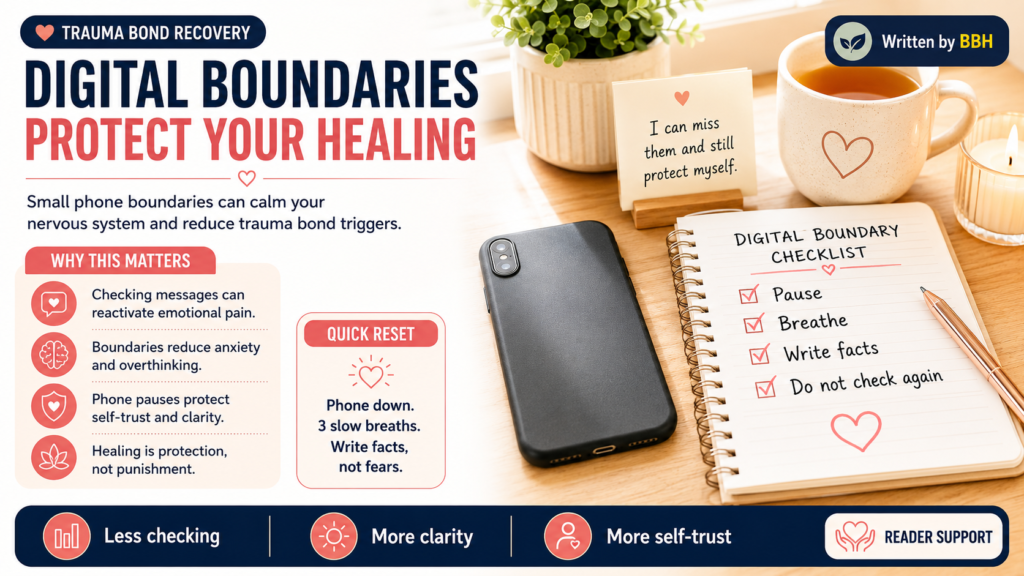
This is why digital boundaries are not small. They are nervous system protection.
You are not immature for being affected by a message or a photo. If the relationship already carries emotional pain, the phone can become a door that reopens the wound.
When you keep checking WhatsApp, you may not be looking only for information. You may be looking for emotional proof.
Did they see me?
Did they care?
Did they respond?
Did they choose others again?
Did they forget me?
Did I matter at all?
This is why emotional abuse recovery must include digital safety. Healing is not only about what happens in person. It is also about what happens after a message, a photo, a seen tick, an online status, or a silence.
Read Also : start-here for recovery for yourself.
Real Solution Table: What to Do When the Pain Gets Activated
| Painful Moment | What It May Trigger | Healing Response |
|---|---|---|
| You wish them even after conflict | Hope for repair and care | “My kindness is real, but I cannot force their emotional response.” |
| They do not call or include you | Old rejection wound | “Exclusion hurts. I do not need to call it ego.” |
| You see family or relationship photos without you | Belonging pain and loneliness | Step away from the photo or group for 24 hours if it reopens the wound. |
| You keep checking WhatsApp | Nervous system searching for safety | Put the phone away for 20 minutes and ground the body first. |
| You doubt your pain | Gaslighting or self-trust injury | Write down facts: what happened, what I felt, what I needed. |
| You wait for apology | Desire for emotional repair | Seek validation from safe support, not only from the person who hurt you. |
| You feel you cannot leave emotionally | Attachment system still looking for repair | Create one small boundary instead of forcing total detachment overnight. |
| You feel broken after being excluded | Old belonging wound | Say, “This is loneliness, not proof that I have no value.” |
| You want to send a long message | Emotional flooding | Write it privately first and wait until the body is calmer. |
This is the practical heart of emotional abuse recovery: you do not only explain the pain; you create a response that protects you from being pulled back into the same wound.
- Follow a step-by-step healing direction: emotional-healing-roadmap
- Find more support tools and resources: healing-resources-hub
Do Not Do This When Triggered
When you are emotionally activated, the goal is not to shame yourself. The goal is to pause before the wound makes the next decision.
| Trigger Urge | Safer Pause |
|---|---|
| Send a long emotional message immediately | Write it in notes first and wait 20 minutes. |
| Check WhatsApp again and again | Put the phone away and place one hand on your chest. |
| Reopen old chats | Write what you are hoping to find before opening them. |
| Beg for apology | Contact a safe person, therapist, or support resource instead. |
| Blame yourself as egoistic | Say: “This is hurt, not ego.” |
| Look at family or social photos repeatedly | Mute, archive, or step away temporarily if it keeps reopening pain. |
| Make a major decision during emotional flooding | Wait until the body is calmer and your thinking is clearer. |
| Return only because you feel lonely | Ask, “Am I going back to safety or going back to familiar pain?” |
This is not avoidance. This is protection.
Your nervous system cannot heal if it is repeatedly pushed back into the same emotional injury.
Emotional Abuse Recovery Requires Boundaries, Not Only Understanding
Emotional abuse recovery is not only about understanding what happened. Understanding helps, but it is not enough.
You may understand the pattern and still feel pulled back.
You may know the abuser hurt you and still want their care.
You may see the cycle and still wait for one kind message.
You may know your pain is valid and still doubt it when they deny it.
This is why boundaries matter.
A boundary is not revenge. A boundary is a way of protecting your body from repeated injury.
A boundary may look like:
Not checking WhatsApp after 9 p.m.
Muting a family group for a few days.
Not explaining your pain to someone who repeatedly denies it.
Not sending a message while your body is shaking.
Not using social media to measure whether you matter.
Keeping proof of patterns privately, not to obsess, but to protect your reality.
Choosing one safe person or professional support instead of returning to the abuser for validation.
The abuser may not understand your boundary. They may call it rude, egoistic, dramatic, cold, or selfish. But a boundary does not need their approval to be valid.
Emotional abuse recovery often begins when you stop treating your pain as an argument you must win and start treating it as a signal you must protect.
For more context on why some bonds leave you exhausted, read why love can start feeling emotionally heavy: why-you-feel-drained-in-relationships

Rebuilding Self-Trust After Gaslighting
Rebuilding self trust after gaslighting happens through small repeated actions. You do not rebuild trust in yourself by forcing confidence. You rebuild it by honoring small truths.
Start with simple statements:
“I felt hurt.”
“I needed care.”
“I was excluded.”
“I was waiting for apology.”
“I checked the phone because I wanted reassurance.”
“My pain is real even if someone else ignores it.”
Then add small actions:
I will pause before reacting.
I will write facts separately from fear.
I will not call my pain ego without listening to it first.
I will protect my body from repeated digital triggers.
I will speak to myself with more honesty and less self-attack.
Rebuilding self trust after gaslighting means learning to believe your own experience again. It does not mean every emotion is the full truth. It means every emotion deserves to be heard before it is dismissed.
If someone repeatedly denied your reality, you may need a practice that restores your relationship with your own perception. One simple practice is the three-column reality journal.
| What Happened | What I Felt | What I Need Now |
|---|---|---|
| I saw the photo and was not included. | I felt rejected, sad, and alone. | I need grounding and distance from checking. |
| My message was not answered. | I felt unimportant and anxious. | I need to stop waiting by the phone. |
| I started blaming myself. | I felt shame and confusion. | I need to remember: hurt is not ego. |
This practice helps because rebuilding self trust after gaslighting is not about proving everything to the abuser. It is about giving your own nervous system a stable witness.
Self-trust returns when your inner voice learns, “I will not abandon myself just because someone else dismissed me.”
Somatic Recovery: Calm the Body Before Processing the Story
Relational pain is not only in thoughts. It can sit in the chest, throat, stomach, shoulders, sleep, appetite, and breathing.
That is why body-based recovery matters.
Before trying to analyze everything, ask:
Where do I feel this in my body?
Is my chest tight?
Is my throat heavy?
Is my stomach tense?
Am I frozen, restless, numb, or panicked?
Do I need water, movement, breath, or quiet?
Try this small grounding practice:
- Put both feet on the floor.
- Look around the room and name five safe objects.
- Place one hand on your chest.
- Say: “This is pain. This is not danger in this exact moment.”
- Breathe out slowly.
- Keep the phone away for 20 minutes before checking again.
This will not remove all pain, but it helps your nervous system stop reacting from emergency mode.
This is an important part of trauma bond recovery because trauma bonding is not only mental. It lives in the body’s expectation of fear and relief. If the body keeps waiting for the abuser to provide relief, the first healing step is teaching the body that relief can also come from inside, from safe support, and from grounded action.
For a deeper body-based healing path, read gentle body-based healing steps: somatic-experiencing-for-beginners/
For more support around calming the body after emotional stress, read how your body can return to steadiness: nervous-system-regulation
Product and Email Path for BBH
If this article helped you understand your pattern, the next step is not to consume more pain content endlessly. The next step is to create a small healing structure.
Suggested free email lead magnet:
“The 7-Day Self-Trust Reset After Emotional Abuse”
Reader promise:
A gentle 7-day email guide to help readers pause before reacting, reduce phone checking, write reality notes, rebuild self-trust, and create one safe boundary.
Suggested product path:
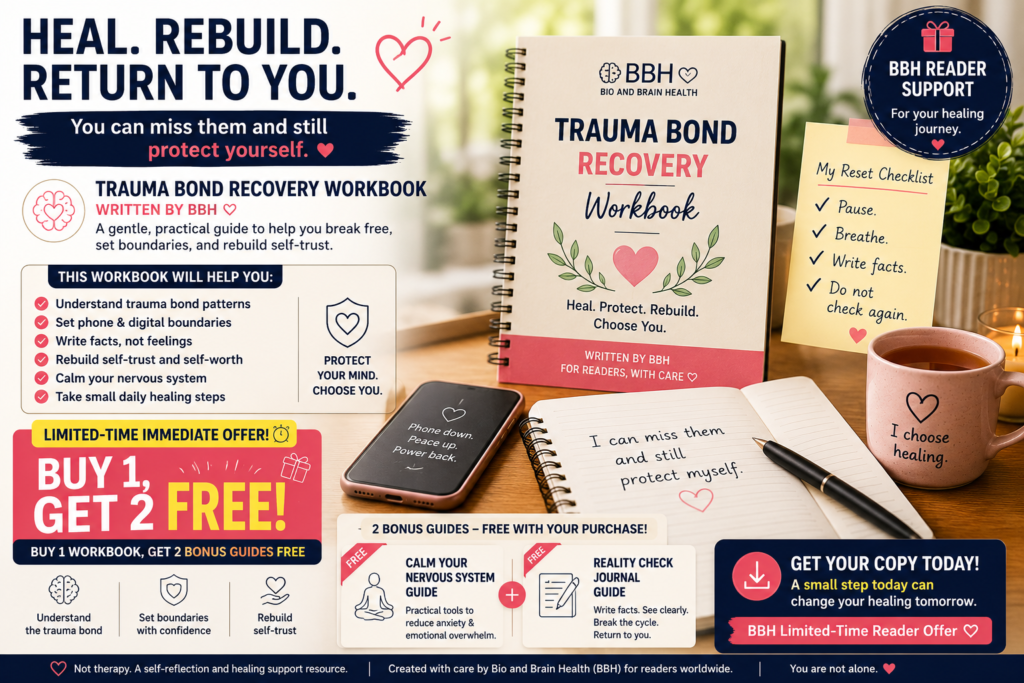
“Trauma Bond Recovery Workbook: Phone Boundaries, Self-Trust, and Emotional Clarity”
This product path fits the article because readers are not only looking for information. They are looking for a way to stop checking, stop doubting, stop waiting for apology, and start protecting themselves.
Read Also:
People Also Ask About Missing Someone Who Hurt You
Why do I miss someone who hurt me?
You may miss someone who hurt you because your nervous system may still associate them with relief, apology, hope, or belonging. Missing them does not mean the hurt was not real. It may mean your body is still looking for emotional repair.
Why am I attached to someone who emotionally abused me?
You may feel attached because emotional abuse can create cycles of fear, affection, withdrawal, and relief. The attachment system may keep seeking safety from the same person who caused pain.
Can gaslighting make you doubt yourself?
Yes. Gaslighting can make you question your memory, emotions, judgment, and reality. Over time, repeated denial, blame, or minimization can weaken self-trust. This is why healing from gaslighting often includes reality journaling, safe support, and learning to trust body signals again.
Why is trauma bond recovery so hard?
Trauma bond recovery can be hard because the body may become attached to relief after fear. The person may not only miss the abuser; they may miss the apology, kindness, attention, or hope that came after pain.
Why does leaving not stop the pain immediately?
Leaving can reduce exposure, but the nervous system may still need time to grieve, calm down, and rebuild safety. Emotional detachment often takes longer than physical distance.
How do I stop checking their messages or profile?
Start with a small pause. Put the phone away for 20 minutes, write what you are hoping to find, and ground your body before checking again. If checking keeps reopening pain, mute, archive, block, or create a digital boundary.
How do I rebuild self-trust after gaslighting?
Rebuilding self trust after gaslighting begins with small truth-based steps. Write down what happened, what you felt, what you needed, and what pattern repeated. Self-trust returns when you stop dismissing your own reality.
What does emotional abuse recovery look like?
Emotional abuse recovery can include safety planning, nervous system regulation, boundaries, self-trust repair, therapy or support groups, digital boundaries, and learning to stop seeking validation from the same person who repeatedly caused harm.
When should I get professional help?
Seek help if you feel unsafe, threatened, controlled, stalked, coerced, emotionally unstable, isolated, or unable to function. Professional support is especially important when abuse, trauma, panic, self-harm thoughts, or safety risks are involved.
Personal Note
My healing became easier when I stopped fighting every reaction and started listening to what it was trying to protect.
I realized that some reactions were not weakness. They were old wounds asking for safety, belonging, and emotional repair.
I also learned that missing someone who hurt me did not mean my pain was false. It meant a part of me was still waiting for the care I should have received.
That part needed compassion. But it also needed protection.
Conclusion: Missing Them Is Not Proof That You Should Return
If you still ask, why do I miss someone who hurt me, please do not use that question as proof that the relationship was safe.
Missing them may mean your body remembers hope.
Missing them may mean you waited for apology.
Missing them may mean you wanted to feel chosen.
Missing them may mean your nervous system is still searching for repair.
But your healing cannot depend only on the person who kept reopening the wound.
You are not weak for missing someone who hurt you. But your pain deserves protection, not repeated exposure. Healing does not mean forcing yourself to stop caring overnight. Healing means learning to care for yourself more than you wait for someone else to repair what they broke.
The real question is not only, “Why do I miss them?”
The deeper healing question is:
“What part of me is still waiting to feel safe, loved, and chosen — and how can I begin giving that part protection today?”
That is where trauma bond recovery begins. Not in self-attack. Not in denial. Not in waiting forever for the abuser to finally understand.
It begins when you say:
“I can miss them and still protect myself.”
“I can feel hurt and still trust my reality.”
“I can want apology and still stop waiting by the door of pain.”
“I can care about them and still choose safety for myself.”
That is not coldness. That is healing.
When Professional Support Is Needed
Some emotional abuse situations are not safe to handle alone.
Please seek professional or emergency support if you feel threatened, stalked, controlled, isolated, coerced, financially trapped, physically unsafe, or emotionally at risk. Also seek support if the relationship triggers self-harm thoughts, panic, severe depression, dissociation, or difficulty functioning.
You do not have to prove that the abuse was “bad enough” before asking for help.
External support resources:
- SAMHSA — Trauma and Violence Resources
https://www.samhsa.gov/mental-health/trauma-violence - National Domestic Violence Hotline — Emotional Abuse Resource
https://www.thehotline.org/resources/what-is-emotional-abuse/ - National Domestic Violence Hotline — Gaslighting Resource
https://www.thehotline.org/resources/what-is-gaslighting/ - Office on Women’s Health — Emotional and Verbal Abuse
https://womenshealth.gov/relationships-and-safety/other-types/emotional-and-verbal-abuse - NCBI Bookshelf — Trauma-Informed Therapy
https://www.ncbi.nlm.nih.gov/books/NBK604200/
If you are in immediate danger, contact your local emergency number now.