Emotional Impact of IVF: Stress, Hope, Fear, Relationship Pressure
Emotional Impact of IVF: Mental Health & Stress During Treatment

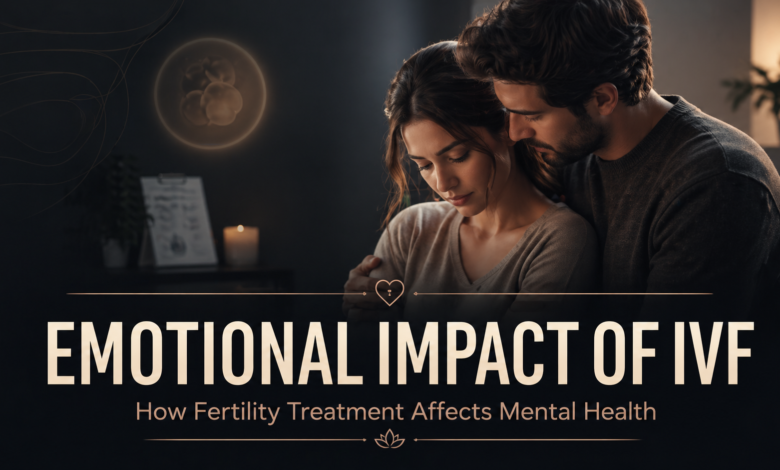
IVF is not only a medical process. It is also an emotional journey where hope, fear, uncertainty, self-worth, relationship pressure, and mental health meet at the same time.
Thank you for reading this post, don't forget to subscribe!👉Many people talk about fertility treatment through reports, injections, procedures, costs, and success rates, but very few speak honestly about the emotional impact of IVF.
Behind every clinic visit, there may be a silent prayer. Behind every report, there may be fear. Behind every waiting period, there may be a couple trying to stay strong while feeling emotionally tired inside.
The emotional impact of IVF is not weakness. It is the human side of fertility treatment. When a person enters IVF, they are not only asking the body to respond; they are also asking the mind, heart, nervous system, and relationship to carry a difficult journey with patience.
👉This article explains IVF emotional stress, mental health during IVF, emotional preparation for IVF, and IVF and relationship stress in a calm, supportive, and realistic way. The goal is not to create fear. The goal is to help couples feel less alone and more emotionally prepared.
Introduction: IVF Is More Than a Medical Journey
When people hear about IVF, they often think about hospitals, fertility specialists, hormone injections, embryo transfer, and pregnancy tests. These are important parts of the process. IVF is a complex medical treatment used to help with fertility and conception, and infertility itself is recognized by the World Health Organization as a disease of the male or female reproductive system.
But for the couple going through it, IVF is rarely only medical.
It becomes emotional.
It becomes personal.
It becomes connected to identity, hope, family expectations, marriage pressure, body image, faith, and future dreams.
A person may start IVF thinking, “We are beginning treatment.” But emotionally, they may soon feel, “My whole life is waiting for one result.”
This is where the emotional impact of IVF becomes heavy. The body may be going through treatment, but the heart is going through hope, fear, grief, and surrender at the same time.
What Is the Emotional Impact of IVF?
The emotional impact of IVF means the psychological, emotional, and relationship pressure that can happen before, during, and after fertility treatment.
It can include anxiety, sadness, irritability, fear of failure, emotional exhaustion, relationship tension, self-blame, comparison, and grief after failed cycles.
Some people feel hopeful in the morning and scared by evening. Some feel strong in front of family but break down alone. Some couples stop talking deeply because every conversation begins to revolve around treatment, dates, results, and medical decisions.
The emotional impact of IVF can show up as:
- Constant overthinking about results
- Fear before every report
- Emotional tiredness after repeated appointments
- Crying without knowing what to say
- Feeling jealous or hurt by pregnancy announcements
- Feeling disconnected from your partner
- Blaming your body
- Feeling pressure from family or society
- Losing interest in normal life
- Feeling guilty for not being “positive enough”
👉This is why mental health during IVF matters. IVF emotional stress is not just “stress.” It can become a deep emotional load that affects sleep, communication, daily functioning, and inner stability.
For deeper emotional support, explore our Mental Health section for guides on anxiety, stress, emotional regulation, and inner stability.
Why IVF Affects Hope, Fear, and Self-Worth
IVF touches one of the deepest human desires: the desire to become a parent. Because of this, every step can feel emotionally charged.
- A scan is not only a scan.
- A report is not only a report.
- A waiting period is not only waiting.
For many couples, every update feels connected to the future they have imagined for years.
This is why emotional preparation for IVF is so important. Without emotional preparation, the person may enter treatment only with a medical plan, but no inner support system for fear, disappointment, pressure, or uncertainty.
The mind may start asking painful questions:
- “Why is this happening to me?”
- “Is my body failing?”
- “Will people judge me?”
- “What if this never works?”
- “What if my partner is disappointed?”
These thoughts can quietly damage self-worth. A person may begin to feel that their value depends on a pregnancy result. That is emotionally dangerous because no medical outcome should define a person’s worth.
A healthier truth is this:
IVF is something your body is going through. It is not the measure of your identity, love, or value.
This sentence should be remembered throughout the journey.
Why Many Couples Suffer Silently
Many couples do not openly discuss IVF emotional stress because fertility is still treated as a private or sensitive topic in many families. Some fear judgment. Some fear pity. Some do not want repeated questions. Some feel ashamed, even though infertility is not a personal failure.
This silence can make the emotional impact of IVF even stronger.
A woman may be physically carrying injections, side effects, appointments, and body changes. A husband or partner may feel helpless because they cannot remove the pain. Both may be suffering, but in different ways.
One partner may cry.
The other may become silent.
One may want to talk.
The other may avoid the topic because it feels too painful.
This does not always mean the relationship is weak. Sometimes it means both people are overwhelmed and do not know how to express pain safely.
IVF Emotional Stress: The Hidden Pressure Behind Treatment
IVF emotional stress often comes from the combination of uncertainty, medical intensity, time pressure, financial cost, and emotional hope.
The process may include repeated appointments, hormonal medications, monitoring, egg retrieval, embryo updates, transfer, and waiting for results. Each step can create emotional pressure because the outcome is not fully under personal control.
This uncertainty can activate the nervous system. The person may feel restless, alert, sensitive, or mentally exhausted.
Common signs of IVF emotional stress include:
- Racing thoughts
- Difficulty sleeping
- Sudden anger or crying
- Fear of bad news
- Emotional numbness
- Body tension
- Social withdrawal
- Repeated online searching
- Comparing with other IVF stories
- Feeling unable to enjoy normal life
This is why mental health during IVF should not be treated as an afterthought.
👉 Emotional support is part of care. ASRM notes that mental health professionals play an important role in reproductive medicine because fertility patients can face complex psychosocial issues.
Waiting, Reports, Injections, and Uncertainty
The waiting period during IVF can be emotionally exhausting. Waiting for follicle growth, embryo development, transfer results, pregnancy tests, or doctor feedback can make every day feel longer than usual.
During this time, the mind may become hyper-alert.
A small body sensation may become a sign.
A delay in response may create panic.
A normal report may still feel uncertain.
This is not overreaction. It is the mind trying to control an uncertain situation.
Emotional preparation for IVF means learning how to live through these waiting periods without letting fear completely take over. It does not mean forcing positivity. It means giving the nervous system enough safety to survive uncertainty with more stability.
A simple practice can help:
Before checking reports, messages, or symptoms, pause for one minute and say:
“I can receive information without losing myself. Whatever comes next, I will take one step at a time.”
This does not change the medical result. But it changes how the mind meets the moment.
If IVF is part of your journey toward future parenthood, you may also explore our Parenting section for conscious parenting, child emotional development, and emotional preparation after conception.
Why Failed Cycles Can Feel Like Grief
A failed IVF cycle can feel like grief because the couple is not only losing a result. They may feel they are losing a dream, a name they imagined, a future picture, and months or years of emotional investment.
People around them may say:
“Try again.”
“Stay positive.”
“At least you have options.”
But inside, the person may feel something much deeper.
A failed cycle may bring grief for:
- The hope built during treatment
- The embryo or possibility they emotionally connected with
- The time and money invested
- The body effort endured
- The future they imagined
- The emotional strength used to continue
This grief deserves respect. It should not be rushed. It should not be dismissed with forced positivity.
Mental health during IVF means allowing space for grief without turning grief into self-blame.
A failed cycle does not mean the person failed.
It means one medical attempt did not become the outcome they hoped for.
That difference matters.
A Gentle Reminder: This Pain Is Real
If IVF is making you emotional, sensitive, afraid, or tired, it does not mean you are weak. It means you are walking through a journey that touches body, mind, relationship, and future identity at once.
The emotional impact of IVF is real.
IVF emotional stress is real.
Mental health during IVF matters.
Emotional preparation for IVF is not extra. It is part of protecting yourself.
And IVF and relationship stress should be handled with compassion, not blame.
Before moving deeper into the next part, remember this grounding line:
You are not only trying to create life. You are also trying to stay emotionally alive during a deeply uncertain process.
👉Educational Note
This article is for emotional education and support only. It does not replace medical, fertility, or mental health advice. If IVF treatment is causing severe distress, please speak with your fertility doctor, counselor, psychologist, or qualified mental health professional.
Emotional Preparation for IVF Before Treatment Begins
Emotional preparation for IVF does not mean you must become perfectly calm before treatment. It means you begin the journey with more honesty, more support, and more emotional awareness.
Many couples prepare the body, arrange appointments, manage finances, and follow medical instructions carefully, but they do not prepare for the emotional pressure that may come with waiting, uncertainty, fear, and relationship strain.
This is why the emotional impact of IVF often becomes heavier than expected. The couple may be medically ready, but emotionally unprepared for the repeated waves of hope and fear.
Emotional preparation for IVF begins with one simple truth:
IVF may happen inside a clinic, but the experience enters your home, your conversations, your sleep, your self-worth, and your relationship.
Before treatment begins, couples should gently ask:
What are we afraid of?
How will we support each other if the result is uncertain?
Who will we tell, and who will we not tell?
How will we protect our mental health during IVF?
What kind of emotional support do we need before we feel broken?
These questions do not make the journey negative. They make it more grounded. A couple that can speak honestly before treatment often handles IVF emotional stress with more stability.
Read Also: Start Here – Your Journey to Mental Clarity & Emotional Healing
Naming the Unspoken Feelings
One of the most important steps in emotional preparation for IVF is naming the feelings that are usually hidden. Many people say, “I am fine,” when they are actually scared, ashamed, angry, tired, or confused.
During fertility treatment, unspoken emotions can grow stronger because the mind keeps carrying what the mouth never says.
A woman may feel broken but hide it.
A man may feel helpless but stay silent.
A couple may keep functioning outside while emotionally collapsing inside.
Naming emotions does not solve everything immediately, but it reduces emotional isolation. It turns silent pressure into shared understanding.
Instead of saying only:
I am stressed.
Try saying:
I am scared this may not work.
I feel tired of pretending I am strong.
I feel guilty when I see you suffer.
I feel jealous when others announce pregnancy.
I feel ashamed even though I know this is not my fault.
This honesty is painful, but it is also healing. The emotional impact of IVF becomes more bearable when the pain is not carried alone.
Fear, Shame, Guilt, and Body Pressure
IVF can awaken emotions that many people do not expect. Fear is obvious, but shame and guilt are often hidden underneath.
- Some people feel shame because they believe their body has failed.
- Some feel guilt because treatment is expensive.
- Some feel pressure because family members are waiting.
- Some feel grief because life did not happen in the simple way they once imagined.
These emotions are not signs of weakness. They are signs that IVF has touched identity, body image, social pressure, and future hope.
Mental health during IVF becomes difficult when a person starts believing painful thoughts such as:
My body is not enough.
I am delaying my partner’s happiness.
I am failing my family.
Everyone else is moving ahead.
I should be stronger than this.
These thoughts must be challenged gently. Fertility struggles are not a moral failure. A medical challenge should not become an identity wound.
A healthier inner response is:
My body deserves care, not blame. My worth is not decided by one treatment outcome.
This is one of the most important emotional shifts during IVF.
Creating Emotional Safety as a Couple
IVF and relationship stress often begins when both partners are suffering but expressing pain differently. One partner may want emotional conversation. The other may become quiet because they do not know what to say. One may appear practical. The other may feel that practicality means emotional distance.
- This misunderstanding can create loneliness inside the relationship.
- A woman may think, “He does not understand my pain.”
- A man may think, “Nothing I say helps, so maybe I should stay quiet.”
- But silence can become dangerous if it becomes emotional separation.
Creating emotional safety means both partners agree that fear, sadness, anger, disappointment, and confusion can be spoken without blame. The goal is not to fix every feeling. The goal is to make sure no one feels alone inside the process.
A simple weekly check-in can help:
What felt heavy for you this week?
What did you need from me but could not say?
What fear are you carrying silently?
How can I support you better this week?
This kind of conversation protects mental health during IVF because it gives the relationship a safe place to breathe.
How to Talk Without Blame
When IVF emotional stress becomes high, couples may unintentionally hurt each other. The pressure may come out as irritation, withdrawal, criticism, or emotional shutdown.
Instead of saying:
You never understand me.
Try:
I feel alone right now, and I need you to sit with me.
Instead of saying:
You are always negative.
Try:
I know you are scared. Can we talk about the fear without blaming each other?
Instead of saying:
You do not care.
Try:
I need emotional reassurance, not only practical support.
This shift matters because IVF and relationship stress is often not caused by lack of love. It is caused by lack of emotional language during pressure.
A couple does not need perfect communication. They need repair. They need the ability to return to each other after difficult moments.
IVF and Relationship Stress
IVF and relationship stress can appear in many ways. Treatment can affect intimacy, finances, schedules, family conversations, decision-making, and emotional closeness. What was once a private relationship may suddenly feel controlled by reports, timing, injections, and medical advice.
This can make the relationship feel less romantic and more procedural.
Couples may also disagree on how much to share with others, how long to continue treatment, how to handle failed cycles, or when to take a break. These decisions can create emotional tension if both people are already exhausted.
The key is to remember that both partners are on the same side.
The problem is not the partner.
The problem is the pressure both are trying to carry.
A helpful sentence during conflict is:
We are not fighting each other. We are trying to survive a difficult season together.
This sentence can soften defensiveness and bring the couple back into partnership.
Read Also: Emotional Healing Roadmap
Why Partners May Cope Differently
Partners often cope differently during IVF. One may express emotions openly, while the other becomes practical. One may research everything, while the other avoids information. One may cry often, while the other appears calm but feels anxious inside.
Different coping styles can create misunderstanding.
The emotional partner may feel unsupported.
The practical partner may feel unappreciated.
But both may actually be scared.
This is why emotional preparation for IVF should include understanding each partner’s coping style.
Ask each other:
When you are scared, do you talk more or go quiet?
When you feel helpless, do you try to fix things?
When you are overwhelmed, do you need comfort or space?
What kind of support feels loving to you?
These questions reduce IVF and relationship stress because they help couples stop interpreting each other wrongly.
The Silent Pain of the Supporting Partner
In many IVF journeys, one person carries more physical burden, especially when the woman goes through injections, hormonal changes, procedures, and body monitoring. This physical reality must be respected deeply.
But the supporting partner may also carry silent emotional pain. They may feel helpless watching their loved one suffer. They may feel pressure to stay strong. They may worry about money, outcomes, family expectations, and their partner’s emotional state.
This pain often goes unspoken because the supporting partner may think:
My pain is smaller, so I should not talk about it.
But silence can build distance.
A healthier approach is to say:
I know your body is carrying the hardest part. I also feel scared and helpless sometimes. I do not want us to carry this separately.
This kind of honesty does not reduce the physical burden of the person undergoing treatment, but it creates emotional partnership.
What Couples Should Say to Each Other
During IVF, couples need simple, steady sentences that create safety. Not every conversation has to be deep. Sometimes one sentence can protect the relationship from emotional collapse.
Use sentences like:
I am with you in this.
Your worth is not decided by this result.
We will take one step at a time.
You do not have to be strong every day.
I may not know the perfect words, but I am not leaving you alone.
We can pause and breathe before making decisions.
This is our journey, not your burden alone.
These sentences may look simple, but during emotional pressure, they can become anchors.
The emotional impact of IVF becomes easier to carry when the couple creates a language of safety.
Healing Emotional Wounds Before Parenthood
Your original blog carried a beautiful and important thought: healing emotional wounds before birth matters. That idea should stay, but we will hold it in a grounded and emotionally safe way.
Healing emotional wounds before parenthood does not mean a couple must become perfect before having a child. It does not mean every fear must disappear. It means the couple begins noticing old pain, unspoken grief, family pressure, shame, and emotional reactions that IVF may awaken.
IVF can make old wounds louder because the journey touches deep questions:
Am I enough?
Will I be chosen by life?
Can I trust my body?
Can I handle disappointment?
Will I be loved if this fails?
These are not only fertility questions. They are identity questions.
This is why mental health during IVF matters so much. IVF can become a mirror, showing where the heart still needs compassion.
Why Old Pain Can Become Louder During IVF
Old emotional pain can become louder during IVF because uncertainty often activates earlier fears.
- A person who already carries rejection wounds may feel abandoned by life after a failed cycle.
- A person with body shame may feel even more disconnected from their body.
- A person who grew up with family pressure may feel crushed by expectations.
This does not mean IVF is causing all the pain. It may be revealing pain that already existed.
That is why emotional preparation for IVF should include self-reflection.
Ask yourself:
What part of this journey hurts beyond the medical process?
What fear keeps repeating in my mind?
What old belief about my worth is getting triggered?
Where do I need support instead of self-blame?
These questions can help convert emotional suffering into awareness.
How Journaling, Prayer, Counseling, and Reflection Can Help
Different people need different kinds of emotional support.
- Some find healing through counseling.
- Some find grounding through prayer.
- Some use journaling, meditation, breathwork, or quiet reflection.
- Some need a trusted friend.
- Some need professional mental health support.
There is no one correct method. The best method is the one that helps you feel safer, clearer, and less alone.
Journaling can help you release thoughts that keep repeating.
Prayer can help you surrender what you cannot control.
Counseling can help you process grief, anxiety, relationship stress, or decision fatigue.
Breathing practices can calm the nervous system when fear becomes too loud.
A gentle daily journaling prompt is:
Today, IVF made me feel...
What I needed but did not say was...
One thing I can offer myself with kindness is...
One thing I appreciate about my partner today is...
This kind of practice supports mental health during IVF without pretending the journey is easy.
Emotional Preparation Is Not a Guarantee, But It Is Protection
Emotional preparation for IVF does not guarantee pregnancy. It does not control medical outcomes. It does not replace fertility treatment, medical guidance, or professional care.
But it protects something very important: your inner stability.
- It helps protect your relationship from unnecessary blame.
- It helps protect your mind from constant fear.
- It helps protect your self-worth from becoming dependent on results.
- It helps protect your future parenthood journey from being built only on desperation and pressure.
The emotional impact of IVF is real, but emotional preparation can help you meet the process with more awareness, love, and steadiness.
Before moving to the final part, remember this:
You do not have to remove all fear before IVF. You only need enough honesty, support, and compassion so fear does not carry the journey alone.
How to Cope With the Emotional Impact of IVF
Coping with the emotional impact of IVF does not mean staying positive every day. It means learning how to move through hope, fear, uncertainty, grief, and pressure without completely losing your emotional center.
IVF is a sensitive journey because it asks you to wait for something deeply meaningful while knowing that the result is not fully in your control.
This is why coping must be gentle, realistic, and repeatable. You do not need a perfect routine. You need small emotional habits that help your mind and body feel safer during the process.
IVF emotional stress often becomes heavier when the mind tries to control everything.
- The mind keeps asking,
- “Will it work?
- What if it fails?
- What if I cannot handle another disappointment?”
These thoughts are understandable, but if they continue all day, they can exhaust the nervous system.
A better approach is not to fight every thought. Instead, create a simple structure that tells your mind:
I cannot control every outcome, but I can support myself through every stage.
This is the foundation of emotional preparation for IVF.
Reduce Comparison and Protect Your Mental Space
One of the most painful parts of IVF emotional stress is comparison. Social media, family functions, pregnancy announcements, baby photos, and casual comments from others can suddenly become emotionally difficult.
You may feel happy for someone and still feel pain for yourself. Both can exist together.
Comparison does not mean you are a bad person. It means your heart is tired and your longing is being touched.
During IVF, protecting your mental space is not selfish. It is necessary. You may need to reduce time on social media, avoid fertility forums that increase panic, and limit conversations with people who ask insensitive questions.
You can set boundaries like:
We are not discussing treatment updates right now.
I will share when I feel ready.
Please do not ask about reports or results repeatedly.
I need emotional support, not pressure or advice.
These boundaries help protect mental health during IVF. You are not rejecting people. You are protecting a sensitive season of your life.
Create a Daily Grounding Practice
A daily grounding practice can help reduce emotional overload during IVF. It does not need to be complicated. Even five minutes can help your nervous system shift from panic to steadiness.
You can try this simple practice:
Sit quietly.
Place one hand on your chest and one hand on your lower belly.
Inhale slowly for 4 seconds.
Exhale slowly for 6 seconds.
Repeat for 5 minutes.
Say gently: “I am safe in this moment. I will take one step at a time.”
This practice does not guarantee a medical result. It simply helps your body understand that not every moment is an emergency.
Mental health during IVF improves when the body receives regular signals of safety. Gentle breathing, short walks, prayer, journaling, music, silence, or sitting in sunlight can all become emotional anchors.
The goal is not to escape the IVF process. The goal is to remain connected to yourself while moving through it.
Use Support, Counseling, and Medical Guidance
IVF can become emotionally heavy when couples try to carry everything alone. Support is not a sign of weakness. It is a sign of maturity.
Support may come from:
A fertility counselor
A therapist or psychologist
A trusted friend
A support group
A compassionate doctor
A spiritual mentor
A calm family member
Your partner
Professional support is especially important if IVF emotional stress is affecting sleep, appetite, work, daily functioning, or relationship stability. It is also important if you feel hopeless, numb, constantly anxious, or unable to recover emotionally after failed cycles.
Emotional preparation for IVF should include a support plan before crisis begins. Do not wait until you are fully broken to ask for help.
A useful question is:
Who can support me without judging, rushing, advising, or minimizing my pain?
Choose those people carefully.
Spiritual and Emotional Reflection During IVF
For many couples, IVF is not only a medical journey. It can also become a spiritual and emotional journey of patience, surrender, trust, and self-understanding.
But this spiritual layer must be held gently. It should never create blame. It should never make someone feel that a failed cycle happened because they were not positive enough, spiritual enough, calm enough, or deserving enough.
A healthier spiritual view is this:
This journey is teaching me how to meet uncertainty with compassion, not how to blame myself for what I cannot control.
IVF as a Journey of Patience, Love, and Surrender
IVF often teaches patience in a way that feels difficult. You wait for appointments. You wait for reports. You wait for embryo updates. You wait for the pregnancy test. You wait for the next instruction.
This waiting can either create panic or become a practice of surrender.
Surrender does not mean giving up. It means accepting that effort and outcome are not the same thing. You can do your best, follow medical guidance, care for your body, protect your mind, and still not control every result.
This is painful, but it can also become emotionally freeing.
During IVF, surrender may sound like:
I will do my part with care.
I will not punish myself for what I cannot control.
I will not reduce my worth to one result.
I will allow hope without forcing certainty.
I will allow grief without losing myself completely.
This kind of reflection helps soften the emotional impact of IVF because it gives the mind a wiser place to rest.
Creating a Loving Inner Space Before Parenthood
Emotional preparation for IVF can also become emotional preparation for parenthood. Whether the journey is successful quickly, delayed, repeated, or uncertain, the inner work still matters.
A child does not need perfect parents. A child needs parents who are willing to become more aware, more emotionally honest, and more loving.
Creating a loving inner space before parenthood may include:
Healing self-blame
Reducing comparison
Learning emotional regulation
Strengthening couple communication
Practicing patience
Creating boundaries with family pressure
Building trust in your own worth
This is where IVF and relationship stress can become a turning point. Instead of letting treatment pressure divide the couple, the journey can become a reason to speak more honestly and support each other more deeply.
A simple couple practice can help:
Every night, each partner says one sentence:
Today, I felt...
Today, I needed...
Today, I appreciate you for...
This keeps communication alive even during emotionally heavy days.
When Fear Overpowers Hope
There will be days when fear feels louder than hope. On those days, do not force yourself to act peaceful. Forced positivity can become another pressure.
Instead, give yourself permission to say:
Today is hard.
I am scared.
I need rest.
I need support.
I do not have to solve everything today.
Sometimes the most healing thing is not a perfect affirmation. Sometimes it is honest rest.
If fear becomes overwhelming, reduce triggers. Stop reading too many IVF stories online. Avoid comparing timelines. Do not repeatedly check symptoms. Ask your doctor questions directly instead of relying only on online searches.
Mental health during IVF needs protection from unnecessary emotional noise.
When to Seek Professional Support During IVF
Seek professional support if emotional distress becomes too heavy to manage alone.
This is especially important if you experience:
Constant anxiety
Frequent crying spells
Loss of interest in life
Severe relationship conflict
Panic symptoms
Hopelessness
Sleep disturbance
Emotional numbness
Strong self-blame
Thoughts of harming yourself
If there are thoughts of self-harm or you feel unsafe, seek urgent help from a local emergency service, crisis helpline, doctor, or trusted person immediately.
Getting support does not mean you are failing IVF. It means you are protecting your mind while your body goes through a demanding process.
IVF emotional stress deserves care, not shame.
Final Thoughts on the Emotional Impact of IVF
The emotional impact of IVF is real because IVF touches more than the body. It touches hope, fear, love, identity, marriage, family pressure, self-worth, and the dream of parenthood.
It is not just about injections, scans, reports, and procedures. It is also about the silent moments when you wonder if you are strong enough to continue. It is about the conversations couples avoid because they are afraid of breaking down. It is about the grief after failed cycles and the courage to begin again.
But within this difficult journey, there can also be deeper emotional growth.
IVF can teach couples how to speak honestly, support each other, protect their mental health, and stop measuring their worth through outcomes. Emotional preparation for IVF does not guarantee success, but it can help you walk through the process with more stability, love, and self-compassion.
If you are going through IVF, remember this:
You are not weak because this hurts. You are human because this matters.
And no matter what stage you are in, your worth is not waiting inside a test result. Your worth already exists.
👉Educational Note
This article is for emotional education and support only. It does not replace medical, fertility, or mental health advice. IVF decisions should always be discussed with your fertility specialist, doctor, or qualified healthcare provider. If IVF is causing severe emotional distress, please seek support from a licensed mental health professional.
Frequently Asked Questions About the Emotional Impact of IVF
What is the emotional impact of IVF?
The emotional impact of IVF refers to the stress, anxiety, hope, fear, grief, self-blame, and relationship pressure that can happen during fertility treatment. IVF is not only a physical process; it can also affect mental health, self-worth, emotional stability, and couple communication.
Why does IVF emotional stress feel so intense?
IVF emotional stress feels intense because the process combines uncertainty, medical treatment, waiting periods, financial pressure, family expectations, and deep hope for parenthood. The mind wants certainty, but IVF often requires patience, trust, and emotional endurance.
How can couples protect mental health during IVF?
Couples can protect mental health during IVF by talking openly, setting boundaries, reducing comparison, using grounding practices, seeking counseling when needed, and avoiding emotional isolation. Mental health during IVF improves when both partners feel supported instead of silently pressured.
What is emotional preparation for IVF?
Emotional preparation for IVF means preparing your mind and relationship for uncertainty, waiting, fear, and possible disappointment. It includes honest conversations, emotional support, self-compassion, stress-reducing routines, and a clear plan for how to handle difficult moments.
Can IVF and relationship stress affect couples?
Yes, IVF and relationship stress can affect couples because partners may cope differently. One partner may become emotional, while the other becomes quiet or practical. This can create misunderstanding. Regular check-ins, reassurance, and blame-free conversations can help couples stay connected.
How do you handle grief after a failed IVF cycle?
Grief after a failed IVF cycle should be treated with compassion. Allow yourself to feel sadness without blaming your body or identity. Talk to your partner, take time before making the next decision, and seek professional support if grief becomes overwhelming.
Should couples avoid talking about IVF with family?
Not always, but couples should choose carefully who they share details with. Some people provide comfort, while others create pressure through questions or advice. During IVF, emotional boundaries are important for protecting mental health and reducing unnecessary stress.
Can spiritual reflection help during IVF?
Spiritual reflection, prayer, meditation, journaling, or gratitude can help some people feel calmer during IVF. These practices should support emotional balance, not create guilt or pressure. Spiritual support is helpful when it brings compassion, patience, and inner steadiness.
People Also Ask
Why is IVF so emotionally difficult?
IVF is emotionally difficult because it combines medical procedures with deep personal hope. The waiting, uncertainty, treatment pressure, and fear of failed cycles can affect mental health, sleep, mood, and relationships.
Does IVF affect mental health?
IVF can affect mental health by increasing anxiety, emotional stress, sadness, irritability, and fear. Many people also experience grief, self-blame, or relationship tension during fertility treatment.
How can I stay emotionally strong during IVF?
You can stay emotionally supported during IVF by taking one step at a time, reducing comparison, speaking honestly with your partner, using calming routines, and asking for professional support when needed.
Can IVF cause relationship problems?
IVF can create relationship stress because both partners may handle fear differently. Treatment pressure, financial concerns, intimacy changes, and emotional silence can affect communication. Supportive conversations can reduce this pressure.
Is it normal to cry during IVF?
Yes, crying during IVF is normal. IVF can bring hope, fear, grief, and emotional exhaustion. Crying does not mean you are weak; it means the process is touching something deeply important.
How do I prepare emotionally before IVF?
Prepare emotionally before IVF by discussing fears with your partner, setting boundaries with family, planning support, learning calming practices, and reminding yourself that your worth is not defined by treatment results.
References
- World Health Organization — Infertility
Use this for defining infertility as a reproductive health condition and showing that fertility struggles are not personal failure.
URL: https://www.who.int/news-room/fact-sheets/detail/infertility - Mayo Clinic — In Vitro Fertilization IVF
Use this for a clear medical explanation of IVF as a complex series of procedures used to support fertility.
URL: https://www.mayoclinic.org/tests-procedures/in-vitro-fertilization/about/pac-20384716 - American Society for Reproductive Medicine — Fertility Counselors Guidance
Use this to support the point that mental health professionals can play an important role in reproductive medicine and fertility care.
URL: https://www.asrm.org/practice-guidance/practice-committee-documents/guidance-on-qualifications-for-fertility-counselors-a-committee-opinion-2021/ - MGH Center for Women’s Mental Health — Fertility & Mental Health
Use this for fertility-related mental health support and reproductive psychiatry context.
URL: https://womensmentalhealth.org/specialty-clinics/infertility-and-mental-health/ - RESOLVE — The National Infertility Association
Use this as a support-resource reference for people experiencing infertility and looking for community support.
URL: https://resolve.org/ - RESOLVE — Find a Support Group
Use this if you want to mention peer-led support groups for infertility emotional support.
URL: https://resolve.org/get-help/support-groups/