Relationship Safety AI: Build Emotional Trust Safely
How AI Can Support Safer Communication, Boundaries, and Secure Bonding

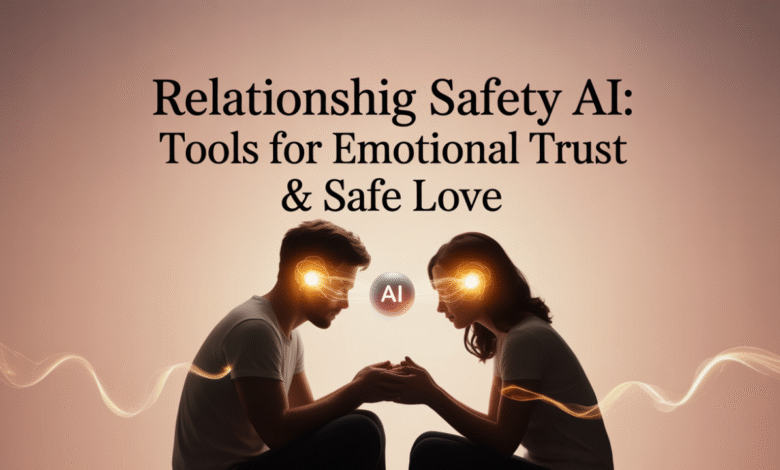
Relationship safety AI is not about letting technology control love, judge your partner, or replace therapy. This blog is for people who feel emotionally sensitive in relationships, overthink small changes, fear distance, or struggle to speak safely during conflict.
Thank you for reading this post, don't forget to subscribe!Most advice only says “communicate better,” but this guide goes deeper: it explains how AI emotional safety coaching can work as a human-first reflection tool, helping you pause, understand your fear, and choose calmer words before reactions damage trust.
You will learn how emotional trust in relationships is connected to nervous system safety, not just promises. You will also see how AI boundary-setting guidance can help you express needs without sounding cold, harsh, or defensive.
The unique value of this blog is simple: it shows how secure bonding tools can support safer communication while keeping real human connection, responsibility, and emotional honesty at the center.
What Is Relationship Safety AI?
Relationship safety AI means using artificial intelligence as a human-first reflection tool to support safer communication, emotional clarity, and better relationship awareness. It is not a tool to control love, judge your partner, replace therapy, or decide what your relationship should become.
Its real value is simple: it can help you pause before reacting, understand what you are feeling, and choose words that create less fear and more emotional safety.
Many people do not struggle in relationships because they lack love. They struggle because their nervous system feels unsafe when there is silence, distance, conflict, mixed signals, or emotional uncertainty.
In that moment, the mind starts guessing, the body becomes tense, and communication becomes defensive. Relationship safety AI can help slow this pattern by giving you structured reflection before you send a message or enter a difficult conversation.
For a wider understanding of digital emotional support, readers can also explore AI Therapy as a related learning path.
How AI Emotional Safety Coaching Supports Sensitive Relationships
AI emotional safety coaching can help emotionally sensitive people reflect before they react. This matters because sensitive people often feel emotional shifts deeply.
A delayed reply, a changed tone, or a short message may not look serious from the outside, but inside the body it can feel like rejection, abandonment, or emotional danger.
This is where AI emotional safety coaching becomes useful as a pause-point.
It can help someone ask:
- “What actually happened?”
- “What am I afraid this means?”
- “What can I say without blaming?”
- This does not remove personal responsibility, but it gives the mind a calmer space before the relationship becomes a battlefield.
The goal of AI emotional safety coaching is not to make one partner right and the other wrong. The goal is to help the person regulate enough to communicate with honesty, respect, and emotional maturity.
This is why relationship safety AI must remain human-first, not technology-first.
Why Emotional Trust in Relationships Depends on Nervous System Safety
Emotional trust in relationships is not created only by promises. It is created when the body begins to feel safe enough to stay open. When someone has experienced emotional neglect, betrayal, rejection, inconsistent love, or repeated conflict, even small uncertainty can activate fear.
The person may ask for reassurance again and again, not because they want drama, but because their nervous system is searching for safety.
This is why emotional trust in relationships needs more than communication tips. It needs emotional regulation, repeated consistency, and the ability to separate present reality from old fear. Relationship safety AI can support this process by helping a person slow down the fear story before they act from it.
This connects strongly with Nervous System Regulation because trust becomes difficult when the body is already in a stress response. A regulated body can listen better, speak better, and repair faster.
When Love Feels Unsafe, the Nervous System Stops Trusting
When love feels unsafe, the mind does not stay neutral. It starts scanning for signs of danger.
- A partner’s silence may feel like rejection.
- A small disagreement may feel like emotional loss.
- A boundary may feel like abandonment.
This is not always logical, but it is real inside the body.
In this state, emotional trust in relationships becomes fragile because the person is not responding only to the present moment. They may also be responding to old pain, previous disappointments, or fear of being unseen. Relationship safety AI can help by asking reflective questions that separate facts from assumptions.
For readers who struggle with repeated mental loops, Anxiety and Overthinking can help explain why the mind keeps replaying uncertain signals. Relationship fear often becomes stronger when overthinking turns one unclear moment into a full emotional story.
Relationship Safety AI Is Support, Not Therapy or Human Replacement
This is the most important foundation of this blog: relationship safety AI should support reflection, not replace real human connection.
AI can help you prepare your words, understand your emotional pattern, organize your thoughts, and notice when fear is speaking louder than truth. But AI cannot feel your relationship, know your full history, diagnose your partner, or replace professional support.
Healthy use of relationship safety AI means you use it to become more responsible, not more dependent. It should help you enter real conversations with more calmness, not avoid conversations completely. It should help you understand boundaries, not control another person. It should support honesty, not create manipulation.
For deeper recovery from emotional wounds, AI should only support the process while real Emotional Healing still requires awareness, safety, time, and human responsibility.
What AI Can Support
AI emotional safety coaching can support many small but meaningful relationship moments.
- It can help rewrite a reactive message into a calmer one.
- It can help prepare for a difficult conversation.
- It can suggest reflective questions before conflict.
- It can help someone express hurt without blame, need without pressure, and boundaries without harshness.
It can also support AI boundary-setting guidance by helping a person say, “I need time before I respond,” instead of disappearing or attacking.
This is especially helpful for emotionally sensitive people who fear that boundaries will make them look cold. Used wisely, relationship safety AI can help people speak with more clarity and less emotional panic.
What AI Should Never Replace
AI should never replace therapy, crisis support, consent, accountability, or direct communication. It should not decide whether you stay or leave a relationship. It should not be used to secretly analyze, test, manipulate, or monitor a partner. That is not safety. That is control.
AI emotional safety coaching is safest when it helps you reflect on your own feelings, not when it becomes a weapon against someone else. If there is abuse, coercion, threats, emotional manipulation, self-harm thoughts, or severe distress, professional support is more important than AI guidance.
Relationship safety AI can reflect your words, but it cannot carry the full responsibility of emotional safety.
Why Emotionally Sensitive People May Need Relationship Safety AI
Emotionally sensitive people often feel deeply before they can explain clearly.
They may know they are hurt, but not know how to express it without sounding needy, angry, or defensive.
They may want closeness, but fear asking for it.
They may need boundaries, but fear that boundaries will create distance. This is where relationship safety AI can become a useful support tool.
For sensitive readers, secure bonding tools matter because safety is built through repeated emotional signals, not one perfect conversation. A calm check-in, a respectful boundary, a repair message, or a simple reassurance habit can help rebuild safety over time.
Relationship consistency support also matters because unpredictable communication can make emotional insecurity stronger.
The best use of relationship safety AI is not to make love mechanical. It is to help people slow down enough to relate with more honesty, care, and emotional steadiness.
Overthinking Can Turn Small Signals Into Emotional Threats
Overthinking can make a small situation feel much bigger than it is. A partner may be tired, busy, or quiet, but the anxious mind may read it as rejection. This does not mean the fear is fake. It means the mind is trying to protect the heart before it understands the full truth.
In this situation, AI emotional safety coaching can ask grounding questions:
“What facts do I know?”
“What story am I adding?”
“What do I need to ask directly?”
These questions can protect emotional trust in relationships because they reduce impulsive reactions.
This is also where AI boundary-setting guidance, secure bonding tools, and relationship consistency support can work together.
Clear boundaries reduce confusion, bonding rituals create closeness, and consistency helps the nervous system feel safer over time.
“I learned that emotional safety does not come from perfect words. It comes when the mind slows down enough to speak without fear and listen without defense.”
How Relationship Safety AI Can Support Emotional Trust in Relationships
Relationship safety AI can support emotional trust in relationships by helping people slow down before they speak from fear, anger, insecurity, or emotional pressure.
Many relationship conflicts do not become painful because the first feeling was wrong. They become painful because the reaction came too fast.
A person feels ignored, sends a sharp message, withdraws completely, or starts blaming. Later, they may realize they were not trying to fight; they were trying to feel safe, seen, and reassured.
This is where AI emotional safety coaching can become useful. It can help someone name what they feel, separate facts from assumptions, and choose words that protect connection instead of increasing distance.
Emotional trust in relationships grows when both people feel they can speak honestly without being attacked, dismissed, mocked, or emotionally punished.
This connects with Emotional Acceptance During Uncertainty because relationship fear becomes easier to manage when a person can feel uncertainty without immediately reacting from it.
In that sense, relationship safety AI is not only about better words. It is about creating a calmer inner space before communication begins.
AI Can Help Slow Down Emotional Reactions Before Conflict
One practical benefit of relationship safety AI is that it creates a pause between feeling and response. This pause is powerful because many emotionally sensitive people know what they feel, but they do not always know how to say it safely in the moment.
When the nervous system is activated, the message may come out as blame, accusation, silence, sarcasm, emotional pressure, or repeated questioning.
AI emotional safety coaching can help rewrite a reactive message into a calmer message.
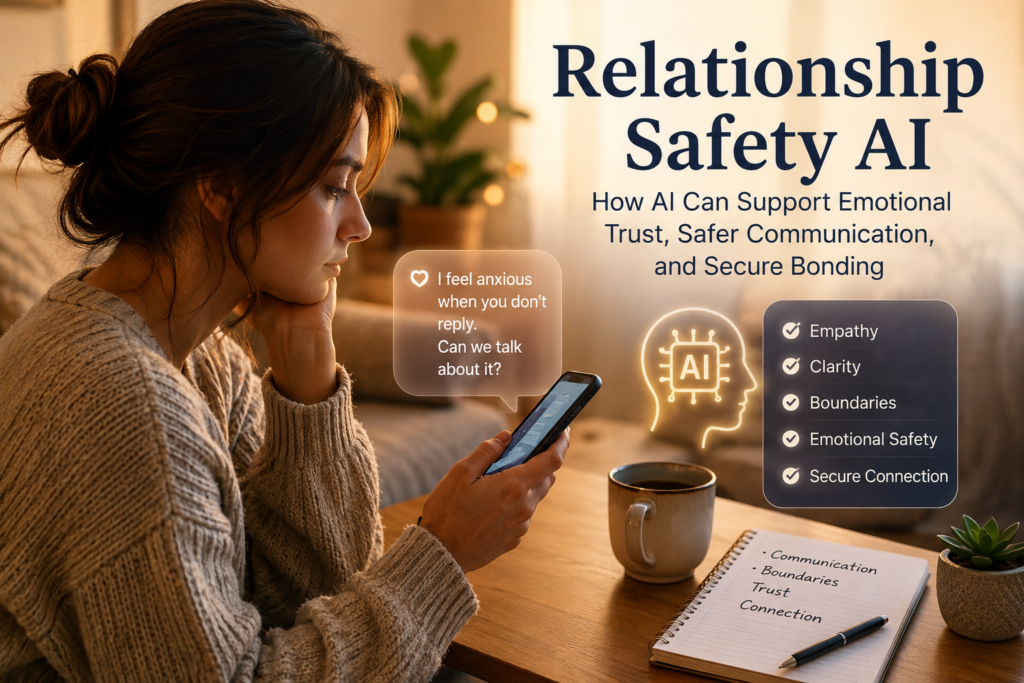
For example, instead of saying,
“You never care about me,” the person may learn to say,
“I felt hurt when I did not hear from you.
Can we talk about what happened?”
This protects emotional trust in relationships because the message still expresses pain, but it does not attack the other person’s character.
The goal is not to hide emotion. The goal is to express emotion in a way that keeps the conversation open.
When AI emotional safety coaching is used wisely, it helps people become more honest, not less emotional. It helps them speak from clarity instead of panic.
Example Prompt for Emotional Regulation
“Help me rewrite this message in a calm, respectful way. I feel hurt, but I do not want to blame my partner. I want to express what I need clearly.”
This kind of prompt turns AI emotional safety coaching into a reflection tool. It does not remove personal responsibility from the person.
It helps the person communicate with more care, emotional maturity, and awareness.
That is the real purpose of relationship safety AI: not to control the relationship, but to help someone return to safer communication.
Using AI Boundary-Setting Guidance Without Sounding Harsh
AI boundary-setting guidance can help people express limits without sounding cold, rejecting, or aggressive. This is important because many emotionally sensitive people fear boundaries.
They may believe that saying “I need space” will hurt the relationship, or that asking for respectful communication will make them look difficult, selfish, or unloving.
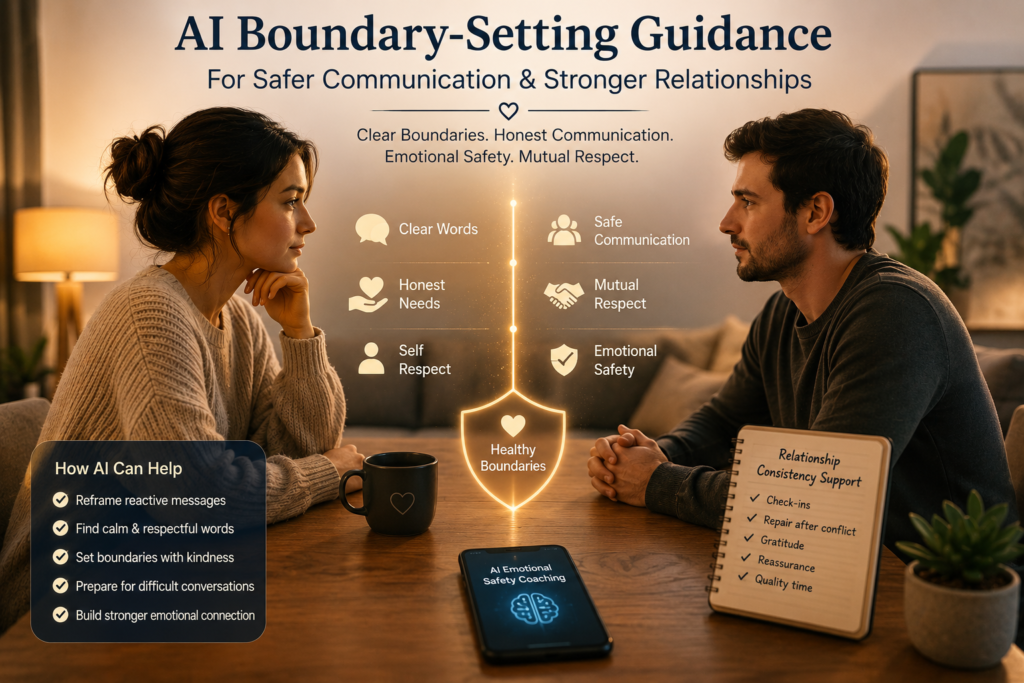
Healthy boundaries are not emotional walls. They are clear lines that protect respect, safety, and honesty. Relationship safety AI can help a person shape their boundary in a softer but stronger way.
It can help them avoid two common extremes: saying nothing until resentment builds, or speaking harshly because the emotion has become too heavy.
Good AI boundary-setting guidance teaches the reader to say what they need without controlling the other person. That is the difference between safety and pressure.
A boundary says, “This is what I need to stay emotionally steady.”
Control says, “You must behave exactly how I want.”
When this difference is clear, emotional trust in relationships becomes stronger because both people can understand where safety begins.
Healthy Boundaries Create Safety, Not Distance
Boundaries often feel frightening when someone has a fear of abandonment. A person may think, “If I ask for space, they will leave,” or “If I speak honestly, they will reject me.”
But in healthy relationships, boundaries do not weaken love. They make love more sustainable because they reduce hidden resentment, emotional guessing, and silent pressure.
AI boundary-setting guidance can help sensitive people find language that is firm but caring.
This is where relationship safety AI becomes practical because it supports the emotional middle path: not silence, not attack, but clear communication.
A boundary can be kind and still be strong.
A person can say “I care about you” and still say “I need this conversation to happen respectfully.”
This is also connected to Detachment in Relationships because healthy detachment helps a person love without losing emotional balance.
When a person can stay connected without gripping, pleading, or controlling, emotional trust in relationships becomes more stable.
Gentle Boundary Script Examples
You can use AI boundary-setting guidance to create simple boundary scripts like:
“I care about this relationship, but I need some time before I respond.”
“I want to talk, but I need us to speak without blame.”
“I am not ignoring you. I am trying to calm myself so I can respond better.”
“I want closeness, but I also need emotional respect during conflict.”
These examples show that AI boundary-setting guidance should not make communication robotic. It should help the person become more honest, calm, and emotionally clear.
When used well, relationship safety AI helps boundaries feel less like rejection and more like emotional responsibility.
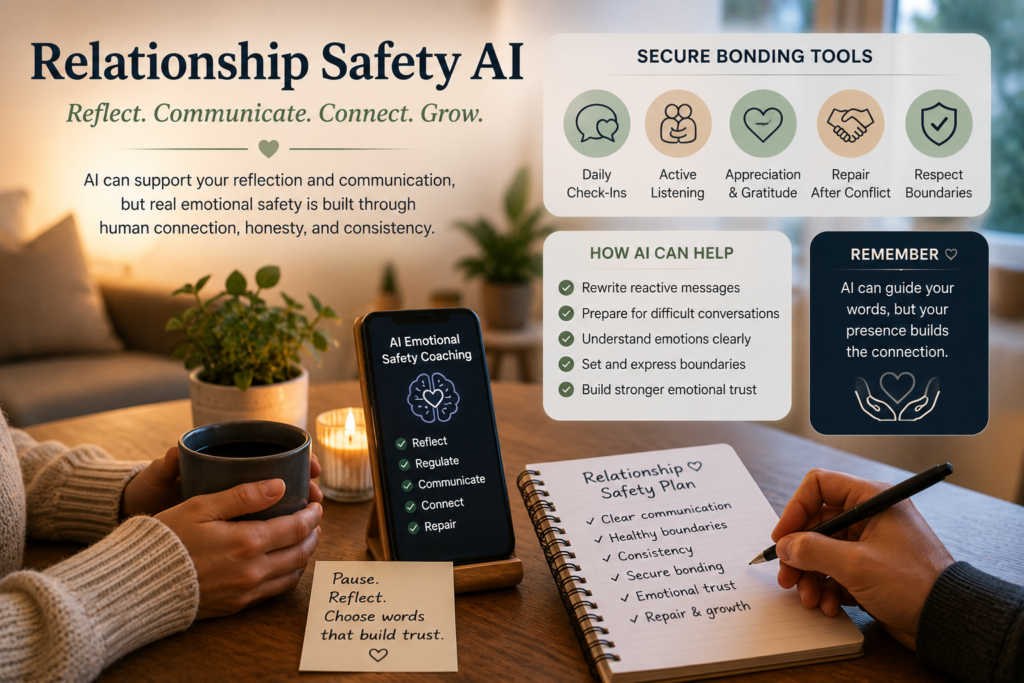
Secure Bonding Tools: How AI Can Support Daily Emotional Connection
Secure bonding tools are small practices that help relationships feel safer over time. Many people think trust is built only through big promises, emotional intensity, or dramatic reassurance.
But emotional safety usually grows through repeated small moments: checking in, repairing after conflict, expressing appreciation, listening without defense, and showing up consistently.
Relationship safety AI can support these moments by helping people create simple emotional habits. For example, it can suggest weekly check-in questions, repair messages, gratitude notes, or gentle reminders to ask instead of assume. These secure bonding tools are not meant to make love artificial. They are meant to help people practice care more consciously.
For a wider learning path, readers can explore the Relationship section and then go deeper into Relationship Psychology. These pages help connect relationship safety with emotional patterns, communication habits, attachment fears, and inner healing.
Small Consistent Messages Can Calm Relationship Anxiety
Relationship anxiety often grows when connection feels unpredictable.
One day the partner is warm. The next day they are distant.
One day there is reassurance. The next day there is silence.
For an emotionally sensitive person, this inconsistency can create fear even when love still exists.
This is why relationship consistency support matters. Consistency does not mean constant texting, emotional dependence, or needing reassurance every hour. It means small reliable signals that help the nervous system feel less threatened. A daily check-in, a planned conversation time, or a simple “I am busy but I care” message can reduce unnecessary fear.
Secure bonding tools can help couples create these patterns intentionally. When used well, relationship safety AI can suggest check-in language, repair questions, or emotional routines that support closeness without pressure. This kind of relationship consistency support helps love feel steadier, especially for people who struggle with uncertainty.
Examples of Relationship Consistency Support
Here are simple examples of relationship consistency support that AI can help create:
A weekly emotional check-in question.
A calm repair message after disagreement.
A reminder to ask directly instead of assuming.
A gratitude note after a difficult week.
A boundary reminder before conflict.
A short reassurance message during a busy day.
These secure bonding tools may look small, but they matter. Emotional safety is often built through repeated proof that connection can survive honesty, distance, stress, and disagreement. Relationship consistency support gives the nervous system a pattern it can begin to trust.
AI Emotional Safety Coaching Should Help You Reflect, Not Avoid Real Conversation
AI emotional safety coaching should prepare a person for real communication, not replace it. This is an important difference.
If someone uses AI only to feel understood but never speaks honestly with their partner, the relationship may not actually become safer. The person may feel temporary relief, but the real issue remains unresolved.
Healthy relationship safety AI should move the person toward responsibility.
It should help them ask,
- “What do I need to say?”
- “What part is my fear?”
- “What part needs a real conversation?”
- “How can I express this without blame?”
That kind of reflection can protect emotional trust in relationships because it reduces emotional dumping and encourages mature communication.
AI is helpful when it becomes a bridge back to human connection. It becomes unhealthy when it becomes a hiding place from difficult but necessary conversations.
The best use of AI emotional safety coaching is to understand yourself better so you can show up more honestly in the relationship.
Reflection Is Useful Only When It Leads to Responsibility
Reflection without responsibility can become avoidance. A person may keep asking AI what their partner means, whether the relationship is safe, or whether they should trust someone, but never have the real conversation. That can increase overthinking instead of reducing it.
The better use of AI emotional safety coaching is to prepare for honesty. It can help a person understand their emotion, but then the person must still speak, listen, repair, or set a boundary in real life. This is how relationship safety AI stays human-first.
AI boundary-setting guidance, secure bonding tools, and relationship consistency support are useful only when they create healthier action. The goal is not perfect language. The goal is safer love, clearer communication, and stronger emotional responsibility.
The Ethical Limits of Relationship Safety AI
Relationship safety AI becomes truly helpful only when it is used with honesty, consent, emotional responsibility, and human awareness. It should never become a hidden tool for controlling a partner, testing loyalty, reading someone’s mind, or proving who is right. The purpose of relationship safety AI is to support reflection, not emotional power.
This matters because relationship problems are sensitive. A person may come to AI feeling hurt, insecure, angry, or afraid.
In that emotional state, it is easy to look for certainty. But relationships are not solved by one-sided analysis. They need real conversation, mutual listening, safety, boundaries, and personal responsibility.
Healthy AI emotional safety coaching should help the reader ask better questions about themselves:
- “What am I feeling?”
- “What do I need?”
- “What part is fear?”
- “What do I need to communicate clearly?”
It should not encourage blame, suspicion, manipulation, or emotional dependence on technology.
Do Not Use AI to Control, Test, or Monitor a Partner
Relationship safety AI should never be used to secretly monitor a partner, analyze private messages without consent, create emotional traps, or test someone’s loyalty. That is not safety. That is control hidden under the language of healing.
A healthy relationship needs trust, not surveillance. If someone uses AI to build arguments, manipulate emotional responses, or force a partner into guilt, the tool becomes harmful. AI emotional safety coaching should help a person regulate their own reaction, not weaponize emotional information against someone else.
This is especially important for emotionally sensitive people. When fear is high, the mind may want proof, certainty, and reassurance immediately. But emotional safety cannot grow through pressure. Real emotional trust in relationships grows when communication becomes clearer, calmer, and more respectful.
AI Should Not Decide Whether You Stay or Leave
AI can help organize your thoughts, but it should not decide whether you stay in or leave a relationship.
A relationship decision needs context, history, safety, values, repeated patterns, practical reality, and sometimes professional support. Relationship safety AI can reflect your words, but it cannot fully understand your life.
This is why AI boundary-setting guidance is safer than AI decision-making. A person can use AI to write a respectful boundary, prepare for a difficult conversation, or clarify emotional needs. But the final decision must come from human awareness, real-world evidence, and personal wisdom.
If there is abuse, coercion, threats, violence, severe emotional manipulation, or fear for safety, the priority is not AI advice. The priority is real support, safe planning, and professional guidance.
When Relationship Safety AI Is Not Enough
Relationship safety AI is useful for reflection, communication, emotional regulation, and healthy self-awareness. But it is not enough when the relationship involves serious harm, deep trauma, crisis, or unsafe behavior. AI can support clarity, but it cannot replace trained care.
If someone feels constantly afraid, emotionally trapped, threatened, humiliated, controlled, or unsafe, AI emotional safety coaching should not be the main support system. In those cases, therapy, trusted people, crisis resources, or professional guidance may be needed. Emotional pain should not be handled alone when it becomes overwhelming.
This is also true when relationship stress affects sleep, appetite, work, self-worth, or daily functioning. Emotional trust in relationships cannot grow properly when one person is living in continuous fear or emotional collapse. Support matters because healing requires safety, not just information.
If a reader feels emotionally overwhelmed and does not know where to begin, the Start Here – Your Journey to Mental Clarity & Emotional Healing page can guide the next step gently.
When Therapy or Professional Help Is Needed
Professional help may be needed when relationship fear becomes intense, repetitive, or difficult to manage alone. This includes panic, trauma triggers, self-harm thoughts, severe depression, ongoing abuse, emotional dependency, or repeated conflict that does not improve.
Relationship safety AI can help someone write down feelings before therapy or prepare questions for a conversation, but it cannot replace the safety of a trained professional. AI emotional safety coaching should be seen as supportive reflection, not clinical treatment.
When relationship anxiety becomes physical stress, the Nervous System Reset Program for Anxiety and Stress can help readers focus on body-based regulation, not only mental analysis.
Safe Prompts You Can Use With Relationship Safety AI
The safest way to use relationship safety AI is to ask for reflection, not control. A good prompt should help you understand your feelings, communicate respectfully, and take responsibility for your part. It should not ask AI to judge your partner as good or bad.
For overthinking, try:
“Help me separate facts from fear in this relationship situation. What do I know for sure, and what am I assuming?”
For repair, try:
“Help me write a calm repair message that takes responsibility without self-blame or blame toward my partner.”
For boundaries, try:
“Help me express this boundary with kindness and clarity, without sounding harsh or emotionally distant.”
For emotional trust, try:
“Help me understand what I need to feel emotionally safe without blaming my partner.”
These prompts make AI boundary-setting guidance, secure bonding tools, and relationship consistency support more practical. The goal is not perfect wording. The goal is calmer self-awareness and healthier action.
People Also Ask About Relationship Safety AI
Is relationship safety AI safe to use?
Relationship safety AI can be safe when used as a reflection tool for communication, boundaries, and emotional awareness. It becomes unsafe when used to control, test, monitor, or manipulate a partner.
Can AI emotional safety coaching replace therapy?
No. AI emotional safety coaching can support reflection and calmer communication, but it cannot replace therapy, crisis care, diagnosis, or professional relationship support.
How can AI help emotional trust in relationships?
AI can help by slowing down reactive messages, separating facts from fear, and helping people express needs more clearly. This can support emotional trust in relationships when followed by real human communication.
Can AI help with boundary-setting?
Yes. AI boundary-setting guidance can help people create calm, respectful language for needs, limits, space, and repair. It should support honesty, not control.
What are the risks of AI relationship advice?
The main risks are overdependence, one-sided interpretation, emotional avoidance, privacy concerns, and using AI to justify blame. Relationship safety AI works best when it leads back to real communication.
Frequently Asked Questions
What is relationship safety AI?
Relationship safety AI is the use of AI as a human-first reflection tool for emotional safety, communication, boundaries, and trust. It helps people pause before reacting and speak more clearly.
Who should use relationship safety AI?
It may help emotionally sensitive people, overthinkers, couples in communication stress, or readers who want calmer reflection before conflict. It is best for support, not for crisis or unsafe relationship situations.
Can AI help couples communicate better?
Yes, AI can help rewrite reactive messages, prepare check-in questions, and suggest calmer language. These secure bonding tools work best when both people still practice real listening and repair.
Is AI relationship coaching emotionally healthy?
It can be emotionally healthy when it supports self-awareness, responsibility, boundaries, and honest conversation. It becomes unhealthy when it replaces real communication or creates dependency.
When should someone stop using AI and seek help?
Someone should seek professional help if there is abuse, fear, coercion, self-harm thoughts, panic, severe distress, or repeated emotional collapse. AI should not carry situations that need real support.
Final Thought: AI Can Reflect, But Humans Must Relate
Relationship safety AI can help people pause, understand their emotions, create safer words, and reduce impulsive conflict.
It can support AI emotional safety coaching, AI boundary-setting guidance, secure bonding tools, and relationship consistency support when used with care. But AI cannot love for us, repair for us, listen for us, or take responsibility for our behavior.
The real purpose of this tool is not to make relationships mechanical. It is to help people become more present before they speak, more honest before they blame, and more aware before they react.
Emotional trust in relationships is still built by humans through consistency, respect, repair, and courage.
For readers who want to understand how emotional freedom and love can exist together, this deeper guide on What Is Detachment and How to Practice Conscious Living can support the next step.
“AI can reflect your words, but only human awareness can turn those words into trust, repair, and real emotional safety.
External References
- American Psychological Association — Healthy Relationships
Website: American Psychological Association
URL: https://www.apa.org/topics/marriage-relationships/healthy-relationships
Use this reference to support the point that communication, regular check-ins, and healthy relationship habits matter for long-term relationship quality. - The Gottman Institute — How to Build Trust in Your Relationship
Website: The Gottman Institute
URL: https://www.gottman.com/blog/trust/
Use this reference for trust, attunement, intimate conversation, and relationship repair principles. - The Gottman Institute — Repair Attempts
Website: The Gottman Institute
URL: https://www.gottman.com/blog/r-is-for-repair/
Use this reference to support the idea that repair attempts can stop negativity from escalating during conflict. - National Institute of Mental Health — Anxiety Disorders
Website: National Institute of Mental Health
URL: https://www.nimh.nih.gov/health/topics/anxiety-disorders
Use this reference where the blog discusses anxiety, fear, overthinking, and how emotional distress can affect daily life and relationships. - Federal Trade Commission — Consumer Privacy
Website: Federal Trade Commission
URL: https://www.ftc.gov/business-guidance/privacy-security/consumer-privacy
Use this reference in the ethical AI section to support privacy awareness when using digital or AI-based emotional support tools.