Biotin Deficiency Symptoms: 9 Warning Signs
Low Biotin Symptoms: Hair, Skin and Brain Health

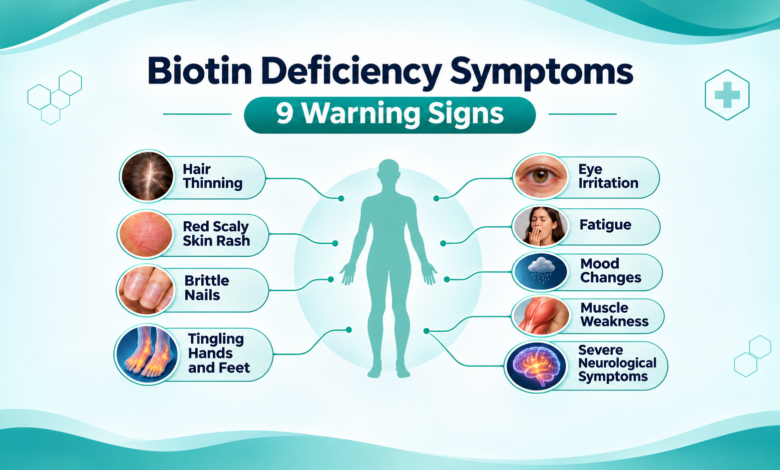
Biotin deficiency symptoms can include progressive hair thinning, a red scaly rash near the eyes, nose or mouth, brittle nails, conjunctivitis, and—in more severe cases—neurological changes such as lethargy, tingling, low muscle tone or seizures. However, biotin deficiency is rare in people consuming a varied diet. None of these findings independently confirms a deficiency. [1}
Thank you for reading this post, don't forget to subscribe!Hair loss, fatigue and changes in skin or nails are common reasons to investigate vitamin status. The important clinical question is not simply whether biotin can cause these symptoms; it is whether the symptom pattern and the person’s risk factors make biotin deficiency a plausible explanation. This evidence-based guide separates established manifestations from nonspecific symptoms, discusses dietary and inherited causes, and explains when testing and medical evaluation are appropriate.
What is biotin and why does the body need it?
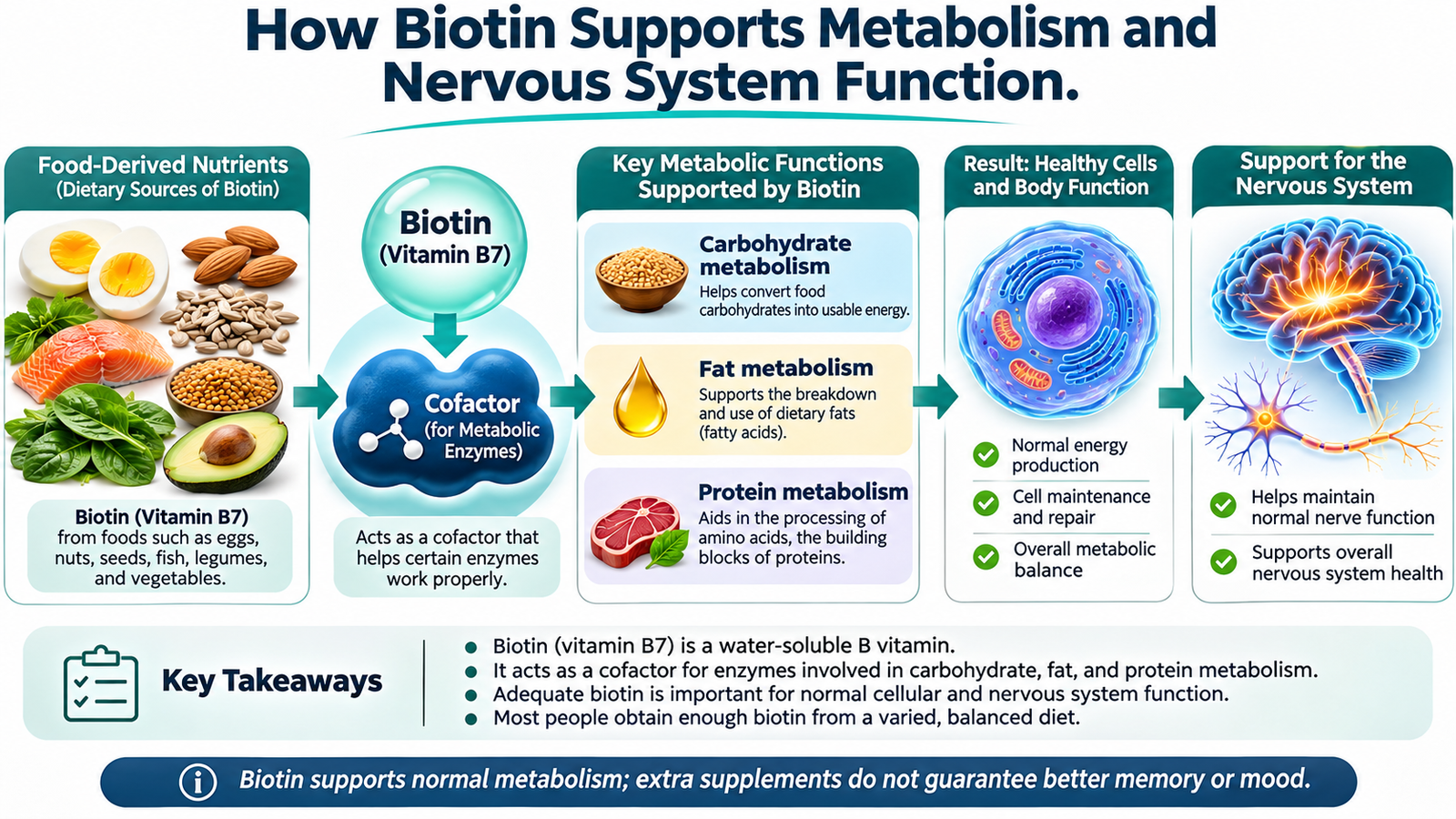
Biotin (vitamin B7) is a water-soluble vitamin that serves as a cofactor for carboxylase enzymes. These enzymes contribute to fatty-acid synthesis, amino-acid catabolism and gluconeogenesis. Adequate biotin is important for normal metabolic activity; this biochemical role should not be confused with evidence that extra biotin improves memory, attention or mood in a person whose intake is already sufficient. [1]
The US National Institutes of Health reports that overt biotin deficiency is unusual and severe deficiency has not been described in healthy people eating a normal mixed diet. In clinical practice, symptoms need to be evaluated together with nutrition, medications, medical history, and other plausible diagnoses. [1]
Nine possible biotin deficiency symptoms
1. Progressive hair thinning or alopecia
Thinning hair can be an established manifestation of significant biotin deficiency. In severe deficiency, loss may progress beyond the scalp. Nevertheless, most cases of hair shedding do not establish a biotin problem. Thyroid disorders, iron deficiency, androgenetic hair loss, telogen effluvium, medications and recent illness can also contribute. Evidence that biotin supplements improve hair growth in otherwise biotin-sufficient people is limited. [1]
2. Red, scaly skin rash
A characteristic deficiency-associated dermatitis may occur around the eyes, nose, mouth and other body openings. Its distribution can help clinicians formulate a differential diagnosis, but eczema, seborrheic dermatitis, irritation and infection are more common explanations in many settings. [1]
3. Brittle nails
Brittle or splitting nails have been reported with deficiency. Repeated wetting, chemical exposure, nail disorders and aging can create similar changes. A nail complaint alone should not be treated as proof of vitamin B7 deficiency. [1]
4. Conjunctivitis
Eye inflammation can accompany pronounced biotin deficiency, particularly in inherited biotin metabolism disorders. Pain, reduced vision or marked sensitivity to light requires prompt eye assessment rather than nutritional self-diagnosis. [1,2]
5. Fatigue and lethargy
Lethargy is described in clinically significant deficiency. It is nonspecific: inadequate sleep, anemia, thyroid disease, infection and other conditions can also produce fatigue. Biotin treatment should not be assumed to correct persistent tiredness without evidence of deficiency. [1]
6. Tingling or altered sensation
Paresthesias of the extremities have been reported in adults with biotin deficiency. Neuropathy may also arise from diabetes, vitamin B12 deficiency, nerve compression, medication effects or other causes. Persistent or worsening sensory symptoms merit evaluation. [1]
7. Mood or cognitive changes
Depressive symptoms, lethargy and hallucinations have been described in severe deficiency. These findings do not establish that ordinary anxiety, low mood or brain fog is caused by a lack of biotin. New mental-status changes require careful medical assessment. [1]
8. Hypotonia or muscle weakness
Low muscle tone is a recognized manifestation in infants with profound biotin-related metabolic disease. Adult weakness has a broad differential diagnosis and should be considered alongside neurological, metabolic and muscular causes. [1,2]
9. Seizures and other serious neurological manifestations
Untreated profound biotinidase deficiency can cause seizures, developmental problems and serious neurological injury. This is a rare inherited disorder, not the usual presentation of low dietary biotin in adults. Seizures, sudden weakness or acute confusion require urgent medical care. [2]
Evidence-strength guide: which signs are specific?
| Finding | Relationship to biotin deficiency | Interpretation |
|---|---|---|
| Hair thinning and periorificial scaly rash | Recognized manifestations | More informative together, particularly with risk factors; still not diagnostic |
| Conjunctivitis or brittle nails | Reported manifestations | Investigate other dermatological or ophthalmological causes |
| Lethargy, mood changes or tingling | Possible in pronounced deficiency | Highly nonspecific; assess common alternative causes |
| Seizures, hypotonia, developmental delay | Established in untreated profound inherited disorders | Urgent specialist assessment, especially in infants and children |
Evidence interpretation: The categories above describe clinical associations, not numerical diagnostic sensitivity or specificity. There is no validated home symptom score that can diagnose biotin deficiency. [1,2]
Nutritional deficiency versus biotinidase deficiency
These conditions should not be conflated. Acquired nutritional biotin deficiency is uncommon and may be associated with unusual dietary patterns or particular clinical circumstances. Biotinidase deficiency is an inherited condition in which biotin recycling is impaired. It can cause severe neurological and skin findings, often beginning in infancy, although later presentations are documented. Newborn screening and confirmatory enzyme or genetic testing are important in appropriate cases. Early medically supervised treatment helps prevent complications. [2]
| Feature | Acquired/nutritional deficiency | Inherited biotinidase deficiency |
|---|---|---|
| Mechanism | Inadequate availability or altered biotin status | Impaired recycling of biotin due to BTD-related enzyme deficiency |
| Typical context | Selected nutritional or clinical risk factors | Newborn screening finding, affected family history or characteristic clinical presentation |
| Evaluation | Clinical review and selective specialized investigations | Confirmatory biotinidase enzyme activity and sometimes molecular testing |
| Management | Address underlying cause with clinical guidance | Specialist-directed lifelong biotin treatment |
What increases the risk?
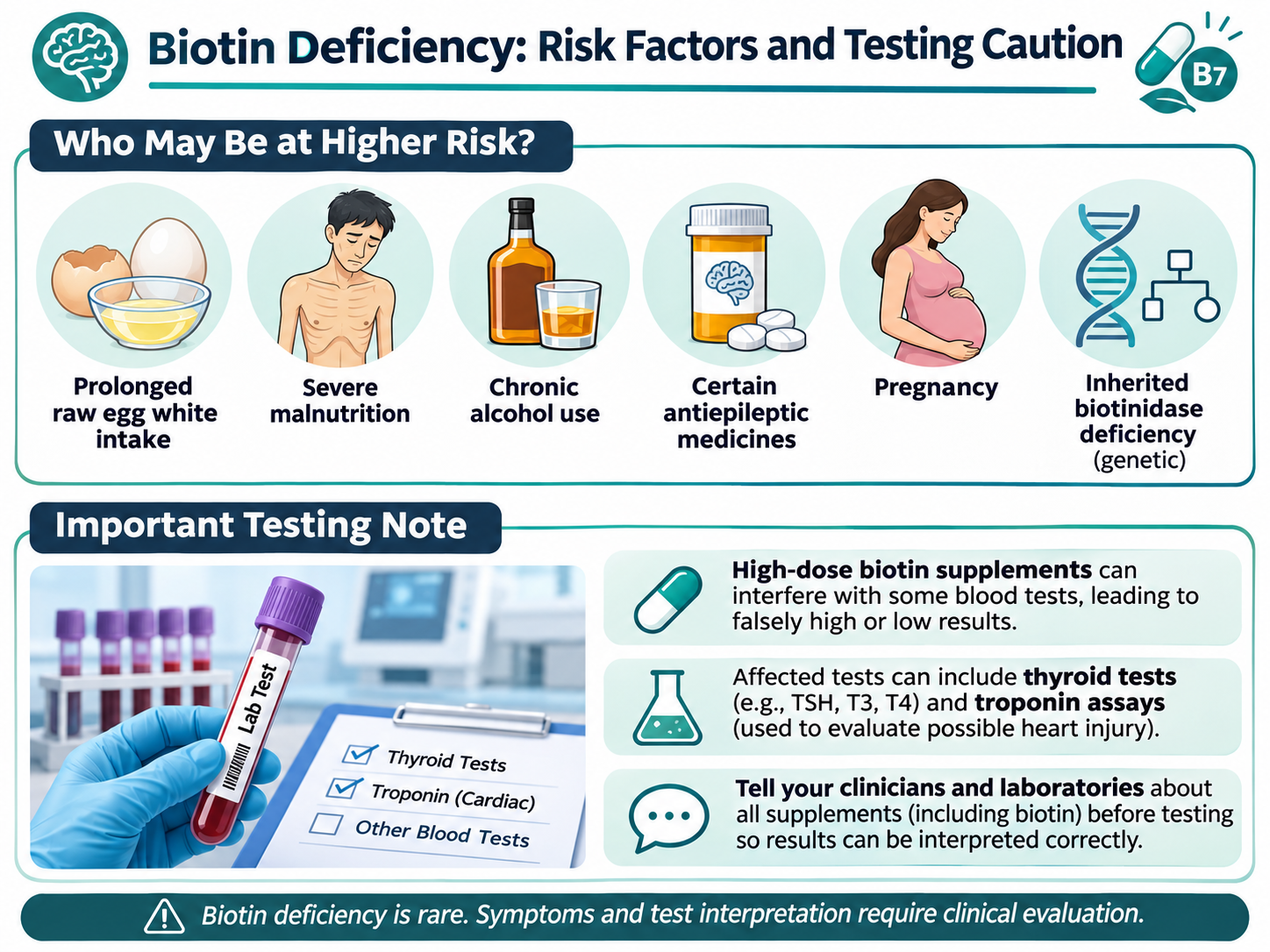
- Habitual consumption of substantial amounts of raw egg white; avidin binds biotin and reduces availability. Cooking denatures avidin.
- Certain prolonged antiepileptic drug exposures may affect biotin status; medication changes require medical supervision.
- Chronic alcohol use disorder and severe nutritional impairment can increase concern for inadequate status.
- Pregnancy and breastfeeding may alter biotin metabolism or requirements; routine symptoms are not proof of deficiency.
- Long-term parenteral nutrition without appropriate vitamin provision is a possible clinical risk.
- An inherited biotin metabolism disorder requires a separate diagnostic and management pathway.
Risk factors increase the reason to assess an individual; they do not confirm a diagnosis. [1,2]
Biotin-rich foods and practical dietary choices
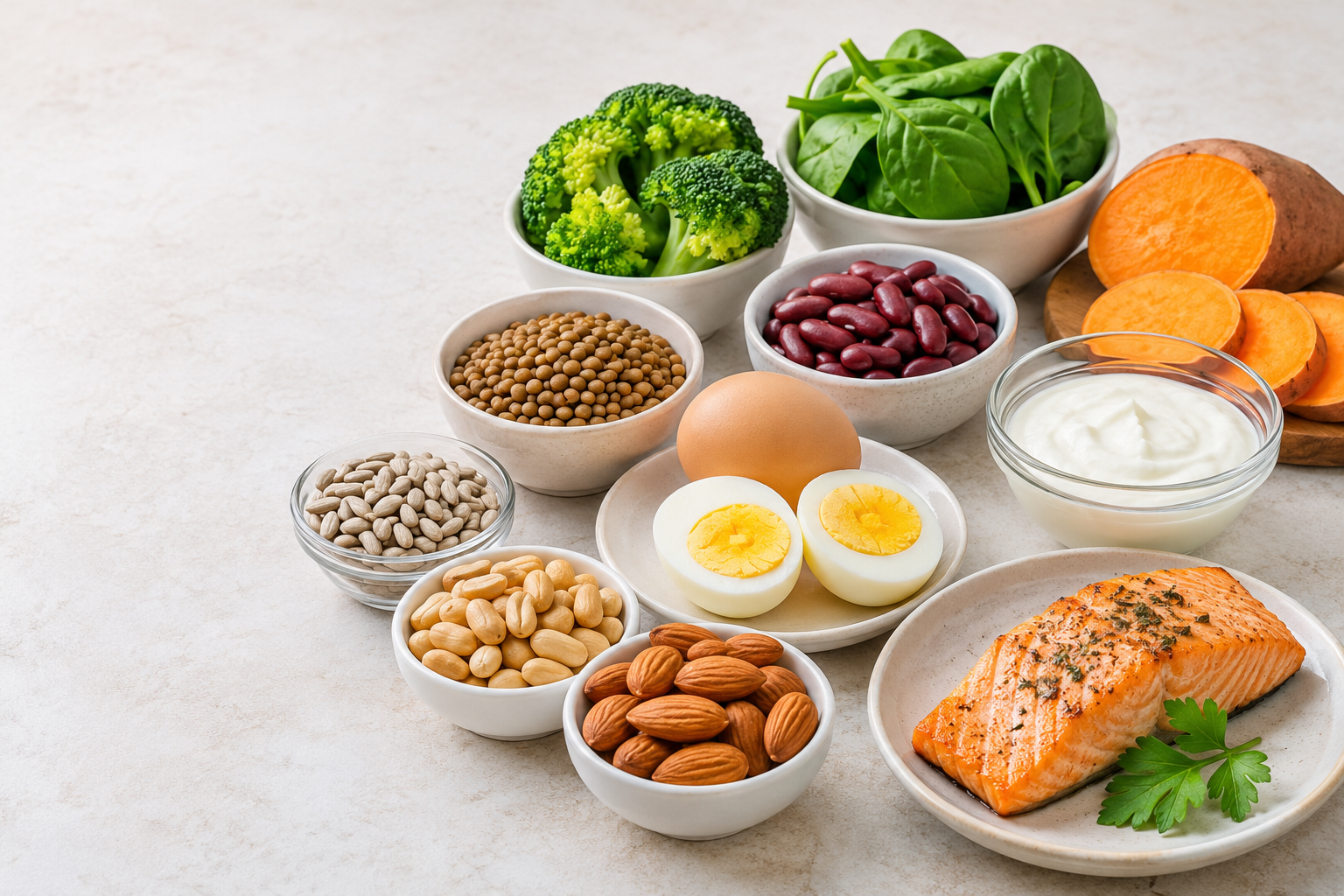
Dietary sources include cooked eggs, salmon, liver and other meats, sunflower seeds, nuts, sweet potatoes and selected vegetables. Biotin amounts vary considerably between foods and preparation methods. A varied diet can provide biotin alongside other nutrients relevant to hair, skin and nerve health. [1]
| Food group | Indian meal example | Other practical example |
|---|---|---|
| Cooked eggs | Fully cooked egg bhurji | Boiled or scrambled eggs |
| Legumes, nuts and seeds | Chana with roasted peanuts | Bean salad with sunflower seeds |
| Vegetables | Palak and sweet potato sabzi | Baked sweet potato and cooked spinach |
| Fish and meat where suitable | Cooked fish or chicken | Salmon or cooked meat |
For adults aged 19 years and older, the US adequate intake (AI) is 30 micrograms/day; for breastfeeding adults it is 35 micrograms/day. AI is a dietary reference intake and must not be confused with a therapeutic prescription. [1]
Can a blood test diagnose biotin deficiency?
No single routine biotin blood measurement reliably diagnoses every case of marginal deficiency. Clinicians consider history, physical findings and, when indicated, specialized biochemical measures. If an inherited disorder is suspected, biotinidase enzyme activity and sometimes genetic testing are used. Individual testing decisions depend on the clinical picture. [1,2]
Important safety issue: biotin can distort laboratory results
Biotin supplement warning: High-dose biotin can interfere with some immunoassays, leading to falsely elevated or falsely reduced laboratory results. Depending on the assay, this can affect thyroid testing and cardiac troponin testing. The US Food and Drug Administration has documented concern about potentially falsely low troponin results, which can complicate assessment for heart injury. Tell clinicians and laboratory personnel about all biotin-containing supplements, including hair/skin/nail products. Do not guess a universal washout period: the appropriate interval depends on dose, timing and the assay. Never delay emergency medical evaluation. [1,3]
Does taking biotin improve hair, skin or brain function?
Evidence does not support treating extra biotin as a general-purpose brain enhancer or a reliably effective hair-growth product for people without deficiency. Where a deficiency or inherited disorder is established, directed treatment can be important. The presence of biotin in a supplement does not establish that the supplement is needed, nor does a symptom improvement prove which ingredient or mechanism was responsible. [1,2]
A practical assessment pathway
| Situation | Reasonable next step |
|---|---|
| Isolated mild hair shedding or brittle nails | Review onset, nutritional adequacy, medications and other causes; arrange routine assessment if persistent |
| Rash plus marked hair loss or multiple symptoms | Seek clinical evaluation rather than starting large doses without diagnosis |
| Existing biotin supplementation before laboratory work | Disclose product, dose and last dose to the ordering clinician and laboratory |
| Infant with seizures, poor tone or abnormal newborn screening | Obtain urgent pediatric/metabolic assessment |
| Chest pain, seizures, sudden weakness or confusion | Seek emergency care immediately |
Where common online biotin advice can be misleading
Internet symptom lists sometimes group fatigue, forgetfulness, depression, hair loss, brittle nails and skin irritation as though the combination were sufficient to confirm vitamin B7 deficiency. In reality, each observation has a different diagnostic value. Hair shedding can arise from common dermatological conditions and physiological changes. Fatigue can reflect sleep disruption, anemia, metabolic disease or chronic illness. Mood and cognitive symptoms are especially nonspecific. The important issue is not whether a symptom has ever been reported in deficiency; it is whether the broader clinical picture supports that possibility. [1]
A useful evaluation therefore considers the symptom pattern, timing, associated conditions, dietary intake, medications, supplement exposure and a focused examination. This approach also avoids overlooking common conditions that require different treatment. Biotin deficiency symptoms should prompt proportionate investigation, not a predetermined supplement prescription.
Clinical patterns: what is more informative than one symptom?
A scaly rash around body openings accompanied by progressive alopecia may be more suggestive of a nutritional or metabolic problem than isolated brittle nails. In infants, seizures, hypotonia and developmental delay raise a different level of concern, particularly when biotinidase deficiency is possible. However, these patterns still overlap with other diseases. Clinical suspicion is not the same as confirmation, and urgent symptoms require timely treatment decisions rather than an online questionnaire. [1,2]
How much biotin do foods actually provide?
The US NIH Office of Dietary Supplements gives illustrative biotin values for selected foods: approximately 10 micrograms in a whole cooked egg, 5 micrograms in three ounces of canned pink salmon, 2.6 micrograms in a quarter cup of roasted sunflower seeds, 2.4 micrograms in half a cup of cooked sweet potato, and 1.5 micrograms in a quarter cup of roasted almonds. Exact values differ by food, processing and serving size. These examples demonstrate how ordinary meals contribute to intake; they do not constitute a deficiency-treatment plan. [1]
For most adults, the US adequate intake is 30 micrograms per day. During breastfeeding, it is 35 micrograms per day. These reference intakes are not equivalent to treatment recommendations for an inherited enzyme disorder. An adequate intake also differs from a Recommended Dietary Allowance: the available evidence has not been sufficient to establish an RDA for biotin. Readers in the US, UK, Canada and Australia should follow advice appropriate to their healthcare setting and individual needs.
Understanding biotin dose labels and supplement marketing
A supplement containing 5,000 micrograms provides 5 milligrams of biotin. That is numerically more than 160 times the US adult adequate intake of 30 micrograms. This comparison alone does not establish toxicity, but neither does it support a claim that the high dose is necessary. The NIH notes that evidence for improving hair, nails or skin in biotin-sufficient people is limited and often based on uncontrolled studies or individual reports. Nutritional sufficiency and a therapeutic dose are different questions. [1]
Some beauty supplements combine biotin with zinc, vitamin C, B vitamins and other ingredients. These combinations make it difficult to attribute a perceived change to biotin alone. Hair growth also takes place over months, so timing can create misleading impressions about causality. For people concerned about persistent shedding, evaluation of scalp health, thyroid function, iron status or other relevant factors may be more useful than escalating vitamin doses without a diagnosis.
Why certain biotin blood tests can be unreliable
There are two separate testing issues. First, tests designed to assess marginal biotin status have limitations; serum biotin concentrations do not reliably identify every marginal case. Second, taking large amounts of biotin can interfere with unrelated laboratory assays that use biotin-streptavidin chemistry. Depending on the assay, results may appear falsely elevated or falsely reduced. Thyroid-related assays and certain troponin tests are important examples. [1,3]
The FDA has highlighted the risk of falsely low cardiac troponin values with susceptible testing systems. This matters because troponin is used during assessment of possible heart injury. A person with chest pain should seek emergency care and report supplement use immediately. Do not delay assessment, and do not assume every laboratory uses the same testing technology or the same stopping interval. The clinician and laboratory should provide assay-specific instructions. [3]
A seven-day record is useful, but not a diagnosis
A brief food and symptom diary can make a consultation more efficient. Record when symptoms started, whether they changed after an illness, any associated rash or tingling, normal dietary patterns, and all medicines or supplements. For laboratory testing, include the supplement brand, biotin amount and date of the most recent dose. This record can support a clinical conversation, but it cannot demonstrate biochemical deficiency or prove that a supplement works.
Inherited biotinidase deficiency requires a different pathway
Biotinidase deficiency is a rare inherited disorder that impairs biotin recycling. It should not be equated with simply eating too few foods containing vitamin B7. GeneReviews, revised in February 2026, describes neurological, dermatological, hearing, visual and developmental complications that can arise when affected individuals remain untreated. Newborn screening and appropriate confirmatory testing are therefore important. Early specialist-led biotin treatment can prevent major complications in many affected children. [2]
This distinction has direct implications for online advice: an infant with seizures or delayed development should not be managed using an adult dietary checklist. Likewise, the therapeutic regimen used for a confirmed inherited disorder should not be generalized to healthy readers who want better hair growth.
A practical medical decision pathway
Routine review: Persistent hair thinning or brittle nails without emergency symptoms can be discussed in a scheduled appointment, with attention to nutrition, medications and dermatological causes. Timely evaluation: Hair changes accompanied by unusual rashes, progressive sensory symptoms or marked fatigue warrant a broader assessment. Urgent care: New seizures, severe confusion, sudden one-sided weakness or chest pain call for immediate medical care rather than supplementation.
A clinician may use targeted investigations based on the history and examination. There is no reason to assume all people need the same laboratory panel, and a normal or abnormal result should be interpreted with the test method and supplement history in mind.
What remains uncertain in the research?
Several important limitations deserve explicit mention. Biotin status indicators have practical constraints, evidence supporting high-dose supplementation for cosmetic concerns is weak, and the clinical relevance of marginal biotin changes during pregnancy is still being studied. Mechanistic findings about biotin-dependent enzymes do not demonstrate that extra biotin improves attention, memory or mood in people with adequate nutrition. Clearly describing this uncertainty is more helpful than presenting every plausible mechanism as a proven treatment. [1]
The most defensible conclusion is that biotin is essential, severe deficiency can produce recognizable manifestations, and most people obtain adequate amounts through varied diets. When symptoms arise, distinguishing deficiency from more common causes—and disclosing supplements before blood testing—are safer priorities than immediately starting a high-dose product.
Biotin deficiency symptoms: interpreting the clinical evidence
A search for biotin deficiency symptoms often begins with hair changes or fatigue. These symptoms are worth discussing with a healthcare professional when persistent, but they are not equivalent to a biotin deficiency diagnosis. The accompanying symptom pattern, medical risk factors and alternative explanations all matter.
Biotin deficiency hair loss is a recognized manifestation of clinically significant deficiency, yet most thinning hair is not caused by low biotin. Vitamin B7 deficiency symptoms can involve the skin, eyes, nails and, in severe cases, neurological function. The phrase biotin deficiency neurological symptoms refers to uncommon clinical findings that require careful medical evaluation, rather than a general explanation for everyday brain fog.
When investigating the causes of biotin deficiency, clinicians distinguish inadequate availability, selected medication and nutritional exposures, and rare inherited disorders of biotin recycling. These different mechanisms lead to different assessment and management decisions. Biotin deficiency symptoms should therefore be interpreted as possible clues rather than a self-diagnosis.
People Also Ask
What are the earliest signs of biotin deficiency?
Hair thinning and a characteristic rash are possible early clues, but no single first sign occurs in everyone. Clinical context determines whether deficiency merits investigation.
Can biotin deficiency cause hair loss?
Yes, significant deficiency can cause alopecia. Hair loss by itself is not a reliable indicator of low biotin. [1]
Can low biotin cause brain fog?
Severe deficiency may have neurological manifestations, but brain fog is not a specific diagnostic sign. Other explanations may be more likely. [1]
How do doctors confirm biotin deficiency?
Assessment may combine diet, medical history, clinical findings and selected specialized tests. Suspected biotinidase deficiency requires a different enzyme-based or genetic evaluation. [1,2]
Should I stop biotin before blood tests?
Tell your clinician and laboratory what you take and follow their assay-specific instructions. There is no universally appropriate stopping interval. [1,3]
Frequently asked questions
Is vitamin B7 the same as biotin?
Yes. Vitamin B7 and biotin refer to the same essential water-soluble vitamin.
Are biotin supplements necessary for everyone?
No. Most people eating a varied diet obtain sufficient biotin; a supplement is appropriate for specific indications rather than automatically for hair or fatigue. [1]
Can vegetarians obtain biotin from food?
Yes. Seeds, nuts, legumes and vegetables contribute biotin. Dietary variety remains important.
Is raw egg white linked with biotin deficiency?
Frequent ingestion of large amounts of raw egg white can interfere with biotin absorption because avidin binds biotin. Fully cooking egg white reduces this interaction. [1]
Is inherited biotinidase deficiency treatable?
Yes. Early diagnosis and appropriate lifelong biotin treatment can prevent many serious manifestations; specialist monitoring remains important. [2]
Related BBH reading
Free BBH Biotin Food & Symptom Tracker
The BBH seven-day worksheet helps record meals, symptoms, supplement products and questions to discuss with a healthcare professional. The worksheet is educational and does not provide a diagnostic score. Download the free Biotin Food & Symptom Tracker (PDF)
Research references
- [1] NIH Office of Dietary Supplements. Biotin — Health Professional Fact Sheet.
- [2] Wolf B. Biotinidase Deficiency. GeneReviews. Updated February 19, 2026.
- [3] US Food and Drug Administration. Biotin Interference with Troponin Lab Tests.
Medical safety and editorial disclosure
This article is for general education only and does not diagnose or treat deficiency. Symptoms are nonspecific. Emergency neurological or cardiac symptoms require immediate medical assessment. No individual medical testimonial, clinical examination or independent clinical review is claimed.
Bio and Brain Health Info (BBH) | Brain Health → Vitamins & Minerals | Evidence review updated November 2026.