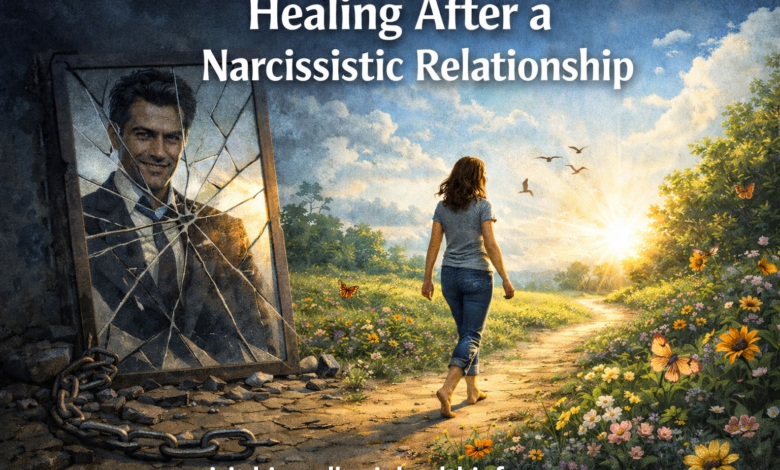
Healing after a narcissistic relationship is not only emotional recovery; it also includes clarity, nervous system repair, and rebuilding trust in love.
Healing after narcissistic relationship is confusing because the heart may still miss the person while the mind keeps asking, “Why did they do this?”
Thank you for reading this post, don't forget to subscribe!
👉 This blog is important because it does not give generic advice like “move on” or “forget them.” It explains the deeper recovery map behind narcissistic abuse recovery: emotional pain, unanswered questions, body reactions, broken trust, and the slow return of clarity.
If you are going through emotional healing after narcissistic abuse, your chest heaviness, poor sleep, numbness, message checking, or fear reactions are not weakness. They may be survival responses.
This blog also explains nervous system repair after abuse, so you understand why healing is not only mental but body-based.
Most importantly, it helps you rebuild trust in love after narcissistic relationship without becoming cold, blind, or ashamed. Missing them is not proof you should return; clarity is proof healing has started.
Healing After Narcissistic Relationship Starts With Confusion, Not Closure
Healing after narcissistic relationship rarely begins with peace. It often begins with confusion. One part of you may feel angry, another part may miss them, another part may feel guilty, and another part may keep asking why you did not see the truth earlier.
This is why narcissistic abuse recovery can feel very different from normal breakup healing.
You are not only grieving a relationship.
You may also be grieving trust, innocence, emotional safety, and the version of love you believed was real.
This confusion can bring fear, shame, loneliness, numbness, self-doubt, anger, and guilt together. One day you may feel strong; the next day you may feel pulled back into memories.
That does not mean healing is failing. It means your emotional system is trying to understand something that did not end with honesty, care, or clear closure.
The most important reminder is this:missing them is not proof you should return. Missing can be a sign of attachment, emotional memory, hope, or unfinished questions. It is not always a sign that the relationship was safe.
You may still miss someone who hurt you because the heart does not disconnect only by logic. The mind may understand that the relationship caused pain, but the emotional system may still remember the closeness, the promises, the good moments, the future you imagined, and the version of the person you hoped they would become. This is why emotional healing after narcissistic abuse can feel so confusing.
In many narcissistic relationships, love is mixed with uncertainty. There may have been affection, then distance; attention, then coldness; apology, then repetition.
This creates a painful emotional rhythm where the body starts waiting for the good moment to return.
You may not only miss the person.
You may miss the hope that one day they would finally understand your love properly.
This does not mean your pain is foolish. It means your attachment system is still trying to make sense of love that was mixed with emotional insecurity.
Missing Them Does Not Mean the Relationship Was Safe
Missing someone is an emotional experience, not a safety certificate. You can miss their voice, their presence, their attention, or the memories, and still know that returning may reopen the same wound.
Healing after narcissistic relationship begins when you stop judging yourself for missing them and start asking what the missing is really connected to.
Sometimes you miss the person.
Sometimes you miss the dream.
Sometimes you miss who you were before the relationship changed your peace.
This difference matters because clarity begins when you can separate attachment from truth.
Why Did They Do This When You Truly Loved Them?
One of the deepest questions after a narcissistic relationship is, “Why did they do this when I truly loved them?” This question can stay in the mind for weeks, months, or even years because it is not only about their behavior. It is about your broken understanding of love.
You may ask,
“What went wrong?
Where did it go wrong?
Why was my real love not valued?
Why did they not trust this love?
How did I not see that I was loving the wrong person?”
This is where narcissistic abuse recovery becomes painful. The person is not only grieving the loss of a partner. They are grieving the fact that their care, sacrifice, loyalty, patience, and honesty were not protected.
The mind keeps returning to the same question because the relationship may have ended without emotional truth.
But healing does not always come from receiving a perfect answer from the person who hurt you. Sometimes healing begins when you stop using their lack of emotional responsibility as proof that your love had no value. Their inability to protect your love does not make your love meaningless.
The Mind Wants Answers Because the Story Ended Without Truth
The mind searches for answers when a painful story ends without emotional clarity. If someone gave mixed signals, denied your reality, blamed you for their behavior, or made you doubt your own memory, your mind may keep trying to rebuild the missing pieces.
This is why emotional healing after narcissistic abuse often includes repeated thinking, emotional replay, and the need to understand every moment.
You may keep asking,
“Was it my fault?
Did I love too much?
Did I ignore signs?
Was anything real?”
These questions are not weakness.
They are the mind’s attempt to restore order after confusion. But there is a point where searching for their reason keeps you tied to their emotional world.
👉 A healthier question slowly becomes: “What do I need to understand now so I can protect my peace?” This shift does not erase pain, but it moves your energy from their behavior back to your recovery.
You Were Not Foolish for Loving Deeply
You were not foolish for loving deeply. You were human. The mistake was not that you cared, hoped, forgave, or tried. The wound came because your love was placed in a relationship where emotional responsibility, honesty, consistency, or empathy may have been missing.
This difference is important for healing after narcissistic relationship because shame can make you attack yourself for having loved.
Real love requires care from both sides. If one person gives loyalty and the other gives confusion, the loyal person often starts blaming themselves.
They think, “Maybe I should have loved differently.” But healthy love does not require you to lose your dignity to prove devotion.
👉 Your love was not low. Your love was not weak. Your love was not the problem.
The problem was that the relationship did not hold your love with the respect and safety it deserved. This is where clarity begins.
Some endings are painful, but they can still become protection. This does not mean your pain should be dismissed with careless lines like “everything happens for a reason.”
Pain deserves respect. Grief deserves time. But sometimes, when a relationship keeps making you smaller, more anxious, more doubtful, and less connected to yourself, the ending may protect you from deeper emotional damage.
Healing after narcissistic relationship becomes more powerful when you realize the relationship may have ended before it broke the part of you that still knows how to love.
It may have ended before your nervous system became more exhausted, before your self-trust became weaker, or before your future became more limited by emotional chaos.
This is not about hating the person. It is about seeing the truth clearly. If love repeatedly makes you question your worth, silence your needs, fear honesty, or abandon your peace, then losing that relationship may become the beginning of finding yourself again.
Nervous System Repair, Body Symptoms, and Trust Recovery
Narcissistic Abuse Recovery Is Also Body Recovery
Narcissistic abuse recovery is not only about changing thoughts. It is also about helping the body feel safe again. After emotional instability, criticism, manipulation, silence, blame, or repeated confusion, the body may continue to react even when the relationship is already over.
This is why healing after narcissistic relationship can include chest heaviness, stomach tightness, low energy, overthinking, poor sleep, fear when the phone rings, checking messages again and again, and emotional numbness.
These reactions can feel embarrassing to the reader, but they are not signs of weakness. They are often signs that the body is still carrying emotional threat, uncertainty, and unfinished stress.
The mind may say, “It is over now,” but the nervous system may still feel alert because it learned to expect conflict, rejection, sudden mood shifts, or emotional punishment.
👉 This is why emotional healing after narcissistic abuse needs patience. The reader is not only trying to forget a person. They are trying to teach the body that peace is safe again.
Your Reactions Are Survival Responses, Not Weakness
Your reactions are survival responses, not weakness. If you feel anxious when a message appears, if your stomach tightens when you remember a conversation, or if your sleep feels broken after the relationship ends, it does not mean you are failing. It may mean your body is still trying to protect you from emotional danger it once learned to expect.
In a narcissistic relationship, the nervous system may become trained to scan for changes in tone, silence, anger, blame, or withdrawal. You may have spent a long time trying to predict what would happen next, avoid conflict, explain yourself, prove your love, or calm the situation before it became worse.
Over time, this can make the body feel responsible for another person’s mood.
Nervous system repair after abuse begins when the reader stops attacking these reactions and starts understanding them.
The goal is not to become emotionless. The goal is to help the body slowly learn that it does not need to stay on guard all the time.
Why Your Body Still Feels Unsafe After the Relationship Ends
The relationship may end physically before the body feels free emotionally. This is why some people feel confused when they still feel fear, heaviness, or alertness after leaving.
The body does not heal on the same timeline as a decision. It needs repetition, calm routines, distance from emotional triggers, and safe experiences that prove the danger is not continuing.
👉Healing after narcissistic relationship becomes easier when you stop asking, “Why am I still reacting?” and start saying, “My body is learning safety again.”
Nervous System Repair After Abuse Takes Time
Nervous system repair after abuse takes time because emotional stress affects how the body responds to safety, connection, and uncertainty.
Positive thinking alone may not be enough because the body may still be living from old alarm patterns. You may tell yourself, “I should be okay now,” but your body may still tighten when you remember the past or feel uncertain about the future.
This is why healing needs more than advice. It needs regulation, rest, consistent routines, boundaries, and safe relationships. The nervous system heals through repeated signals of safety, not through pressure.
Simple practices like slow breathing, walking, journaling, reducing contact with triggers, sleeping at regular times, and speaking to safe people can help the body slowly return to steadiness.
Emotional healing after narcissistic abuse becomes deeper when the reader understands that healing is not a race.
👉If the body took time to learn fear, it will also need time to relearn calm. Recovery is not weakness. Recovery is rebuilding.
Phone Fear, Message Checking, and Poor Sleep Are Signals
Phone fear, repeated message checking, and poor sleep are signals that the nervous system may still be waiting for emotional impact. A sound, notification, or silence can bring the body back into old patterns.
The reader may know logically that they do not want the relationship back, but the body may still respond as if something important, painful, or unpredictable is about to happen.
Checking messages again and again is often not only curiosity. It can be an attempt to reduce uncertainty. Poor sleep may happen because the mind keeps replaying conversations, looking for answers, or preparing for imaginary conflict. This is why narcissistic abuse recovery must include body awareness and emotional regulation.
Instead of judging these signals, the reader can use them as information. The question becomes: “What does my body need right now to feel safer?” This small shift moves healing from shame into care.
Healing Means Safety, Not Emotional Perfection
Healing does not mean you never miss them, never cry, never feel angry, and never get triggered. Healing means your body slowly starts feeling safer than before.
It means the past still exists, but it does not control every reaction. It means confusion becomes smaller, clarity becomes stronger, and your emotional energy slowly returns to your own life.
Many people pressure themselves to recover quickly because they think healing should look clean. But healing after narcissistic relationship is often non-linear. Some days may feel peaceful, and some days may bring memories, dreams, or emotional waves. This does not mean you are going backward.
The goal is not emotional perfection. The goal is safety, stability, and self-respect. If you are reacting less intensely, resting a little better, checking less often, or understanding yourself with less shame, healing has already begun.
Trust in Love After Narcissistic Relationship Can Return Slowly
Trust in love after narcissistic relationship can feel broken because the wound is not only about one person. It can change how you see love, closeness, honesty, and other people.
You may think, “If someone close could hurt me like this, how can I trust anyone again?” This fear is understandable. When love becomes connected with confusion, betrayal, or emotional instability, the heart may start protecting itself by closing down.
But the goal of healing is not to become cold. The goal is to become clear. Unsafe love was not the final definition of love. One painful relationship does not mean all love is dangerous. It means your system now needs wiser trust, stronger boundaries, and slower observation before giving full emotional access.
This is where emotional healing after narcissistic abuse becomes a growth process.
You are not learning to stop loving.
You are learning to protect love from places where honesty, consistency, care, and responsibility are missing.
Do Not Trust Blindly, But Do Not Close Your Heart Forever
After narcissistic relationship pain, blind trust can feel dangerous, but permanent emotional closure can also hurt your future. Wise trust is the middle path.
It does not rush into attachment, and it does not reject everyone because one relationship was unsafe. Wise trust observes actions, patterns, consistency, accountability, and respect over time.
Trust should not be built only on words, promises, apologies, intensity, or emotional chemistry.
It should be built on repeated behavior.
Does the person respect boundaries?
Do they take responsibility?
Do they make you feel safe to speak honestly?
Do their actions match their words?
Do you feel more peaceful or more confused around them?
Trust in love after narcissistic relationship returns slowly when you learn to trust evidence, not fantasy. Real healing makes you clear, not cold. It helps you keep your heart open while protecting your dignity, peace, and nervous system.
Awareness Helps You Return to Yourself After Narcissistic Abuse
Awareness helps you return to yourself after narcissistic abuse because attachment can keep pulling the mind toward the person, while healing asks you to come back to your own safety.
After a painful relationship, the mind may keep remembering the good moments, the promises, the emotional highs, and the hope that things could have been different.
This can make healing after narcissistic relationship feel like an inner fight between what you know and what you still feel.
Awareness does not force you to hate them. It helps you separate love from attachment, memory from reality, and pain from identity.
Attachment may ask, “How do I get them back?”
Awareness asks, “How do I return to myself?”
This is important because emotional healing after narcissistic abuse is not only about understanding the other person. It is also about understanding what happened inside you.
When you stop abandoning yourself to decode their behavior, clarity begins to return. You slowly stop asking only, “Why did they do this?” and begin asking, “What part of me needs protection, peace, and care now?”
Love, Attachment, and Reality Are Not Always the Same
Love, attachment, and reality are not always the same. You can love someone, miss someone, and still accept that the relationship was not emotionally safe. This is one of the hardest truths in narcissistic abuse recovery because the heart often remembers the bond before it remembers the damage.
Missing them does not mean you should return. It may only mean your attachment system is still adjusting to life without the emotional pattern it became used to.
Sometimes the mind misses the person.
Sometimes the body misses the familiar rhythm.
Sometimes the heart misses the future it imagined.
But healing begins when you stop treating missing as proof and start treating it as information.
This is where clarity becomes stronger than confusion. You can say, “I miss them, but I also remember what this relationship did to my peace.” That sentence creates space between emotion and action.
Stop Using Their Behavior as Proof Your Love Was Not Valuable
One painful part of healing after narcissistic relationship is the belief that your love was not enough.
You may think,
“If my love was real, why did they hurt me?
If I cared so much, why did they not value it?”
These questions can become heavy because they turn someone else’s emotional immaturity into self-blame.
Their behavior is not the measurement of your love’s value. If someone could not handle your care with honesty, empathy, and responsibility, that does not mean your love was weak. It means the relationship did not have the emotional safety needed to hold that love properly.
This matters deeply for trust in love after narcissistic relationship.
You do not need to become cold to protect yourself.
You need to become clearer.
Your love can remain valuable while your boundaries become stronger.
Your softness can remain alive while your discernment becomes wiser.
A Full Recovery Map for Healing After Narcissistic Relationship
A full recovery map for healing after narcissistic relationship must include the emotions, the mind, the body, trust, and growth.
If recovery focuses only on “move on,” the reader may feel ashamed when they still miss the person or still react physically.
But narcissistic abuse recovery is layered. It needs understanding, safety, and direction.
Emotional Recovery
Emotional recovery begins by allowing mixed feelings to exist without shame. Fear, anger, numbness, guilt, loneliness, confusion, and missing the person can appear together.
This does not mean you are weak. It means your emotional system is processing a painful bond.
Mind Recovery
Mind recovery begins when the question “Why did they do this?” no longer controls your whole day. You may never receive a perfect answer from them, but you can still receive clarity from yourself.
The goal is not obsession. The goal is understanding.
Body Recovery
Body recovery means accepting that nervous system repair after abuse is part of healing. Chest heaviness, stomach tightness, poor sleep, phone fear, overthinking, and emotional numbness are not personal failures.
They are signals that your body needs safety, regulation, and time.
Trust Recovery
Trust recovery means learning to trust love slowly again. Trust in love after narcissistic relationship does not return through blind hope.
It returns through wise trust, healthy boundaries, consistent actions, emotional honesty, and people who respect your peace.
Growth Recovery
Growth recovery begins when you understand that some endings are protection before deeper damage. This does not erase the pain, but it gives the pain direction.
The relationship may have ended before it broke the part of you that still knows how to love, grow, and live with dignity.
Final Clarity: Missing Them Is Not Proof You Should Return
The final clarity in healing after narcissistic relationship is simple but powerful: missing them is not proof you should return. Missing someone can come from attachment, memory, grief, habit, hope, or the body’s need for familiar connection. It does not automatically mean the relationship was safe, honest, or healthy for your future.
Your reactions are survival responses. If you still feel emotional waves, body tension, sadness, anger, or confusion, it does not mean you are broken.
It means your system is slowly learning life after emotional instability.
Healing does not ask you to become perfect.
It asks you to become more honest with yourself.
You can miss them and still choose peace. You can feel pain and still protect your future. You can love deeply and still accept that not every relationship deserves access to your life again.
Healing begins when clarity becomes stronger than confusion, and when you finally understand that returning to yourself is more important than returning to the person who made you lose yourself.
1. Why is healing after narcissistic relationship so difficult?
Healing feels difficult because the heart may still miss the person, the mind wants answers, and the body may still feel unsafe. Recovery is not only emotional; it also includes nervous system repair after abuse.
2. Why do I still miss someone who hurt me?
You may miss the attachment, memories, hope, or familiar emotional pattern. Missing them is not proof you should return; it may only mean your emotional system is still healing.
3. What helps narcissistic abuse recovery?
Narcissistic abuse recovery needs clarity, distance from harmful patterns, emotional support, boundaries, and body-based calming. Healing begins when you stop blaming yourself and start rebuilding safety.
4. Can emotional abuse affect the body?
Yes. Emotional abuse can affect sleep, energy, focus, and body tension. This is why emotional healing after narcissistic abuse should include rest, regulation, and nervous system safety.
5. Can I trust love again after a narcissistic relationship?
Yes, but slowly. Trust in love after narcissistic relationship returns through wise trust, consistent actions, healthy boundaries, and emotional safety over time.
FAQ
1. What is the first step in healing after narcissistic relationship?
The first step is clarity. Understand that your reactions are survival responses, not weakness.
2. Is missing them a sign I should go back?
No. Missing them may come from attachment, habit, grief, or unfinished questions. It does not prove the relationship was safe.
3. Why do I keep asking, “Why did they do this?”
Because your mind is trying to understand why your love, trust, and loyalty were not protected. Healing begins when clarity becomes stronger than this question.
4. How long does narcissistic abuse recovery take?
There is no fixed timeline. Healing depends on emotional safety, support, distance, nervous system repair, and how deeply the relationship affected you.
5. What does real healing look like?
Real healing looks like less self-blame, better boundaries, calmer body reactions, clearer thinking, and slowly rebuilding trust in love.