Is There Treatment for Narcissism? Therapy and Recovery
Why Narcissism Is Difficult to Treat and What Real Change Requires

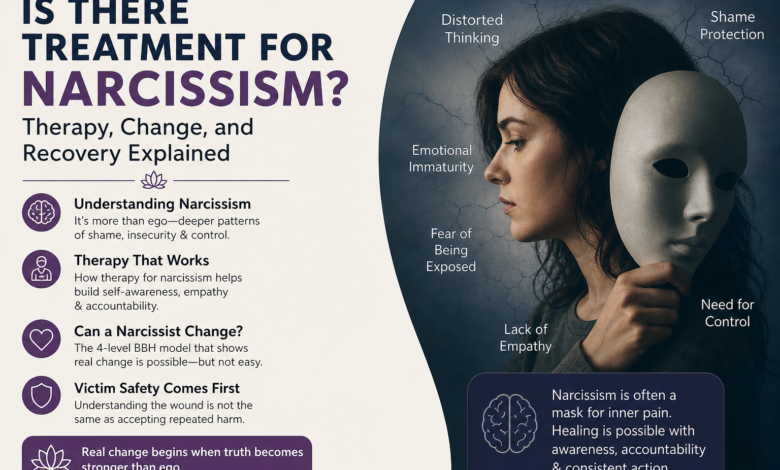
Many people search for treatment for narcissism because they want one clear answer: can this person change, or should I stop hoping? But narcissism is not only arrogance, ego, or confidence gone wrong.
Thank you for reading this post, don't forget to subscribe!👉This blog explains what many articles miss: narcissism often hides shame, insecurity, emotional immaturity, distorted thinking, jealousy, and a deep fear of losing control.
That is why the question can narcissism be treated needs a deeper answer than “therapy helps.” Real therapy for narcissism must work on emotional processing, accountability, shame tolerance, empathy, and behavior repair.
This article also explains narcissistic personality disorder treatment in a safe, balanced way while keeping victim safety first.
👉 If you wonder can a narcissist change, this blog will help you understand one important truth: change is possible only when readiness, responsibility, and consistent action become stronger than ego protection.
Is There Treatment for Narcissism? Therapy, Change, and Recovery Explained
Is There Treatment for Narcissism?
Yes, there can be treatment for narcissism, but the answer must be explained carefully. Narcissistic patterns do not usually change only because someone receives advice, feels guilty for one day, or promises to behave better.
Real change begins when a person becomes willing to examine their own thinking, emotional reactions, control patterns, and the harm their behavior may cause. Without that readiness, treatment may remain only a word, not a transformation.
Professional sources generally describe psychotherapy, also called talk therapy, as the main treatment approach for narcissistic personality disorder.
👉Medication is not considered a direct cure for narcissism, though it may be used when a person also has anxiety, depression, or another mental health condition.
The Short Answer: Treatment Is Possible, But Not Simple
The short answer is this: can narcissism be treated? In some cases, yes. But it is rarely simple, fast, or surface-level. Narcissistic traits may improve when a person develops self-awareness, emotional maturity, empathy, accountability, and the ability to tolerate shame without attacking others.
This means treatment is not only about reducing ego; it is about changing the inner emotional system that protects ego.
A person may attend sessions and still avoid real responsibility. They may learn therapy language and still blame others. They may apologize but continue the same behavior.
That is why the better question is not only “are they in therapy?”
👉The better question is: are they becoming more honest, responsible, regulated, and safe in their behavior?
Read Also: DSM-5 Criteria for Narcissistic Personality Disorder: Symptoms, Gaslighting, and Healing Awareness
Why Readiness Matters Before Therapy Begins
Readiness matters because many people with strong narcissistic patterns do not first see themselves as the problem.
They may believe others are too sensitive, disrespectful, disloyal, jealous, weak, or unfair. If the person enters treatment only to prove they are right, win sympathy, or blame someone else more professionally, deep change may not happen.
This is why therapy for narcissism needs more than attendance. It needs willingness.
The person must become ready to ask difficult questions:
Why do I feel attacked when someone gives feedback?
Why do I need control when I feel insecure?
Why do I turn someone else’s pain into my defense?
Treatment begins when ego protection becomes weaker than the desire to face truth.
BBH Insight: Treatment Starts Before the Therapy Room
Treatment does not truly begin only when someone books an appointment. It begins when the person becomes willing to see their own pattern.
Therapy can guide the process, but readiness opens the door. Without readiness, even good therapy can become another stage where the person explains, defends, performs, or blames instead of changing.
Narcissism Is Not Only Arrogance or Ego
Many people think narcissism means arrogance, ego, or acting superior. That is partly true on the surface, but it is not the full picture.
A narcissistic person may appear proud, confident, controlling, or emotionally powerful from outside. Inside, however, the pattern may include shame, insecurity, fear, jealousy, emotional immaturity, and a fragile sense of self.
This is one reason treatment for narcissism is difficult. The visible behavior may be arrogance, but the hidden engine may be shame protection. The person may not know how to process feeling ordinary, wrong, rejected, ignored, criticized, or emotionally exposed.
Instead of feeling those emotions directly, they may use blame, control, silent treatment, superiority, manipulation, or image-building to escape inner discomfort.
Read Also: narcissism
What People Often Misunderstand About Narcissism
The biggest misunderstanding is that narcissism is only “too much self-love.” In reality, many narcissistic patterns are not built from healthy self-love at all.
Healthy self-love allows humility, empathy, apology, and respect for others. Narcissistic ego often cannot tolerate those things because it feels threatened by emotional truth.
A person with narcissistic patterns may not simply enjoy themselves;
they may need to feel above others to avoid feeling small inside.
They may not only want respect; they may demand control.
They may not only dislike criticism; they may experience feedback as humiliation.
This is why can a narcissist change depends on whether the person can face what their ego has been protecting.
The Deeper Pattern: Shame, Insecurity, and Emotional Immaturity
Under narcissistic behavior, there may be a deep inability to process shame in a healthy way. Shame says, “Something is wrong with me.” A
mature person can feel discomfort, reflect, apologize, and grow. But a narcissistic pattern may convert shame into anger, blame, superiority, denial, or emotional punishment. This protects the person from inner collapse, but it creates harm for others.
This is why treatment must work on emotional processing, not only behavior. If the person only learns to act polite but still cannot tolerate shame, jealousy, feedback, or emotional vulnerability, the pattern may return under pressure.
👉Real therapy for narcissism must help the person stay present with uncomfortable truth without escaping into ego defense.
BBH Insight: The Ego Protects the False Self
A strong narcissistic pattern often protects an image, not the real self. The person may defend how they want to be seen instead of facing what they are doing.
This is where awareness becomes important. Without awareness, the ego turns comparison into jealousy, jealousy into anger, and anger into control.
Read Also: understanding-narcissism
Narcissistic Traits vs Narcissistic Personality Disorder
It is important to separate narcissistic traits from narcissistic personality disorder. Many people can show narcissistic behavior at times.
A person may become defensive, attention-seeking, controlling, or self-centered during stress, insecurity, competition, rejection, or emotional pain. That does not automatically mean they have narcissistic personality disorder.
Narcissistic personality disorder treatment applies to a clinical condition that should be assessed by a qualified mental health professional.
A blog can educate, but it cannot diagnose a person. This distinction protects readers from labeling everyone as a narcissist and also protects victims from minimizing repeated harmful behavior.
👉Both things matter: avoid careless diagnosis, but do not ignore real patterns of control, manipulation, blame shifting, and emotional harm.
Narcissistic Traits Can Exist Without a Disorder
Narcissistic traits can appear in relationships, parenting, workplaces, friendships, social media, and even spiritual groups.
Someone may demand attention, avoid responsibility, seek praise, become jealous, or act superior in certain situations. These traits may still cause pain even when the person does not meet the criteria for a personality disorder.
This matters because many readers are not asking about a diagnosis. They are asking about behavior that hurts them. They want to know why someone controls, blames, ignores, manipulates, or makes everything about themselves.
👉In that case, the practical question becomes: is this person willing to see the pattern and change it? If not, the label matters less than the emotional reality.
Read Also: narcissistic-parenting-traits-how-do-i-know-if-i-am-a-narcissist
Narcissistic Personality Disorder Needs Professional Diagnosis
Narcissistic personality disorder is more than occasional ego or selfishness. It is a deeper and more persistent pattern that can affect relationships, work, self-image, emotional regulation, and empathy.
Medical sources describe treatment for narcissistic personality disorder as usually involving psychotherapy with a mental health professional.
👉Cleveland Clinic also lists therapy approaches that may be used, including CBT, DBT, metacognitive therapy, group therapy, and couples or family therapy.
This is why narcissistic personality disorder treatment should not be reduced to simple advice like “just be humble” or “just stop being toxic.” If the pattern is deep, treatment may require long-term emotional work, structured therapy, and consistent accountability.
Educational Safety Note
This article is for education only. It cannot diagnose narcissistic personality disorder and cannot replace care from a licensed mental health professional.
If there is emotional abuse, intimidation, threats, coercive control, or fear for safety, the first priority is protection and support, not trying to fix the other person.
The Real Question Is Readiness
So, can narcissism be treated? The best answer is: treatment may help when the person is genuinely ready to face truth. But if a person only wants to protect their image, avoid consequences, or prove others wrong, therapy may not become real change.
The difference is not only treatment access.
The difference is readiness, honesty, emotional responsibility, and behavior repair.
This is the foundation of the BBH view: narcissism is not only arrogance. It is often distorted thinking, shame protection, emotional immaturity, and ego defense.
That is why treatment for narcissism must go deeper than behavior correction. It must reach the emotional process behind the behavior while keeping one boundary clear: understanding the wound does not mean accepting repeated harm.
Read Also: narcissistic-relationship
Why Narcissism Is Difficult to Treat
Narcissism is difficult to treat because the problem is not only behavior. The deeper issue is often the person’s relationship with shame, truth, emotional discomfort, and responsibility.
A person with strong narcissistic patterns may not simply say hurtful things or act superior. They may have an inner system that quickly protects them from feeling wrong, exposed, ordinary, rejected, or emotionally weak.
This is why treatment for narcissism must go deeper than “be nicer” or “listen more.”
The person must learn to notice how their mind defends itself. They must see how quickly they blame, deny, attack, control, withdraw, or present themselves as the victim when accountability appears. Without this inner seeing, change stays on the surface.
The Ego Protects Image Before Truth
A narcissistic pattern often protects image before truth. The person may care more about how they look than what actually happened.
They may want to appear kind, powerful, wise, spiritual, successful, innocent, or misunderstood. But when someone close to them questions their behavior, their ego may treat that truth as an attack.
This is one reason therapy for narcissism can become difficult.
Therapy asks the person to look behind the image. It asks:
What did you do?
How did it affect another person?
What feeling were you avoiding?
What responsibility belongs to you?
For a person deeply attached to image, these questions can feel threatening because they disturb the false self.
Shame Can Feel Like Attack
For many people with narcissistic patterns, shame does not feel like a normal uncomfortable emotion. It can feel like danger.
When shame appears, the person may quickly convert it into anger, superiority, blame, or emotional punishment.
👉Instead of saying, “I feel exposed,” they may say, “You are disrespecting me.” Instead of saying, “I hurt you,” they may say, “You are too sensitive.”
This matters because can narcissism be treated depends heavily on shame tolerance.
If the person cannot tolerate shame, they cannot stay present long enough to learn from feedback.
- Every correction becomes humiliation.
- Every boundary becomes rejection.
- Every honest conversation becomes a battle to protect ego.
Blame Shifting Blocks Real Change
Blame shifting is one of the biggest blocks in narcissistic personality disorder treatment and in any healing work around narcissistic traits. The person may not deny everything directly.
Sometimes they accept a small part but quickly move attention toward what the other person did wrong. This creates confusion because the conversation moves away from the original harm.
For example, someone may say, “I shouted because you made me angry,” or “I ignored you because you were acting needy.”
👉In this pattern, the person’s behavior is always explained through someone else’s mistake. Real change begins only when the person can say, “Even if I felt hurt, my reaction was still my responsibility.”
Read Also: empath-relationship-with-narcissist-self-loss
BBH Insight: Accountability Is Not Humiliation
A healthy person can accept responsibility without collapsing into shame. But a narcissistic ego may experience accountability as humiliation.
This is why treatment must teach the difference between being wrong and being worthless.
A person can admit harm without destroying their identity. That emotional maturity is essential for real change.
Treatment Must Work on Thinking, Not Only Behavior
Many people ask, can a narcissist change, but the answer depends on what kind of change we are talking about. Surface behavior can change for a short time.
A person may speak softly, apologize, attend therapy, or promise improvement. But if their thinking pattern stays the same, the old behavior often returns when they feel criticized, jealous, ignored, or out of control.
Real treatment must work on the internal meaning system.
- What does the person believe when someone disagrees with them?
- What do they feel when another person receives attention?
- What happens inside them when they are not praised?
- What story do they create when someone sets a boundary?
These inner interpretations shape the outer behavior.
Distorted Emotional Processing Keeps the Pattern Alive
Narcissistic behavior often comes from distorted emotional processing. The person may not respond to reality as it is.
They respond to the meaning their ego gives to reality.
- Someone else’s confidence may feel like disrespect.
- Someone else’s happiness may feel like showing off.
- Someone else’s boundary may feel like betrayal.
- Someone else’s success may feel like personal defeat.
This is why treatment for narcissism must help the person slow down and examine interpretation. The goal is not only to stop one behavior.
👉The goal is to help the person ask, “Is this person really attacking me, or is my shame being triggered?” Without this self-questioning, the person may keep reacting to old wounds instead of present truth.
Read Also: do-narcissists-know-they-are-narcissists
Why Surface-Level Good Behavior Is Not Enough
Surface-level good behavior is not enough because narcissism can hide behind performance. A person may act kind in public but become controlling in private.
They may speak about healing, spirituality, family values, or loyalty, but still punish people emotionally when they do not get their way.
They may show niceness to outsiders while the person closest to them feels scared, confused, or unsafe.
This is a major reason therapy for narcissism must examine private behavior, not only public image.
Real change is not proved by good words in front of others. It is proved by how the person behaves when they are challenged, disappointed, corrected, or not admired.
BBH Insight: The Same Behavior, Two Different Rules
A narcissistic pattern often creates double standards.
When another person enjoys success, it may be called ego.
When the narcissistic person does the same thing, it becomes pride.
When another person speaks confidently, it becomes showing off.
When they speak loudly, it becomes self-expression.
This double standard reveals how ego changes the meaning of behavior to protect itself.
Narcissism as a Power Mask in Human Circles
Narcissism often looks like strength from the outside, but many times it is weakness wearing the costume of power. A person who feels unseen, disrespected, powerless, rejected, or emotionally empty in one part of life may try to feel powerful in another part of life.
This does not excuse their behavior, but it helps explain why narcissistic patterns appear across different human circles.
- A person who feels small in society may try to dominate at home.
- A person who feels unloved at home may try to become superior in the workplace.
- A person who feels ordinary inside may create a perfect image on social media.
- A person who feels spiritually insecure may use spiritual language to feel above others.
This is why can narcissism be treated requires more than behavior control. It requires facing the hidden weakness behind the power mask.
Read Also: empathy-and-narcissism-psychological-differences
Relationships, Parenting, Workplace, Friendship, and Social Media
In relationships, narcissistic behavior may appear as control, silent treatment, blame shifting, jealousy, emotional manipulation, or making the partner feel responsible for every emotional reaction.
The partner may slowly become careful, afraid, and confused because peace depends on the narcissistic person’s mood.
In parenting, the pattern may appear when a parent demands respect but does not listen to the child’s emotions.
The child may be expected to obey, admire, or protect the parent’s image instead of being emotionally understood. In the workplace, the pattern may appear as a boss or client who wants credit, control, and authority but cannot accept mistakes.
👉In friendship, one person may always need attention but avoid responsibility. On social media, the pattern may appear as fake image-building and intolerance of criticism.
Spiritual Ego: When Wisdom Becomes Superiority
Narcissism can also appear in spiritual or healing spaces. This is sensitive, but important. Some people speak about wisdom, energy, consciousness, healing, or truth, but still carry superiority, hatred, control, and emotional dismissal toward others. They may use spiritual language to protect ego instead of dissolving ego.
True spirituality should reduce ego, not decorate it. If spiritual knowledge makes a person more arrogant, more judgmental, more controlling, or more dismissive of another person’s pain, then the ego has only changed costume. It has not transformed.
This matters for treatment for narcissism because healing words are not the same as healing behavior.
When Another Person’s Happiness Triggers Shame
Sometimes a narcissistic pattern appears when another person’s normal happiness feels like a personal insult.
Someone buys something, receives attention, speaks confidently, grows in life, or enjoys a small achievement.
Instead of seeing that as normal human joy, the narcissistic ego may see it as competition, showing off, disrespect, or humiliation.
The deeper issue is not the other person’s happiness. The deeper issue is the shame, jealousy, and comparison triggered inside.
The ego converts another person’s joy into its own wound. This is why therapy for narcissism must help the person separate reality from projection.
BBH Insight: Projection Turns Inner Shame Into Outer Accusation
Projection means the person puts their own hidden feeling onto someone else.
If they feel jealous, they may accuse the other person of showing off.
If they feel insecure, they may accuse the other person of ego.
If they want control, they may accuse the other person of being disrespectful.
Without awareness, projection becomes emotional injustice.
Read Also: emotional-healing-roadmap
Why Readiness Comes Before Real Change
Many people never reach real treatment because they never accept that treatment is needed. This is one of the most painful truths for families, partners, children, friends, and people affected by narcissistic behavior.
They may keep hoping the person will understand, apologize, or change after one more conversation. But if the person is not ready to face truth, repeated explanation may only create more exhaustion.
This is why narcissistic personality disorder treatment and healing from narcissistic traits both require readiness.
The person must become willing to stop asking only,
“Why are people against me?” and begin asking,
“What pattern in me keeps creating harm?”
That shift is not small. It is the doorway to change.
Wanting Relief Is Not the Same as Wanting Change
Some people want relief from consequences, but they do not want real change. They may want the relationship back, the family to forgive them, the workplace to respect them, or the public image to improve. But wanting relief is not the same as wanting transformation.
Real change begins when the person stops using suffering as proof of innocence and starts using it as a signal for self-examination.
They must ask,
“What am I protecting?
What am I avoiding?
Where did I cause harm?
What must I repair?”
Without this shift, the question can a narcissist change remains unanswered because the person has not yet chosen real change.
The Victim Story Can Hide Responsibility
A narcissistic person may sometimes present themselves as the one who suffered most, even when another person was harmed by their behavior.
This can be deeply confusing. They may describe themselves as misunderstood, betrayed, disrespected, or unfairly treated, while the person close to them feels scared, controlled, and emotionally drained.
This is why balanced education matters. Pain may explain behavior, but it does not excuse harm.
A person can have wounds and still be responsible for what they do with those wounds.
In BBH’s view, healing requires compassion, but it also requires truth.
Read Also: trauma-recovery-start-your-healing-journey-today
Narcissism Changes Only When Truth Becomes Stronger Than Ego
The deeper difficulty in narcissism treatment is not only finding a therapist. The deeper difficulty is helping the person become honest enough to see their own emotional process.
Ego protection, shame avoidance, blame shifting, projection, jealousy, control, and image management can all block real change.
That is why treatment for narcissism must work on thinking, emotional processing, shame tolerance, accountability, and private behavior.
Narcissism may look like power, but often it hides weakness, insecurity, fear, and inner emptiness.
👉Real healing begins when the person no longer needs control, superiority, or victim performance to protect the false self. Truth must become stronger than ego. Only then can treatment become more than a word.
What Therapy for Narcissism Actually Works On
Real therapy for narcissism does not only ask a person to behave better in public. It works on the inner emotional system that creates the harmful behavior.
This may include shame tolerance, emotional regulation, empathy, accountability, relationship repair, and the ability to hear feedback without turning defensive.
The goal is not to destroy the person’s identity, but to help them build a healthier one.
Professional sources describe psychotherapy, or talk therapy, as the main treatment for narcissistic personality disorder.
👉Medication is not considered a direct treatment for NPD itself, though it may help when other conditions like depression or anxiety are also present.
Emotional Regulation and Shame Tolerance
A central part of treatment for narcissism is helping the person regulate emotional reactions. Many narcissistic reactions begin when shame, criticism, jealousy, rejection, or insecurity feels unbearable.
Instead of staying with the emotion, the person may attack, blame, withdraw, punish, or control. Therapy must help them pause before ego defense becomes harmful behavior.
Shame tolerance means the person can feel uncomfortable truth without escaping into blame.
They can hear,
“You hurt me,” without immediately saying,
“You are too sensitive.”
They can face a mistake without turning themselves into the victim.
This is not weakness. It is emotional maturity.
Read Also: Community Support – Free Zoom Healing Space
Empathy, Accountability, and Relationship Repair
Another goal of therapy for narcissism is building empathy that becomes visible in action. Empathy is not only saying, “I understand.”
It is the ability to recognize another person’s emotional reality without making everything about oneself. For someone with strong narcissistic traits, this may take time because other people’s pain may feel like accusation.
Accountability means the person stops using intention as an excuse.
They may say,
“I did not mean to hurt you,” but healing requires more: “I understand that I hurt you, and I will change how I respond.”
Relationship repair requires consistent behavior, not emotional speeches. Trust returns slowly when the person becomes safer in real situations.
Why Medication Is Not a Direct Cure for Narcissism
Medication is not a direct cure for narcissism. This matters because some readers may hope for a quick medical solution, but narcissistic personality disorder treatment usually centers on psychotherapy.
If depression, anxiety, mood symptoms, or another condition is present, a qualified professional may consider medication for those related symptoms, but medicine does not directly remove narcissistic thinking, entitlement, lack of empathy, or blame shifting.
👉Mayo Clinic, Cleveland Clinic, and Harvard Health all describe psychotherapy as central and note that medications may be used for coexisting symptoms rather than directly curing NPD.
Can a Narcissist Change? The 4-Level BBH Model
The question can a narcissist change needs a careful answer. Some people with narcissistic traits can improve when they become honest, willing, emotionally mature, and consistent. But change is not proved by one apology, one emotional conversation, one therapy session, or one temporary calm phase. Change is proved by repeated behavior under pressure.
The BBH model explains change in four levels: awareness, accountability, regulation, and repair.
This model helps readers avoid confusion.
A person may say they understand, but if they never accept responsibility, the change is incomplete.
A person may apologize, but if they still attack when ashamed, the change is unstable.
A person may attend therapy, but if they keep manipulating privately, the change is not safe yet.
Level 1 — Awareness: “I Can See My Pattern”
The first level is awareness. The person begins to see their own pattern instead of only blaming others.
They may recognize, “I become defensive when I feel criticized,” or “I control people when I feel insecure.”
This is the starting point of real treatment for narcissism.
Awareness is not the same as healing, but without awareness, healing cannot begin. A person who cannot see the pattern will keep repeating it. They may continue believing that everyone else is the problem.
Level 2 — Accountability: “I Caused Harm”
The second level is accountability. This is where the person stops hiding behind excuses.
They may still have wounds, shame, insecurity, or childhood pain, but they understand that pain does not give permission to harm others.
- Accountability sounds like:
- “I understand my reaction hurt you,”
- “I was wrong to manipulate the situation,” or
- “I blamed you instead of facing myself.”
This level is essential because can narcissism be treated depends on responsibility. Without accountability, therapy may become only self-explanation.
Level 3 — Regulation: “I Can Tolerate Shame Without Attacking”
The third level is regulation. The person learns to tolerate shame, anger, jealousy, disappointment, or rejection without attacking, withdrawing, punishing, or controlling. This is where treatment becomes visible in daily life.
Regulation means the person can pause before reacting.
They can hear feedback without creating fear.
They can feel insecure without humiliating someone else.
For many narcissistic patterns, this is one of the hardest but most important stages.
Level 4 — Repair: “I Rebuild Trust Through Action”
The fourth level is repair. Repair means the person does not only apologize; they change the pattern that caused the harm. They listen, take responsibility, respect boundaries, and show safer behavior repeatedly.
Repair also means accepting that trust may not return immediately.
The harmed person may need time, distance, or protection. A person who is truly changing does not demand instant forgiveness. They understand that repeated harm requires repeated repair.
BBH Insight: Change Is Behavior Under Pressure
Real change is not what someone says when life is calm. Real change is what they do when they feel criticized, ignored, rejected, exposed, or powerless. If the old pattern returns every time pressure appears, treatment has not yet reached the root.
Victim Safety Comes First in Narcissism Recovery
Balanced education does not mean equal responsibility for harm. This blog gives space to understand narcissistic wounds, but victim safety must come first.
A person may have shame, insecurity, emotional immaturity, or trauma, but that does not give them permission to control, manipulate, blame, intimidate, or emotionally damage someone else.
This is important because many victims keep waiting for the person to change. They read about therapy for narcissism, hope the person will become aware, and keep giving chances.
But if the person refuses responsibility, the safest response may be boundaries, distance, support, or professional guidance. Understanding someone’s wound does not mean accepting repeated harm.
Understanding the Wound Does Not Mean Accepting Repeated Harm
This is the main boundary of the whole article: understanding the wound does not mean accepting repeated harm.
- You can understand that someone is insecure and still refuse manipulation.
- You can understand that someone fears shame and still protect yourself from blame shifting.
- You can understand that someone has emotional immaturity and still choose distance.
Compassion without boundaries can become self-abandonment. If the relationship makes you constantly afraid, confused, guilty, responsible, or emotionally unsafe, your peace matters.
You are not cruel for protecting yourself from repeated harm.
Change Must Be Seen in Behavior, Not Promises
Promises can create hope, but behavior reveals truth. A person may say they will change, but if they keep repeating control, silent treatment, emotional manipulation, blame shifting, or public kindness with private cruelty, the pattern is still active.
This is why the question can a narcissist change should not be answered only through words.
Look at patterns.
Are they accepting responsibility without attacking?
Are they respecting boundaries?
Are they repairing harm without demanding praise?
Are they becoming safer when disappointed?
If not, the promise may be emotional relief, not real change.
How to Know If Treatment Is Becoming Real
Treatment becomes real when the person’s private behavior begins to change.
- They become more honest when no one is watching.
- They stop needing to win every emotional conversation.
- They listen without immediately defending.
- They accept correction without humiliating the other person.
- They become more consistent, not only temporarily calm.
This does not mean they become perfect. It means their direction becomes healthier.
They recover faster from defensiveness.
They apologize more clearly.
They repair harm more consistently.
They respect the other person’s emotional reality.
These signs show that treatment for narcissism is reaching deeper than surface performance.
Signs of Real Change
Signs of real change may include honest self-reflection, consistent therapy attendance, less blame shifting, fewer emotional punishments, better listening, respect for boundaries, and willingness to repair harm.
The person may also become more able to say, “I was wrong,” without turning the conversation into their own suffering.
Another strong sign is consistency under pressure.
If they only behave well when they are getting attention, praise, control, or comfort, the change may be fragile.
If they behave better even when corrected, disappointed, or not admired, the change is more meaningful.
Warning Signs Therapy Language Is Being Used Without Change
Sometimes therapy language becomes another mask. A person may say “trigger,” “trauma,” “boundaries,” “healing,” or “energy” while still manipulating others.
They may use psychological words to avoid responsibility instead of becoming more accountable.
Warning signs include blaming every harmful action on trauma, using therapy language to silence the victim, demanding forgiveness because they are “working on themselves,” or presenting themselves as deeply healed while continuing private emotional harm.
👉True therapy should make a person more responsible, not more skilled at defending the same pattern.
What Family, Partners, and Friends Should Remember
Family members, partners, and friends should remember that they cannot do another person’s healing work for them.
You may explain, support, suggest therapy, or set clear boundaries, but you cannot force readiness. A person must choose truth for themselves.
This is painful because love often hopes. But hope without evidence can become emotional imprisonment.
If someone repeatedly harms you and refuses responsibility, you are allowed to protect your mental health. Support does not mean surrendering your dignity. Understanding does not mean staying available for repeated damage.
Compassion With Boundaries
Compassion with boundaries means you can see the human pain behind narcissistic behavior without giving that behavior unlimited access to your life.
You can say, “I understand this may come from shame,” and still say, “I will not accept manipulation, insults, threats, or emotional punishment.”
This is the healthiest middle path. It avoids hatred, but it also avoids self-abandonment.
👉BBH’s view is clear: compassion should make you wiser, not easier to harm.
Do Not Become Responsible for Someone Else’s Healing
You are not responsible for proving someone needs help.
You are not responsible for convincing them to change every day.
You are not responsible for absorbing their emotional reactions until they become ready.
Healing belongs to the person who carries the pattern.
Your responsibility is your clarity, safety, boundaries, and recovery.
- If the person chooses treatment, that is their path.
- If they refuse treatment, your life should not remain trapped inside their refusal.
Final BBH View on Treatment for Narcissism
The most honest answer is this: treatment for narcissism can help, but only when the person is ready to face truth.
Therapy can support change, but it cannot replace willingness. Narcissistic patterns improve when awareness, accountability, emotional regulation, empathy, and repair become stronger than ego protection.
This blog does not reduce narcissism to arrogance, and it does not excuse harmful behavior.
It sees the deeper pattern: shame, insecurity, distorted thinking, jealousy, emotional immaturity, image attachment, and fear of being exposed.
But the final boundary remains firm: understanding the wound does not mean accepting repeated harm.
Healing Requires Truth, Responsibility, and Safe Distance When Needed
Healing requires truth from the person with narcissistic patterns and safety for the person affected by those patterns.
Sometimes healing happens together through real accountability.
Sometimes healing requires distance because the other person refuses responsibility.
Both can be true. A narcissistic person may have wounds, and you may still need protection.
They may be capable of change, and you may still not be required to wait. The safest wisdom is this: observe behavior, not promises.
People Also Ask About Treatment for Narcissism
Can narcissism be treated?
Yes, narcissism can be treated in some cases, especially when the person accepts responsibility and stays committed to psychotherapy. But treatment usually takes time because narcissistic patterns involve shame, ego defense, emotional regulation, empathy, and relationship repair.
What is the best therapy for narcissism?
Psychotherapy is generally considered the main treatment approach. Depending on the person, therapy may focus on emotional regulation, distorted thinking, empathy, shame tolerance, accountability, and healthier relationships. A licensed mental health professional should guide the treatment plan.
Can a narcissist change in a relationship?
A narcissistic person may change if they become genuinely self-aware, accountable, emotionally regulated, and consistent in repair behavior. But the partner should not ignore repeated harm while waiting. Change must be visible in action, not only promises.
Why is narcissism hard to treat?
Narcissism is hard to treat because shame, criticism, feedback, and accountability may feel like personal attack. The person may protect their ego through blame, denial, control, superiority, or victim stories instead of facing truth.
Is narcissistic personality disorder curable?
Narcissistic personality disorder is usually treated through psychotherapy rather than described as quickly curable. Treatment may help improve self-awareness, relationships, emotional regulation, and behavior patterns, but progress often requires long-term commitment. Psychotherapy is widely described as central for personality disorder treatment when the person is motivated to change.
FAQ About Narcissism Treatment
Is medication used in narcissistic personality disorder treatment?
Medication does not directly cure narcissistic personality disorder. However, a doctor may prescribe medication if the person also has depression, anxiety, mood symptoms, or another related condition. Treatment itself usually focuses on psychotherapy.
Can someone with narcissistic traits change without therapy?
Some people may improve through deep self-awareness, honest feedback, spiritual growth, emotional maturity, and consistent accountability. But strong narcissistic patterns are difficult to change alone because the person may not see their own defenses clearly.
How long does therapy for narcissism take?
There is no fixed timeline. Because narcissistic patterns can be connected with personality structure, shame, identity, and long-term emotional habits, therapy may take time. Real progress depends on readiness, honesty, consistency, and willingness to repair harm.
Should I wait for a narcissistic person to change?
You should not wait endlessly while your mental health is being damaged. If there is repeated manipulation, fear, blame shifting, control, or emotional abuse, protect yourself first. Change must be shown through consistent behavior.
What is the first sign of real narcissism recovery?
The first sign is honest awareness without immediate blame. When a person can say, “I see my pattern and I caused harm,” without attacking, denying, or making themselves the victim, real recovery may be beginning.
Conclusion: Treatment Begins When Ego Stops Running From Truth
Narcissism treatment is not only about therapy sessions. It is about whether a person becomes willing to face their own thinking, emotional processing, shame, jealousy, control, and harm.
The question can narcissism be treated has a hopeful but careful answer: yes, sometimes, when readiness and responsibility are real.
Real therapy for narcissism works on emotional regulation, empathy, accountability, and repair. Narcissistic personality disorder treatment should be guided by qualified professionals, and no article should replace diagnosis or care.
👉If you wonder can a narcissist change, watch behavior under pressure. Change is not a speech. Change is repeated honesty, safer reactions, and repair over time.
The BBH view is simple: understand the wound, but do not accept repeated harm.
External References With Website and URL
- Mayo Clinic — Narcissistic Personality Disorder: Diagnosis and Treatment
URL: https://www.mayoclinic.org/diseases-conditions/narcissistic-personality-disorder/diagnosis-treatment/drc-20366690
Use for: Psychotherapy as the main treatment and medication only for related conditions like depression or anxiety. - Cleveland Clinic — Narcissistic Personality Disorder: Symptoms and Treatment
URL: https://my.clevelandclinic.org/health/diseases/9742-narcissistic-personality-disorder
Use for: NPD symptoms, treatment direction, and medication not directly treating NPD. - Harvard Health — Narcissistic Personality Disorder: Symptoms, Diagnosis, and Treatments
URL: https://www.health.harvard.edu/mind-and-mood/narcissistic-personality-disorder-symptoms-diagnosis-and-treatments
Use for: No FDA-approved medication specifically for NPD and treatment support through therapy. - MSD Manual Professional — Narcissistic Personality Disorder
URL: https://www.msdmanuals.com/professional/psychiatric-disorders/personality-disorders/narcissistic-personality-disorder-npd
Use for: Clinical explanation of NPD and psychotherapy-based treatment. - Merck Manual Consumer Version — Narcissistic Personality Disorder
URL: https://www.merckmanuals.com/home/mental-health-disorders/personality-disorders/narcissistic-personality-disorder
Use for: Reader-friendly explanation of symptoms, fragile self-esteem, sensitivity to criticism, and diagnosis. - National Library of Medicine / PMC — Narcissistic Personality Disorder: Progress in Understanding and Treatment
URL: https://pmc.ncbi.nlm.nih.gov/articles/PMC10187400/
Use for: Deeper research-based support about NPD treatment development and clinical understanding.