Niacin Deficiency Symptoms: Signs and Causes
Vitamin B3 Deficiency: Symptoms and Causes

Feeling unusually tired, struggling to concentrate, or noticing unexplained changes in your skin and digestion can raise questions about nutritional health. Could low vitamin B3 be contributing?
Thank you for reading this post, don't forget to subscribe!Understanding niacin deficiency symptoms can help you recognize possible warning signs without assuming that every episode of fatigue or brain fog is caused by a vitamin deficiency. Vitamin B3 supports normal energy metabolism and nervous system function.
Quick Answer: What Are Niacin Deficiency Symptoms?
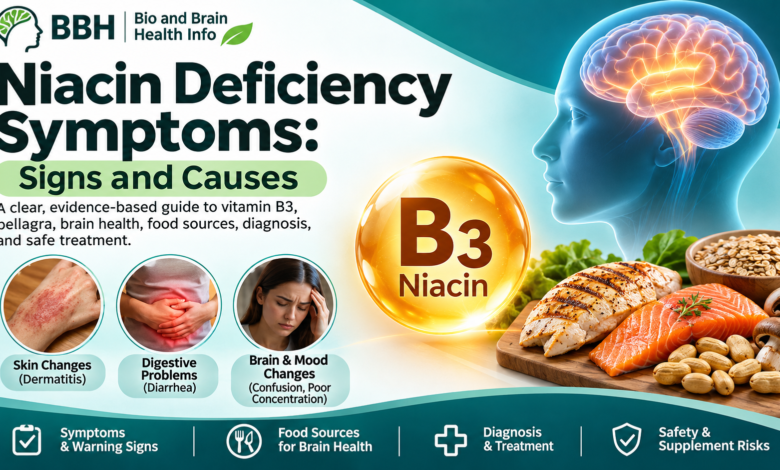
Niacin deficiency symptoms may include fatigue, poor appetite, weakness, digestive problems and skin changes. Severe vitamin B3 deficiency can cause pellagra, a condition traditionally associated with three major warning signs:
- Dermatitis: Skin inflammation, particularly on sun-exposed areas.
- Diarrhea: Digestive disturbances and gastrointestinal symptoms.
- Neurological changes: Confusion, memory difficulties or cognitive impairment in advanced deficiency.
These symptoms can have several other causes. An unusual sun-sensitive rash accompanied by digestive
or neurological changes warrants prompt medical assessment.
Scientific reference: NIH Office of Dietary Supplements — Niacin
What Is Vitamin B3 and Why Does Your Brain Need It?
Vitamin B3, also called niacin, is a water-soluble vitamin found in poultry, fish, peanuts, legumes and fortified grains. Its forms include nicotinic acid and nicotinamide.
The body uses niacin to produce coenzymes NAD and NADP, which participate in numerous metabolic reactions and normal cellular functions.
How Niacin Supports Brain Energy
Brain cells require a continuous energy supply for communication and neurological activity. NAD-dependent processes help cells produce and use energy. Severe niacin deficiency can impair neurological function, but taking extra niacin has not been established to improve cognition in people with adequate nutrition.
Brain function is also influenced by sleep and behavior. Explore why self-control fails for a separate discussion of behavioral challenges, not a nutritional diagnosis.
Vitamin B3 Deficiency Symptoms: Early Warning Signs
Early vitamin B3 deficiency symptoms can resemble other health problems. Possible symptoms include:
- Persistent fatigue or weakness
- Reduced appetite
- Headaches
- Irritability or apathy
- Difficulty concentrating
- Digestive discomfort
- Inflammation of the mouth or tongue
Can Low Vitamin B3 Cause Brain Fog?
Severe deficiency can affect memory and concentration. However, brain fog alone is not a reliable sign of low niacin. Poor sleep, anemia, thyroid conditions, medication effects and other nutritional problems can also affect concentration.
For a separate psychological perspective, see why your mind fears uncertainty.
Pellagra Symptoms: Skin, Digestion and Brain Changes
Pellagra is the classical disease associated with severe niacin deficiency. It is often described by three major features: dermatitis, diarrhea and dementia. Not all features must be present at the same time.
| Body System | Possible Symptoms | Why It Matters |
|---|---|---|
| Skin | Darkened, inflamed, sun-sensitive rash | Characteristic of pellagra |
| Digestive | Diarrhea, nausea, mouth inflammation | Can worsen nutritional status |
| Neurological | Confusion, memory problems, behavioral changes | May indicate advanced deficiency |
| General | Weakness, fatigue, poor appetite | Occurs in many other conditions |
Skin Changes in Pellagra
A characteristic rash often affects sun-exposed areas such as the hands, arms, face and neck. The skin may become rough, thickened or darkened. A distinctive rash around the neck is sometimes called Casal’s necklace.
Brain and Behavioral Changes
Advanced pellagra may cause confusion, memory impairment, apathy or other serious neurological and psychiatric symptoms. These manifestations require medical evaluation rather than being attributed to everyday stress.

Niacin Deficiency Causes and Risk Factors
Understanding niacin deficiency causes is important because not everyone with fatigue or cognitive difficulties has a nutritional deficiency.
Severe Dietary Inadequacy
Long-term diets lacking sufficient niacin and tryptophan increase deficiency risk. Tryptophan is an amino acid the body can partially convert into niacin.
Alcohol Use Disorder
Heavy alcohol use may contribute to inadequate nutrition and multiple vitamin deficiencies.
Digestive and Absorption Problems
Certain gastrointestinal conditions may interfere with nutrient absorption or contribute to malnutrition.
Medical Conditions and Medications
Hartnup disease and carcinoid syndrome can affect tryptophan availability and niacin metabolism. Some medications, including isoniazid, may contribute to deficiency risk.
Other Nutritional Deficiencies
Inadequate vitamin B2, vitamin B6 or iron may reduce the body’s ability to convert tryptophan into niacin. A clinician may therefore consider overall nutritional status.
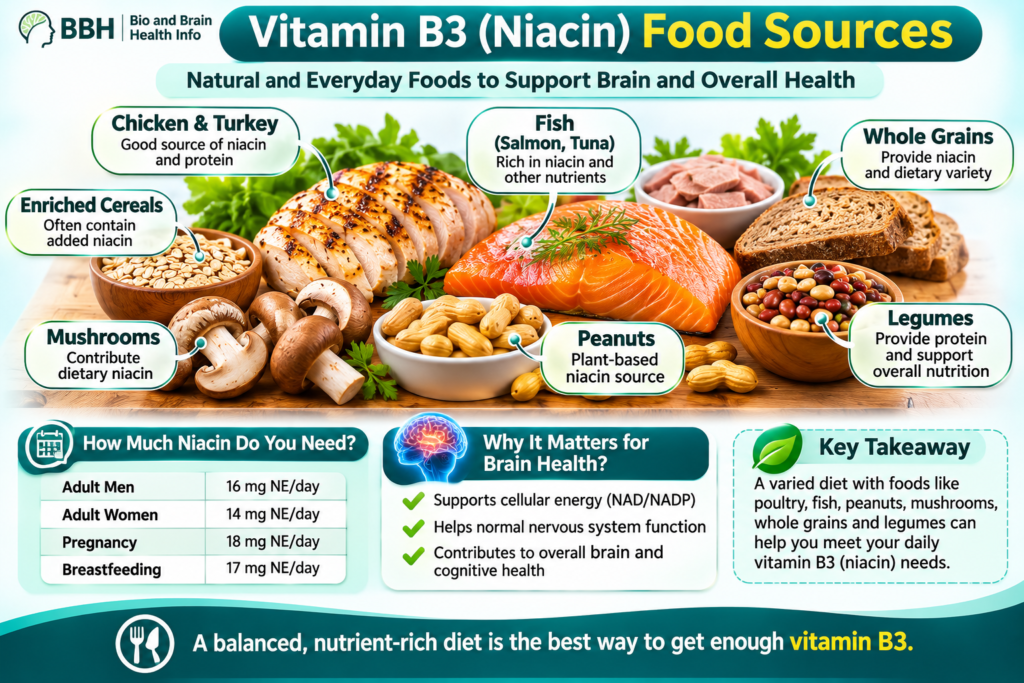
Best Vitamin B3 Food Sources
A varied diet is generally the preferred way to obtain adequate niacin. Foods containing niacin and those providing tryptophan both contribute to nutrition.
| Vitamin B3 Food Source | Nutritional Contribution |
|---|---|
| Chicken and Turkey | Provide niacin and protein. |
| Tuna and Salmon | Supply niacin and other important nutrients. |
| Peanuts | Offer a plant-based source of niacin. |
| Mushrooms | Contribute dietary niacin. |
| Whole Grains | Provide niacin and other nutrients. |
| Enriched Cereals | May contain added niacin; check the nutrition label. |
| Legumes | Provide protein and dietary variety. |
How Much Vitamin B3 Do Adults Need?
| Adult Group | Daily Recommended Vitamin B3 Intake |
|---|---|
| Men | 16 mg NE |
| Women | 14 mg NE |
| Pregnancy | 18 mg NE |
| Breastfeeding | 17 mg NE |
What Does NE Mean?
NE stands for niacin equivalents. This measurement accounts for niacin obtained directly from food and niacin the body can produce from the amino acid tryptophan.
These are US dietary reference values for adults. Individual nutritional needs may vary.
Niacin Deficiency Treatment and Diagnosis
Appropriate niacin deficiency treatment depends on severity and the underlying cause. Clinically significant deficiency requires professional assessment.
How Is Niacin Deficiency Diagnosed?
Clinicians consider dietary history, symptoms, examination, medications and underlying medical conditions. Specialized urine testing for niacin metabolites may sometimes help, but diagnosis is often clinical.
How Is Pellagra Treated?
Confirmed pellagra is commonly treated with nicotinamide and correction of associated nutritional problems under medical supervision. Clinicians also address conditions that affect nutrient intake or metabolism. Severe disease should not be self-treated with supplements or dietary changes alone.
Niacin Supplements: Benefits, Risks and Safety
Vitamin B3 is essential, but high-dose supplements are not automatically beneficial. High doses of nicotinic acid can cause flushing, itching, digestive discomfort, increased blood glucose and potentially serious liver injury.
The US tolerable upper intake level for supplemental niacin in healthy adults is 35 mg daily. This does not apply to niacin naturally occurring in food or to medically supervised treatment.
BBH Practical Brain Nutrition Checklist
Use these questions to prepare for a healthcare appointment. They are not a diagnostic test.
| Question | Practical Next Step |
|---|---|
| Is my diet very restricted? | Review food variety. |
| Do I eat protein-rich foods? | Include suitable protein sources. |
| Do I have persistent fatigue? | Discuss possible medical causes. |
| Do skin and digestive symptoms occur together? | Seek clinical assessment. |
| Am I considering high-dose niacin? | Review risks and interactions with a healthcare professional before use. |
BBH Health Reminder This checklist is for educational self-reflection, not for diagnosing niacin deficiency. Persistent symptoms should be assessed by a qualified healthcare professional. Seek prompt medical attention for unusual sun-sensitive skin changes with digestive symptoms, and urgent assessment for new confusion or significant neurological changes.
For broader wellbeing education, read how to deal with anxiety on a daily basis. Anxiety does not automatically indicate niacin deficiency.
People Also Ask About Niacin Deficiency
What are the first signs of niacin deficiency?
Early signs may include fatigue, poor appetite, weakness and digestive discomfort. These symptoms are nonspecific.
Can vitamin B3 deficiency affect memory?
Severe deficiency can cause cognitive impairment and confusion. Forgetfulness alone does not establish deficiency.
What causes pellagra?
Pellagra results from severe niacin deficiency or inadequate niacin availability, sometimes associated with malnutrition or underlying conditions.
Is vitamin B3 important for brain health?
Yes. It supports normal cellular energy metabolism and neurological function. Extra niacin is not proven to improve cognition in adequately nourished people.
Can niacin deficiency be treated?
Yes. Medical treatment and correction of underlying nutritional problems can improve deficiency-related symptoms.
Frequently Asked Questions
Is niacin deficiency common?
Severe deficiency is uncommon in populations with adequate access to varied or fortified foods.
Can low niacin affect mood?
Severe deficiency can cause mood and behavioral changes, but depression and anxiety have many causes.
Are niacin and vitamin B3 the same?
Yes. Niacin is the general name for vitamin B3 and includes several related forms.
Should I take vitamin B3 for brain fog?
Not without a clear reason. Persistent brain fog deserves appropriate assessment.
Can too much niacin damage the liver?
Yes. High-dose niacin, particularly some extended-release formulations, can cause liver injury.
Final Thoughts
Recognizing niacin deficiency symptoms can be useful, especially when nutritional risk factors occur alongside skin, digestive or neurological changes. Fatigue, concentration problems and mood changes do not automatically indicate low vitamin B3.
Balanced nutrition, awareness of warning signs and appropriate medical assessment are more useful than unnecessary supplementation.
BBH Support Resource
Free Vitamin B3 Food & Symptom Tracker PDF
Download our free printable Vitamin B3 Food & Symptom Tracker to record dietary patterns, persistent symptoms and questions for your healthcare professional.
What the worksheet includes:
- Daily food intake and meal variety
- Symptoms and their timing
- Questions for medical appointments
- Follow-up notes and personal observations
Download Free Vitamin B3 Tracker PDF
Prefer to request the worksheet by email? Request Free BBH Tracker
Explore More BBH Resources
Visit our BBH Support Resources page for additional educational guides and self-reflection tools.
Medical note: This worksheet is for educational tracking and does not diagnose niacin deficiency. Persistent symptoms require appropriate medical evaluation. Do not delay medical care while completing the worksheet.
Scientific References and Further Reading